Without the federal EV tax credit, demand for electric cars would’ve eventually manifested in the United States on its own. But there’s no arguing that the tax credit accelerated that demand. The policy, which gifted a $7,500 tax rebate to buyers for EVs starting in 2009, did a lot to bring EVs closer to affordability;, being new, highly complex products, they were always going to be more expensive than their ICE counterparts. Without the tax credit, it’s entirely possible that Tesla wouldn’t be near as big as it is today. As of last week, that EV tax credit is dead. Unsurprisingly, automakers and dealers alike worry the EV market will now cave in on itself, considering every car in the segment just got a whole lot more expensive. To counteract this, automakers are attempting to fill the gap with discounts, rebates, and other incentives. But many of these deals won’t last forever.
What else? Tesla has offered its own car insurance since 2019 as a way to integrate the car ownership experience under one roof. Now, that arm of the company is facing a ban in California, with users reporting big delays in responses and unreasonable claim denials.
In other news, there’s a report out of Washington that says the Department of Energy is considering revoking $1.1 billion in grants to General Motors and Stellantis that would’ve been used to revitalize and retool old plants to build electric cars.
Speaking of Stellantis, it was named as a possible partner alongside Ford in a potential tie-up with Nissan. A report suggests Nissan could start selling rebadged Rogue hybrids to either of the brands mentioned above, a deal that could include a team-up in electric vehicle development. Nissan’s really doing everything it can to stay in the game.
The Discounts Aren’t Totally Gone Just Yet
There’s no doubt that the sales of electric cars are about to see a big slump in the fourth quarter. Lots of buyers sprang for their EVs last month to take advantage of the federal tax credit before it disappeared for good, resulting in record sales for some brands, including Tesla. With a bunch of satisfied buyers now out of the market (and the credit gone), there’s no way Q4 sales will reach anywhere near Q3’s numbers.
To cushion the fall, numerous brands are offering discounts of their own to keep buyers coming through the door. The most interesting strategy comes from Ford and GM, which, as The Autopian reported previously, actually used a loophole to take ownership of cars in its inventory it plans to lease to customers before the September 30th deadline, allowing lessees to take advantage of the credit even after that deadline has passed. Clever stuff.
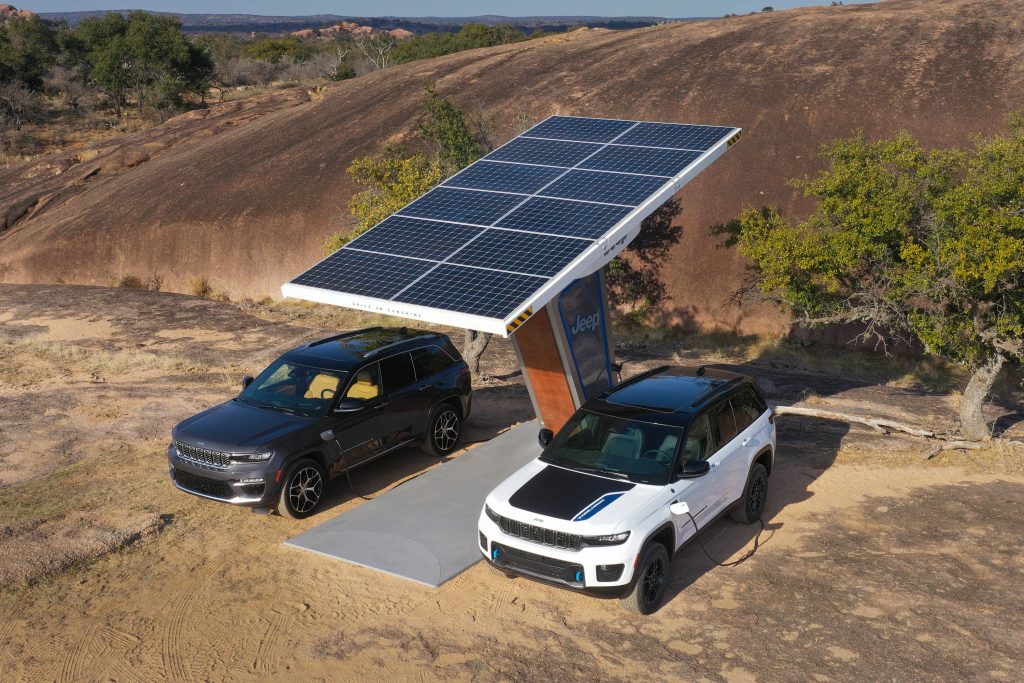
Stellantis, the last of the Big Three, is using a more conventional approach by simply replicating the tax rebate with a bonus cash allowance of its own, and eating the discount itself. All of the conglomerate’s hybrids and EVs qualify, which means you’ll be able to use it on cars like the Dodge Charger Daytona, the Jeep Wagoneer S, and Jeep’s lineup of plug-ins. The discounts will only apply to existing inventory, according to Automotive News, and according to Stellantis’s websites, they expire on November 3.
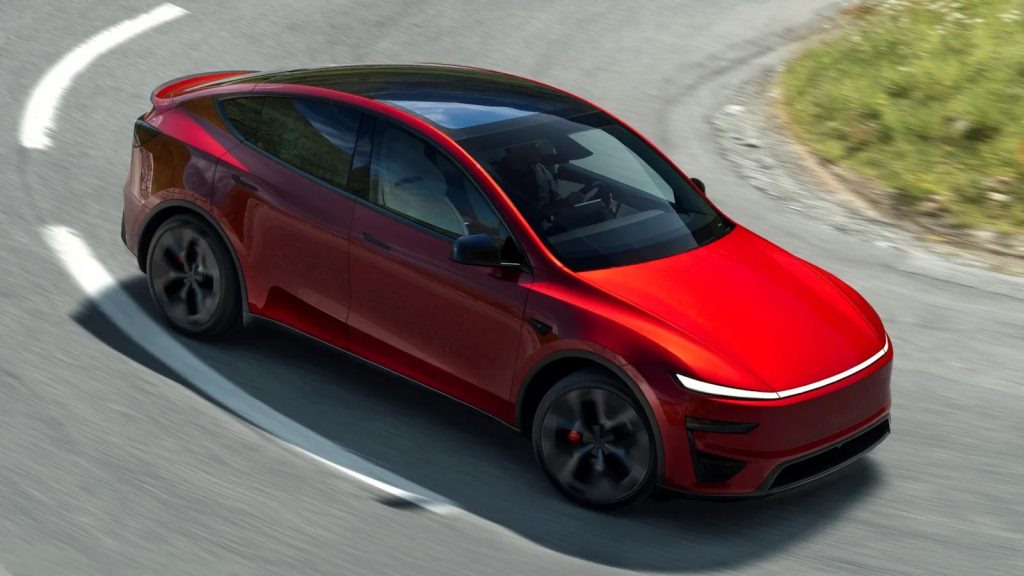
Then there’s Tesla, which, on October 1st, added a $6,500 lease credit for the Model 3 and the Model Y to offset the loss of the federal rebate. It’s worth noting this credit isn’t available for either of the more affordable “Standard” versions of those cars launched yesterday. In fact, Tesla doesn’t give potential owners the option to lease that trim at all, according to its website.
Rivian is following in Tesla’s footsteps, offering a lease credit worth up to $6,500 for new owners. The offer expires at the end of the month, and only applies to a few models. From InsideEVs:
The biggest rebate of $6,500 applies to the 2025 R1S and R1T in three specific configurations: the tri-motor, the dual-motor with the Max battery pack and the Performance Upgrade, and the dual-motor with the Large battery and the Performance Upgrade. In other words, Rivian is trying to get rid of its inventory, but it’s worth noting that neither the entry-level Dual version with the Standard battery pack nor the top-spec Quad variant is eligible for any of these discounts.
That said, buyers can get $6,000 off the lease price of a 2026 R1S or R1T with the tri-motor configuration, while the 2026 R1S and R1T dual-motor with the Max battery and Performance Upgrade are eligible for a $5,000 lease bonus.
It’s not just American brands getting in on the action. BMW is offering $7,500 off its electric lineup and $5,000 off its plug-ins. This is only for vehicles purchased, not leased, and the discount ends after November 1, according to Car and Driver. Hyundai is taking what feels like a more permanent approach, slashing prices of its Ioniq 5 by up to $9,800 for the 2026 model year.
So if you’re sad you missed out on the federal credit, just know that there are still deals out there, at least for a few more weeks. Though the golden era may be behind us for now.
California Is Threatening To Shut Down Tesla’s Insurance
Tesla owners who use Tesla’s insurance are pretty upset with the service, at least according to California’s Department of Insurance. The organization announced plans last week to hold the car company’s subdivision accountable for failing “in their legal obligations to adequately handle hundreds of California automobile policyholder claims.” From the release:
The actions allege that, despite being repeatedly warned by the Department of Insurance, the Tesla Companies and State National instead chose to abandon their responsibility to consumers and persist with their non-compliant claims-handling practices, placing profits above people and flouting the law with impunity.
After continuing to receive a significant number of consumer complaints related to the handling of their automobile policyholder claims beginning in 2022, the Department of Insurance repeatedly warned the Tesla Companies and State National of the significant harm to their policyholders — largely Tesla drivers — unless immediate corrective actions were taken. Throughout numerous meetings with, correspondence between, and reports to the Department of Insurance, the companies repeatedly committed to improvements, but the number of justified consumer complaints and violations continued to mount. Instead of correcting their unlawful and egregious behavior, the companies disregarded the Department’s serious warnings and continued their misconduct, and the number of consumer complaints and the amount of legal violations have only continued to significantly increase. The companies face monetary penalties up to $5,000 for each unlawful, unfair, or deceptive act, or up to $10,000 for each such act determined to be willful.
Tesla Insurance has been in the news for years over allegedly less-than-satisfactory business practices. Reuters published a wide-ranging report back in 2023 covering the firm’s alleged inability to deliver timely communications, pay out on claims, or even pick up the phone. The CDI’s accusations seem similar:
The Department’s accusations are based on the companies’ ongoing systemic failures and willful unfair claims settlement practices including, but not limited to, the following alleged violations:
-
Egregious delays in responding to policyholder claims in all steps of the claims handling process, causing financial harm, out-of-pocket expenses, potential third-party liability exposure, and distress to policyholders
-
Unreasonable denials and delays in fully paying valid claims to consumers
-
Failure to conduct thorough, fair, and objective investigations of claims, thus denying consumers the insurance benefits they expect
-
Failure to advise policyholders of their rights to have their claims denials reviewed by the Department – a major consumer protection in California to make sure insurers are held accountable by their regulator
The CDI says Tesla Insurance has 15 days from October 3 to respond to the accusations, or else the provider could have its license to operate in the state suspended.
GM And Stellantis Could Be Out $1.1 Billion In Factory Retooling Grants
The cuts just keep on coming. Last year, the Biden administration awarded nearly $1.1 billion to GM and Stellantis to retool a trio of plants, with plans to convert them for EV and EV parts production. That money might not be coming in anymore, according to a government document seen by Reuters. From the report:
The projects are among a list of $12 billion in awards that could be canceled as the partial government shutdown persists.
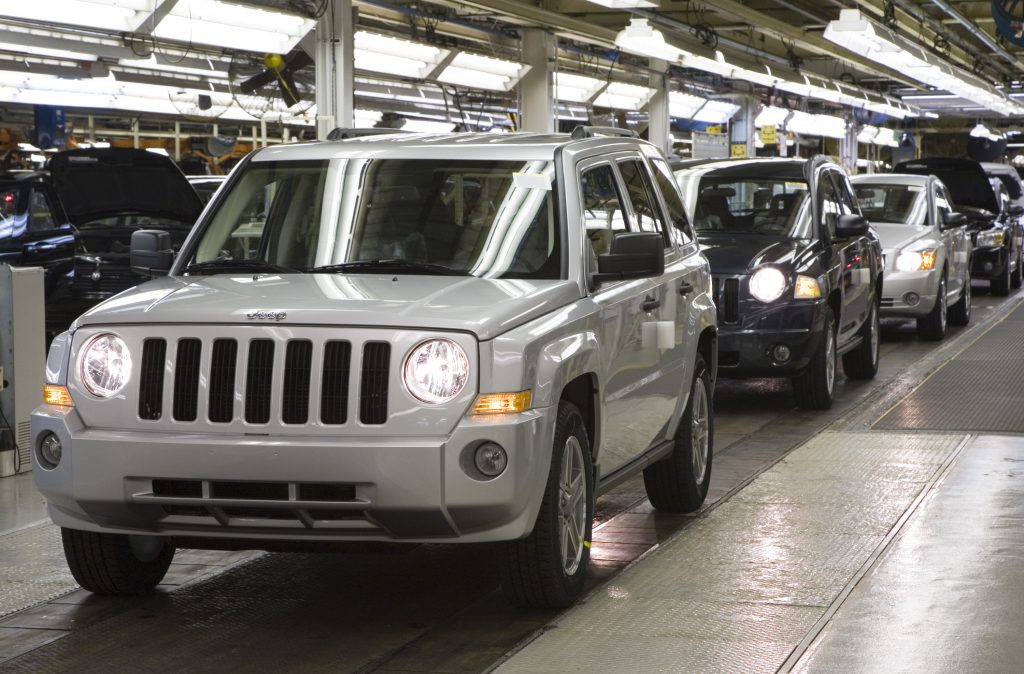
Among those grants: $500 million awarded to GM to convert Lansing Grand River Assembly in Michigan to build electric vehicles; $335 million for Stellantis to convert the shuttered Belvidere Assembly Plant in Illinois to make midsize electric pickups; and $250 million for Stellantis to convert its Indiana Transmission Plant in Kokomo to produce EV components.
The possible cancellations come a week after the Energy Department announced plans to cancel $7.56 billion in financing for hundreds of energy projects that it said would not provide sufficient returns to taxpayers.
The Lansing plant currently builds the Cadillac CT4 and CT5, while the Belvidere plant hasn’t built anything since 2023, when the last-gen Cherokee went out of production.
As for why these previously earmarked funds could be canceled over the government shutdown, well, you’ll have to ask the current administration. As Reuters points out, this news comes just a week after the DOE announced plans to cut $7.5 billion in financing for various energy projects, and a week after White House budget director Russell Vought said on X that the admin would be cancelling nearly $8 billion in climate-related funding in 16 Democratic-run states. Only Belvidere falls under the States mentioned, though, so going by this Reuters report, the admin’s planned cuts could reach even farther than expected.
Nissan Could Supply Rebadged Rogue Hybrids To Ford Or Stellantis
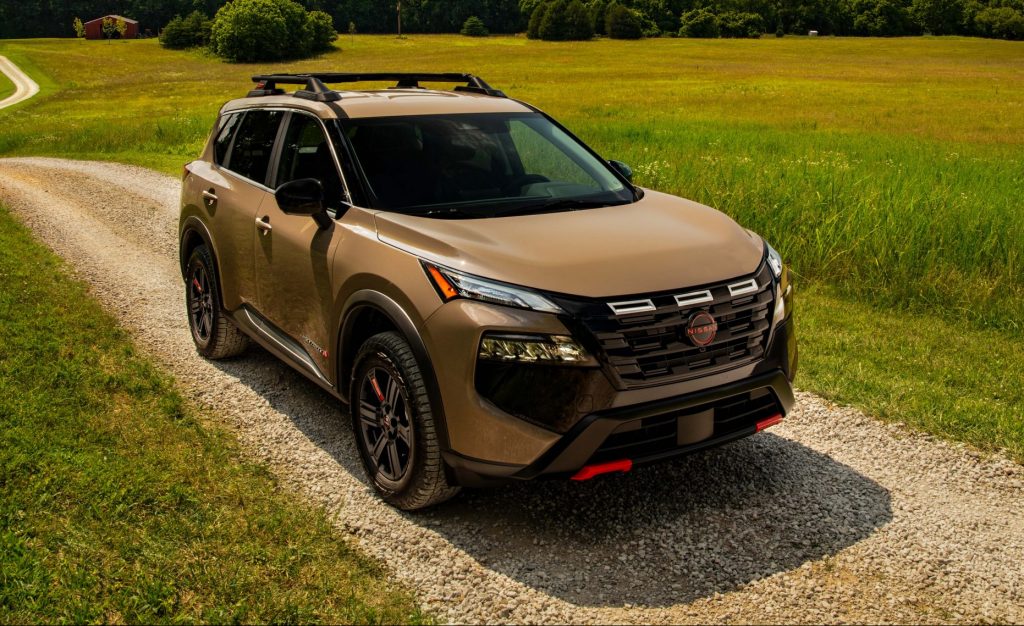
The Nissan Rogue is a great car, and the world can use more of them. That could soon be a reality, as Rogue production may add a badge-engineered sibling wearing bodywork from one of the Big Three American automakers. A report from Automotive News claims the company is in talks with brands like Stellantis and Ford to sell an electrified crossover based on the ever-popular SUV. From the report:
The compact crossover would feature Nissan’s e-Power hybrid system, which uses a battery-powered electric motor to drive the wheels and a gasoline engine to recharge the battery.
Nissan would assemble the vehicle alongside the Rogue in Smyrna, Tenn.
Discussions include potential collaboration on electric vehicle development, said one of the people, who spoke on condition of anonymity because the discussions are private.
“It’s not a quid pro quo,” the person said, adding that a deal could happen even without an EV partnership.
While a Nissan official told Autonews there were no agreements in place right now, they did say the company “remains open to dialogue that delivers strategic, complementary market opportunities to our core model development efforts.” So that’s something.
If such a partnership does materialize, the badge-engineered, Rogue-based hybrid will likely use Nissan’s third-generation e-POWER tech, which utilizes one of the most thermally efficient engines in production right now. It’s already for sale in Europe, and it’s expected to make its first appearance in America via the Rogue next year, according to Autonews.
The post Carmakers Are Replacing The EV Tax Credit With Their Own Discounts appeared first on The Autopian.