In the school district where my kid goes, there seems to be a perpetual shortage of bus drivers. When I was growing up, this issue was mitigated through the use of burnout high school students with one or two years of driving experience being entrusted to drive buses in exchange for getting out of school for two periods or so. I’ve written about this before, coming from the era before parents actually loved their children. This isn’t done anymore, which is partially why there’s a driver shortage, which is why I had to drive my kid to school this morning, which is why I happened to be behind this Ram truck, and which is why I happened to notice this issue with its taillights.
I think the issue I have with these taillights is an interesting one, because it represents a sort of one step forward, two steps back situation. The step forward is that these trucks – which I think are 2023 to 2024 Ram pickups – have incorporated amber rear indicators, which have been shown in studies to be safer to varying degrees.
Personally, I think amber rear indicators make more sense, because they are visually distinct from the red brake lamps, and eliminate a potential source of confusion. However, to really be effective, I think there is another important criteria, and it’s in this one that the Ram falls surprisingly short.
Let’s look at what these taillights we’re discussing today are actually like:
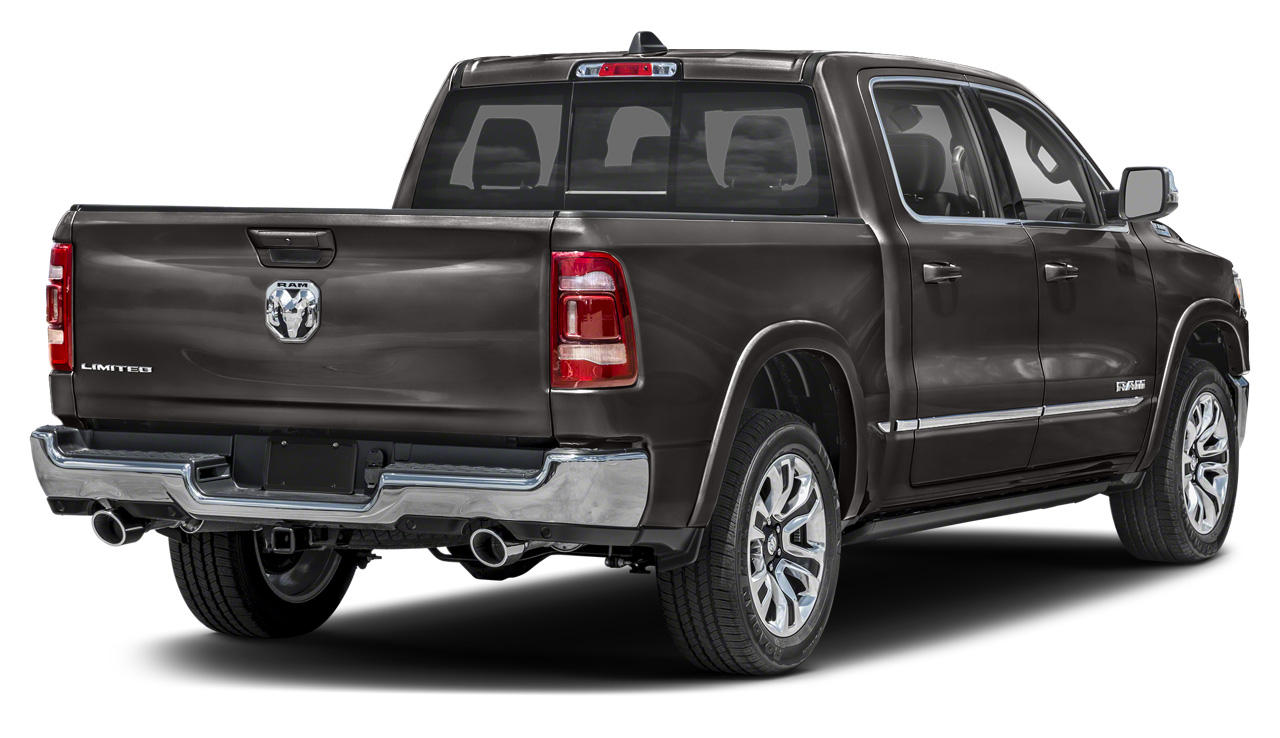
So, they’re fairly typical modern pickup truck taillights in size and shape; large, vertically-oriented, and these appear to contain integrated into their middle sections a radar module for blind spot detection. There appears to be plenty of lens real estate for all the crucial functions: brake, taillight, indicator. The reverse lamp is incorporated into the center radar module section.
Now, here’s where things get weird: I was behind one of these trucks, as it was simultaneously braking and indicating a left turn – an extremely common situation. You would think by looking at that taillight that one of the red areas may be a brake lamp, and one of the clear areas may blink for the turn indicator.
What actually happens is this:
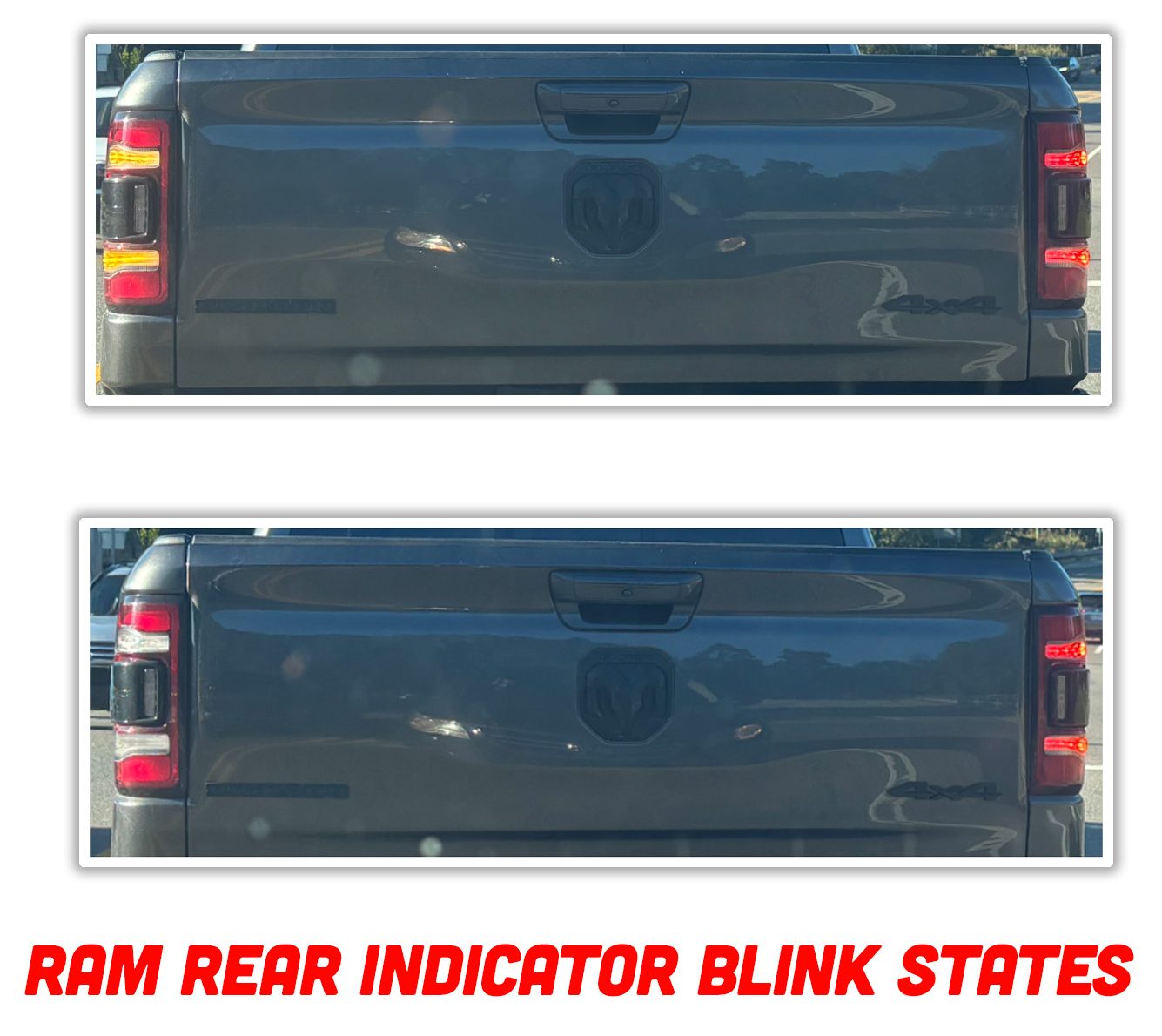 Those clear areas seem to do double-duty as both brake lamp and indicator. And yes, the indicator is amber, but for some strange reason the indicators and brake lamps share areas on the taillight, so you can only do one or the other: show a brake lamp or indicate a turn.
Why?
This makes no sense to me: why would you want to disable a crucial warning lamp like a brake light when indicating a turn, especially if you both have the area and have taken the effort to make an amber indicator? This isn’t the 1980s, when truck-makers were cranking out cheap taillights with just two bulbs in them!
 There’s plenty of room for separate brake and indicator areas, and there is no logical reason why a taillight-producer in this modern age should be accepting the miserable limitations of the past! What if one taillight is damaged? Then you would be completely brakelightless should you have the temerity to indicate a turn!
I would argue that having separate and distinct functional regions in a taillight is as important as color; it’s helpful for people to be able to recognize such areas and therefore be primed to know what to expect when a given area of the lamp is illuminated. And it’s not like that’s a hard thing to accomplish; hell, my incredibly minimal and spartan Citroën 2CV does this:
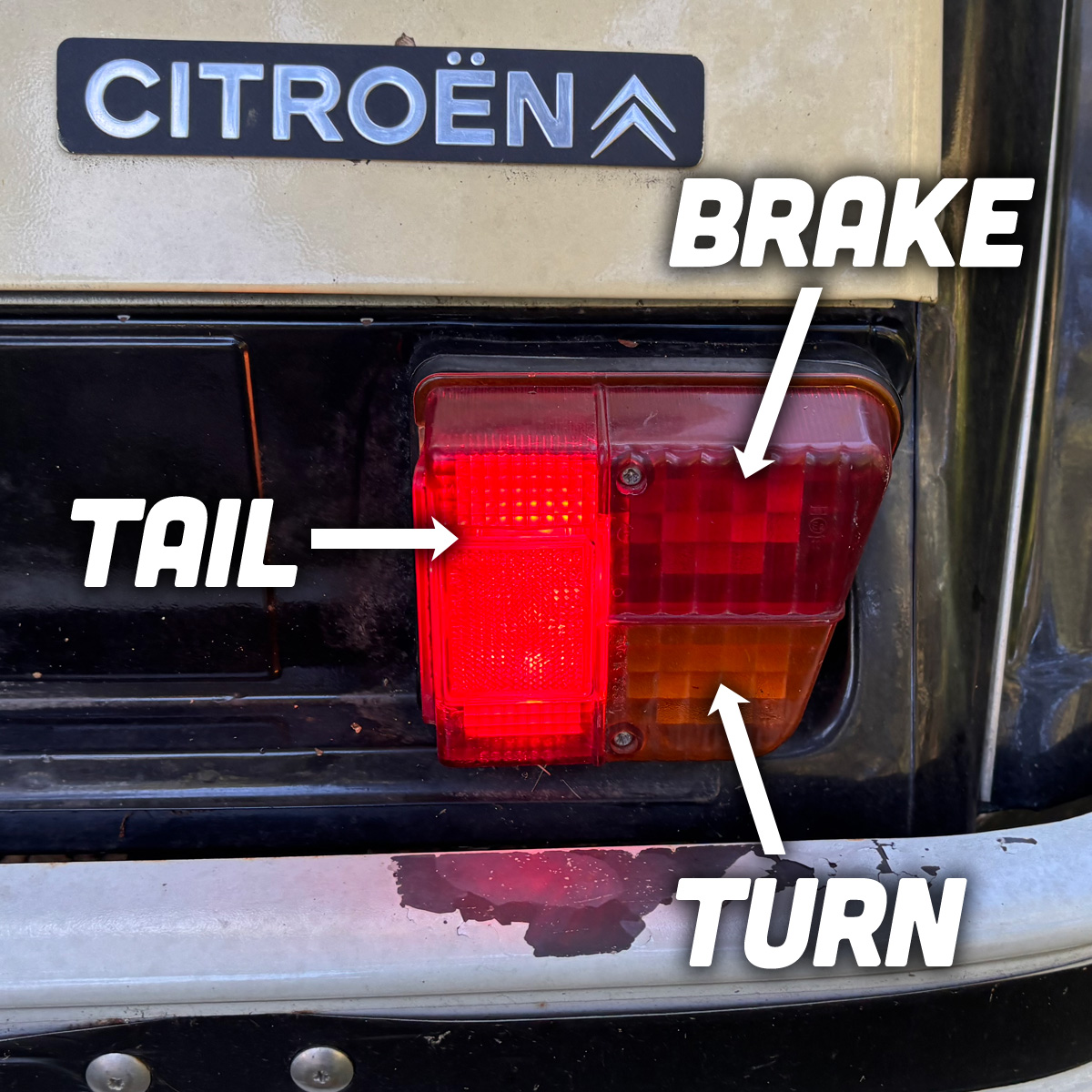
I just got these working this past weekend, so I’m excited for a reason to include a picture of these taillights in here. And of course there’s no reverse lamp, because that sort of thing is the same kind of decadent luxury that got Marie Antionette separated from her head.
The point here is that while I respect Ram’s decision to use amber rear indicators, the decision to make turn signals and brake lamps mutually exclusive is just baffling to me. It’s a step backward, and is absolutely unnecessary considering modern taillight hardware.
The state of taillampery in America is still in flux; I hope one day there will be some agreed-upon best practices, and I would hope that among these practices is one that decrees that each function of a taillight should get its own, discreet area, and that multiple signals can be displayed concurrently.
One can dream.
The post I Have A Problem With These Ram Taillights And You Need To Know About It appeared first on The Autopian.

