Last weekend, I popped open my mini warehouse only to discover one of a car owner’s worst nightmares. One of my favorite cars, my 2008 Saturn Sky Red Line, had a seat with rapidly spreading mold. Sadly, this isn’t even the first time this has happened to me, but it’s now the fourth time. I’m tired of cleaning out mold, and now I’m wondering: How do I stop this from happening again?
If you’re a longtime reader, you may remember that, in 2022, I wrote a story about how my 2005 Smart Fortwo became filled with what I called “forbidden polka dots.” Right before I stored the car for the winter in 2021, I had an accident with a car cover that let about a gallon of water into the interior. I forgot to fully dry out the car before parking it, and my reward the next spring was a car that was full of mold.
My wife cleaned out the car, and it has been fine ever since. The mold has not come back. I haven’t even smelled the telltale scent of mold, either. Since then, I also haven’t had a problem with any of my other cars. I’d pop open my mini warehouse, drive away in whatever chariot I chose, and life would be good.
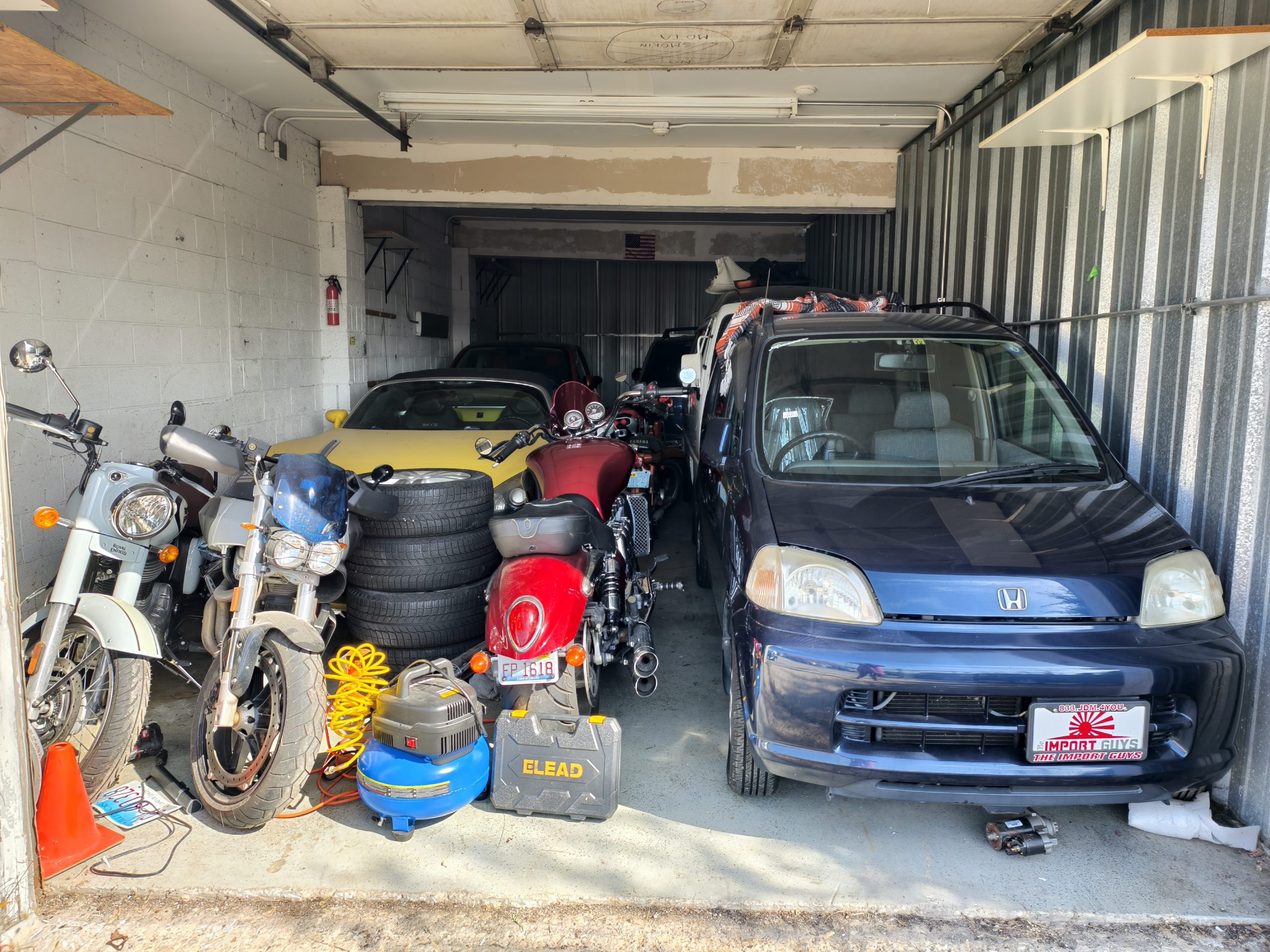
Something different must have happened this year, because it feels like I’ve been fighting a losing battle with mold this summer. I have found a grand total of three more of my cars with the stuff in them. I’m not exactly sure what’s going on, and I’m not entirely sure how to stop it.
Mold Is Nasty Stuff
Back in 2022, when I had the mold issue in my 2005 Smart Fortwo, there was an easy explanation: I was a goofball and stored a car with a gallon of water hiding under its carpet – a mold farm, basically.

The United States Environmental Protection Agency has a pretty good primer on mold:
Molds are a natural part of the environment and can be found almost anywhere that moisture and oxygen are present. They belong to the kingdom Fungi and live in moist places such as soil, plants and dead or decaying matter. Outdoors, molds play a part in nature by breaking down dead organic matter such as fallen leaves, dead trees and other debris; however, indoors mold growth should be avoided.
There are many types of mold – all of them need water or moisture to grow. When excessive moisture accumulates in buildings or on building materials, mold growth often occurs, particularly if the moisture problem remains undiscovered or unaddressed.
Molds spread by producing tiny reproductive cells called spores that waft through the air. Mold spores usually cannot be seen without magnification (ranging in size from 2-10 um) and are naturally present in both indoor and outdoor air. Some molds have spores that are easily disturbed and settle repeatedly with each disturbance. Other molds have sticky spores that will cling to surfaces and are dislodged by brushing against them or by other direct contact. Spores may remain able to grow for years after they are produced. In addition, whether or not the spores are alive, the allergens in and on them may remain allergenic for years.
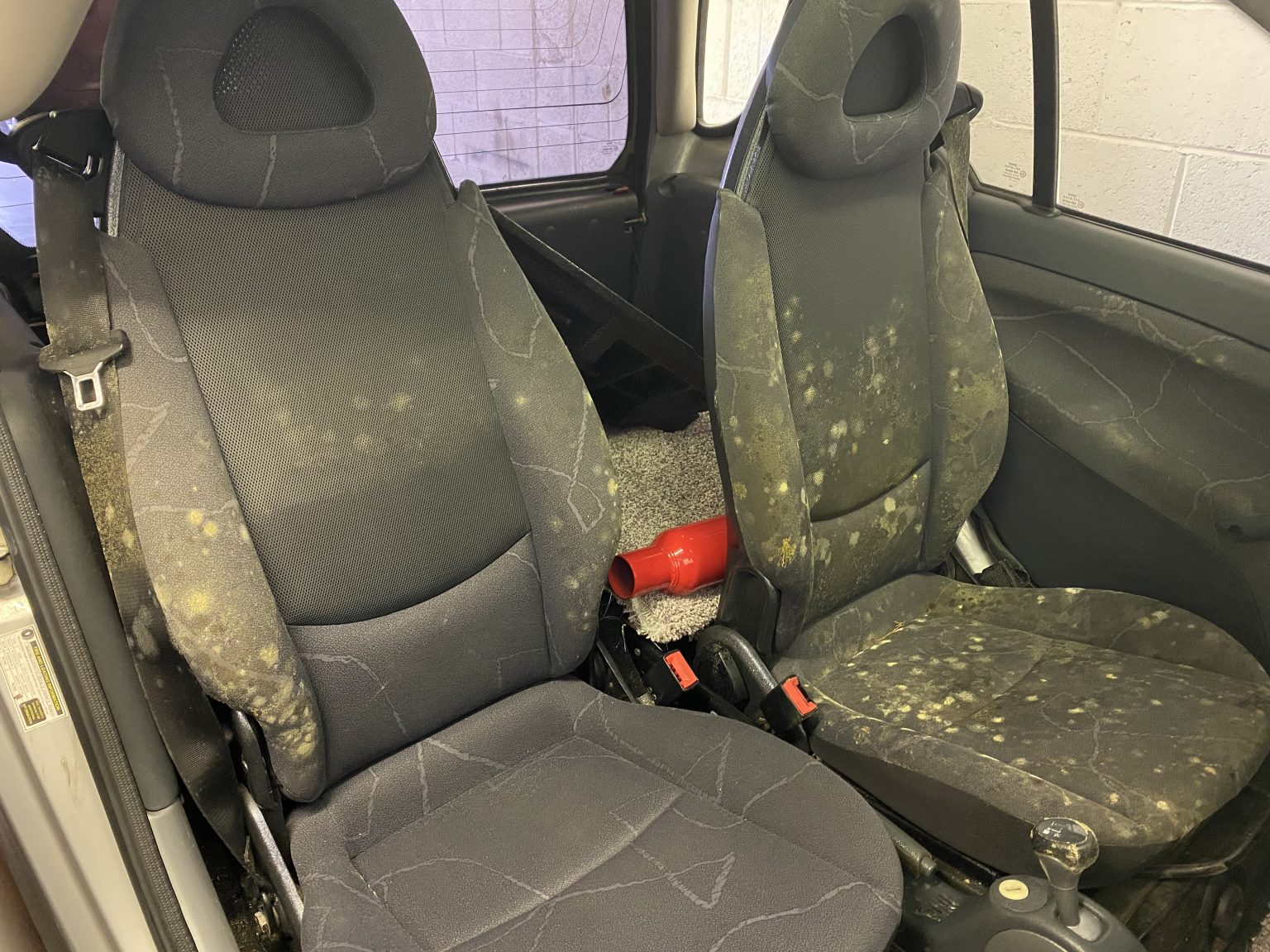
Yeah, mold is the stuff of nightmares. It’s also really bad for you, and can cause Asthma attacks, headaches, and, depending on how your body reacts to its environment, more serious issues.
Generally, mold requires four factors to grow: moisture, oxygen, a temperature between 40 degrees and 100 degrees, and a food source that contains cellulose. Mold will happily grow on walls, fabric, wood, leather – even paper, if you let it. Also, a quirk about mold is that simply exposing the mold to a temperature extreme might not be enough to kill it. Mold may go dormant in freezing or hot temperatures, but it is unlikely to die based on a temperature swing alone. Once conditions permit growth again, the mold will just kick back into action.
My Storage Situation
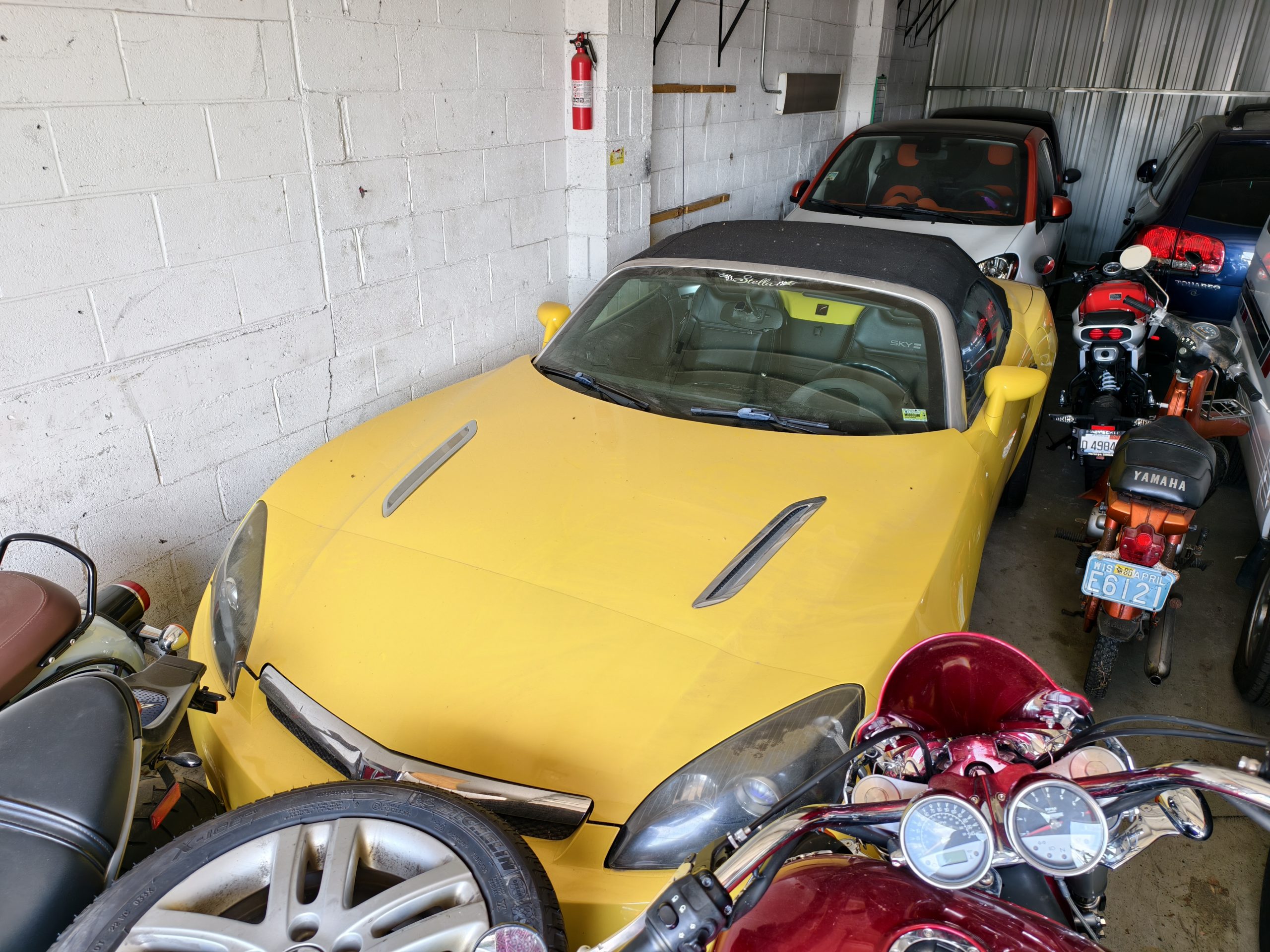
My mini warehouse is an interesting place. It sits maybe 500 feet from a lake and is more or less situated right in the middle of a chain of lakes. The area around my unit gets seriously humid. My warehouse also isn’t like a pole barn; the structure and floor of the building are concrete, and the roof appears to be not much different than what you’d find on top of an older commercial building. This is all to say that, based on the water stains on the ceiling in the building, this roof has leaked in the past. Likewise, the building gets extremely humid, just like the outside. So, at minimum, there’s a lot of water in the air. Also, spiders love this place, so I got that goin’ for me.
Here’s how Sheryl beat the crap out of the mold in my 2005 Smart:
Sheryl’s plan involves multiple prongs. The first involves this Bissell Little Green Pro cleaning machine. It injects searing hot water (or a chemical mix) into the surface that you’re cleaning and uses both brushing action and vacuum to get the job done. She combined it with RMR-86 Pro mold remover. The jug of RMR contains one of the active chemicals of bleach, among other harsh stuff.
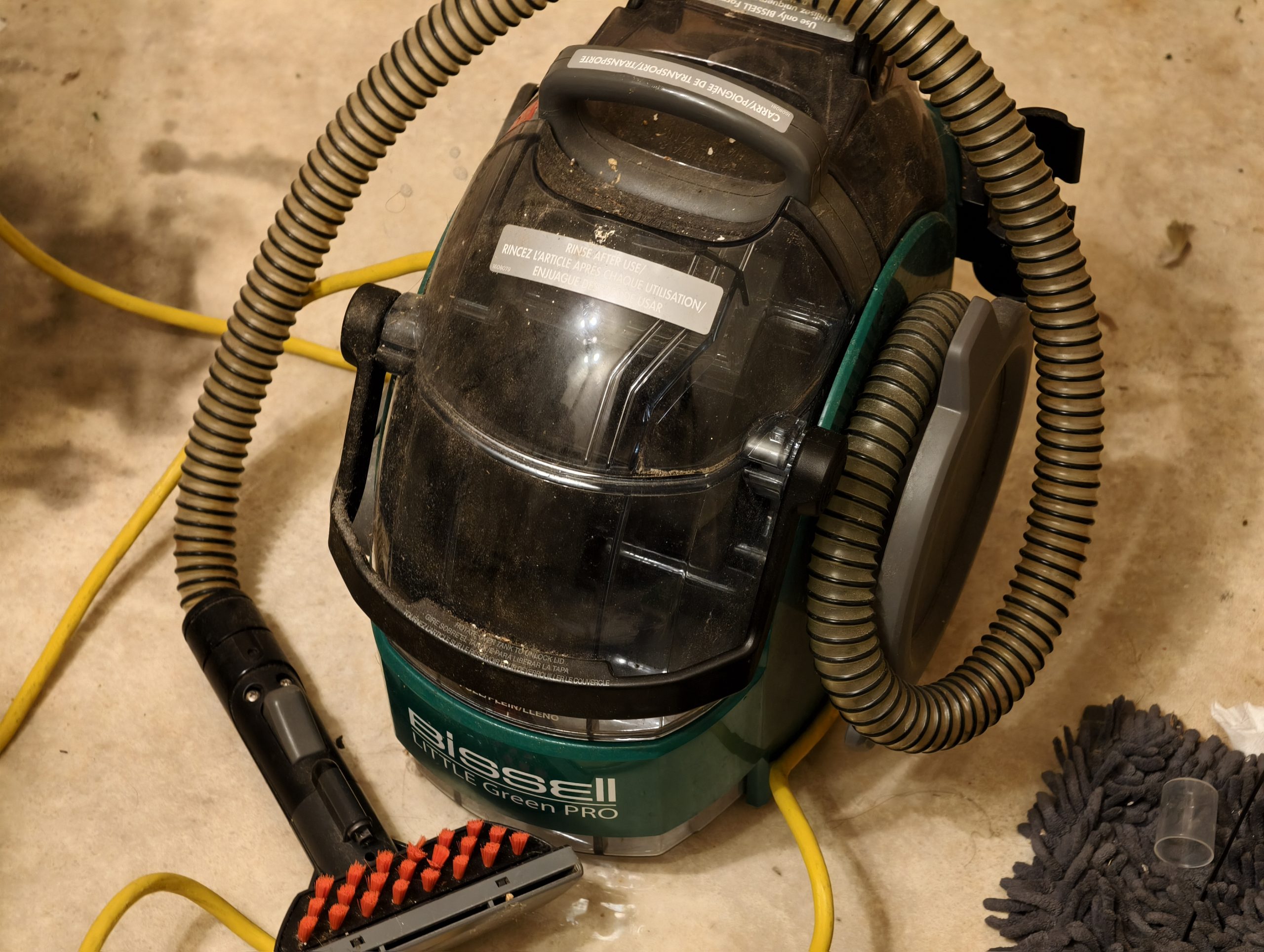
Sheryl made somewhat short work of the mold on the passenger seat. It took several passes and lots of scrubbing, but it took give or take an hour for her to be satisfied with the job.
[…]
Next came the driver seat, and she said that the growth on it was much worse. The seat bottom in particular required a lot of scrubbing to get through. However, after about two hours even it, too, looked extremely clean.

As I noted earlier, the mold hasn’t been back! So, this process worked out. I actually had doubts about this. It seems a lot of folks go hard on mold remediation, and remove their seats, dashboard, interior panels, and carpet to give them a ridiculously deep cleaning. Some folks straight up throw some of those parts away. Perhaps my car wasn’t bad enough to warrant tearing down the whole interior.
Here We Go Again

I figure the humidity supercharged the mold growth in that Smart. But I’m not entirely sure what happened this year with my other cars sprouting mold. Back in the spring, I excitedly attempted to drive my Honda Beat before finding its steering wheel covered in the fungi that are not fun guys. I cleaned up the mold with more of that RMR-86 stuff, monitored it for a while, and then sold the car.
Then, last week, I opened my unit hoping to drive my Saturn Sky Red Line, and was stopped hard by this sight:
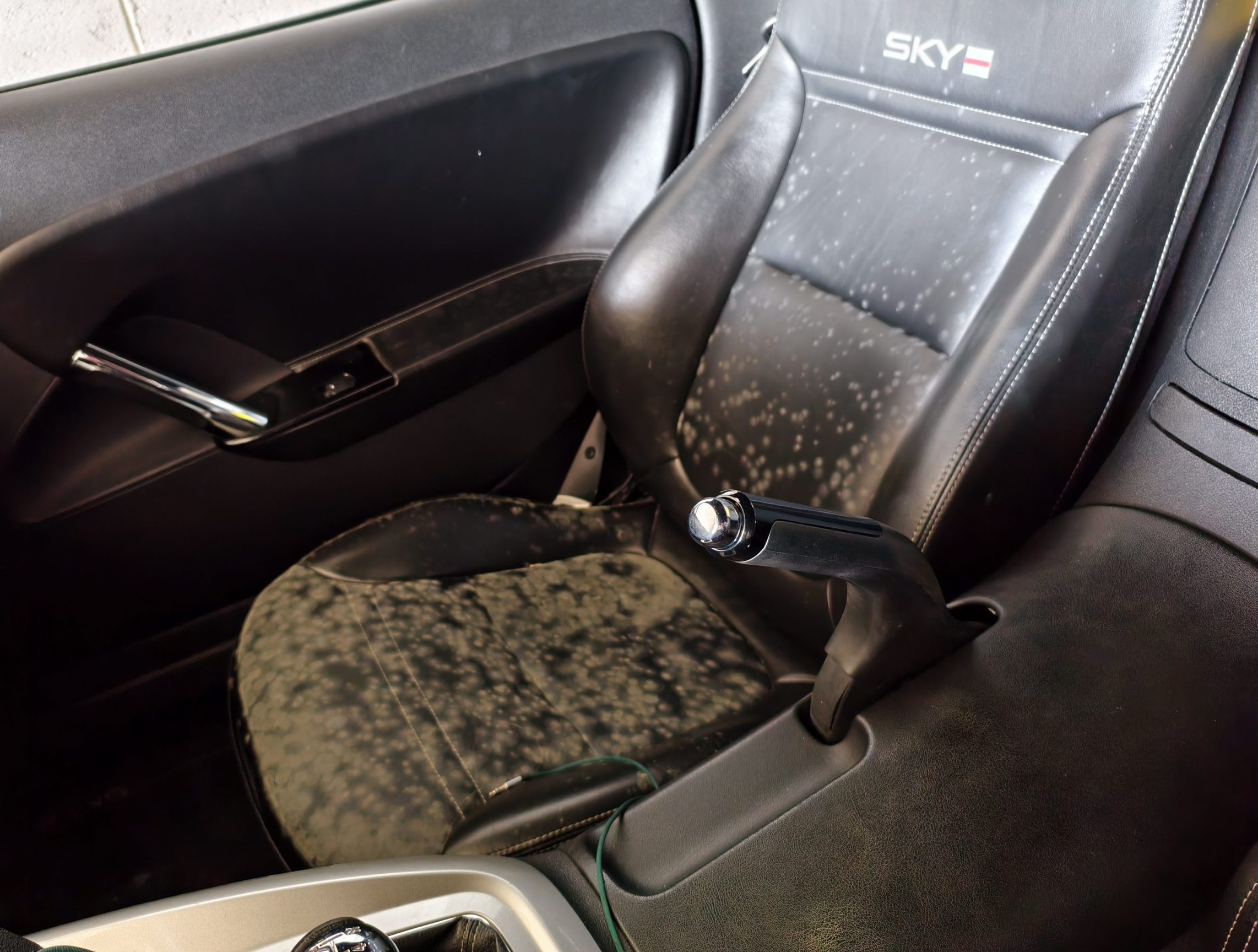
Crap.
This sent me into a panic, and I decided to check every other car in the unit. The 2006 Volkswagen Touareg V10 TDI was fine, as was the 2016 Smart Fortwo Edition #1, the 1997 Honda Life, and the 1989 Suzuki Every. All of the motorcycles were good, too. The only other troublemaker was the 2006 Smart Fortwo CDI, which had one little moldy dot on its driver seat.

I didn’t get it. I stored these cars with completely dry interiors with their windows rolled up. Mold has no reason to attack my beloved Saturn! Then, I started to think about it. Remember when I said mold needs moisture, oxygen, 40 – 100 degrees, and a cellulose food source? While the interiors of my cars might not be wet, there’s a ton of moisture in the air – enough for mold to take hold.
I did some digging and found out I’m not the only one suffering with the stuff. People who park their cars inside barns sometimes find mold in them after just one season, even though the car was totally dry when it went into the barn. The issue is made even worse when the barn has an imperfect roof. That was the case in the story told by Rob Siegel of BimmerLife. Rob, like me, stores a lot of cars and tries to pay as little as possible for storage. In 2023, he ran into his own mold nightmare.

Based on my digging, it seems like there are two major recommendations for mold mitigation. One is to remove the moisture from the air. This can with a dehumidifier or possibly by deploying large amounts of moisture removers like desiccant cartridges or DampRid. Another tactic that seems to work is keeping the air moving around your storage place, so it never really becomes stale. A final recommendation is to simply visit the unit frequently enough to remove any water and to change out the DampRid, if that’s your line of attack.
My storage unit’s power is currently disconnected due to ongoing electrical work in the building, but once the juice is back on, a dehumidifier will be my first line of defense. But until then, in the absence of a dehumidifier, how do I stop mold from growing?

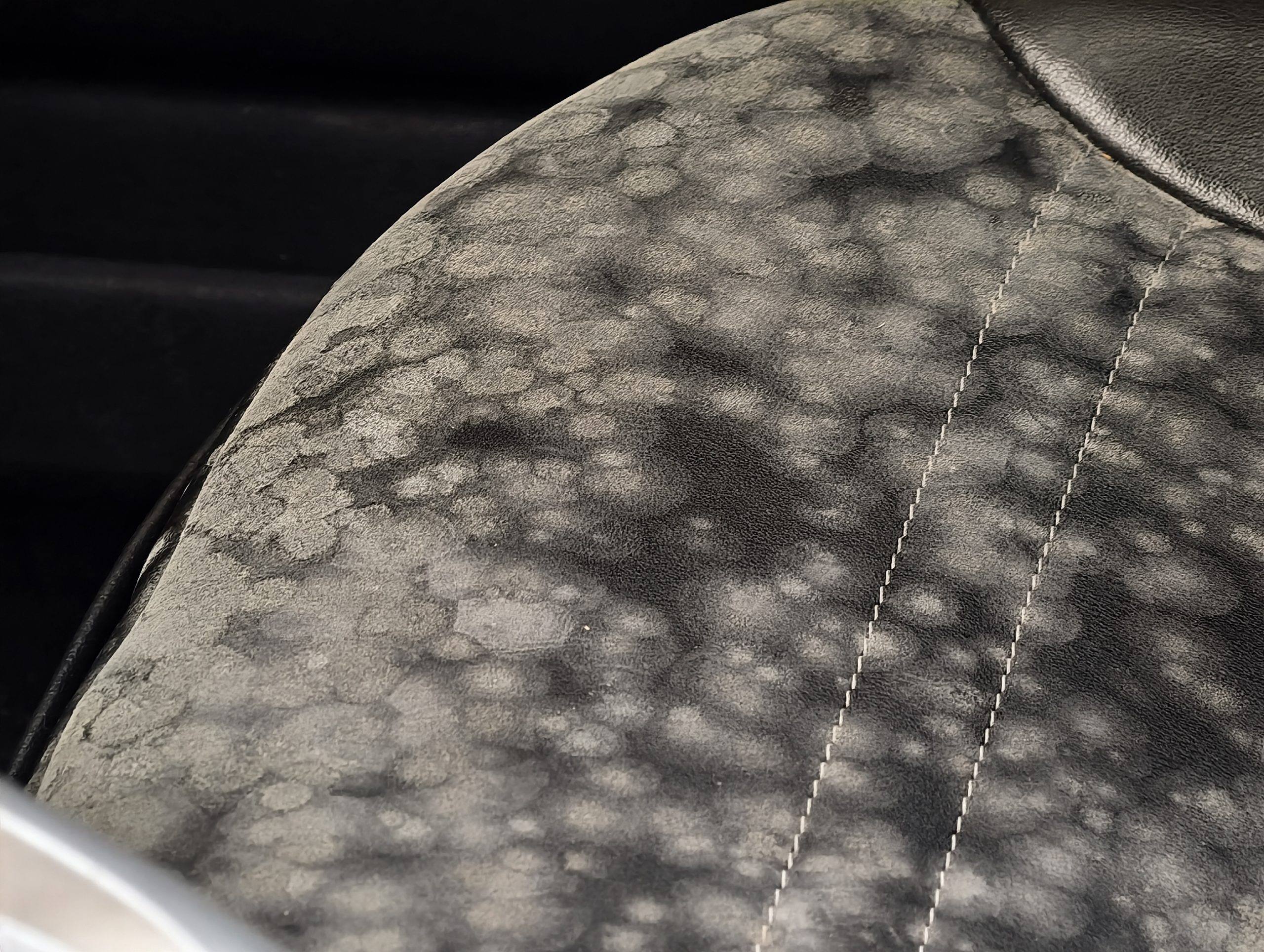
It looks like a lot of folks use desiccant bags inside stored cars, boats, and RVs, so maybe that is something that I will try. In the worst case, I’ll just waste a little money. Ultimately, I’ll use a dehumidifier, DampRid, and an ozone generator to aid in my cleaning.
As for killing the mold in the latest victims, my wife seems somewhat excited to help out. I won’t yuck her yum, so if she likes killing mold, I won’t stop her. I am not at all worried about cleaning up the cars.
What I am worried about is making sure that mold cleaning doesn’t become a regular thing for me. I have only partial confidence in my plan to deploy a dehumidifier, a fan for circulation, and DampRid. Here is where I will turn things over to you: How do you keep vehicles in seasonal or long-term storage from getting moldy?
The post My Car Interiors Keep Turning Into Dangerously Moldy Nightmares, And I’m Not Sure How To Stop It appeared first on The Autopian.