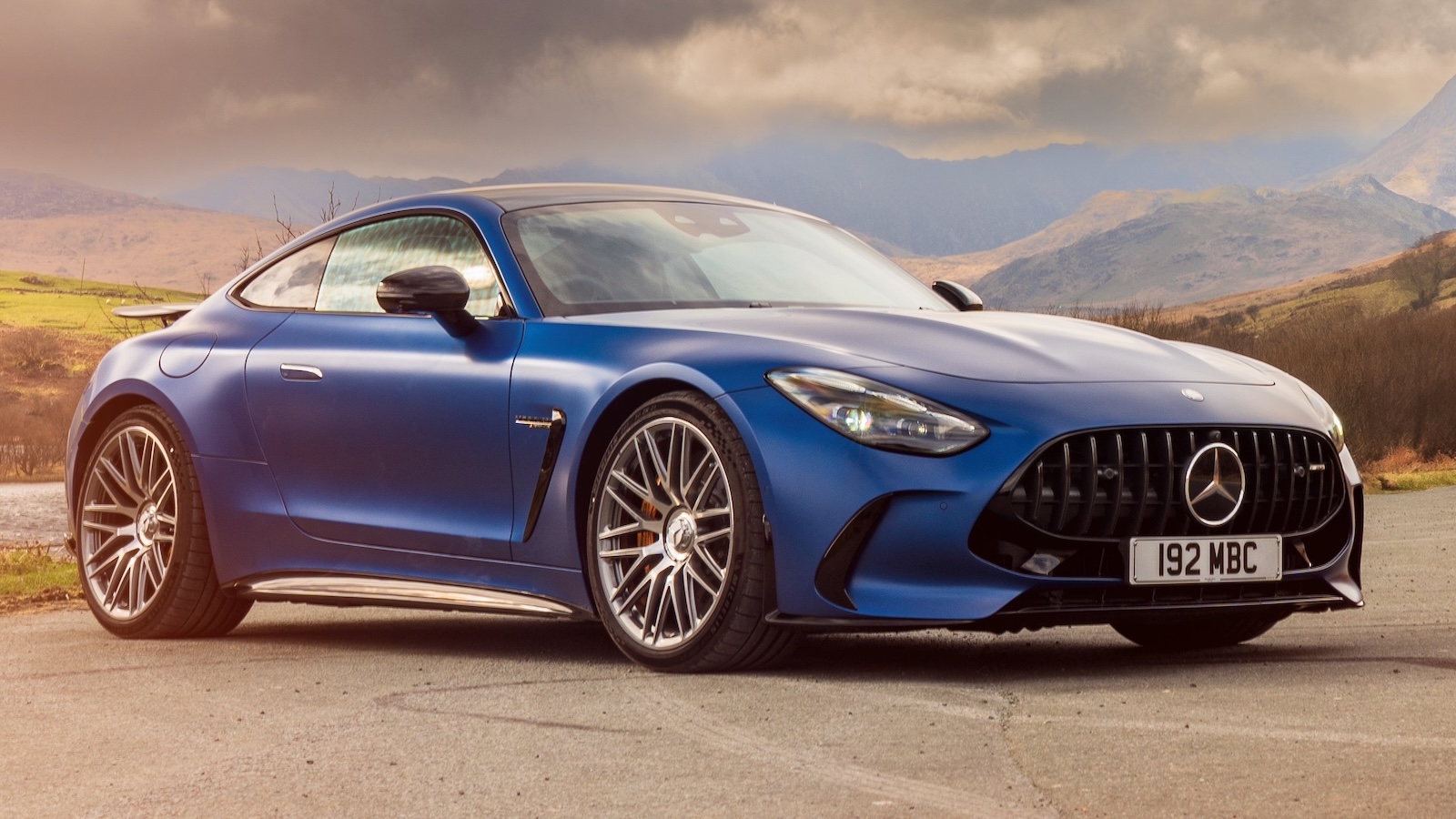
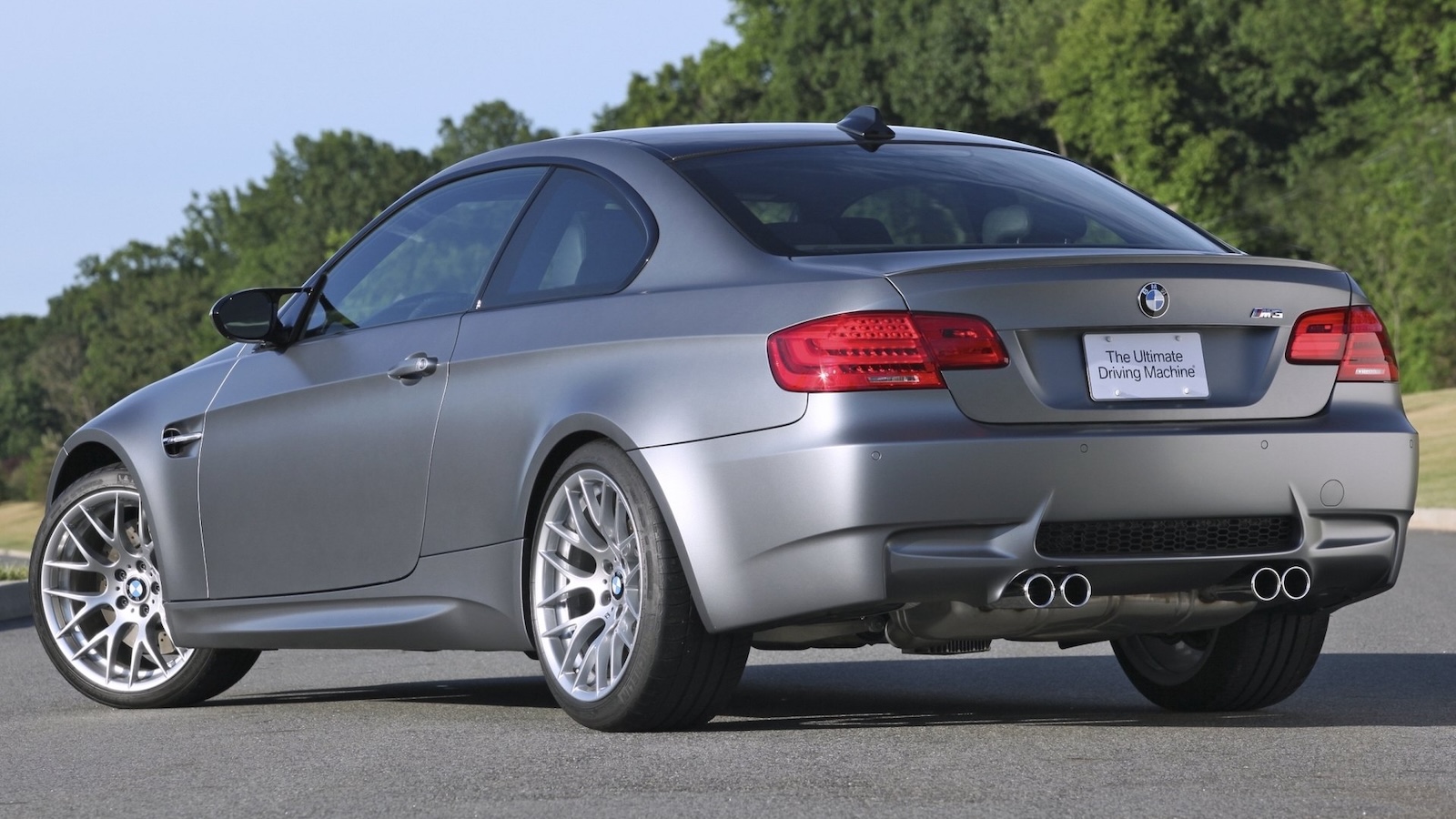
It’s safe to say that modern matte paint definitely isn’t a fad. Initially popularized by a handful of unique applications in the 2000s, its popularity has ballooned to the point where it’s not just reserved for limited-run Lamborghinis and special-order AMGs. Beyond the German big three of luxury, you can find satin or matte finishes being offered on everything from a Hyundai Santa Fe all the way up to a Bentley Flying Spur, and some applications look pretty great.
I won’t lie, I catch myself staring whenever I see a Spectral Blue Magno Mercedes-Benz, or an Earthy Brass Matte Hyundai Santa Fe, but before you sign on the dotted line, there’s something you should know: Caring for these less-reflective finishes is still a giant pain. In case you’ve been curious, here’s a quick run through the stuff you shouldn’t do to matte paint, and the stuff you just straight-up can’t do.
Let’s start with going through certain automatic car washes, a fairly normal thing to do in areas with water use restrictions. While you can generally take a glossy car through any automatic car wash, guidance is all over the board for matte paint. Hyundai gives the instruction “Do not go through an automatic car wash with rotating brushes,” and BMW has previously stated that “No mechanical means of cleaning the surface, such as a buffing wheel should be used.” Translation: Touchless car washes only, and even then, you might not be in the clear.
When it comes to protecting the finish of cars with traditional glossy paintwork, you generally don’t have to worry much about the composition of whatever coating you’re using. Sure, a ceramic coating will typically outperform a synthetic sealant, which will typically outperform a carnauba wax, but they all make paint look shiny while providing a hydrophobic coating. In contrast, matte paints are far more picky because the components in most waxes that make typical paint look shiny will also make matte paint shiny. Think glazing compounds that fill in little imperfections in clearcoat. As it stands, protecting matte paint really does require compatible products, and there are tons of warnings out there around this.
BMW states in the owner’s handbook for the current M4 to “Only use cleaning and care products suitable for vehicles with matte paintwork,” while Hyundai goes a step further, stating “If wax is applied, remove the wax immediately using a silicone remover.” Unsurprisingly, Mercedes-Benz is in a similar boat, with the handbook for the CLE coupe stating the following as two of many bullets under the matte paint care section:
-
Do not use a car wash program with a final hot wax treatment.
-
Do not use paint cleaners, buffing or polishing products, gloss preservers, e.g. wax.
Oh yeah, buffing. That’s the next annoying thing about matte paint. Let’s say you’ve done your best to park away from everyone, yet some inconsiderate oaf has still found a way to lightly scuff just the clearcoat of your bumper. Normally, this is the sort of damage that would literally buff out, but not with low-gloss finishes. Instead, polishing matte paint turns it glossy, as Larry Kosilla of AMMO NYC fame demonstrated:
It’s often a similar story with minor damage that would normally be repaired with touch-up paint, like stone chips. Because a spot repair to matte paint can’t be blended in the same way a spot repair to glossy paint can, several automakers quietly warn drivers of the repair challenges in the fine print of owner’s manuals. Indeed, if you flip to page 633 of the handbook for the new Hyundai Santa Fe, you’ll see this special care warning for this unique finish:
It is impossible to modify only repaint the damaged area. The whole part must be repainted as necessary. If the vehicle is damaged and painting is required, contact an authorized HYUNDAI dealer.
Yep, standard operating procedure is a full-panel respray at the minimum, which can get quite expensive if the part you need paint repair on is, say, a quarter panel. While a traditional touch-up paint application might run you a few hundred dollars, respraying a panel or two in a matte finish will easily cost four figures.
Alright, so what if you like matte paint but find all the matte paint care ridiculous? Well, you have two options: Either wrap your car with matte-finish vinyl, or have it covered in matte or satin paint protection film. Both will yield the desired finish, but while vinyl wrapping is used for color changes, matte paint protection film puts a removable translucent matte coating over the paint that’s already on your car. Granted, covering a whole car in paint protection film is typically more expensive than vinyl wrapping it, but thermoplastic urethane is typically more resilient to damage than thin vinyl film. Regardless, before you tick the box for matte paint on that new car, think about whether you actually want to maintain it. This unique finish comes with a whole list of gremlin-like conditions, some of which really can be aggravating.
Top graphic image: Hyundai
Support our mission of championing car culture by becoming an Official Autopian Member.
The post Matte Paint Looks Great But It’s Still A Giant Pain appeared first on The Autopian.