For about 76 years, helicopters have served the world as an important alternative to fixed-wing aircraft. Helicopters can go places and do things that airplanes cannot, like save mariners stuck at sea or airlift heavy cargo with precision between two points. The modern helicopter owes its existence to one man, Igor Ivanovich Sikorsky. His son, Sergei Sikorsky, advanced his father’s legacy into the modern day. At 100 years old, Sergei has flown into the sunset, ending one more link to its founding. Let’s take a look at what makes Sikorsky so important.
The folks of Lockheed Martin, the owner of Sikorsky Aircraft, say that Sergei I. Sikorsky passed on September 18 at the age of 100. Reaching such an age is impressive for any person. Sikorsky got to witness most of the formative years for the airplane, the automobile, and the diesel-electric locomotive. He lived through World War II, the Space Race, and the advent of modern electronics and the Internet. But Sergei also got to witness a whole new kind of aviation take form when his father invented the practical helicopter in the United States.
That only planted the seeds for the future, one where Igor and Sergei would popularize the helicopter into the tool that it is today. The story of Sikorsky is one that’s so huge that I’m not sure aviation would have been the same without it. As the world celebrates the life of Sergei, let’s take a look at the feats of Sikorsky.
Dreams Of Vertical Flight
Igor Sikorsky’s invention of the so-called “practical” helicopter in the United States is an important distinction because he didn’t so much invent the helicopter, but made one that actually worked well.
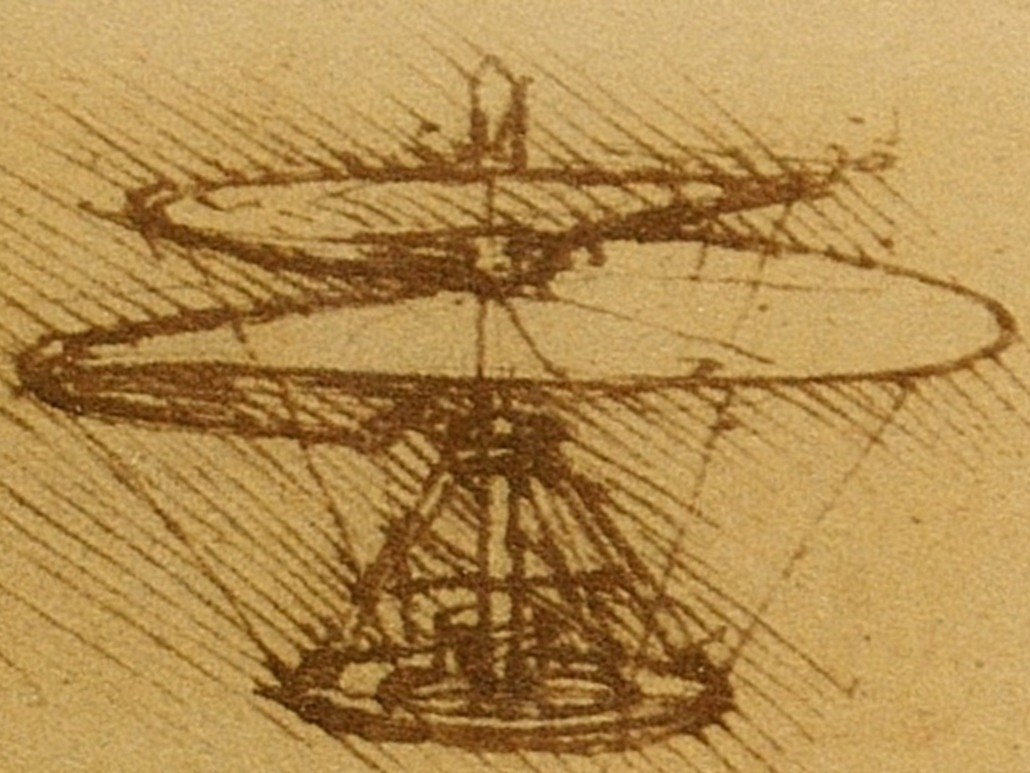
Some of the earliest ideas of rotorcraft date back to China around 400 BC. Back then, there were toys made out of bamboo that were little more than sticks with propellers on top of them. Leonardo da Vinci, Sir George Cayley, Mikhail Lomonosov, and so many more would envision flying machines that flew vertically. According to the textbook, Principles of Helicopter Aerodynamics, the idea of vertical flight enveloped the thoughts of so many dreamers and inventors that, at least in the 18th and 19th centuries, there were more people trying to create early helicopters than there were people attempting to fly in fixed-wing aircraft.
Even the term “helicopter” was an invention of this dreamer era, and the term is credited to Gustave de Ponton d’Amécourt, who built a helicopter with counter-rotating props and a steam engine in 1863. If you check out the U.S. Centennial of Flight Commission’s website, which was published in 2003, you’ll see that the page notes countless attempts to create vertical flying machines throughout the 1800s. Check these paragraphs out:
A U.S. Confederate soldier, William Powers, designed an attack helicopter in 1862 that made use of Archimedes’ screws powered by a steam engine that was to propel it vertically and forward. He intended to use it to break the Union’s siege of the southern ports. He constructed a non-flying model but did not construct a full-size craft.
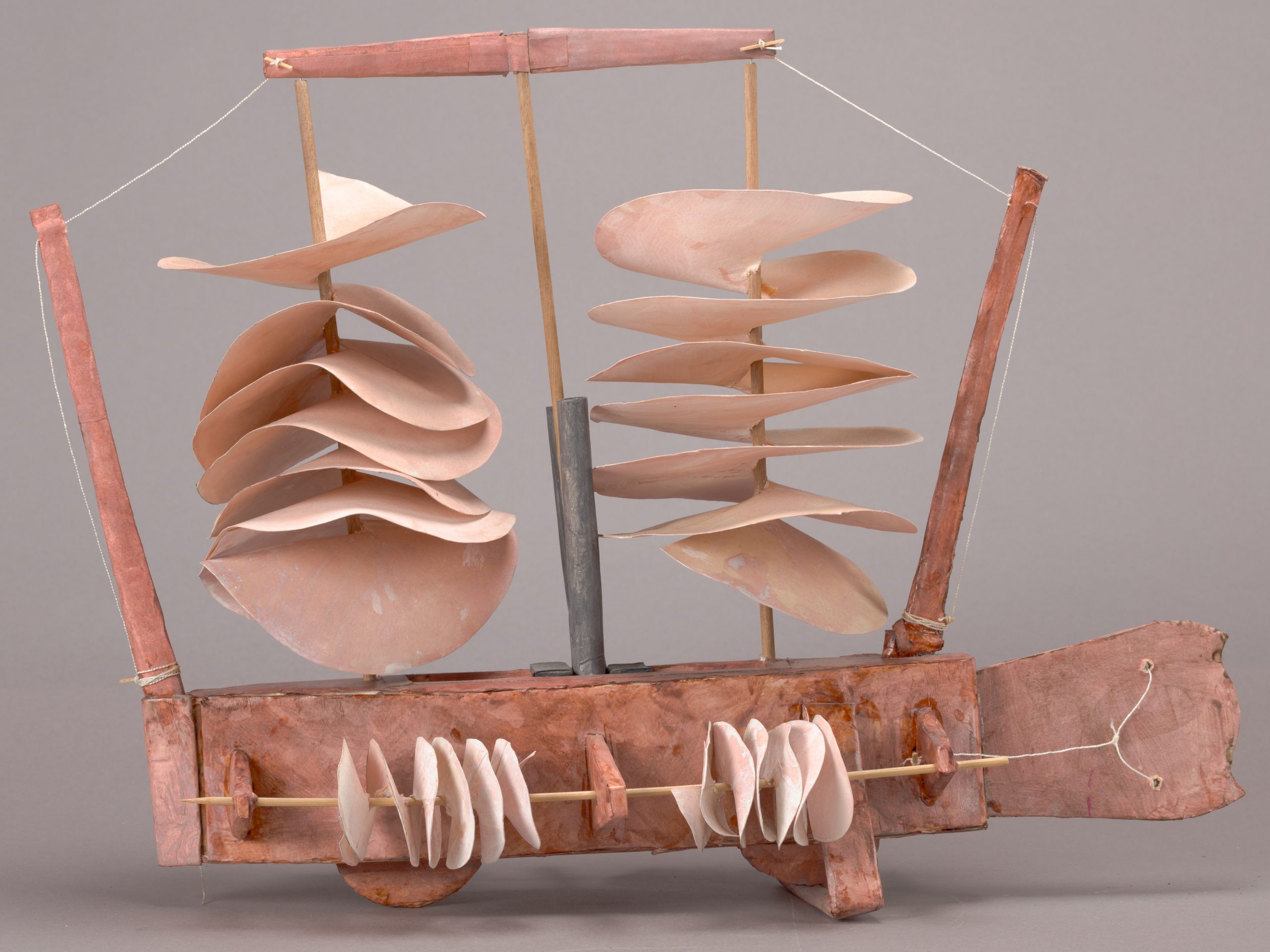
In the 1880s, Thomas Alva Edison experimented with small helicopter models in the United States. He tested several rotor configurations driven by a gun cotton engine, an early form of internal combustion engine. However, a series of explosions that blew up part of his laboratory deterred him. Later, Edison used an electric motor for power, and he was one of the first to realize from his experiments that a large-diameter rotor with low blade area was needed to give good hovering efficiency. Edison’s scientific approach to the problems of vertical flight proved that both high aerodynamic efficiency of the rotor and high power from an engine were required for successful vertical flight.
At the end of the nineteenth century, inventors had not solved the inherent aerodynamic and mechanical complexities of building a vertical flight aircraft. The hundreds of failed helicopter inventions had either inadequate power or control or experienced excessive vibration. Some of the better-designed early helicopters managed to hop briefly into the air, but they did not attain sustained flight with control. Steam engines were just too heavy for a full-scale helicopter. Not until the internal combustion engine was invented and became available could inventors develop full-sized models.
Part of why all of these helicopters failed, the U.S. Centennial of Flight Commission said, was the fact that getting a vehicle to fly vertically requires a beautiful balancing act of engineering and physics. Some helicopter fans joke that helicopters don’t so much fly through the air as they beat the air into submission. But that’s really simplifying it. Aerodynamics still matter greatly, as does having a powerful enough engine and a light enough airframe. Oh, and just getting the helicopter into the air for a brief flight barely above the ground is one thing, and is something that some inventors of the 1800s did achieve. But actually controlling the helicopter was a whole different story.
The Practical Helicopter
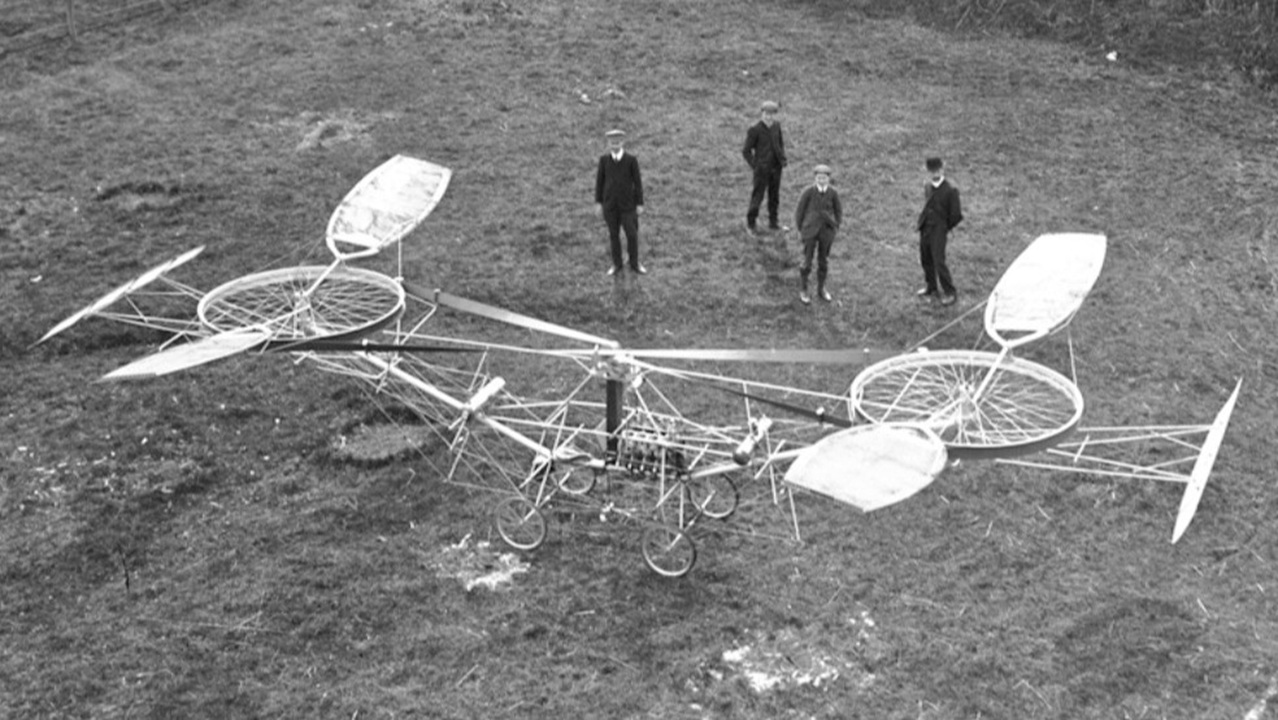
What is considered to be the first manned flight of a helicopter in 1907, when Jacques and Louis Breguet experimented with the Gyroplane No.1, a quadcopter-type of aircraft that was so unstable that it had to be held as it hovered at only two feet above the ground. Later that year, French inventor Paul Cornu took flight in a helicopter only one foot above the ground for 20 seconds, but unlike the previous flight, that helicopter wasn’t tethered.
Inventors and pioneering aviators would begin to set records soon after, as helicopters began to fly higher, for longer, and more frequently. But even these helicopters never really attained a super high altitude or flew particularly far. For example, in 1930, the D’AT3 coaxial helicopter built by Italian engineer Corradino D’Ascanio held records for flying 59 feet high, staying in the sky for 8 minutes and 45 seconds, and covering 3,540 feet of ground.

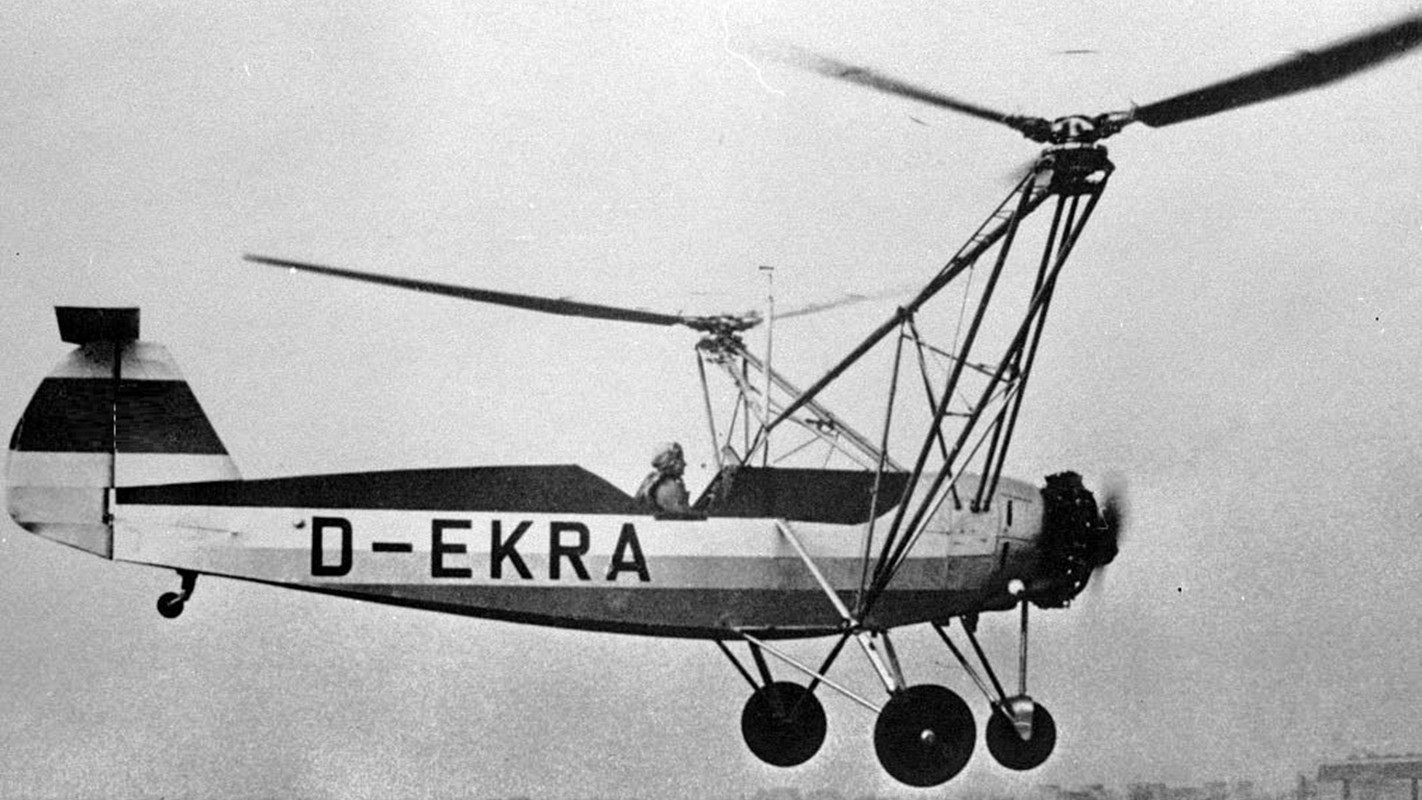
The designation of the first truly “successful” helicopter is often credited to the Focke-Wulf Fw 61. This helicopter, which made its first flight in 1936, sported a radial engine that powered two counter-rotating rotors. Control was handled through cyclic pitch and asymmetric rotor lift. Some historians call this aircraft the true first practical helicopter. Some folks seem to draw the line on region as well.
But it would be one Igor Sikorsky who would take the credit for the first so-called “practical” helicopter in the United States, and his design would more or less become the standard for helicopters for nearly a century later. Here’s what Sikorsky Aircraft says:
Igor had tried 30 years earlier, in spring 1909, to build a helicopter at his family home in Kiev, Ukraine. His apparatus consisted of a wood and wire-braced frame built around a 25-horsepower engine connected to a transmission of wooden pulleys and belts that drove coaxial shafts topped with two twin-bladed rotors. He tried again in the spring of 1910 with a second design consisting of two new three-bladed rotors, but the craft could barely lift itself off the ground without a pilot. Realizing that technology would have to catch up with the idea of vertical lift flight, the young engineer abandoned his dream for a more practical career in fixed wing aviation.
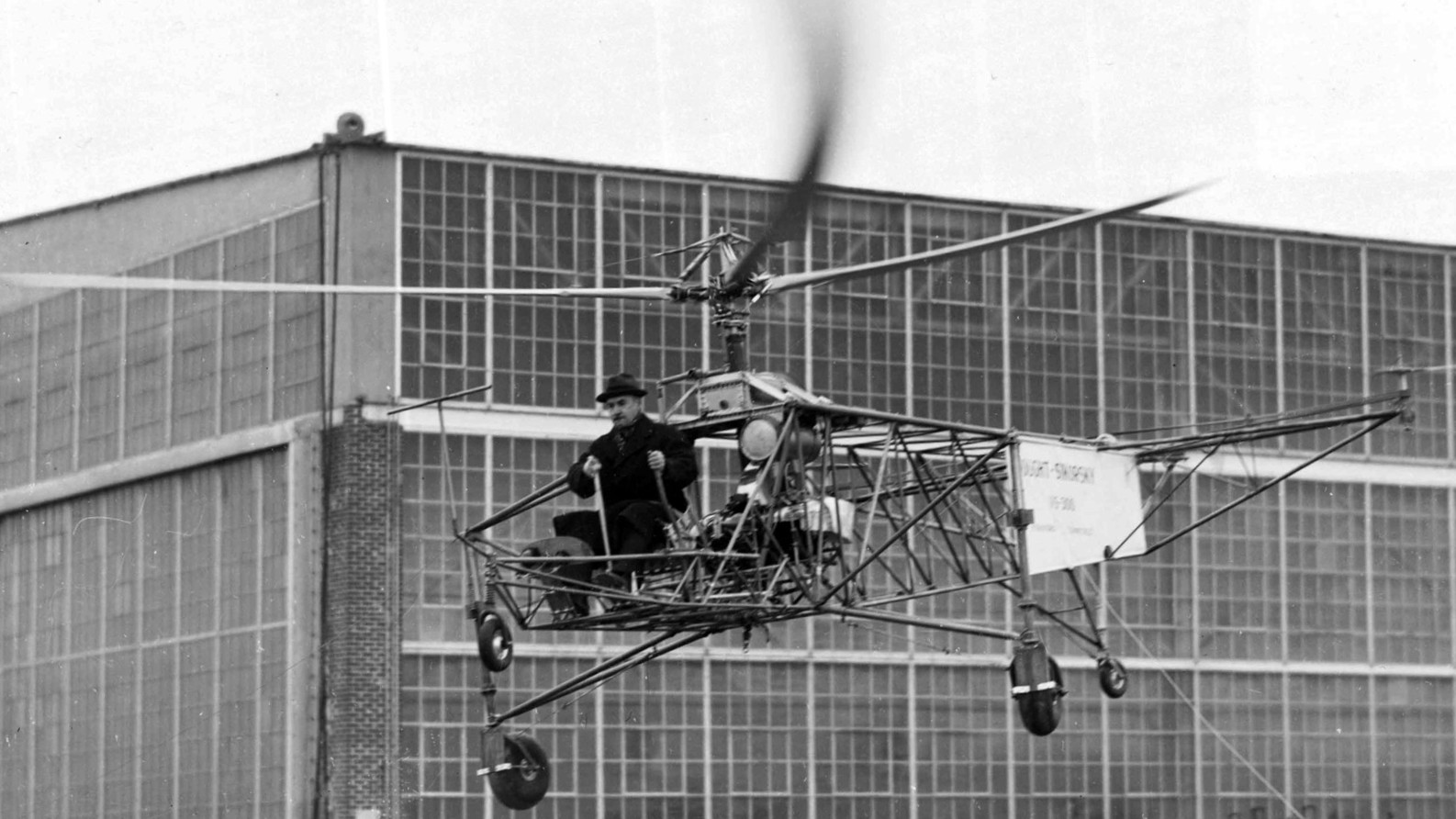
“The helicopter was always my father’s first love,” said Igor’s son and company ambassador Sergei Sikorsky, who worked as an apprentice mechanic on “that sweet little ship,” the VS-300 aircraft. “By the late 1930s, my father wanted to prove that after two aviation careers — in Russia before and during World War 1, and in the United States building transoceanic flying boats before the Second World War — that he could design and build a helicopter without knowing how it should be done, and then to try to fly one never having flown one before. That was a challenge many said couldn’t be done.”
In 1938, Igor made a compelling argument to United Aircraft, now United Technologies Corp. The board of directors gave Igor and his team $30,000 to test his single rotor helicopter theory. “Igor settled on a single rotor configuration for its design simplicity, and to enable the optimum placement of major components that would allow precise control of hovering take-offs and landings, and quick conversion to horizontal flight,” said Mark Miller, Sikorsky Vice President of Research & Engineering. “Igor was not the first to conceive a vertical lift rotorcraft, nor did he develop any complex new technologies to ensure success. It was the genius of his design, integrating mature technologies in an innovative way, which enabled efficient vertical lift flight. Three generations later, we at Sikorsky are following a similar design approach with our next-generation X2® co-axial helicopter program.”
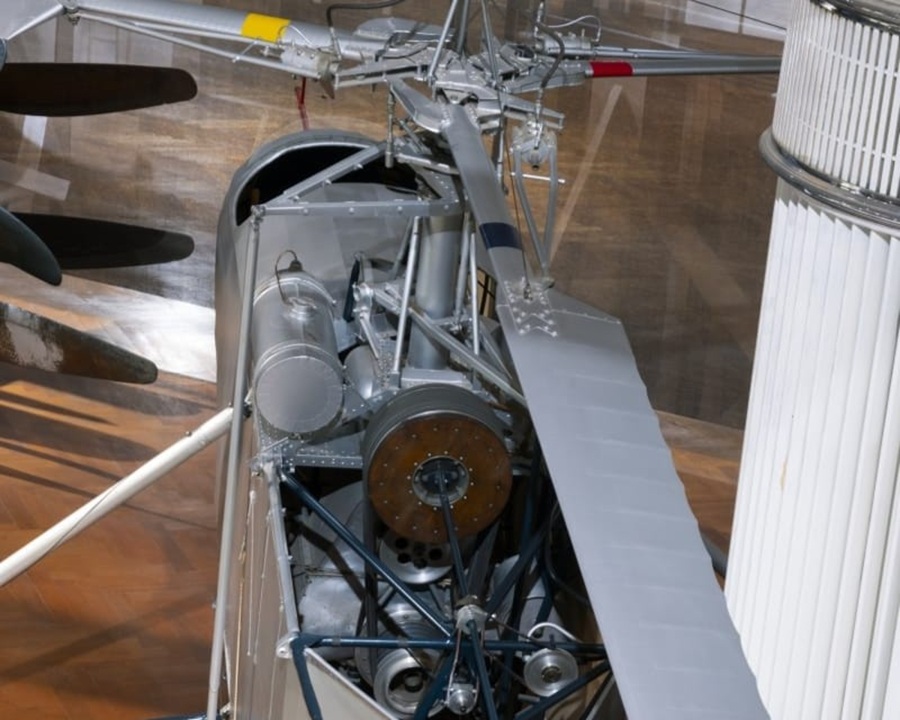
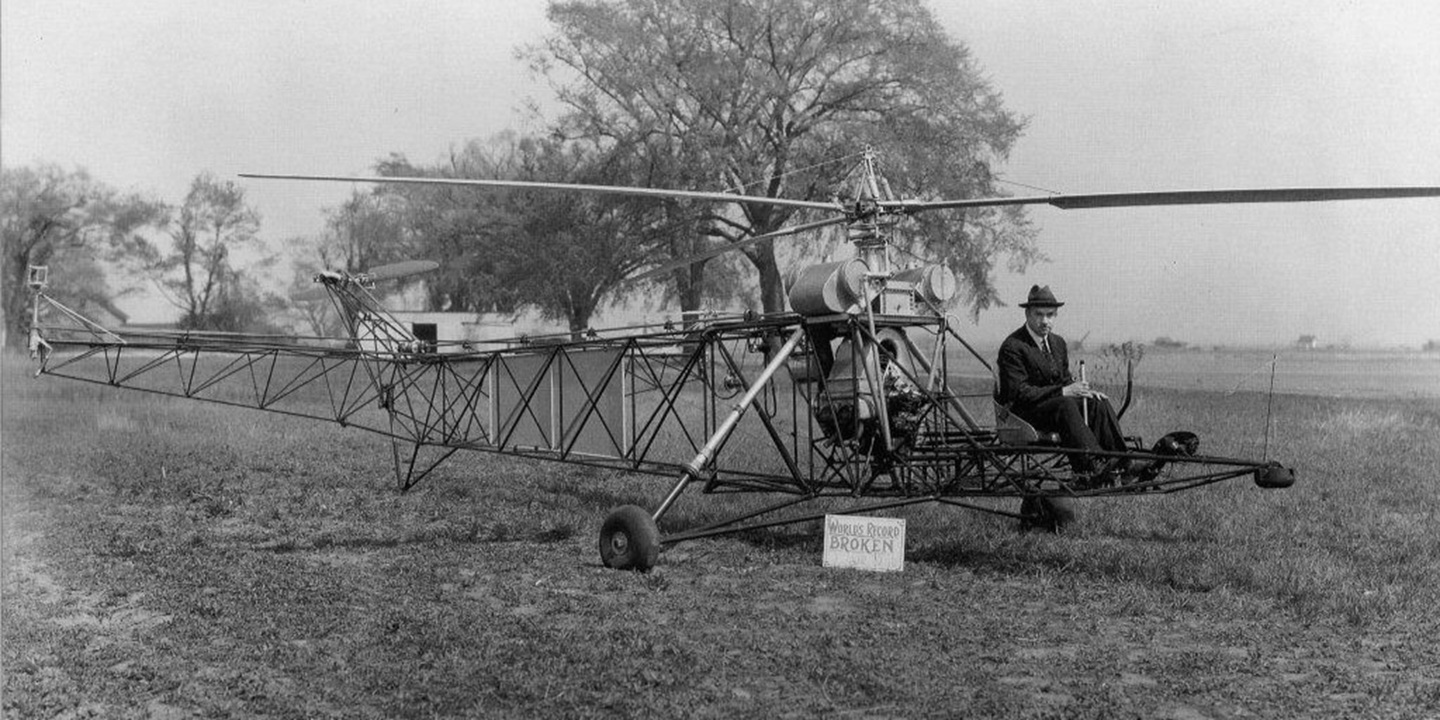
The Sikorsky VS-300 was built out of a welded steel tube frame. Attached to it was an undercarriage with wheels and a 75 HP Aircooled Motors Corporation engine, which used a transmission, belts, and gears to drive the main rotor as well as bevel gears to drive the wooden tail rotor. When flying, the main rotor spun at 255 RPM.
To control the VS-300, Sikorsky changed the pitch of the rotors by moving the control column. Side-to-side movements of the stick rolled the helicopter left and right, while moving the stick fore and aft produced pitch changes. Rudder action was achieved by foot pedals that controlled the pitch of the rear rotor.
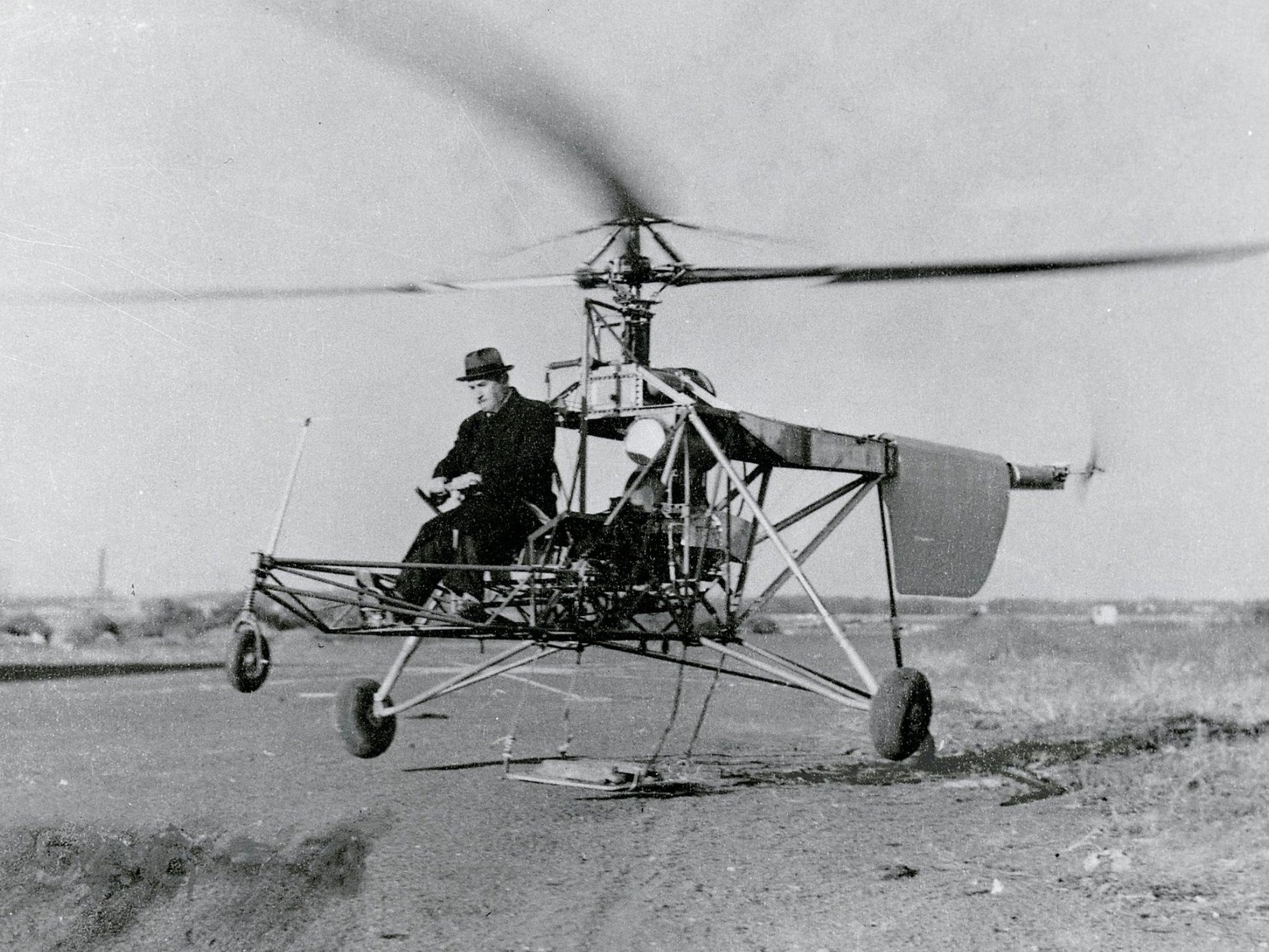
At the time, Sikorsky was known not for his work in helicopters, but in fixed-wing aircraft. Sikorsky was famously the builder of Pan American World Airways’ iconic clipper flying boats. But Sikorsky never abandoned the helicopter dream, and worked on improving the design at night. Eventually, as technology improved, Sikorsky’s helicopter became closer to reality. Sikorsky continues:
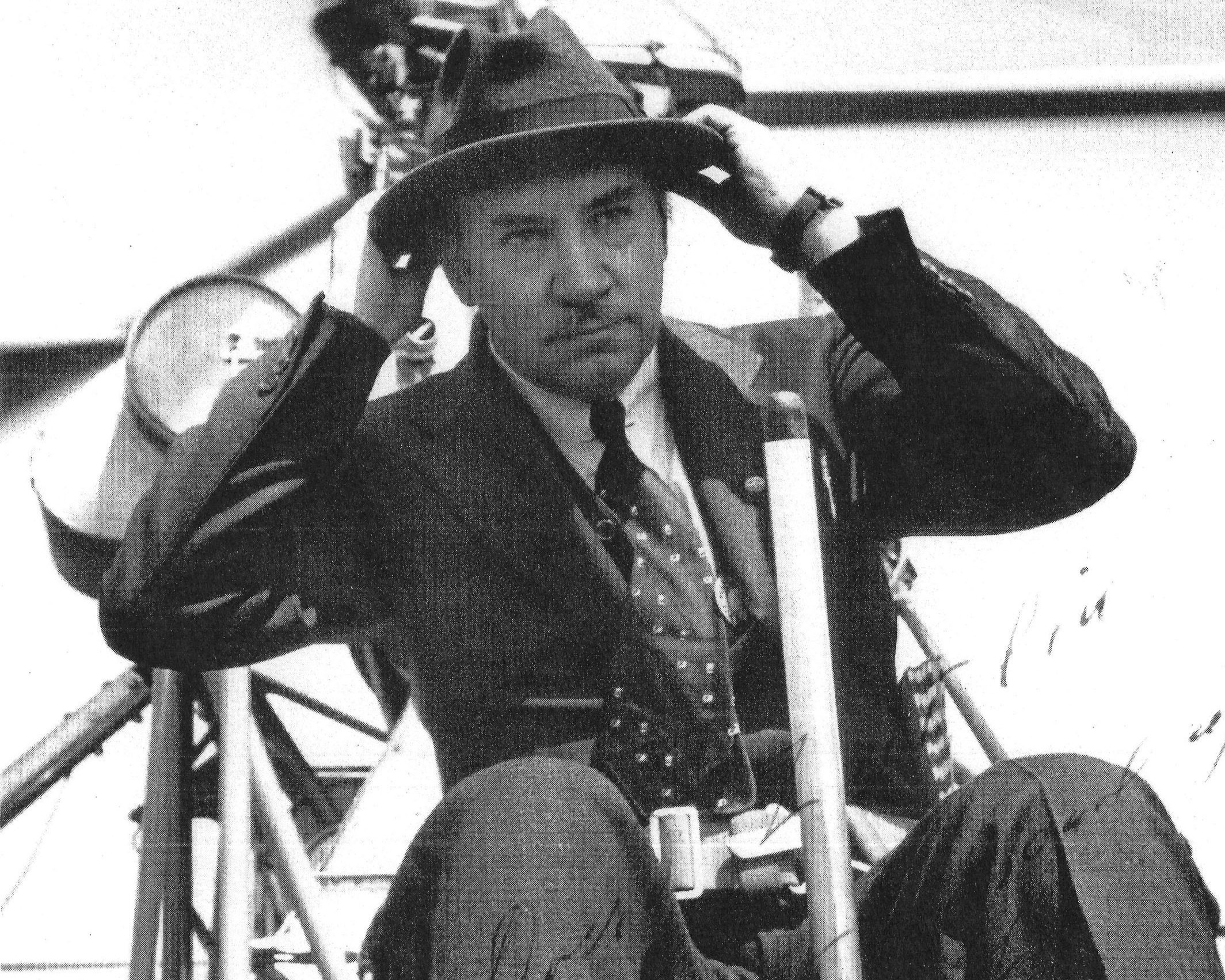
On September 14, 1939, outside the Stratford, Connecticut, factory, Igor sat in the open VS-300 cockpit wearing his trademark overcoat and fedora, the engine vibrating the aircraft. He pulled up on the collective control lever at his left side. The VS-300 cleared the ground for a few seconds to the height of its short tether ropes. Many more such ‘hops’ over the ensuing days and weeks proved the aircraft could be controlled. Sikorsky and other pilots then flew different variations of the VS-300 aircraft for a total of 102 hours and 35 minutes into 1943.
Reflecting on his achievement years later, Igor Sikorsky said, “If a man is in need of rescue, an airplane can come and throw flowers on him. But a direct lift aircraft could come in and save his life.” The U.S. Army placed America’s first helicopter production contract with Sikorsky in 1942 for 131 R-4 helicopters (Sikorsky designation S-47) of different variants. A YR-4A aircraft flew the first ever helicopter rescue mission under combat conditions in Burma in April, 1944.
Son Follows Father
While Igor Sikorsky tends to get most of the fame, his eldest son, Sergei, was there all along, helping Sikorsky advance helicopters. Then, Sikorsky’s son kept the empire alive after his passing in 1972. Sergei was born in New York City in 1925, and Lockheed Martin notes that Sergei’s first flight happened when he was only eight years old. Back then, he sat in his father’s lap in the co-pilot seat of a Sikorsky S-38 amphibian.
The young Sergei, who got to see aviation icons like Captain Eddie Rickenbacker, the Lindbergh family, Roscoe Turner, and U.S. Air Force Gen. “Jimmy” Doolittle, decided to devote his own life to aviation. According to Sergei, his father built a tiny passenger seat out of a wooden board in the VS-300 and took the young Sergei up into the sky.
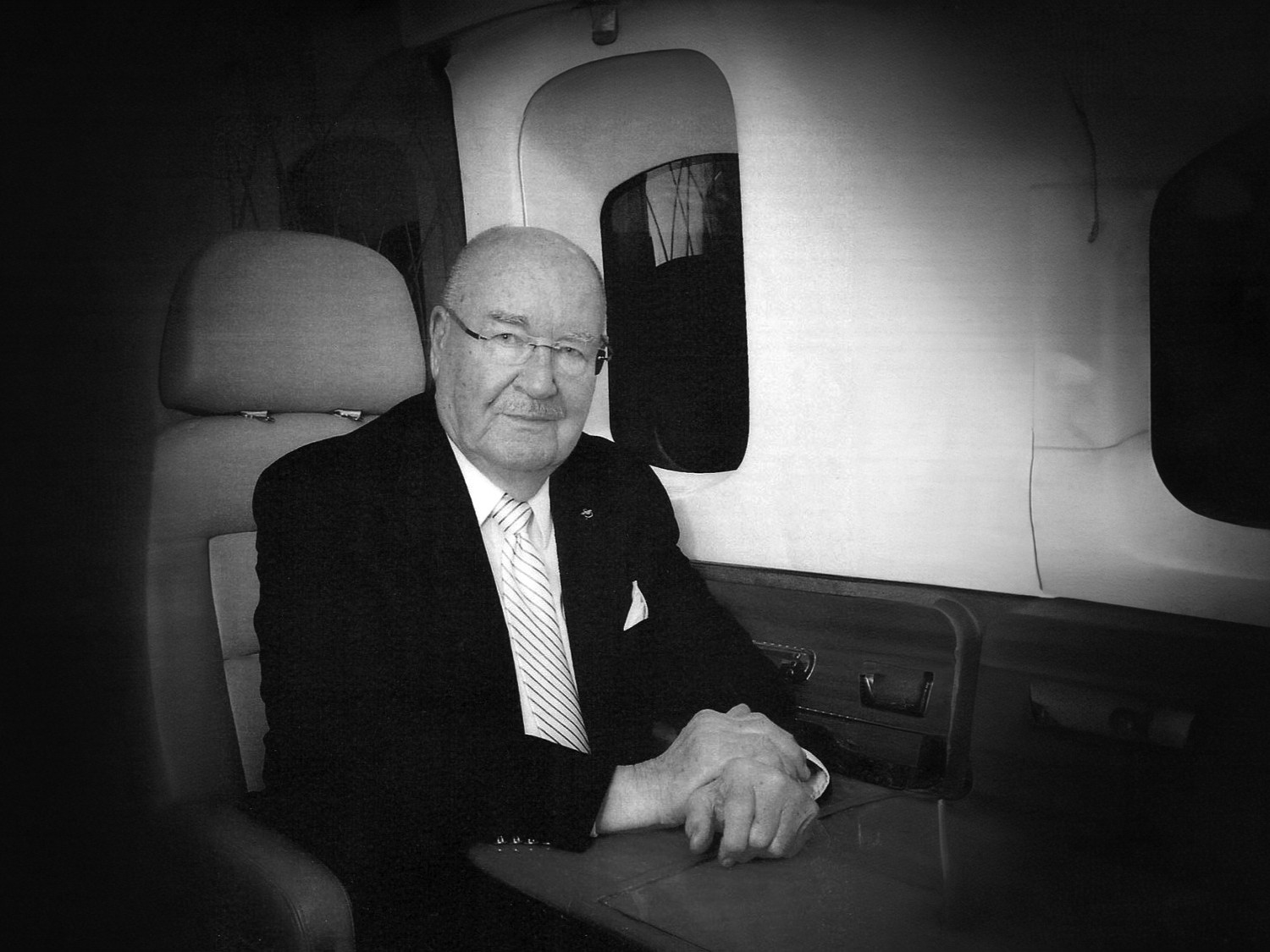
In 1942, at the age of 17, Sergei started his aviation career as an apprentice at the Sikorsky factory, working as a junior mechanic on his dad’s helicopters. Then, soon after, during World War II, he Sergei joined the U.S. Coast Guard, where he joined the Helicopter Development Unit and helped develop rescue boats.
In Sergei’s own words, one of the biggest moments of his life was taking part in the development of Coast Guard Lieutenant Commander Frank A. Erickson’s hydraulically powered rescue hoist. Erickson’s hoist was designed to rescue people stranded from sinking ships, swamped cars, forest fires, flooded homes, and any other sort of emergency where a helicopter might swoop in to save someone’s life. Sergei says that his part of the project included testing and demonstration.
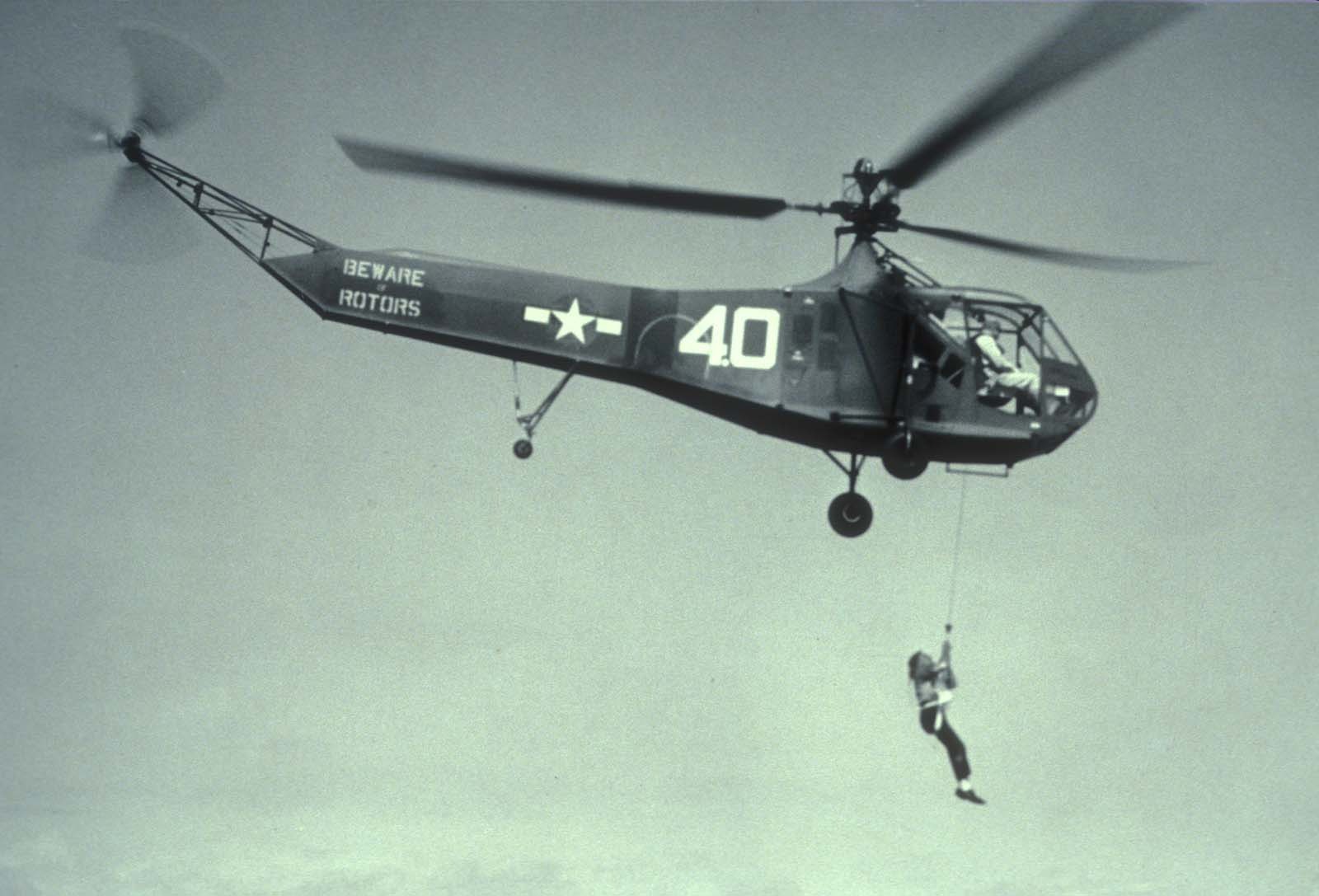
For Sergei, his father’s helicopters and the hoist provided the missing link between helicopters and the ground. Suddenly, helicopters could be used for far more than just transportation. In the decades since, the rescue hoist has saved thousands of people from all kinds of emergencies.
But Sergei didn’t let this moment define his career, and he flew to new heights, from Lockheed Martin:
The son of aviation pioneer Igor Sikorsky, the company’s founder and inventor of the first practical helicopter, Sergei began his career with the company in 1951 in international marketing and sales.
He returned to the United States in 1976 at the dawn of the Black Hawk era to become division vice president in Stratford, overseeing the company’s co-production programs. Sergei would later take on marketing and special project roles until retiring in 1992. Even in retirement, Sergei remained active with the company, serving as a goodwill ambassador at major trade shows and other events where he would sign autographs, speak about his family’s legacy and highlight an immeasurable passion for the helicopter and its promise to save lives around the world. The aircraft hangar at Sikorsky’s Stratford facility was dedicated as the Sergei I. Sikorsky Flight Center in 2019. Sergei called it his life’s “single greatest honor.”
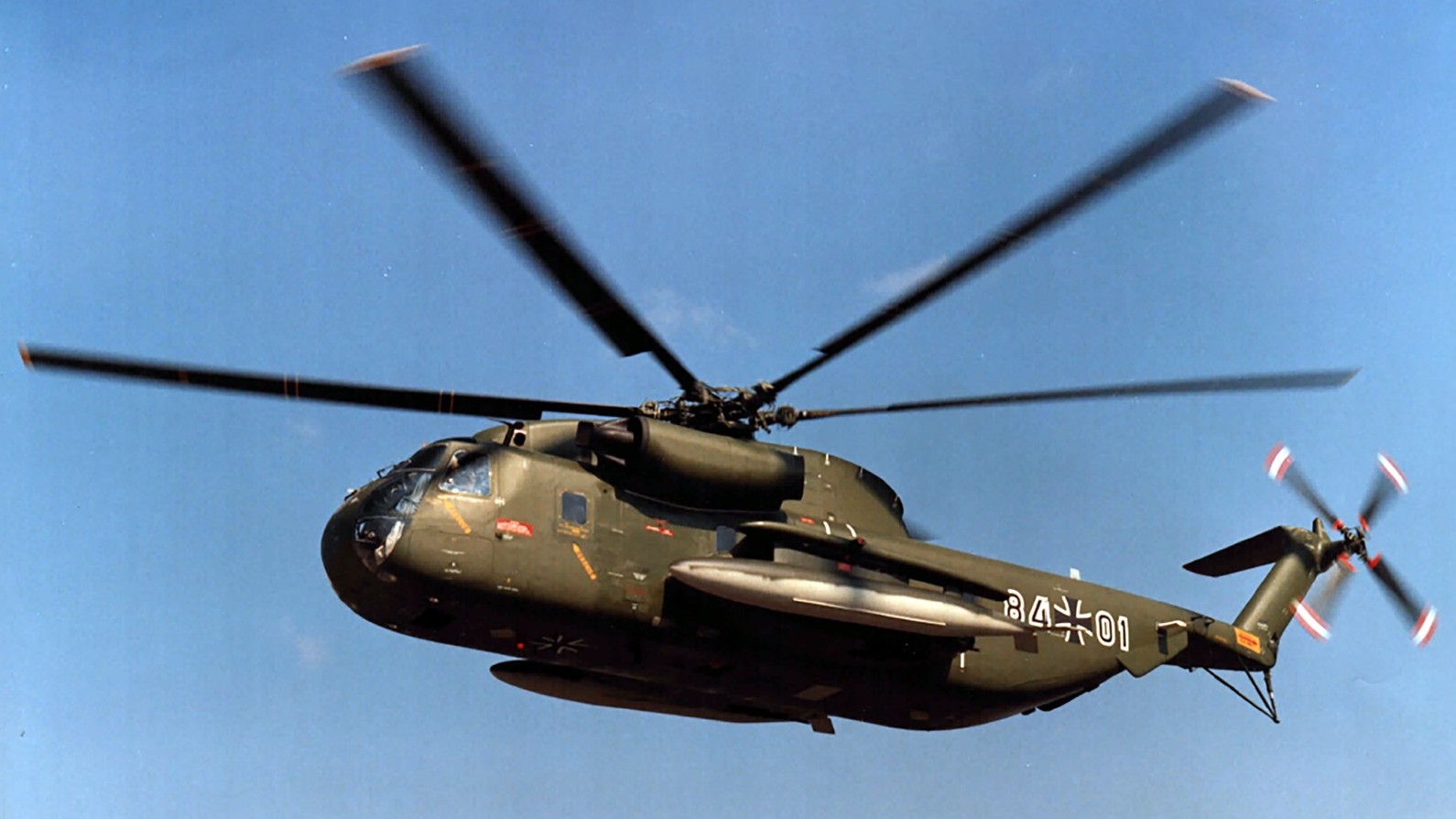
Sergei said that one of the highlights of his career was selling the Sikorsky CH-53 heavy lift helicopter to Germany’s armed forces, a move that, apparently, might have saved Sikorsky from financial ruin during the 1970s.
In the decades after the VS-300, Sikorsky has produced fabled helicopters including the Black Hawk, S-61, CH-53, S-76, and S-92. Then there’s my favorite Sikorsky, the S-64 Skycrane.
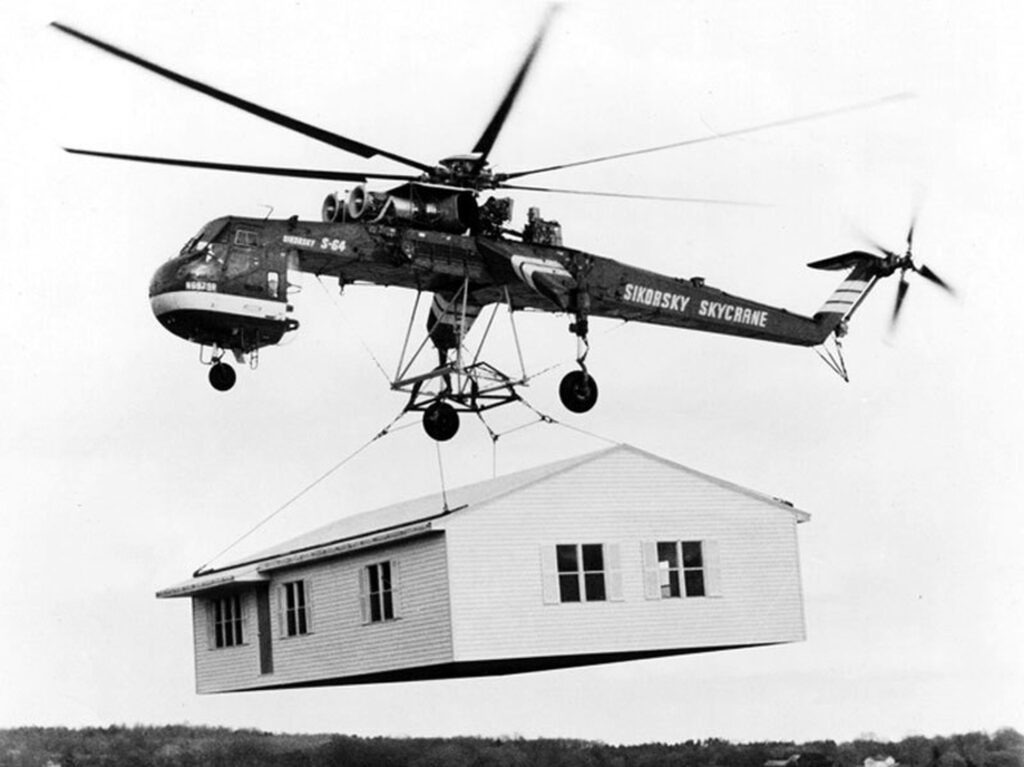
From the Pima Air & Space Museum:
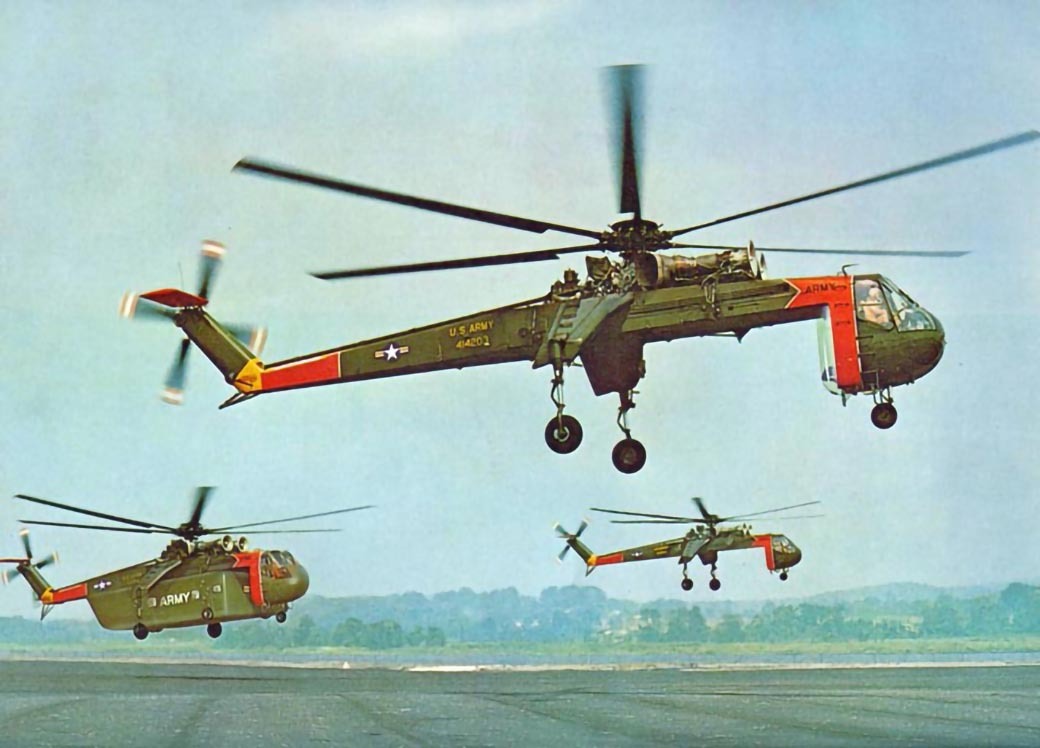
In 1959, Sikorsky Aircraft began testing of a proof-of-concept heavy lift helicopter called the S-60. Initial tests proved successful and the U.S. Navy and Army showed interest in the concept. Sikorsky immediately began development of a more powerful version of the helicopter powered by two turbo-shaft engines. Designated the S-64 by Sikorsky and the H-54A by the U.S. Army, it made its first flight in May 1962. The U.S. Army named the helicopter Tarhe, but most people call them Skycranes. The CH-54 served through the last years of the Vietnam War and finally left military service in the early 1990s. Many surplus Skycranes have found new uses in civilian hands, being widely used for fighting forest fires and as heavy lift aircraft for erecting electrical towers, and in the timber industry.
The Sikorsky Archives notes that the Skycrane was unique in that, since speed was not really a concern, neither was reducing drag. So, Sikorsky saved money on the design by not covering up systems in aerodynamic fairings. Also, despite the small cockpit, there was room in there for three pilots and two mechanics. At its most hardcore as the S-64F, a Skycrane had a payload of a whopping 25,000 pounds!
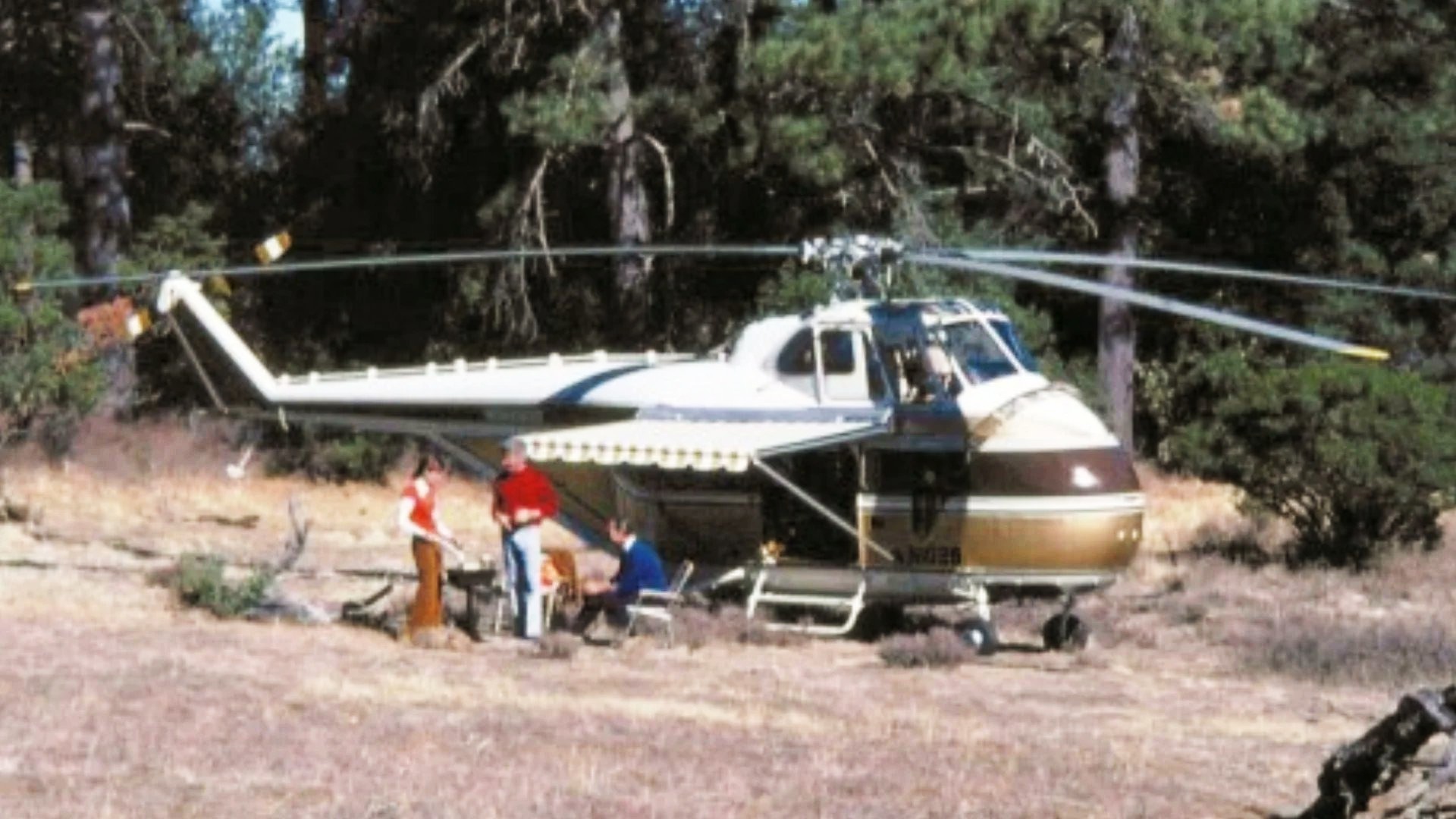
As I’ve written about before, Sikorsky helicopters were even very briefly involved in the RV industry once, when Orlando Helicopter Airways had Sikorsky S-55 helicopters converted into flying motorhomes.
Aviation Legends
The passing of Sergei marks the end of an era. Sergei’s father proved the capability and versatility of the helicopter, and Sergei helped sell them and spread the helicopter around the world. I cannot even begin to guess how helicopter history could have played out had Igor never built the VS-300.
What I do know is that history will likely remember these the Sikorskys fondly. For some people, helicopters are the ultimate way to fly, and Sikorsky is a huge reason for that.
The next time you see a flying crane fighting a fire or a Coast Guard chopper pulling someone out of a flood, remember that flying piece of scaffolding from higher in this piece. It may not have been the first helicopter, not by a long shot, but for many, it was when the helicopter finally started making sense.
Top graphic images: Sikorsky
The post The Son Of The Practical Helicopter’s Inventor Just Passed, Here’s How Sikorsky Changed Aviation Forever appeared first on The Autopian.