Of all the automakers that have removed physical buttons from their interiors, Mercedes-Benz is among the worst offenders. Most of the German automaker’s cabins are riddled with touch-capacitive buttons and sliders that are tough to figure out and, at best, bothersome to use regularly.
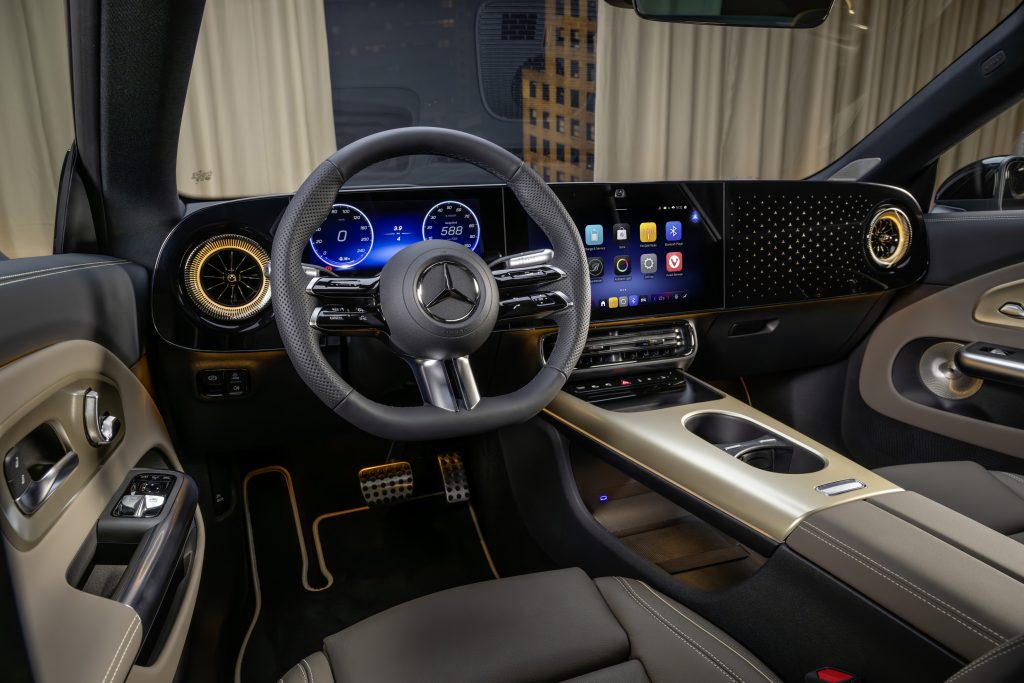
Mercedes is finally starting to figure out the error of its ways, though. The new GLC EV, introduced at IAA earlier this month, sports normal, physical buttons on the steering wheel for things like volume and cruise control. And there’s even a roller knob for the volume on the center console.
The company’s software boss, Magnus Östberg, admitted to Autocar that yes, people actually care about having usable controls in their cars. Shocker!
Speaking to Autocar at the Munich motor show, he explained: “You can see a difference if you move from the CLA [saloon], which has a touchscreen and fewer hard buttons, to the [new] GLC, where we put back the rollers and buttons, because we see in the data that the rollers and these physical buttons are very important for certain age groups and certain populations.
“So having that balance between physical buttons and the touch is extremely important for us. We’re completely data-driven, seeing that what is actually something that is used high-frequency, the data shows us the physical buttons are better, and that’s why we put them back in.”
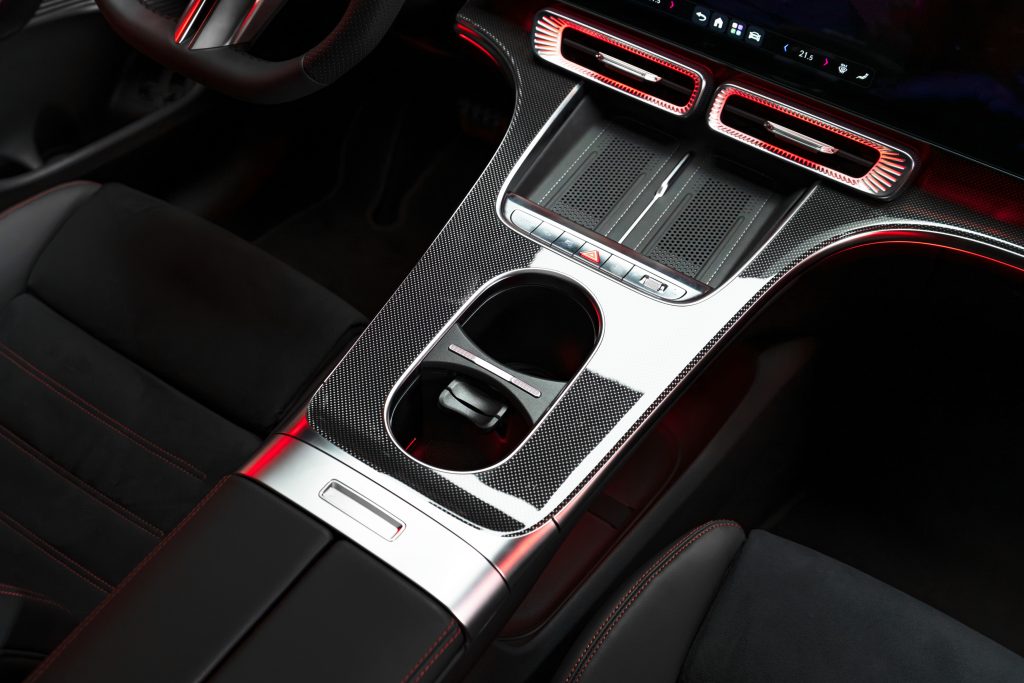
But where exactly does that data come from? Mercedes cited customer feedback for buttons returning in the GLC, but Östberg mentions another, far more sinister source: The cars themselves. From Autocar:
That data has come from software-defined vehicles: the CLA is Mercedes’ first SDV and the incoming GLC the second.
As well as being easier to tweak (as software can be updated over the air rather than needing to drag buyers into garages), SDVs also give car makers full access to drivers’ data and usage. “This is so important,” said Östberg, as it means decisions, such as bringing back some physical controls, can be data-driven.
Due to that data, he hinted that other wheel designs could be used depending on the market. For example, while Europeans like buttons, Asian drivers prefer more touchscreen and voice controls.
Many new cars stay connected to the mothership, sending your driving data to the manufacturer, which, in turn, sells that data to insurance companies to raise your rates. It’s not a new phenomenon, but that doesn’t make it any less unsettling.
Source: Mercedes-Benz
Mercedes obviously uses that data for itself, too, to inform how it’ll develop its future products. That makes sense, but it also means not all of the company’s lineup will return to physical controls.
Östberg said Mercedes is also looking at adding more physical controls elsewhere in the cabin for future models – but this will most likely be kept to SUVs, as “in larger cars we have more freedom to package” and buyers of those cars “care more about buttons”.
The result is, as Östberg mentioned earlier, a new CLA with fewer real buttons than its bigger GLC sibling. While that’s disappointing for people who prefer real buttons (me and everyone I’ve ever talked to about this issue), I understand why Mercedes did it. The company’s biggest market isn’t America or Europe. It’s China.

Source: Mercedes-Benz
Buyers in Asia care more about having the latest tech than having physical controls, so Mercedes is simply prioritizing that crowd. That’s evident not only when it comes to buttons, but the sheer size of the touchscreens in its cars—the GLC is available with a 39.1-inch “Hyperscreen,” one of the largest in the industry right now. Naturally, the company is also leaning into artificial intelligence, specifically for stuff like voice controls.
This is an important feature for buyers in China – the world’s largest car market, in which Mercedes is trying to build back a presence. But Östberg said that European buyers will also use it, and the data suggests that voice command usage in the CLA has “tripled” among Mercedes drivers. “It’s phenomenal,” he said.
Again, this is tech that no one in my personal circle is passionate about. But Mercedes says the data is there, and it trusts that data enough to invest millions. All I really want is a volume knob. And it seems like I’d have to spend a bunch on a big SUV to get one, at least at Mercedes.
Support our mission of championing car culture by becoming an Official Autopian Member.
Top photo: Mercedes-Benz
The post Mercedes Says It’ll Put More Buttons In Its SUVs. What About Its Cars? appeared first on The Autopian.

