By the end of the ’90s, Cadillac was in a dire situation. If it kept on its path, there was absolutely no room to grow. The average buyer age in 1998, as reported by Forbes, was 64, and sales were in enough of a low spot that Cadillac was caught faking figures for 1998, with Automotive News reporting that Lincoln had actually taken the domestic luxury brand crown that year. The brand had to change, and while the Escalade was a lifeline, the most obvious path forward was to go where the product was hot by building a proper compact sports sedan good enough to rival the Germans.
Entry level cars had historically been a notorious sore spot for GM’s luxury division. The Cimarron was, by-and-large, a mistake, a hastily reworked economy car aiming far above its league. It became the butt of jokes, and once it went off sale at the end of 1988, it would be another eight years before Cadillac gave the compact executive car thing another shot.
This time, it was with a rear-wheel-drive Opel that drove reasonably well, but a few factors conspired against the Catera. For one, Cadillac was still in its frumpy phase, and the early egg-crate grille clashes with the jellybean silhouette. This was fixed with a facelift, but the bigger issues were competition and marketing. Shortly after the Catera launched, BMW dropped the era-defining E46 3 Series, a car that vacuumed all the air out of the sports sedan room. At the same time, who approved “The Caddy That Zigs” as an ad campaign?
It was time to incinerate the old script, and while the launch of the first Escalade bought Cadillac a lifeline, the real hard work would start with the Catera replacement. Welcome to the Cadillac CTS.
The Big Bet
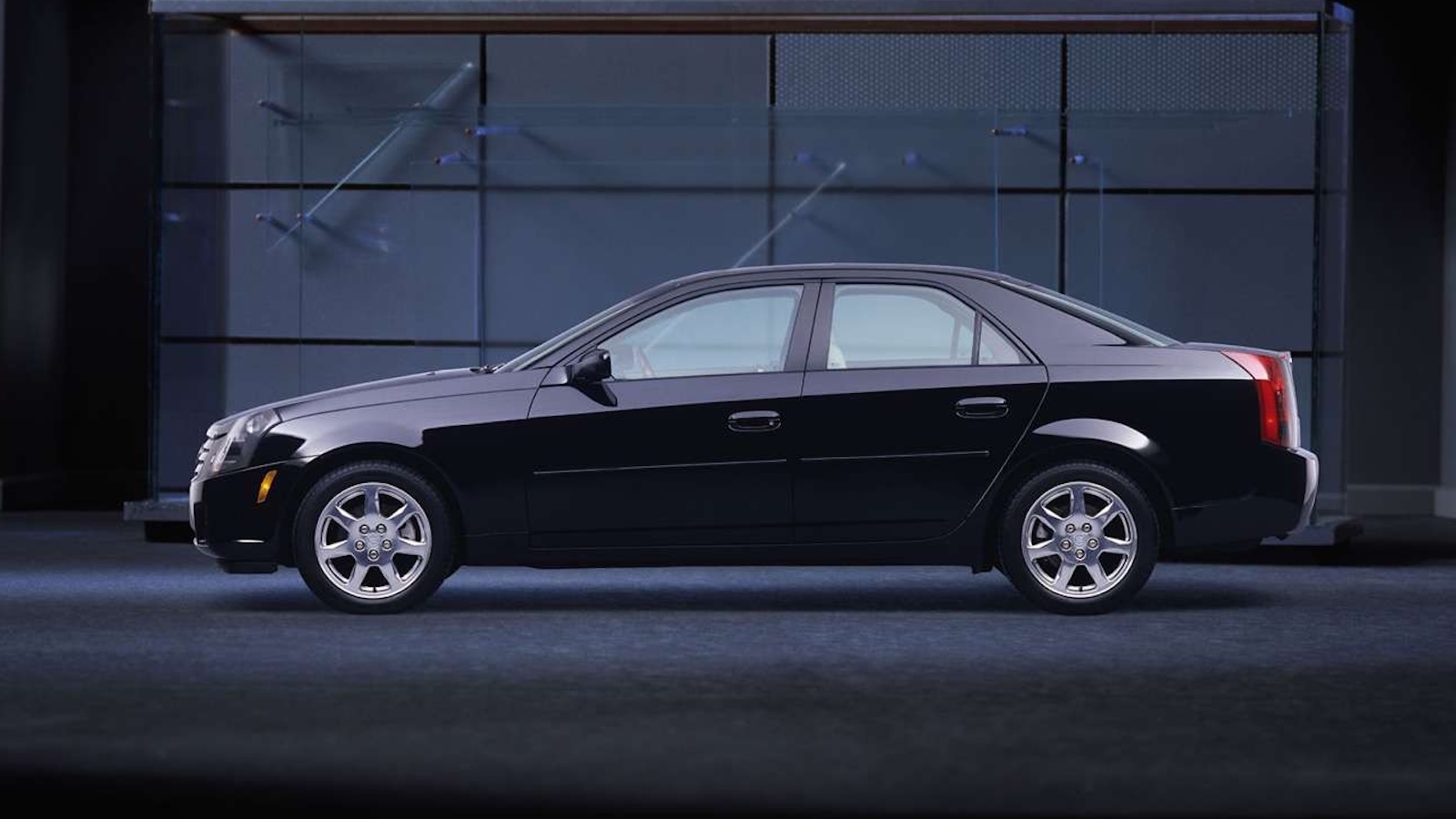
The plan for the CTS came together astonishingly quickly. As Autoweek reported, the first full-sized sketches of what would be the Catera-replacement were shown to brass in February of 1998. The first full-sized foam model? That was ready by May. Not only was it GM’s first model of the sort with functional lighting, it met what seemed like an impossible deadline.
“When we pulled off the cover, we got a round of applause,” [Chief designer Wayne] Cherry says. With a laugh, he adds, “That may have been for how fast we did it.”
The first full-scale foam model of the CTS showcased an entirely new design language, radically angular and unlike anything Cadillac had produced before. While the rest of the industry was evolving the jellybean language of the ’90s, Cadillac was doing something it called Art & Science. It was a huge risk, one that would need a $4 billion investment in a new rear-wheel-drive architecture, new models, and a new plant, but Cadillac was getting absolutely trampled at the time. It really was a case of evolve or die.

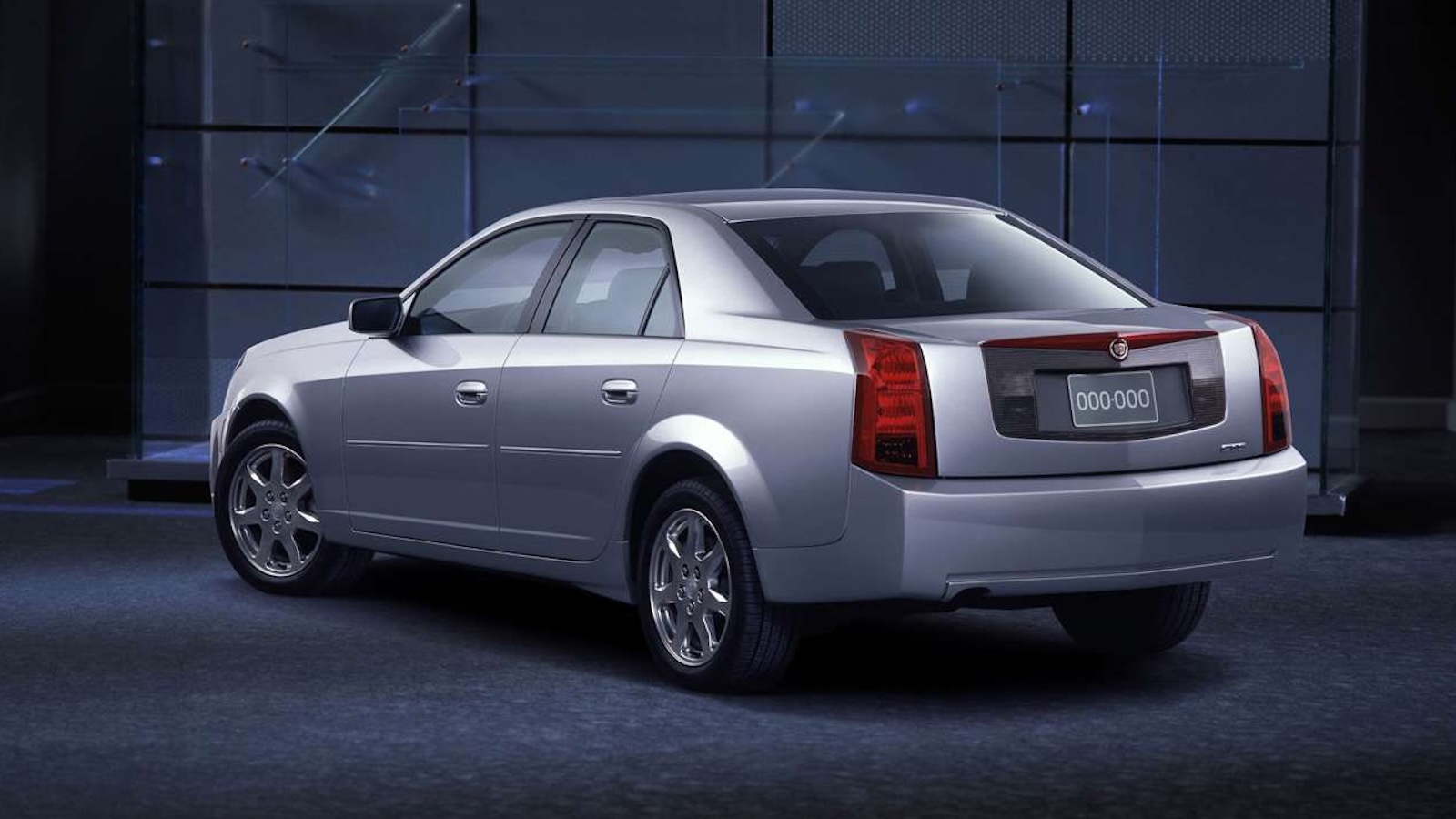
Roughly three years later, the production CTS was ready to be shown to the world, and it was a hard break from tradition. Not only was it the first stick-shift Cadillac since the Cimarron, it had a chassis tuned on the Nürburgring, looked like nothing else on the market, and was enough of a shock to almost instantly fade the Catera out of everyone’s minds. Sure, the interior still had some cheapness to it, and the old-school GM tilt column hampered the driving position somewhat, but when Car And Driver compared it against the rest of the segment, the magazine came away largely impressed.
Make no mistake, this is the best Cadillac ever. Get past the styling that, to some, has been carved from a bar of soap, and underneath lies a first-rate effort to bring Cadillac into the 21st century. The target is BMW. It is still wide of that mark. A bull’s-eye, perhaps, on a 10-year-old 7-series sedan, but not against a current 3- or 5-series from Munich.
But Cadillac is now truly in the hunt, and the CTS is only an opening shot.
This truly was a turning point, the moment Cadillac really stopped looking back and started looking at the future. Less chrome, more dark finishes. Less float, more precision. The brand had a new mission, one of developing world-class sports sedans that, in tandem with the Escalade, would try their hardest to shake off a Boca Raton image. Being featured in “Bad Boys 2” and “The Matrix: Reloaded” certainly didn’t hurt.
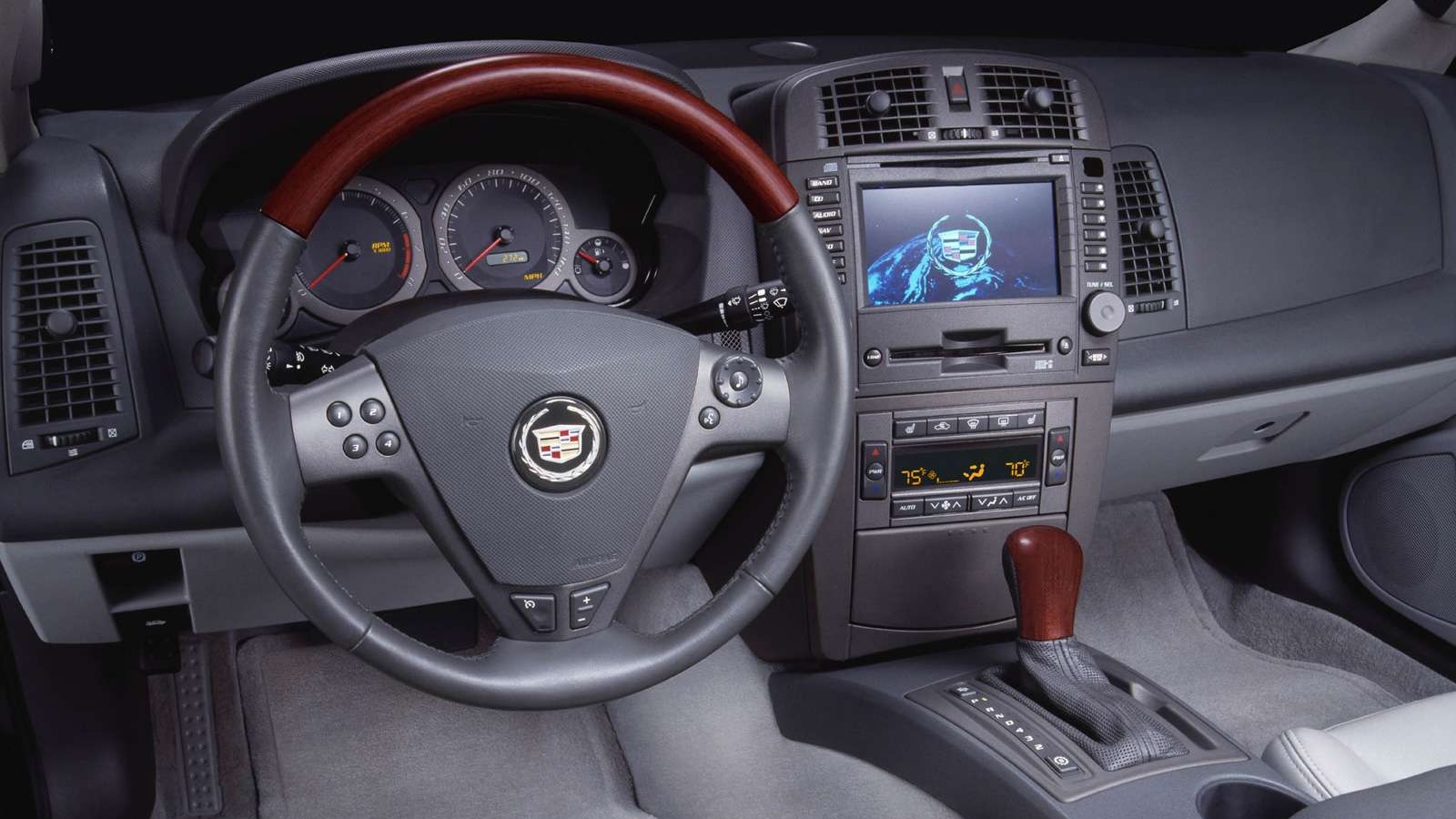
Over time, the CTS would see the sort of incremental improvements expected from a product GM tried hard with. A 260-horsepower 3.6-liter V6 appeared on the options sheet for 2004 and supplanted the original 220-horsepower 3.2-liter V6 for 2005, an Aisin six-speed manual replaced the five-speed Getrag for 2005, sales channels spread to Europe and Japan, and touches like more legible gauges and a cleaner steering wheel control layout helped usability. However, arguably the most memorable arc of the original CTS was when Cadillac took an even bigger swing.
The Corporate Hot Rod
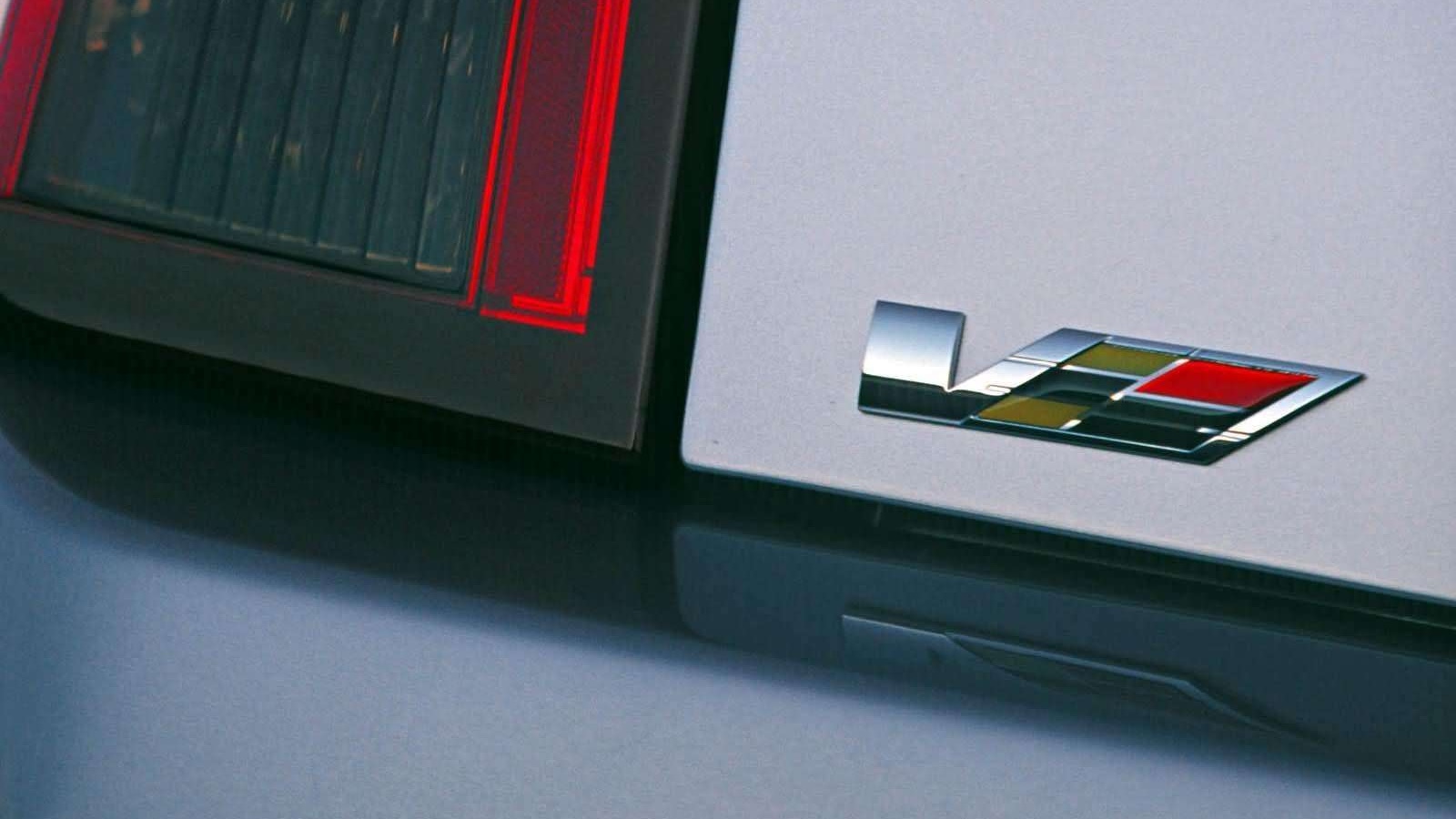
If you were going after BMW, Mercedes-Benz, and Audi back in the 2000s, you were going to need something fast. If you listened carefully in finance districts around the world, you’d hear M cars, AMGs, and the like being revved up in underground garages, the left-lane chariots of power brokers with wild streaks and city boys seeking a thrill. Cadillac had never really made a performance car of this sort before, but the CTS was the perfect place to give it a shot. The name of the sub-brand? Cadillac went with a pretty good letter: V.
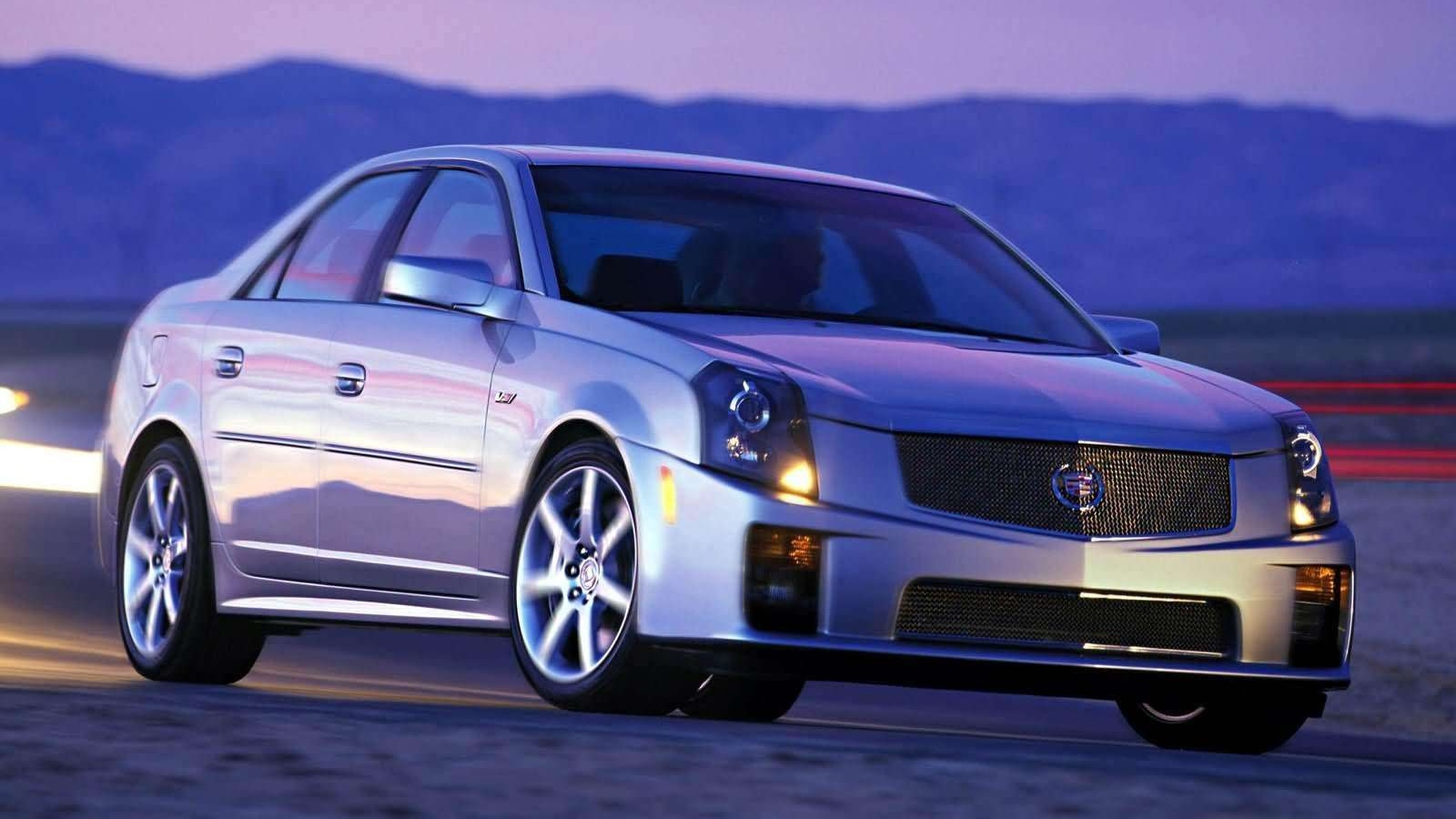
To create the original CTS-V, Cadillac raided the parts bin where it could, absconding from the warehouses with the 5.7-liter LS6 V8 from the C5 Chevrolet Corvette Z06 and Tremec’s T-56 six-speed manual transmission under its jumper. We’re talking 400 horsepower and 395 lb.-ft. of torque, 60 more horsepower than an Audi S4 and 38 more than a C 55 AMG. However, Cadillac didn’t stop there. Four-piston Brembo calipers clamping 14-inch discs hauled the CTS-V down from triple-digit speeds, 46 mm monotube dampers joined forces with 27 percent stiffer springs and a larger front anti-roll bar to maintain body control, and square 245-section Goodyears did what they could to manage grip. Cadillac changed so much that even the bolt patterns for the wheels were different, with the CTS-V being one of the few passenger cars to feature six-lug hubs.

The result was a sharp-looking midsize sports sedan that could sprint to 60 MPH in under five seconds, wouldn’t stop pulling until 163 MPH, and was properly capable on a circuit. Launched for the 2004 model year, it meant business, and this executive muscle car with BMW-troubling handling instantly had people raving. As Car And Driver wrote:
Watch out, children, fusty old GM is raising hell. The power is loud, violent, and addictive. The steering is sharp, the suspension is in control, and the brakes are a strain on tendons. You touch bliss in a drift out of an apex, the grille pointing where your right foot aims it. Holy Saint Herman of Alaska—the traction-control-disable button is right there on the steering wheel! You can boot GM’s lawyers out of the car with one thumb flick. No need to, though, since the computer allows lots of sideways horseplay before it intervenes. Straight-line acceleration is crimped by spasmodic axle hop, and the chintzy interior (pre-Lutz) should be shoveled. But GM’s being bad is really quite good.
Now, that’s not to say that everything was perfect with the first-generation CTS-V because there were some teething issues. That early Car And Driver test was hampered by an early oil temperature display software issue, but the biggest issue with the original CTS-V was what happened if you tried to launch it. Dumping the clutch was met with violent, areola-shaking wheel hop, to the point where some owners grew familiar with how much a replacement differential cost. A whole aftermarket sub-sector appeared to mitigate the likelihood of breaking rear end components, but so long as you abstained from hard launches, the CTS-V was a sweet machine.
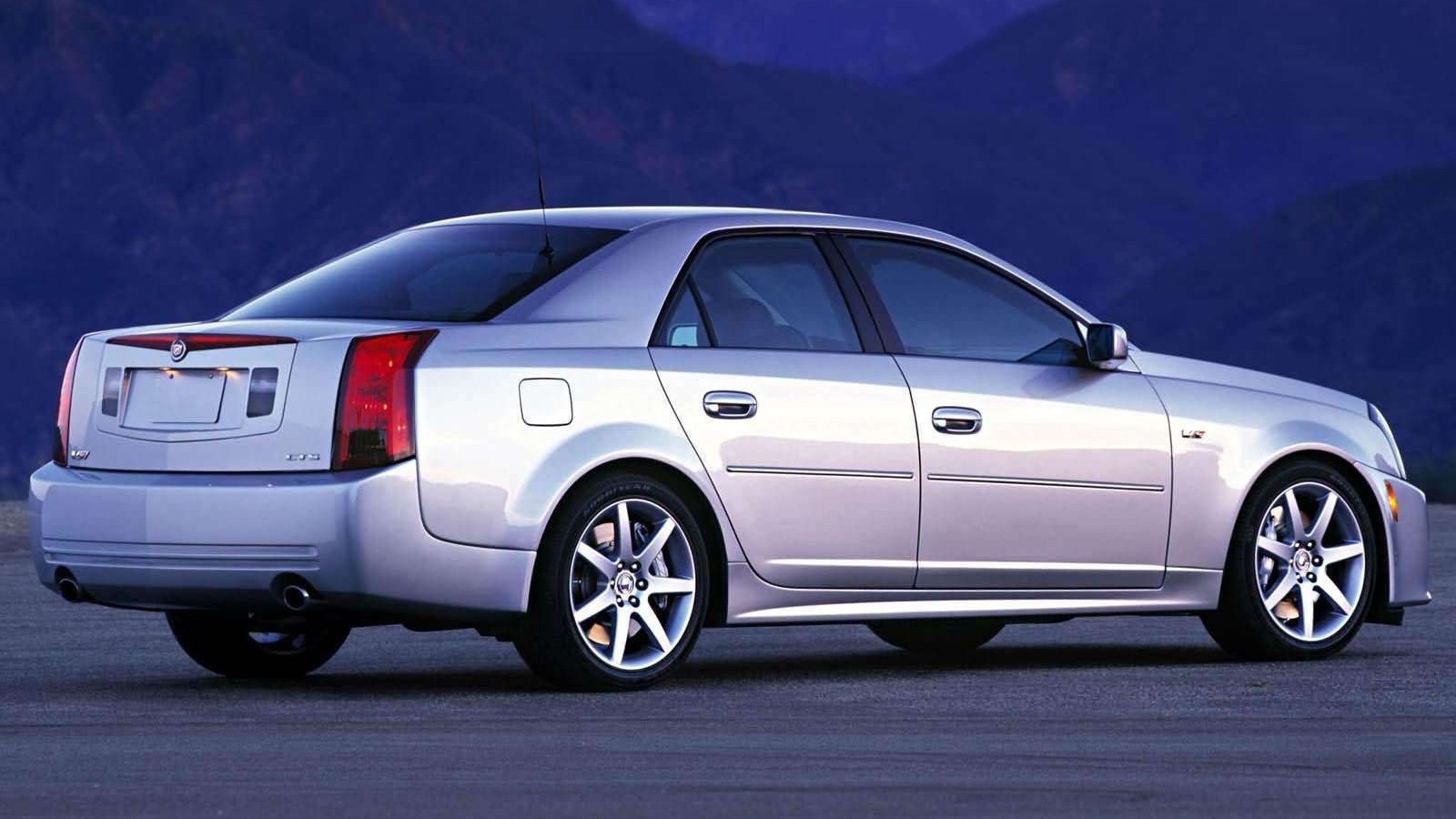
Plus, it got even better in 2006 with the arrival of the six-liter LS2 V8. Sure, it made the same 400 horsepower and 395 lb.-ft. of torque, but the torque peak arrived 400 RPM sooner for a wider power band. The rear end also gained some much-needed upgrades for hard driving, beefier half-shafts and a stronger differential that was far more difficult to blow up.
The Legacy Of The CTS
It’s easy to forget how groundbreaking the CTS was, but it was the starting point to Cadillac making some truly epic cars. The 556-horsepower supercharged stick-shift second-generation Cadillac CTS-V wagon is one of my favorite cars of all time, the third-generation CTS-V was absolutely ludicrous thanks to the 640-horsepower LT4 engine from the Corvette Z06, and then there are the performance sedans of the moment, the CT4-V Blackwing and CT5-V Blackwing. It’s wild to think that the most coveted new fast four-doors are American, but the Blackwings are that good.
Then there’s the styling. The Art & Science motif has coursed through Cadillac’s veins for nearly a quarter-century, refined into a series of signature vertical and horizontal elements that offer distinction while rarely toeing the line of vulgarity. Guess what? It worked, to an extent. Cadillac’s average buyer age has been slowly trending downward since the early 2000s, with GM Authority reporting an average buyer age of 54 in 2023. Plus, the CTS immediately buoyed sales. Over the Catera’s production run, only 94,801 were sold, with the last units not making it off dealer lots until 2003. In contrast, over the six years the original CTS was in production, Cadillac sold 317,966 entry level sports sedans. Let that sink in.
While Cadillac’s sports sedan reign won’t last forever, given the brand’s intention of an electric future, it helped do what it needed to do. Sure, the Escalade gets all the credit, but it’s worth remembering that the CTS also changed Cadillac in a massive way.
Top graphic image: Cadillac
Support our mission of championing car culture by becoming an Official Autopian Member.
The post The Original Cadillac CTS Changed American Luxury Cars Forever appeared first on The Autopian.