As I recently announced: I have a massive project ahead of me. In a span of only seven months, I’m going to attempt to build a World War II Jeep from scratch using parts I’m buying from eBay. Yes, you read that right: from scratch. While I’ll get into the particulars of the build in my upcoming “build plan” article, today I want to show you where this project is actually going to take place: in my driveway.
Take a look at the footage under the reel below and you’ll see the Willys Overland factory in Toledo, Ohio, where an American icon is being built by hardworking men and women working as a team, using overhead hoists, spray booths, a moving assembly line, and all sorts of other specialized equipment to get allied soldiers the rough-and-tumble runabout they needed to fight for freedom.
At its peak, the Willys Overland factory was cranking out General Purpose (GP, from which the name “Jeep” is derived) vehicles at a rate of one every 5-ish minutes. By 1945, Willys Overland had produced over 350,000 “MBs,” while Ford — the other company contracted to build the Jeep, whose basic architecture had actually been developed by the small Butler, Pennsylvania-based company Bantam (which in the early 1940s was building British Austin 7s under license) — built 280,000 “GPWs.”
That’s right: Between 1941 and 1945, two companies cranked out roughly 650,000 MBs and GPWs, which were the designations for World War II Jeeps built by Willys-Overland and Ford, respectively, though they were largely identical. That’s around a Jeep every three minutes between the two companies. That haste builds upon American Bantam’s shockingly quick development period of just 49 days to design and build the first prototype.
So if a tiny Butler, PA-based company can develop an icon in only 49 days, and Willys and Ford could crank out a Jeep every 3 minutes, then surely I can build one in seven months, right?
I’m not so sure. You see, not only do I not have the personnel or specialized equipment, I also don’t have a factory. I have this driveway:
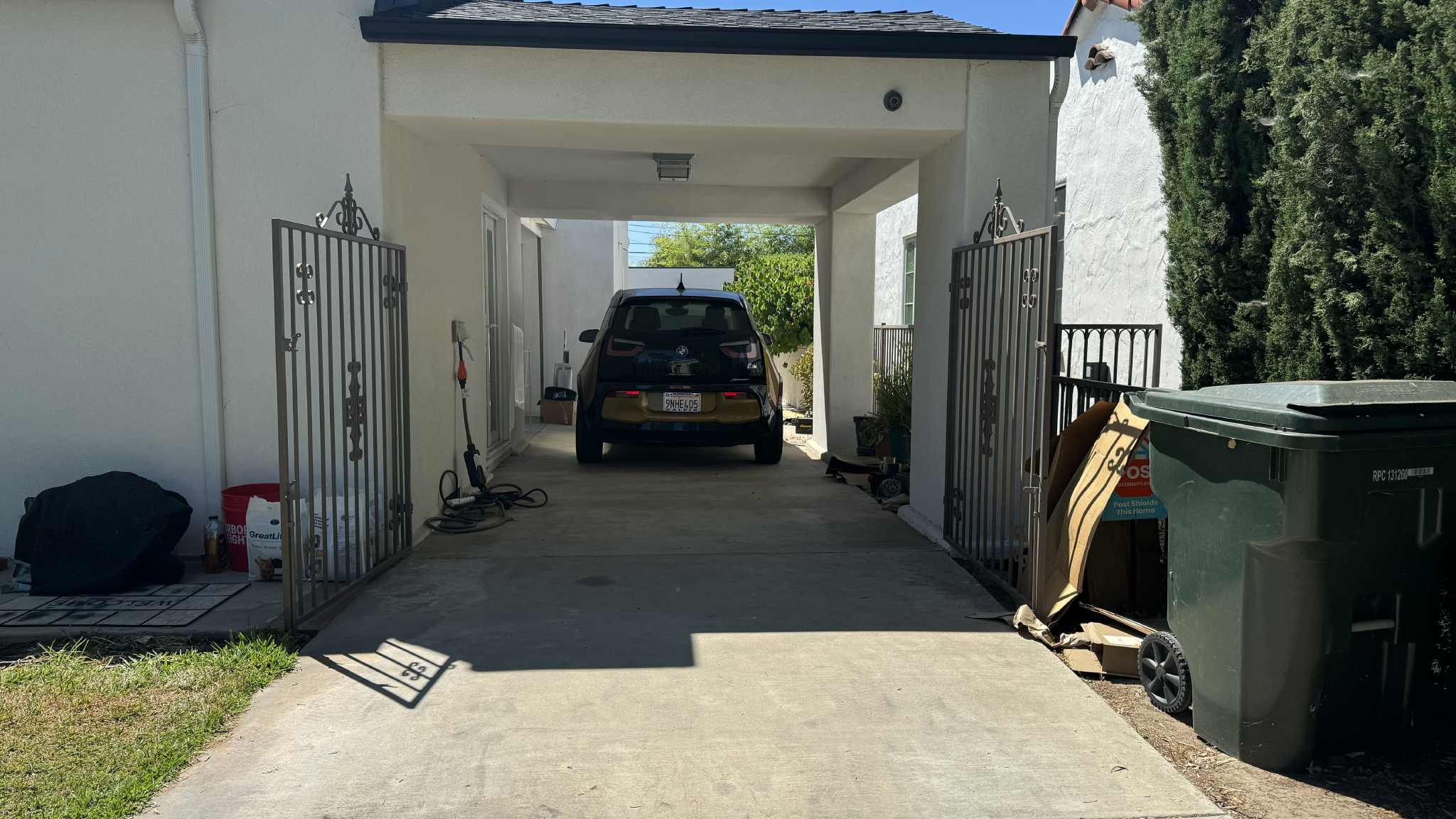

It’s skinny for the first 60 or so feet, then it widens a bit:
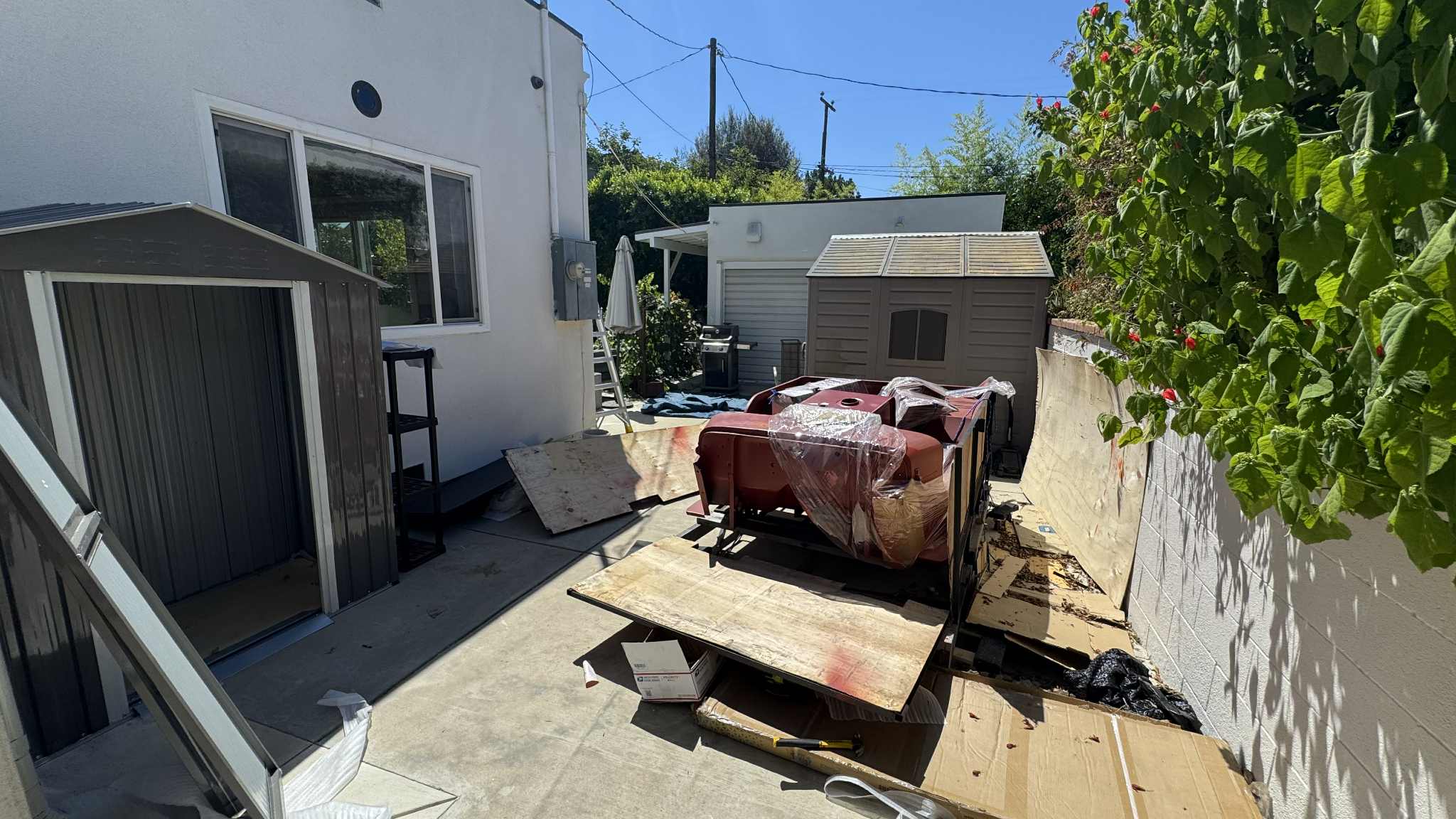
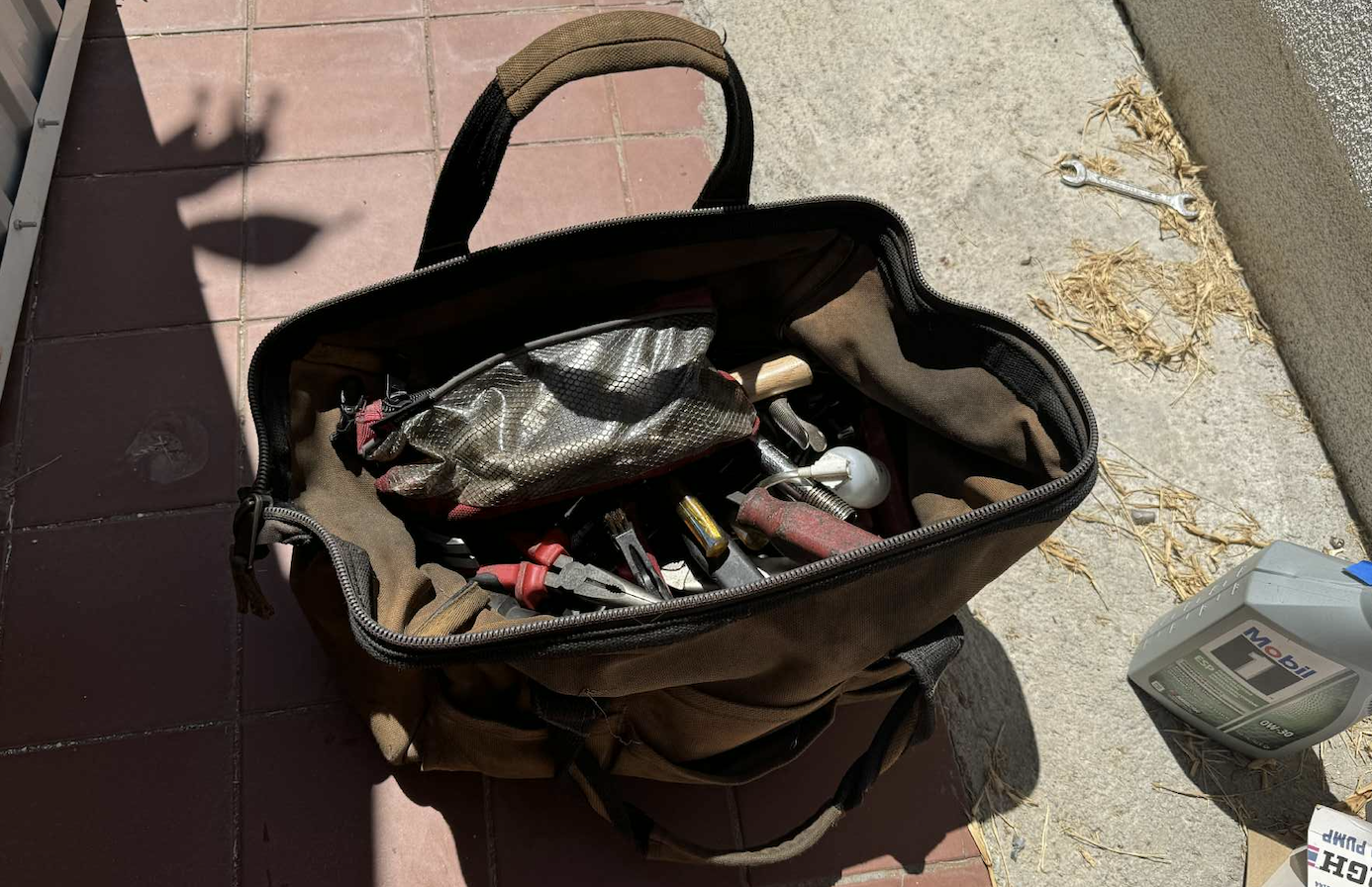
I’m grateful to have a driveway here in LA; it’s awesome, but it’s not a car factory by any stretch. It’s a fairly tight driveway that gets blisteringly hot pretty much year-round, and as far as equipment… I have a cherry picker and some hand tools.
I’m in the process of erecting a few sheds on my property, and I do have a giant one already in my driveway. I need to find a way to organize the hundreds of parts that will be rolling in from all over the world via eBay Motors (you can see the frame in the photo, as well as the body). With so many items coming in from various vendors, I could see this getting out of hand if I don’t have a solid system in place.


Though I do need space for the assembly, I may keep that giant shed that’s in my driveway solely for this project; it’s about 10 feet by 12 feet, and should fit everything I need. It’s currently filled with all sorts of junk:

I’ll buy some shelves, break out my labeling device, and break all the parts down into subsystems according to the official Chrysler designation, BICEEPR, which means:
- Body
- Interior
- Chassis
- Electrical
- Engine systems
- Powertrain
I’ll ignore the “R” for restraints, because the WWII Jeep didn’t have any.
I need to install some kind of sun shade above, so this is bearable, and I’ll need some lighting. This isn’t going to be like a typical car-media build — it’s not going to be in a fancy shop with a hydraulic lift and a bunch of expert technicians — it will be a dad and his friends in a driveway. Maybe I’ll tow the Jeep to a friend’s shop every now and then, but for the most part, it’s happening just outside my kitchen, in the blistering heat, between me changing my baby’s diaper and trying to edit blogs.
It’s a daunting one, and I welcome any input you, dear readers, may have on how I can best organize this driveway to handle the Jeep onslaught that lies ahead.
The post Here’s Where I’m Going To Build A World War II Jeep From Scratch (I Don’t Have A Garage) appeared first on The Autopian.