I could have put the quote in the headline of this Morning Dump in the mouth of the Volkswagen CEO because, as regular readers know, Oliver Blume is the head of both the larger Volkswagen Group and subsidiary brand Porsche. But the Porsche CEO saying this just feels right.
Volkswagen, as a brand, has some flexibility, both from a production standpoint and from an expectation standpoint. Porsche? Not so much. The hope for Europe’s carmakers is that the European Union will grant them some flexibility, and that seems to be coming.
Japanese automakers got a decent tariff deal, and the goal for American policymakers was that more production would come this way in return. That’s probably happening, but in the short term, Toyota is going to shift some Lexus production away from the United States so it can build more hybrids.
And, finally, Stellantis Chair John Elkann has agreed to a year of community service (and millions of dollars in penalties) in order to settle tax evasion charges.
‘Now It’s About Reorientation,’ Says VW CEO
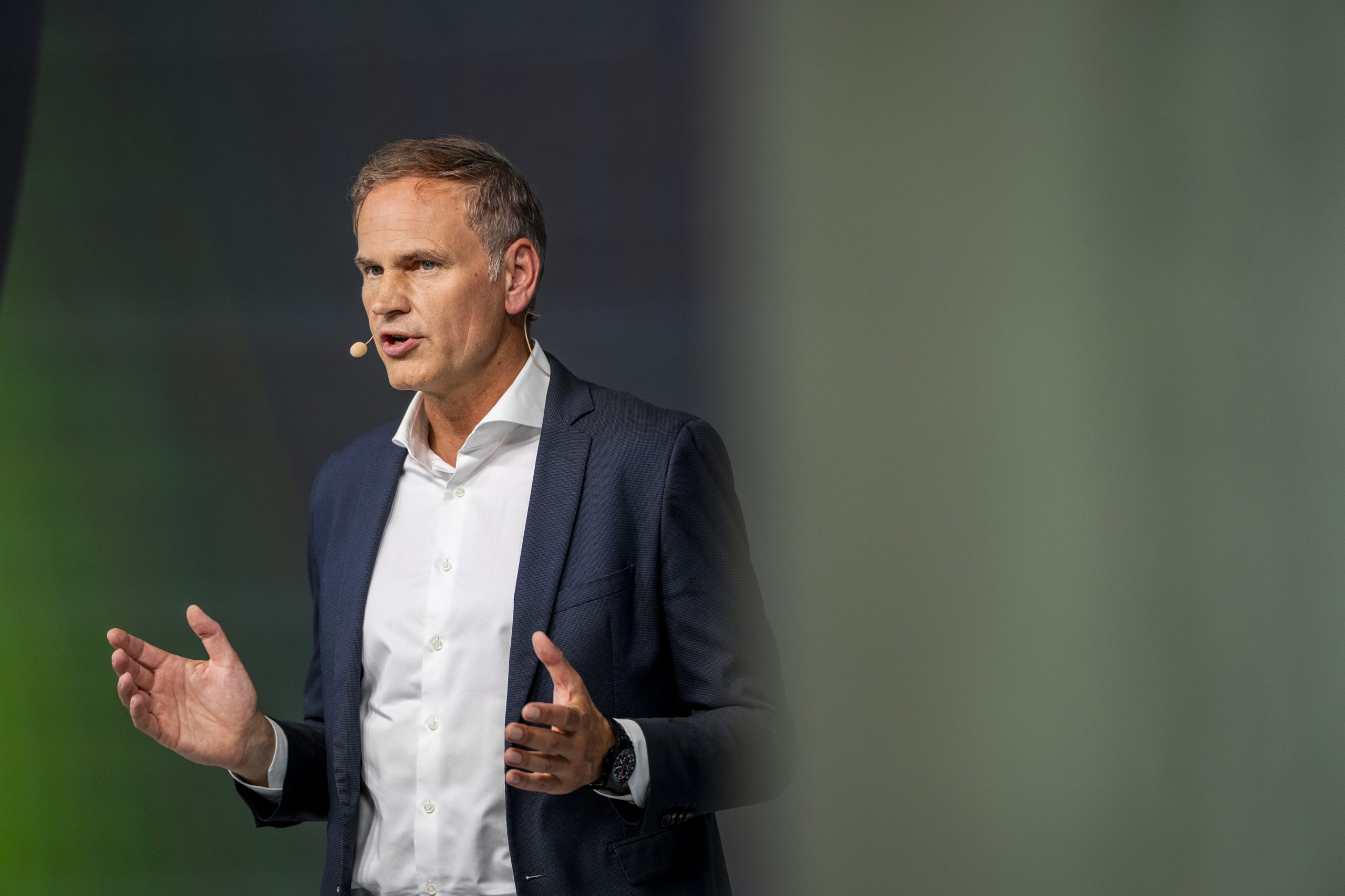
Ok, I got VW CEO in there. Again, same guy (for now).
The European car industry in general, and the German one specifically, has had quite a shift over the last decade or so. In the wake of Dieselgate–the revelation that German automakers (especially VW) were cheating emissions tests in order to sell diesel cars and trucks that weren’t as clean as advertised–companies (especially VW) made a hard shift into electrification.
They could afford it, mostly because of years of joint ventures in China printing cash, and Americans buying Porsches and Audis like freakin’ Labubus.
High on this cash, and presuming that it would exist forever, these automakers made a lot of bad decisions. The French and Italian automakers entered into or expanded questionable partnerships (Stellantis and Nissan Renault). The German brands tried to copy Tesla, poorly, and built a generation of electric cars that were not competitive enough in the right ways. At the same time, the German execs didn’t foresee the negative impact of a Trump presidency on global trade norms, nor being replaced in China by local automakers at the high-end of the market (and the low-end, and the middle-end…)
This week was all about fixing those problems, just as Chinese brands start building more cars in Europe. Tesla is in a weakened state, and the three major German automakers had their specific Hail Mary plays. VW has its ID. Cross, BMW is pinning its hopes on the iX3, and Mercedes wants people to buy the Miss Piggy-faced GLC EV.
That’s a start, but it’s going to take time. At one point, Volkswagen Group was hoping to make a 20% margin on Porsche by now. That ain’t happening, as Blume said at the big German car show this week.
Prices and profits in key market China are in decline, demand is tepid in Europe and U.S. tariffs have created an uncertain outlook, putting the focus on cost-cutting as the global market is reshaped.
“The party we have been celebrating in the automotive industry for decades is over in its current form,” said Oliver Blume, CEO of both Volkswagen, Europe’s biggest carmaker, and its luxury division Porsche AG.
“Now it is about reorientation.”
And from Manager Magazin:
The VW subsidiary, like no other manufacturer, is in a “sandwich position” between the US and China, whose markets together account for more than 60 percent of Porsche sales. According to Blume, the luxury market in China, which is relevant for Porsche, has shrunk by more than 80 percent in a very short period of time. In the US, tariffs currently at 27.5 percent are also weighing on business.
However, Blume expressed more confidence about the future. He described the current 2025 fiscal year as an “absolute low point” that would be used for necessary restructuring. Starting next year, things should then pick up again. A return to double-digit profitability is possible for Porsche. Should the general conditions change in the future, the original target of 20 percent is also conceivable. Porsche has launched a completely new product portfolio and is working with performance programs to counteract the negative trend.
Volkswagen needs North America and China, but a little relief in Europe would be welcome.
Relief In Europe Is Coming For European Automakers, At Least

European automakers, especially of the lederhosen-wearing variety, are hoping that the EU will reverse or soften the requirement that all cars be emissions-free by 2035. The biggest voting bloc in the EU is Germany (96 seats), so what the German Chancellor says is important.
And, according to Bloomberg, he’s signalling some openness to something:
Chancellor Friedrich Merz called for more regulatory flexibility from the European Union, throwing his weight behind the German auto industry’s push to soften rules that would effectively ban combustion engine vehicles in 10 years.
The conservative leader stopped short of calling for the 2035 deadline for selling only emission-free vehicles to be delayed or scrapped — something that some members of his bloc have been agitating for. Instead, he reiterated his coalition government’s support for “technology openness,” a reference to the auto sector’s desire for hybrid and other vehicles to be exempted from the rules.
“We are, of course, fundamentally committed to the transition to e-mobility,” Merz said Tuesday in a speech at the Munich auto show. “But we need more flexibility in regulation.”
“We need smart, reliable, flexible European regulation,” he added. “One-sided political commitments to specific technologies are the wrong economic policy path, and not just for this sector.”
Hybrids? More hybrids! EREVs! The EU needs to do something because German automakers are being buffeted from all directions, as Blume notes, and can’t fix everything simultaneously. Unless solid-state batteries can start rolling out at a huge clip and quickly, the next five years are going to be tough for European automakers.
Mercedes may be the worst off under the current regime, given its inability to make popular EVs.
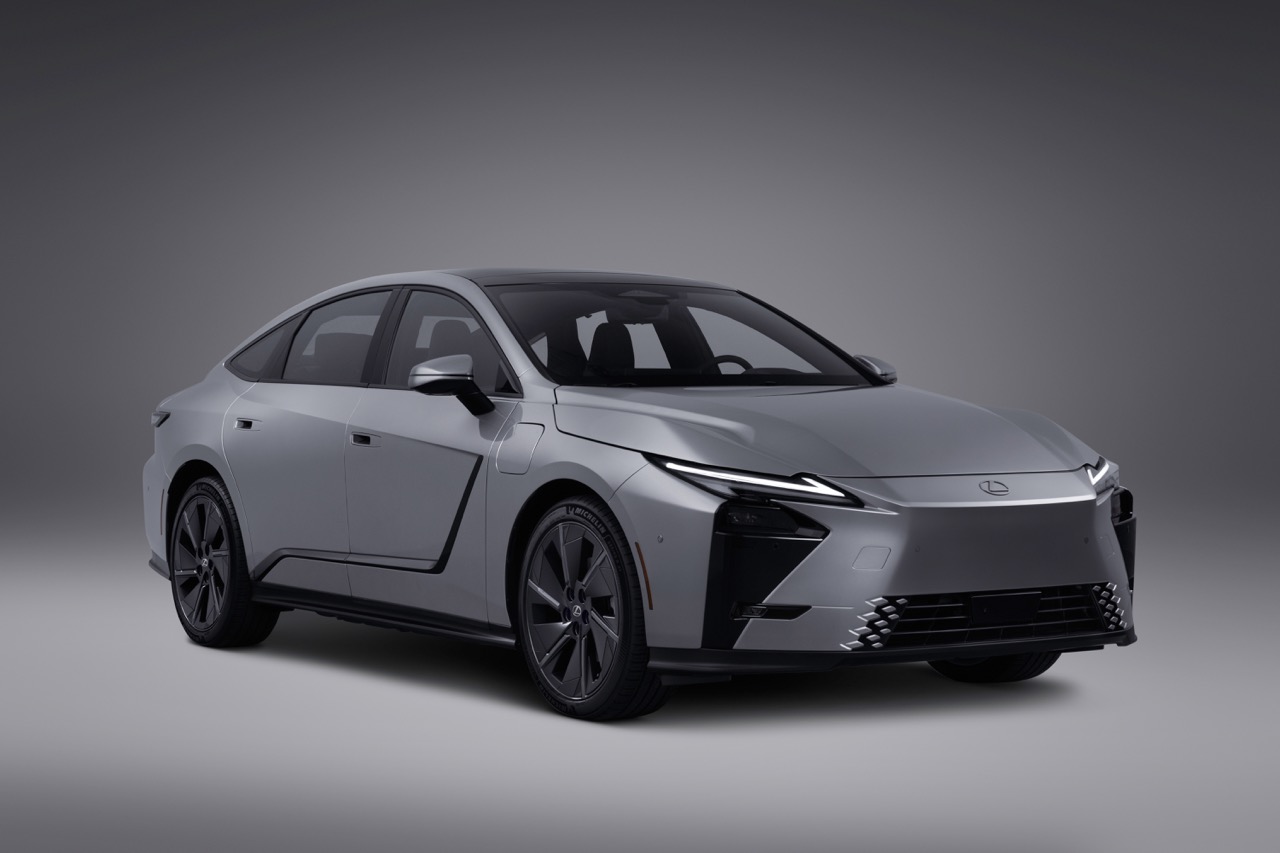
Toyota To Shift Lexus ES Production Back To Japan
One of the ideas behind the tariffs was that the United States wanted more production here locally, but it’s unreasonable to expect countries to give up all their jobs and ship them to another country (that is, to some degree, what the US did during the China Shock period, and look how that turned out).
So the question becomes: what do you produce, and where do you produce it? It’s hard to build cheap cars abroad and import them here with higher tariffs in place, which means it probably makes sense to build your most expensive cars elsewhere and just pass the cost onto the consumer, assuming that everyone else you compete with will have to do the same.
That’s what seems to be happening with Toyota. Nikkei Asia is reporting that Toyota is going to stop making the Lexus ES in the United States and shift all Lexus production in the United States to a single plant.
Why?
Demand for hybrid vehicles is rising, even as the growth of electric vehicles in the U.S. has slowed. The Kentucky plant mostly turns out hybrid Camry sedans and RAV4 SUVs, which are strong sellers in the U.S. After ending production of the Lexus, the plant will increase production of hybrids.
A change in U.S. tariff policy is behind Toyota’s decision to tweak its manufacturing in the U.S. In April, the Trump administration imposed a 25% tariff on imported cars, although the rate will drop to 15% for Japanese vehicles and auto parts based on an executive order issued by Trump on Thursday. That is still many times higher than the 2.5% duty that applied to imported cars before. The change has forced Japanese automakers to grapple with the higher cost of exporting to the U.S.
Expecting the high U.S. tariffs to remain in force over the long term, Toyota intends to continue increasing production of vehicles in the U.S. However, building new plants there is likely to eat into the company’s earnings due to higher labor costs and material prices. Toyota concluded that it can earn a profit from Lexus models because of their high unit prices, even if they are exported from Japan.
Americans will buy as many Toyota hybrids as Toyota will build, so keeping those costs as reasonable as possible while tacking on a bit of price hike to the new Lexus ES seems like a decent strategy.
Stellantis Chair To Do Community Service To Settle Tax Issue

Exor, if you’re not aware, is the company set up by the Agnelli family to sit above all of its investments, including in automakers Ferrari and Stellantis. Exor is now run by John Elkann, who is also the Chairman of Stellantis.
Elkann and his siblings were set to inherit a significant amount of money from their grandmother, but they claimed that money in Switzerland, allegedly to avoid Italy’s inheritance tax. The issue is on its way to being resolved, with the Elkanns paying a substantial penalty and John Elkann agreeing to community service.
According to Reuters, what he’s doing hasn’t been resolved yet:
The payment of the 183 million euros closes all investigations into evasion of taxes on an estate estimated by the Italian authorities to be worth around 800 million euros.
Elkann will now have to propose to the judicial authorities an institution where he can perform his community service.
This could be a center for the elderly, an association that helps drug addicts, or some other institution with a similar social-support function.
As you can see in the photo above, taken with an unnamed gentleman, Elkann already has experience with the former.
What I’m Listening To While Writing TMD
Is it weird that my favorite Vampire Weekend song might be the Japanese-only song “Houston Dubai” from the extended edition of “Father of the Bride?” It just rings true to me. There’s also the fun vagueness of the lyrics:
Houston just did ninety-nine
Dubai’s one-eighteen
I think this lyric is either about the price of a barrel of oil or the temperature. Or both!
The Big Question
Which German brand is in the worst shape?
Top photo: Porsche
The post Why Porsche’s CEO Thinks ‘The Party Is Over’ In The Auto Industry appeared first on The Autopian.