Good morning! For the second installment in what I think is going to be a week of project cars, we’re going to look at a couple of four-wheel-drive SUVs. They’re both iconic, they’re both very capable off-road, and they’re both currently in pieces.
The result of yesterday’s engine swaps didn’t surprise me; the rough-and-ready Pontiac beat the pants off the even-rougher-and-who-knows-how-ready-it-really-is Datsun. Yeah, LS swaps are starting to get a bit common, but they’re also predictable, and that goes a long way. I get the feeling that the Datsun was a swap of opportunity: someone had a wrecked or rusted-out 300ZX, found a 510 shell for sale, and just kinda made it work. Or maybe didn’t. We don’t really know.
I’m firmly (but gingerly; I’m still healing) throwing my weight behind the Pontiac here. I love the styling of ’60s Pontiacs, and even if that crazy paint job is covering up more rust than we know of, it’s not a forever car anyway. For four grand, it’s something to have fun with for a while and look back on fondly when you move it along. And there’s a lot to be said for that.

Classic 4x4s are big right now. Everybody seems to want a Bronco or a Scout or a Land Cruiser, and apparently they’re willing to pay handsomely for them. Prices for originals are through the roof, and plenty of companies offer restomod versions of classic off-roaders all decked out with modern conveniences. But what if you want to join in on the fun, and can’t afford a six-figure price tag? Well, you can work in smaller scale, like I do, or you can find a basket case, like one of these, and do the work yourself.
1956 Land Rover Series I – $3,500

Engine/drivetrain: 2.0 liter OHV inline 4, four-speed manual, 4WD
Location: North Bend, WA
Odometer reading: 26,000 miles
Operational status: “Not currently running”
The World War II Army Jeep, preferred method of light transportation during the war by American troops, left quite an impression all over the world. As soon as peacetime production started getting back underway, it seemed like everyone wanted their own little utilitarian 4×4 like the Jeep. In Great Britain, where some supplies were severely rationed and others practically lying around for the taking, Rover engineers developed an ingenious four-wheel-drive utility vehicle designed around the constraints of the day, and created a legend that still endures: the Land Rover.
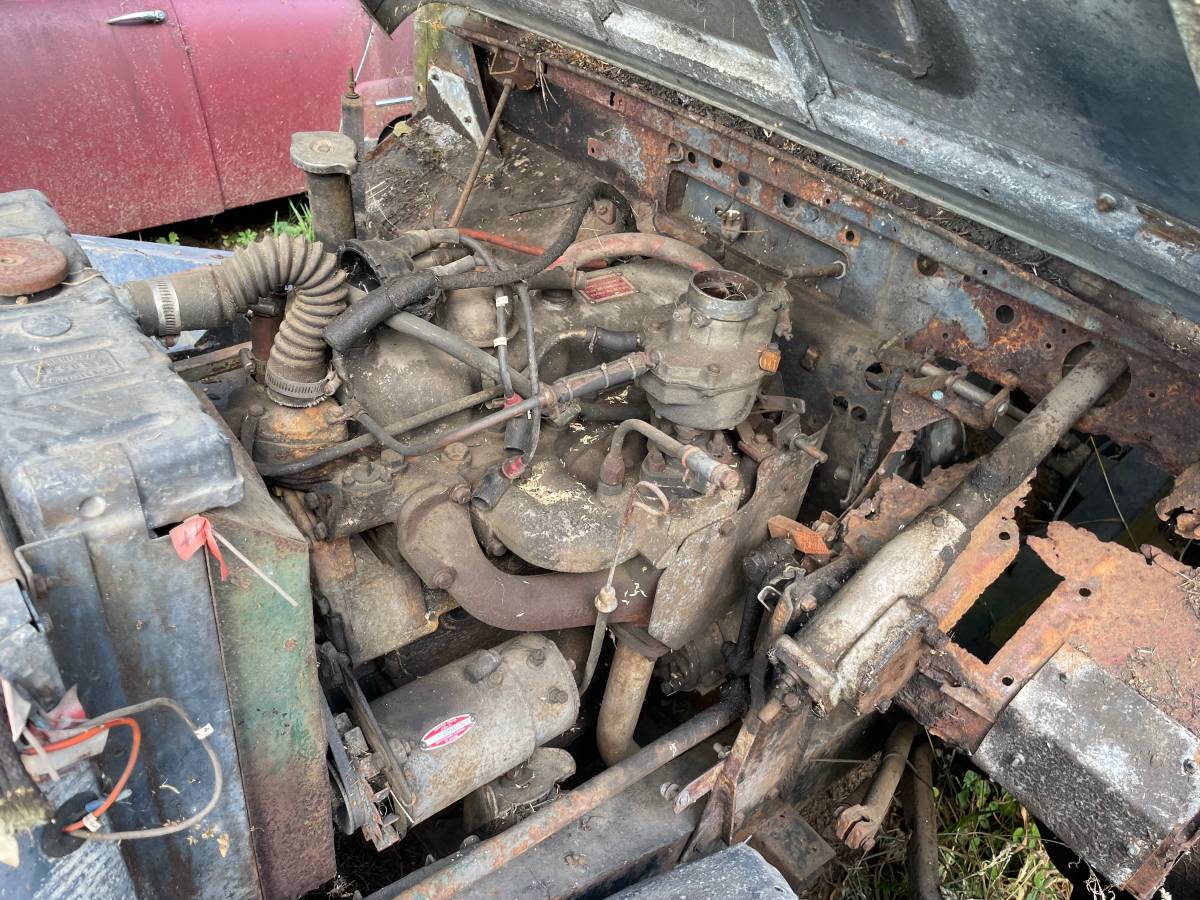
This is a Series I Land Rover, with a 2.0-liter engine that powers not only both front and rear axles through a transfer case, but also a power take-off shaft that runs out through a hole in the rear bumper. The PTO was originally intended to power farm equipment, but for many years at the All-British Field Meet in Portland, I saw one used for a tastier function: spinning an ice-cream maker. This one is a long way away from such crowd-pleasing antics; the seller says it “currently” does not run, and from the looks of it, that current period spans at least a couple Presidents. Luckily, the ecosystem around these things is huge, and anything you need to revive one is still available, if you know where to look.
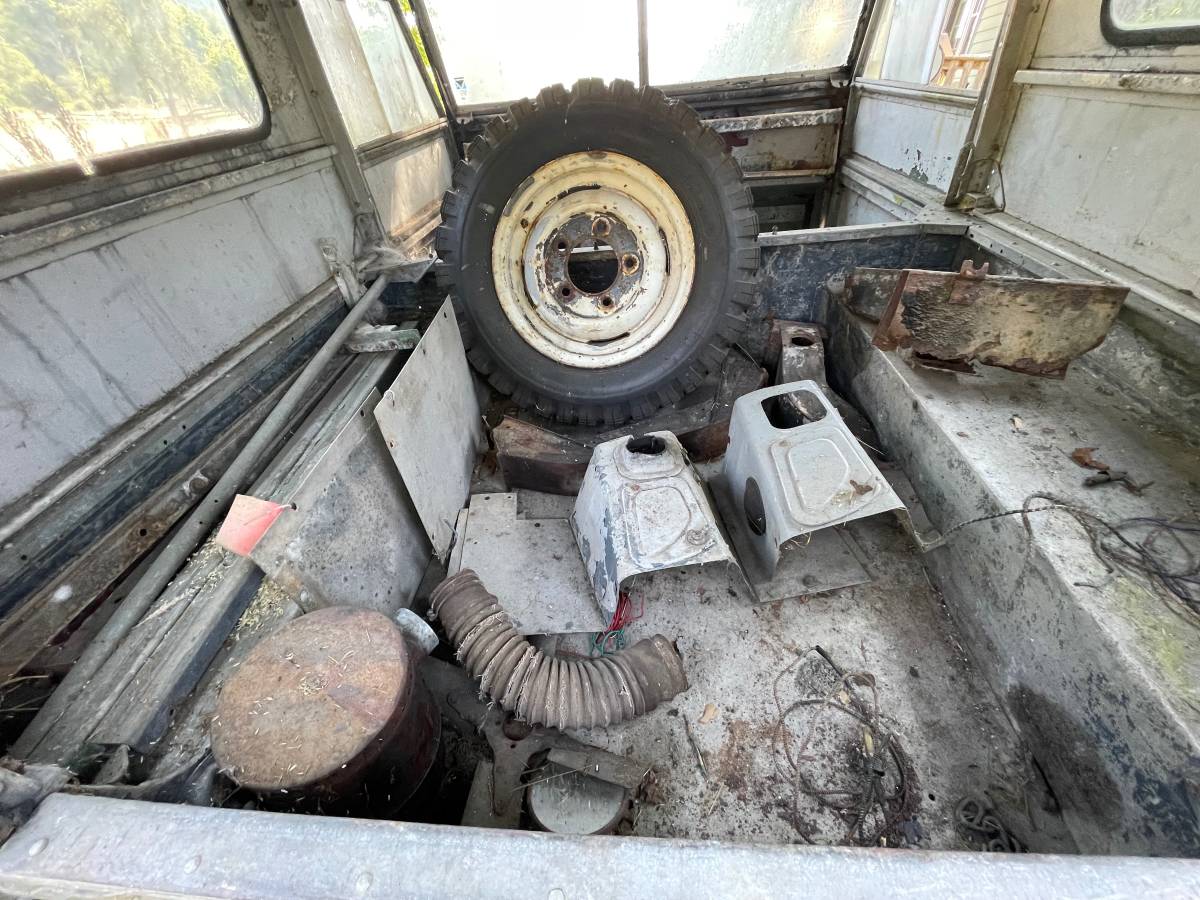
It’s a sad sight inside: the whole interior has been gutted, the front floorboards are missing, and there’s no dash or seats at all. The seller says all those parts, and a bunch of extras, are included, and have been kept in “dry storage.” It appears, however, that in some cases, that just means “chucked in the back out of the rain.” But again, it’s all available. If you have a title and a serial number tag, I’m not sure there is such a thing as a lost cause Land Rover.
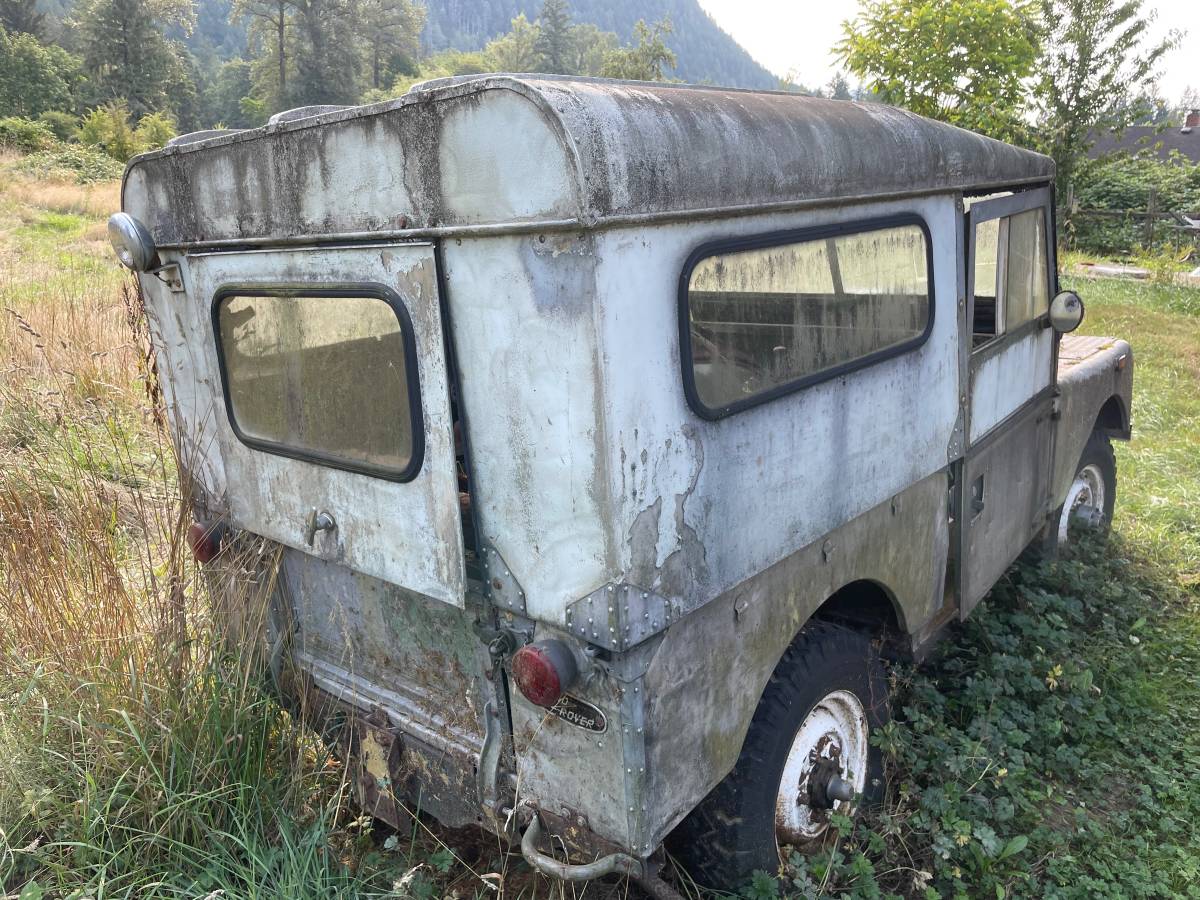
Land Rover bodies are aluminum because Britain had a surplus of it after the war, so there’s no worries about rust on the main body panels. But the frame, cowl/firewall, and other structural components are steel, and that’s where I fear for this one. It looks like it has been sitting in this patch of weeds for a very long time, and there’s a good chance that the chassis is about as rigid as a paper towel core. But when I say everything is available for these, I mean everything – though shipping won’t be cheap.
1985 Toyota Land Cruiser – $5,000

Engine/drivetrain: 4.0-liter OHV inline 6, five-speed manual, 4WD
Location: Bremerton, WA
Odometer reading: unknown
Operational status: Drivetrain is completely disassembled
If you want to fix up an old car, it makes sense to look for two rough examples and mix and match parts to make one good car. A buddy of mine in high school did it with Firebirds, another friend combined a pair of Scouts into one beautiful example, and we all know about those crazy guys who spent a month in Australia mashing two basket-case utes into one absolute hero. Some time ago, someone near Seattle bought two beige FJ60 Land Cruisers with the intent of making one good one. They got as far as dismantling one and mostly disassembling the other, then sold the whole mess on to the current owner, who has gotten exactly nowhere with it. Now, it’s all up for sale again.

The heart of the Land Cruiser is a nearly indestructible inline six, displacing 4.0 liters and driving all four wheels through a five-speed manual and a dual-range transfer case. This package deal comes with two of everything – the long block above is still intact, while a bare engine block sits on a stand next to it. Two transmissions, two transfer cases, and an extra set of axles from the other truck are also included. Basically, you should have no trouble putting together a running Land Cruiser drivetrain from this lot. You’ll just need some time and a good set of tools.
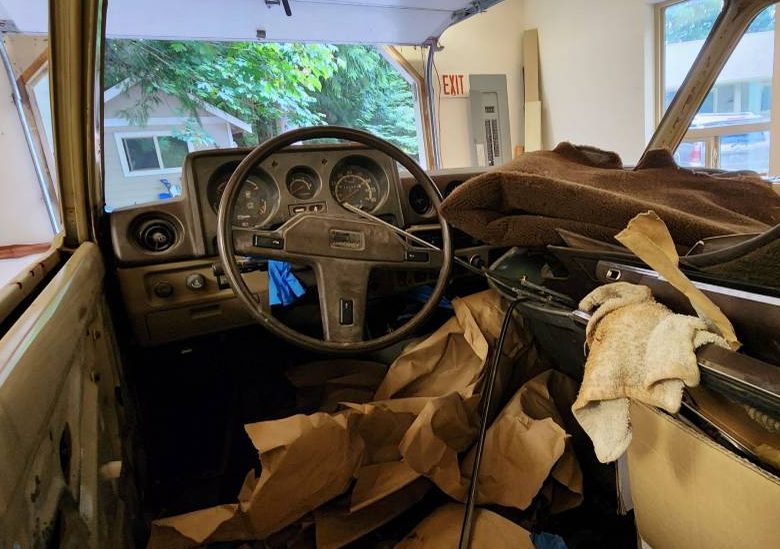
The interior is currently being used as storage for other parts, but everything is there, and then some. It looks like the rest of the parts are stored in the garage loft, and there are two complete sets of seats, along with doors, door cards, window glass, and everything else you can think of. You can just take your pick of the best bits, and sell the rest to recoup some costs. Again, all it takes is time.
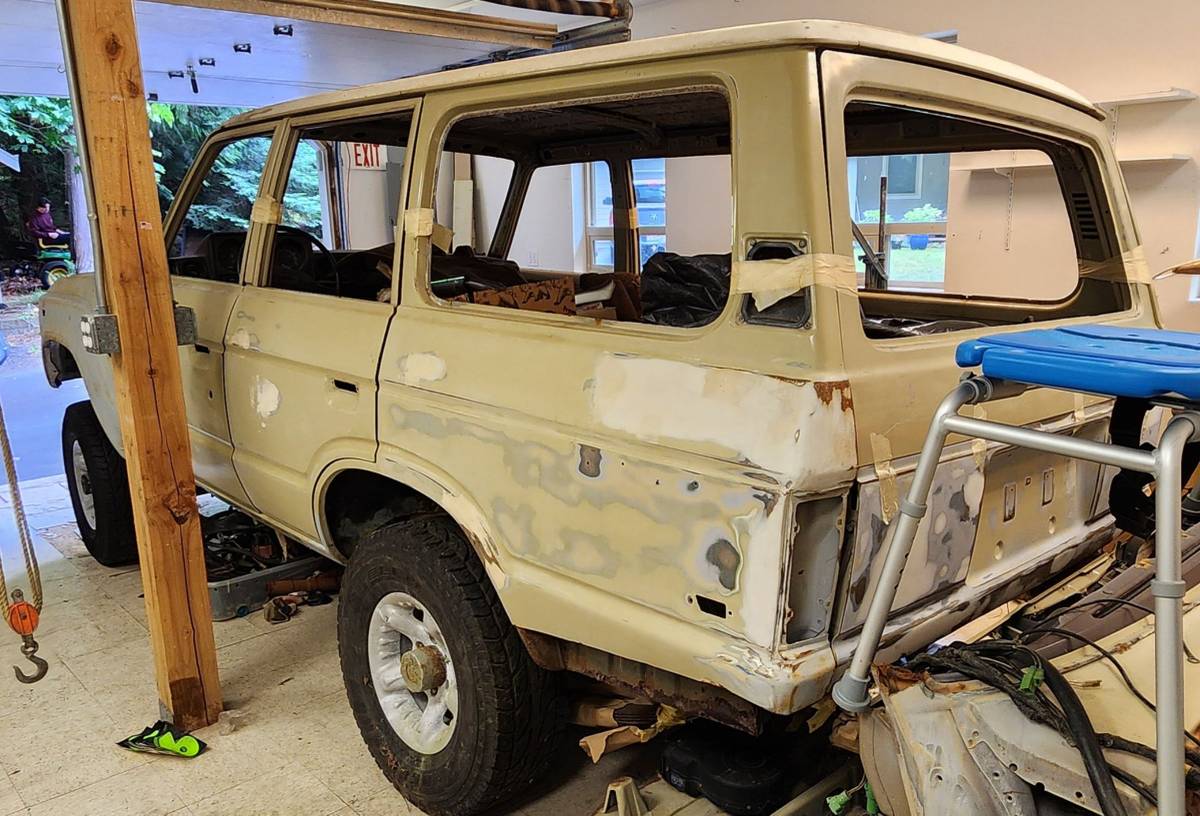
I’m guessing this is the less-rusty of the two main body shells. It still has some rust, but repairs are underway, and it doesn’t look terrible. If you don’t care how shiny it is, you could probably just build it back up as-is, and just enjoy it. The spare parts are all the same paint color, so again, just pick the best pieces. Or go the whole nine yards, do the bodywork, and get it repainted, if that’s your thing.
I know some of you are going to scream bloody murder about the prices for these piles of parts, but do you have any idea what a nice example of either one goes for these days? These are cheap. Which project would you rather tackle?
The post Some-Assembly-Required 4x4s: 1956 Land Rover vs 1985 Toyota Land Cruiser appeared first on The Autopian.