Picture this: It’s the early 1980s, and you’ve survived the bleakest period for automotive performance since, well, ever. The first era of regression, the Malaise era. Opera windows replaced big blocks, miles per gallon replaced pounds per horsepower as the leading metric, almost everything grew massive bumpers, and you watched hero nameplates get sapped of their power. Then, in 1983, a car rolls off the transporter at your local Chevrolet dealership, an ultra-sleek wedge-shaped thing with a clamshell hood that doubled as the front fenders. You peer inside, and instead of a double-nickel gauge cluster, you see an arcade crammed into the dashboard, optimism for a digital future. The name on the back of the car? Corvette.
When Car And Driver tested the 1984 Chevrolet Corvette, it was the first production car to ever hit the 0.90 g mark on the skidpad, one of the six fastest then-current production cars in the world, and its 173-foot stopping distance from 70-to-zero beat the Porsche 928’s 180-foot figure and was only eight feet off the record at the time, 165 feet set by a Porsche 930 Turbo. And this was the lame-duck Crossfire Injection model with two throttle body injection units atop a 205-horsepower 5.7-liter V8. However, while a zero-to-60 mph time of 6.7 seconds was quick for the time, the real revelation of the inaugural C4 Corvette was the way it took bends. As the magazine wrote:
Until the arrival of final understeer, which comes at lateral accelerations unknown to the average driver, the Corvette is race-car responsive. The exotic suspension, upgraded with a sensational Z51 performance handling package (special Goodyear P255/50VR- 16 tires with an F1-style “Gatorback” rain-tire tread mounted on 8.5-inch front and 9.5-inch rear aluminum wheel , plus quicker steering, tighter hocks, and heavier-duty bushings, sway bars, and spring ), creates handling that can make a quiche-eater look like a serious user of beef jerky and draft beer. The car revels in long, controlled slides. It begs to be steered with the throttle. It forgives ham-fisted operation like no other car on the road, and when driven seriously it will hook up under hard cornering to a point where one begin to wonder if Gordon Murray and Colin Chapman attached sliding skirts and ground-effects tunnels.
Such high praise indicates that the fourth-generation Corvette was off to a serious start by early-1980s standards, but the Corvette team didn’t rest for a moment. The 1984 model year was just the warm-up, with 1985 bringing a retuned suspension setup for better road manners and faster lap times, a new brake master cylinder, and modern fuelling. The Tuned Port Injection L98 5.7-liter V8 cranked out 230 horsepower and 330 lb.-ft. of torque, 25 more ponies, and 40 extra pounds-foot of twist compared to the 1984 models, enough for revised gearing. The result was dramatic: Car And Driver clocked a 14.5-second quarter-mile time for examples with the Doug Nash 4+3 manual gearbox, the sort of go America’s sports car needed. For 1987, output increased again to 240 horsepower thanks to valvetrain revisions, and the overall package was so formidable by the standards of the day that it was banned from SCCA Showroom Stock GT racing.
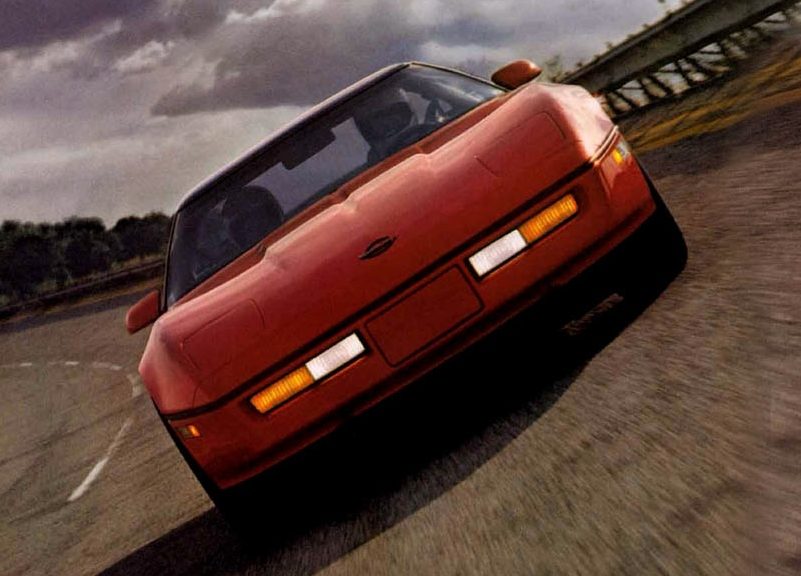
See, from 1985 to 1987, the Corvette didn’t just beat its competition, it annihilated it. As SCCA Showroom Stock GT racer John Powell told Hagerty, “The Corvette beat Porsche 29–0 from 1985 to 1987.” That’s every single race of this class that it entered. Unsurprisingly, the Corvette was given the boot so that other marques could have a chance to actually compete, and that’s where things got really wild. Powell co-organized a one-make race series starting in 1988, the Corvette Challenge, and sponsors lined up to offer $1 million in prize money during the first season. The result was some of the best sports car racing of all time, involving some big-name drivers. Over the two seasons the series ran, entrants included Jimmy Vasser, Juan Manuel Fangio II, Caitlyn Jenner, Andy Pilgrim, and Scott Lagasse.
Coincidentally, the year of the SCCA ban coincided with the first time a turbocharged Corvette was sold through GM’s dealer network. Ticking option box B2K and ponying up an extra $26,995 would get you a Callaway twin-turbo setup and a built low-compression engine, boosting the Vette to 382 horsepower and 562 lb.-ft. of torque. If you wanted a more powerful U.S.-spec production car in 1987, your only choice was a Countach. Speaking of speed parts, the Corvette got a ZF six-speed manual transmission in 1989 making it among the first, if not the first mass produced car with a six-speed manual, and then things really got crazy during the 1990 model year with the ZR-1.
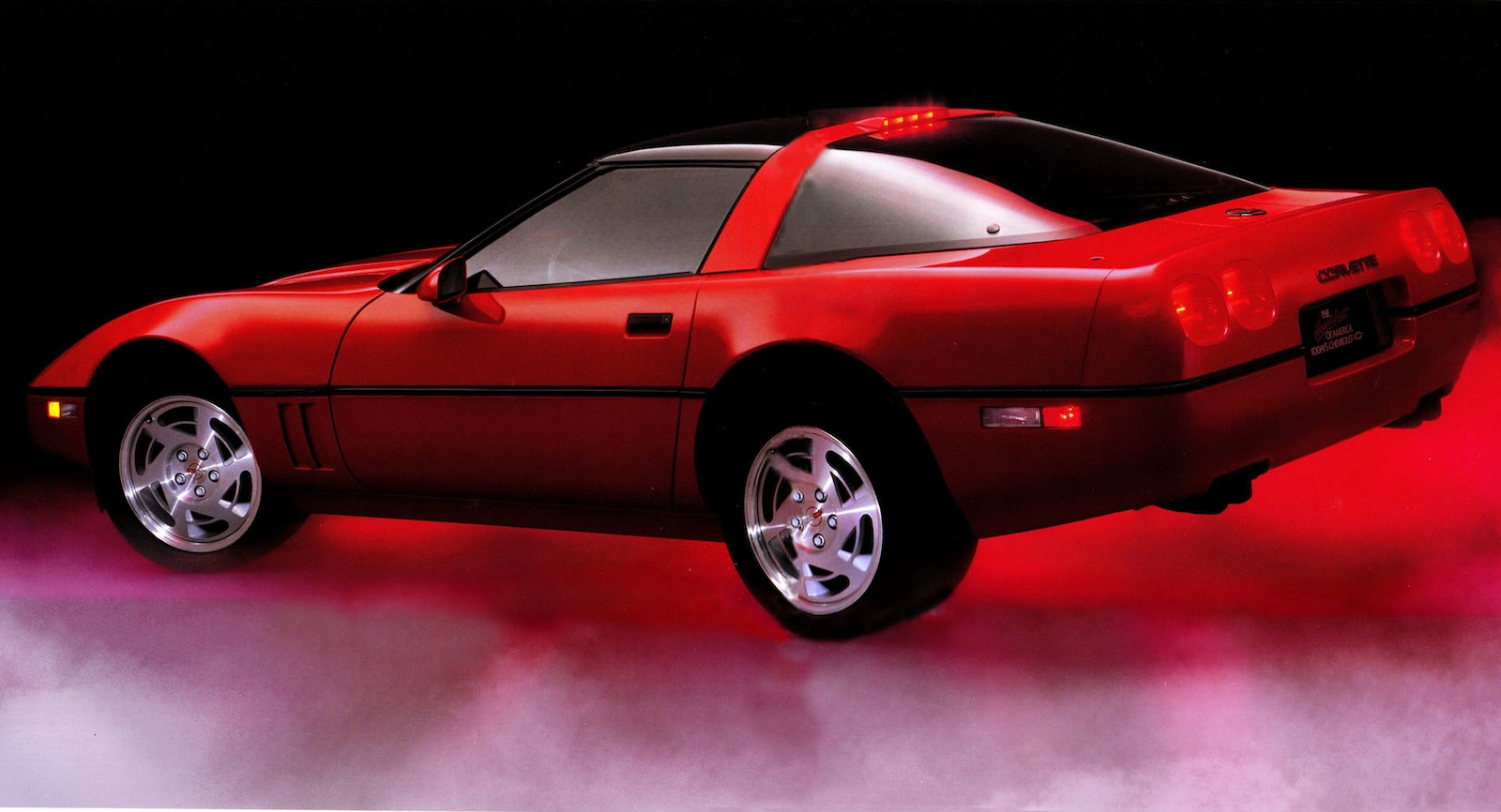
Sure, the C4 ZR-1 isn’t the first Corvette to run that alphanumeric, with ZR1 being an option code for an engine package on the C3 Corvette, but it was the first ZR1 as we know it. A Mercury Marine-built quad-cam V8 called the LT5 cranked out 375 horsepower and 370 lb.-ft. of torque without any forced induction, a wider body hid massive 315-section tires, and Lotus-tuned adaptive dampers kept things under control. The result, when Car And Driver got one to test, was zero-to-60 mph in 4.6 seconds, the quarter-mile in 12.9 seconds, and a top speed of 176 mph. In 1990, those were supercar numbers, just married to the relative practicality and comfort you’d expect from a Corvette. It set seven FIA speed records, but now you can pick one up for the price of a new compact car.
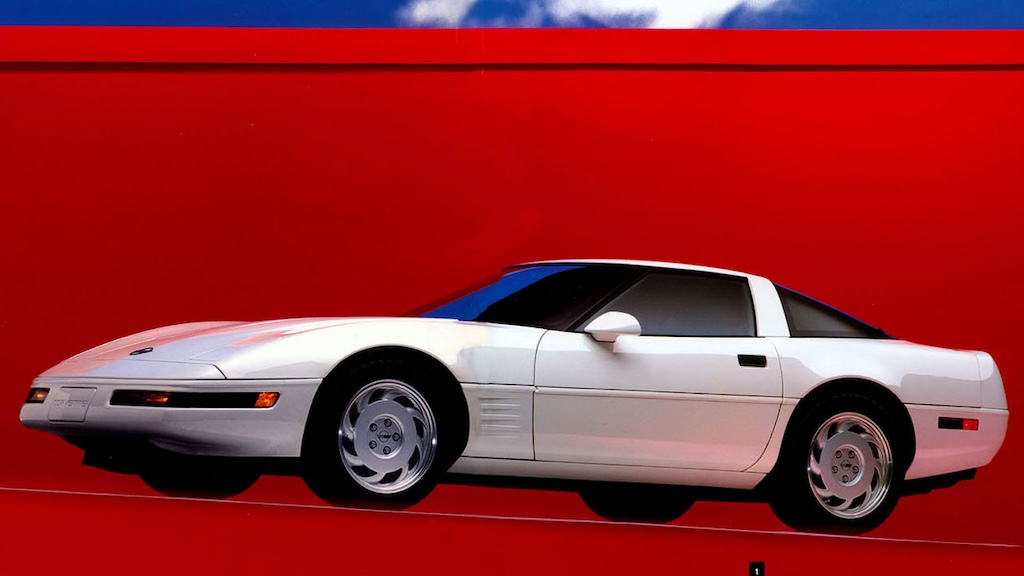
However, by the early 1990s, the regular Corvette had a problem, and that problem was Japan. Twin-turbocharged Toyota Supras, Mazda RX-7s, and Mitsubishi 3000GTs may have been more expensive than a regular Corvette, but they ran faster, revved higher, and paired big creature comforts with serious shove. The solution was called the LT1, a heavily reworked 5.7-liter small-block Chevrolet V8 that kicked out 300 horsepower and arrived on the scene in 1992. When Car and Driver tested it for its December 1991 issue, the re-powered Corvette hit zero-to-60 mph in five seconds flat, good enough to just about keep up with the Japanese competition for now. Still, it couldn’t catch the Japanese on refinement. The revised interior from 1990 onward was plastic fantastic, the cabin was noisy by 1990s standards, and the small-block still showed its roots.
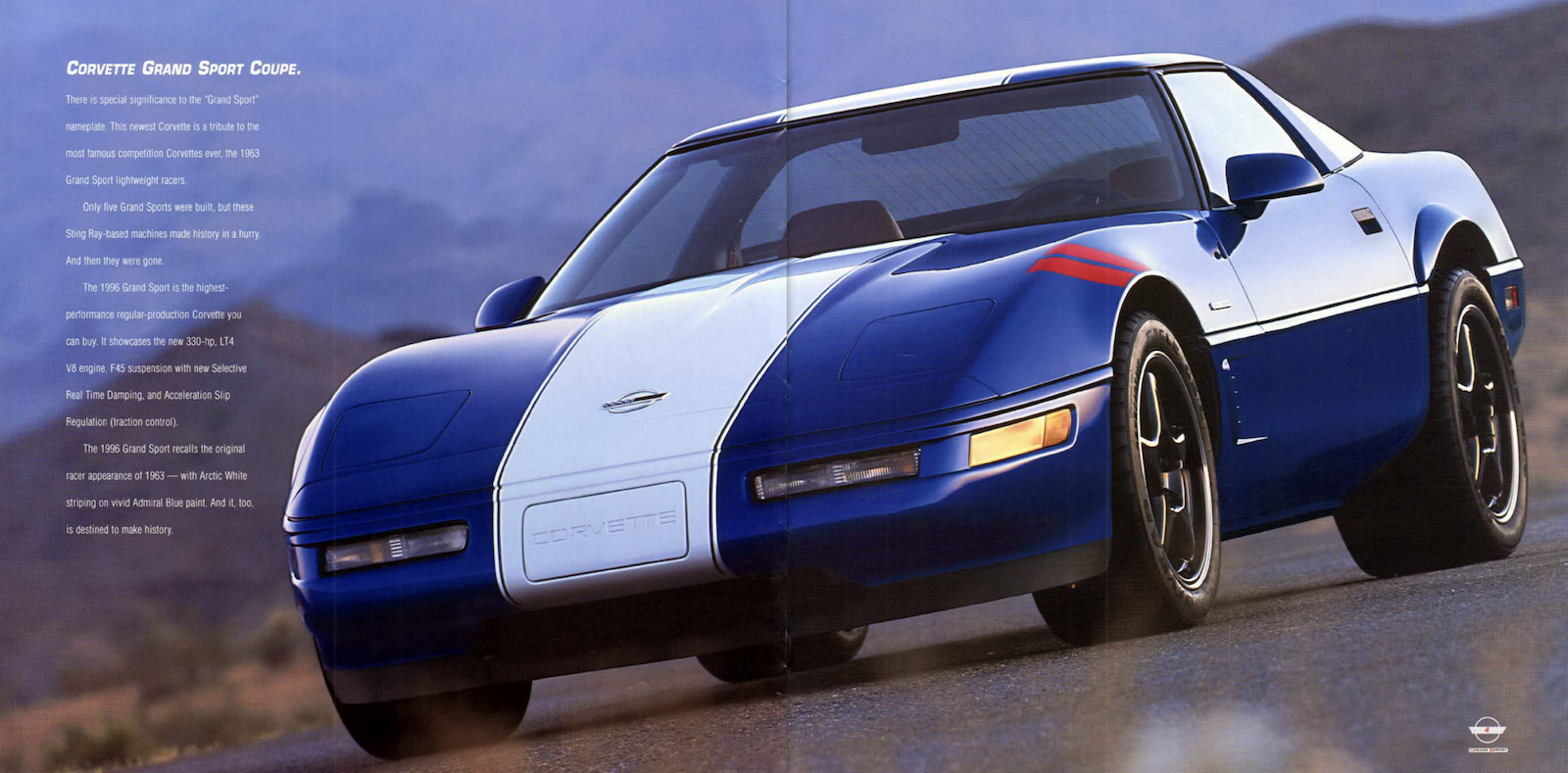
By 1996, the writing was on the wall. The fourth-generation Corvette had been around for 12 years, sales were falling as buyers were captivated by new breeds of sports sedans and small roadsters, and GM was largely the one to blame for things going a bit stale. The automaker had even considered killing the Corvette as an entity, but eventually had a change of heart. A year before the C5 Corvette was set to arrive, the Corvette team gave the old car a victory lap with an engine called the LT4. Compared to the LT1, it had a more aggressive camshaft, a new crankshaft, 10.8:1 compression, port-matched cylinder heads, and a reworked valvetrain with sodium-filled exhaust valves and hollow intake valves, all to punch out 330 horsepower in stick-shift cars. The cherry on top? A Grand Sport trim that was mostly just an appearance package as you could get the F45 suspension as an option on non-Grand Sport models, and the LT4 came standard on all six-speed cars.
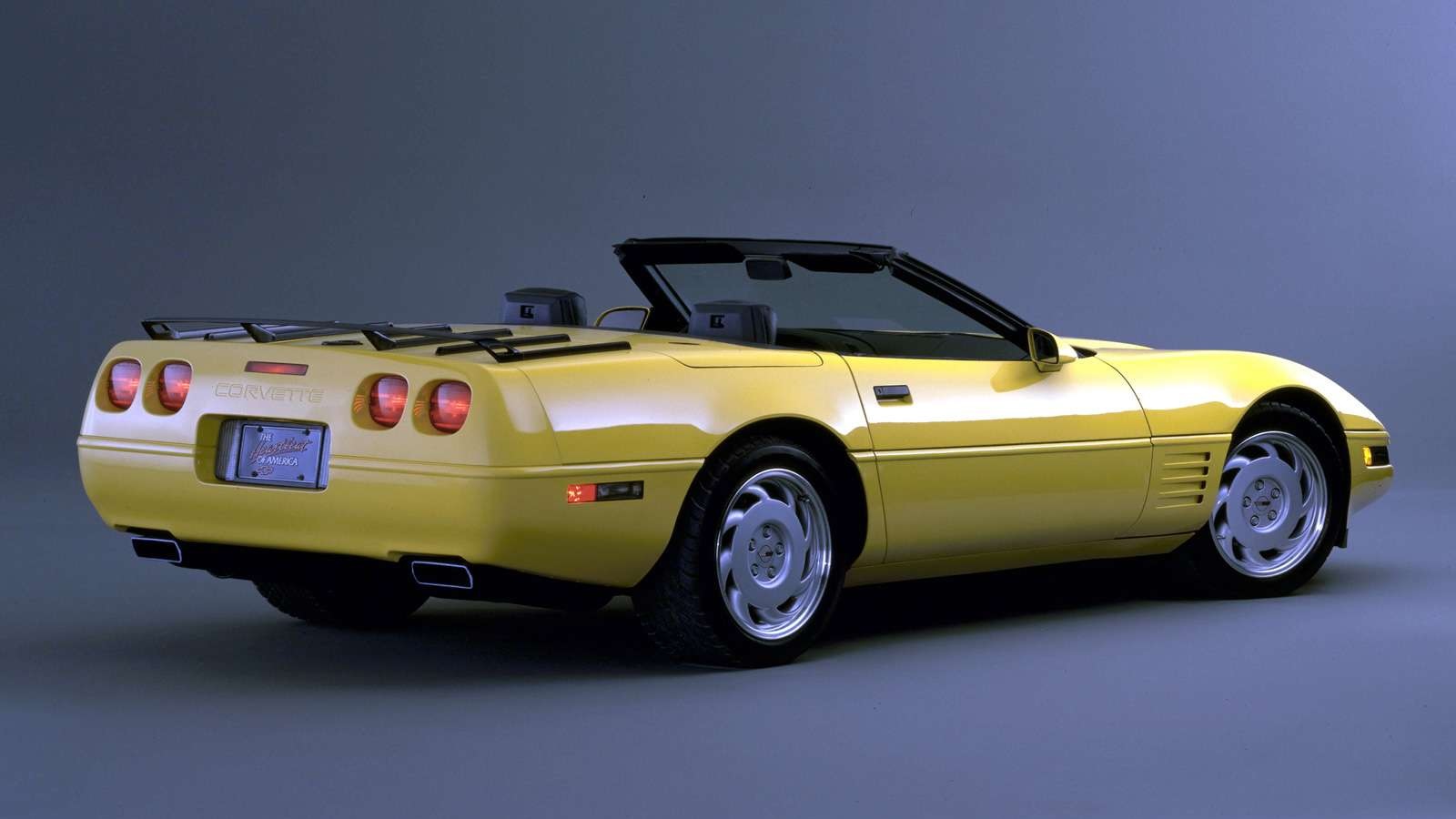
As a result of this parabolic curve of competitiveness, the C4 is arguably the most enigmatic Corvette. For every flaw, there was a triumph. Abominably tall sills versus big-league grip, cramped footwells versus serious moments of innovation, brittle ride quality versus a performance package once so formidable that it was banned from an entire class of racing. However, it was exactly the flagship GM needed for the ’80s, a shot in the arm after the sad decline of the C3. After the malaise era of the late ’70s, this sleek sled was “we’re so back” in four-wheeled form, and that absolutely makes it a hit. If you’ve always wanted one, they’re now cool again, so why not pick one up?
Top graphic image: Chevrolet
Support our mission of championing car culture by becoming an Official Autopian Member.
The post If ‘We’re So Back’ Was A Car, It Would Be The C4 Corvette: GM Hit Or Miss appeared first on The Autopian.