The crutch of punditry is that people can be critical of a person or a company, over and over again, and so long as that company fails one time, those writers can be correct and crow about how they were right all along. It is much easier to be a critic of the producer than it is to be the one who produces things for critique. It’s also generally far more rewarding financially to be the producer than the critic, which is how the universe finds balance.
Elon Musk is more successful than I probably will ever be as a businessman and celebrity, so perhaps my critiques are not worth that much. At the same time, Tesla is out with its latest Master Plan and it sounds like mostly meaningless garbage to me. Musk also said this shows that cars will be worth less than 20% of the value of the company, which is a point where we might agree.
That’s good for Tesla, I guess, since the cars keep running into trouble. The latest issue is in India, which was supposed to be a growth area for the company. Maybe not so much. Audi, on the other hand, is looking to grow the value of its car division, and it’s looking to grow in America.
Tariffs have screwed up plans across the globe, and now Mazda is becoming two different companies depending on which market you’re looking at, and I think it’s a loss for American consumers.
ALSO, an important note: We instituted some changes this weekend and, uh, the style sheet got altered somehow. We’re fixing it, so apologies for the bright red text everywhere.
‘~80% Of Tesla’s Value Will Be Optimus’

Tesla likes to release these Master Plans that outline what the future of the company will be. I think this is a good practice for a company to undertake, even if Tesla often misses the mark. It’s far better to aim for something big and miss than it is to fail by never attempting anything ambitious.
The first Master Plan goes back to 2006, and the ideas were sound. Build a sports car, use that money to build something affordable, use that money to build something even more affordable. While not everything in Master Plan 2 was achieved (including the weird Solar City sideline business), the company did preview the Model Y, which was a huge success. Master Plan 3, in 2023, seems to be where things went off the rails a bit.
Master Plan 4 is out and, uh, there’s both a lot here and not a lot here:
This next chapter in Tesla’s story will help create a world we’ve only just begun to imagine and will do so at a scale that we have yet to see. We are building the products and services that bring AI into the physical world.
We have been working tirelessly for nearly two decades to create the foundation for this technological renaissance through the development of electric vehicles, energy products and humanoid robots.
Now, we are combining our manufacturing capabilities with our autonomous prowess to deliver new products and services that will accelerate global prosperity and human thriving driven by economic growth shared by all.
We are unifying our hardware and software at scale, and in doing so, we are creating a safer, cleaner and more enjoyable world.
This is sustainable abundance.
The topshot. Is that AI? Why is there an indoor lamp outside? What is going on here?
Whatever. I have said this before, but Elon Musk doesn’t want to be CEO of a car company, because a car company is boring and not, ultimately, as valuable as a company that does AI/Robots, et cetera. Musk said basically the same thing in a response to this tweet:
Those are the biggest factors.
~80% of Tesla’s value will be Optimus.
— Elon Musk (@elonmusk) September 1, 2025
Logically, if the Optimus robot is worth 80% of the value of the company, then cars are worth less than 20%.
This might be a sincere and thoughtful vision from the company, but given recent promises and the current environment, it is also mostly indiscernible from something a struggling company might do to prop up the sky-high valuation of its own stock. It’s not a good sign when your platitudes about the future sound an awful lot like Faraday Future.
I am not alone in this feeling. Here’s Electrek’s Fred Lambert (who, it’s worth mentioning, is rather critical of Tesla these days) on MPP4:
Tesla is lost as a company. This is a bunch of utopic nonsense, complete with AI “abundance” buzzwords that Grok could have easily written.
Elon’s first two master plans were straightforward, featuring clear, actionable steps and a well-defined product roadmap.
In comparison, this is opium meant for Tesla shareholders to get their fix of potential “infinite growth” as an AI stock. It’s not real.
While we wait for fully functioning robots and truly self-driving cars, there are still Teslas to be sold. Just maybe not in India.
Tesla Only Sold 600 Cars In India
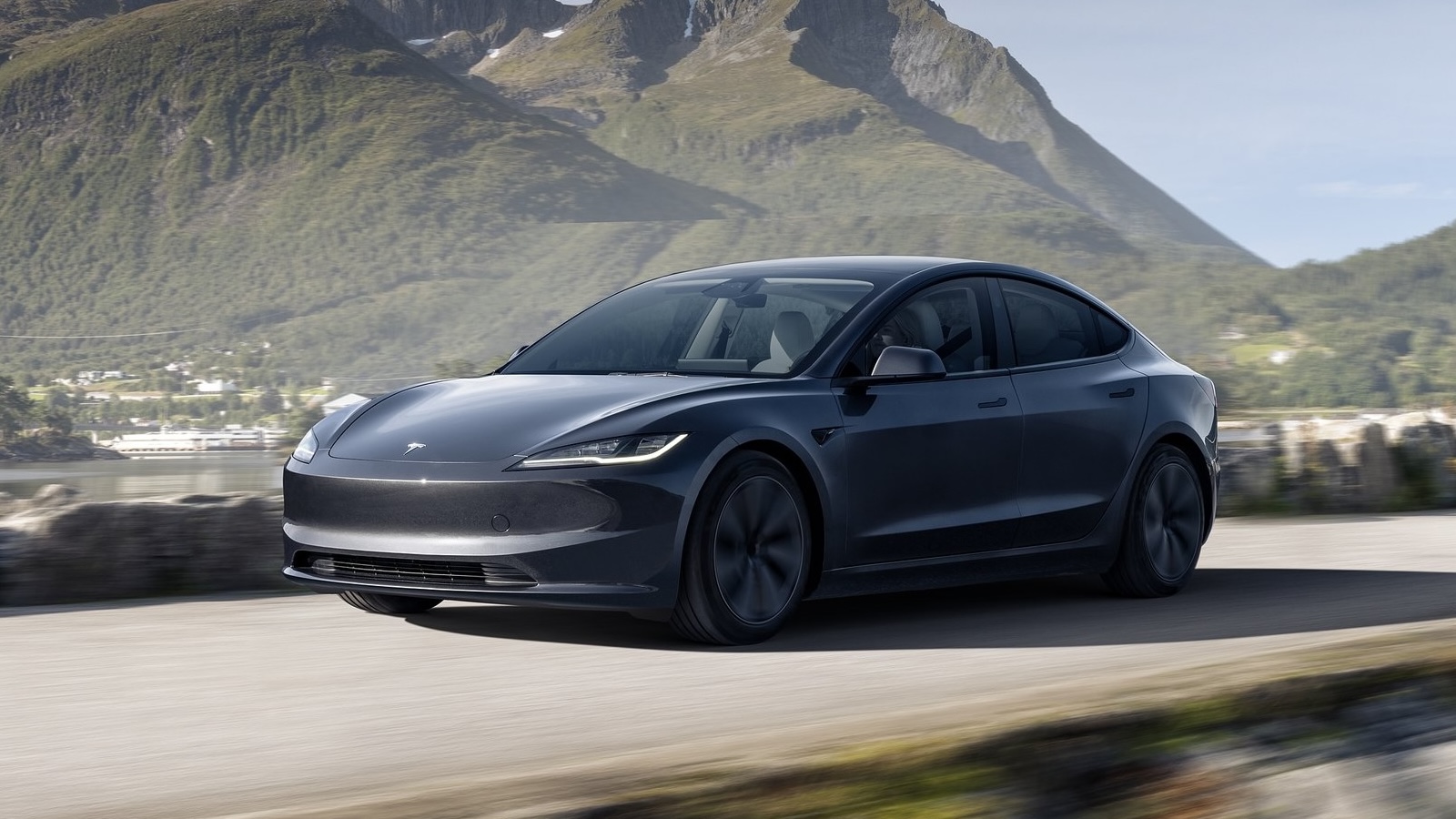
Looking at the global picture, Tesla is sliding in the United States, cratering in Europe, and having trouble in China. Where could it possibly expand? For a moment, India seemed like a potential growth market for the company, as Elon Musk was friends with President Trump and President Trump was friends with Indian Prime Minister Narendra Modi.
It doesn’t seem like Musk/Trump is a friendship that’s cherished by either anymore, and President Trump and PM Modi are also at odds.
How is Tesla doing since its launch in India? The company has delivered just 600 cars, which means it’ll likely be short of its goal, according to Bloomberg:
The company had originally aimed to utilize its full 2,500-car annual quota this year, Bloomberg News reported earlier.
While the company was banking on its brand power and its chief executive officer’s once-cozy ties with Donald Trump to break into India’s nascent EV sector, Musk’s public fallout with the US President, deteriorating bilateral ties, high local import taxes and the harsh reality of a price-sensitive market have unraveled that equation.
Tesla’s cheapest car is almost three times more expensive than comparable models, and that’s only going to get worse, according to this Reuters report:
An Indian tax panel has proposed steep increases in consumer levies on luxury electric cars priced above $46,000, a government document showed, a move that could impact sales of carmakers such as Tesla, Mercedes-Benz, BMW and BYD.
Prime Minister Narendra Modi is aiming to reform India’s tax system and is pushing Indians to buy more domestic goods just when relations with the United States have soured due to high tariffs. His government has recommended hefty cuts in the goods and services tax (GST) that could make everything from shampoos to electronics cheaper.
The key panel tasked with making rate suggestions to India’s powerful GST Council has backed sweeping cuts to many items in line with Modi’s overhaul, but it has called for raising taxes on electric cars, the document detailing its recommendations showed.
Yeah, alright, screw it. Robots!
Audi’s Master Plan Is: Sell More Cars
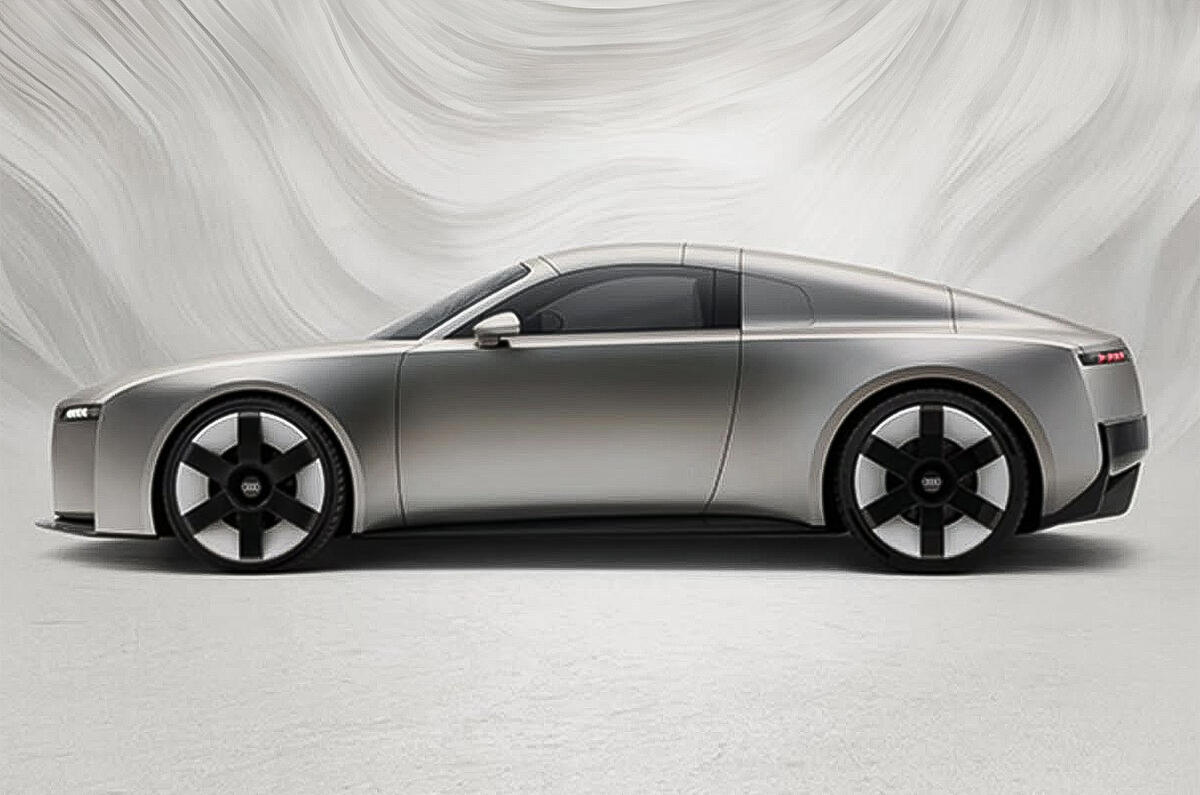
It’s been a rough few years for Audi, in no small part because Tesla replaced it as the cool, tech-forward car to have. The company also doesn’t make any cars in the United States, and its main seller here isn’t USMCA-compliant.
So what’s a company to do? According to Reuters, there’s no “quit” in Audi, although there is a “U” and an “I.”
Audi could target long-term annual sales of at least 2 million cars, up a fifth from 2024, under a new strategy the premium brand is expected to release later this year, according to a person close to the matter.
The potential target would be an annual record for Audi and points towards a more aggressive approach after some tough years that have seen its sales slip.
When is it supposed to hit 2 million sales as a brand? No one knows. How is it supposed to do it? Also, no one knows. Maybe a new Audi TT will help.
A Tale Of Two Mazdas

I have always thought of Mazda as a company that has continued to carry the torch for smaller, sportier, and generally more premium-feeling affordable cars. In this new tariff environment, it seems like Mazda is going to continue that practice, albeit with a different mix of values for different markets.
As an export-heavy company that sells most of its cars outside of Japan while building many of them inside the country, Mazda has left itself open to being a huge victim in the current trade war. The solution seems to be that it’ll try to sell more high-margin, expensive vehicles in the United States at the expense of more affordable small cars. In Japan, it’ll sell more affordable small cars.
Here’s how Hans Griemel describes the plan:
The sudden slowdown in Japan underscores how tariffs are biting harder and forcing a strategy shift at export-dependent Mazda. CEO Masahiro Moro has pledged to restore profitability partly by focusing on higher-margin vehicles, as Mazda fights back from a quarterly loss in the April-June period.
[…]
Mazda, which derives 90 percent of its global sales from outside its home market, said in June it wants to boost sales at home by about a third to buffer the blow from U.S. tariffs.
It seems to be pushing lower-margin vehicles in Japan to offset slower sales of those products overseas. In Japan, Mazda2 sales increased 62 percent in July as Mazda3 sales climbed 18 percent.
Building as many vehicles in the only factory it has in the United States makes sense, though I think Mazda risks getting stuck in extremely competitive categories instead of owning less competitive ones.
What I’m Listening To While Writing TMD
Via Dan Roth, here’s Melissa Carper with “1980 Dodge Van,” which is the only song I know about focused on the 1980 Dodge Van.
The Big Question
What’s your automotive master plan?
Photo: Tesla
The post Elon Musk Doesn’t See Cars As A Particularly Valuable Part Of Tesla’s Future appeared first on The Autopian.

