Are you familiar with the Spatz (Bayerische Autowerke G.m.b.H. Nürnburg-Traunreut) microcar concern? What an insulting question, of course you are. My apologies. I was thinking about Spatz because some missionaries from the local Church of the Microcar showed up at my door yesterday evening (in a King Midget) and wanted to tell me the Good News about microcars. I told them I was already part of the Beth Microcar Reform Congregation Temple, but I’d be happy to listen, since we all honor the same microcars, just in our own unique ways.
I made Mai Tais for everyone and sat down to listen to them; they wanted to share with me some esoteric knowledge about the Spatz microcar. This is a car I have only passing familiarity with, so I was curious.
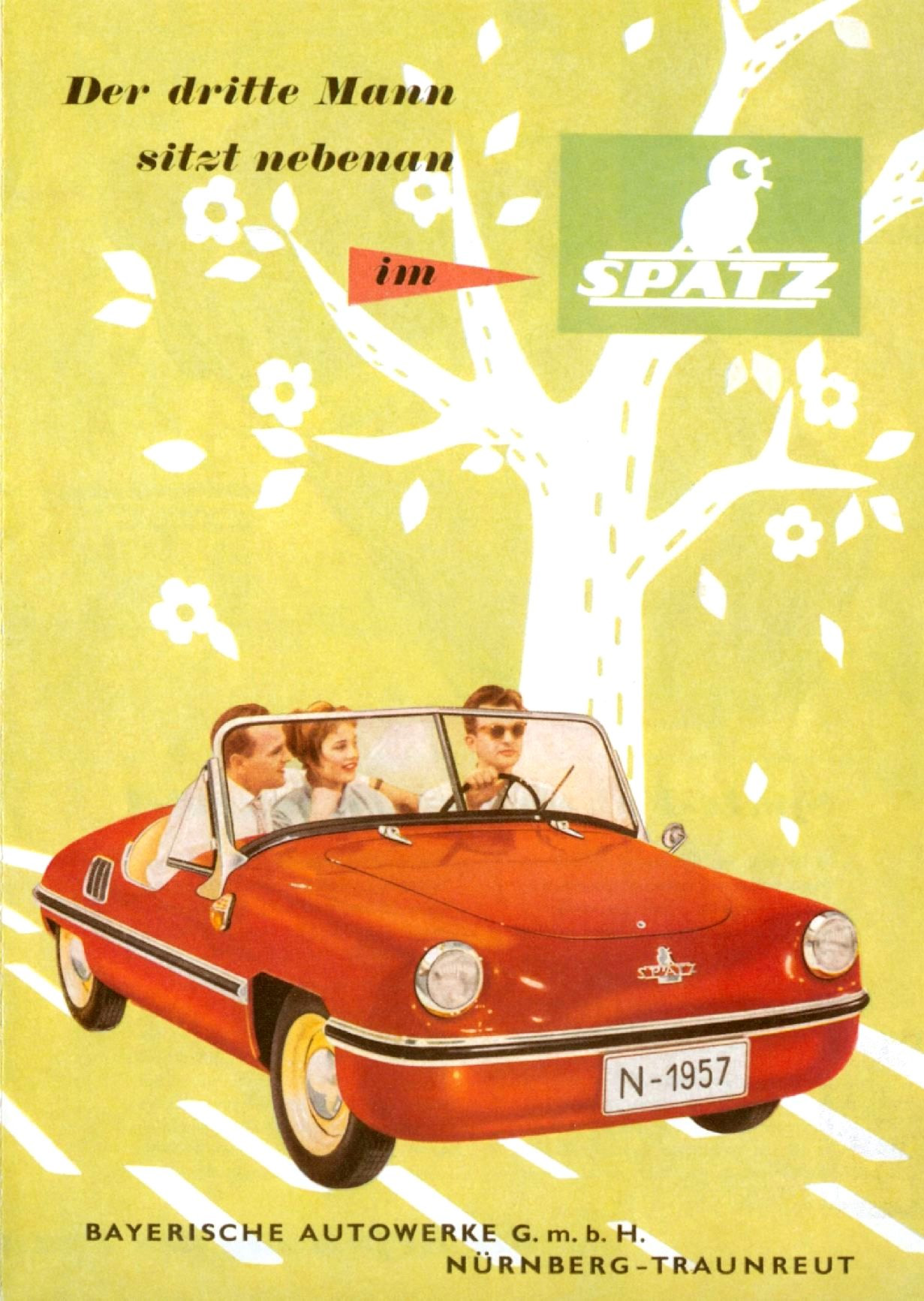
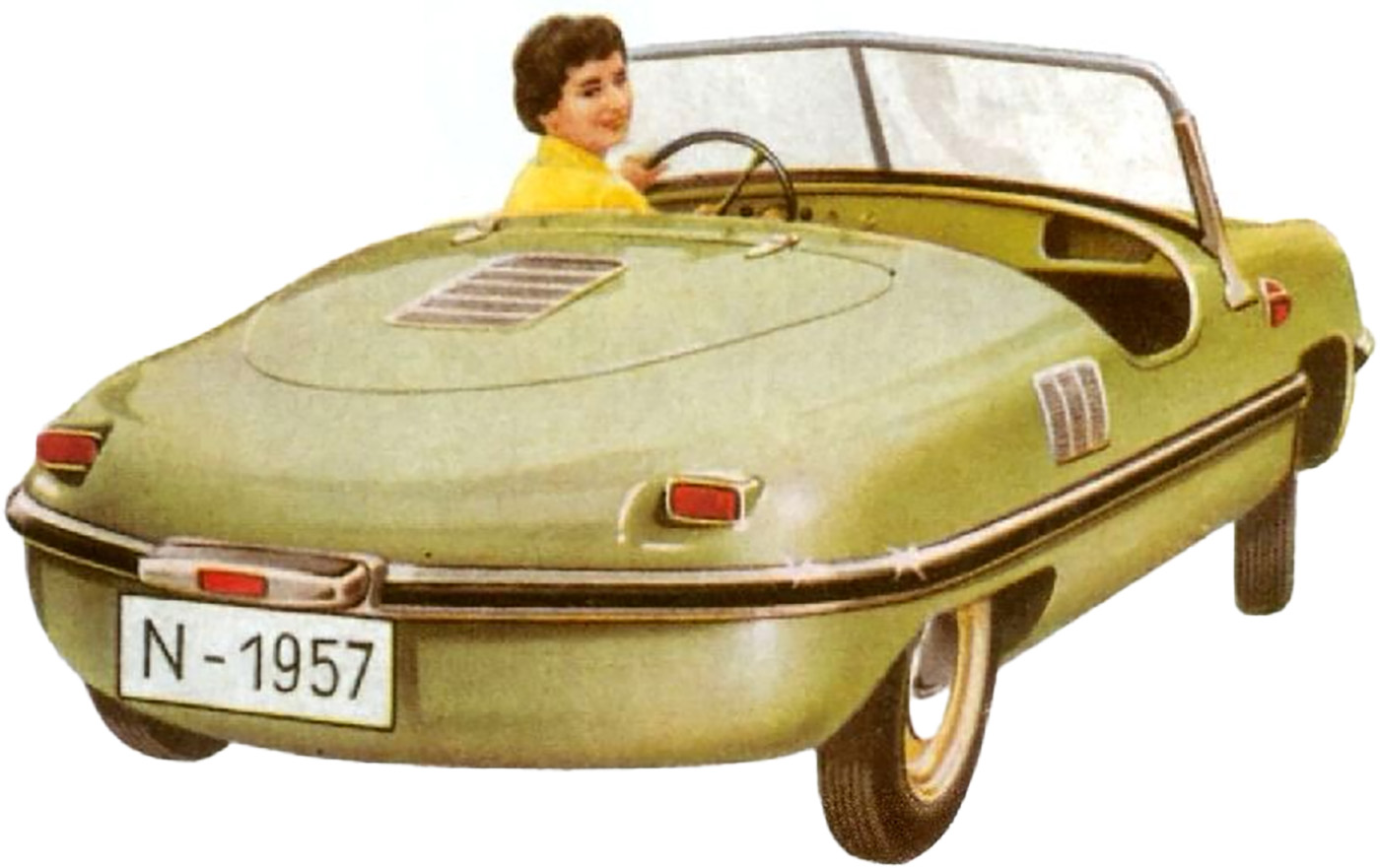
They laid an old brochure from 1957 on the coffee table. It was beautifully illustrated, in keeping with the standards of the era, and showed on the cover a Spatz microcar, improbably loaded with three people sitting abreast:
I’ve always wondered how plausible it was that you’d actually cram three people in one of these 10 horsepower little fiberglass tubs. I mean, look at the seating and size of this thing from above:
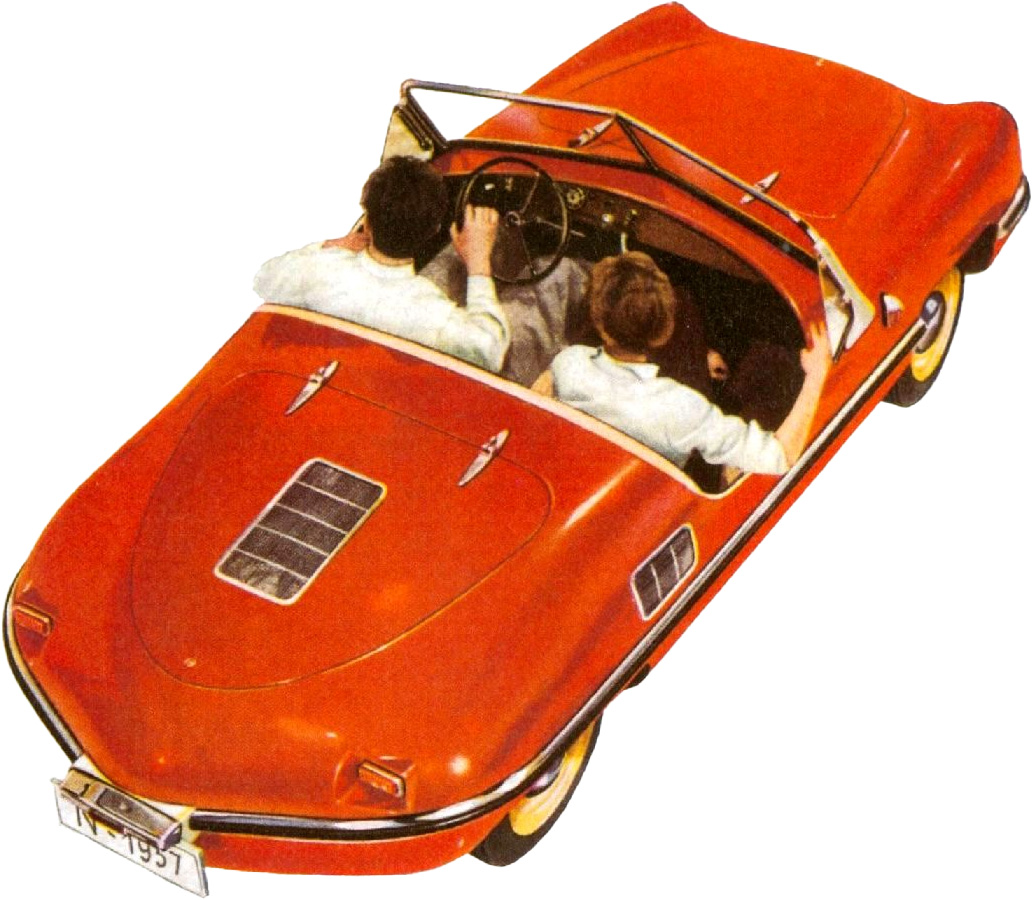
Two people fit fine in there, a bit cozy, but it seems reasonable. Cramming another adult between them? Laps are being sat upon, at best. I do like that very Porsche 356-like engine lid grille, though.
Anyway, the missionaries were telling me the story of the Spatz, how it started as a three-wheel Brütsch microcar with its suspension mounted directly to the fiberglass tub, which proved to be a disaster. Then, Harald Friedrich acquired the license to build the car from Brütsch, but was unsatisfied with the inadequate, fiberglass-supported chassis design. So he reached out to someone to design a new chassis.
But not just any someone; a legend. Hans Ledwinka.
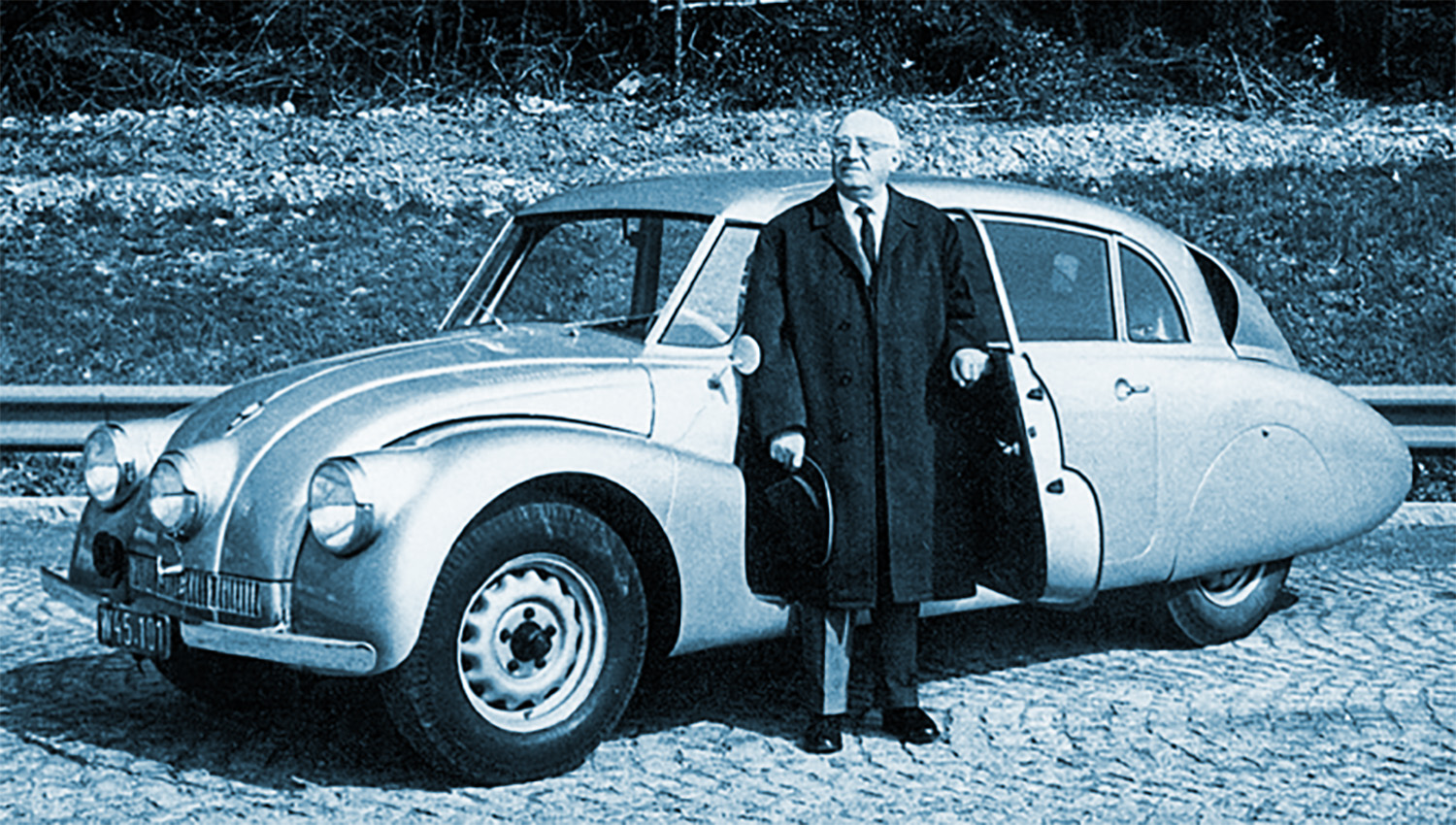
Yes, that Hans Ledwinka, the man behind the legendary Tatras and the streamlined rear-engined Tatras, the man whom Ferdinand Porsche admitted to “looking over the shoulder” of when designing the Volkswagen, the pioneer of the central backbone chassis still used on big Tatra trucks and other vehicles today.
Even though he was 77 at the time, Ledwinka agreed to redesign the chassis, and what he came up with was pure Ledwinka, just very scaled down and simplified:

Backbone chassis, rear engine, independent suspension (looks a little VW like up front, even), and now a four-wheeler. A great, simple, well-designed and robust chassis from the mind of someone who did this sort of thing better than almost anyone.
When the missionaries revealed this, I was so shocked I did a powerful Mai Tai-fueled spit take, soaking them both in the cocktail spray, leaving them dripping on the sofa. One of the missionaries took off her glasses to clean the spatter off them, but otherwise no mention of the spit take was made. These were well-trained missionaries.
I’ll admit, I was looking at Spatz microcars in a whole new way now. I had no idea under that fiberglass clamshell lurked the last chassis designed by a true automotive legend! This changes everything!

While I don’t think I’ll be converting and joining the local Church of the Microcar, I think I will share the Good News about Spatz at this week’s Microcar Shabbos service at the temple tonight.
And good Microcar Shabbos to all of you, whatever denomination of Microcar interest you practice!
The post This Fun Little Microcar Had The Last Chassis Designed By An Absolute Legend appeared first on The Autopian.