Railroad maintenance is a critical element in keeping freight and passenger trains running smoothly and safely. Armies of skilled technicians command all sorts of complex vehicles to inspect, repair, and maintain a railroad’s right-of-way. Decades ago, these vehicles were very different and often resembled miniature versions of your favorite trains. These vehicles, commonly called “speeders,” were once the backbone of what’s called “maintenance-of-way.” These are pieces of railroad history that you can own and even sometimes drive down a real track; a speeder is pretty much the closest most people will come to owning a real big locomotive.
If you love trains as much as I do, you probably focus so much of your railfanning on the massive beasts of locomotives that propel one-mile-long trains down the rails. There’s nothing wrong with that! Locomotives, regardless of whether they’re pulling passengers or the cargo that moves a nation, are majestic.
But perhaps equally as important as these giants are the smaller rail vehicles that support a railroad. Rail infrastructure needs inspections, maintenance, building, and replacement. For that, railroads employ an entire army of specialized rail vehicles that keep the trains riding down the tracks. A rail speeder is an artifact of how maintenance-of-way equipment used to be. They’re also one of the most accessible ways to own a functional part of railroad history that you can actually drive.
Working Smarter, Not Harder
The railway speeder is steeped in history. These simple vehicles were an evolution of a somewhat even more rudimentary railcar, and all of them were designed to make working on the rails easier.
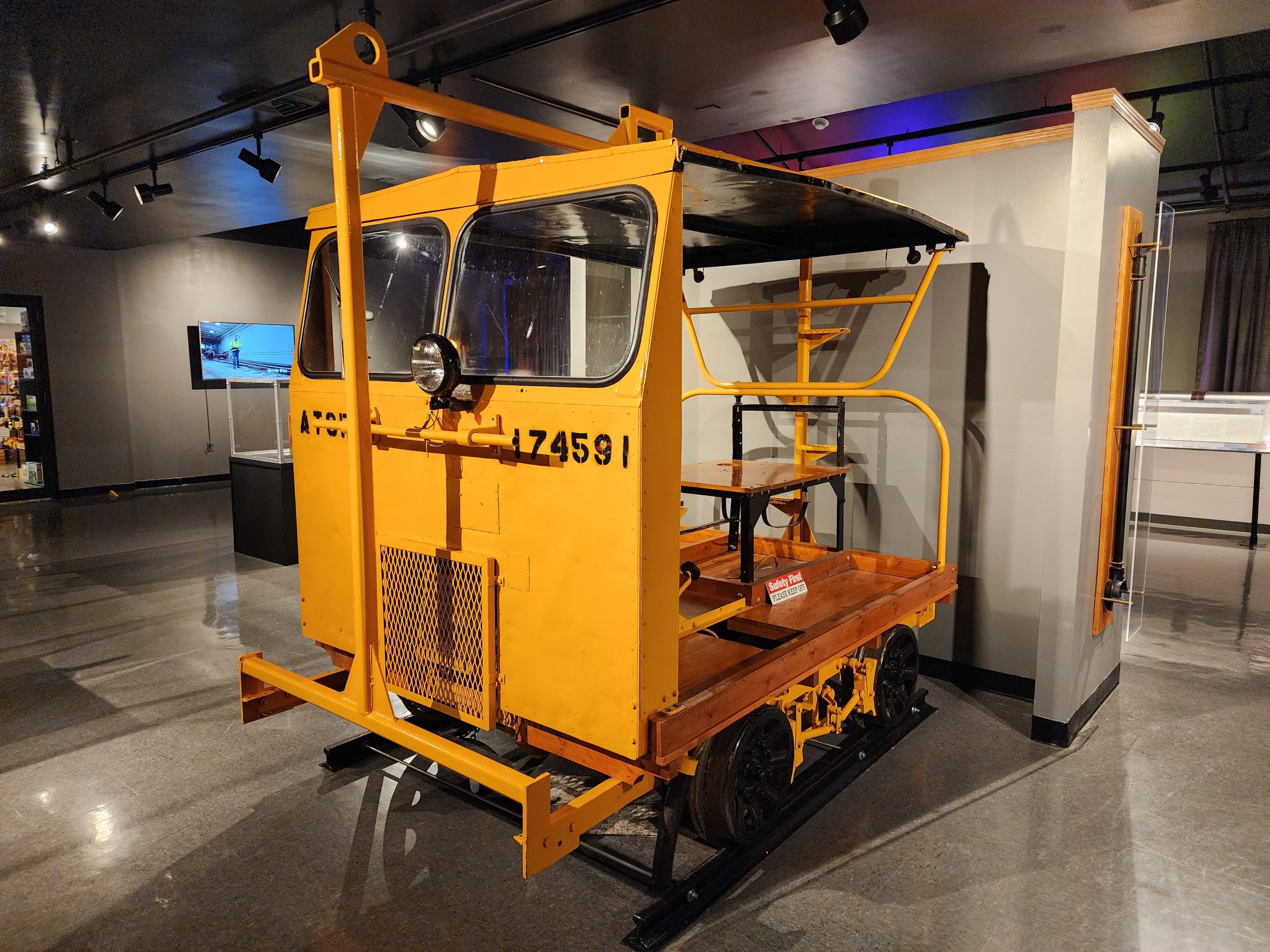
As the National Railroad Museum wrote in its exhibit that I visited, motorized rail maintenance vehicles weren’t a thing in the 1800s. If workers needed to conduct track inspections or repairs, they often boarded four-wheeled, hand-operated railcars. These cars, which were heavy and cumbersome, tired workers out as they needed to pump up and down to propel the car.
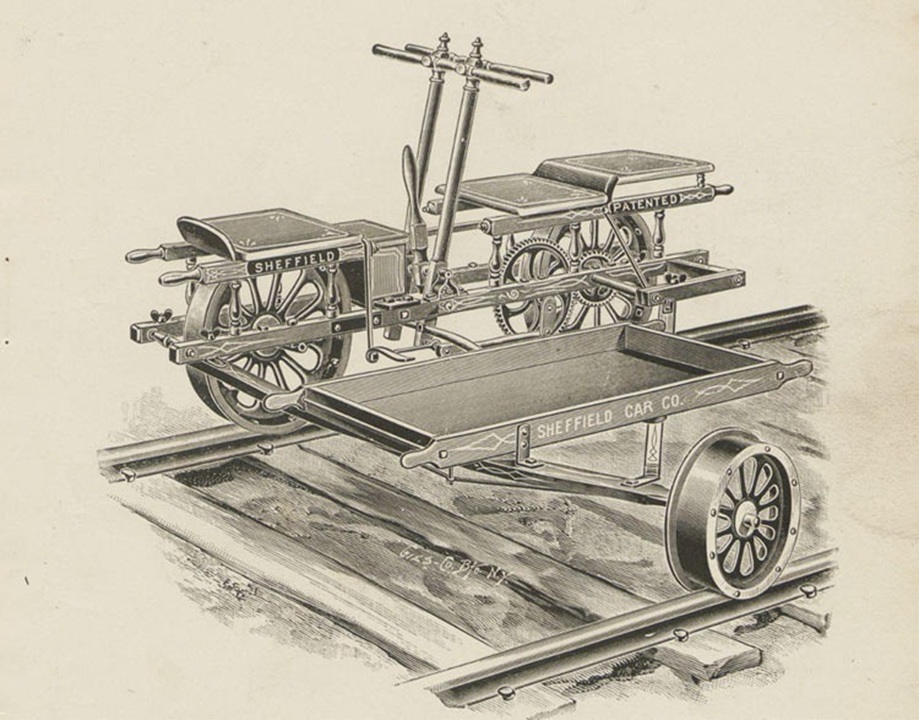
Railroad historians generally accept one person as having invented the solution. In 1877, Michigan farmer George S. Sheffield created a railcar that changed the world of railway maintenance. Sheffield wanted an easier way to reach Three Rivers, a town seven miles away from his farm, where he worked as a mechanic. In the past, Trains.com writes, Sheffield walked those seven miles along a road. His travel was cut down by three miles by walking down Michigan Central Railroad trackage. However, this still meant walking at least eight miles in addition to having a workday. There had to be a better solution.

To give his feet some much-needed rest, Sheffield built a 150-pound, three-wheeled car that rode on rails and was propelled through moving a bar back and forth with your hands on top and feet on bottom. The rail velocipede was born. If you’re still scratching your head over how it works, imagine a rowing machine where the bottom of the bar has a linkage and gear that drives a wheel. Boom, there you go. The velocipede has two wheels on one side and resembles a bicycle, and the extra wheel works as an outrigger.
A year later, the Heart of Dixie Railroad Museum notes, Sheffield realized that his vehicle would likely have value to railroads as an alternative to the heavy handcars on the rails then. The Trains.com version of Sheffield’s story (the story varies slightly depending on source) states that Sheffield rode his velocipede at night to avoid detection. After all, he was trespassing on the tracks. That was foiled one night when he discovered a broken rail. He flagged the broken rail, which prevented a derailment, but his secret was out. Apparently, the Michigan Central Railroad was less mad about the trespassing and was more impressed with the velocipede.

Either way, the rail velocipede had several advantages over existing handcars. Not only was it easy to drive, but if workers piloting a velocipede crossed paths with an oncoming train, all they had to do was lift the car off the track, let the train pass, and then put it back onto the rails.
Sheffield’s company was the first to build velocipedes for railroad use, and as their use became more widespread, other companies sprouted up as competition. One of them, the Heart of Dixie Railroad Museum notes, was the Kalamazoo Railway Supply Co. of the 1880s.
Velocipedes were versatile vehicles. While they were often used to transport maintenance workers to sites, they also found other uses. For example, the Boyles Yard in Birmingham, Alabama, used kerosene lanterns to indicate which directions switches were thrown. This is a job that is handled by a sign or a light today, but back then required a person. The lamplighter had to travel the yard to ensure that the lanterns were lit, and the velocipede made that job easier.
The rail velocipede was the direct ancestor of the speeder. As Trains.com writes, Sheffield’s velocipedes caught the attention of Charles H. Morse in 1888. Morse, who is famous today for being a co-founder of Fairbanks, Morse & Company. George S. Sheffield & Company would fall under Fairbanks, Morse & Co. control in 1981 after Sheffield departed his business. Fairbanks-Morse Co. would later become famous for its farming equipment, diesel locomotives, and the opposed-piston diesel engine that it built in 1912.
The Speeder Is Born

This transition period in Sheffield’s company was important because this was around the time when the George S. Sheffield & Company created a rail velocipede with a motor. Fairbanks-Morse continued this development, creating the motor car, or as it’s more commonly called, the speeder.
Early examples of these rail vehicles weighed a few hundred pounds, had two-stroke gasoline engines, and were about five to seven feet long. They often featured open-air cabs and no real creature comforts. They were little more than more sophisticated versions of those earlier velocipedes, but with motors.
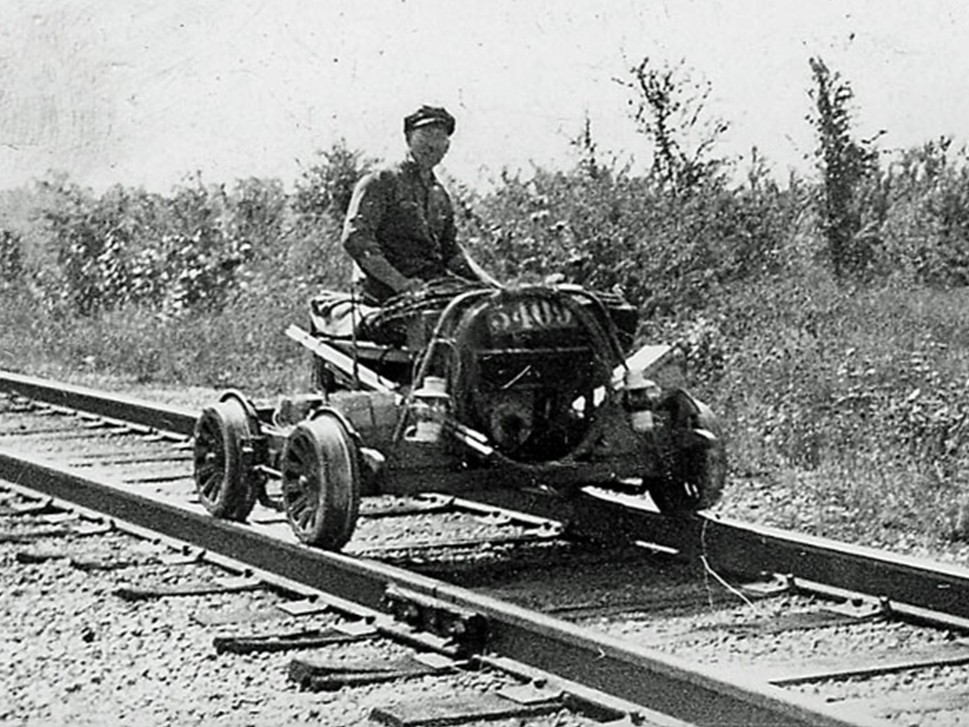
Fairbanks-Morse was a prominent early speeder producer, as was the Fairmont Gas Engine and Railway Motor Car Company. Fairmont was arguably the most famous and most successful of the speeder producers. Its speeders did feature cabs that kept railway workers out of the weather, and chances are, if you find a used speeder for sale, it will likely be a Fairmont. As train resource American Rails writes, Fairmont produced speeders from 1911 to 1991, and over that time, the company built over 73,000 examples.
The speeder eventually became the bedrock of railway maintenance. If a railroad needed to get a maintenance crew to a part of the track to conduct repairs or inspections, they could hop in a speeder and zip down the track. Speeders could also be used as a sort of pilot car to check out a potentially damaged piece of track before a train gets there.

Amusingly, despite their common term, speeders aren’t very fast. They often have top speeds of up to around 35 mph. That’s not fast, even by train standards. But they’re “speeders” because they are much faster than the handcars of old, which went about the speed of a brisk jog on a good day.
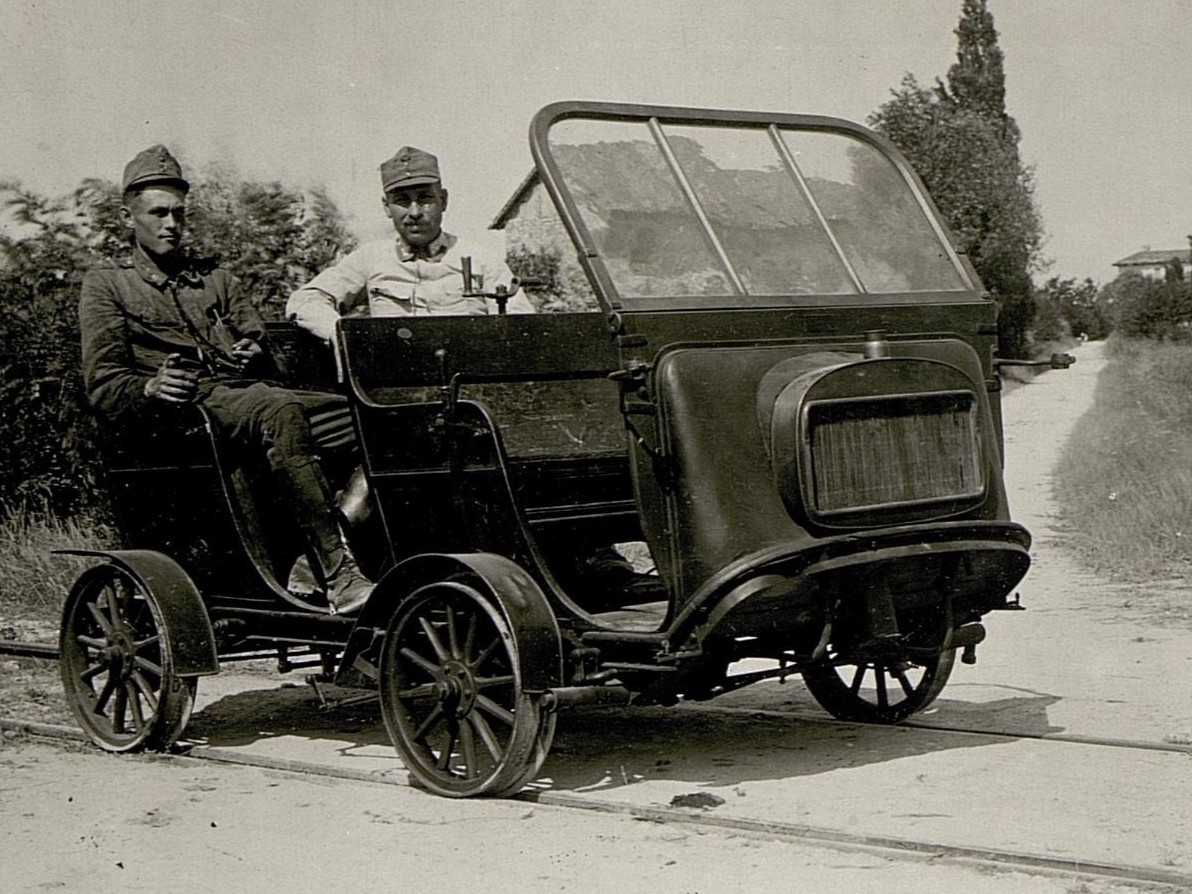
The speeder formula worked so well that, fundamentally, they didn’t change a lot over the course of those decades. Some were made larger to carry more than just two crew. Others had more elaborate cabs and four-stroke engines. But at its core, a speeder is perhaps one of the simplest forms of self-propelled train car. Speeders also weren’t purely an American thing, either. Here’s a speeder operating in Austria in the mid-1910s:
Railroads used these speeders for decades, giving firms like Fairmont business through that time, but, like the handcar, the speeder was eventually superseded by something better.
By the 1980s and 1990s, the hi-rail truck, which is a shortening of “highway-rail” truck, rose to popularity as a crew vehicle that did everything speeders did, but without being constrained to tracks. Hi-rail trucks, which are pickup trucks, SUVs, and medium-duty commercial trucks with retractable rail axles, can drive on a road until they get close enough to a jobsite, then they can deploy their flanged wheels and ride down the rails.
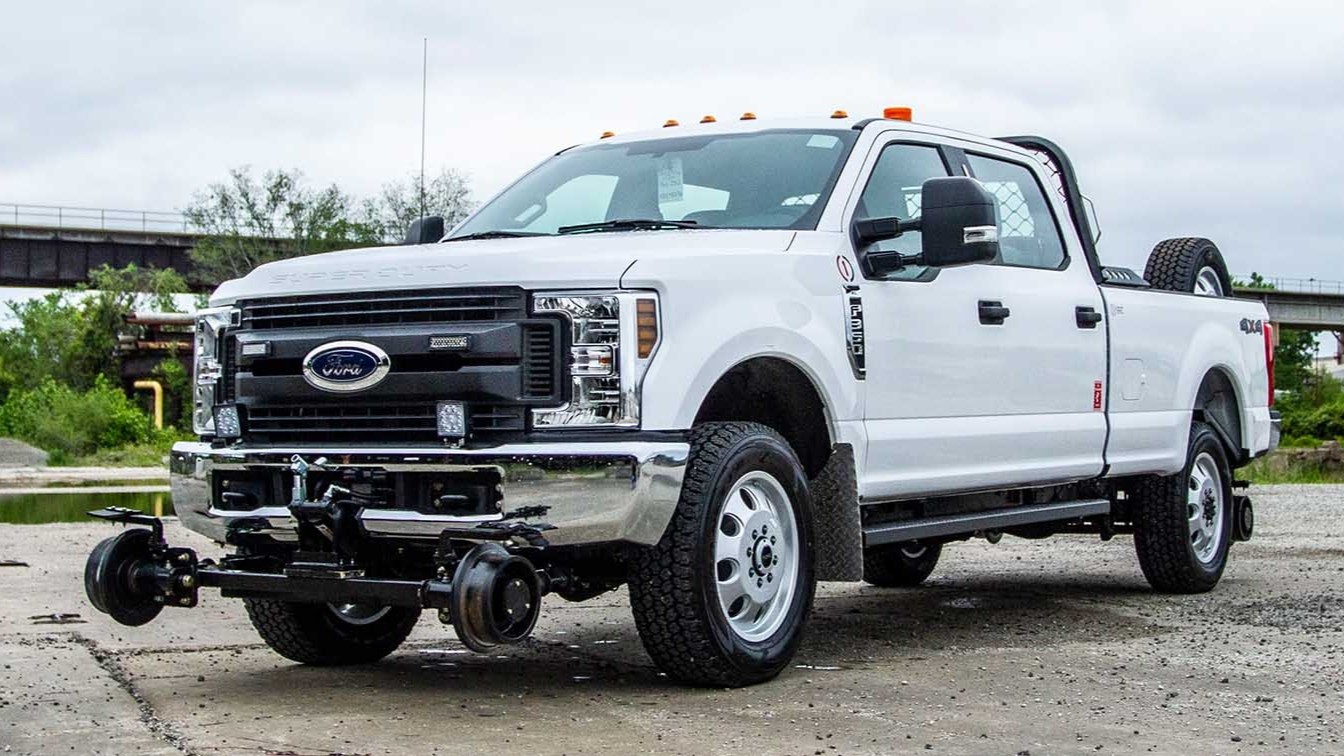
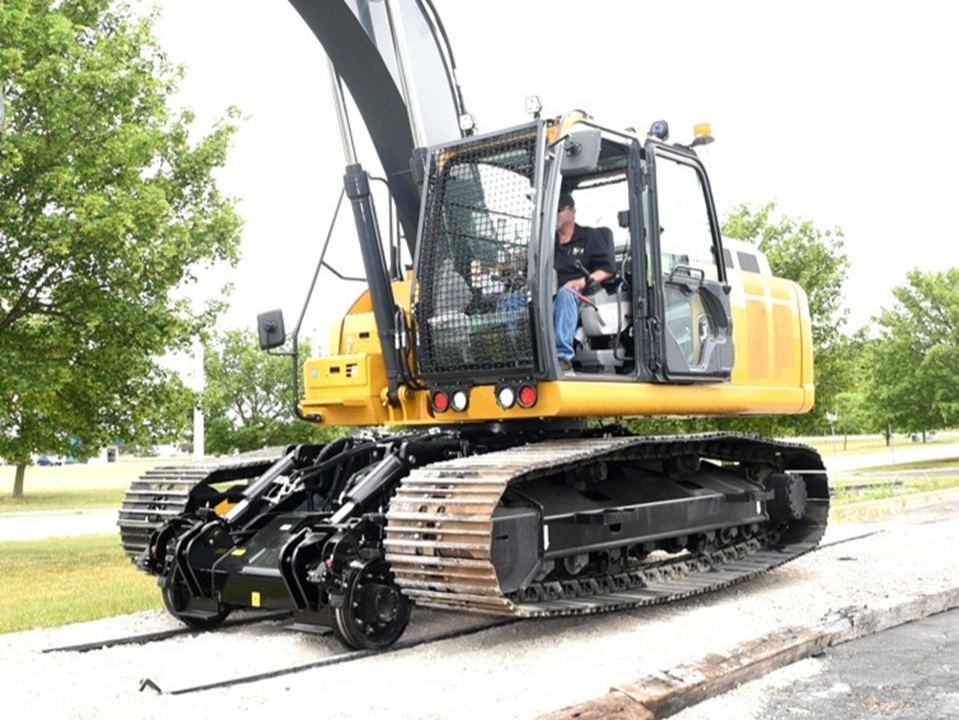
These trucks are also known through the brand name of Hy-Rail as well. Many hi-rail trucks use the truck’s tires to propel it down the track, though some hydraulic drive systems also exist. Those nifty hydraulic systems also mean that construction equipment can also drive down the rails.
There is a shocking number of vehicles that railroads use to inspect, maintain, and build their infrastructure, including anchor spreaders, rail lifters, regulators, spike drivers, spike pullers, tampers, and more. Hi-rails may be designed to help maintain signals, for welding jobs, for handling and maybe dumping materials, for inspections, or perhaps any other maintenance function where a crew might want to get there fast and doesn’t need to drive the whole way on the tracks.
A Locomotive You Can Own And Run

Ultimately, the advent of the hi-rail made the speeder obsolete. Thankfully, speeders are alive and well. You’re unlikely to find one being used by a major railroad, but there are large enthusiast groups of private speeder owners. Owning and operating a speeder as a hobby is such a huge deal that there is a non-profit group, the North American Railcar Operators Association (NARCOA), to preserve speeders and organize outings.
NARCOA’s clubs offer a fascinating opportunity. The clubs that operate under the organization’s umbrella ask railroads for permission to operate on their tracks. Then, these groups, which are all over America, gather, and they drive their little speeders down the track. Sometimes the lines on which these excursions take place will be abandoned. Other times, they will be active lines. NARCOA’s clubs coordinate with the railroad to ensure traffic separation between trains and speeders. Sometimes, the railroads will even give the clubs hi-rail escorts.
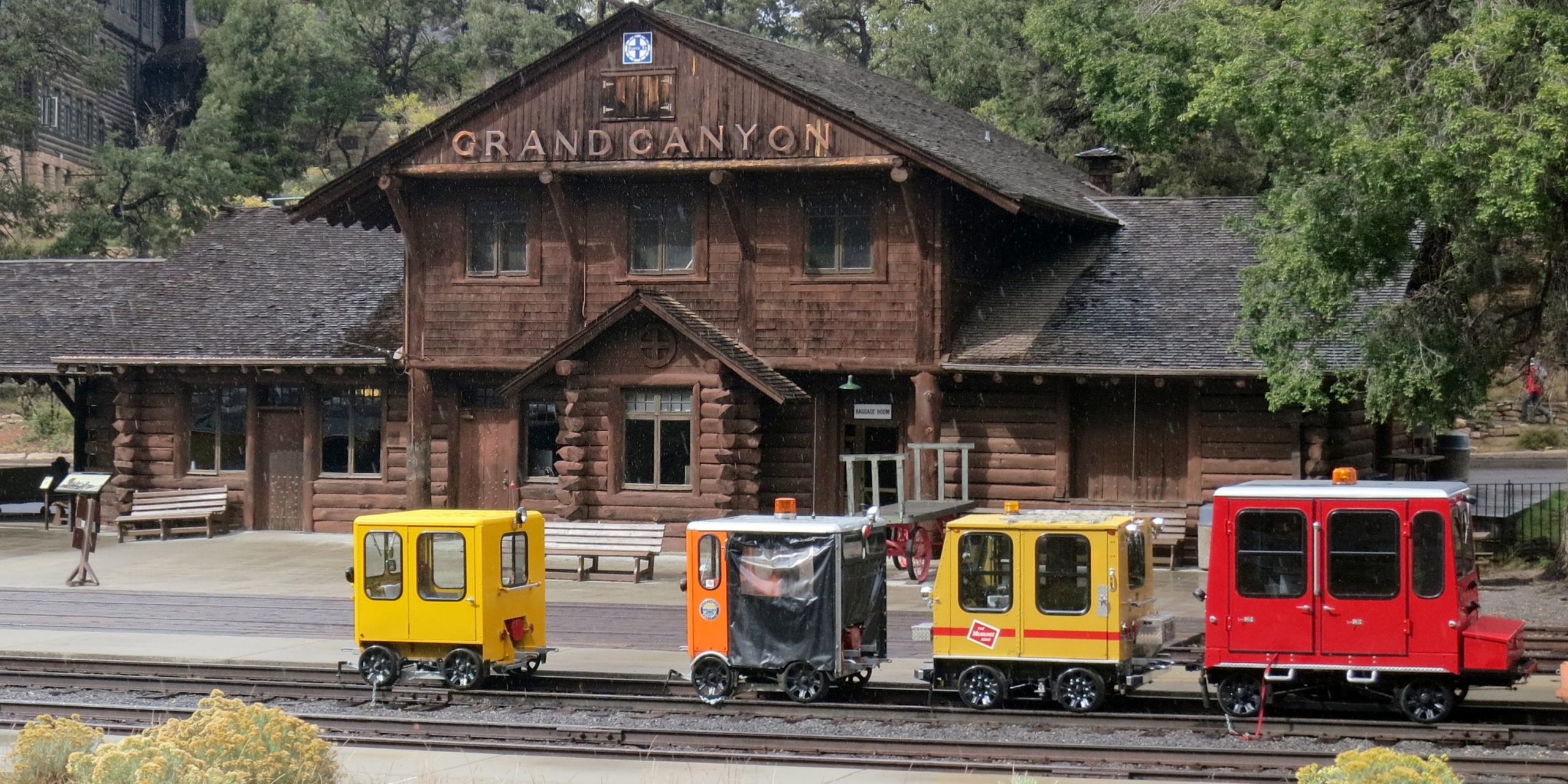
NARCOA says that buying and operating a speeder is a unique experience. This is really the only way for someone who isn’t a locomotive engineer to be able to drive a train down an active rail line. At the same time, because these excursions are often in remote areas, drivers and passengers of these enthusiast-owned speeders get to see the world from a perspective that nobody else can, as rail lines often snake through areas that aren’t accessible by any other kind of vehicle.
NARCOA continues:
Riding in a motorcar provides a perspective on rail travel that most people never experience. One is seated perhaps only two feet above the top of the rail and can see directly ahead and to both sides, similar to the view a locomotive engineer has, but even better.
Travel is relatively slow, generally averaging less than 20 miles per hour. Every culvert, bridge, road crossing, tunnel, and building along the rails is seen from an uncommon vantage point. Because motorcars are so uncommon, they attract much attention from people along the track. When we pause for lunch or other extended periods of time in populated areas small crowds often gather to look and ask questions. Most motorcars have a windshield and roof for protection from the wind and rain.
Most also have sides and backs (sometimes made of canvas) with doors (or opening flaps) and windows. Many are fully enclosed with metal or fiberglass bodies. These are the most desirable for rain or cold weather. Most excursions cover 50 to 120 miles in a day. The average hobbyist uses his motorcar 500 to 1,000 miles a year. A very few, mostly those participating in the longer trips, run as much as 2,500 to 3,000 miles a year.
Speeders Are Shockingly Affordable
If you want to buy a speeder, I have great news. It is not hard to find one of these for under $10,000. Many are even under $5,000.
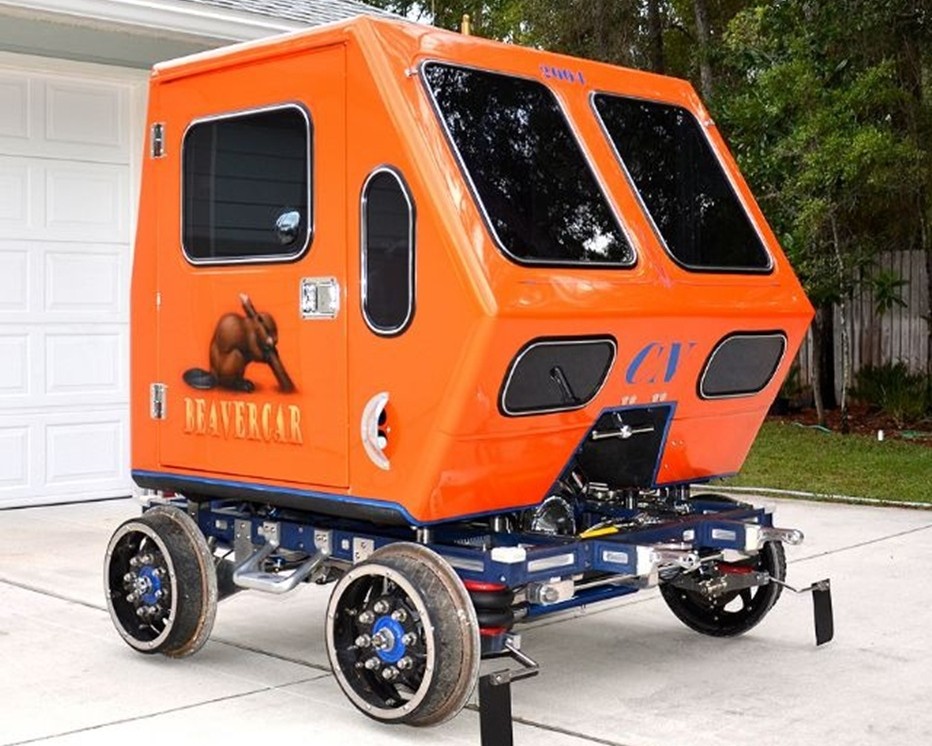
As I noted earlier, most of the speeders that you will find will have been made by Fairmont or Fairbanks Morse, the latter of which was sold to Fairmont in 1955. However, according to NARCOA, you’ll find speeders by Buda, which made motorcars into the 1940s, Northwestern Motors, which built speeders into the 1950s, and Kalamazoo, which built motorcars into the 1960s before selling the business to Tamper.
If you want to join NARCOA, you’ll want to find a speeder that’s compliant with the organization. Usually, the seller will indicate if that’s the case. The organization says that some very old speeders will have two-stroke single-cylinder engines that make 5 HP. Newer speeders might have Onan four-stroke engines that make 20 HP. Here’s an example of a 1946 Fairmont M14E Light Railway Inspection Car, which had a 5 HP two-stroke hit-and-miss engine.

That’s not a lot of power, but NARCOA says that the excursions are so slow that even the 5-8 HP motorcars have no problem keeping up with the group.
Here’s a 1974 Fairmont M19 that I found for sale in Minnesota. This one is said to be NARCOA-compliant, and it’s also said to have its original engine. In this case, that means another classic 5-8 HP single.
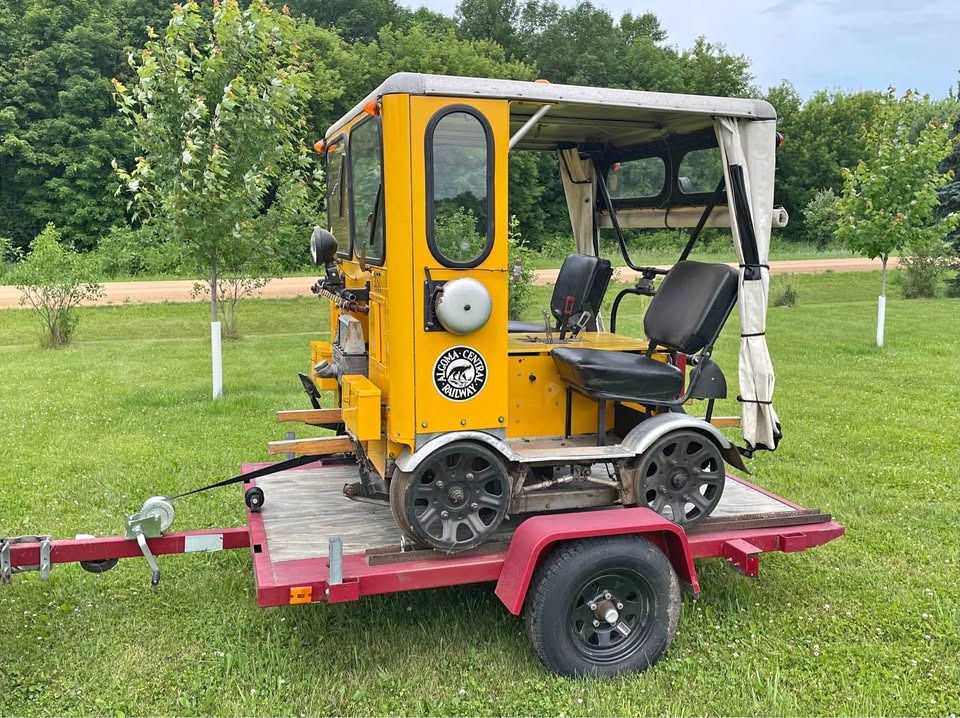
Larger motorcars exist that were built to carry larger crews of workers and even tow rail trailers. Fairmont called these Gang Cars, and these had a range of engines from a 20 HP four to an 85 HP Ford V8. That V8-powered motorcar was able to handle ten workers, a 3,500-pound payload, and tow up to seven trailers.
Whatever you choose, it sounds like you’ll have a ton of fun. NARCOA says that owning and running a speeder costs less than boating or golfing, and for many, it’s a lot more gratifying. Indeed, your cost of entry into the hobby is pretty much the cost of your speeder, the cost of the trailer to put it on (you’ll often find speeders and trailers as a package deal), and membership dues with NARCOA. Certainly, it’s cheaper than what I’m spending to learn how to fly a plane!
To me, all of this is awesome. The railway speeder was once an effective tool for getting workers around. Like so many other obsolete tech, these little train cars could have been relegated to the dustbin of history. Instead, enthusiasts have repurposed these old rides into something fun. It’s upcycling at its finest, and I love it. Maybe one day you’ll see me out there on the rails.
(Topshot: Grand Canyon National Park)
The post These Are The World’s Cutest Train Cars And They’re The Closest You’ll Get To Owning A Locomotive appeared first on The Autopian.