The second-generation Dodge Ram is one of the most iconic pickup trucks in American history. It was the primary truck behind why the pickup trucks of today all try to look like scaled-down big rigs and part of the reason why pickup trucks are now as much style statements as they are work vehicles. Yet, the United States actually didn’t get the weirdest version of its icon. Meet the Dodge Ram 6500 and Ram 7000, two medium-duty commercial trucks built just for Mexico.
Medium-duty trucks have an important position in the truck market. They’re the sorts of trucks that you buy when you need something bigger and heavier than a heavy-duty pickup truck, but when the work you need done doesn’t require a full-fat semi-tractor. School buses are often built on medium-duty platforms, as are box trucks, tow trucks, utility trucks, and the largest U-Haul moving trucks.
Currently, you’ll find medium-duty rigs among dedicated truck producers like International and Freightliner, but also by automakers like General Motors, Ford, and Stellantis. Trucks built by the Big Three join their medium-duty line to their famed truck nameplates, the Silverado, F-Series, and Ram, respectively. As far as the U.S. Federal Highway Administration is concerned, trucks start becoming “medium-duty” once they reach the Class 3 mark, which is defined as a truck with a gross weight rating of 10,001 pounds to 14,000 pounds. Yep, that means that, in the eyes of the government, the Ford F-350 is a medium-duty truck. Per the feds, the medium-duty range ends at Class 6, which covers trucks with gross weights of 19,501 pounds to 26,000 pounds.
Add one more pound, and you get to Class 7, which goes up to 33,000 pounds. American states will require their drivers to have an upgraded license to drive work trucks like these. Some states start enforcing license weight classification rules earlier. In my case, my home state of Illinois requires a license upgrade at 16,001 pounds.
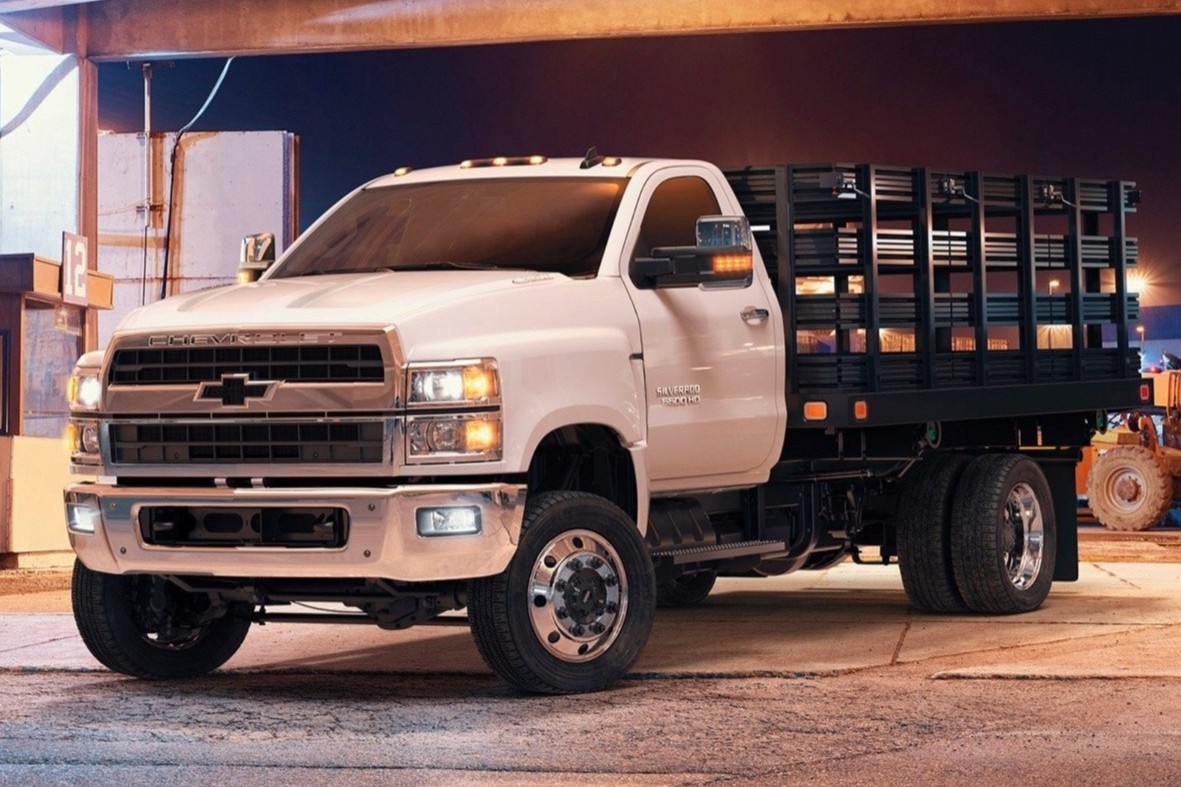
The Chevrolet Silverado medium-duty range, which rises up to the Class 6 Silverado 6500 HD, has been in production since 2019 and succeeded GM’s old legendary TopKick and Kodiak series, which ended production in 2009. Meanwhile, Ford has pretty consistently built medium-duty chassis F-Series-branded trucks since 1948 and currently sells medium-duty trucks up to the Class 7 F-750, plus the F-53 and F-59 motorhome chassis.

Then there’s Ram, which currently stops at the Ram 5500 Class 5 chassis cab as its medium-duty lineup. If you’re looking for a truck that’s even bigger with the legendary Ram logo, you’re out of luck in the new market. You won’t find a Class 7 Ram in the mid-2000s, either, though you were able to buy the Ram 5500 as the Sterling Bullet.
If you’re a Ram truck fan and want to go big, you just need to drive south of the U.S. border, where Ram once sold extra-large trucks in the form of the awkward Ram 6500 and Ram 7000.
An American Revolution
The Ram 6500 and Ram 7000 are members of the iconic second-generation Ram, which sold from 1993 to 2002. If you don’t know why I keep calling this truck “iconic,” let my previous reporting do the heavy lifting:
In 1986, Chrysler’s Advanced Package Studio produced the first design study for the then-upcoming truck. It was dubbed the Louisville Slugger and while the truck was plenty utilitarian, it looked like a minivan with its roof chopped off. The truck was perfectly inoffensive, like the kind of cars a video game developer makes to avoid licensing issues. Unfortunately, bland looks weren’t the Louiville Slugger’s only problem. It had a spacious cab and large box, but the engine bay was too small to fit the Cummins or the planned V10 engine. That was a non-starter and the design study was dropped in 1987.
Later that year, design transferred to the AMC/Jeep design studio, and that crew produced a new truck, nicknamed Phoenix, but that one reportedly looked a bit like a clone of the Ford F-150. Oops. In 1989, executive Bob Lutz and executive Francois Castaing decided to can the Phoenix as well. Instead of sending the truck’s designers back to the drawing board, Lutz ordered the development to be restarted from the beginning with six months to come up with something new. In addition to starting from scratch, the designers would work from start to finish in Computer Aided Three-Dimensional Interactive Application.
When it came to the design, the mission was to be original and go bold. The truck’s designers went flipping through the pages of Dodge’s past at its Power Wagon trucks from World War II. Along the way, they found American big rigs, and that sparked an idea. Chrysler former vice president of design Tom Gale noted to Ars Technica in 2021 that the second-generation Ram had retro style. But, instead of borrowing from Chrysler’s past, designers copied the looks of Kenworth and Peterbilt semis.

The second-generation Ram was a quantum leap in truck design. Sure, there had long been trucks that dripped with hot style, but the Ram took this further, and turned pickup trucks into fashion statements. Now, pickup trucks weren’t just the tools for hard labor, but an aspirational vehicle that you might park in front of your house in suburbia, even if you’ve never towed a trailer in your life.
The second-generation Ram was a runaway success, with sales spiking a huge 143 percent in the 1994 model year. Buyers were ravenous, and the 1995 model year saw sales jump another 77 percent over the previous year. Dodge, which held a lousy 6 percent of the truck market in the early 1990s, now had over 20 percent of the market. Sales were only part of it, because seemingly everyone loved the new Ram. The truck won Motor Trend‘s Truck of the Year award in 1994.
Complementing the small big rig looks was a drivetrain lineup that was seemingly for everyone. Frugal buyers and fleets were able to get their trucks with a baby 3.9-liter Magnum V6, and if you were power hungry, a burly 8.0-liter Magnum V10, and the iconic Cummins 5.9 turbodiesel offered stump-pulling power.
Mexico’s Weird Rams

Yet, for how great the second-gen Ram was, the United States never got to experience every variation of it. By now, many car enthusiasts know about the Mexico-only Ram Charger above, a nod to the old Ramcharger, but with a fresh platform and a new face.
If you want to read more about that truck, click here, because I wrote about it. However, I do have an update for the Mexico Ram Charger, and it’s that most of them are now completely legal to import! What’s neat is that, if you’re looking to dip your toes into car importation, the Ram Charger is a great place to start because you wouldn’t have to load it onto a boat. If you have a passport, you could even just drive down south and take a look at one with your own eyes.
There’s one more variant of the second-gen Ram that we didn’t get, and these were made for some real heavy work.
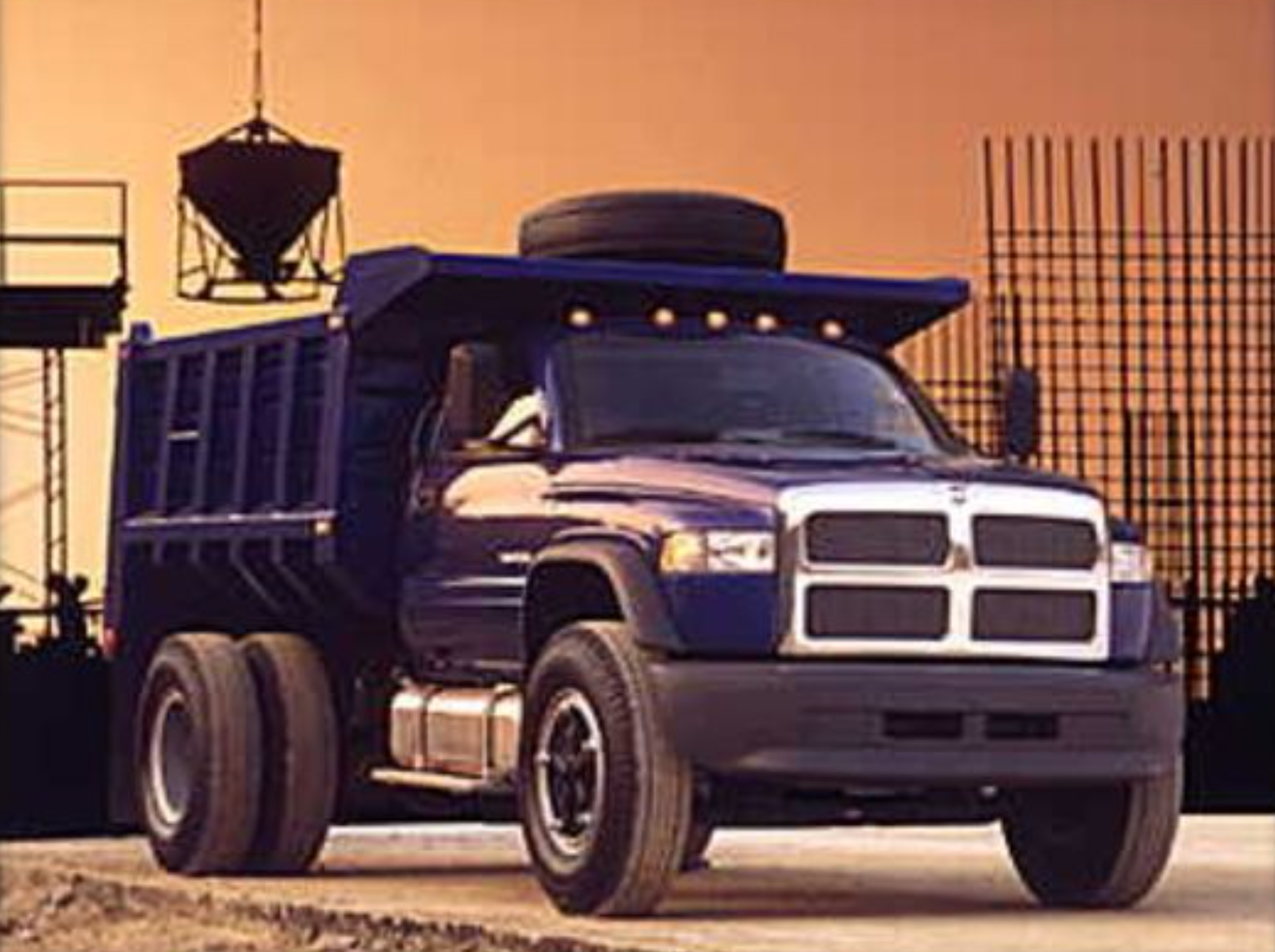
Sadly, I could not find any press releases or anything of the sort to accompany these trucks. But what I can tell you is that, in Mexico, Ram had a different medium-duty line than what we got just north. These trucks were also available for the run of the second-gen Ram.
Mexico’s medium-duty range started with the Dodge Ram 3500, which isn’t that noteworthy, but then things got weird immediately after. Next up was the Ram 4000. This truck was the same as the Ram 3500, including engine, cab, and overall dimensions, but featured 3,274 pounds of cargo carrying capacity, compared to the 3,041 pounds that the Ram 3500 could carry.
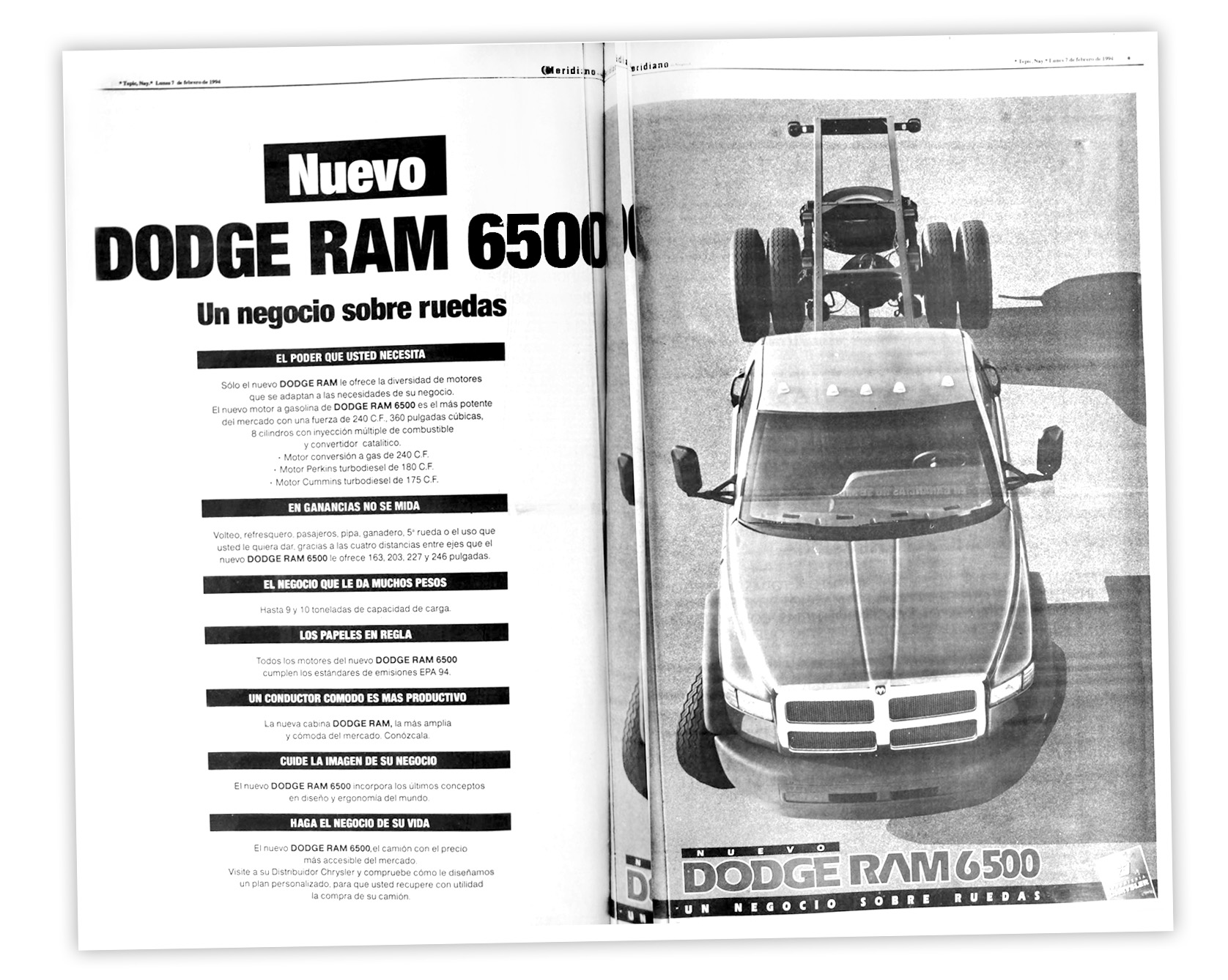
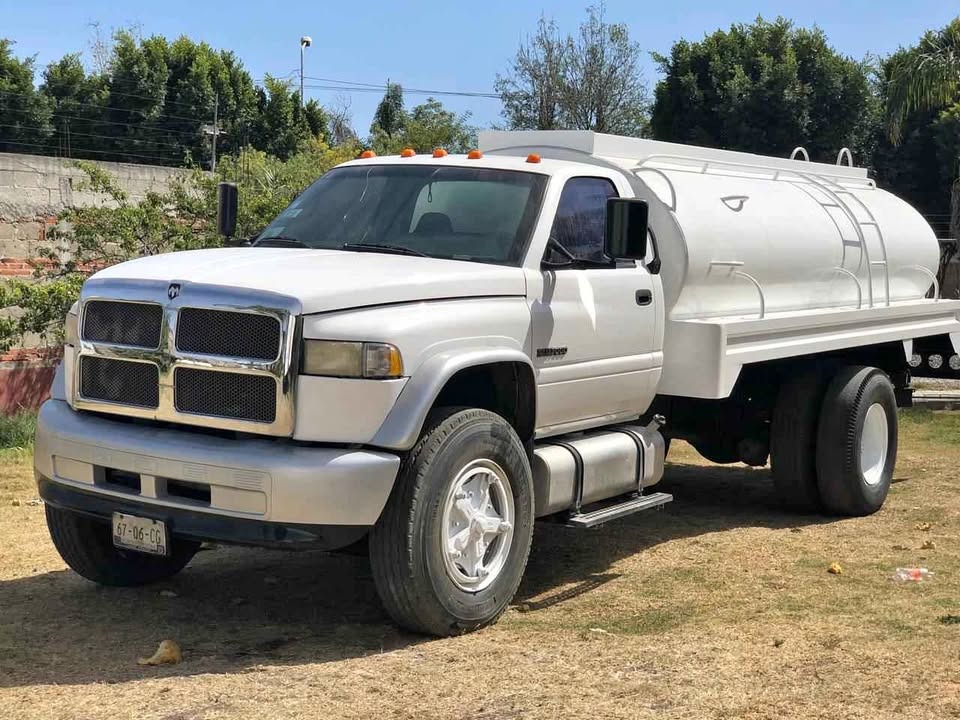
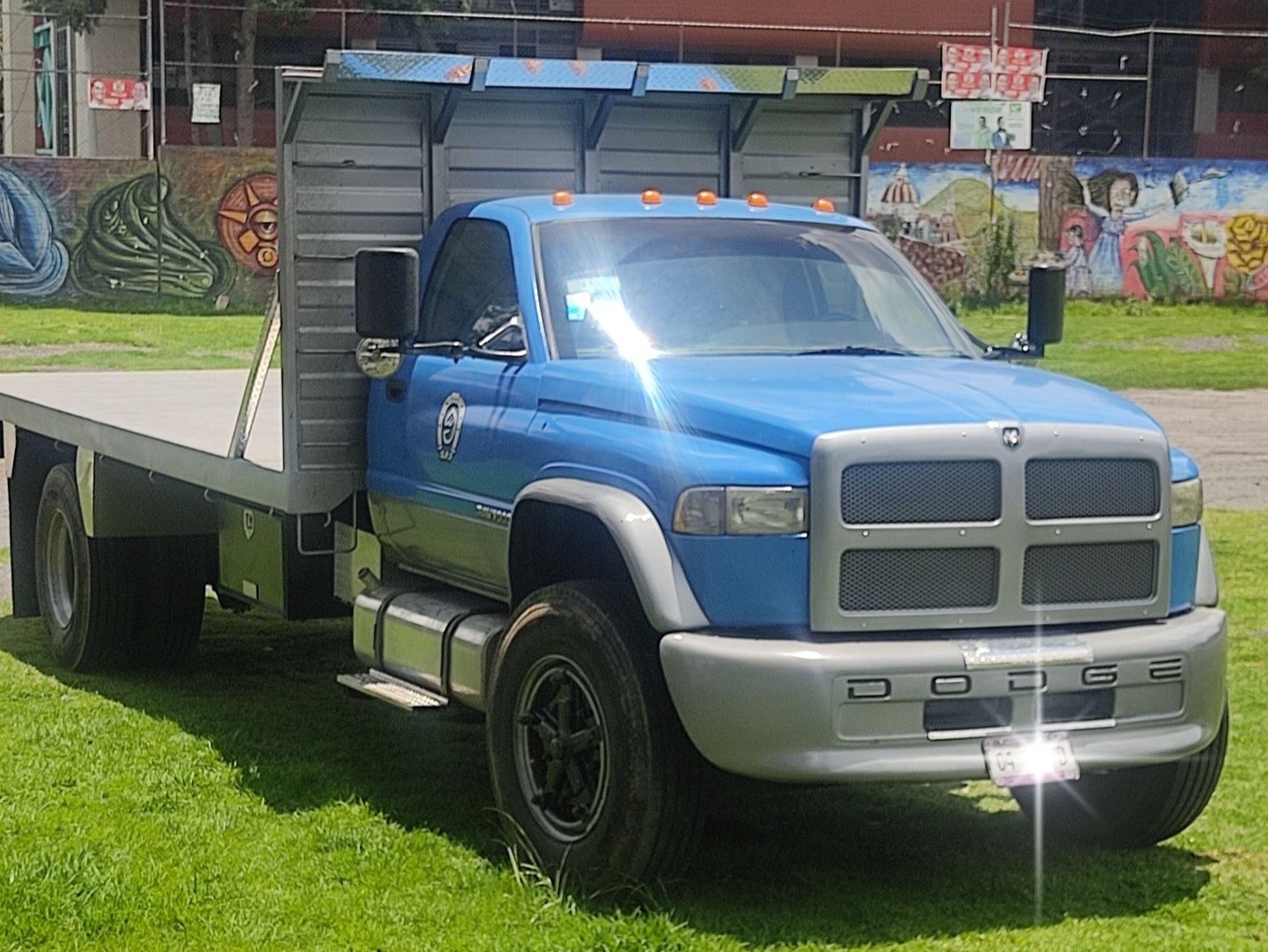
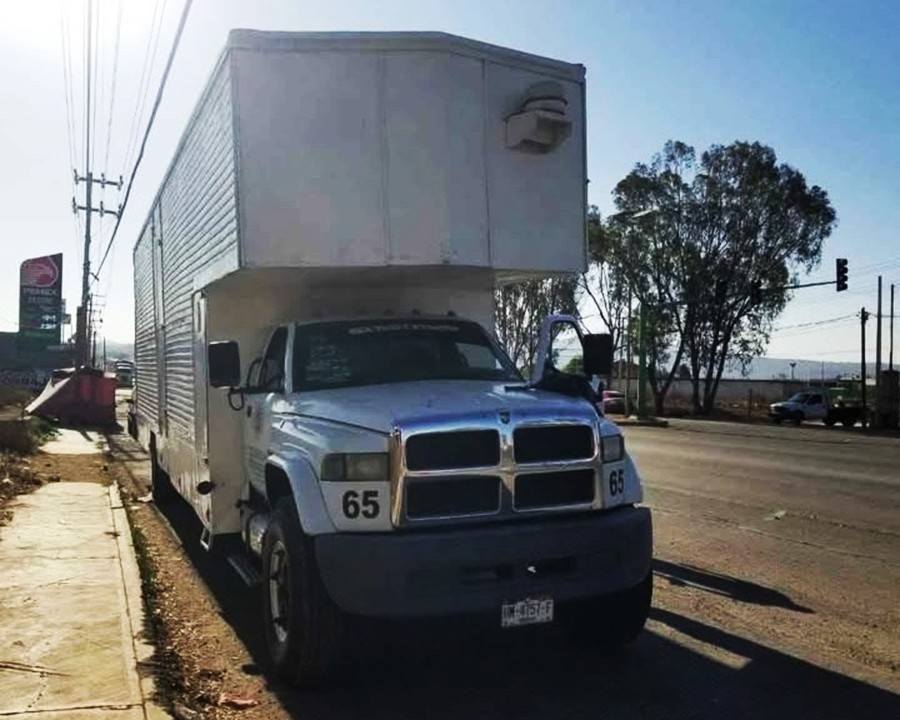
Moving up from there were the Ram 6500 and the Ram 7000. Now these trucks were major departures from the lower Rams. These trucks had some of the same engines as the lower models, but their own chassis, axles, and unique drivetrain options. What made them stand out was the fact that the larger medium-duty Ram trucks used the cabs from the lower models, but with goofy bodywork extensions to fit over the larger frame.
While Dodge’s execution of putting a lighter-duty cab on a medium-duty truck looks absurd, this isn’t unheard of. General Motors loves slapping cabs from lower trucks on bigger trucks.
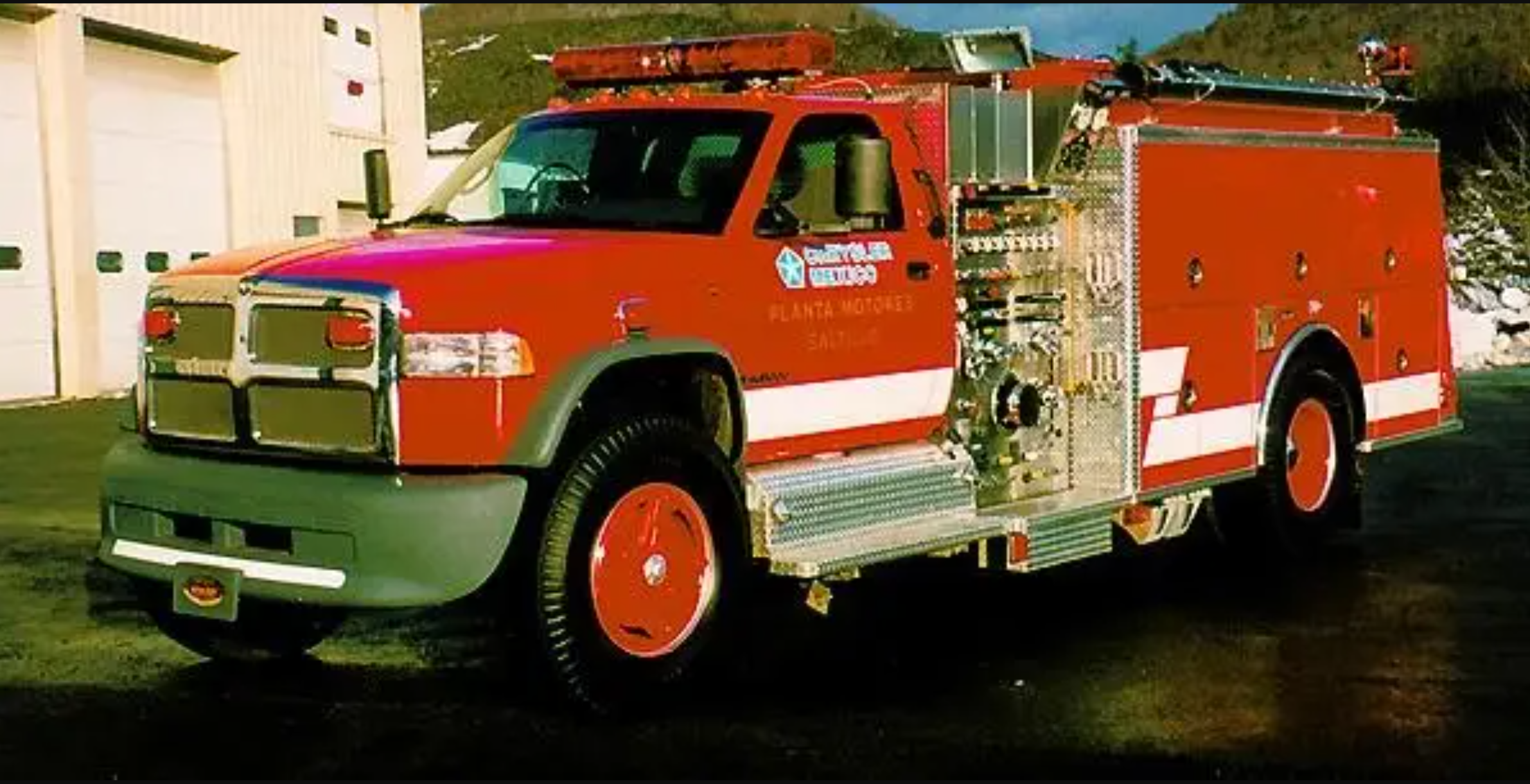
According to Dodge, the Ram 6500 and 7000 were available in four wheelbase lengths, which were 163 inches, 203 inches, 227 inches, and 247 inches, respectively. In Dodge’s eye, the smallest trucks were great for armored truck platforms, tow trucks, dump trucks, and as a small semi-tractor. On the other end of the scale, Dodge say the 246-inch trucks being used as tankers, school buses, transit buses, furniture delivery trucks, and lumber trucks.
No matter your choice of wheelbase, your Ram 6500 had a gross weight up to 28,000 pounds while the Ram 7000 got up to 31,000 pounds. Carrying capacities were 9 tons and 10 tons, respectively.
Buyers had access to some interesting engine choices. On the low end was a 5.9-liter gasoline Magnum V8, which was good for 240 HP and 330 lb-ft of torque in this application. If you wanted an alternative fuel, that same engine was available in a liquefied petroleum gas (LPG) conversion. The LPG-powered trucks made the same torque, but backed down to 210 HP.
These big Rams also had two diesel engines. One was the legendary Cummins 5.9-liter straight-six turbodiesel, which was good for 175 HP and 420 lb-ft of torque in this application. The oddball was a 5.8-liter Perkins turbodiesel rated for 180 HP. Dodge said that all of these engines complied with U.S. EPA 1994 regulations. Backing these engines up was a choice of an Eaton Fuller 5305 E or 5305 G transmission.
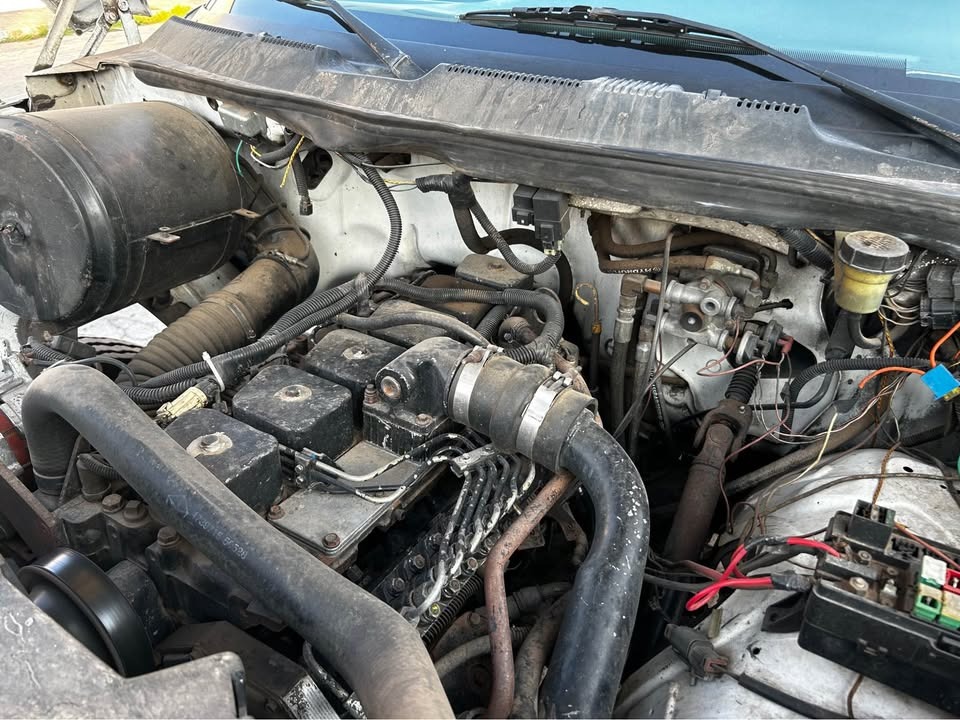

The brochures touted the Ram 6500 and Ram 7000 as being business on wheels and that it was one of the most affordable medium-duty trucks on the Mexican market. Sadly, I could not find original prices for these trucks, but you can find them for sale in Mexico for between the equivalent of $5,000 to $30,000 today.
I also have not found any official explanation for why these trucks were not sold in the United States. The best guess I have is that, for a while, Dodge, Freightliner, and Sterling Trucks were all under the same DaimlerChrysler umbrella, and the latter two brands already sold medium-duty rigs in the United States. Dodge wouldn’t have needed to market the Ram 6500 and Ram 7000 here.
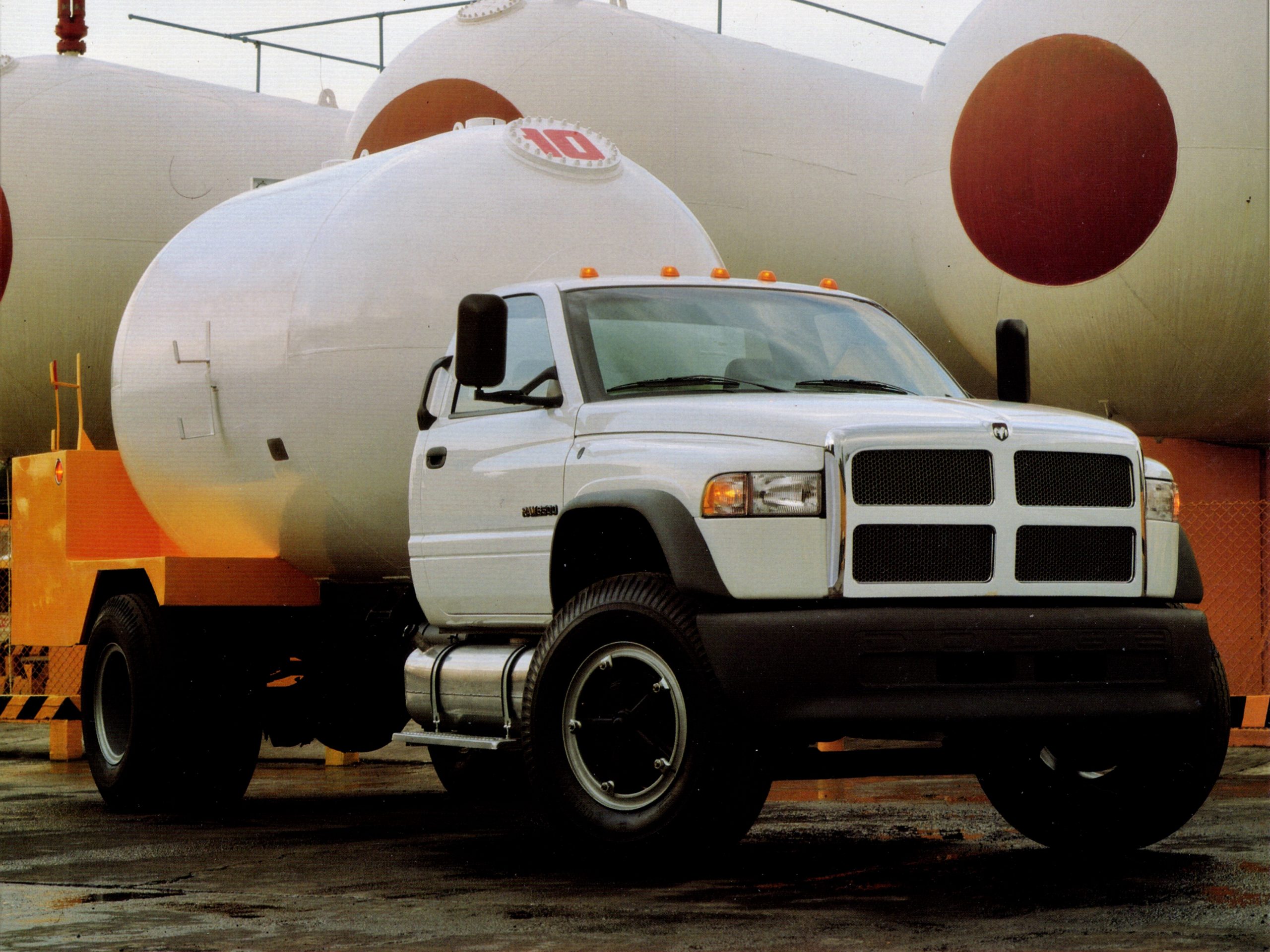
Yet, Dodge felt that there was a market for this in Mexico, just like it did for the Mexico-only Ram Charger. However, like the Ram Charger, Dodge also didn’t feel the need to offer these large models past the second-generation Ram.
I would love to know more about these trucks and fill in the gaps for what I was not able to find. Why did Dodge sell these trucks? Why did Dodge stop selling its unique variants of the second-generation Ram? How much did these cost new? If you know the answers to those questions or even have some delicious press copy, drop me a line at mercedes@theautopian.com.
Otherwise, enjoy these trucks as sort of weird spin-offs of one of America’s favorite old pickup trucks. They’re second-gen Rams, but scaled up high and heavy with a dash of weird. If you collect big trucks, I wouldn’t blame you if you took a vacation down to Mexico and brought one of these bad boys back.
The post The Weirdest Version Of The Second-Generation Dodge Ram Is A 31,000-Pound Diesel Truck The United States Didn’t Get appeared first on The Autopian.