I’ve said it before, and I’ll say it again: my most sincere and personal mission in this world is to get as many people as I can into the world of racing. And I think I’ve finally cracked the code on how to do exactly that. It’s not by watching endless seasons of Netflix’s Drive to Survive, or hitting your local K1 Speed Factory to try your hand at racing for the first time (although I highly recommend it anyway). Nah, what you gotta do is make a trip to the incomparable Laguna Seca Raceway.
Tucked into the rolling hills of California’s Central Coast is a track saturated with the best views and even better weather, hidden amongst vineyards and adorable small towns. In stark contrast to the serene peace of the environment is the banshee-like screams of engines that range from twin-cylinder motorcycles up to the naturally aspirated V12 in IMSA’s Aston Martin Valkyrie.
Why’s it so special though? Two words … or actually one word. Is it hyphenated? It feels like two words, but the dictionary has it as one? Screw it. It’s the Corckscrew.
The Corkscrew
In my opinion, this is irrefutably one of the best sequences that you can find on any track in the world, which is wild considering its competition. The Circuit de la Sarthe (where the 24 Hours of Le Mans is held) is known for extremely long straights that once recorded a top speed of 253 MPH, and sent cars flying into the trees due when the extremely high speeds mixed with some faulty aerodynamics.
The Nurburgring, depending on its configuration, has up to 170 turns in its nearly 16-mile length and remains the default testing ground for sports cars worldwide. Laguna, by comparison, is just 2.238 miles and 11 turns, but the Corkscrew is uniquely terrifying: a full throttle push toward a blind crest into a left-hand turn that drops 59 feet (the equivalent of five and a half stories) in the space of just over just 150 yards, before emptying into an equally tight right hander and another full-throttle punch out of the turn.
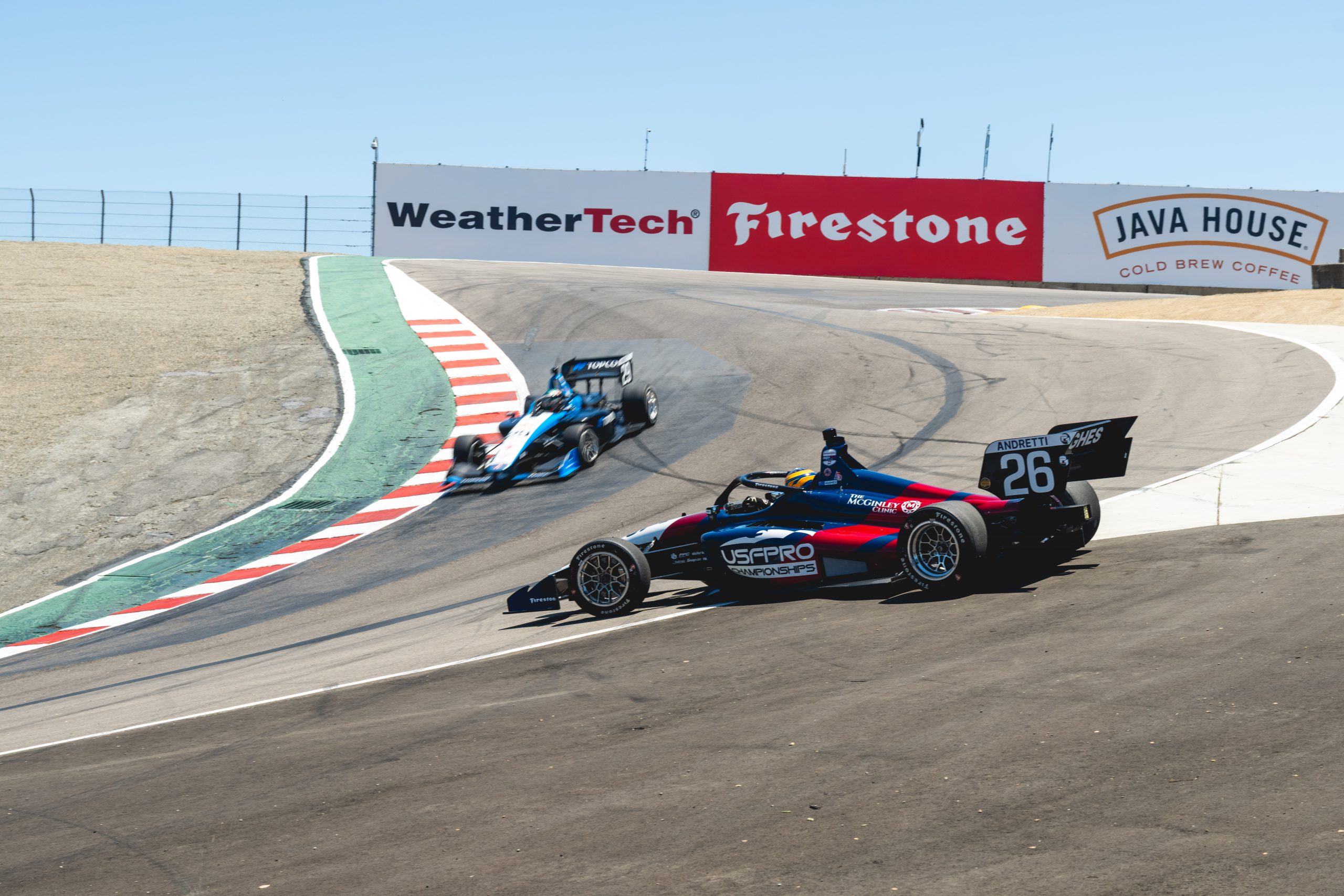
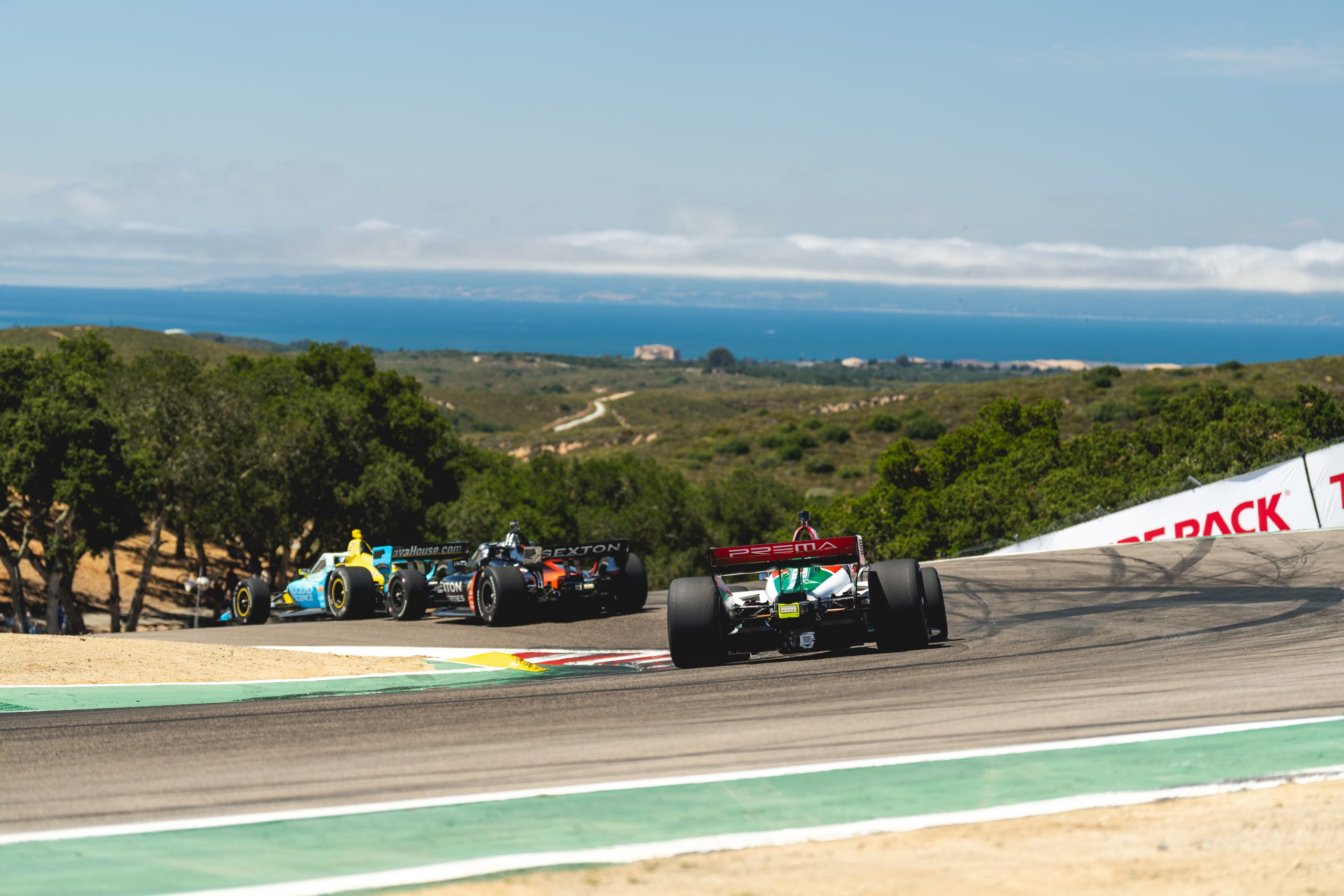
Here’s a helmet-camera view of The Corkscrew:
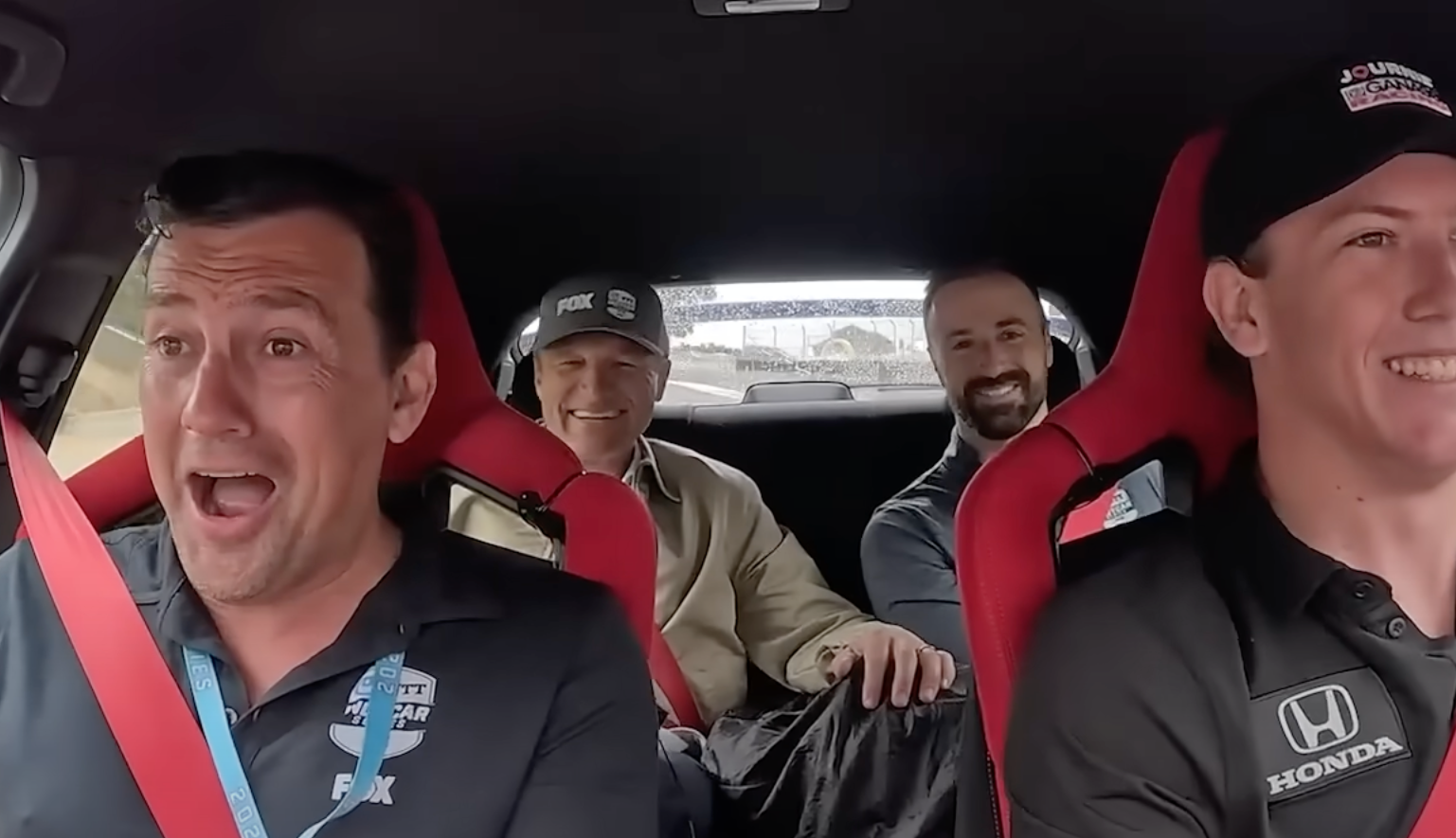
From the beginning of the Corkscrew at turn 8A until turn 9, you drop over 10 stories in just a few seconds. That’s a lot if you aren’t fully grasping it. To further illustrate how insane the turn is, check out this video of the IndyCar commentators joining Chip Ganassi driver Kyffin Simpson on a lap in a Civic Type R where you can see the fear in Will Buxton (passenger seat) as they hit the turn.
It’s also worth noting that Buxton is the only one there without professional driving experience, so what you’re seeing is the genuine reaction from a man whose mouth usually does more work than the rest of his body.
“The Corkscrew here is just incredible, right?” said Kyle Kirkwood, the driver of Andretti Motorsports’ No. 27 car. “That feeling that you get when you turn in and then you’re just looking off into the sky, hoping that you land in the right place and you never really know if you do or don’t, because you never see the second apex.”
The five-time race winner Kirkwood isn’t the only one to give the turn its roses; here’s word from six-time champion Scott Dixon:
“You got the Corkscrew, you know, it’s a famous corner. It’s quite a technical one and not one that I’d say all the drivers love, because it can definitely make or break your lap as well.”
I appreciate the wisdom from one of the most decorated drivers in history, but take it from me, a certified Keyboard Warrior who’s never driven the track outside of a simulator: he’s right. Just look at this pass from 1992 that’s still hotly contested today.
There’s a lot to be said here. Was it a deliberate pass, or a man out of control on one of the craziest parts of a track? Nowadays, it’s largely agreed that Zanardi’s off-track pass is flat-out bad by modern standards, but there just weren’t many rules about overtaking off track back then. With Dixon’s assessment of “make it or break it” in mind, it feels like that pass was a “make it” moment for Alex Zanardi. (And let the record show, Dixon approves of the pass)
The Rest of the Track
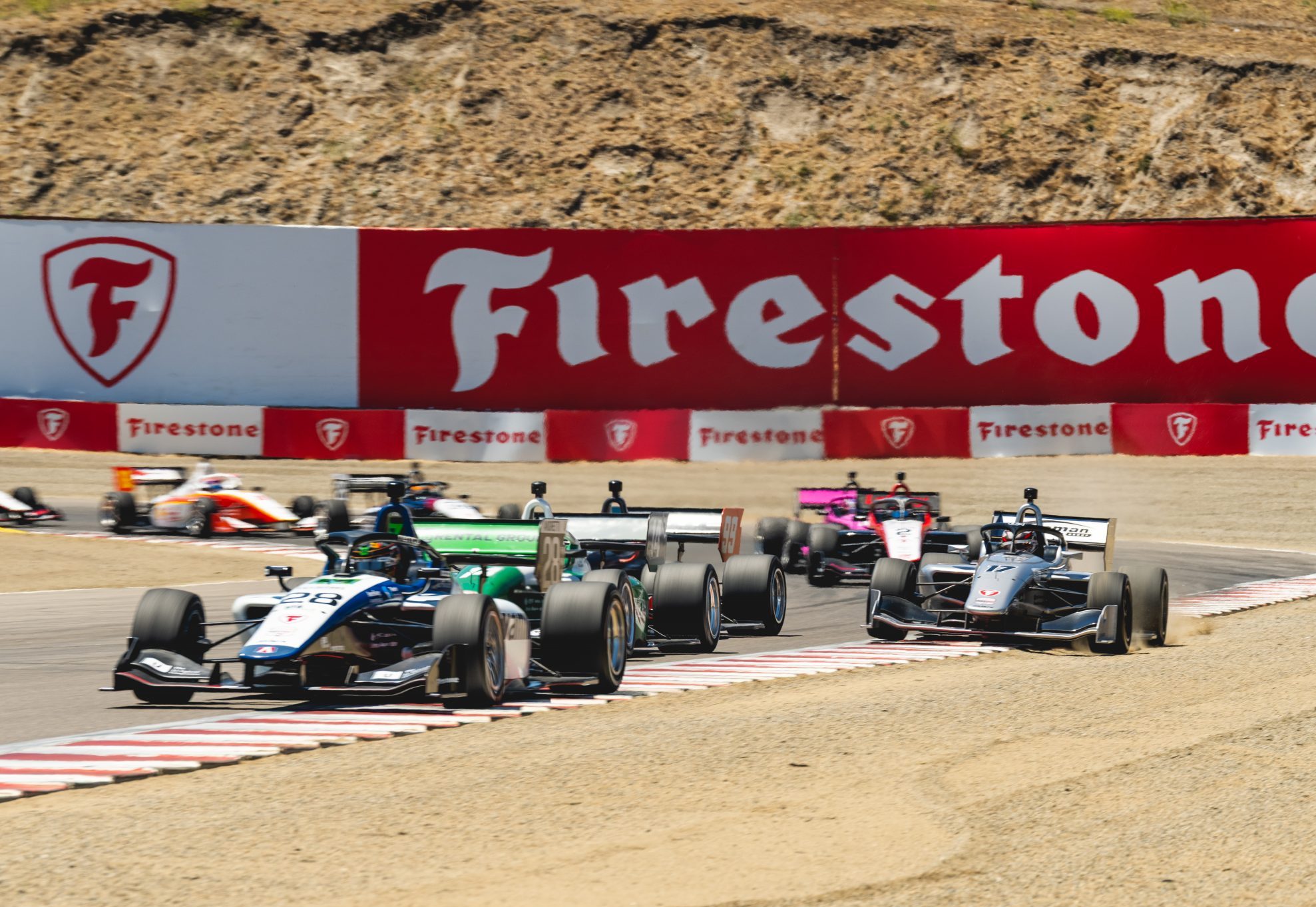
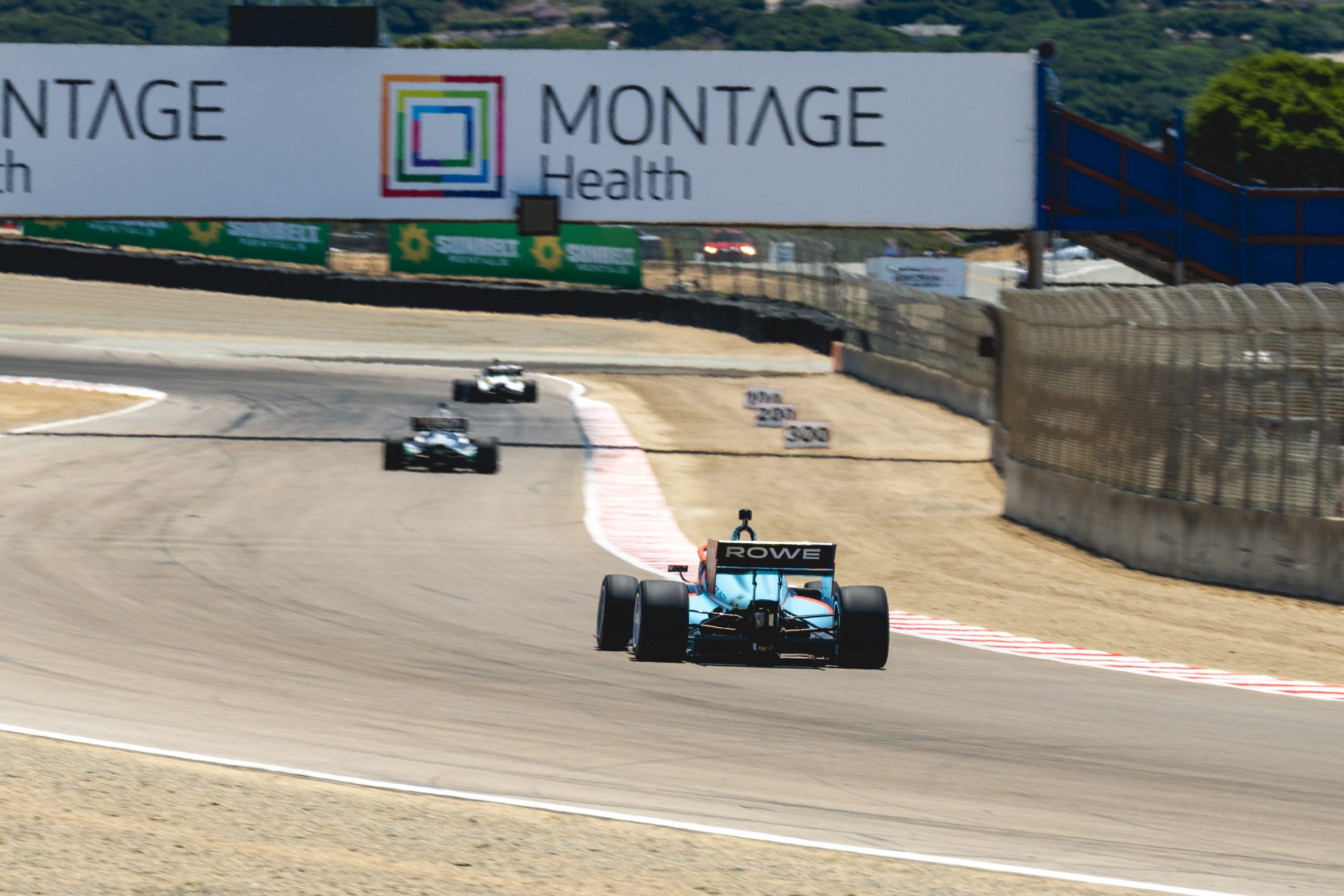
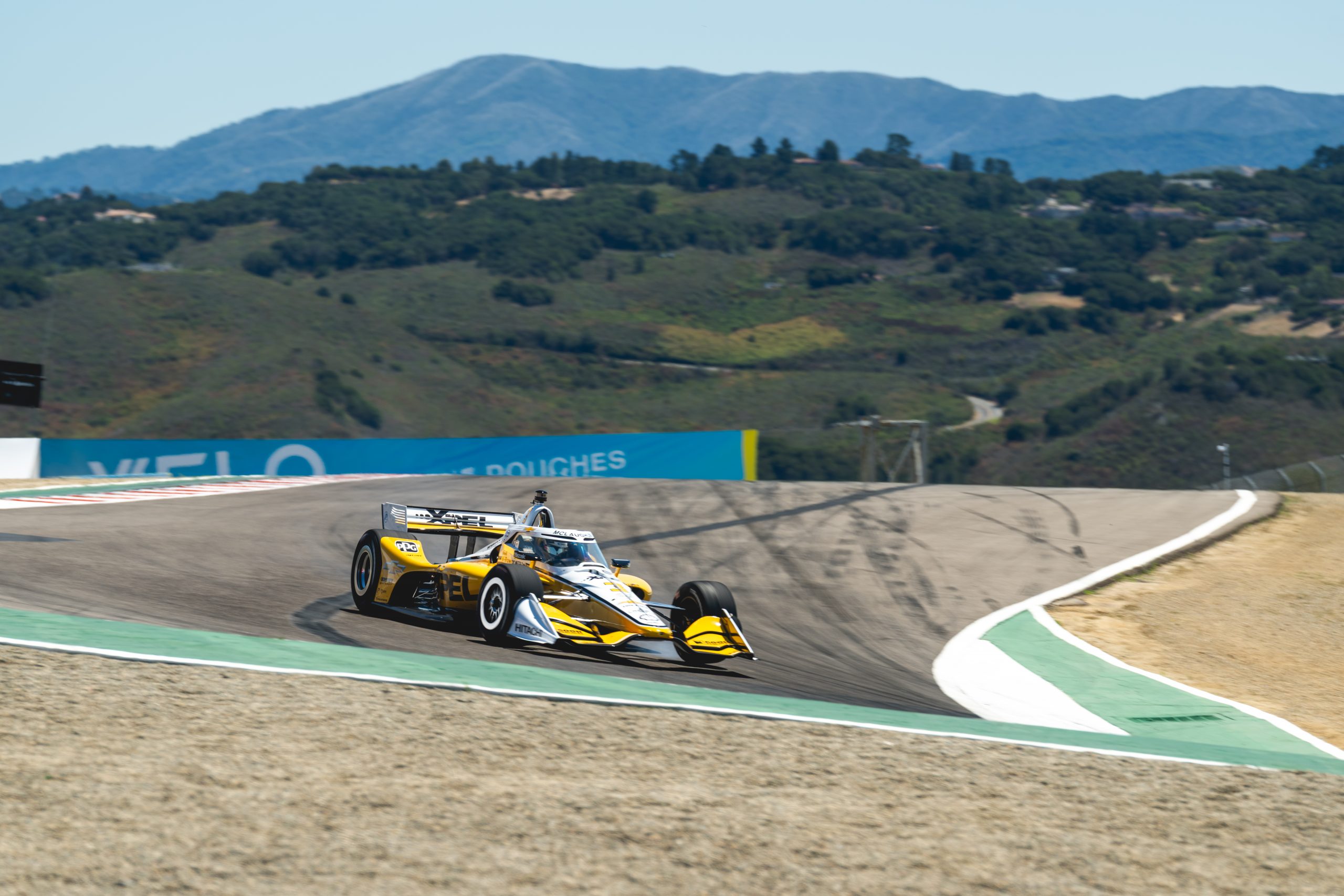
It’s not just the Corkscrew that makes the track worth it, though, because there’s a lot of intensity across the rest of the track, too. Here’s what Arrow McLaren driver and area local Nolan Siegel had to say about it: “Turns like three, four, five, six are super fast, super high commitment, and that’s the difficult section of the track. […] It’s always fun when the car feels fast and it feels gripped up […] that’s what you want when you’re driving an IndyCar.”
Once again, I’m gonna tell the professional driver to sit back so I can speak from firsthand knowledge as an aggressively amateur and mediocre sim racer: turns three through six sucks if you don’t know what you’re doing. I don’t know if I’ve ever hit it perfectly, and I’m confident there’s always so much more speed to give than what I already have. Here’s me attempting just one lap of it to show you what I mean:
The Spectator Life
Hearing firsthand testimony and seeing clips of people on the track only means so much, though. Why should you care about it enough to go? It’s really simple: the ambiance.
For years, I’ve said to friends that the best way to experience a race is by actually being there, feeling the tremors of the ground underneath you as the 20-30 cars blow by you at nearly 200 mph, and hearing the noises they make when pushed that hard. It’s a spectacular sensory overload that brings out massive crowds at tracks worldwide, and for good reason.

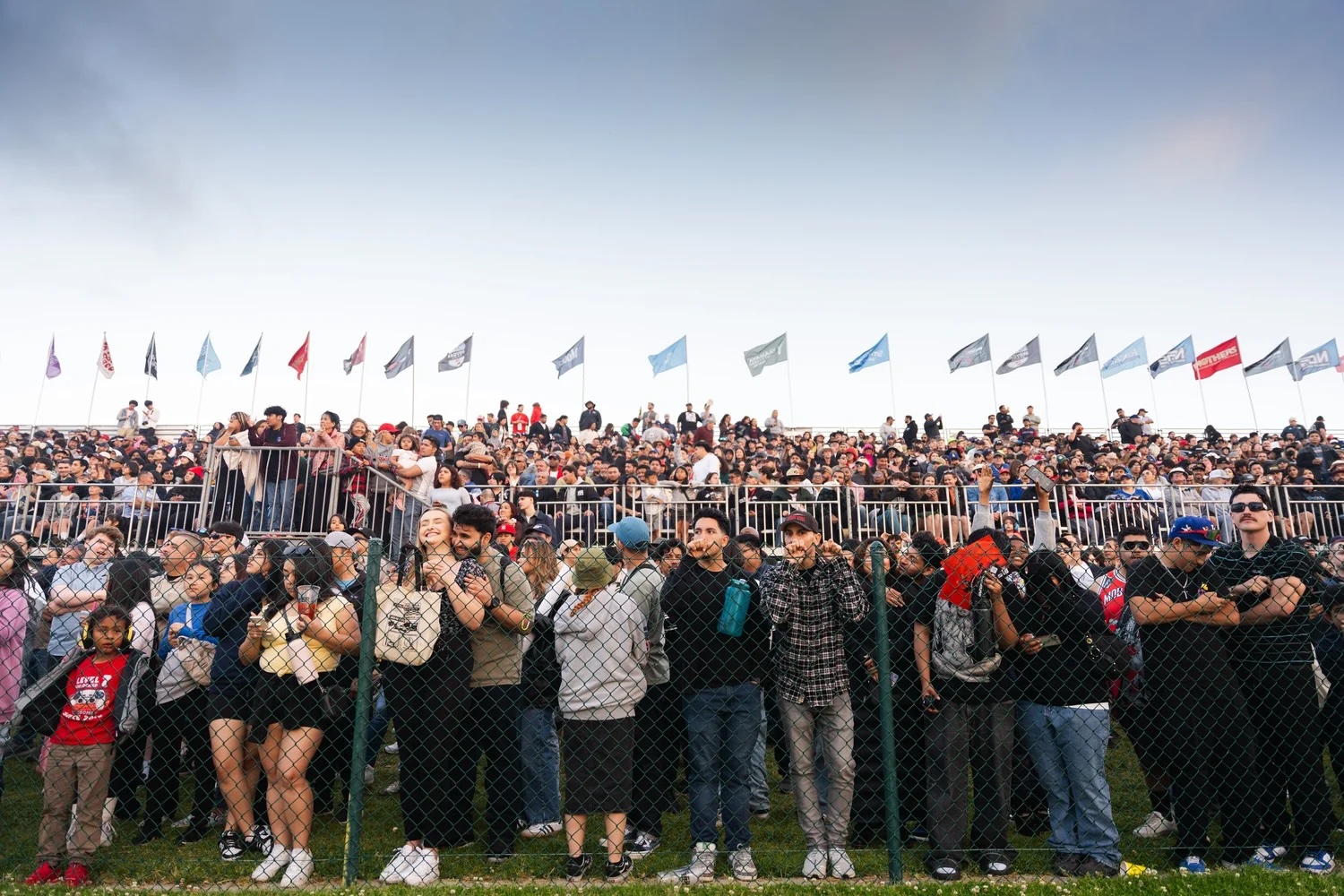
The difference between Laguna and those tracks, however, is that the stands are often pretty empty at Laguna Seca, and not for lack of sales. Very few folks park it in the bleachers because, in my experience, accessibility at the track is second to none.
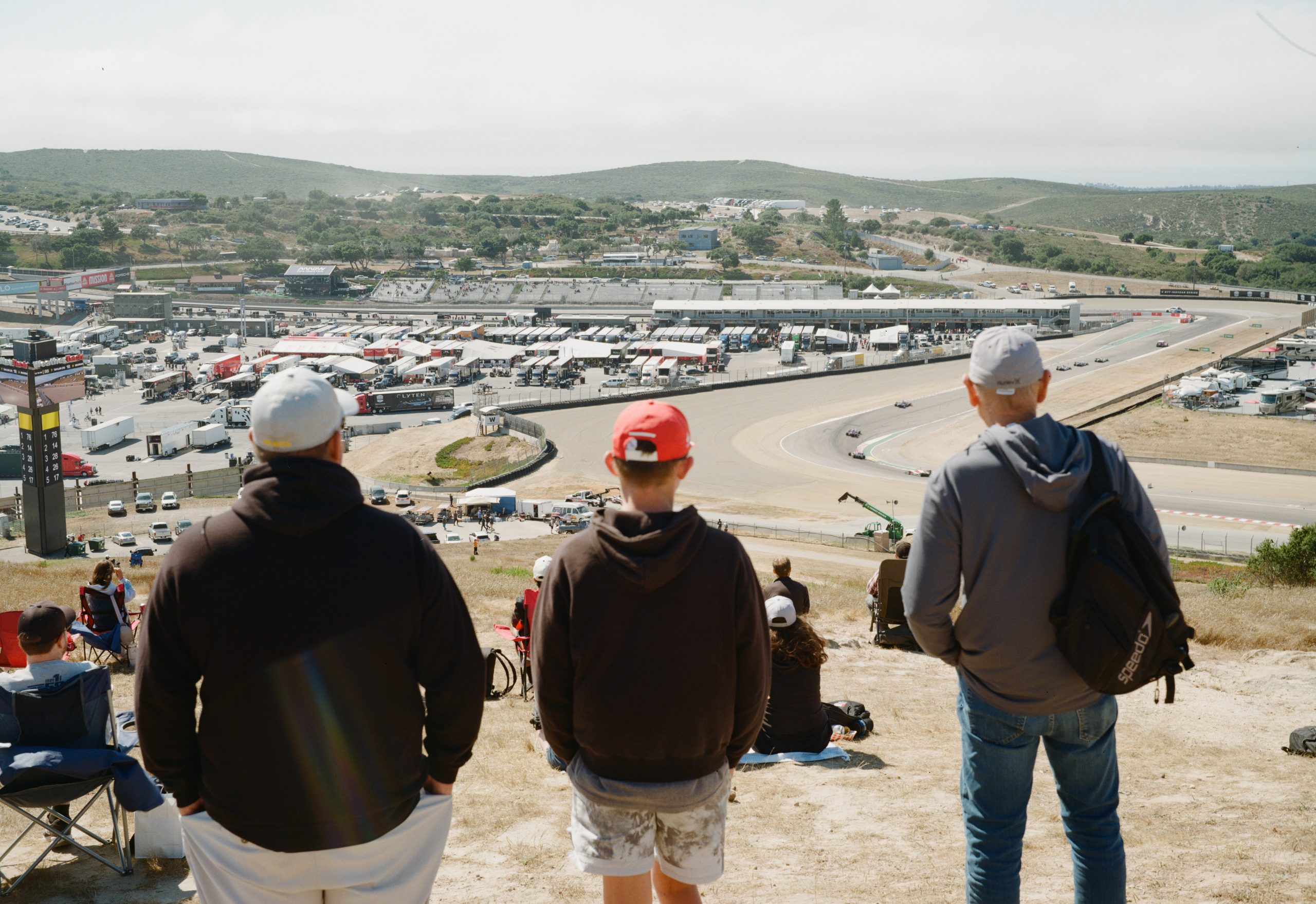
Instead of sitting in one spot for hours, why not take a short hike towards the massive hill in the infield that gets you a view of over half the track? We’re talking both technical areas and the high-speed straights, all without needing to turn your head as much as 10 degrees in either direction.
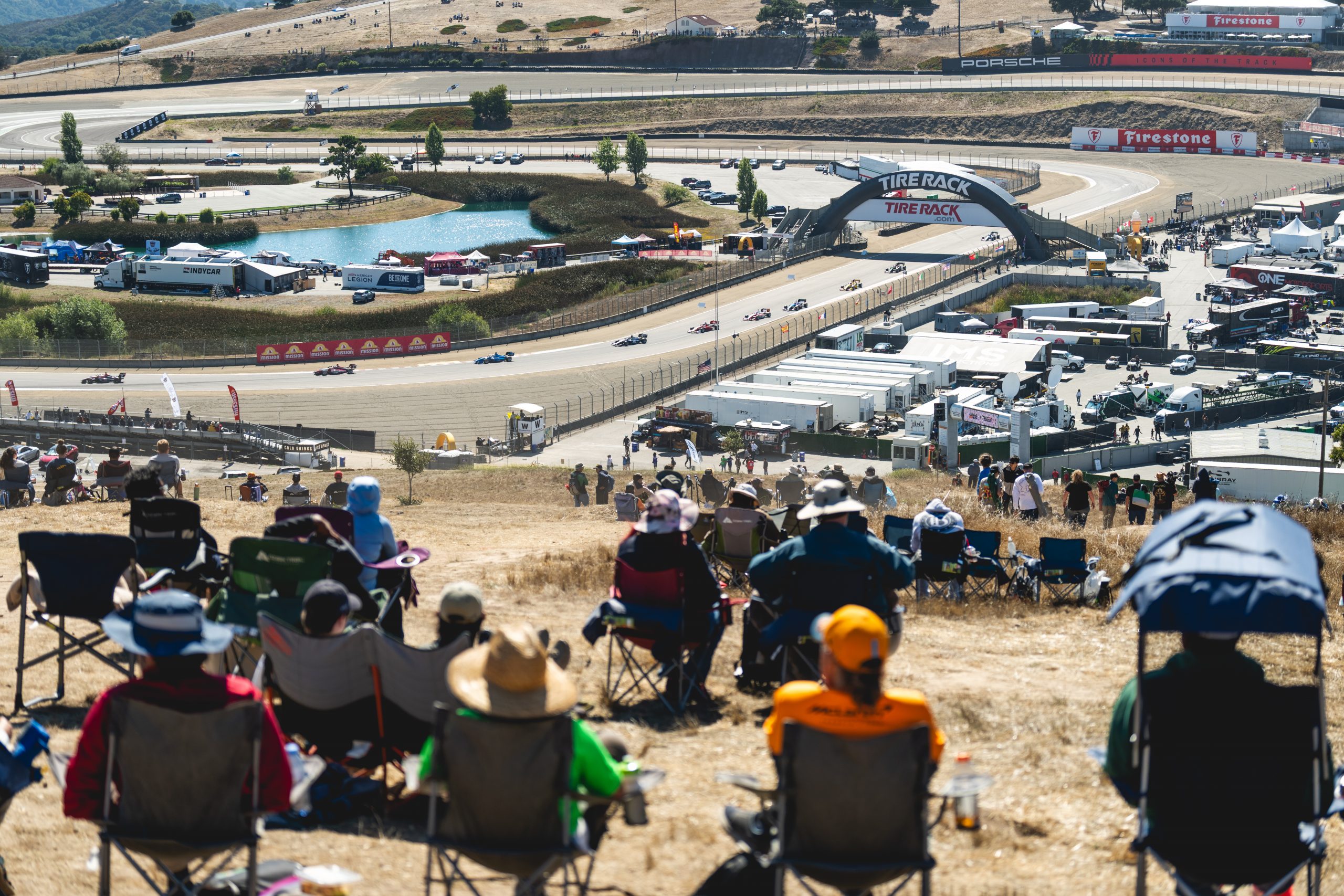
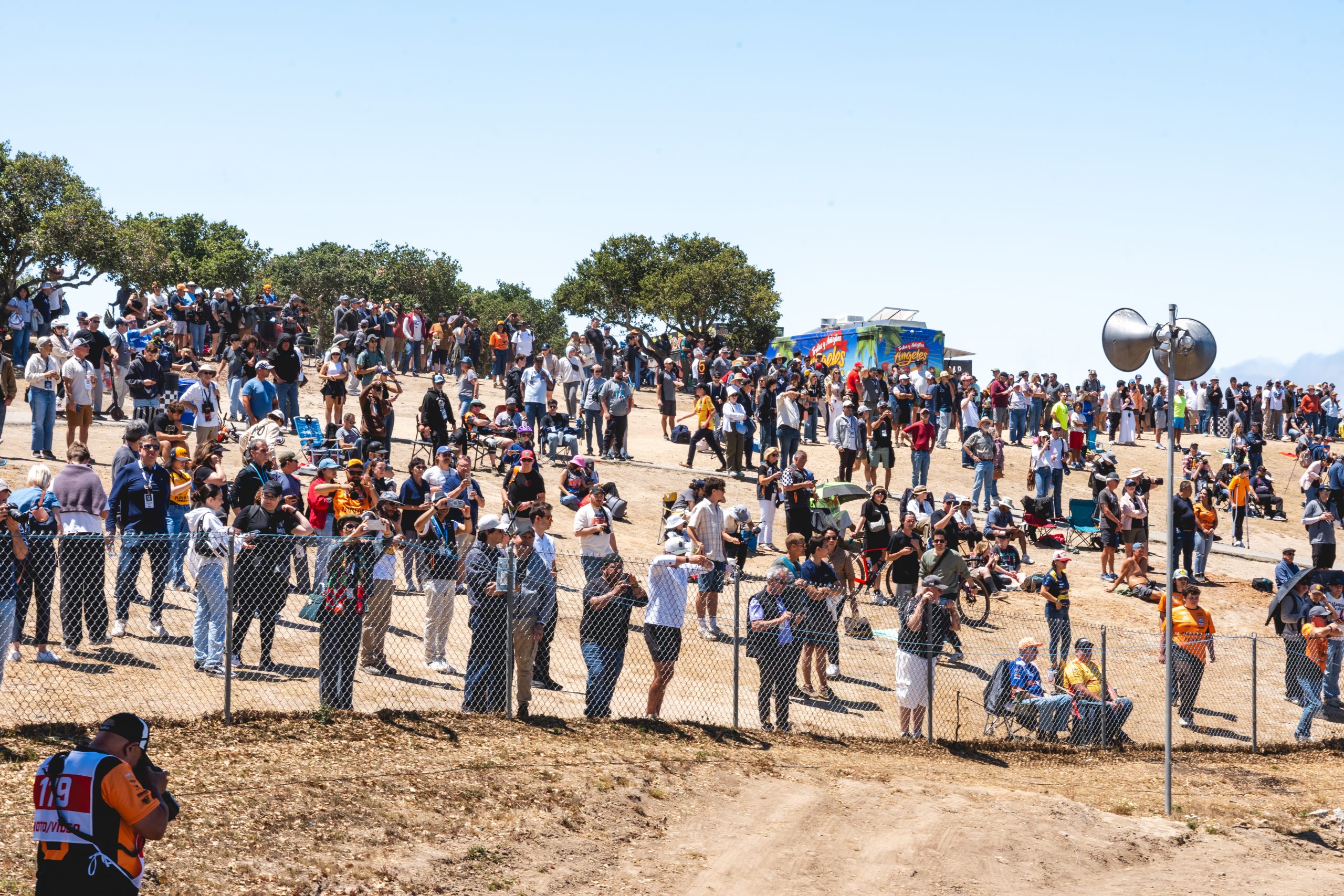
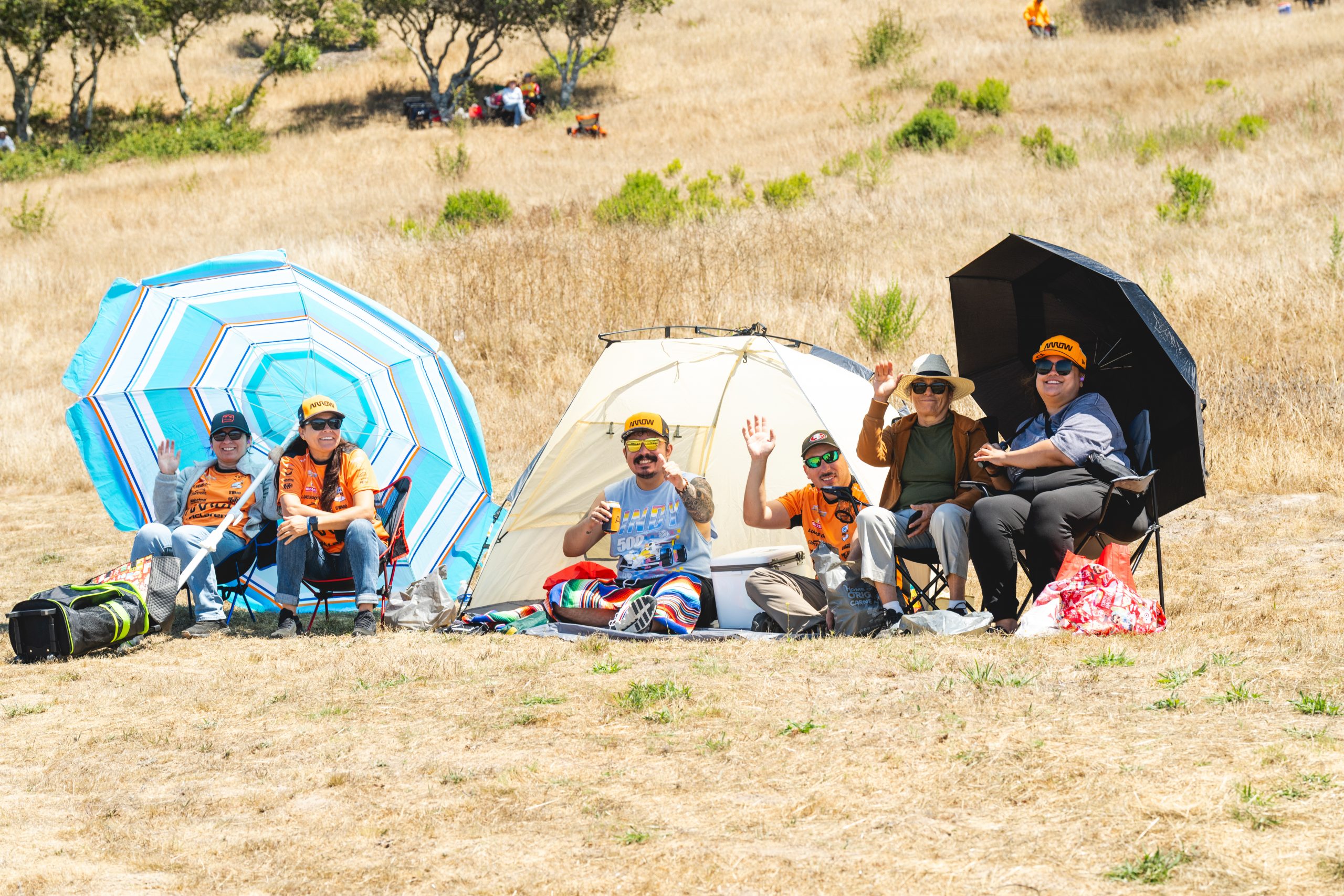
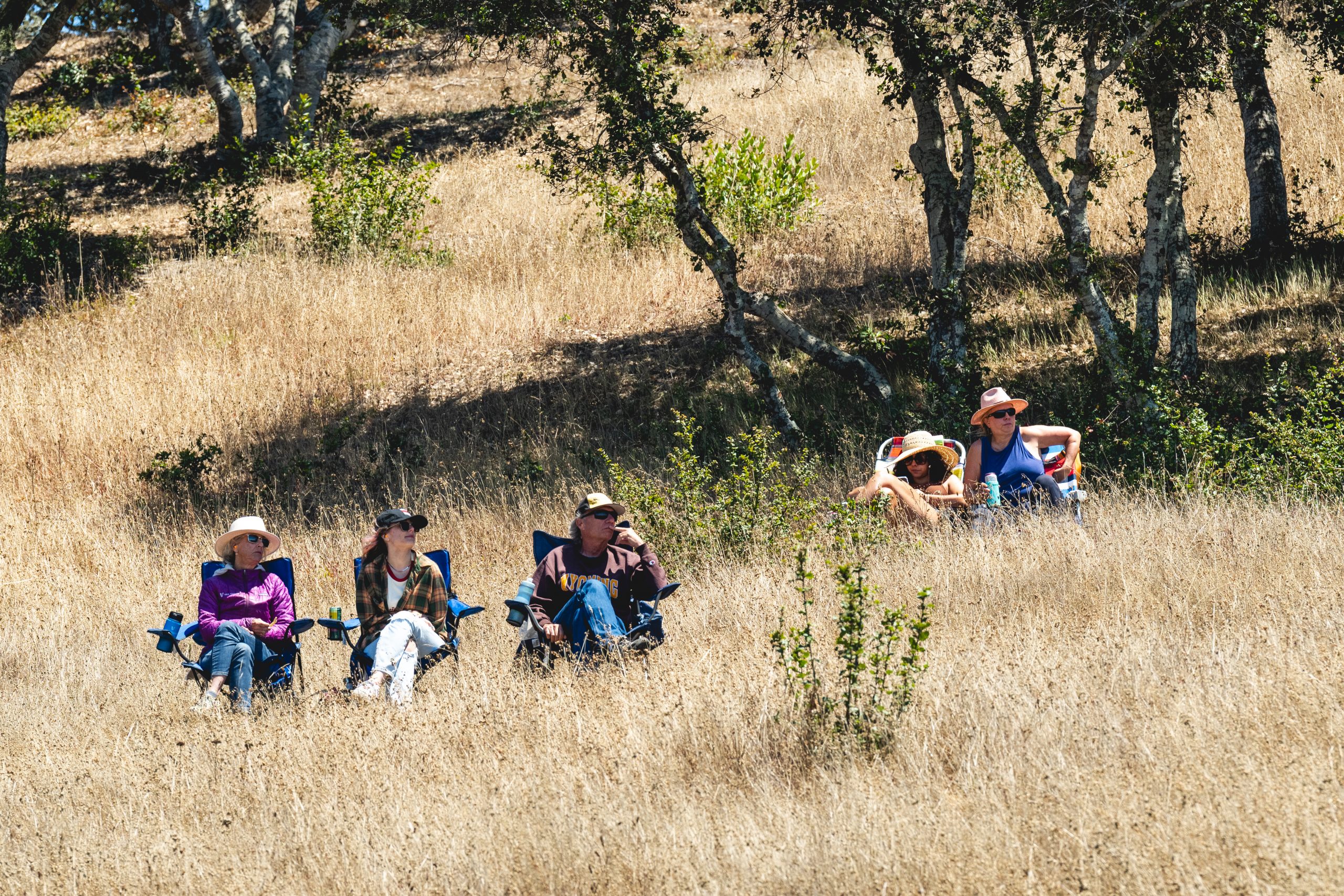
At the risk of beating a dead horse about the Corkscrew, the truth is it’s just as incredible to see as a spectator. When the drivers hook it back to the right during descent, they’re on three wheels while fighting for control of these land-based rocket ships. Imagine understeering towards a straight while squeezing back on full throttle, working with at most 75% of your maximum grip thanks to one wheel freely spinning in the air, all so that you can drag race your way towards the final hairpin before the finish line.

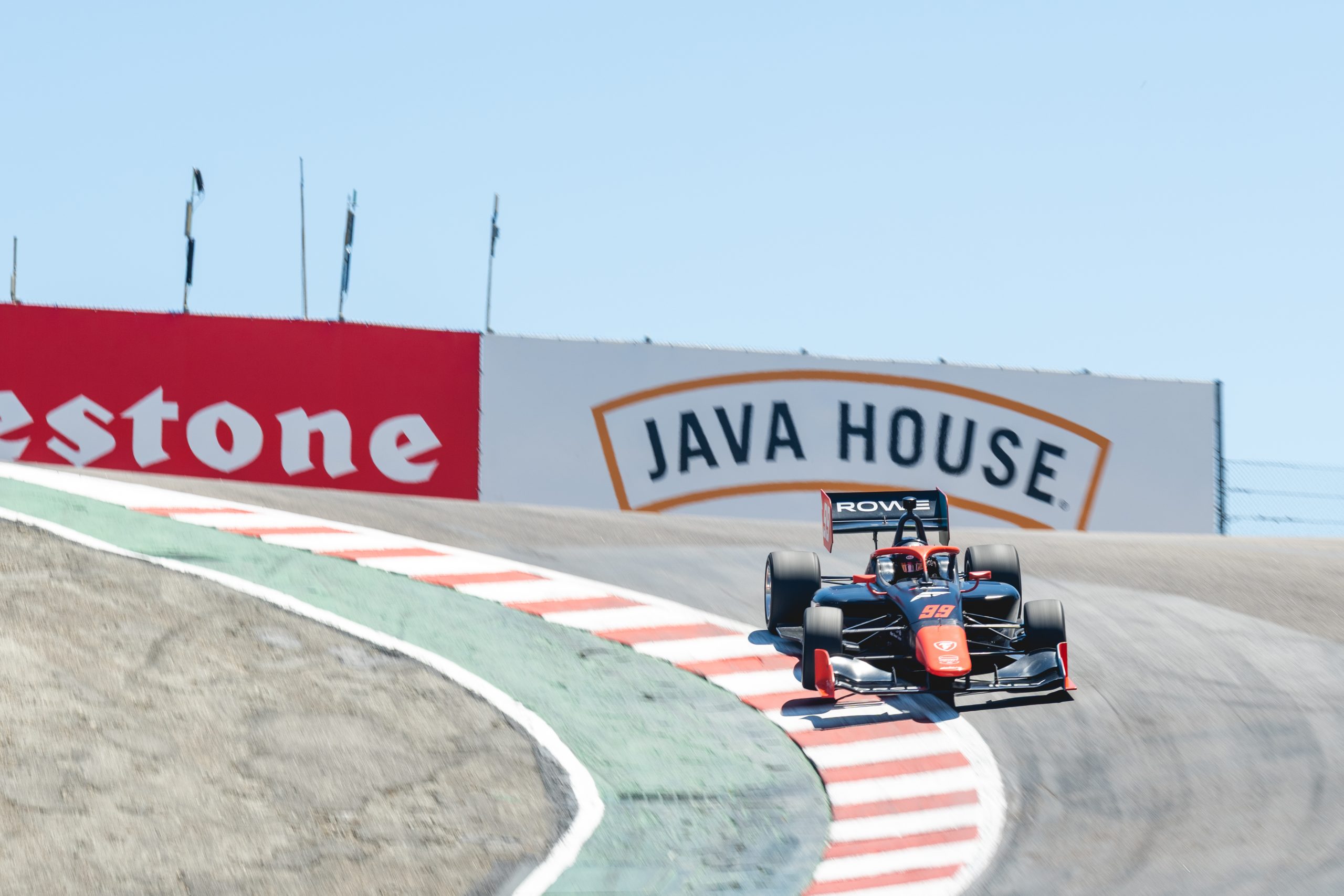
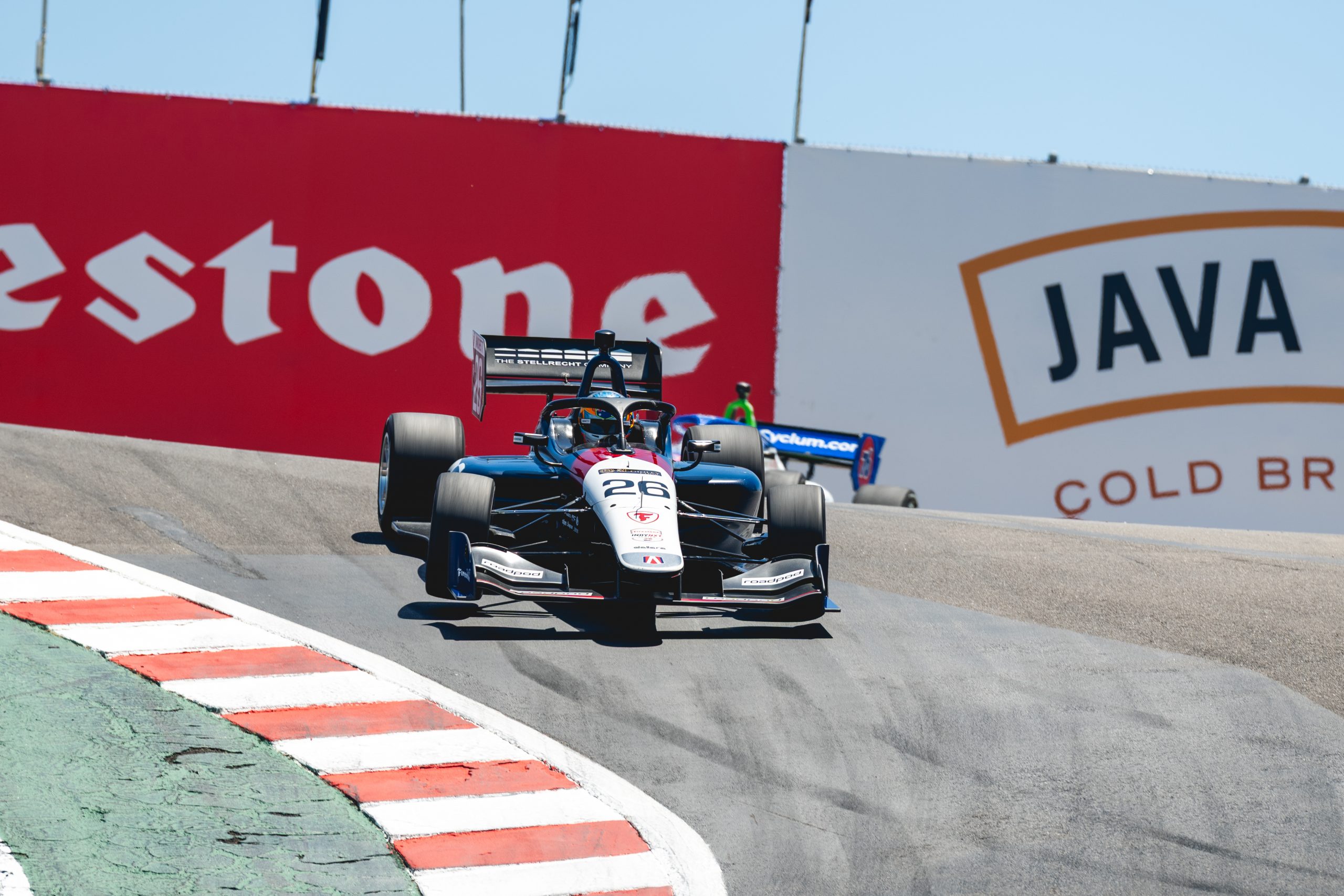
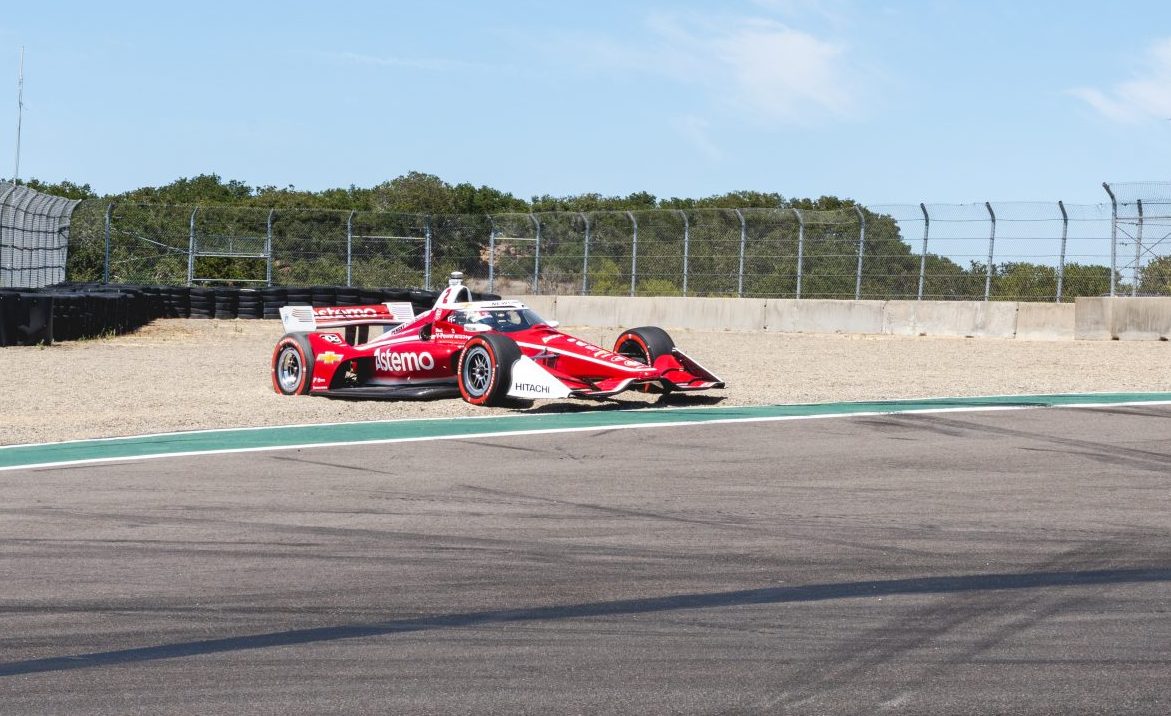
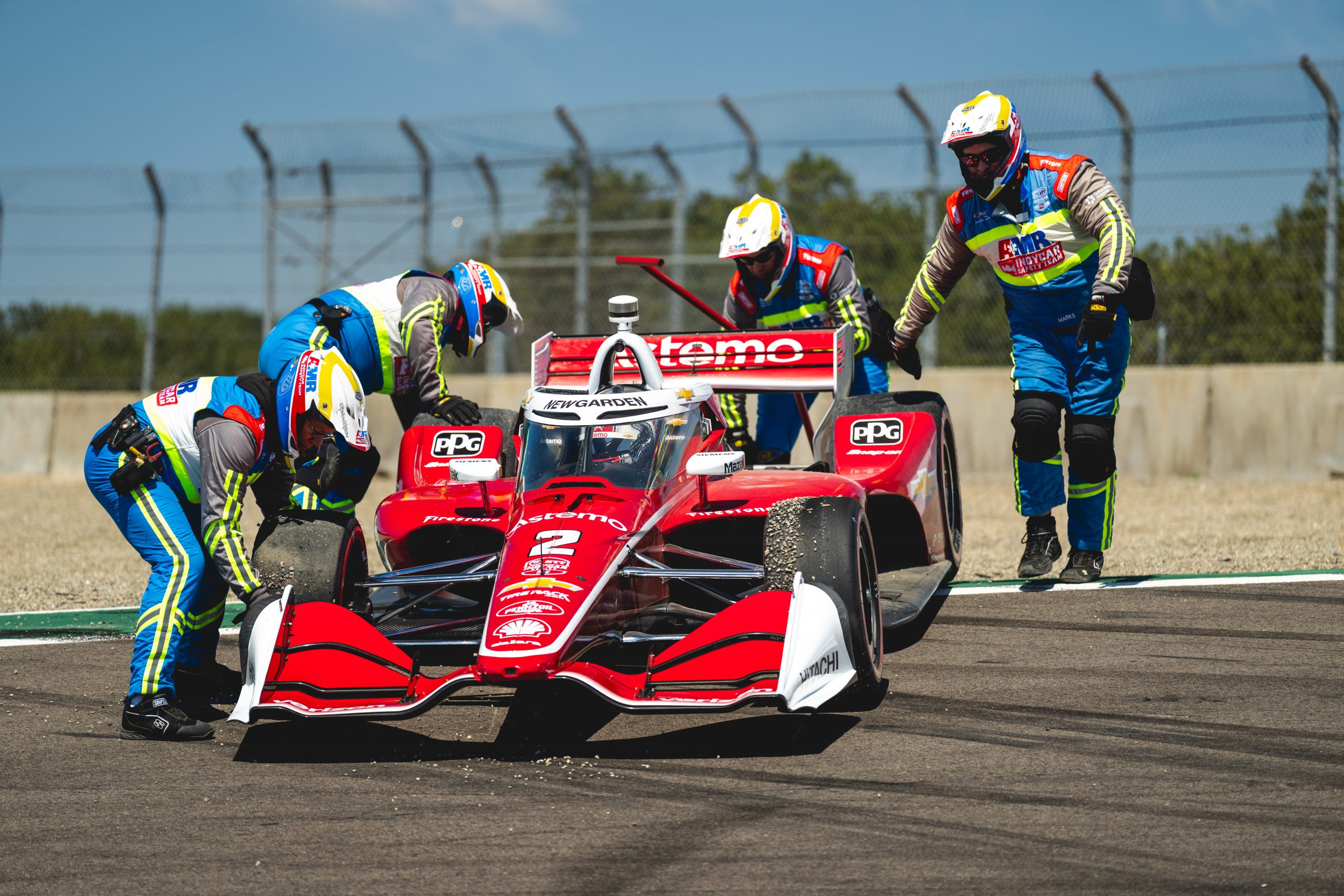
And because the Corkscrew is preceded by another long straightaway, there’s a huge gravel runoff section at the top of the hill that gets a decent amount of play, whether it’s from contact, unforced errors, or, in the case of certain C8 owners, brake failure.
Maybe you just want to bump shoulders with the drivers? The paddock is entirely open to the public, meaning you can just walk up to the trailers and watch teams prepare their cars and drivers ready up before the green flag falls.
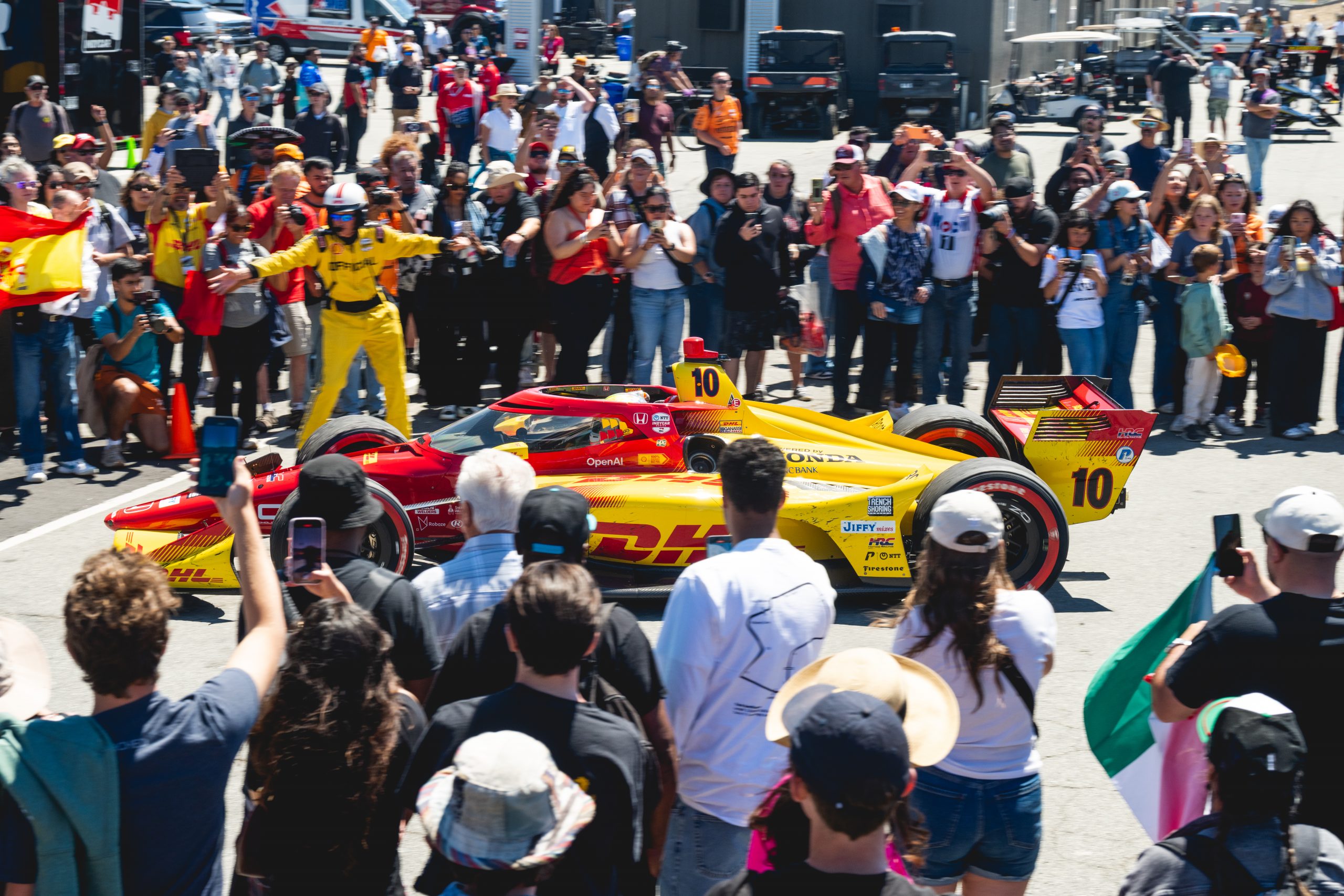
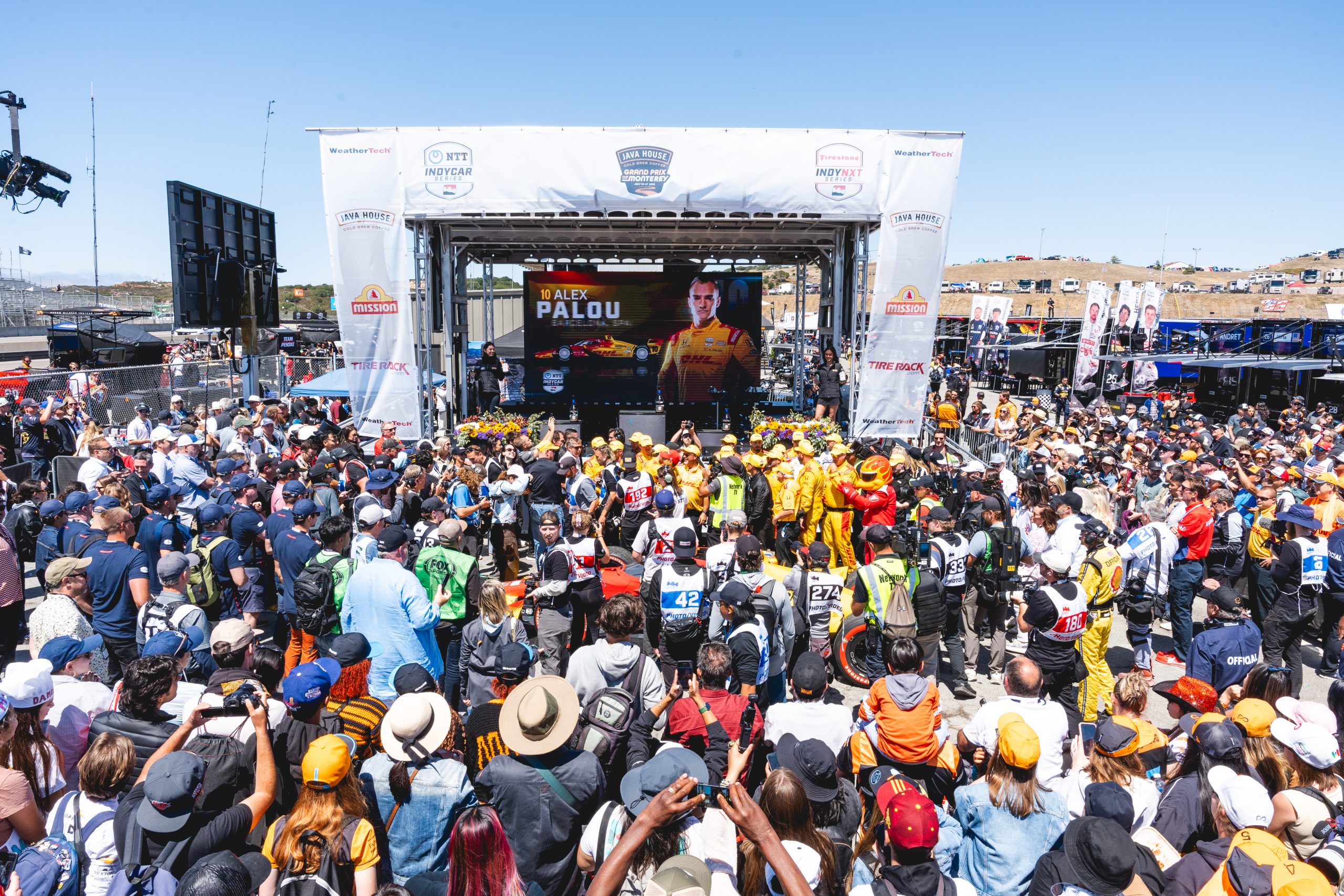
My last-ditch effort to convince you to go there is a simple one that I hope appeals to you: it’s also just a straight-up campsite, meaning you can combine a love of the outdoors with a love of racing, all in one fell swoop. One of my favorite memories of my first time photographing there in ‘23 is waking up to the deafening Porsche GT cars racing in the Sprint Challenge. Gone are the days of a rooster waking you up in the morning; it’s time for the animal Ferdinand Porsche himself made to wake you up at the crack of dawn! Huzzah!
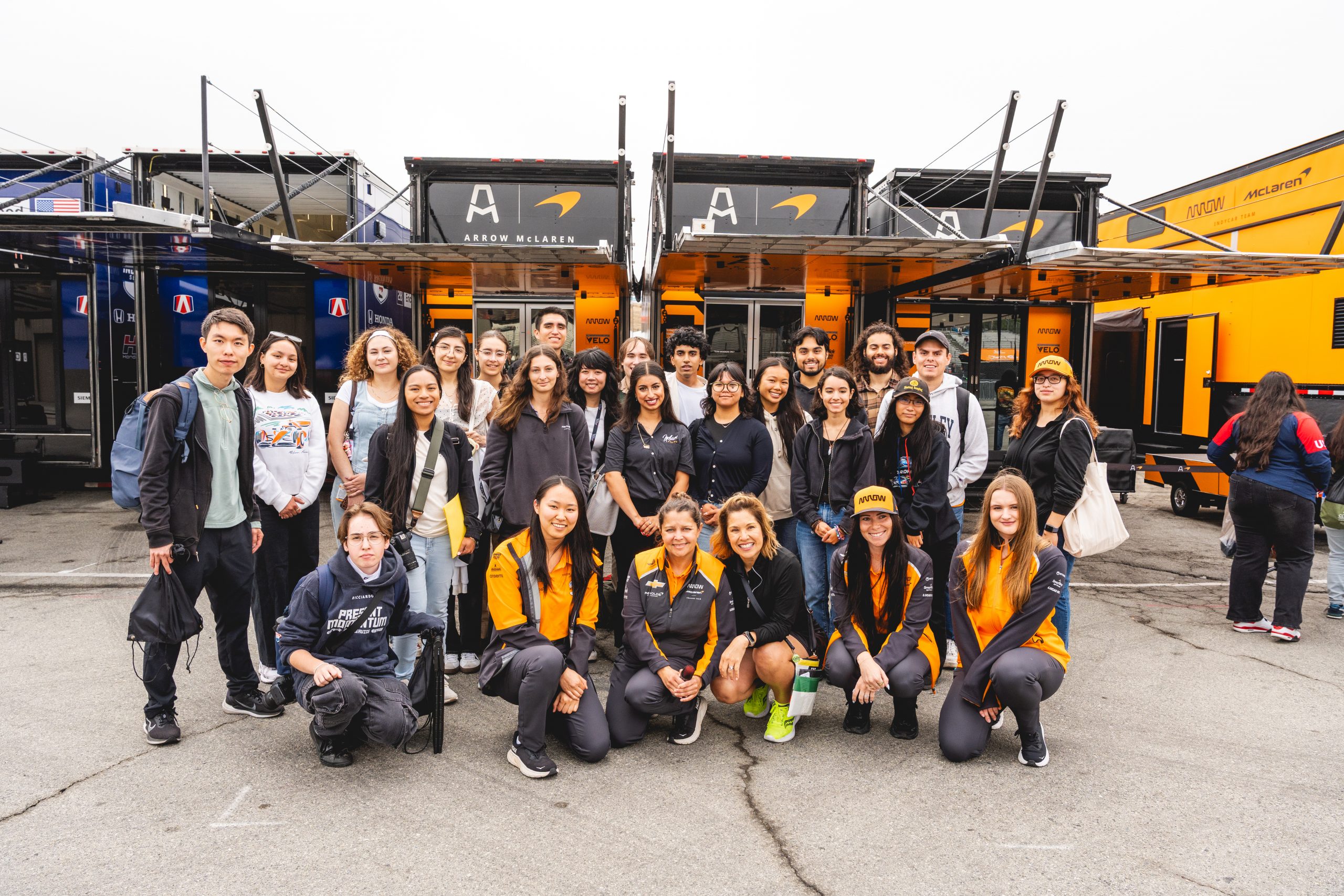
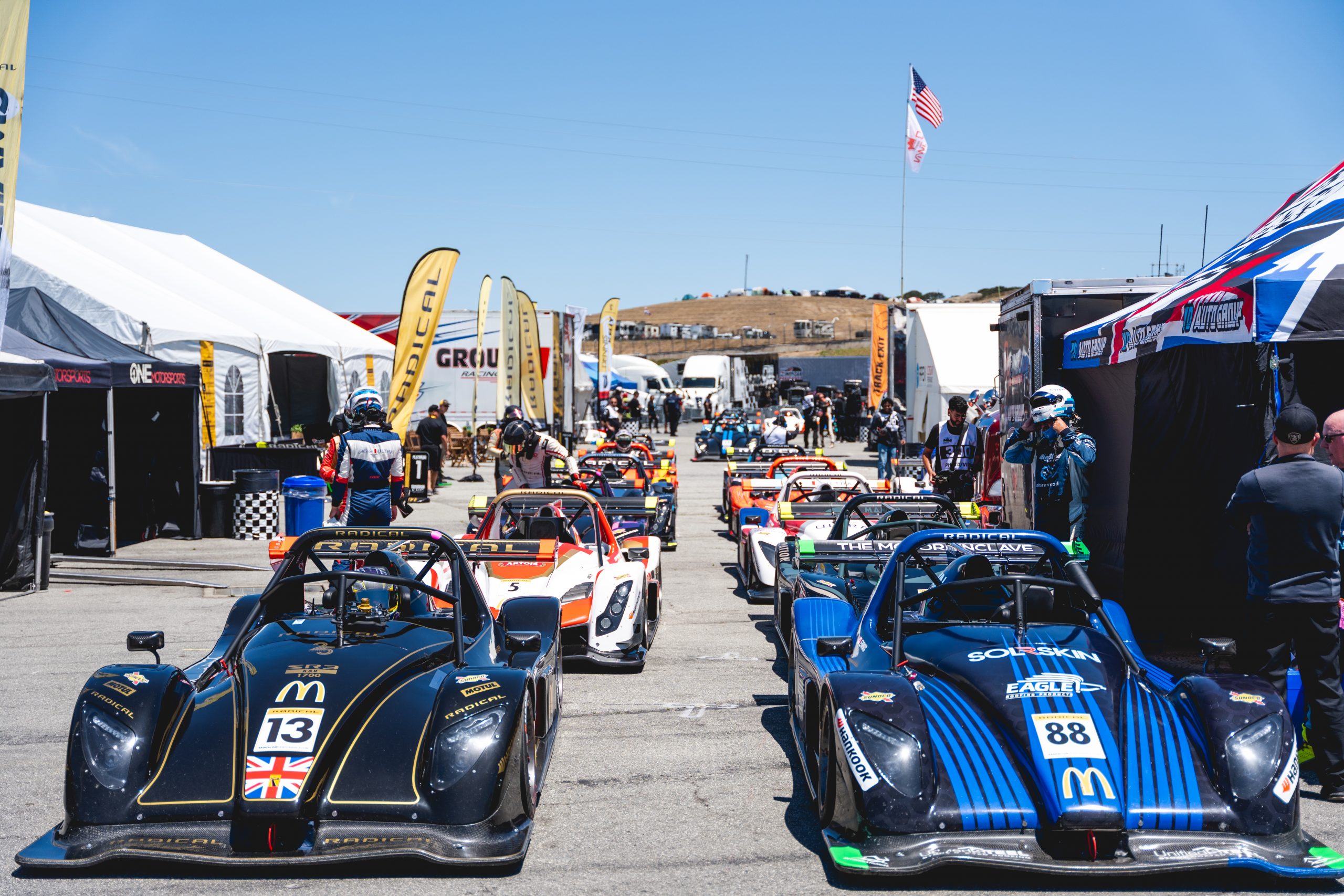
If you don’t like the outdoors or racing, though…I (respectfully) don’t know what to say to you, so I’ll end it with this: just try it. Worst case scenario, you didn’t like it, but I’m very confident you won’t regret it. The track will take care of you.
This post includes an affiliate link. If you purchase anything via this link, we may get a commission.
The post A Weekend at Laguna Seca Will Turn Anyone Into A Racing Fan appeared first on The Autopian.