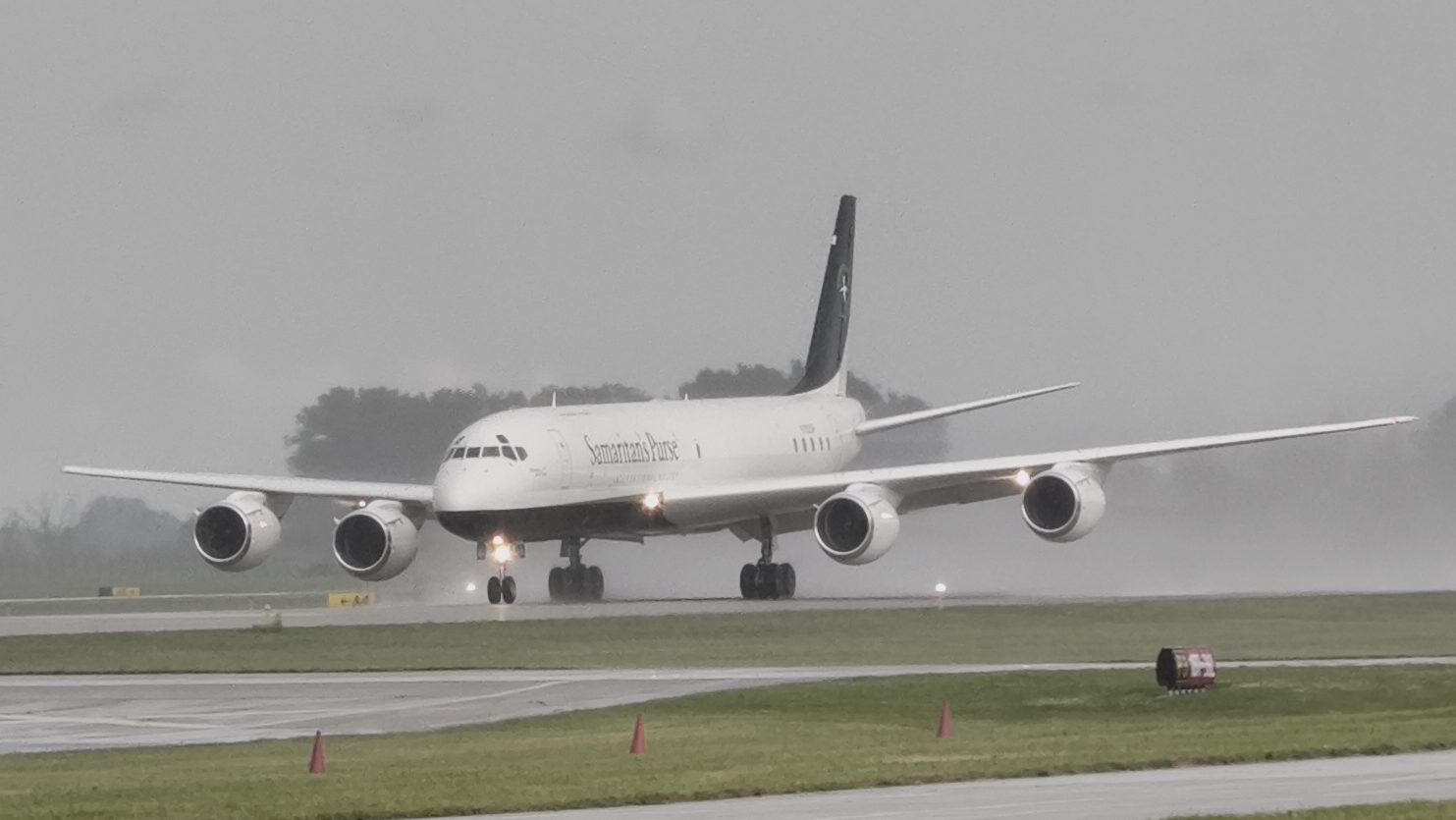
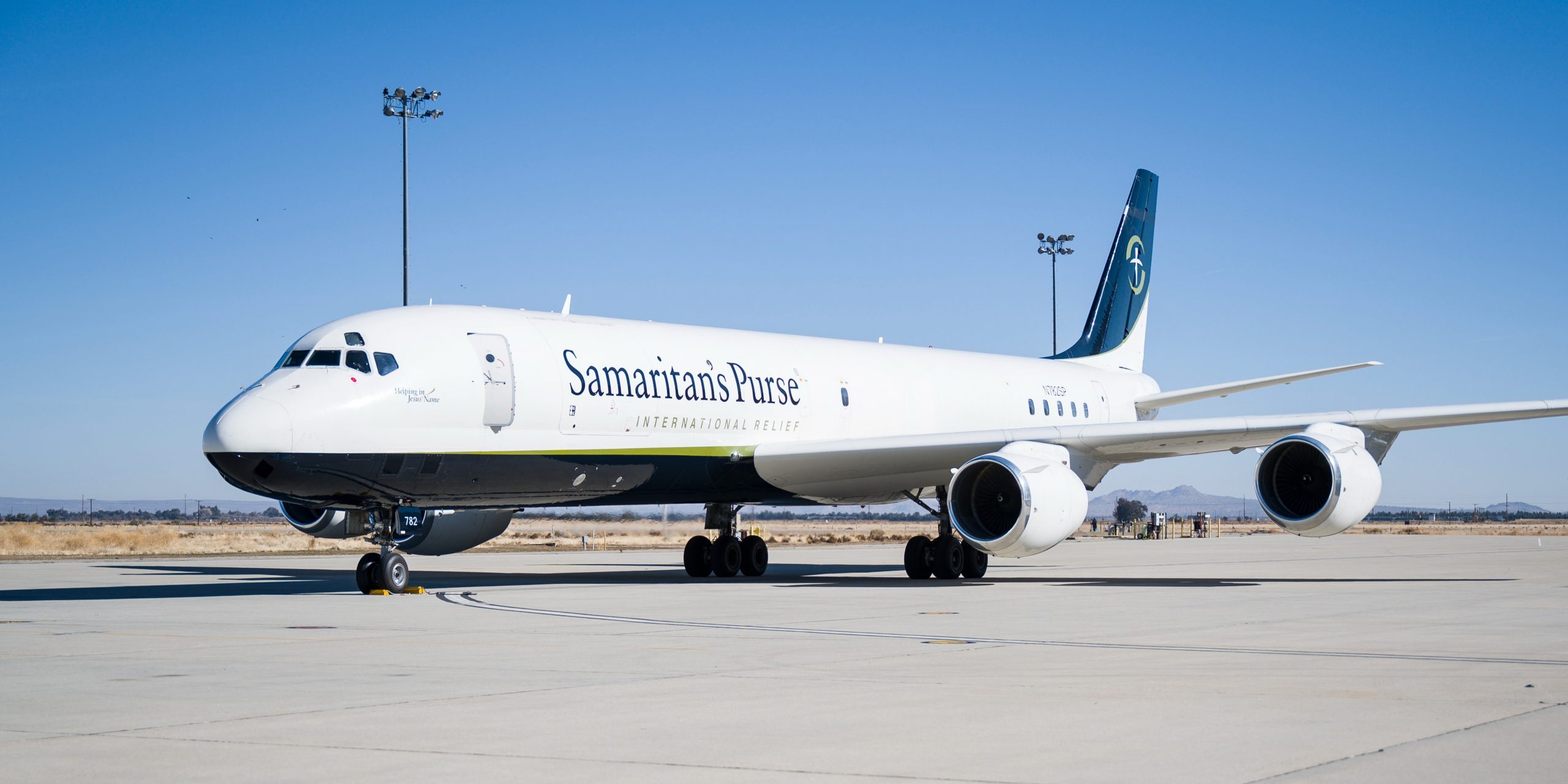
About 67 years ago, aviation was changed forever in America when Boeing launched its iconic 707. Boeing wasn’t alone, and soon after, America’s first-generation jet airliners also included the legendary Douglas DC-8. Suddenly, far-flung destinations seemed much closer thanks to the raw speed and power provided by jet power. Aviation wouldn’t be the same without these jets. Several decades later, the Douglas DC-8 has long been out of passenger service, and only a few remain flying in the entire world. One of them is this, the only Douglas DC-8 flying in America. Long after every other DC-8 has retired, this one is still flying at the old age of 57 years old. This Douglas DC-8 is the flagship of the controversial humanitarian aid organization Samaritan’s Purse, and it’s used to deliver aid to regions torn by war and natural disasters.
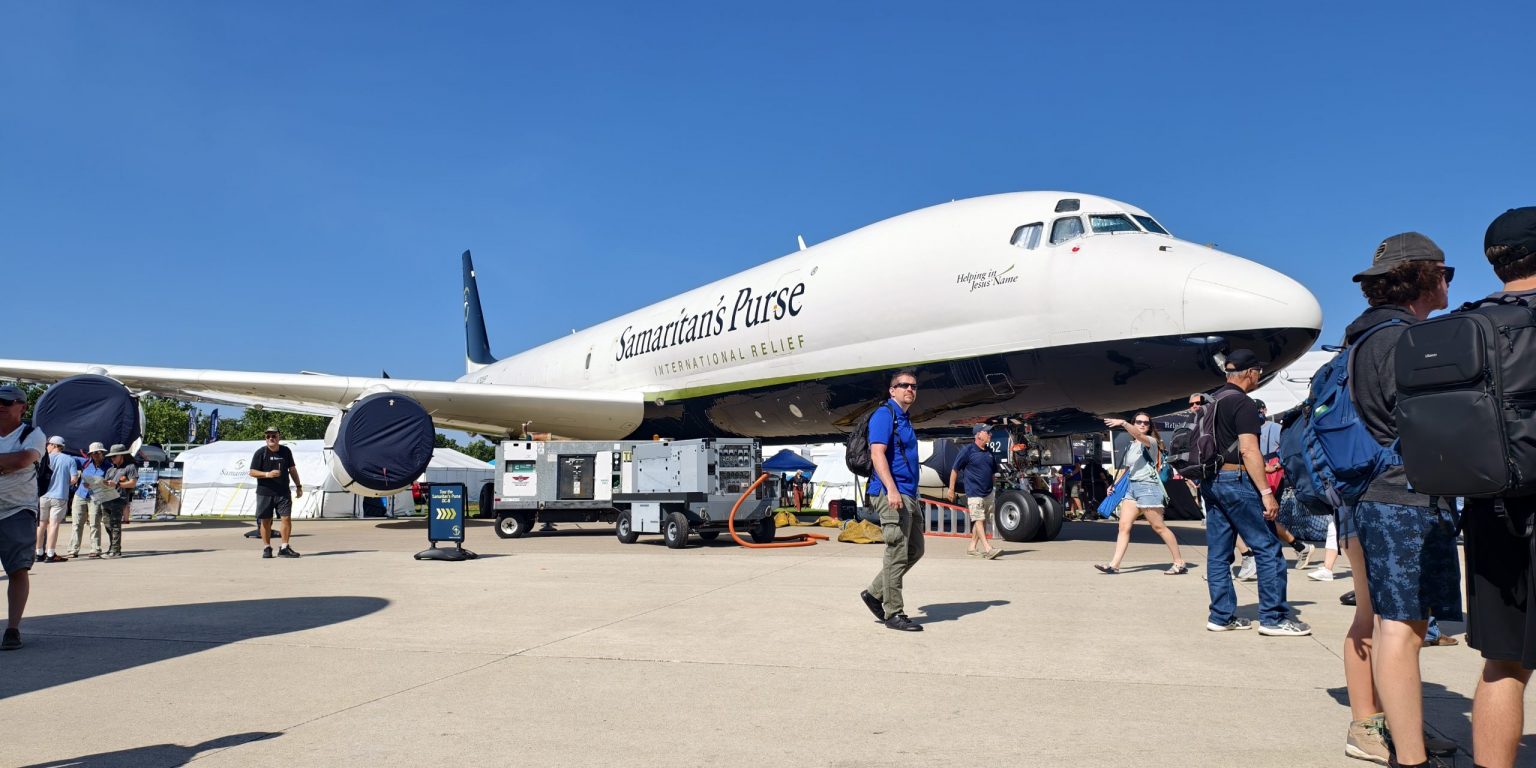
Samaritan’s Purse’s DC-8, registration N782SP, was one of the highlight aircraft in Boeing Plaza during the first half of the EAA AirVenture Oshkosh 2025 aviation spectacular. It was parked beside other rare aviation icons like Pratt & Whitney Canada’s Boeing 747SP engine testbed aircraft and Lockheed VC-121A Constellation “Bataan.” This AirVenture is one that’s bittersweet for the Samaritan’s Purse DC-8 crew and the aircraft itself; as a pilot of the aircraft had informed me, this DC-8, which was built in 1968 and then delivered new to its first airline in 1969, now has nearly 99,000 hours on its airframe. Samaritan’s Purse says that the useful life of its airframe will be around 100,000 hours.
This DC-8 will be retired before the end of the year and replaced with a Boeing 767. Who knows what will happen to the aircraft afterward, but it’s likely that this aircraft doesn’t have much longer before it’s no longer flying at all. I was able to take a tour of Samaritan’s Purse’s DC-8, and it was my first time stepping into a DC-8 of any kind. It will also likely be the last time I ever step into a DC-8, or at least, one that’s capable of leaving terra firma.
Douglas Bets On Jets
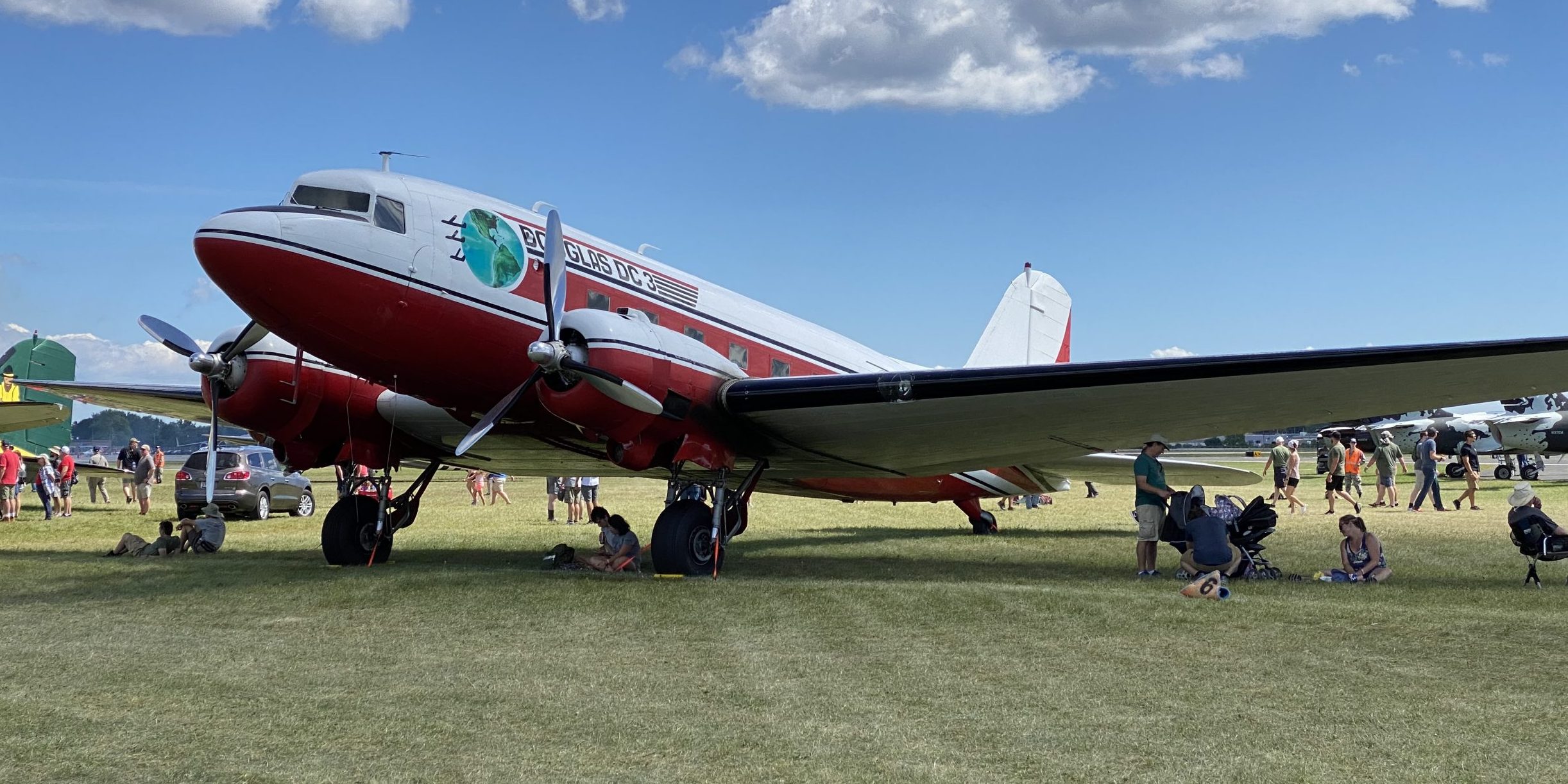
The Douglas Aircraft Company of Santa Monica, California, was once one of the largest players in civil aviation. Founded in 1921 by Donald Wills Douglas Sr., Douglas ruled the skies during the propeller-driven era. One of history’s most iconic aircraft, the DC-3, was a Douglas product. Over 16,000 examples were built beginning in the mid-1930s, and the DC-3 design has proven to be so everlasting that a shocking number of DC-3 variants is still flying today, long after most of the people who built them have passed.
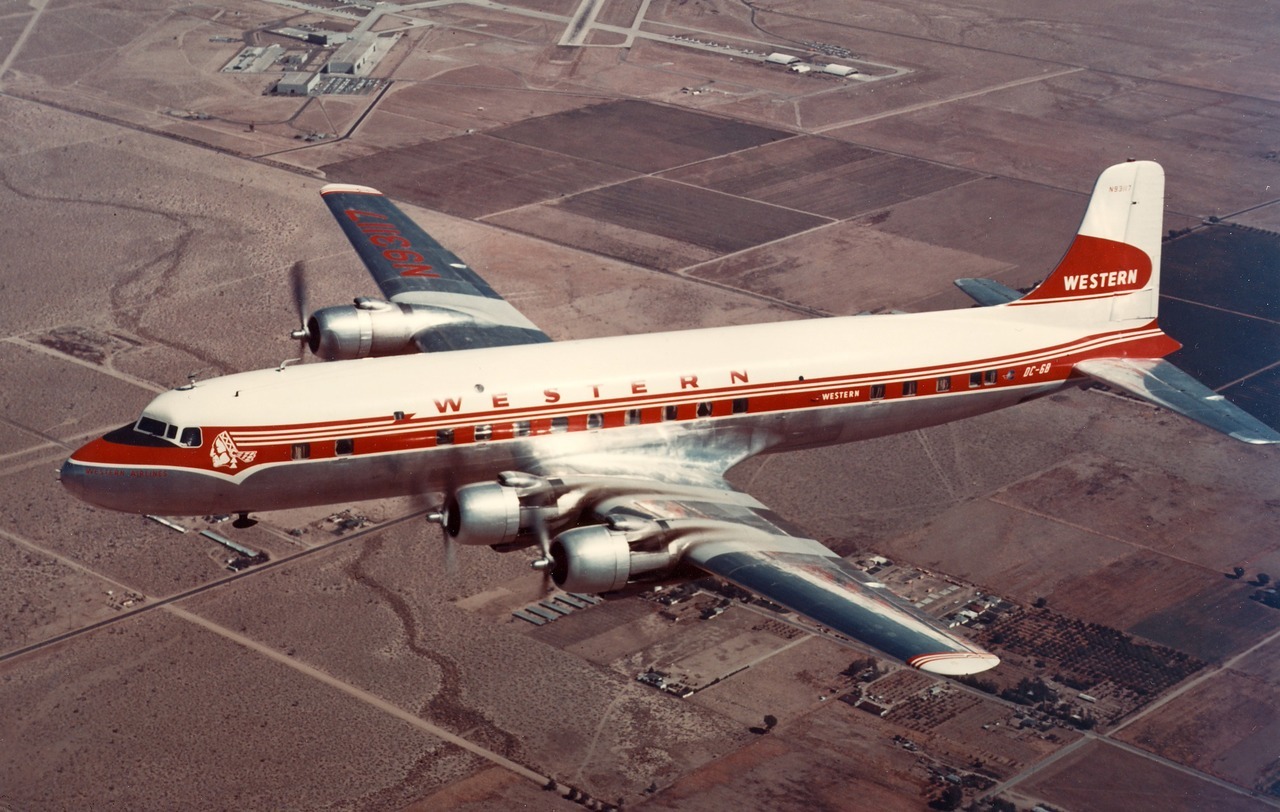
Douglas followed the DC-3 up with durable workhorses including the DC-4, DC-6, and DC-7. None of these latter aircraft has the fame of the DC-3, but even some of those remain flying today, which serves as a testament to why Douglas ruled the prop era.
Douglas even successfully made the transition to turbine power in 1948 with the F3D Skyknight jet fighter. This was only the beginning. According to Airline Ratings, which quotes Richard G Hubler’s book Big Eight, the story of the DC-8 began in 1951. Then-American Airlines CEO Cyrus R. Smith was a friend of Donald Douglas Sr. and called up his buddy with a request. Smith wanted Douglas to introduce a newer version of its DC-6 piston-powered airliner that was capable of flying west across America without having to stop for fuel.
At the time, Airline Ratings notes, prop-driven airliner development was still alive. The Lockheed L-1049 Super Constellation, Lockheed’s answer to the Douglas DC-6, had taken its flight in July of that year and would go into service that December. Now, Douglas could have put its head down and cranked out another DC-6 variant, and indeed, the DC-6 would remain in production until 1958. However, Douglas engineers were enamored with the idea of using Pratt & Whitney JT3D turbofan engines to power a transport.
As Airline Ratings writes, Donald Douglas Sr. wasn’t exactly sold on the idea at first. Reportedly, in 1952, Donald Sr. told Douglas VP of Engineering Arthur Raymond that a jet airliner “would not have been a very good aircraft” due to the relatively low reliability and high fuel consumption of jet engines back then.
Further complicating matters, at least in Donald Sr.’s eyes, was the fact that airlines were already spending lots of money on aircraft like the DC-6, and might not want to buy a new type of aircraft so soon. Likewise, as Airline Ratings points out, Douglas advertised itself as flying twice as many people on its aircraft as all of its competitors combined. All of those aircraft were piston-engine airliners.
American Airlines was committed to the idea of a longer-range prop-driven airliner and ordered 25 aircraft. Douglas announced the DC-7 in 1951. But the march of technology would eventually force the airplane manufacturer’s hand.
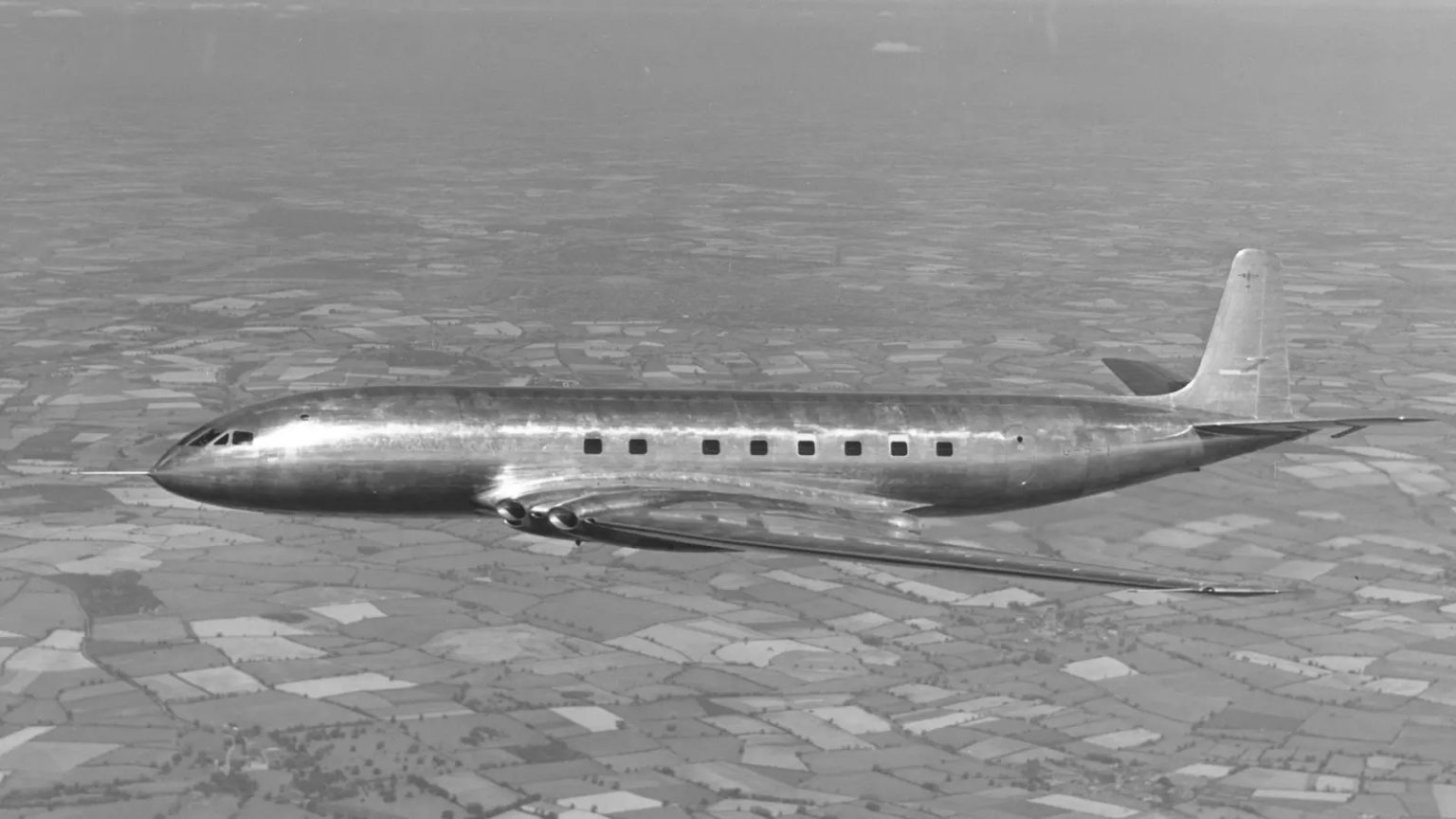
The early 1950s was a fascinating time in commercial aviation. In 1952, the British Overseas Airways Corporation began flying the world’s first commercial jet airliner, the de Havilland DH.106 Comet, on a route between London and Johannesburg. Meanwhile, here in America, Boeing spent its 1952 designing and then beginning construction of the Boeing 367-80, the aircraft that would serve as the basis of the Boeing 707. According to Airline Ratings, Boeing saw jet aviation as the future and figured that if it could jump on the trend early, it could finally sell more planes than Douglas.
Another notable event happened in 1952, and that’s when the United States Air Force put out a bid for a new transport to replace the Boeing KC-97 tanker. At the time, the tankers had only recently been entered into service, but these planes flew so slowly — about 200 mph slower than the era’s bombers — that they had to be stationed over the ocean at all times in case the military needed to scramble its bombers. A jet-powered tanker was promising because it could fly at the same speed as a jet bomber. The events of 1952 were enough to push Douglas to erect an office in California that was dedicated to pursuing jet-powered civil and military transports.
The DC-8 Program

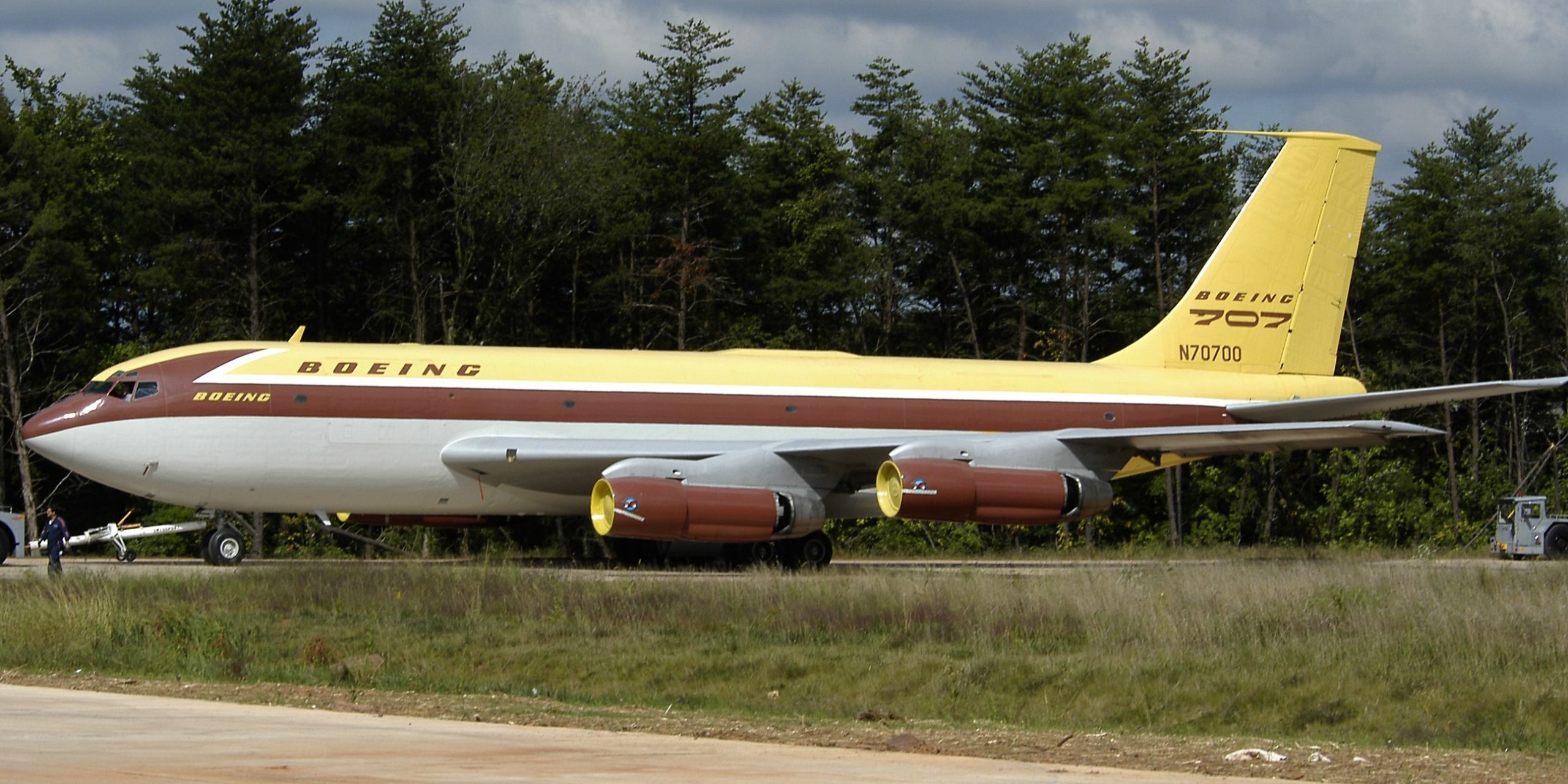
The only problem was that, reportedly, Douglas was entering into a new territory that Boeing already had experience in. Boeing already knew how to build large jet aircraft thanks to its experience in the manufacture of B-47 and B-52 bombers. Likewise, the engines in the very early B-52, eight Pratt & Whitney J57s, were thought to be suitable for airline use. Boeing also had experience in building aerial tankers, too.
This didn’t stop Douglas from taking on the challenge, and Chief Project Engineer Ivor Shogrun made a valiant effort. Douglas went all-in on the project, chasing not only the government contract but an airliner. As Airways Magazine writes, Shogrun and the design team went through hundreds of different design configurations. One of those, Airways says, was a delta wing. Ultimately, Douglas landed on swept-wing design with four engines in pods fixed under the wings, a design similar to Boeing’s Dash-80.
By mid-1954, Airways notes, Douglas had dumped $3 million into the DC-8 project and the equivalent of 250,000 man hours. Unfortunately, Douglas just couldn’t catch up to the lead Boeing set. Boeing’s Dash-80 prototype was revealed that year, before Douglas had its own prototype. Despite this, Douglas wasn’t worried. Historically, the military purchased aircraft from more than one manufacturer, and Douglas was sure that would be the case here. However, in a cruel twist, in 1955, the Air Force went all-in on Boeing’s jet tanker design, leaving Douglas behind.
Douglas responded later in 1955 by refocusing the DC-8 program entirely on the commercial airliner market. Period reports surmised that Boeing would be too busy fulfilling the government contract, allowing Douglas to swoop in and be first to the market with an American jet-powered airliner. Of course, this isn’t how it happened. Boeing was working on both tankers and the Boeing 707 commercial airliner.
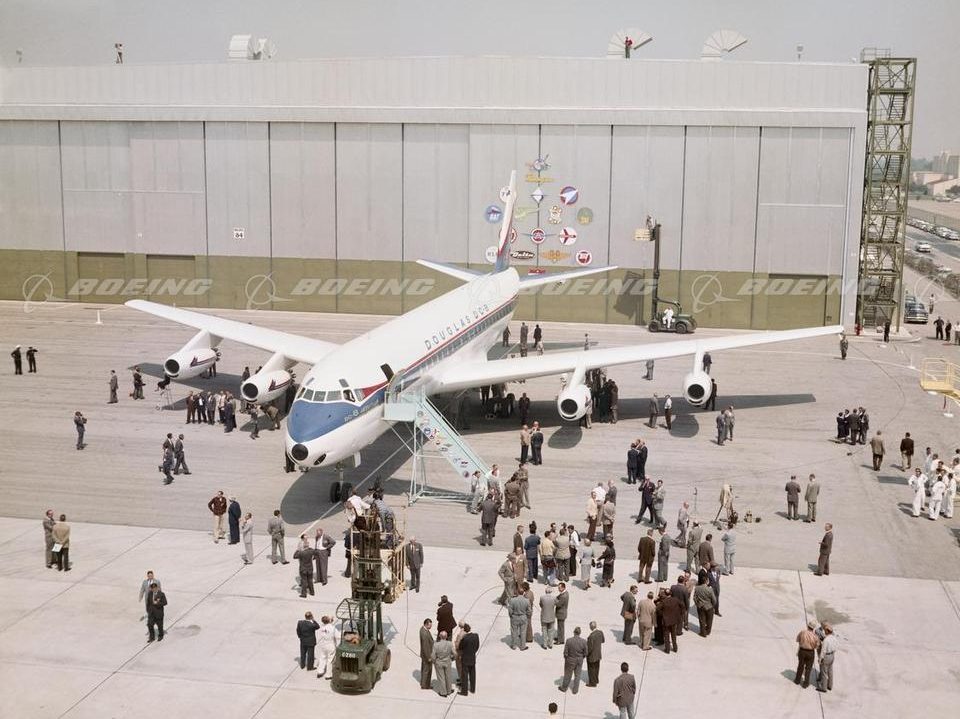
Douglas was ambitious with the DC-8, quoting estimated development costs of $450 million. The DC-8 was projected to have Pratt & Whitney JT3L engines good for 11,000 pounds of thrust and a range of 3,700 miles with 125 passengers onboard. National Airlines placed an order for six DC-8s soon after the announcement, Pan Am placed an order for 25 examples soon after that. A few weeks after Pan Am’s famous order, United Airlines placed an order for 30 of its own DC-8s.
Notably missing from this was Donald Douglas Sr.’s old friend, American Airlines. Reportedly, American Airlines went with the Boeing 707, in part because Boeing was ahead of Douglas and already had a plane flying, but the airline felt that the 707 was a more advanced aircraft that was projected to sell for a lower cost, anyway. Boeing even sweetened the deal by agreeing to make the 707’s fuselage as wide as the DC-8’s, which eliminated the Douglas aircraft’s size advantage.
Teething Issues

The DC-8 made its first flight on May 30, 1958, powered by the thrust of a quartet of 13,500-pound thrust Pratt & Whitney JT3C engines. The aircraft would then go into service a year later as the launch DC-8-11 with Delta Air Lines and United Airlines.
Early on, Airline Ratings notes, the DC-8 had several issues. One had to do with the DC-8’s wing sweep. The Boeing 707 swept its wings back 35 degrees while the DC-8 had a far more conservative 30-degree sweep. As Airline Ratings explains, aircraft wings can achieve low drag at high Mach numbers by keeping the air flowing over the wing at speeds slower than the speed of sound, thus avoiding shock waves and the drag associated with them. Because of this, a wing with 30 degrees of sweep could fly at around Mach 0.80 while 35 degrees could get you to Mach 0.85.
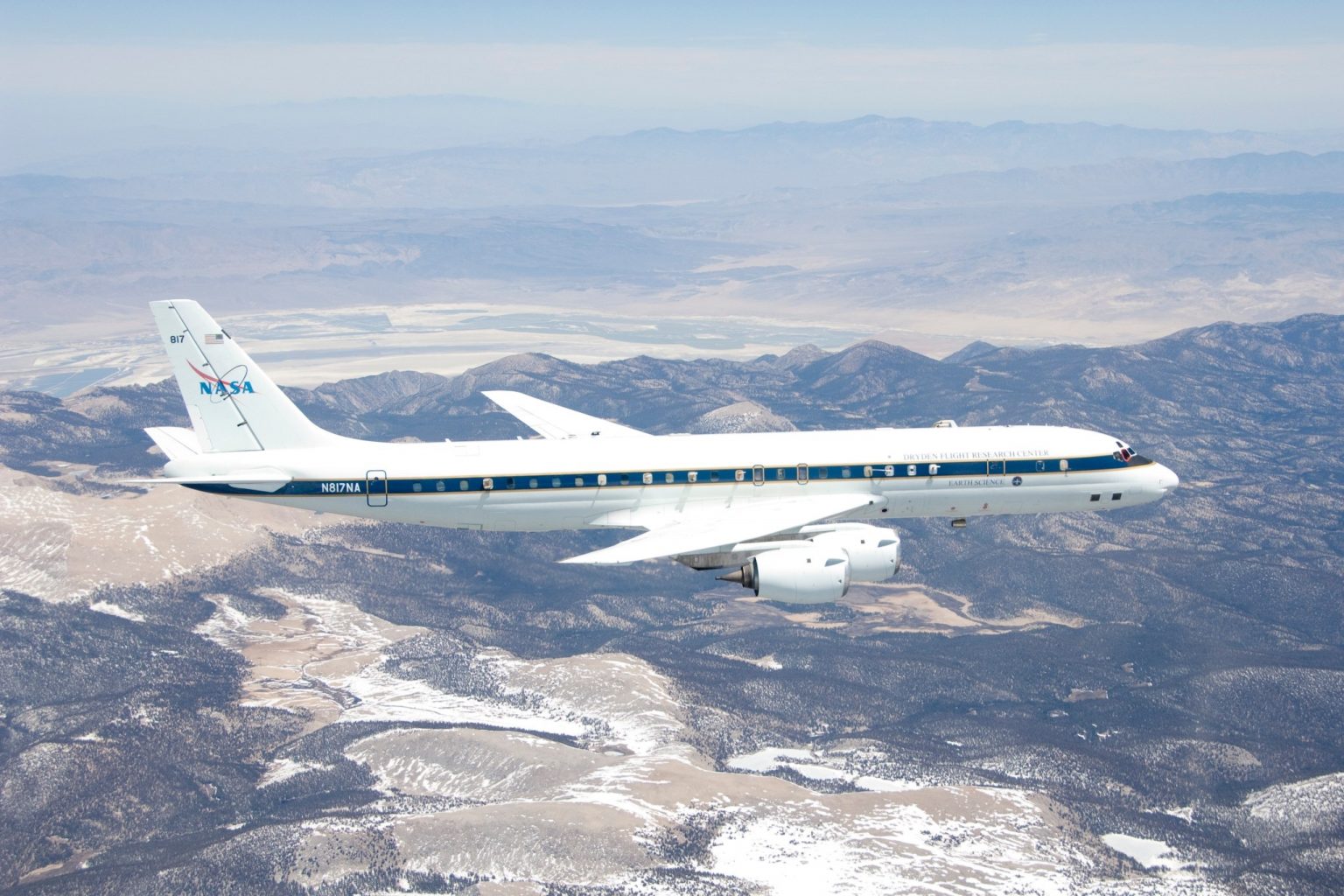
The Douglas DC-8 wing had a sweep back of 30 degrees, but Douglas promised speeds of Mach 0.85, anyway. The DC-8 employed an airfoil design that caused a shock wave at its leading edge, but configured the air after the shockwave in a way that was intended to eliminate the drag caused by the shock waves.
The problem was that, as Airline Ratings writes, Douglas never tested the wing in the real world. Calculations and wind tunnel testing suggested the wing would work, but it wasn’t flight tested until the first flight of the first DC-8. As it turned out, Douglas had goofed up, and its wing produced more drag than Douglas promised to the airlines. Eventually, Douglas found that given its wing and engine pod design, drag was 10 percent greater than it guaranteed to airlines and 13 percent greater than company estimates. Because of this, the initial DC-8s had an economical speed of Mach 0.798, lower than the guarantee of Mach 0.84 that Douglas had given airlines.

Douglas ran back to the drawing board to change the wings’ design, which included a new nose profile, wingtip extensions, wing slots, and more. Unfortunately, because Douglas didn’t figure out the screw up sooner, several early DC-8s were shipped with the older high-drag design. Douglas ended up having to offer a retrofit kit for the early examples. But then the hits kept coming as, reportedly, the changes to the wing didn’t completely fix the drag problem. Douglas ended up offering to pay airlines $230,000 per aircraft for the goof.
Now, you might be wondering something. If a higher wing sweep was known to deliver higher speeds, why did Douglass attempt to make a more conservative wing sweep travel faster? Reportedly, Douglas did this because it wanted the DC-8 to fly as much like the DC-7 as possible. The idea was that DC-7 pilots could have an easier time transitioning to jet power, and training would be cheaper, too. It was also thought that this was a safer way of transitioning to jets, as the stall speeds of the DC-8 wouldn’t be much different than the DC-7.

Reportedly, this wasn’t the only blunder in the DC-8 program, as Douglas spent $10 million developing its own seats for the DC-8, which ended up being no better than the off-the-shelf seats that were already on the market.
Sales also weren’t exactly where Douglas wanted them to be in the early days of DC-8 production, so it tried to please as many airlines as possible. Douglas introduced many models of the DC-8 and then changes within models. Airline Ratings notes that the original Pratt & Whitney JT3C engines were swapped for more powerful 16,800-pound thrust JT4A engines. Come 1961, the JT3D engine came around, bringing better fuel economy and 17,000 pounds of thrust or 18,000 pounds of thrust, depending on configuration.
To illustrate how crazy this got, the original DC-8 is known as the Series 10, and each subsequent model counted in 10s, up to the Super 70 Series. Each series often had additional sub-models. The most common DC-8 was the Series 50, which sold 142 copies. These beauties were 150.7 feet long, carried up to 189 passengers, had a maximum takeoff weight of 325,000 pounds, could carry 23,393 gallons of jet fuel, and could fly as far as 5,855 nautical miles. The Super 60 Series stretched out to 187.4 feet long and could carry up to 259 passengers in a high-density configuration.
A total of 556 examples were built between 1958 and 1972. The DC-8 failed to live up to its mission of beating Boeing, which sold 865 of its 707 over a longer period. To be fair to Douglas, it did put forth a great effort to sell its planes. Orders for DC-8s and the later DC-9 soared in the mid-1960s, but a perfect storm of labor shortages, parts shortages due to the Vietnam War, and the incredible backlog meant that Douglas just couldn’t keep up. Airline Ratings notes that the strain of building DC-8s and DC-9s was one of the reasons why Douglas merged with the McDonnell Aircraft Company in 1967.

Despite all of this, the Douglas DC-8 still became an aviation legend. Sure, it was overshadowed by the Boeing 707, but this was one of the aircraft responsible for the Jet Age. The DC-8 also found a way to get into the history books. In 1961, Douglas test pilot William Magruder flew a DC-8 to around 50,000 feet and then put the aircraft into a dive. At around 45,000 feet, it broke the sound barrier, maintaining Mach 1.01 for about 16 seconds.
What’s perhaps even more impressive than the speed was how Magruder recovered. He found that the control surfaces were ineffective due to the loads of flying past Mach 1.0 and beyond the limits of the aircraft. Pulling up didn’t work, so instead, he pushed the control column forward even more, which unloaded the control surfaces enough for Magruder to enact a recovery. So, if you’re ever in a super steep dive and pulling up isn’t working, push forward a little more first.
Samaritan’s Purse
This brings us to the flagship of Samaritan’s Purse, Douglas DC-8-72CF, registration N782SP. This aircraft was delivered new to Finnair in 1969 as what’s known as a “combi.” A combi aircraft is one that is designed to carry both passengers and cargo. These aircraft are relatively rare today, but back then, flying a combi meant an airline had two bites of the apple to make a profit. Finnair’s configuration called for the aircraft to carry 130 passengers and dedicate the rest of the space to cargo.
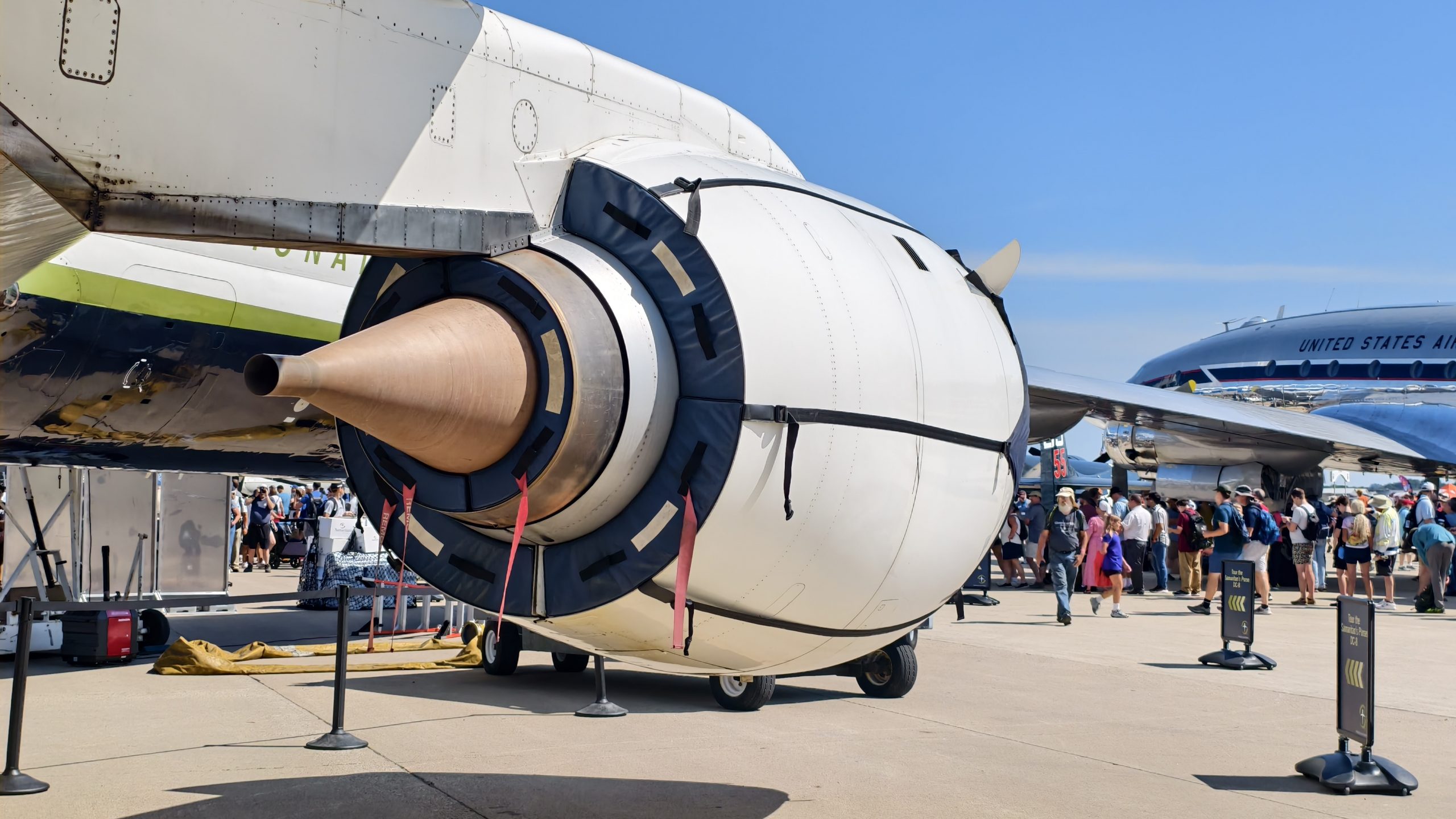
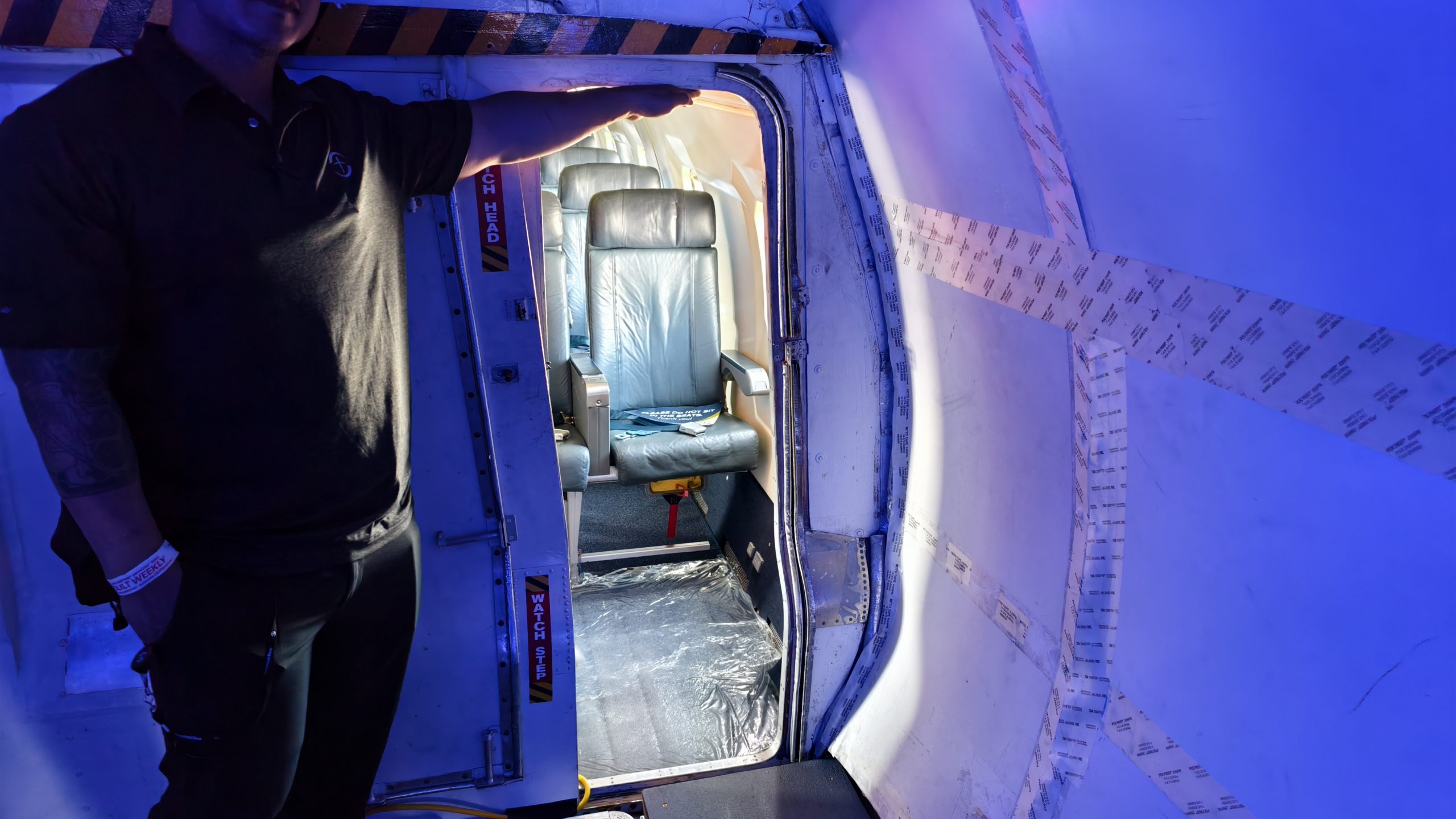
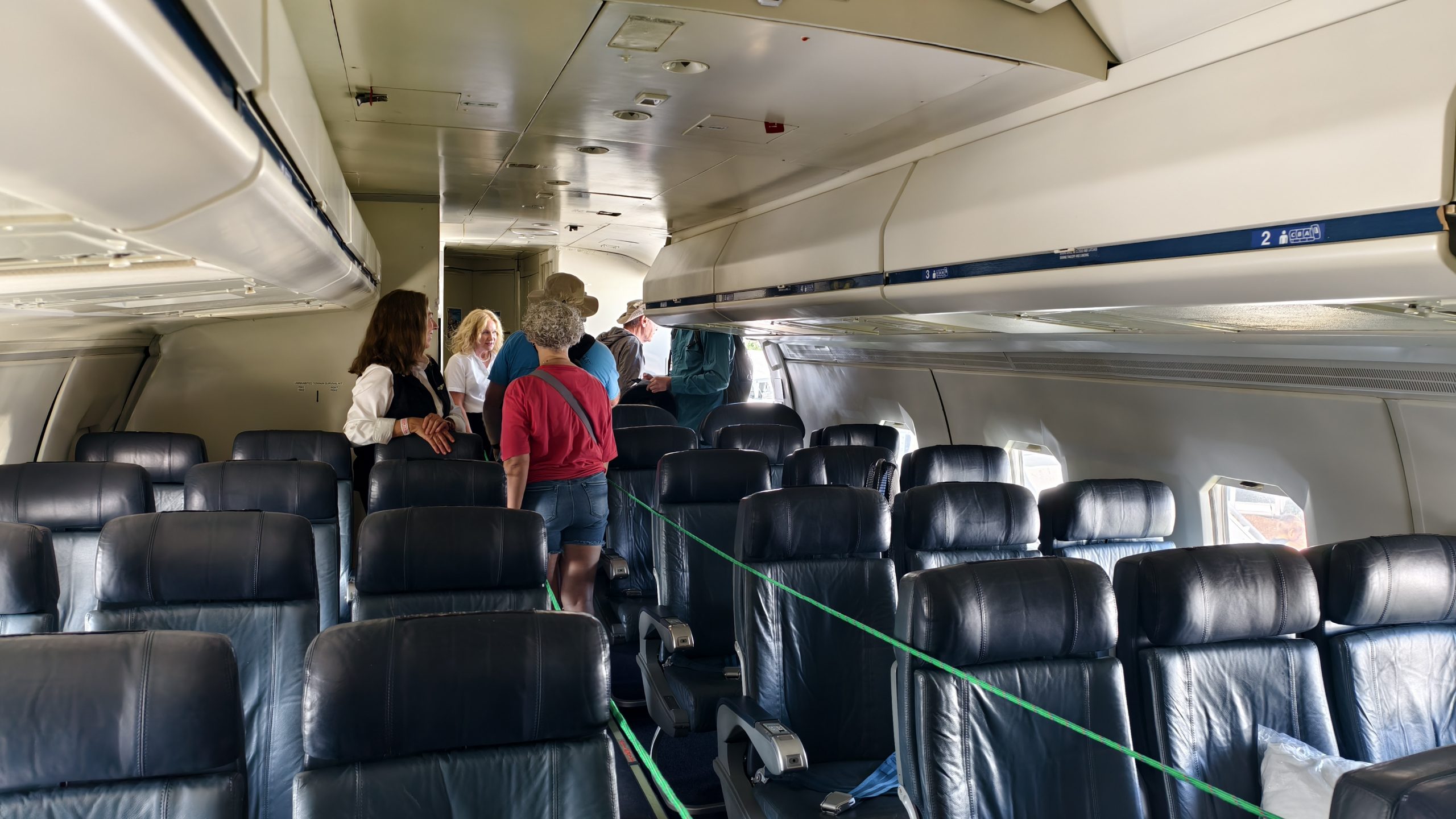
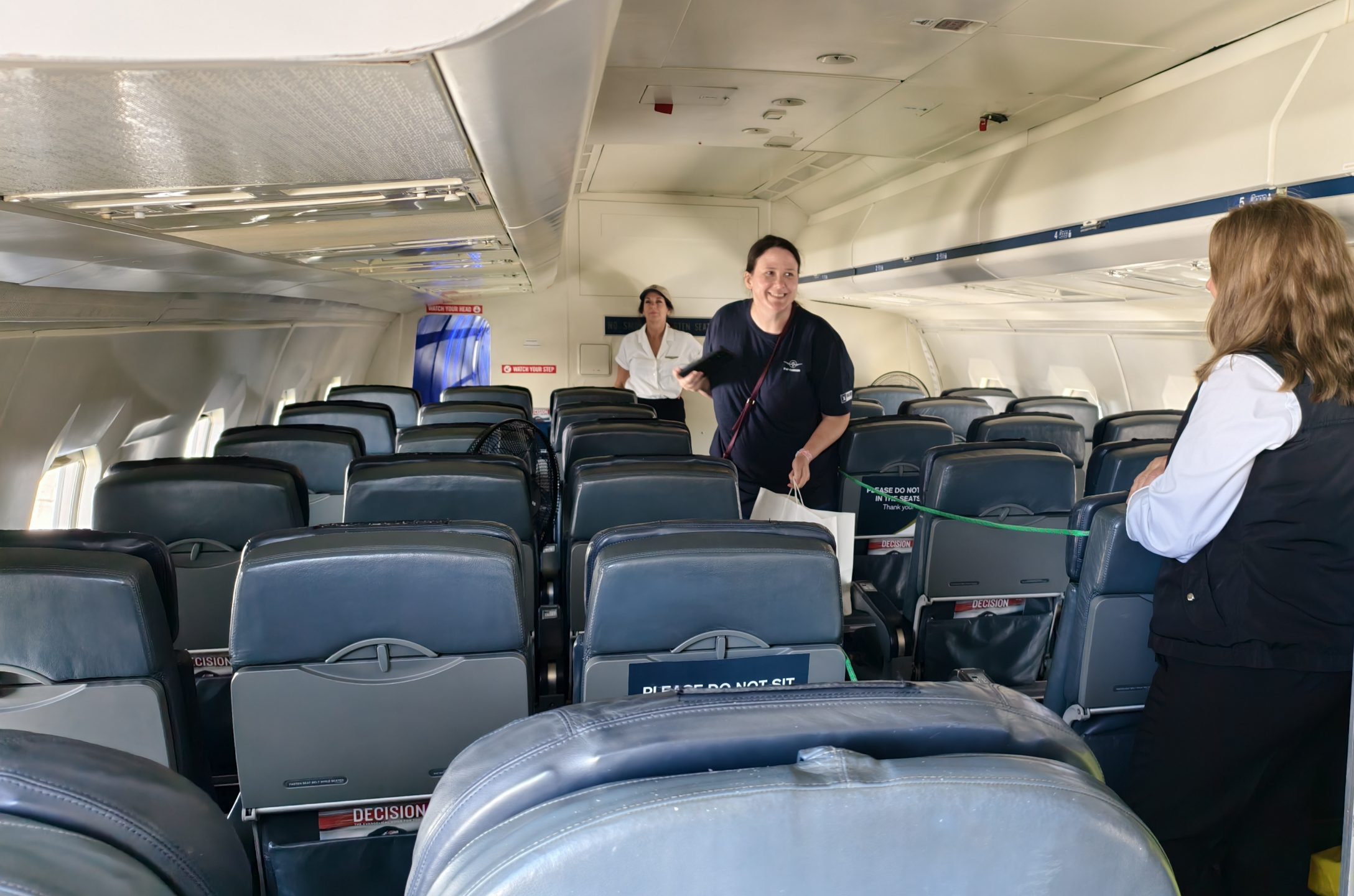
The Samaritan’s Purse DC-8 was traded to the French Air Force in 1981, and then to Air Transport International in 2005. According to the records I’ve been able to find, the aircraft started life with Pratt & Whitney power, but was converted to CFM International CFM56 engines (good for 22,000 pounds of thrust) around the time it was transferred to the French Air Force. Further changes were made to the aircraft when it was transferred to Air Transport International, namely, the reduction of passenger capacity to just 32 people.
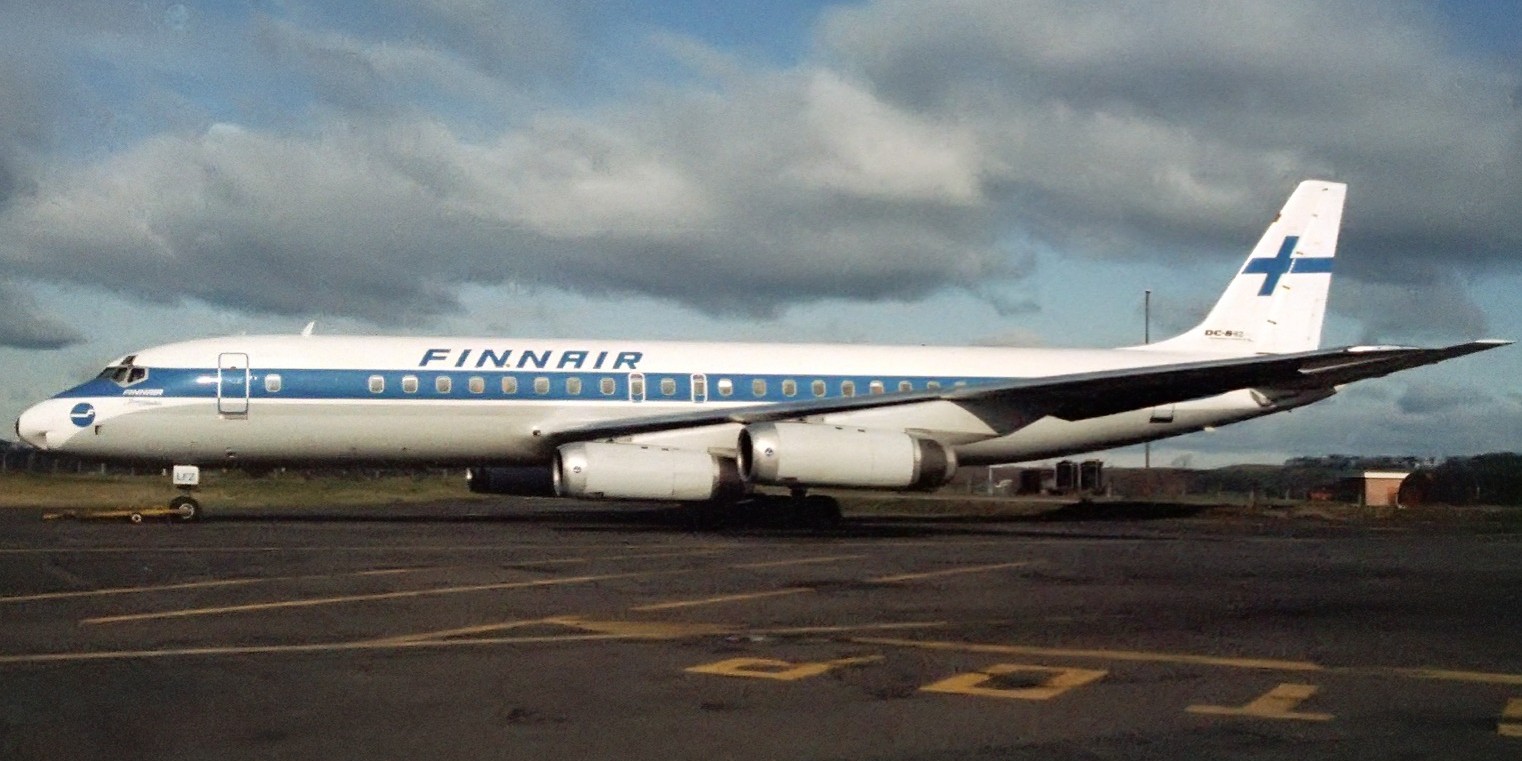
The result is that N782SP has a fuselage where two-thirds of its length is for cargo, while the final one-third is an intact vintage airliner passenger cabin. Another weird oddity about N782SP is the spacing of its windows. Douglas was concerned about the metal fatigue that befell the early de Havilland Comets, and engineers at Douglas felt that the DC-8 could be made to last longer by spacing the windows in every other fuselage frame, or twice as far apart as you’d find on an aircraft like a Boeing 707. In case you were wondering, Aero Toolbox defines these frames as:
Frames are transverse elements that define the cross-section of the fuselage. They are typically spaced approximately 20 inches apart and define the aerodynamic shape. The frames and stringers are spaced in such a way to ensure that the resulting bays that are created support the skins against buckling.
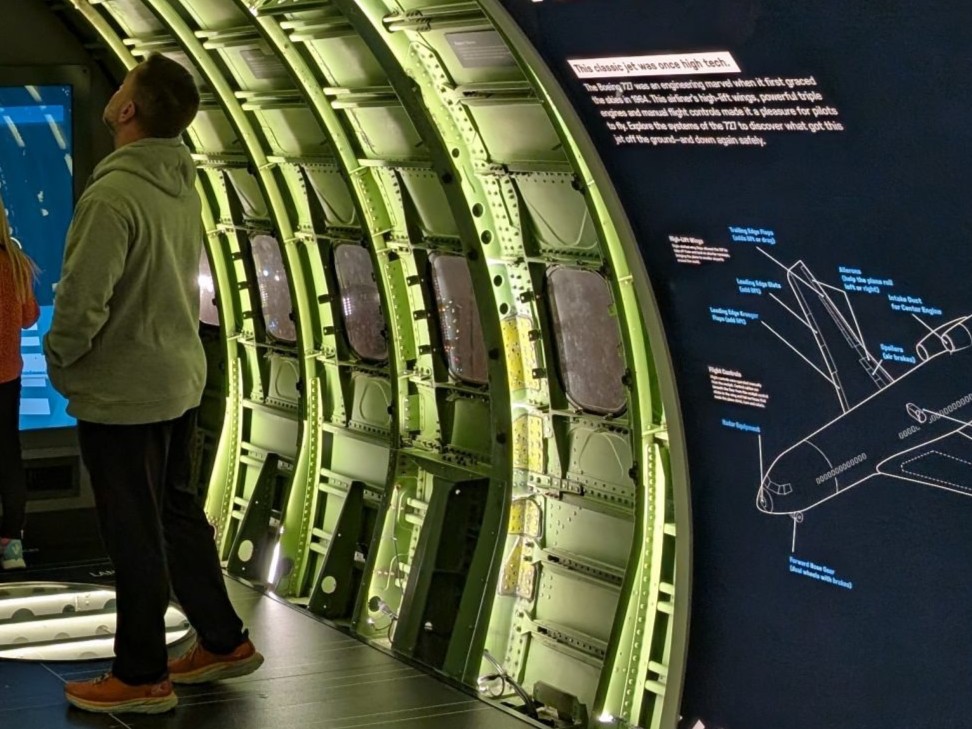
Basically, in a typical aircraft, you have about a 20-inch space with stringers on both sides, a window, and skin. Each of these spaces is a “frame.” The DC-8 had a window only in every other frame, as the belief was that the plane would last longer thanks to reduced stress. To the credit of Douglas, the DC-8 has proven to last quite a long time! Unfortunately, this did mean that, as airlines reduced the space between seats, a lot of DC-8 passengers did not get windows, even when seated in window seats.
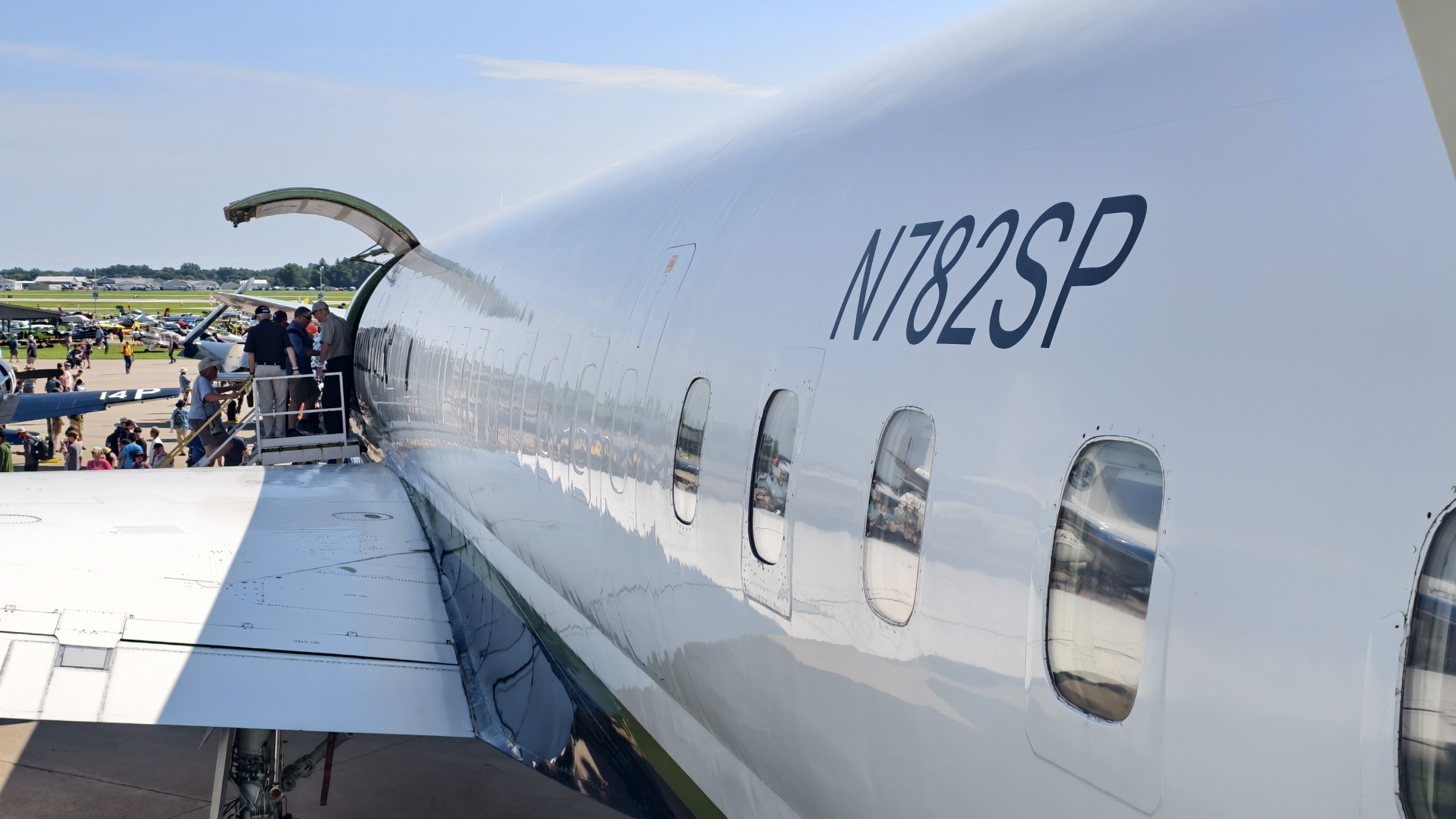
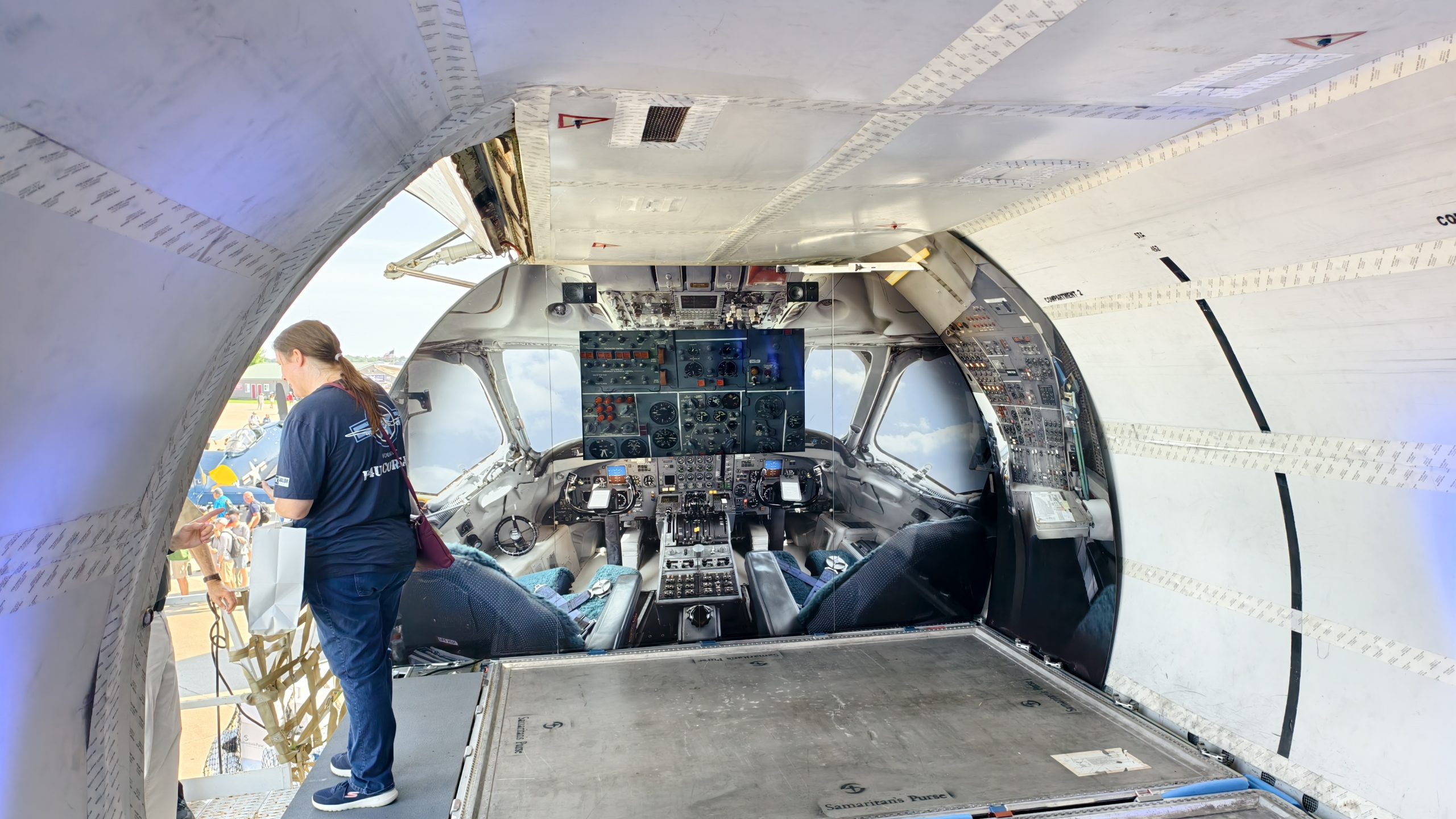
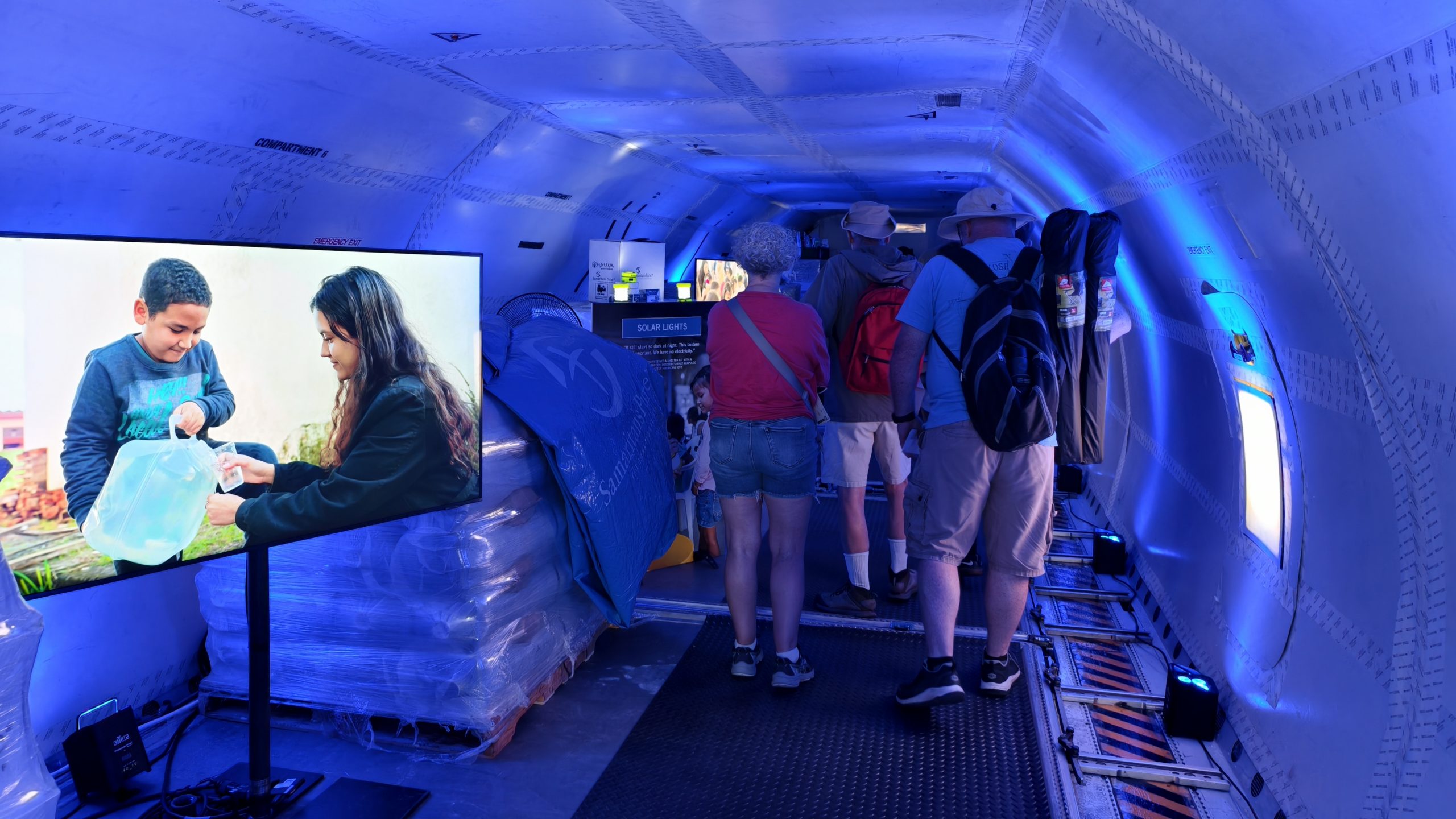
This bird is old in every sense, from those goofy windows and being a quad-engine narrowbody airliner. But the flight deck isn’t particularly modern, either, and still requires a second officer, also known as a flight engineer.
N782SP is being flown by Samaritan’s Purse, an evangelical Christian humanitarian aid organization. The ministry’s motto is “Helping in Jesus’ Name,” and the organization gives this for its backstory:
“Let my heart be broken with the things that break the heart of God.” Bob Pierce wrote these now-famous words in his Bible after visiting suffering children on the Korean island of Koje-do. This impassioned prayer is what guided him as he founded and led the ministry of Samaritan’s Purse in 1970. His mission for this organization was “to meet emergency needs in crisis areas through existing evangelical mission agencies and national churches.”
After World War II, Bob Pierce traveled throughout Asia as an evangelist and journalist with Youth For Christ. While on a university lecturing circuit in China, he stumbled across some courageous women who were living among lepers and orphans, sacrificing everything to share the love of Jesus Christ. Through their selfless love, God gave Pierce a vision for ministry. He dedicated himself to finding and supporting other such Christians who were caring for the poor and suffering in the distant corners of the world.
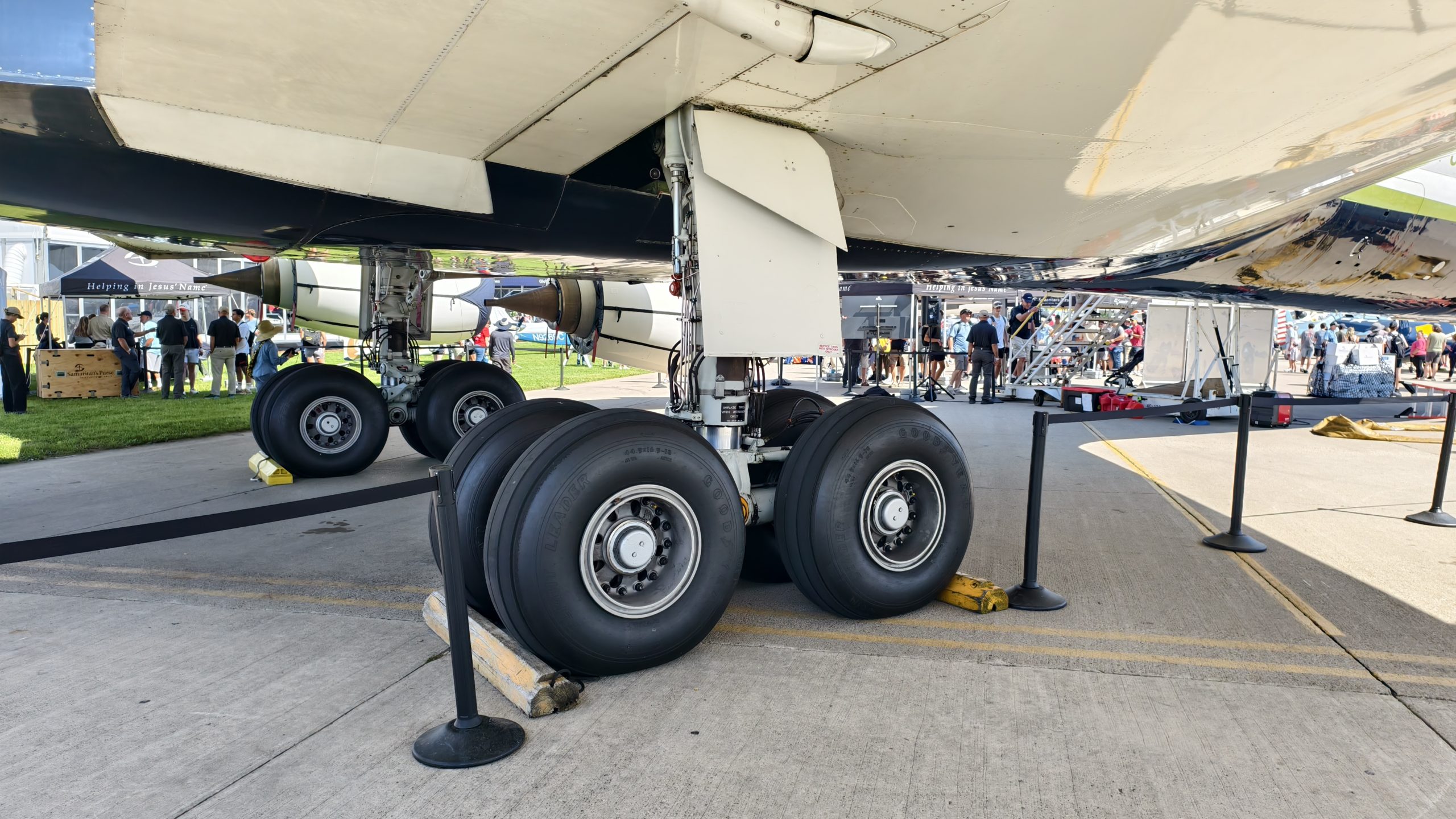
Franklin Graham, who had known Pierce since 1973, became President and Chairman of the Board of Samaritan’s Purse in 1978, after Pierce died of leukemia.
Critical to Samaritan’s Purse is its fleet of 24 aircraft. The flagship of this fleet is the DC-8, but it also contains helicopters, a Boeing 757, and even a Douglas DC-3. Samaritan’s Purse says it acquired the DC-8 in 2015, and it’s been flying missions since 2016. The ministry says that the DC-8 has flown over 200 missions and delivered over 8.7 million pounds of cargo. The aircraft can carry up to 72,000 pounds of cargo on each trip, and the ministry often brings along aid workers, doctors, nurses, and other workers to areas destroyed by war or natural disasters.
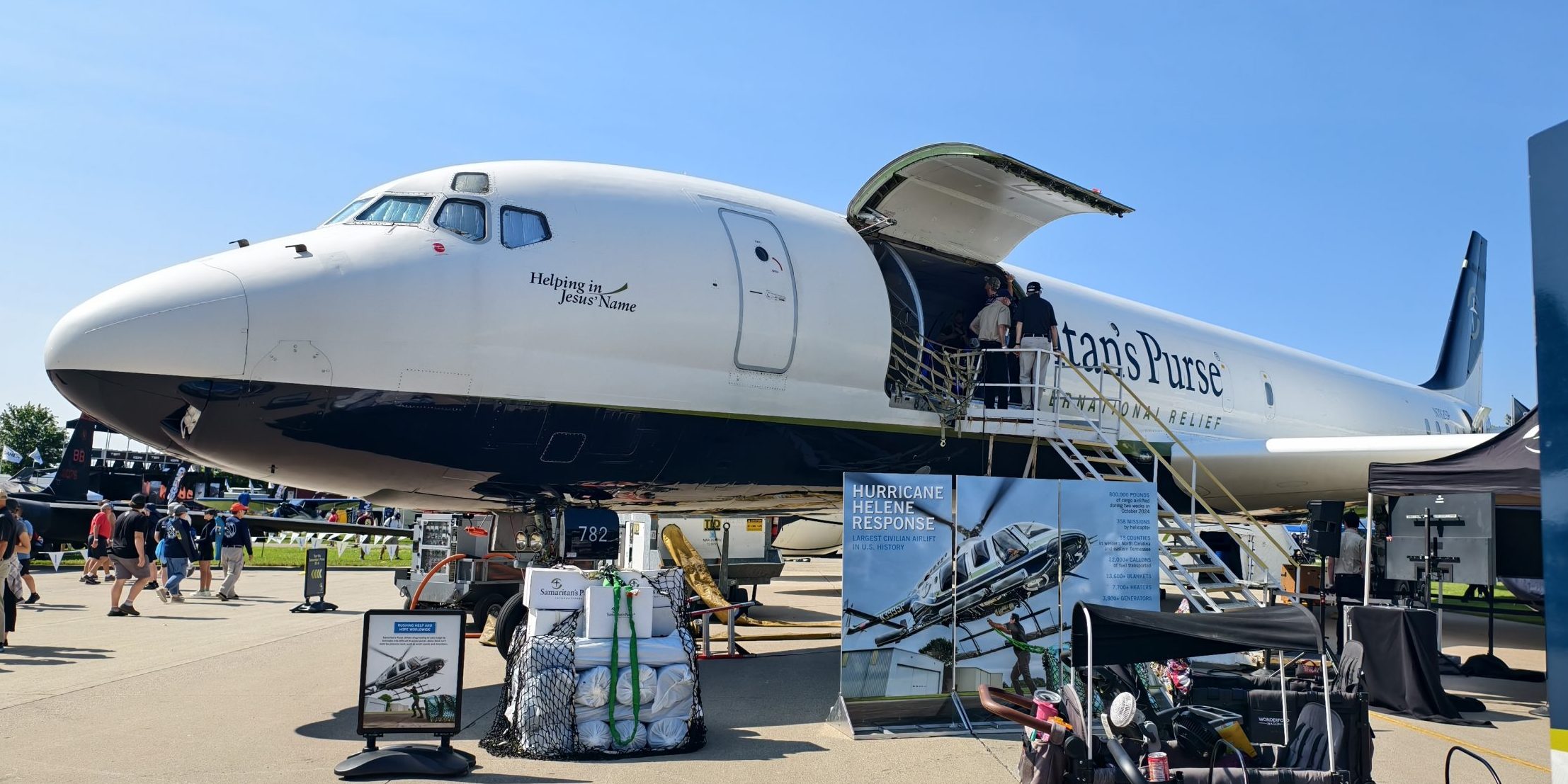
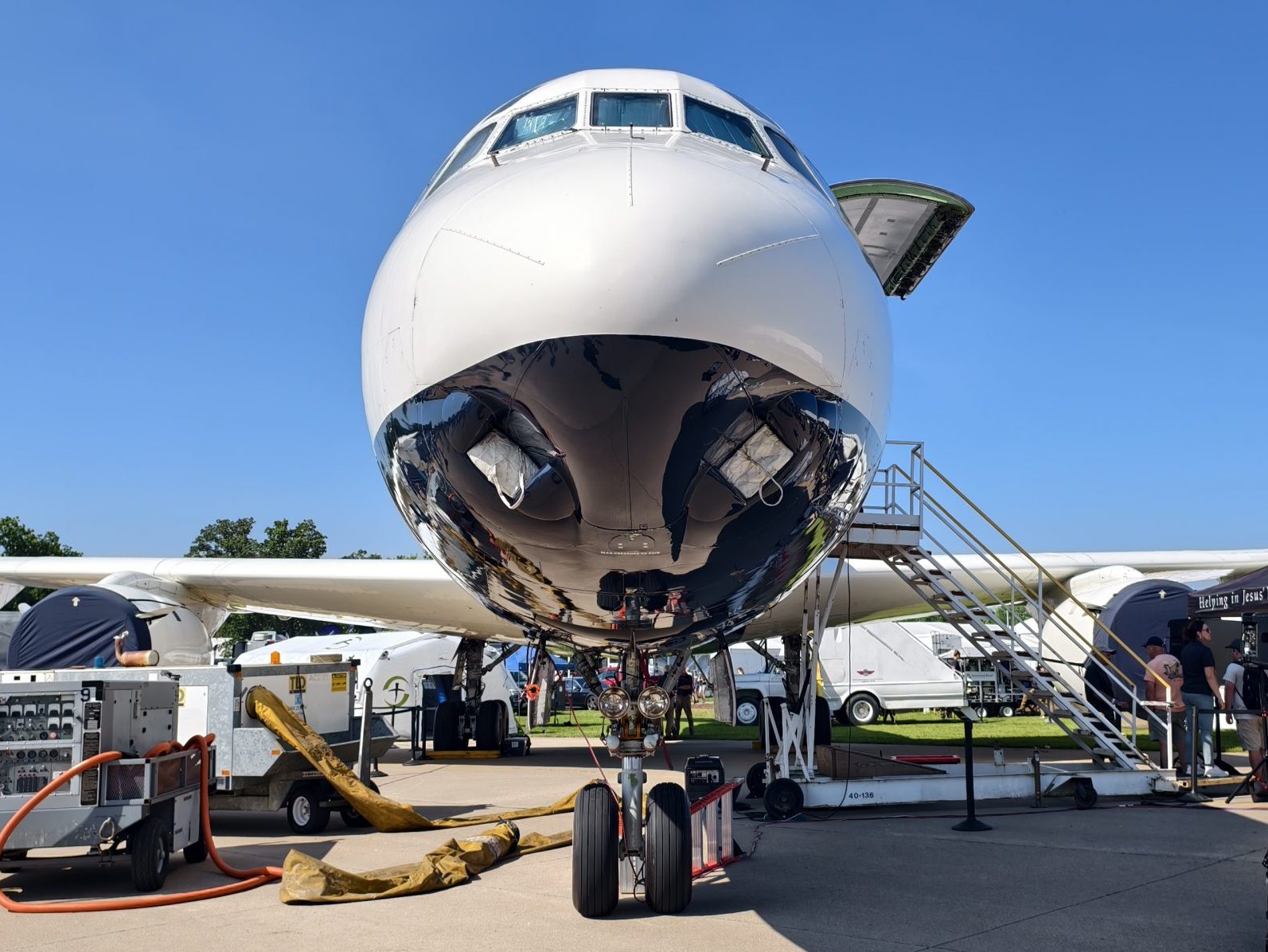
Samaritan’s Purse says it can often have its aircraft off of the ground within 24 hours of a catastrophe, and the organization has been everywhere from the aftermath of Hurricane Helene in the United States to earthquakes and floods all over the world. The DC-8 was also a part of the 2020 COVID-19 response in Italy. The aircraft is almost always working. It left AirVenture 2025 on Thursday, July 24, after taxing in a downpour. Apparently, that weekend, the DC-8 and the ministry’s 757 had delivered 130,000 pounds of food to the citizens of Gaza.
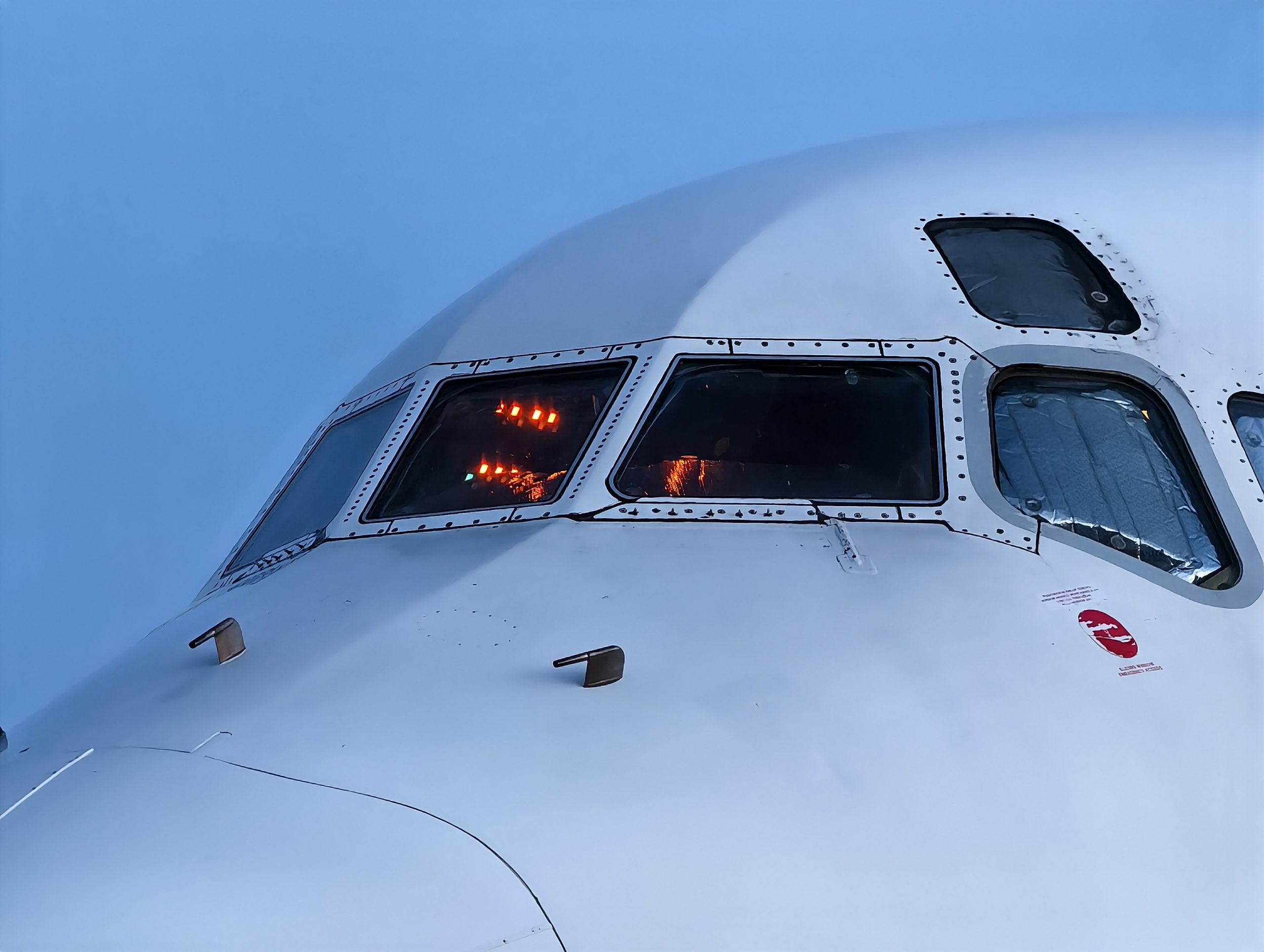
Samaritan’s Controversy
Samaritan’s Purse does a lot of good. However, I am a person who believes in full transparency, no matter the subject, and Samaritan’s Purse has often been mired in controversy.
Samaritan’s Purse has come under fire for the “Statement of Faith” that employees and even volunteers are required to sign. The ministry bases its beliefs on twelve points, with one of them being that marriage is exclusively between a genetic male and a genetic female. Understandably, some people aren’t exactly happy with the requirement that employees apparently have to be straight and disavow gay people to help starving people. Technically, this would mean someone like me would have no chance with Samaritan’s Purse.
In addition, in 2001, the New York Times reported a bit of controversy about Samaritan’s Purse’s earthquake aid; from the NYT:
An American evangelical relief group that is using private donations and United States government money to help victims of two earthquakes has blurred the line between church and state as its volunteers preach, pray and seek converts among people desperate for help.
Residents of several villages said volunteers from Samaritan’s Purse, which has received more than $200,000 from the United States Agency for International Development and is to receive a second similar amount, has held half-hour prayer meetings before showing them how to build temporary homes of metal and plastic provided by the American government.
Samaritan’s Purse came under fire again only two years later when, as the Guardian reported, ministry president Franklin Graham allegedly said something highly controversial about the religion of Islam.
To be clear, I’m not here to litigate Samaritan’s Purse’s past or present here, but I am telling a historical piece here, and this is a part of the ministry’s history. For what it’s worth, the organization says that it does not discriminate when it dispenses aid. Take what you read as you will, and you can learn more with your own research.
Time Is Ticking
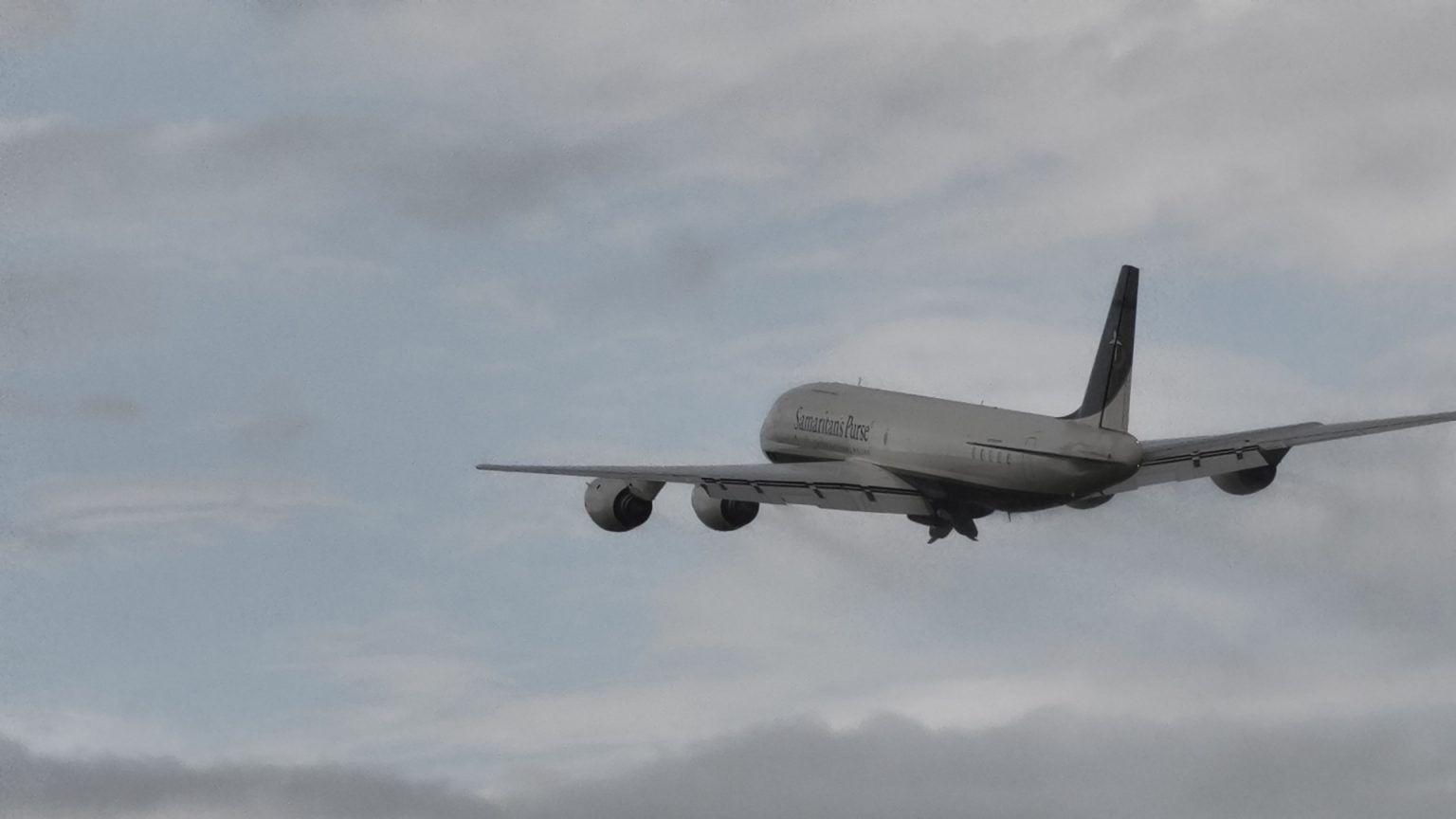
Let’s get back to the aircraft here. Part of the reason why this DC-8 has been around for so long is that Douglas built such a robust aircraft. But it’s also been taken care of. Samaritan’s Purse says it’s been through every square inch of the aircraft to inspect it, replace worn parts, and refurbish other parts. The aircraft has been working hard ever since the Federal Aviation Administration cleared it for operations. One of the reasons why Samaritan’s Purse loves this aircraft so much is its 7,000-nautical-mile range, which permits Samaritan’s Purse to depart from its base in North Carolina and fly as far as Japan if it needs to.
Unfortunately, every aircraft will eventually reach the end of its service life, and N782SP is getting tired. The airframe is nearing 100,000 hours, and Samaritan’s Purse is getting ready to retire the aircraft this year. Samaritan’s Purse has already acquired the Boeing 767 that will replace the DC-8, so time is ticking. Don’t worry, I won’t let you leave without a sweet departure video:
Once this DC-8 is retired, there will be only a few more operational examples left in the world. All of those aircraft are purely freighters, and it’s only a matter of time until they are also grounded. That makes Samaritan’s Purse’s Douglas DC-8 an extraordinarily rare aircraft. It’s the last flying DC-8 with a real passenger cabin, and represents one of the last operational examples of the first generation of American jet airliners.
This DC-8 has outlasted several younger aircraft and is flying proof that Douglas built some seriously tough aircraft. Aircraft like the DC-8 changed the world, and soon, there won’t be any of them flying anymore. Sure, it never reached the fame of the Boeing 707, but the DC-8 is still a rockstar, nonetheless.
Top graphic image: Air Force Materiel Command
The post This Is The Last Douglas DC-8 Left Flying In America And It Has A Critical Job To Do appeared first on The Autopian.