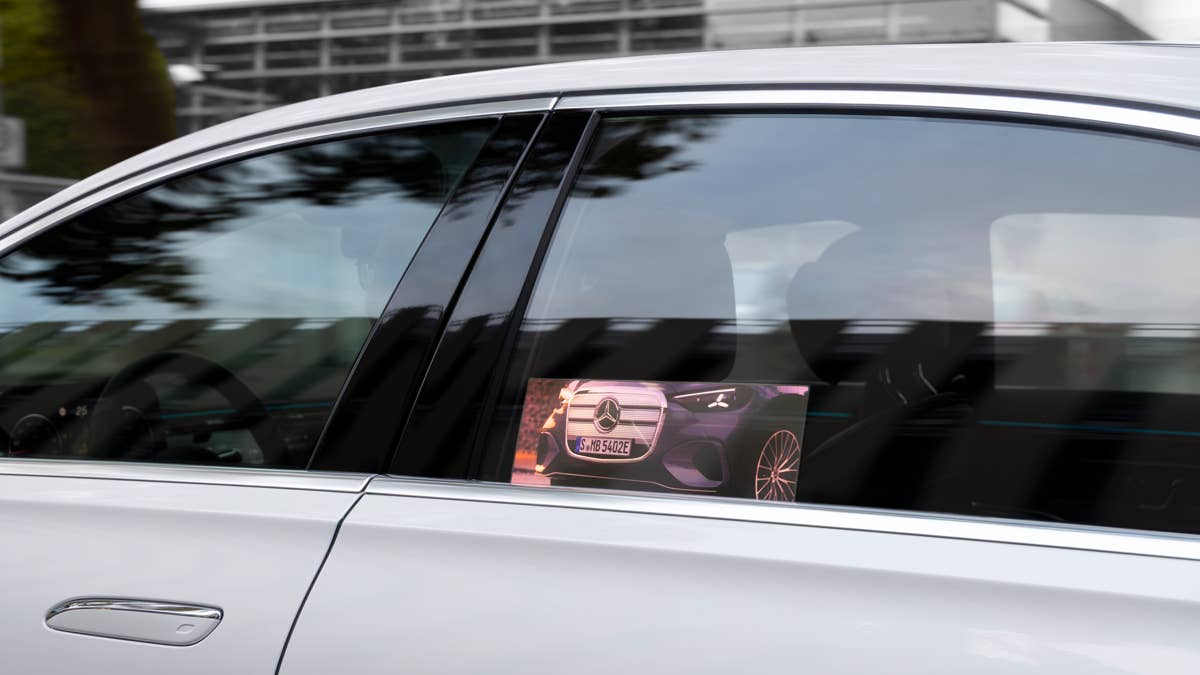
Mercedes-Benz is aggressively reimagining how drivers interact with their vehicles by turning standard glass into dynamic communication surfaces. While competitors continue bolting massive tablets to the dashboard to create a screen-filled interior, the German automaker wants to make physical displays disappear entirely. Their latest research focuses on integrating high-resolution holographic projections directly into the vehicle’s windows and windshields.
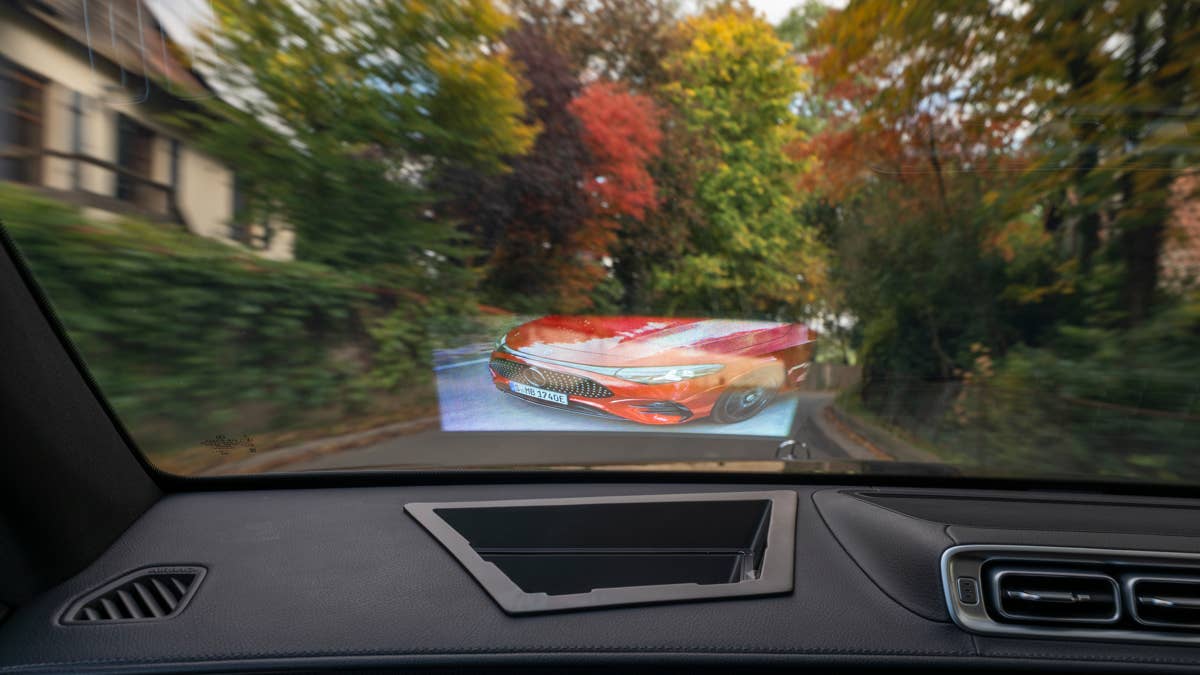
The company is developing a system that utilizes a transparent film laminated directly into the windshield. This specialized film reflects light from a hidden projector to create an augmented car interior. Crucially, the projected image is directional. This allows the front passenger to watch streaming video without distracting the driver, offering a premium multimedia experience that vanishes completely into clear glass when turned off.
Exterior Warnings and Smart Power
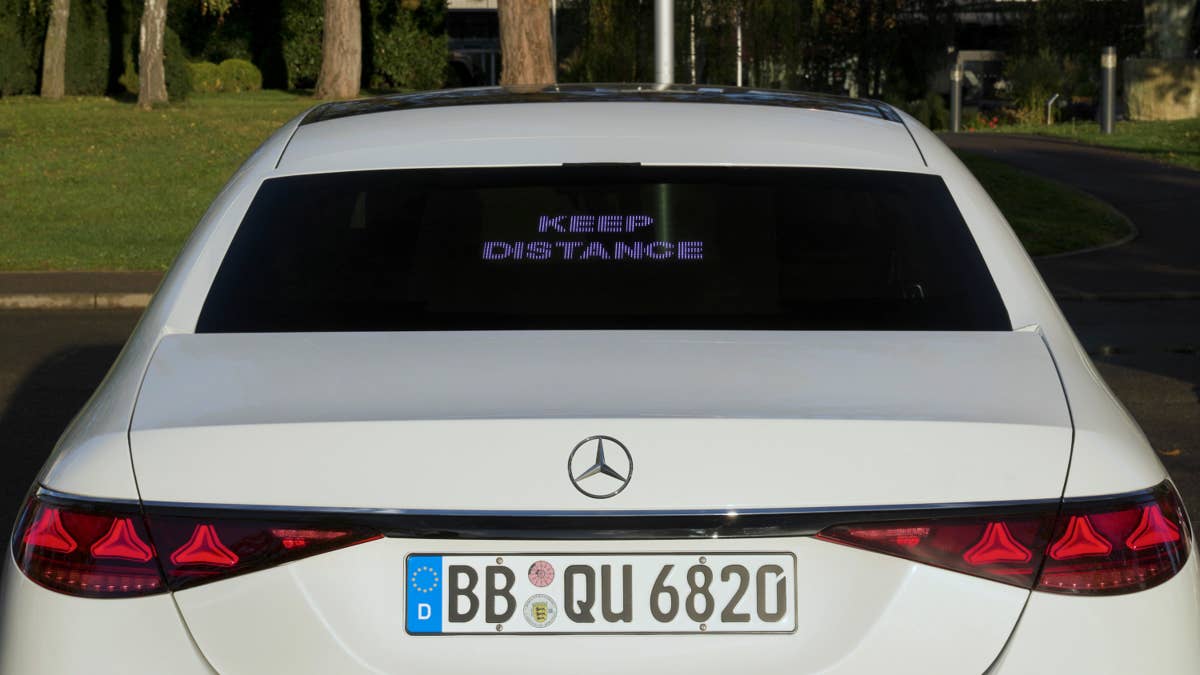
The visual innovation extends beyond the cabin to the exterior of the vehicle. Mercedes-Benz is developing “Display in Glass” technology that embeds micro-LEDs directly into the rear window composite. This exterior display can project dynamic brake lights, warning symbols, or traffic alerts to drivers following behind. The system dramatically enhances road safety by providing immediate context regarding sudden stops without permanently altering the physical sheet metal.
Beyond visual trickery, the automaker is also tackling electric vehicle hardware efficiency. To maximize battery performance without requiring massive bumps in computing power, engineers debuted an innovative 800-volt Power Converter. This programmable micro-converter controls energy flow at the individual battery cell level, ensuring constant high-voltage output regardless of the battery’s overall state of charge, paving the way for lighter and more compact drivetrains.
The End of Dashboard Clutter
This glass-based technology represents the necessary next step in automotive cabin design. The industry is currently stuck in an awkward phase where automakers equate digital sophistication with strapping enormous, glary television screens to the center console. Mercedes-Benz’s approach proves that the ultimate luxury is having complex technology remain completely invisible until the exact moment you actually need it.
If these holographic windshields and micro-LED windows successfully reach mass production, the traditional dashboard layout will fundamentally change. By projecting vital telemetry directly into the driver’s line of sight and moving entertainment to directional glass surfaces, automakers can finally return to crafting beautifully sculpted cabins that aren’t dominated by glowing black rectangles.