I always felt like Audi never truly understood the American market; the company’s sales numbers proved my sentiment. While BMW introduced its first SUV, the X5, back in 1999, Audi didn’t follow suit with the Q7 until 2005. This trend continued when BMW added the smaller X3 in 2003, and Audi did not match it with the Q5 until five years later in 2008. Fast-forward to late 2018, and BMW took another bold gamble with its largest SUV to-date, the X7. Mercedes-Benz had already introduced GLS (formerly the GL) in 2006, but the X7 quickly proved to be a strong competitor for buyers who wanted a full-size German SUV.
Audi
The Audi Q7 had three rows of seats, but it was smaller than the X7 and GLS, and therefore could not match them for comfort and luxury. Nearly a decade after the X7’s debut, the engineers at Ingolstadt have finally realized that American buyers’ idea of a “large SUV” is different from Europe. The 2027 Audi Q9 (and SQ9) enter the market ready to face the competition head-on. With so many years of research and comparisons, Audi could be arriving late to the game but with the perfect playbook to attract new customers to the brand.
What Is The Audi Q9?
At 209 inches long, the Q9 arrives as the largest Audi product in the company’s history. It sits nearly 10 inches longer than the Q7 with a wheelbase that’s stretched by 5.6 inches. That space is valuable for passengers and cargo, where the Q9 is specifically crafted to give BMW and Mercedes a tough time.
Audi
Second-row passengers get 41.6 inches of legroom, besting the X7 and falling just shy of the GLS. The third-row accommodates 29.1 inches of legroom, which is behind the BMW and Mercedes by a sizable margin. Audi appears to have prioritized cargo space, where the Q9’s 19.3 cubic feet behind the third row leads its German rivals, as does the 43.8-50 cubes behind the second row. With both rows stowed, the Q9 packs 87.7 cubes, more than the GLS but less than the X7. It’s worth noting the Q9 comes with seating for up to seven passengers, but the $450 captain’s chairs limit the seating to six. Those seats are nearly identical to the front ones, but will not have ventilation available for the 2027 model. They also lack the ability to fold flat, severely limiting the cargo capacity.
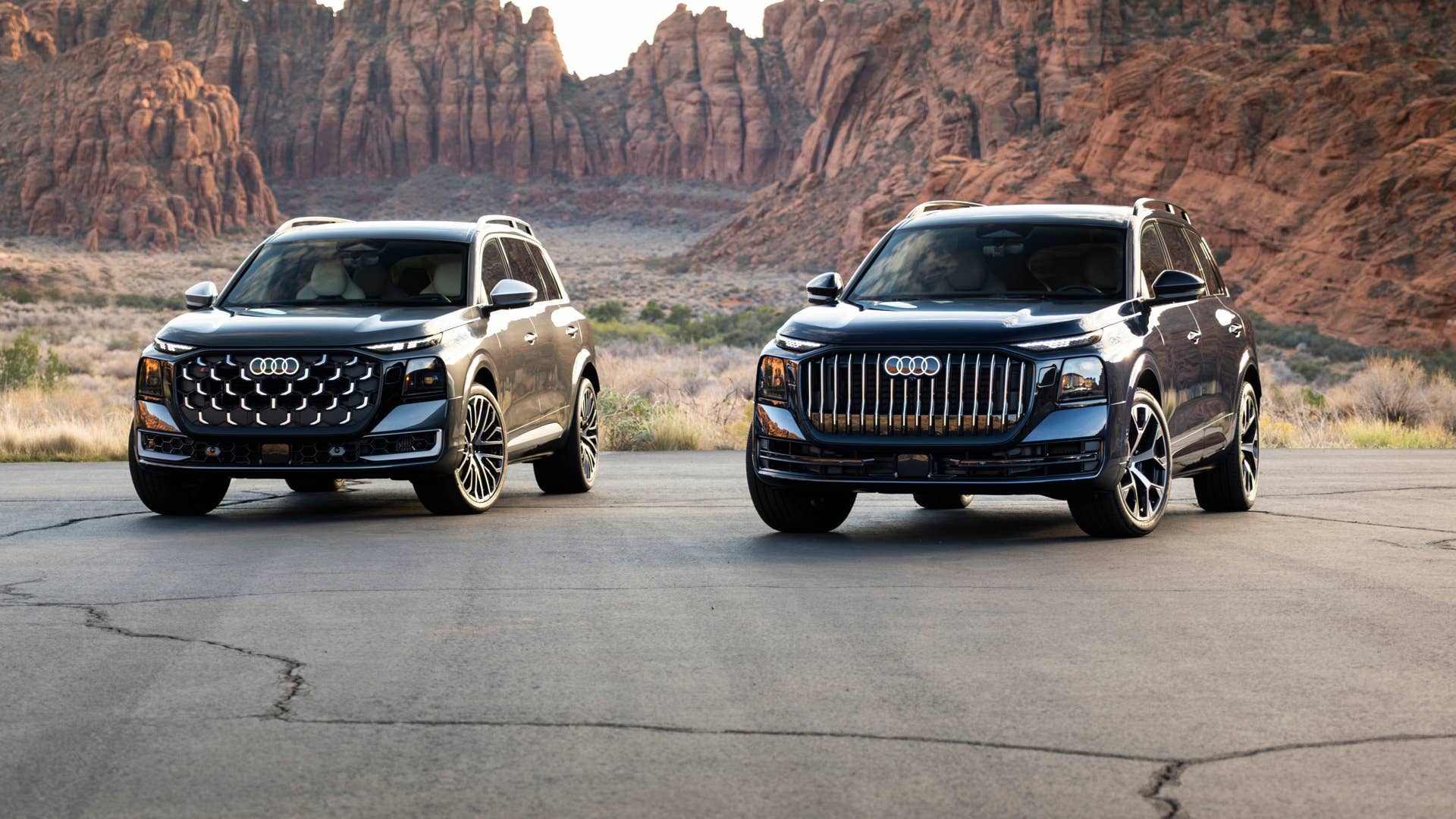
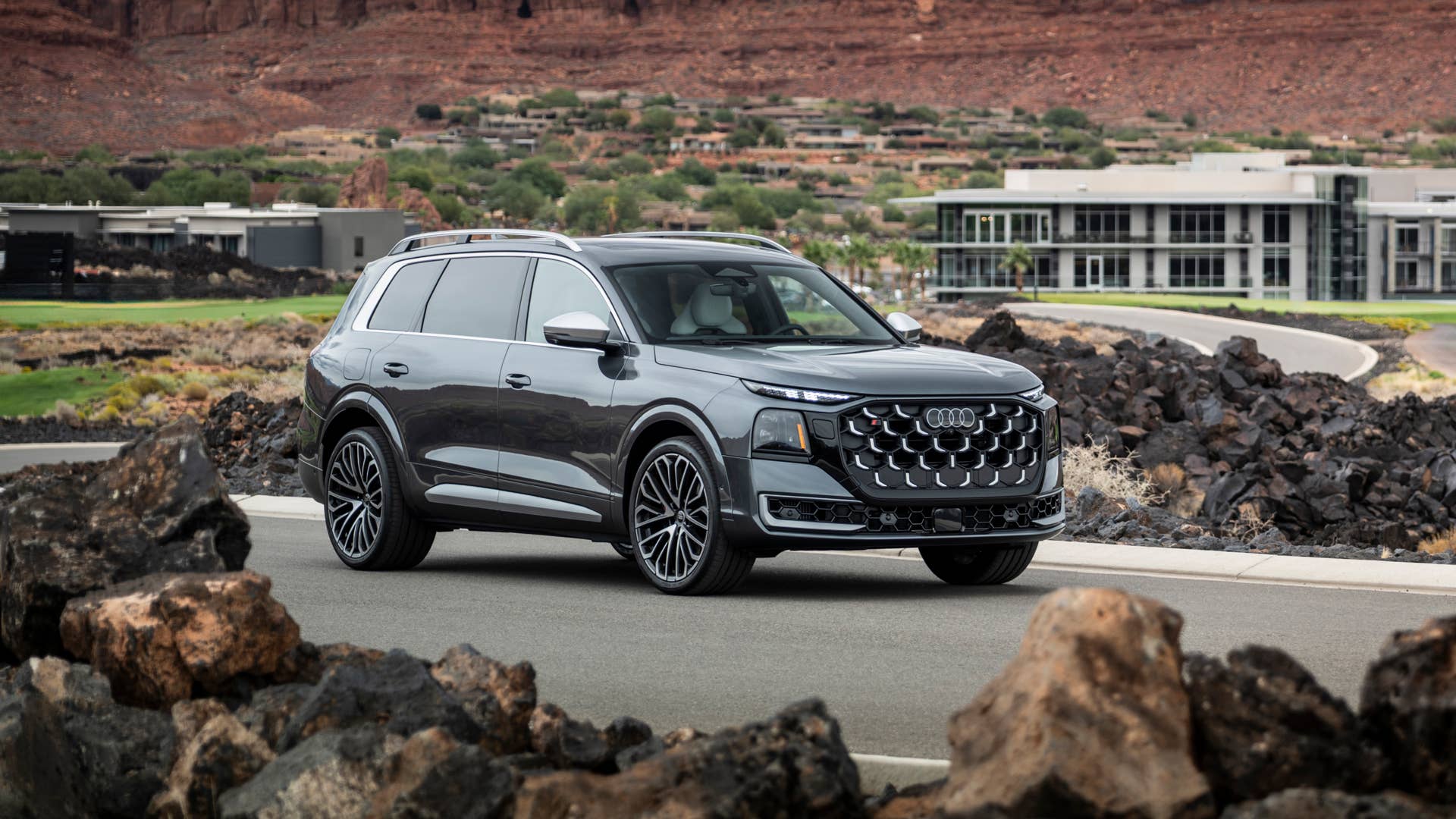
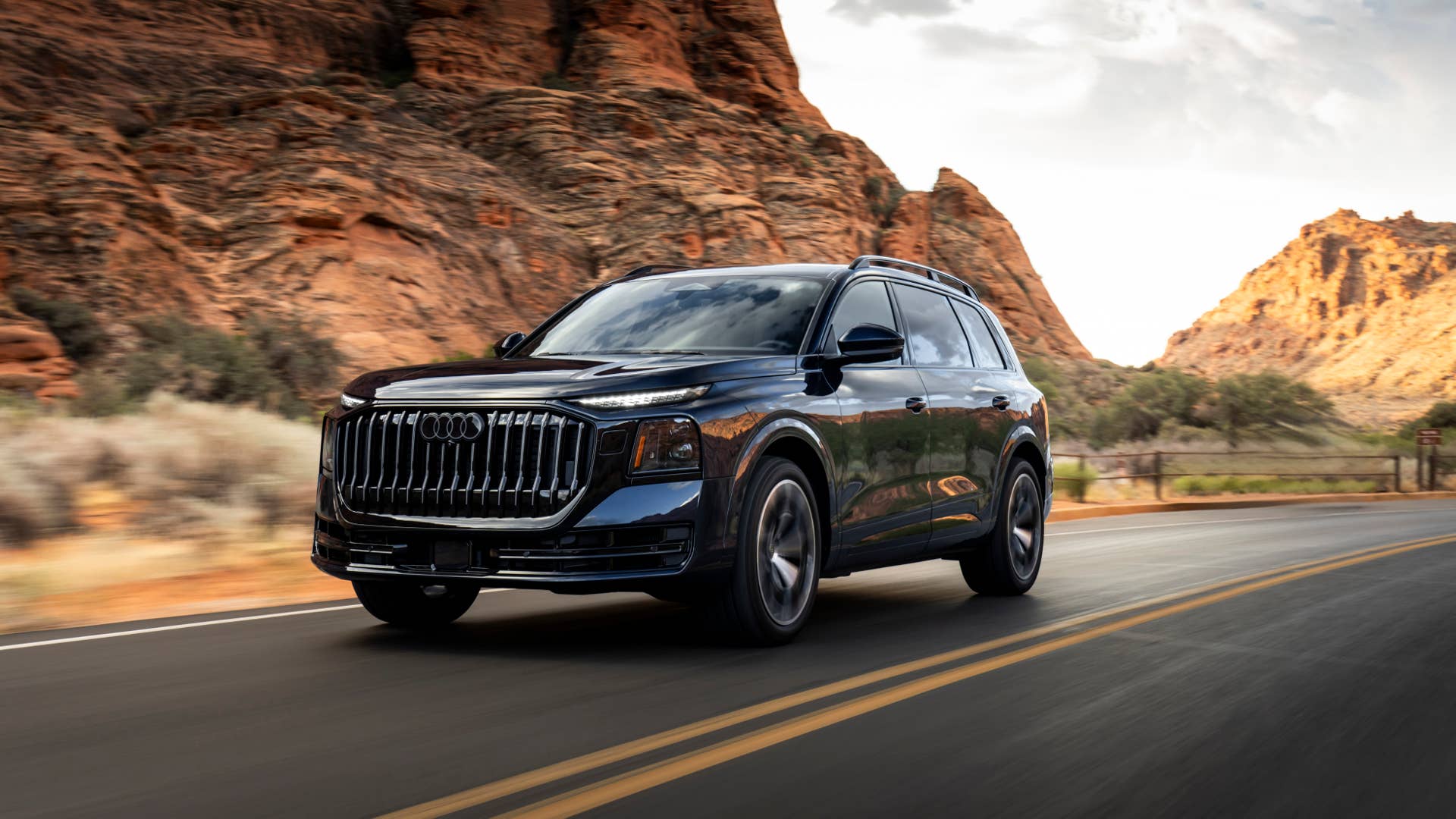
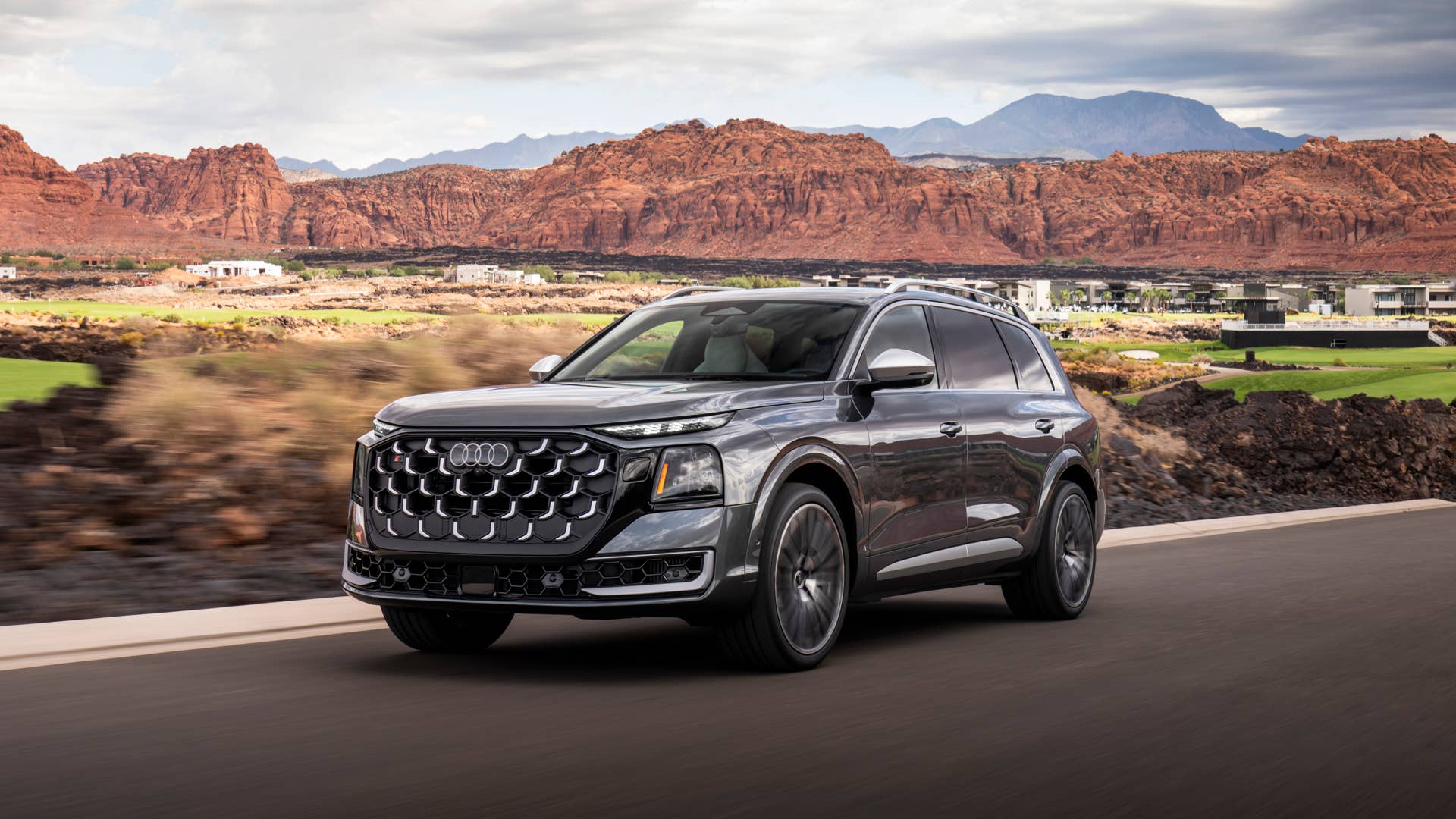
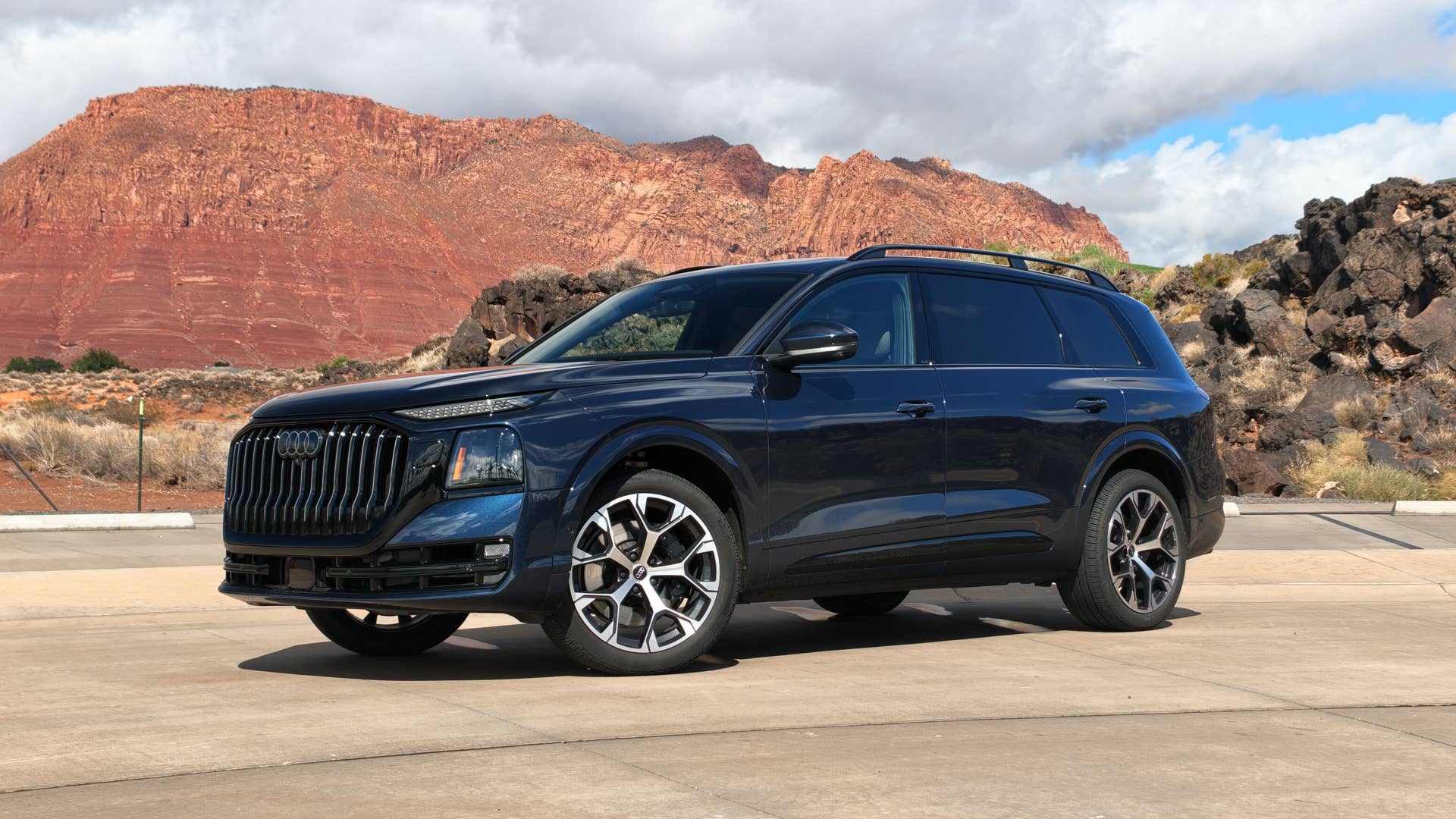
You can easily spot an SQ9 via its more conventional grille. The Q9 features vertical slots with optional illumination, giving it a very unique appearance compared to any existing Audi. I personally don’t love the Q9’s grille, and much prefer the SQ9.
Overpowering The Competition
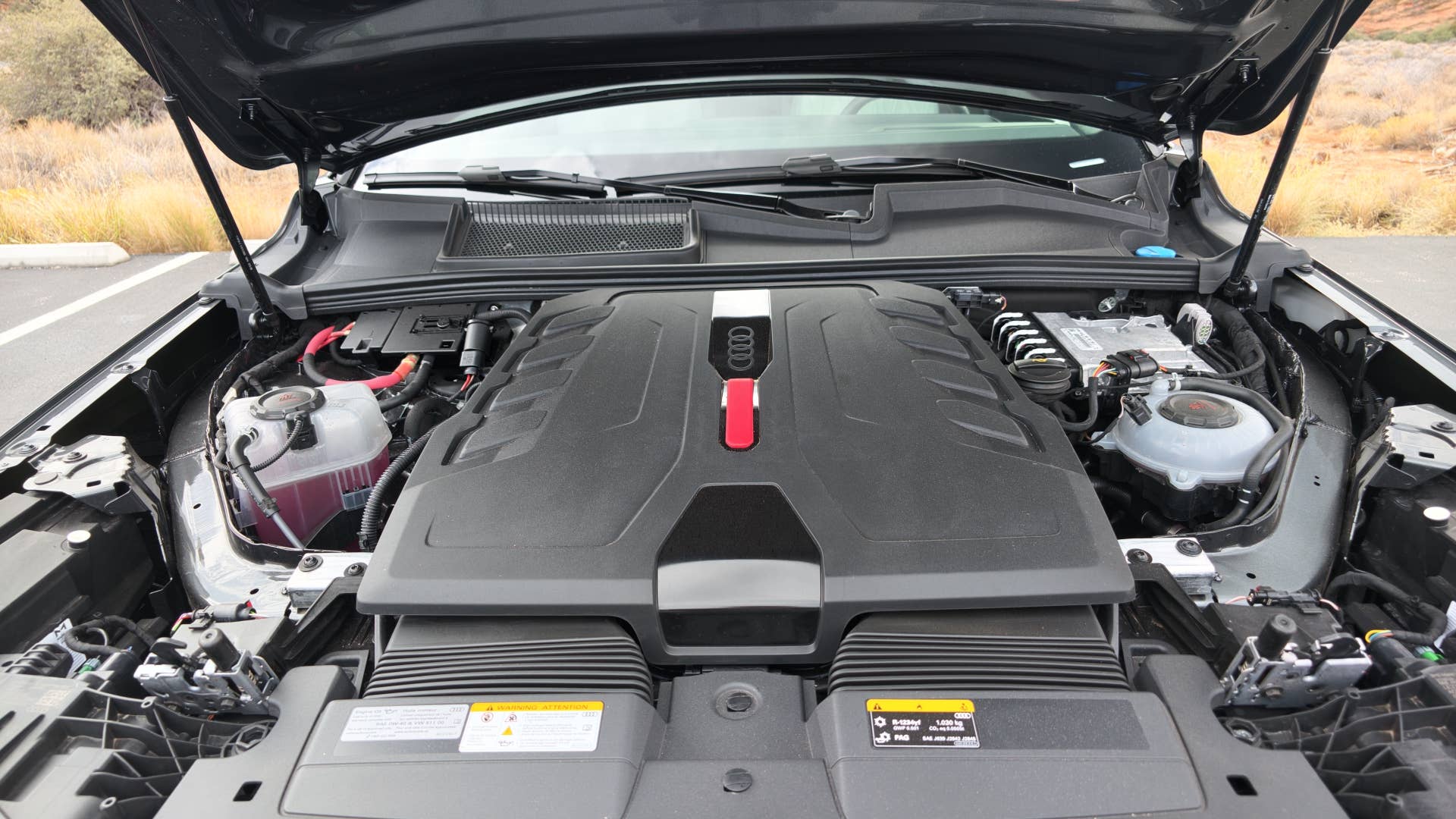
The Q9 might be Audi’s biggest SUV ever, but it arrives sporting an engine that’s slightly smaller than the previous Q7. A 2.9-liter V6 sits under the hood in replacement of the 3.0-liter unit in the outgoing Q7, but this Porsche-derived engine gets two turbochargers instead of one. This results in a massive output jump from the 3.0-liter’s 335 horsepower and 369 lb-ft of torque to 429 hp and 442 lb-ft. For reference, the inline-six engines X7 and GLS both only produce 375 hp. Audi claims a 4.9-second 0-60 mph time, though I only observed a 5.01-second run at altitude at the first drive event in St. George, Utah.
Jared Levenson/Autoblog
Audi will also offer an SQ9, packing a 4.0-liter twin-turbo V8. But whereas the outgoing SQ7 only produced 500 hp and 568 lb-ft, the new SQ9 delivers 591 hp and 590 lb-ft. The SQ9 outmatches the comparably-priced V8 engines in the X7 and GLS (523 hp and 530 hp, respectively), and punches much closer to the Alpina and AMG versions of those vehicles. Audi says the SQ9 can hit 60 mph in 3.8 seconds, quicker than the Alpina XB7 and GLS 63, though my quickest run was only 4.22 seconds in Utah. I’d like to retest the SQ9 at home in Florida, which sits at sea level.
Big Size, Big Luxury
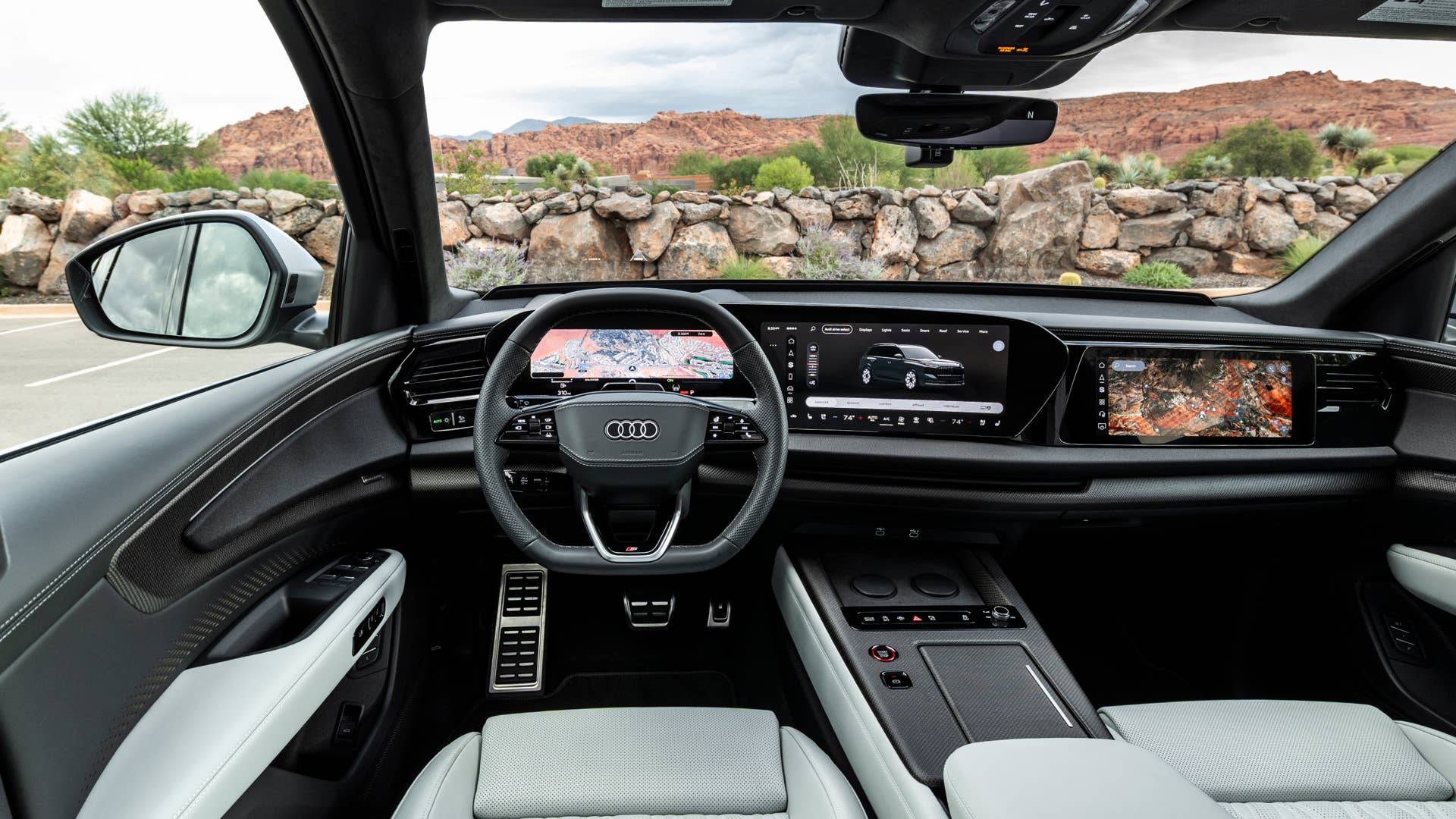
To properly compete with BMW and Mercedes, the Q9 can’t just be spacious, it needs to be Audi’s most luxurious interior. That’s why this flagship SUV is treated to standard heated leather seats with nicer fine leather seats with heating, ventilation, and massage on the Prestige trim. Other standard amenities include wood inlays (carbon fiber on SQ9), four-zone climate control, a head-up display, a Bang & Olufsen Premium sound system with 3D sound, surround-view cameras, panoramic glass sunroof, surround-view camera, ambient interior lighting, and acoustic glass.
Audi
Uppers trims add a dash camera, five-zone climate control, soft-close doors, power-operated doors, panoramic roof with lighting and variable light control, surround-view cameras with 3D view, and a 22-speaker Bang & Olufsen Premium sound system with 4D audio.
This cabin feels like a top-notch Audi product, and it comes alive more at night. The ambient lighting is vibrant without being tacky, and the sound-insulation is library quiet. My driving partner was mid-conversation with me while taking photos, and once the power door closed, his speech became completely inaudible thanks to the insulated glass.
Tech For Tech’s Sake?
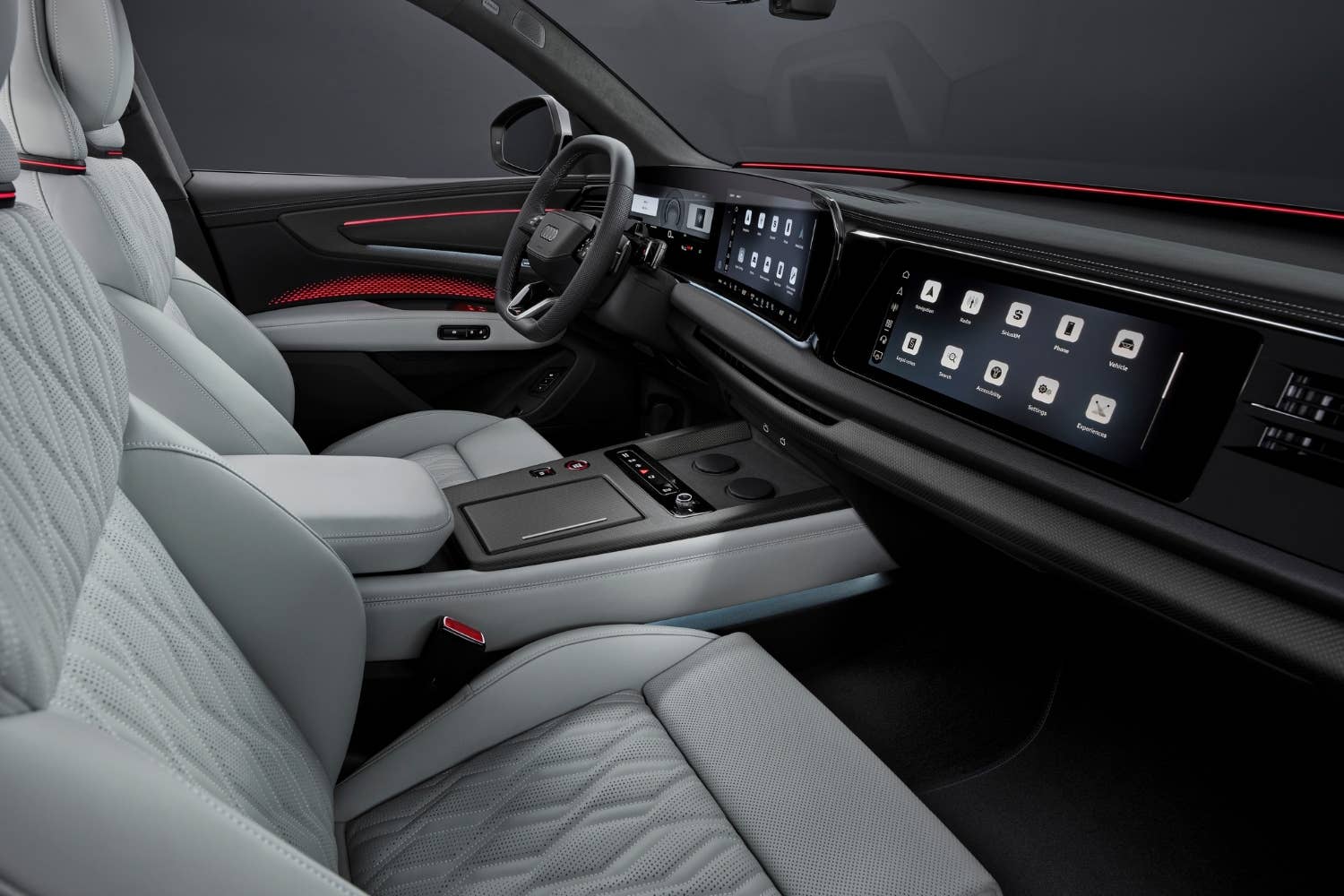
Every Q9 trim includes three screens: an 11.9-inch gauge cluster display, 14.5-inch touchscreen, and a 12.3-inch passenger display. Certain functions are easy to find with visual menus that let you find what you are looking for based on where it is on the car. For example, you click on an image of the head-up display to adjust it. Other functions aren’t as self-explanatory, like adjusting the climate vents or tuning the radio. Audi says many of these tasks can be done with the ChatGPT-powered voice command, but I found it unwilling or unable to execute some of my requests (like closing the power doors).
Audi
The digital cockpit gauge cluster is less intuitive than previous Audi MMI systems, and there is seemingly less customizability. I also miss the separate touchscreen for climate controls in the Q7 and Q8, as the Q9 puts these functions on a ribbon that stays on the central touchscreen. You’d think the passenger screen could be used to adjust the temperature or vent positions, but instead you need to leave your current menu on the central screen to change them. The passenger screen has some useful functionality, like the ability to download apps like Disney+ to stream content, but other platforms such as Netflix are not available in the Audi store. There is no rear seat entertainment available in the Q9, so only the front passenger will be able to enjoy this content.
It’s A True Flagship
I started my day in Utah in the standard Q9, which rides on adaptive air suspension as-standard. The ride is sublime, prioritizing comfort over sporty handling. Even in Dynamic mode on 22-inch wheels, large bumps don’t upset the Q9 and rough roads are not transmitted to the driver. This is possibly the most comfortable and quiet vehicle in its class, though it’s less sporty than the X7. I wish this car had the predictive suspension from the A8/S8, but that would likely add over $7,000 to the Q9’s price.
Audi
Compared to its body-on-frame competition from America and Japan, the Q9 feels spry. Optional rear-wheel steering makes the car feel even more stable through corners, and maneuverable at low speeds. The Q9 has light steering, as most Audi vehicles do, giving drivers a relaxing but not utterly disconnected driving experience. I love the twin-turbo V6, which has been used in several Audi vehicles like the RS5, S6, and S7 as well as Porsche vehicles like the Panamera. It’s quiet when you want it to be and it makes a nice howl when you drive spiritedly.
RS Performance At An S Price
While I fully believe the Q9 packs enough performance for most buyers, the extra grunt from the SQ9 is intoxicating. The additional power makes the car even more effortless and the rumble from the V8 sounds even more premium. Audi also grants the SQ9 an electronically controlled locking rear differential with a more rear-biased quattro all-wheel-drive system. It’s noticeable on curvy roads, sending more power rearward and nudging the car more aggressively around corners.
Audi
The SQ9 also rides on a sport-tuned air suspension that sacrifices some of the standard Q9 cushiness in exchange for superior handling. Heavier steering, rear-wheel steering, and more aggressive tuning make the SQ9 shrink around the driver. On a back road, you can forget there are two rows of seats behind you as the SQ9 does its best impression of an RS6 wagon. Audi has done something impressive here: making an S model feel like an RS.
A Well-Priced Status Symbol
Audi’s largest SUV ever arrives priced at $89,095 (including a $1,395 destination fee) for the base Premium model. The Premium Plus trim adds $5,600 while the Prestige is a whopping $14,700, and there are still packages to add on top of those. The Q9 I drove rang in at $110,095 with the Prestige, Black Optic, and Luxury packages equipped. For only a bit more, the SQ9 starts at $119,395, though it too can add options. The ones I drove checked in at $128,045 with 23-inch wheels, B&O 4D audio, captain’s chairs, and the Luxury Package.
Jared Levenson/Autoblog
Those might seem like high price tags, but the Q9 and SQ9 are well-priced for their segment. The Q9 is marginally more expensive than the X7 but significantly less than the GLS despite having more power than both. Audi priced the SQ9 about $2,000 to $3,000 above the V8-powered GLS 580 and X7 M60i, but it’s nearer to the GLS 63 and Alpina XB7 in terms of power and performance. That makes the SQ9 the best “bargain” in the segment until the updated X7 possibly dethrones it.
American customers and dealerships have been begging Audi to build something larger than the Q7 for at least a decade now. Audi may be late, but it has the right game plan to be a strong competitor, possibly the strongest in the segment. This is the most America-friendly SUV Audi has ever made. Traditional Audi buyers are going to love it, and it should attract plenty of new buyers to the brand.