Imagine American Motors selling a futuristic minivan at its 1980s dealerships. If that sounds like a flight of fancy, it’s simply because it is. But the Dodge Caravan and Plymouth Voyager were successful for Chrysler, immediately selling strongly after their 1984 launch. Together with the humble K-cars, minivan sales spectacularly improved the company’s finances.
American Motors wanted the same to happen for itself, and it even had a ground-breaking new minivan almost at its grasp – but Renault, very wary with the freshly launched Espace, said no.
The original Renault Espace wasn’t even really a Renault at all, if you dig down deep enough. Curiously, it started its life on a Chrysler drawing board, which makes things even more bittersweet.
The Matra Rancho Sets The Scene
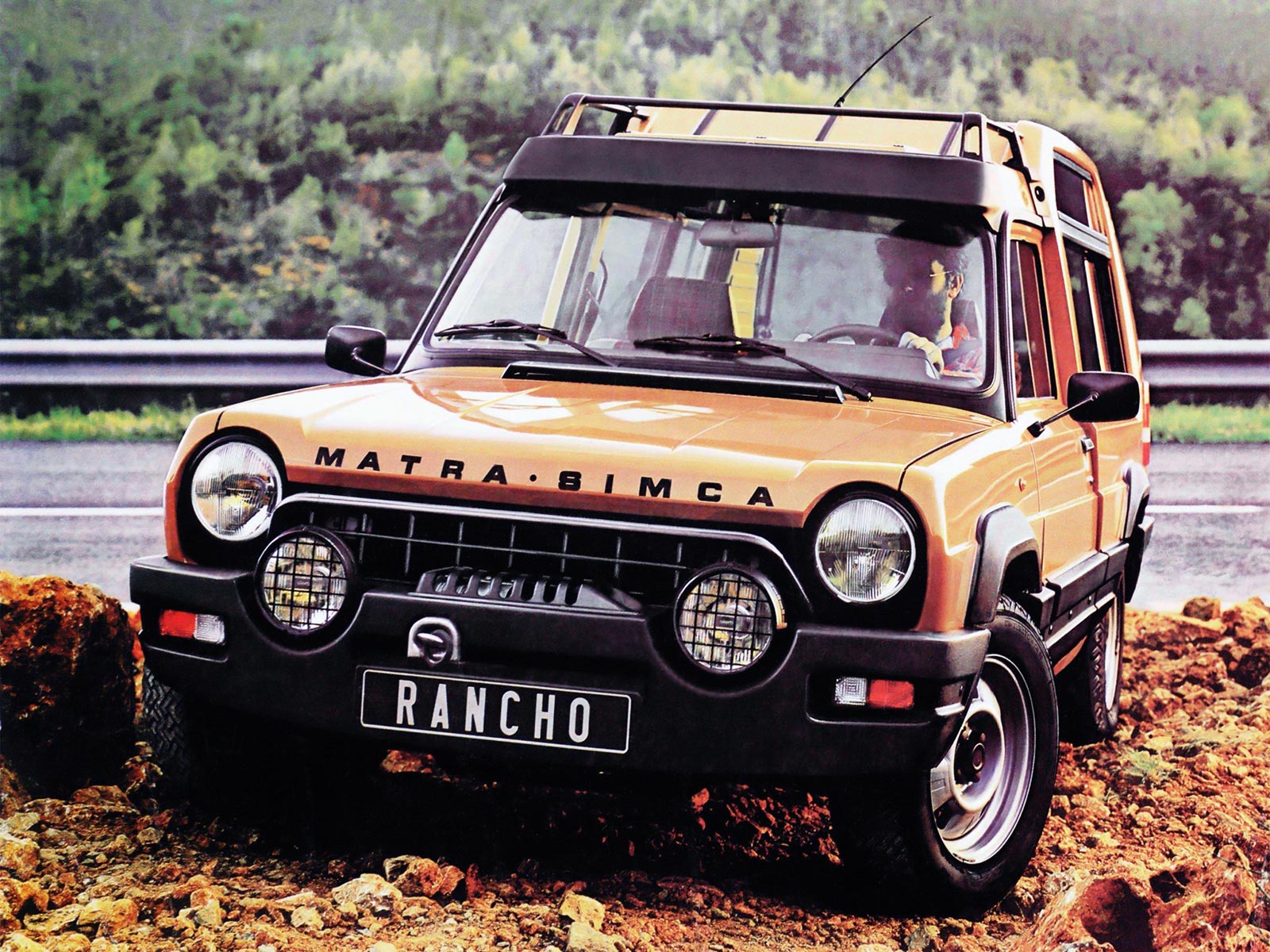
The core idea of the first Espace was to eventually replace the Rancho funwagon at Chrysler Europe, which in the 1970s controlled a large number of British and French brands. Out of the Big Three, Ford and General Motors were both deeply involved in Europe early on (Ford UK in the 1900s, Ford Germany in the 1910s, GM buying Opel by the 1930s), but Chrysler only really reached towards Europe in the 1960s by buying Simca, which was a French brand originally devised as a Fiat offshoot. If all of this sounds like a sprawling Stellantis prequel, you’d be correct.
The Simca purchase was followed by Chrysler taking control of the British Rootes Group, which included brands such as Humber, Commer, Singer, Sunbeam and Talbot. The last one of those will prove important later, in a Chekhov’s car fashion. By 1970, Rootes had become Chrysler UK, and Simca had become Chrysler France. With their powers combined, they formed Captain Planet Chrysler Europe.
In the 1960s and 1970s, Chrysler shut down old British brands even if their vehicles would stay in production, substituting their names with its own, and introducing Dodge as a British commercial vehicle manufacturer (on top of Commer). Simca was kept on sale, and because Chrysler had also made an arrangement with the Matra consortium, which also built plastic sports cars, the Rancho was initially sold as a Matra-Simca. The Matra name came from Mécanique-Aviation-Traction, which is really cool.
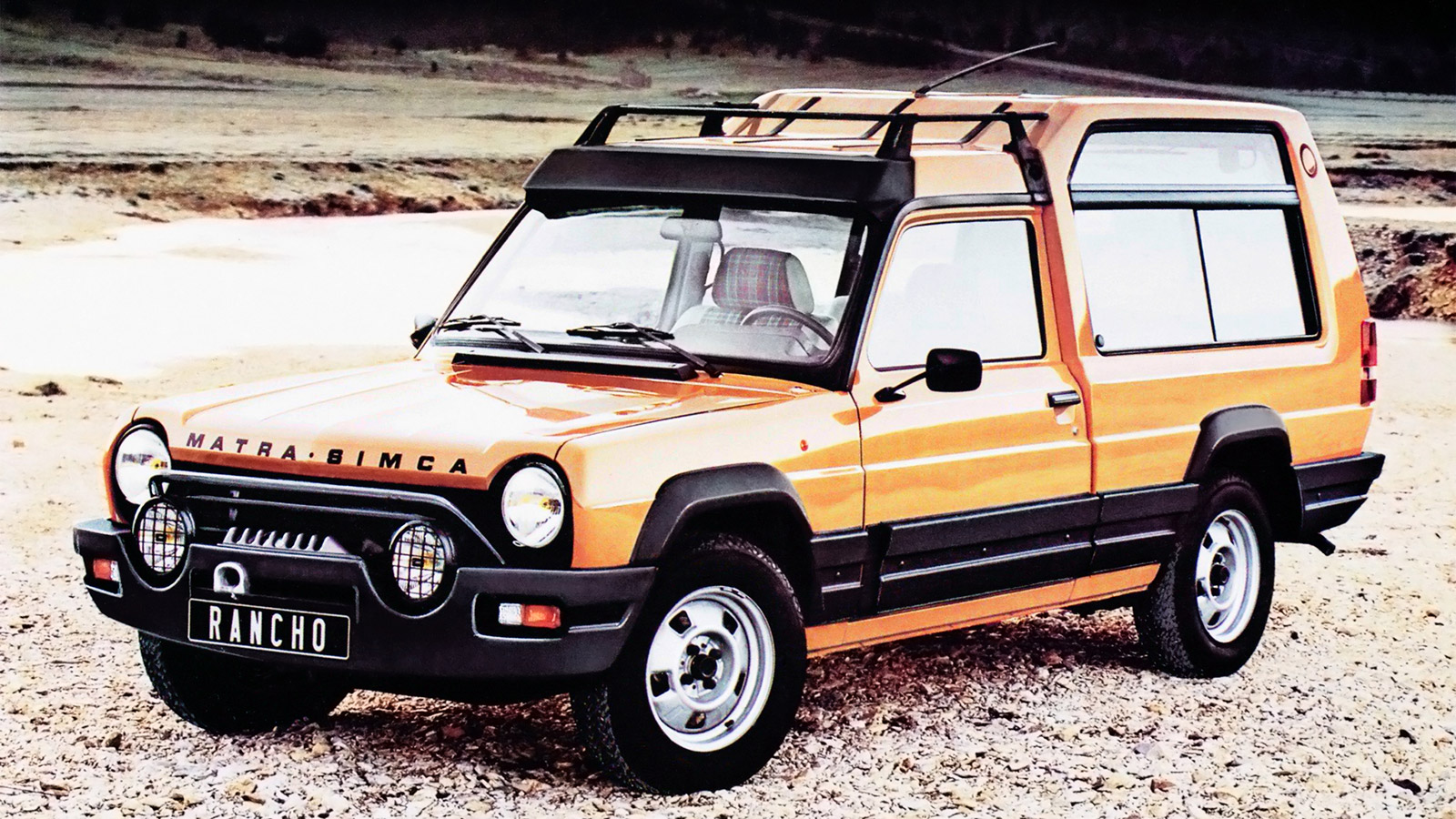
What was the Rancho? Take a small Simca family car from 1967 and have a Greek designer visualize a fiberglass box in the back of its pickup version, creating an early version of the front-wheel-drive crossover. Most of the promotional photos of the Rancho depict it in situations away from the beaten path, even if the car wasn’t offered in four-wheel-drive form. It even had a chunky body kit, a bull bar and a winch.
The Rancho turned out to be a relative success, but it didn’t save Chrysler Europe. A year after the Rancho’s launch, Chrysler threw up its arms and sold the entire European deal to PSA, which itself had only just recently bought out Citroën from the ruins of its Maserati empire.
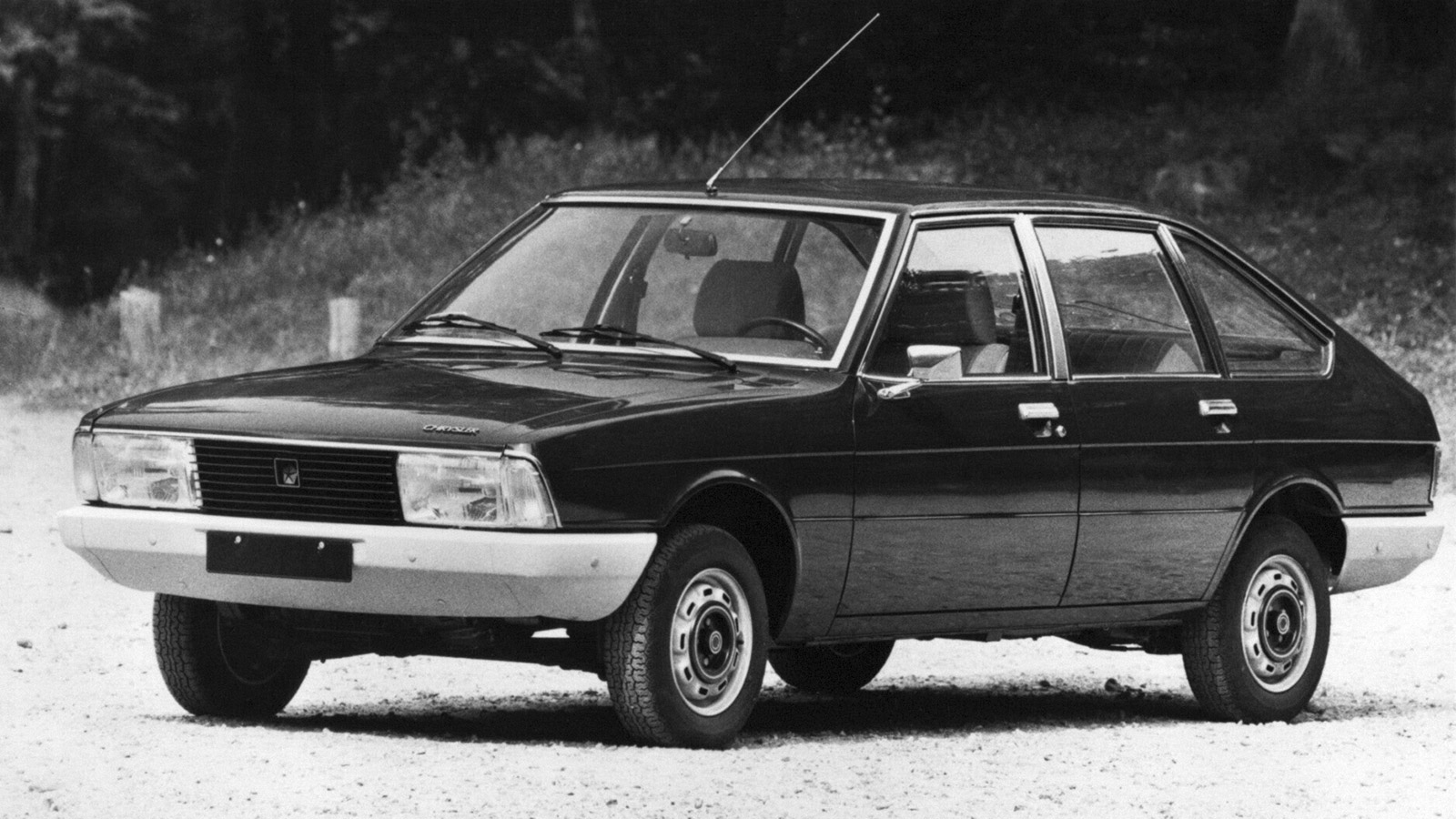
PSA Peugeot-Citroën paid £0.76 for Chrysler Europe and took on its debts, and to rid itself of anything Chrysler-badged, simply decided to call almost everything Talbot. That included the new Chrysler Alpine fastback, the Horizon hatchback (yes, largely the same car as the Plymouth Horizon and Dodge Omni, but not identical), the large rear-wheel-drive saloon Tagora, and the Rancho. It was now sold as the Talbot Matra Rancho, which is not confusing at all. Sales continued until 1984.
The Espace: Bullet Train From Britain?
The British designers at Chrysler Europe’s Whitley studio, near Coventry, had been working on a monospace “Supervan” project since 1974, which, according to British car designer Fergus Pollock, was the starting point of the Espace and its train-inspired looks. In the sketches shown over at AROnline, you can see the Supervan already had the Espace’s basics nailed down early, down to the front-end design. Pollock showed his monospace designs to Chrysler bosses in 1976 and 1977, in the US as well as UK, and said,
Growing up I was obsessed with the Morris J-type van and, with a little lateral thinking, began to develop the idea of a bullet train for the road — a monospace, single-box MPV, capable of carrying several people at high speed. It had to be lightweight, yet capacious, fast and sleek. A next-generation vehicle with clean surfacing and an absence of gratuitous add-ons.
Because the Rancho was really a decade-old car spruced up with a telephone box in the back, Matra was looking to create a replacement for it as soon as it had hit the market. In 1977, Matra’s director visited Coventry and took the plans for the Supervan to France with him, where work continued to combine it with Simca mechanicals based on the new 1307, retaining the dimensions laid down in the UK and keeping the front-end resemblance to the 1307 – this is where the shark nose came from, as well as the TGV train.
The aforementioned Greek designer of the Rancho, Antonis Volanis, was also involved in the project at Matra, but because the Chrysler deal had thrown the new owners, PSA Peugeot-Citroën, into dire straits for years, the van couldn’t reach the market yet. Matra’s concepts were shown to Peugeot and Citroën bosses, but they thought it to be too risky.
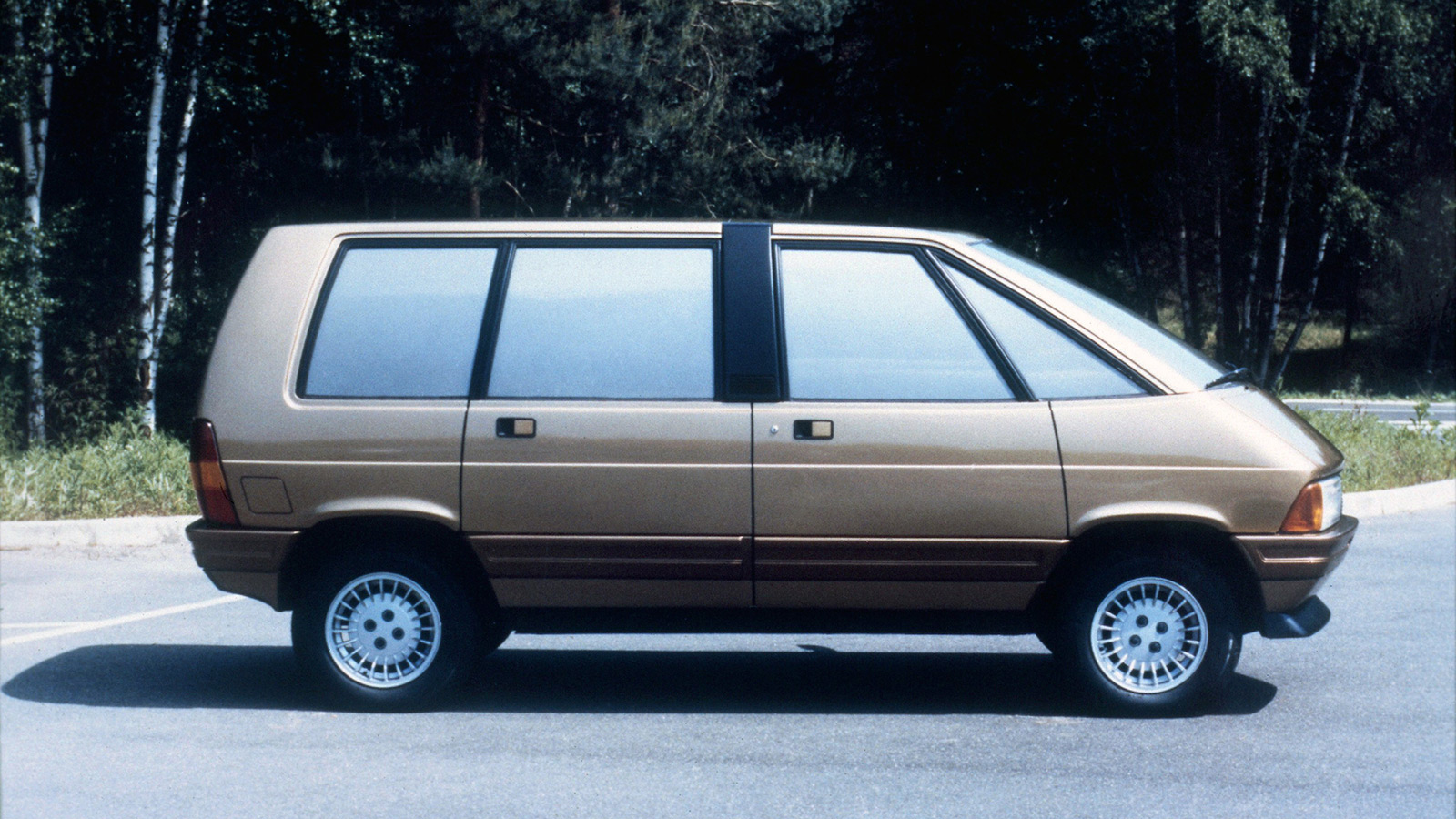
In the early 1980s, Matra bought back its automotive production capacities from PSA and took the minivan plans to a competitor, Renault, with the intent that Matra would take on production duties. Renault’s then-CEO Bernard Hanon loved it and realized it had potential in the new decade. Matra designer Philippe Guédon doesn’t acknowledge the van’s origins in the UK in his 1990 interview, but describes how they were shopping the concept around in the late ’70s and early ’80s.
I think this type of car represents as significant a turning point in body design as diesel did in mechanics. There are those who will embrace it, and there are those who won’t!” That’s what Jean Boillot, the president of Peugeot, told us, without following up on our proposal (it’s true that at the time Peugeot had to settle the “Talbot affair”). He recommended we approach Citroën. There, the project was put under observation for two months, but the refusal was even more categorical: the Espace was too expensive to manufacture.
So, Jean-Luc Lagardère and I agreed that the only option left was to approach Renault. I knew Christian Martin at Renault headquarters, with whom I had studied. He was immediately on board, adding: “Bernard Hanon (the CEO at the time) will take it on. It’s American, so it’s perfect for him.” After a short interview with Jean-Luc Lagardère, Bernard Hanon summoned his 12 directors, silently walked around the car (I found those few minutes horrible) and phew… With everyone in agreement, we could really start.
With Renault’s backing and engineering, the project advanced enough that the van could already be launched in the summer of 1984, and Peugeot-Citroën only brought its own minivans to the market a full decade later, in 1994, with the Peugeot 806 and the Citroën Evasion (and their Italian siblings).
Reborn As A Renault, The Van Goes On Sale
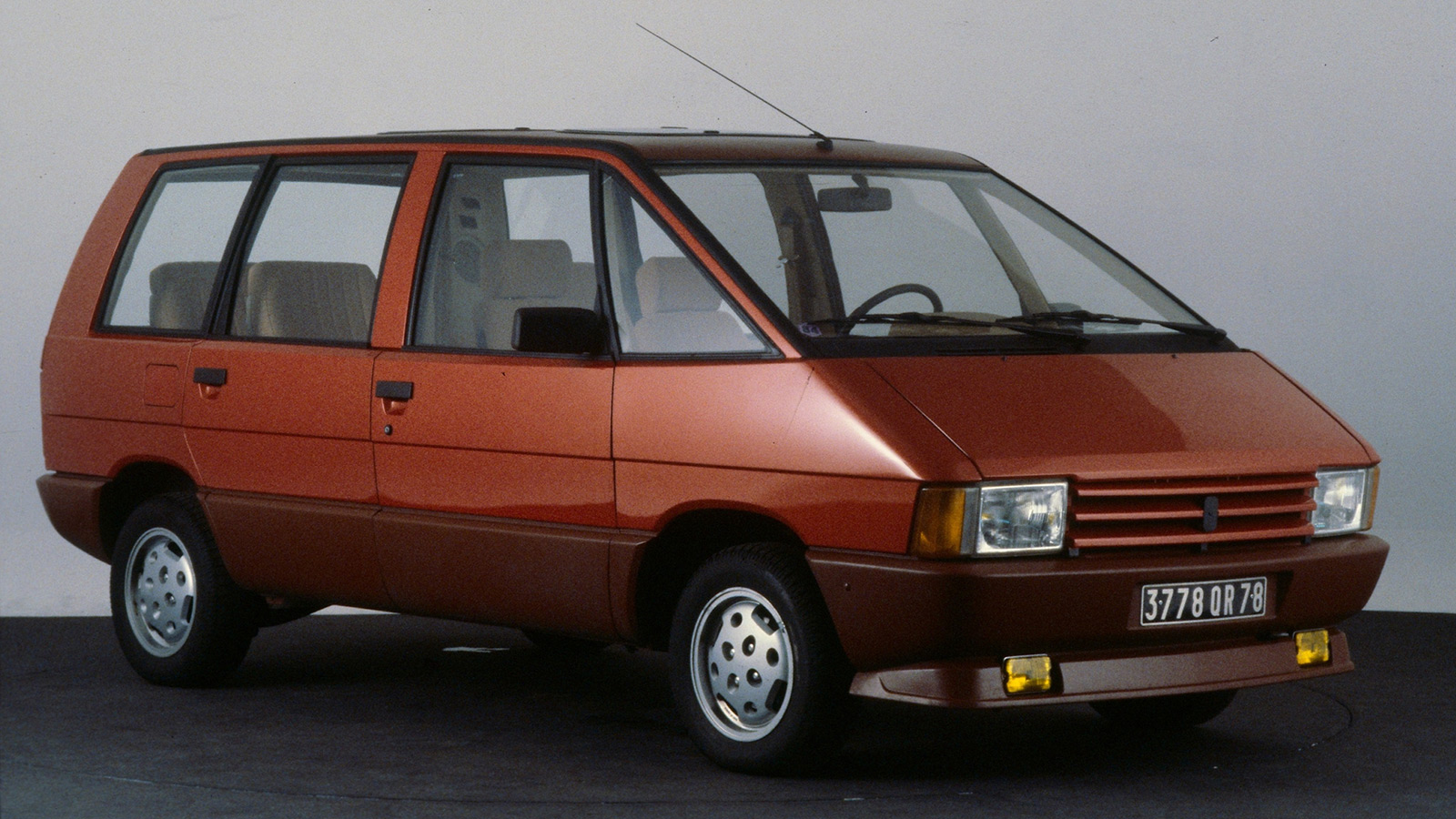
The production Espace was space-age stuff: not only did it look like a high-speed train, but it featured fiberglass panels over a steel monocoque, with a Renault-designed flat floor platform. The seats could be lifted out or arranged freely, and the front seats turned around to form a sort of lounge.
One of the biggest changes during the Espace’s Renaultization was a swap from a transverse engine to a longitudinal configuration, so that it could use Renault engines instead of Talbot/Simca, and this meant a longer nose.
The new Renault Espace initially didn’t sell well. Renault sold nine during the Espace’s first month on sale, which was worrisome. The company wasn’t in a great financial state either, as its family car line needed a complete revision after the pear-shaped Renault 14 failed (replaced by the 9 and 11, which became the Alliance and Encore for the American market). The new mid-size R21 was being developed to replace the 18 sedan and wagon, and a new large sedan was in the works: in 1983, Renault launched the R25, onto which the new North American market Premier would be based.
In a way, the situation wasn’t much different from Chrysler Europe in the late 1970s, and Renault also had the launch of the new Renault 5 in its hands, and since it was replacing a small car that had been on the market for 12 years, the new 5 had to be right. The then-new Jeep Cherokee XJ had also been developed with Renault’s input, which shows here and there, for example in the front seat design and the fact it used a Renix fuel injection system (Renault x Bendix collaboration) as well as a Renault 2.1-liter diesel engine. Renault also sold XJ Cherokees at its own European dealerships, catering to the SUV customers the Rancho had readied.
Luckily, the Espace was soon accepted by customers well enough that Matra, which handled its manufacturing, had to cease building its own mid-engined sports cars to meet demand.
American Motors Wanted A Piece Of It, Too
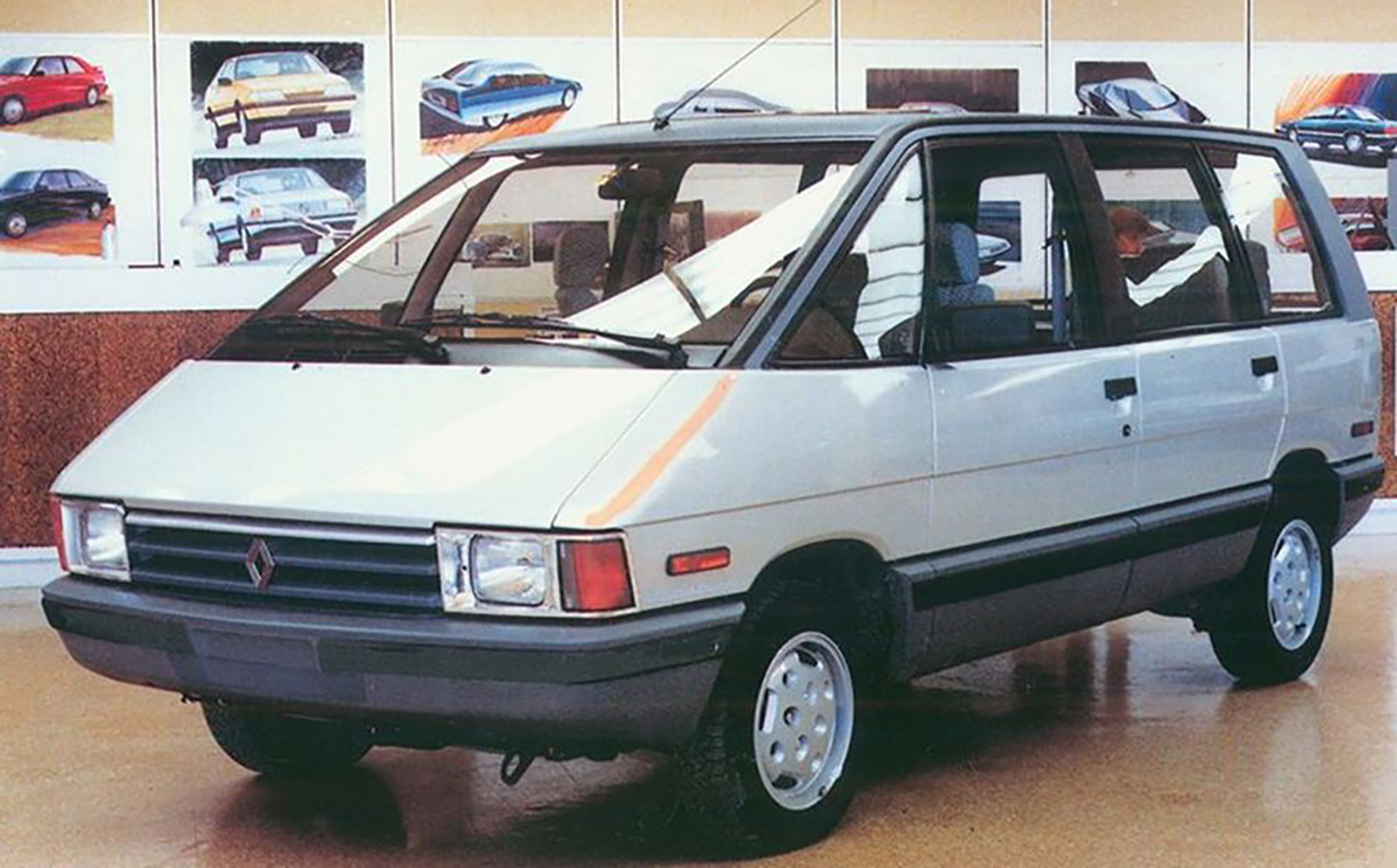
American Motors was watching all of this happening and itched for the Espace to give it its Dodge Caravan moment, as the Chrysler minivans were launched in late 1983 for the 1984 model year. AMC knew American buyers were ready for minivans, and the 1986 Ford Aerostar proved the monospace shape would work. GM would only join the plastic van game with the 1990 dustbuster vans that followed the 1985 Astro.
But despite AMC taking the effort of federalizing the design of the Espace with a new front bumper, headlights, and reflectors, and even sending out a press release in October 1984, it never got the final go-ahead. This was partially due to Renault sensing it would never meet the Chrysler minivans’ aggressive price with a van that was smaller and had conventionally opening rear doors instead of sliding ones.
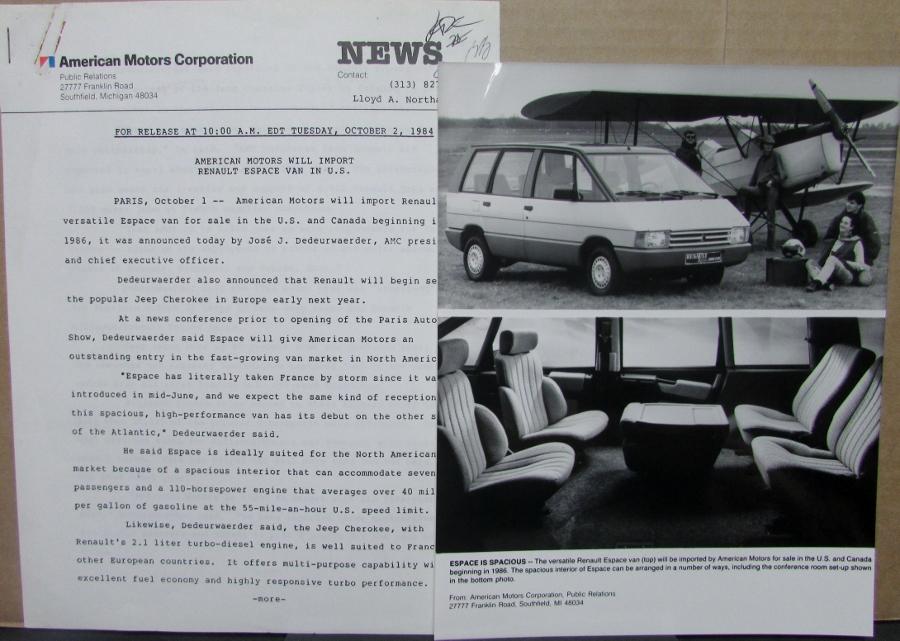
[Editor’s Note: I wrote about AMC’s plans to sell a federalized Espace in America about six years ago, and that article included this amazing 1985 Popular Science chart that compared this hypothetical AMC Espace to its American rivals:
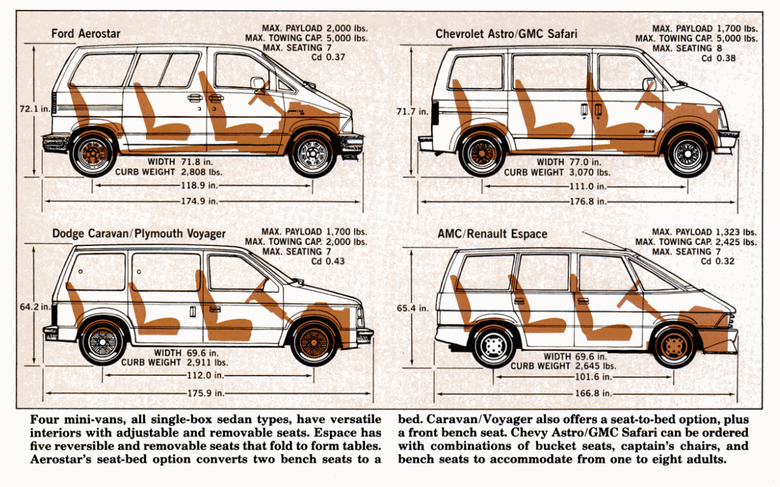
I think this comparison is pretty telling; this thing could have been a viable player here! – JT]
Producing enough vans at the Matra factory for the North American market would be troublesome since Espace sales were speeding up in Europe, with the exchange rate unfavorable, but building a new factory across the Atlantic was out of the question, especially since the Premier was already getting a factory of its own in Brampton, Ontario. By March 1985, Renault had postponed the Espace’s tentative US launch by a couple years.
Still, in 1986, American Motors was keen enough on the Espace that it even created a full-scale federalized model of the Espace’s forthcoming facelift, but ultimately, Renault never chose to export the Espace to the States or build it on North American soil. By 1987, American Motors was sold to Chrysler; soon after, Renault’s chairman Georges Besse was assassinated in late 1986 by a militant anarchist faction, claimed to be due to recent layoffs at Renault.
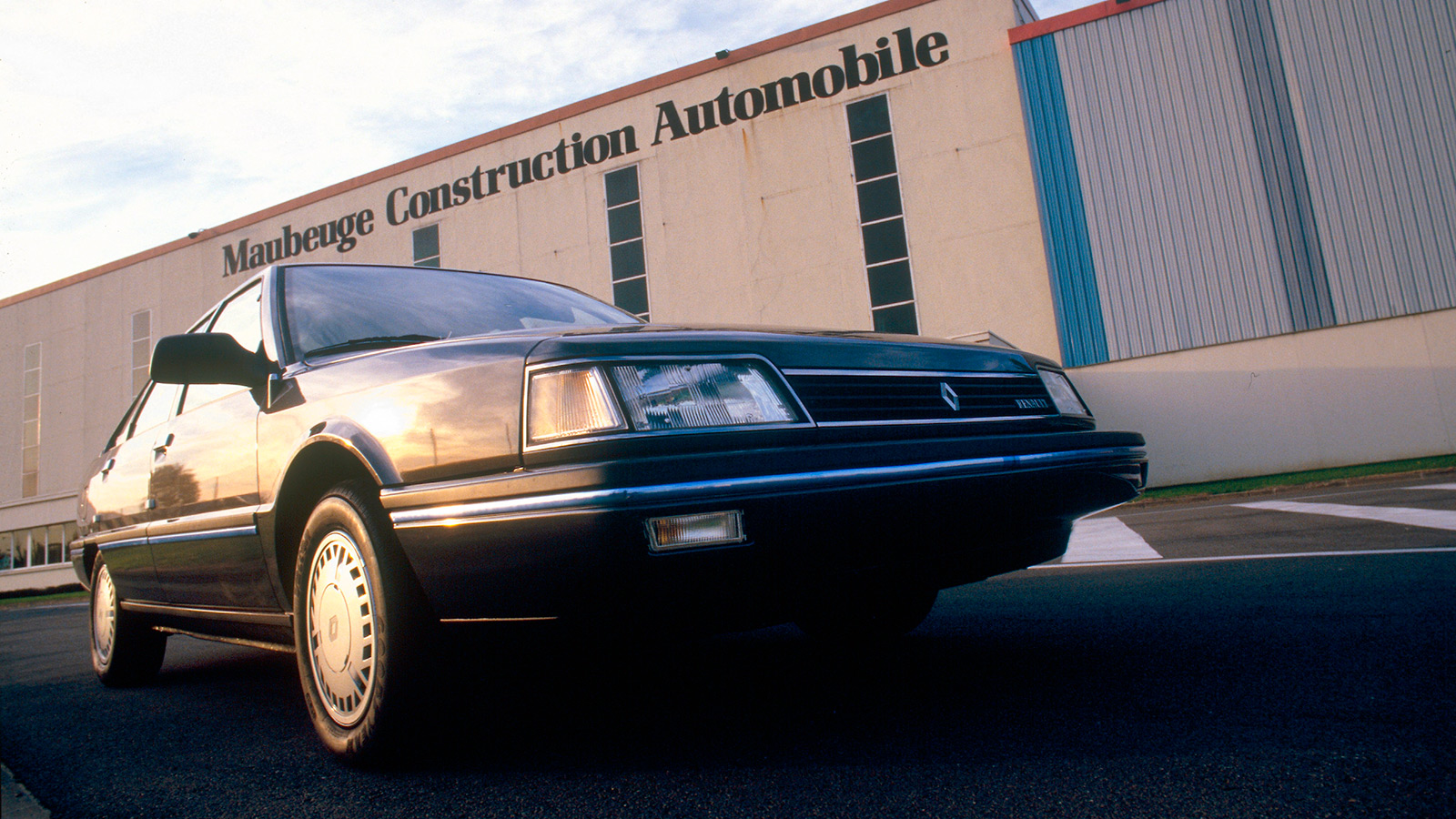
With Chrysler selling its own minivans, the Espace was no longer a concern, and any Renault ties were slowly severed under Chrysler. The new Renault 21 had been planned to be launched as the Renault Medallion in America, and while that wasn’t cancelled, only the 1988 cars were sold as Renaults. The 1989 models were badged Eagles, as was the Premier, which was never sold with Renault badging in America.

The Premier was also sold as the Dodge Monaco from 1990 through 1992, with its name as close to the French Riviera as the Chevrolet Monte Carlo (and the Buick Riviera). The Alliance and Encore were canned in 1987, as was the Renault Sportwagon, which the Medallion replaced. Future Eagles would either be Mitsubishi- or Chrysler-based, and the XJ Cherokee’s Renix fuel injection was replaced with Chrysler’s own by 1990.
The Renault Espace Drives Into The Future

Renault kept building the Espace, refreshing it for 1991 and offering Quadra all-wheel drive. The new Espace was largely just a facelift, with a new look and interior, but underneath it was close to the 1984 original.
This early 1990s Espace was also the generation on which the crazy, Formula-1-engined Espace F1 was based, despite the F1 visually resembling the following generation. Yes, you can put a 3.5-liter V10 in a minivan if you build the minivan on top of a Formula 1 car.
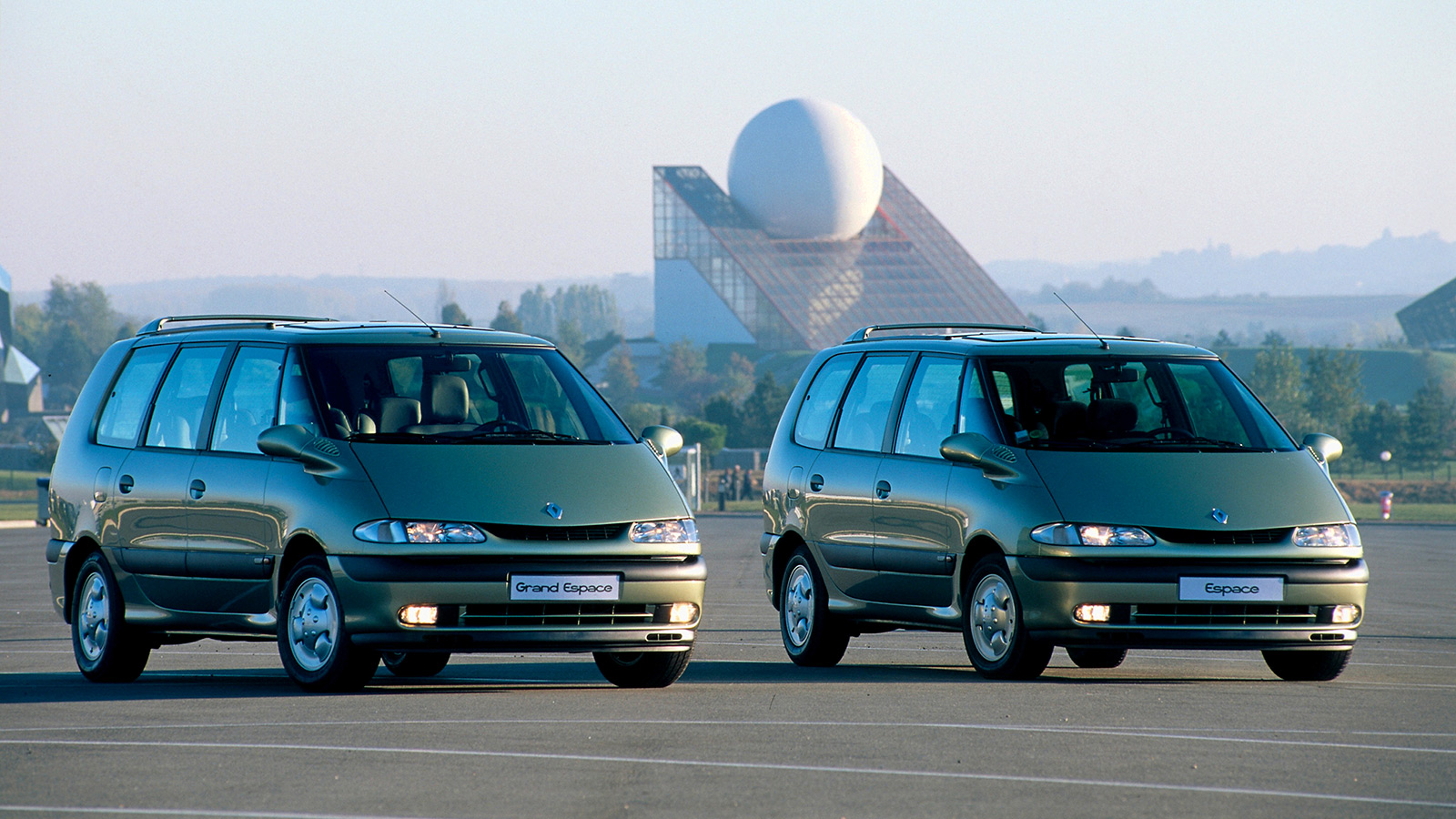
The third-generation Espace, which looked like a swoopy spaceship, was launched for 1997, and it proved to be the last plastic-bodied Espace, as its successor was steel with some aluminum body panels. It was sold in two lengths, the regular Espace and the Grand Espace, which had a longer wheelbase and a longer rear overhang.
The 2002 fourth-generation Espace was entirely Renault-designed and produced, as the predecessor’s oddball Avantime coupe relative proved to be Matra’s swansong.

In recent years, Renault has been building Espaces that looked like regular crossovers, with the 2015 and 2023 generations a far cry from the train-shaped original. This is why this latest concept from Renault is a welcome throwback to over 40 years ago, and hopefully something that previews an eventual production car to replace the current Espace.
As we’ve said in recent articles, Renault keeps nailing the balance between futuristic and retro in both its concept cars and production vehicles. The new Renault E-Space concept will be shown at the Paris motor show next week, and it’s clearly influenced by the much-loved original, with the shark nose proud of its past.
Instead of just another crossover look, the glasshouse is again clearly a Renault Espace design, and the concept could not look better. Just imagine what it would look like as an AMC.
Photos by Renault unless otherwise noted
The post The Shark-Nosed Espace Is Back. Here’s How The Original Became The Minivan That AMC Never Got To Sell appeared first on The Autopian.