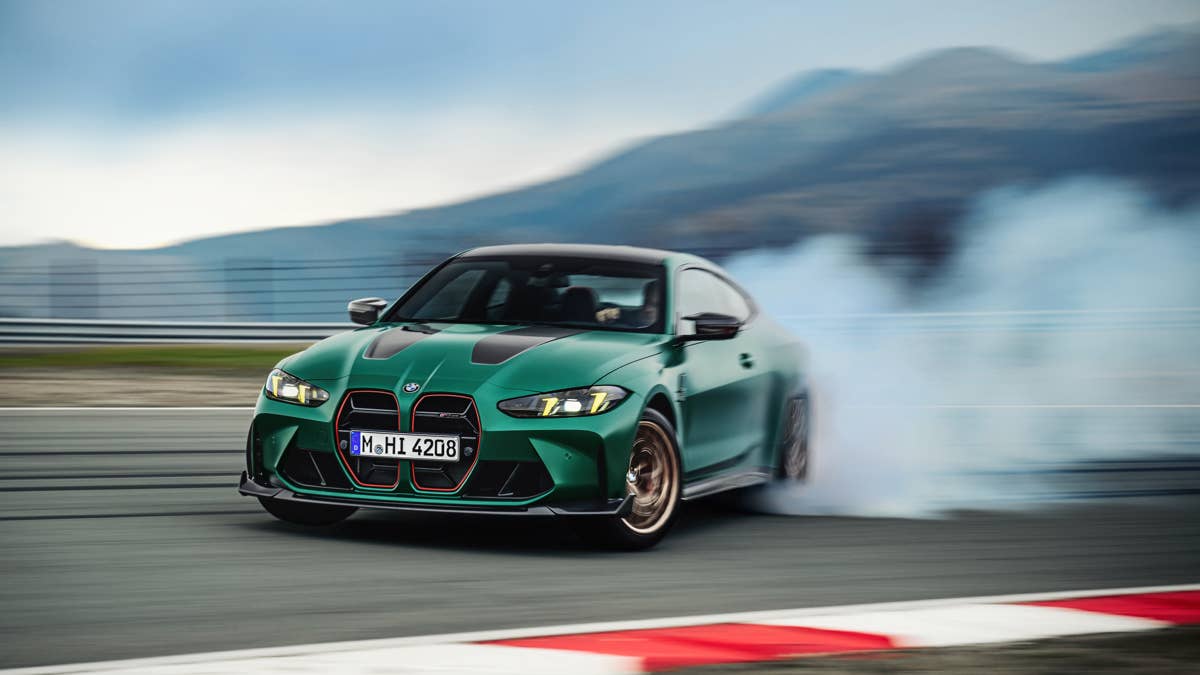
The engineers at BMW M seem to be well aware that many of their customers are incapable of controlling their cars without some sort of electronic intervention, and their latest idea could reinforce the trope: a new system designed to make drifting easier. Discovered at the German Patent and Trade Mark Office, the patent focuses on shifting some weight of the car off the rear wheels, making them lighter and therefore more likely to spin when the throttle is applied. Contemporary BMW M cars already have customizable variable traction control (and a drift analyzer), but this takes the idea in a new direction, manipulating a car’s suspension rather than its torque profile.
How Future BMWs’ Suspension Could Help You Go Sideways
BMW
To understand how the new patent works, let’s quickly recap some of the typical ways in which initiating a drift is achieved. If the car has a manual e-brake/handbrake, the easiest way to reduce traction at the rear axle would be for the driver to yank the lever as they turn in. In a car with a manual transmission, the driver could also momentarily depress the clutch while keeping their right foot on the throttle pedal, causing a spike in revs that lights up the rear tires when the clutch is reengaged. And as popularized in rallying, a driver could perform what’s known as a Scandinavian flick, abruptly turning away from the corner and then back into it while getting on the power. All of these methods are followed by countersteering and throttle modulation to maintain the drift, but it’s the latter that the new patent seems to be inspired by, at least loosely.
Related: BMW Says Younger Buyers Are Why Its Buttons Are Disappearing
See, BMW’s new patent suggests that when various sensors and systems detect that the driver wants to initiate a slide, the car’s adaptive suspension or active roll stabilization systems could effectively “bounce” the rear axle, shifting unsprung mass “impulsively in at least approximately the upward direction of the vehicle, so that the load on the rear axle is temporarily reduced.” Basically, a momentary axle hop could loosen the car’s rear end, getting the drift started with far less torque (and at lower speeds) than may otherwise be necessary, which has the added benefit of making controlling the drift a little less frenetic. While getting the drift going is particularly difficult, keeping it going in the right direction is also not easy for the amateur, so according to CarBuzz, which first analyzed the patent documents, BMW’s system would keep an eye on the vehicle’s speed and trajectory, potentially storing steering angle settings to limit when a user can and can’t drift.
Autoblog’s Take
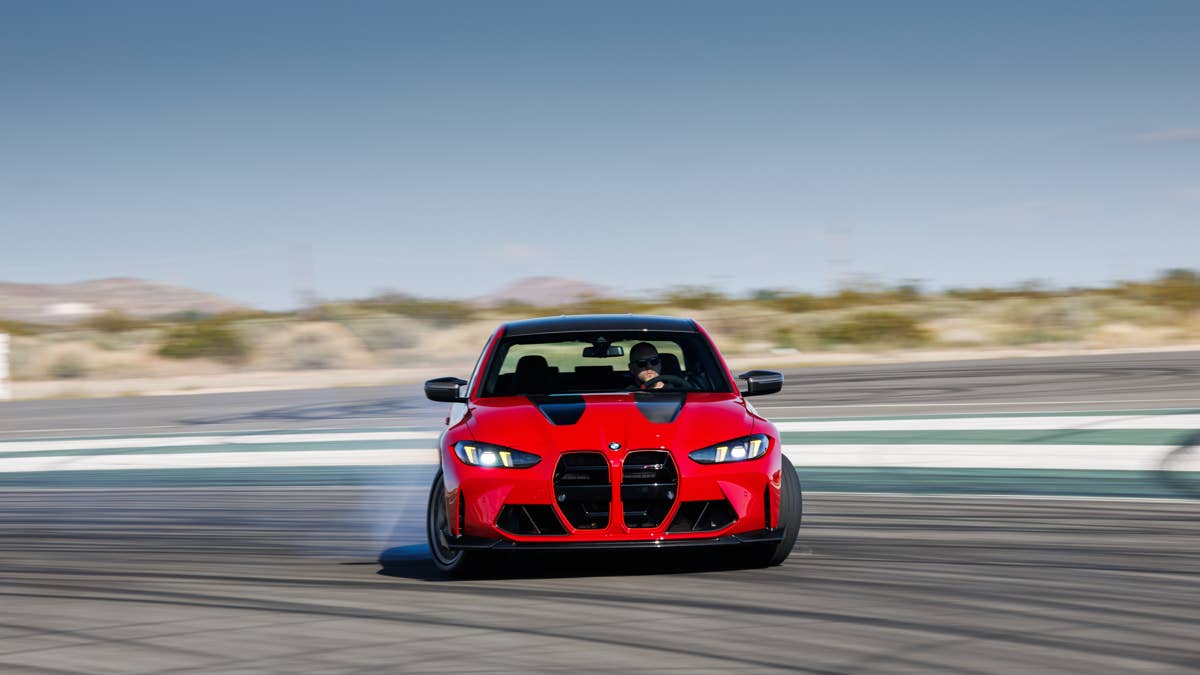
Features like these tend to encourage hooliganism, particularly among those with less skill than sense, but if they’re used on a closed course, they’re not so bad. Of course, there is an argument to be made for the case that such systems make unskilled drivers look better than they are, breeding overconfidence and inflating undeserving egos, but BMW’s patent says this system would only engage under certain circumstances, such as when there’s significant steering angle, and it’s safe to assume that the driver would have to confirm the choice to activate this particular sort of drift mode before it starts trying to activate wheel slip. It’s also worth noting that this patent makes more sense in light of the upcoming arrival of the first-ever electric M3. As a software-defined vehicle with what will surely be a heinous curb weight and the potential for over 1,340 horsepower, this system may be a perfect fit. That said, patents don’t always reach production for reasons including complexity, cost, and safety, but we wouldn’t bet against this forming part of some future performance suite.