It’s the Eighties. You’re a Finn, and you want a cool car to replace the Datsun 100A you’ve been driving since you got your license. You’ve saved your money, but your options are limited, as new cars are expensive and road salt eats up the old ones, like your dented Datsun. In the evening, you settle down to watch Knight Rider or Miami Vice, and it’s not helping. Everyone on TV is driving the sort of car you dream about, but importing one is difficult because of the heavy taxation. What do you do?
You get a van or pickup version of the car you saw on TV.
The other day I covered the story of ’80s Finnish pickups with their weird, extended beds that were modified to pass local regulations. Official imports such as Subarus and VW Caddys are only a part of the picture: Finnish entrepreneurs also applied their special touch to American coupes to create real utility coupes. Yes, this is the story of Finland’s pickup-truckified Camaros and Firebirds, with a bit of wagon lore thrown into the mix.
Let’s take the phrase “coupe utility” first. It’s about having your cake, lots of cake, and getting to eat it too. You want the experience of having a coupe, or even a sports car, and at the same time you want to haul some stuff in the back, more than a coupe usually affords you.

An early example of a car of this type was the Hudson Terraplane, which was in fact ingenious: hidden within a coupe body was a sliding trunk extension that gave you temporary extra space for transporting goods. Slide it back in, and the coupe look is restored.

Later on, pickups such as the Chevrolet El Camino, GMC Caballero, Ford Ranchero, and others combined the front ends of regular sedans or coupes with a pickup rear section, eventually doing so with a really pleasing-looking, flying-buttress design for the cab’s pillars. The same styling was applied to the Subaru Brat in a smaller size, and these are genuinely not bad-looking cars – and they are, to me, cars and not trucks.
Toyota built some neat-looking versions of the Crown with two or four doors, depending on the cab length, with a pickup bed. In a sense, these were the forebearers of the future Subaru Baja, which is an Outback with a different back, retaining the chunky cladding but featuring a pickup bed. These are all factory-made creations, which also shows in the execution.
Nobody Expects The Finnish Legislation

A specific car tax went into effect in Finland in 1958. Initially it was set as a temporary tax, and who knows: maybe it will be temporary, but it’s been nearly 70 years already. With some initial changes, car taxation became two-fold: passenger cars were taxed at a certain percentage, depending on the car’s taxable value, but commercial vehicles were tax free. If you registered a station wagon as a commercial vehicle, the tax was refunded to you.
If you worked abroad long enough and could prove you had earned the money there, you could bring a car with reduced tax when you returned home to Finland. Eventually, many Finns served abroad in peace-keeping operations and brought a Mercedes-Benz or Porsche with them when the tour ended. You couldn’t also sell it for a year.

You’re looking at a freshly inspected Mercedes 240 D ambulance. With a 280 SLC body and drivetrain.
People used to do body/drivetrain swaps all the time in the ’80s due to heavy Finnish import taxation of the time. This is one of the more :chef kiss: examples.
huutokaupat.com/kohde/588686…
— Antti Kautonen (@julkinen.bsky.social) November 18, 2025 at 6:04 PM
Used cars were otherwise taxed heavily at import, so simply bringing a car from Sweden or Germany wasn’t a possibility: however, some people ended up buying “parts cars” and using exactly 49,9% of those to create coupes out of sedans by swapping the bodies. There are still Mercedes-Benz R109 SLC:s driving around with W115 ambulance chassis papers!
You also couldn’t build a complete car from used parts, as that would have been taxed at 90% of a new car’s taxation value; like every rule, this was also to close an earlier loophole.
The Van-Wagons And Ski-Box Specials

The difference between passenger car and commercial vehicle taxation gave birth to a curious class of cars, which was called the “piilofarmari”, or the, uh, covert wagon. The rear seat was removed and at first, the rear side windows were covered, and if you managed to get around like this for three years, you could then convert it back to a passenger car and pay no extra tax.
The rules were adjusted throughout the 1960s, but again, purchasing a commercial vehicle was roughly 50% cheaper than a regular passenger car wagon. You could only do 70 km/h (later 80 km/h, 50mph) in a country that only had speed limits from the late 1960s, initially sporadically, and national speed limits only from the mid-1970s on.
Any jump seats could initially only be rear facing, with absolutely no padding, in an uncomfortable angle to ensure they were for temporary use only. Every time the rules were tightened, entrepreneurs or car buyers figured out some sort of loophole to get cars for cheap. Let’s say the rules would have called for ten-inch spikes in the jump seats, and people would have fit them if that meant the cars were cheaper.

In 1971, the rules were readjusted and the three-year rule was abolished in favor of permanent requirements. To pass as a commercial vehicle, a pickup now needed to have at least a 150-cm bed, which worked for the 1976 Toyota 1000 “Timangi” up until the minimum length was readjusted to 185cm (six feet) in 1977.
Also, in 1971, it was ruled that a van would have to weigh at least 1800 kg (3968 lbs) to be tax-free, or have a cargo area that was at least 130cm tall (51 inches).

The minimum height rule was eventually circumvented by fitting either a custom tall roof, often fiberglass, or if working with a smaller budget: by bolting and sealing a permanent ski box directly onto the roof. Underneath the ski box was a 50 x 60 cm hole (19in x 24in), a literal loophole for the wagon to meet the cargo area height requirement.
You would see these sort of modifications on Volvo and Mercedes-Benz wagons, and there’s at least one Chevrolet Celebrity with a ski-box mod on top. The official Finnish Citroën importer subcontracted a boat company to manufacture tall fiberglass roofs to create BX Vans.
The Full-Size Americans
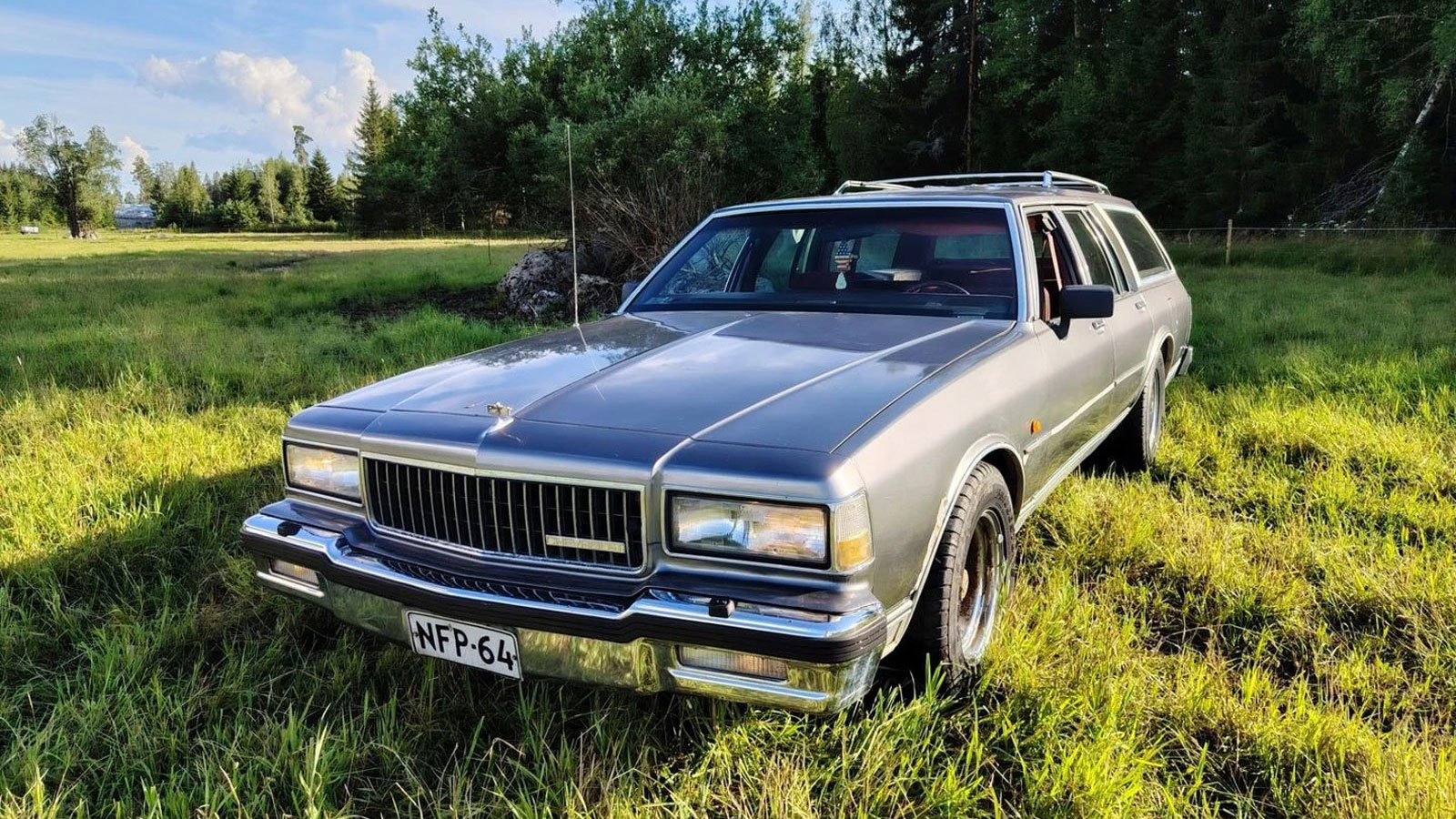
In the 1980s, a car dealer noticed that the cargo area minimum height rule didn’t apply if the vehicle weighed over 1800kg (3,968 pounds). This made full-size American station wagons especially tempting, as they were big and heavy from that factory, and not terribly expensive in the States.
Rather than trying to make Mercedes-Benz 300TE wagons heavy enough (attempts were made, including using lead plates and concrete), Finnish entrepreneurs started importing new, nearly-new, or used wagons from USA with their rear seats removed and often destroyed with the custom official watching. As the Finnish Classic Motorshow’s website says:
The dam that was thought to hold back car taxation began to show serious cracks when Aimo Sulin, the owner of Hatanpään Autokeskus, went to present his idea at the Tampere inspection office in 1988. The car was a Chevrolet Caprice station wagon with its soft back seat replaced with one made of plywood. At first, the attitude was hostile, but the idea was sent to Helsinki for a round of comments.
The matter was finally resolved by Reijo Lampinen, the chief engineer of the Ministry of Transport, who decided that a temporary, front-facing rear seat would meet the requirements set out in the law. The dimensions of the cargo area were irrelevant in a car with a minimum weight of 1,800 kg.
If the dam was already cracked, all the floodgates would fail immediately. News of the opportunity spread like wildfire at record speed, and Finland was gripped by station wagon fever. Hundreds of large and small entrepreneurs entered the industry, and when the loophole was finally closed two years later, more than twenty thousand large American estate cars had been registered in Finland as vans.
Hatanpään Autokeskus alone sold about three hundred American estate cars. In 1990, Metro-Auto – the official importer of GM USA – priced the Chevrolet Caprice Estate van at around 120,000 FIM, a saving of around 140,000 FIM compared to a similar passenger car.
It’s noteworthy that while these conversions were largely carried out by a cottage industry, new conversion wagons were also sold through the official General Motors dealer in the Helsinki capital region. Some of them were also imported by HD-Center, a Harley dealer run by the guys who were also part of the Leningrad Cowboys comedy band.

The rules allowed temporary-use rear seats for a 3+3 passenger configuration, so some very uncomfortable plywood-based seats were built in place of the original rear seats, often using the original upholstery. The cushion couldn’t be more than two inches thick.
Approval of the modifications was also dependent on the specific inspection station: it might have well been, that one station in Finland didn’t approve the shape and form of the rear seat installation or the angle of its backrest, but another did, so people got their cars imported and plated based on word-of-mouth, not a set of easily followed rules, and ended up driving around the country to go to the “good” inspection station. Some places demanded a bolt-on divider or a “dog guard”, some didn’t. In Helsinki, the backrest needed to be vertical and attached into the divider.
An investigative TV program showed all the various configurations that were built based on what would pass in one town but not in another. They also grilled the officials about the vagueness or complete lack of instructions and never got a straight answer, which makes it look like the approval process was muddled on purpose to discourage people from buying loophole wagons. Hilariously, one of the officials was revealed to drive such a wagon himself, and that he would get it inspected at a suitable location by an associate.
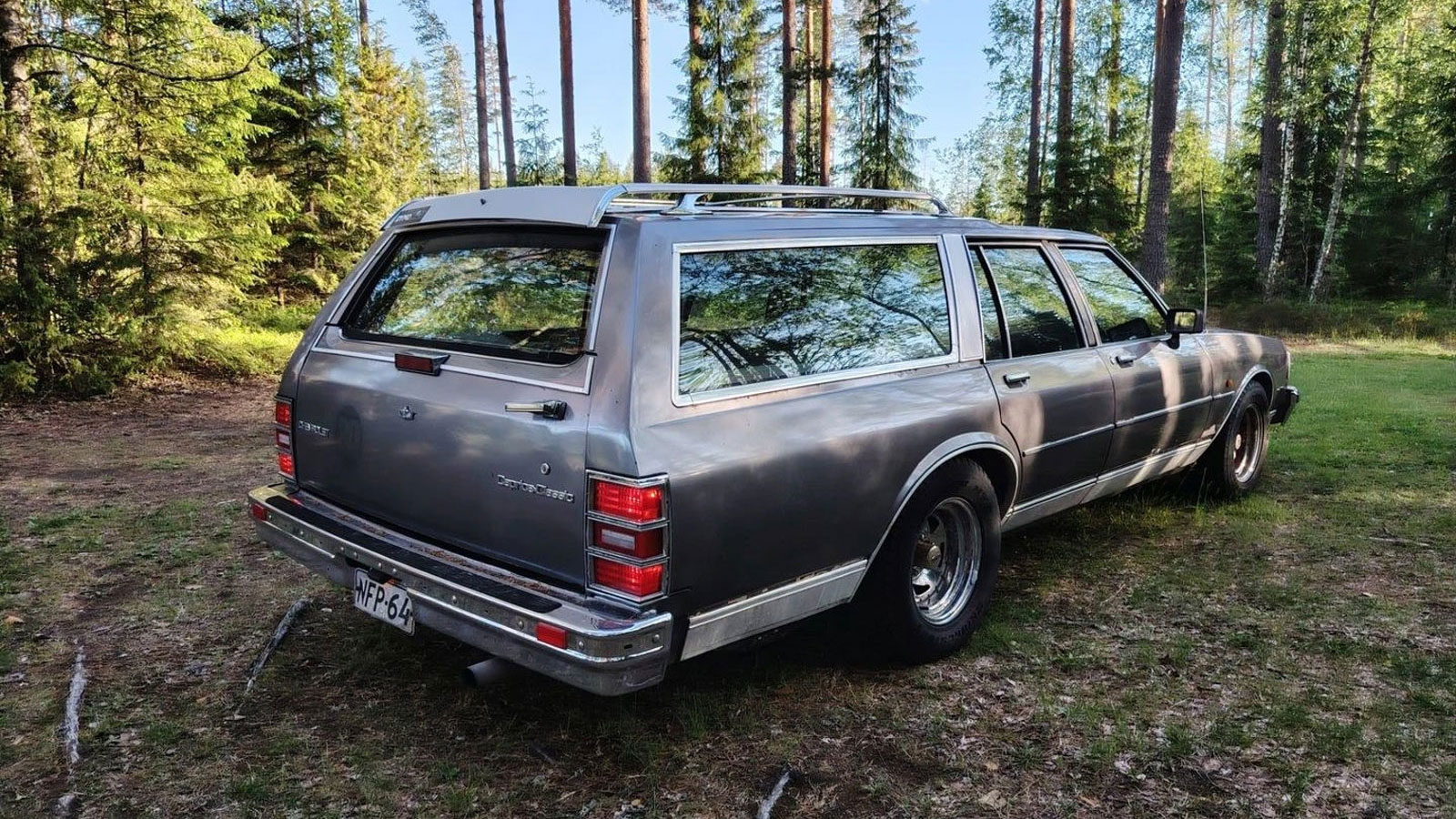
While Ford wagons were also converted to vans, it seems most were Caprices, Buick Electras and Oldsmobile Custom Cruisers with the occasional Pontiac Safari thrown in. Contacts across the Atlantic probably played a role.
As the Finnish magazine Tekniikan Maailma noted in its 08/1990 test drive of a converted 1985 Electra wagon, “So far, Chevrolets have been the most popular, but Buicks are increasingly favored. They are said to be better to drive and better equipped than the others, even if differences aren’t that significant in reality. It’s a bit like comparing Levi’s, Lee and Wrangler jeans.” The magazine did recommend getting a Chevy 305-engined wagon, as it would have had cheaper spare parts prices compared to the Olds 307. “The infamous 5.7-liter diesel cannot be recommended to anyone.”
They also noted that the five-year-old Electra they were testing would cost roughly half compared to a new, half-price wagon, so it cost only a quarter of a brand new full-size wagon with all seats intact. That’s 60,000 FIM compared to 240,000 FIM, if you’re keeping score, or in today’s money, $22k vs $88k. In other words, you chose between the most basic Toyota Corolla, wagon or not, or a fully loaded full-size American wagon that just had a really uncomfortable rear seat. That’s why tens of thousands of buyers went for these.
You also had to drive around with a dinner plate sized “80” speed limit sticker on the back, but that didn’t matter: the cars were cheap, with a large load space. Effortless V8 torque also meant that transporting stuff didn’t really strain the drivetrain, and at 50mph the engines were barely more than idling.

Import tax has an age coefficient, however, and as the wagons are now over 30 years old, remaining taxation value would be minuscule. This was only changed in 2015, and up until that point, any van-wagon that would have had a regular seat put in would have been subject to the full tax it avoided when new, even if the vehicle would have been old and only worth a couple thousand at best.
After the danger passed, many old US-built wagons have now had their rear seats reinstated or new ones sourced, especially in the case where the vehicle has originally been used as a hearse thanks to the long load area.
Vehicles over 30 years old can be historic registered if they pass as original, in presentable condition, and there are a bunch of estates rolling around, having retired from their commercial vehicle duty, now with soft rear seats like they were built with and registered as regular passenger cars. The cheapest, most beat van-wagons have slowly returned to earth.
The Utility Coupes

However, the wagons are only half of the story. One Finnish businessman, who had earned his reputation shipping tax-free, modified wagons from a shop in Lake Worth, Florida, started modifying Pontiac Firebirds and Chevrolet Camaros into pickups after an acquaintance happened to be looking at a third generation F-Body car with the rear hatch glass open.
As the story goes, retold in the Finnish classic car enthusiast magazine Mobilisti in its 5/2009 issue, the guys pointed at a Firebird and thought aloud: “That thing should be turned into a pickup.” The idea seemed so obvious, that a prototype was immediately built out of a black Firebird, extending the rear so the cargo area length would reach six feet.

The outfit didn’t bet on the project succeeding. They contacted an official from the Finnish motor vehicle registration authority and showed him the necessary photos and drawings, as well as the regulations that were in effect in the late 1980s and how the prototype met them. With eventual approval from the Finnish DMV, H&H Auto Exports in Lake Worth started churning out turnkey cars from Florida F-Bodies, used, new and nearly-new, and sending them to Finland.
Even with modifications, the cars were easily 100,000 FIM cheaper than a new Finnish Firebird worth 250,000; a similar saving compared to the wagons mentioned earlier.
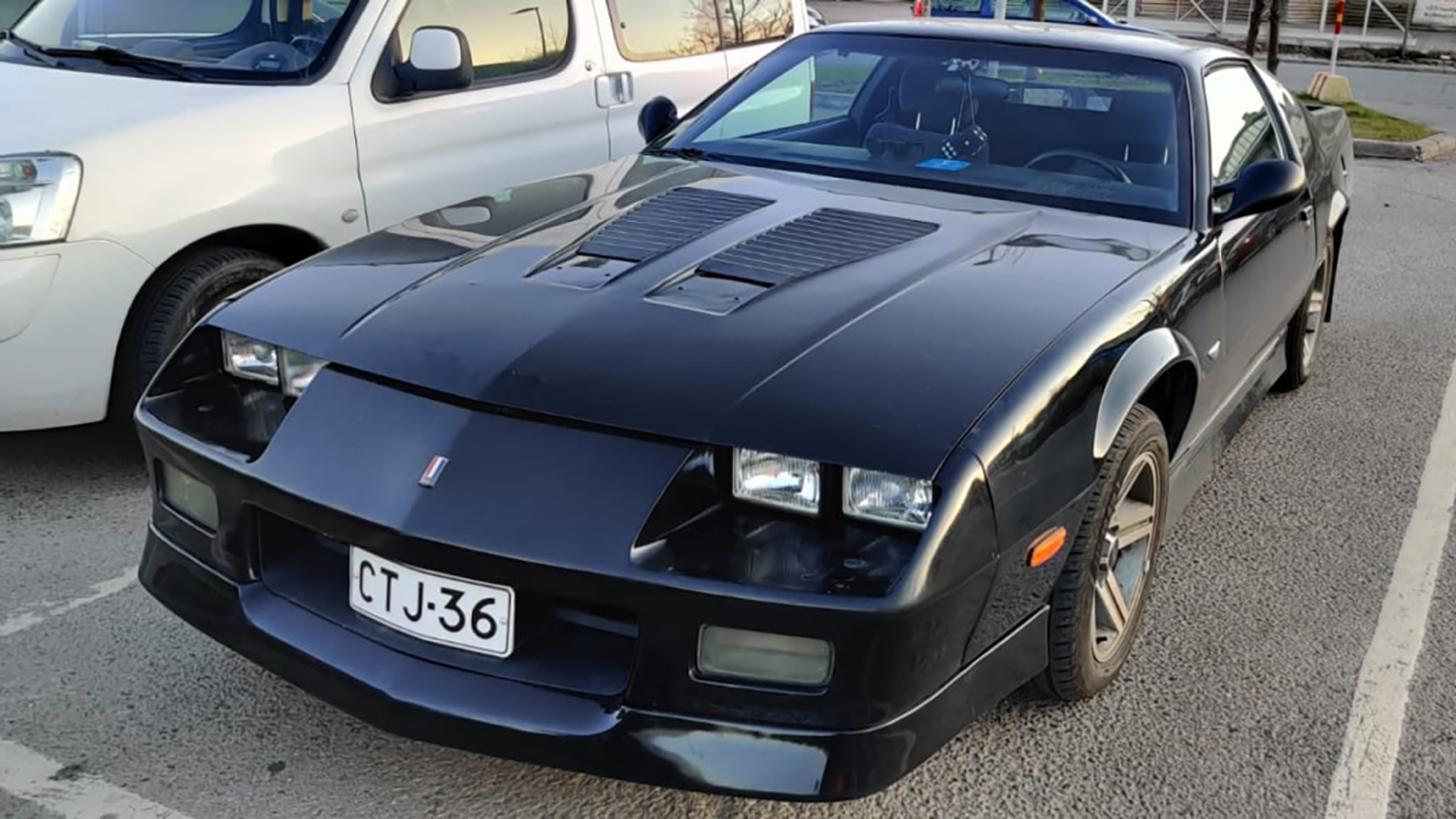
The Mobilisti article mentions that staff from a nearby Chevrolet dealer came to visit the shop, as they wouldn’t believe that a bunch of Finnish guys were chopping up coupes and welding on extensions to create six-foot load beds in them. At one point, a dealership demonstrator was accidentally cut as it was parked too close to the cars waiting to be modified.
Reportedly, the models spanned from Z28s and Firebird Formulas to Pace Car Editions and Trans Am GTAs, from V6 to V8. It’s unlikely anybody was cheap enough to drive around in a four-cylinder one with the Iron Duke engine.
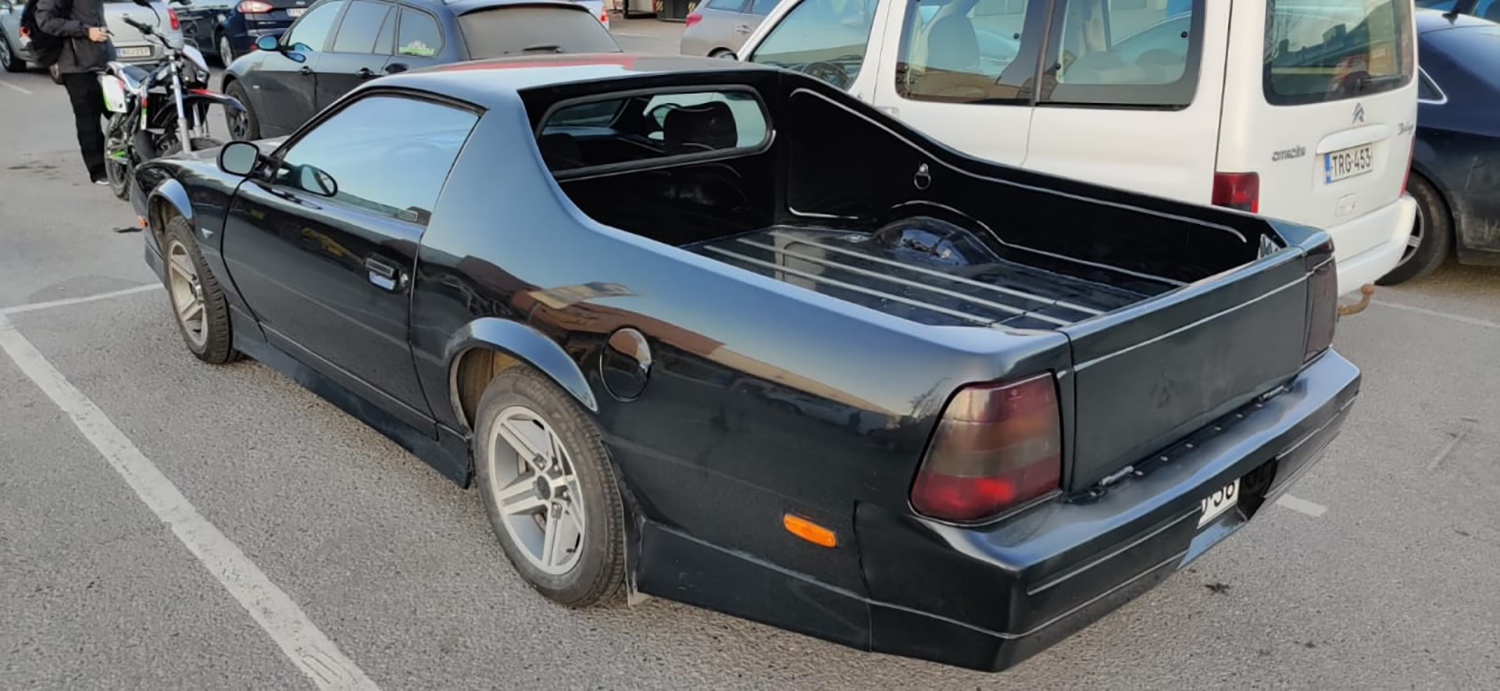
During the couple years that these pickup Camaros and Firebirds were built, the process was developed and changed, with some of the cars fitted with a vinyl faux top to better blend the cargo area into the overall shape and some leaving it body color. Some cars also have the bedsides shaped into a more of a notchback shape, compared to others with a more fastback shape all the way to the tail.
This car, spotted by a friend, has had a folding tailgate built for it with some repurposed Saab 9000 tail lights in place of the originals. It is actually the same car that was included in Jason’s earlier article about pickup Camaros and Firebirds. Looking at the bed and the rear quarters, it’s likely a Florida-converted car that has been customized further in Finland.
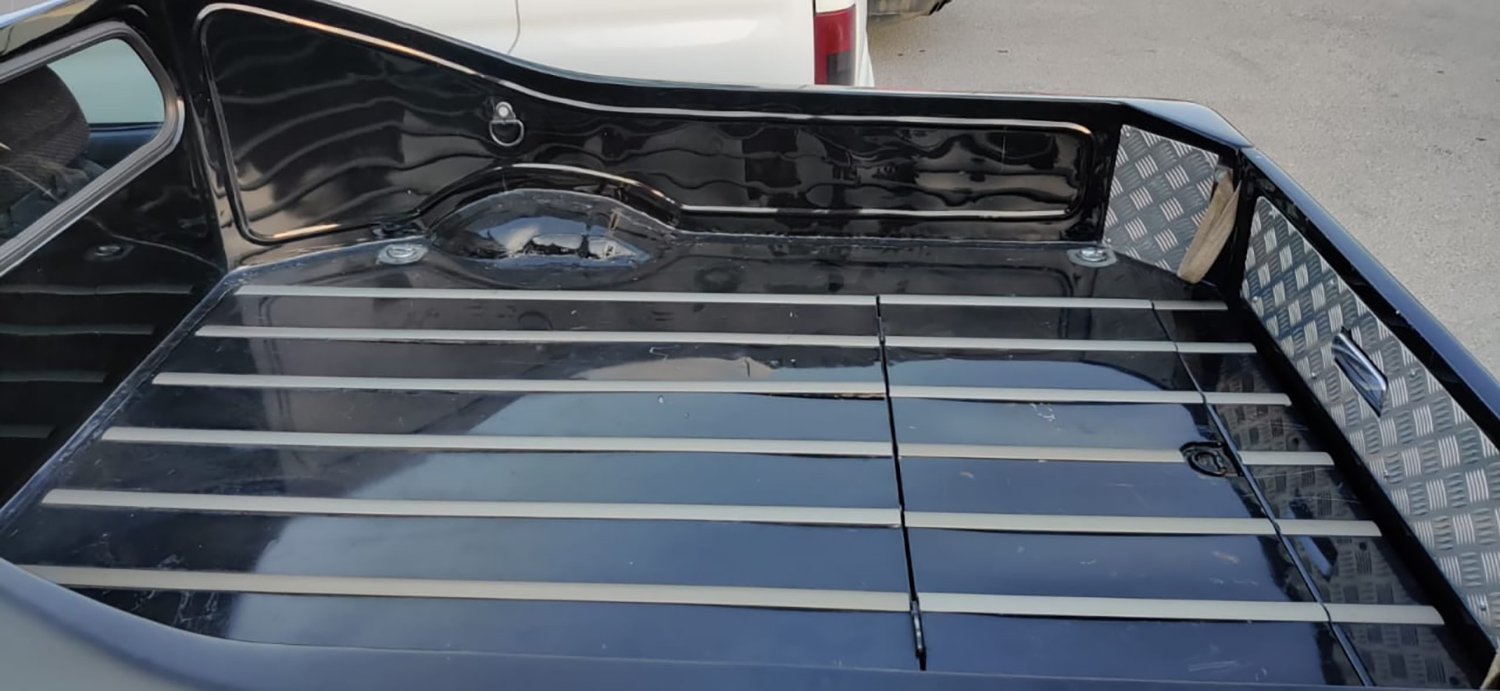
In any case, you couldn’t fit a rigid cover over the bed area, but a tonneau cover was fine. In late 1989, a legislation change was prepared that an opening tailgate would have been required, but nothing came of that.
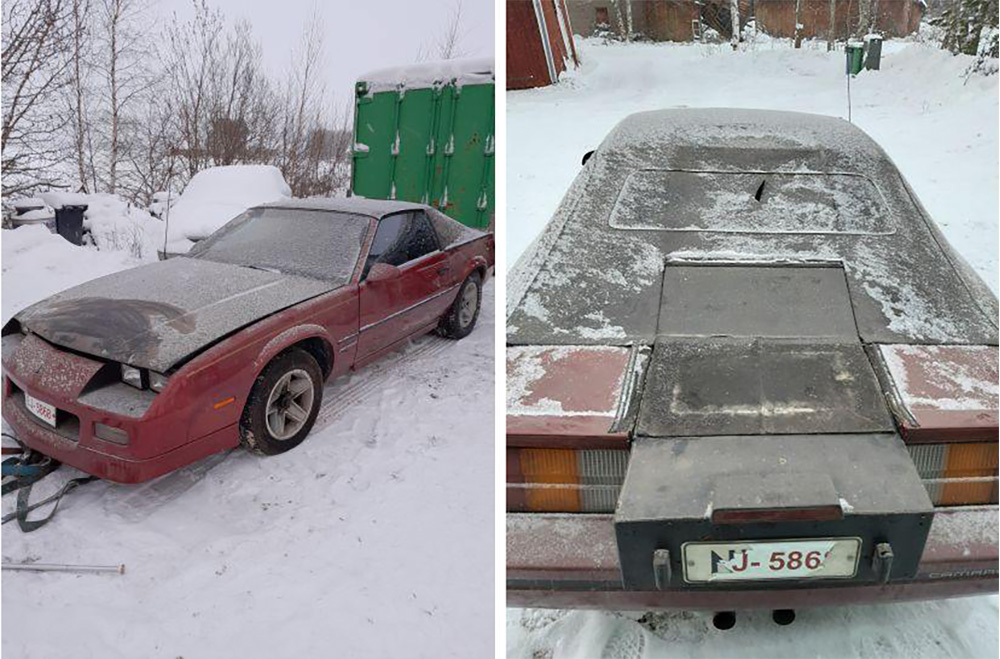
In the Mobilisti article, the total tally of the modified cars is said to be 142; it isn’t mentioned whether other garages also built F-Body pickups, but old ad photos have survived of a Camaro that featured a weird, casket shaped extension to pass the regulations and nothing more.
It looks very odd, as the rear isn’t extended in full width, but a narrow extension just pokes out the back, with the license plate bolted onto it. It’s so homebrew and different looking compared to the H&H Auto Exports cars, that it’s more likely to be a one-off from some other builder. In fact, it almost resembles the Hudson Terraplane in the beginning of the article.

This photo shows how the cargo area “tub” protrudes in the cabin of another red Camaro. There’s a small storage area underneath it.
The Loophole Is Plugged
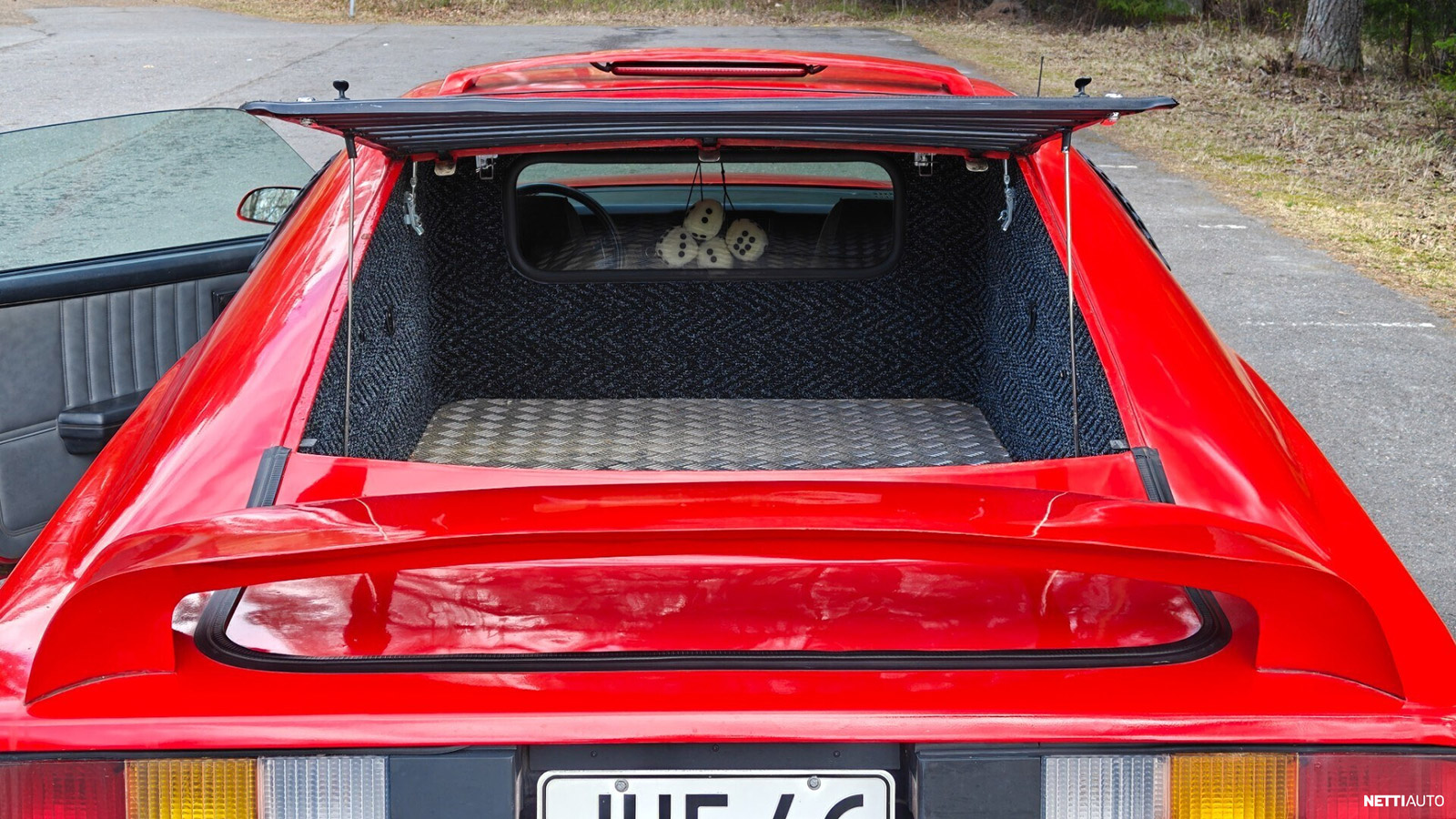
By June 15th, 1990, the whole show was over. Wagon and pickup legislation were changed again to include such specific cargo area measurements, dimensions and jump seat requirements, that both the tax-free full-size estates and the F-Body pickups were ruled out. The legislation also included this damning phrase:
If a vehicle is to be considered to have been constructed or modified for the purpose of tax avoidance in such a way that its structure and characteristics differ from the usual characteristics of vehicles belonging to the relevant vehicle group, tax may be levied on the vehicle even if the vehicle would be exempt from tax under its classification or the provisions of this Act.
In other words: if it looks like a tax evasion special, it’s gonna get taxed even if it meets the criteria, if the official inspecting the vehicle feels like it.
You can still register a station wagon as a van, but these days, no rear seat of any kind is allowed, and the Finnish traffic authority has a list of specific vehicles that can be registered as vans after the necessary modifications have been done, based on vehicle types and classes. Generally, you can only convert a car that has the provision for it in its type approval.
In the early 2000s, car taxation was gradually overhauled and importing used cars became significantly cheaper. For the past few years, EVs have been free from import tax and are only subject to VAT; since taxation is now based on CO2 emissions, some of the less polluting ICE cars have barely any tax in the customer price anyway. There are fully electric pickups that can have full five seats, as it has no effect on their taxation.
The Florida garage modifying Camaros and Firebirds still tried to stay in business even after the 1990 rule change, including shipping a bubble Caprice in two pieces to try and get it past customs, but as the story goes, both ends of the car arrived at the customs at the same time and the keys from the front end fit the trunk. The guys ended up having to pay full tax for a vehicle that had already been cut in two once.
A bunch of these loophole specials still survive in Finland and they pop up for sale every now and then, especially when summer’s approaching. They will never fetch high prices and they cannot be historic registered due to the extensive modifications from stock, but they are an integral part of Finnish automotive history, in a “Lest we forget” way.
The post In The 1980s, Some Geniuses In Europe Dodged Taxes By Turning Camaros And Firebirds Into Pickup Trucks appeared first on The Autopian.