In a world where every automaker seems to be chasing the same formula of bigger, heavier, and electrified, Mini just walked into the room with a turbocharged two-door hatchback that weighs about 3,000 pounds and makes a go-kart the ultimate benchmark for driving fun.
After spending time behind the wheel, the JCW left me grinning in a way that very few cars at this price point can manage. It is quirky, confident, absurdly fun, and dripping with a kind of personality that most modern cars have been focus-grouped out of.
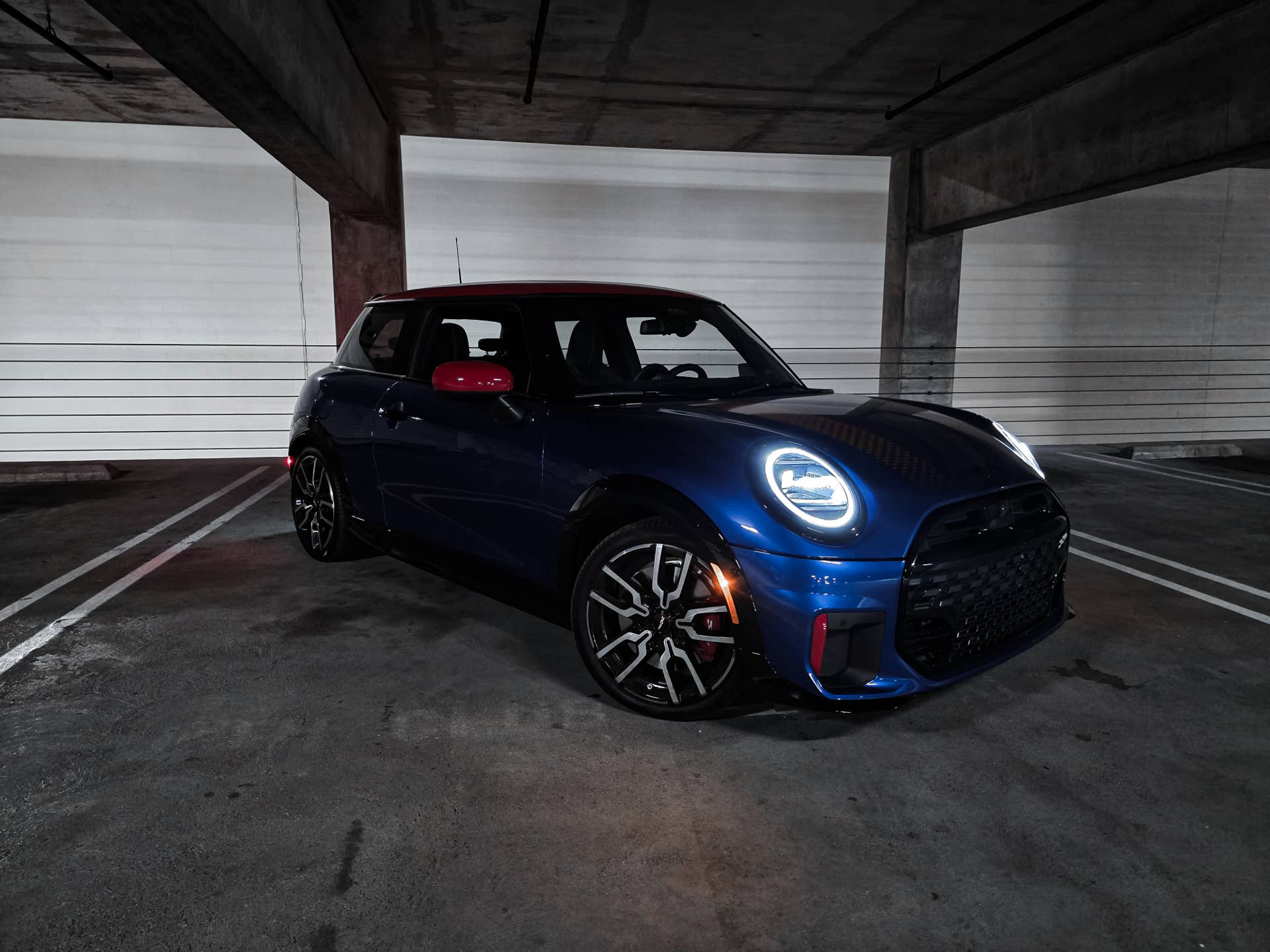
Powertrain and Engineering Deep Dive
Under the stubby hood sits a BMW-sourced B48 2.0-liter turbocharged inline-four producing 228 horsepower and 280 lb-ft of torque. Those numbers represent a carryover in horsepower from the previous generation but a significant bump in torque, up from 235 lb-ft. That 45 lb-ft increase changes how the car pulls out of corners and builds speed from a roll. The turbocharger provides boost early in the rev range, meaning you get that shove of torque from around 1,450 rpm, and it holds strong through 4,800 rpm.
Sending that power to the front wheels is a 7-speed dual-clutch transmission with paddle shifters. Mini killed the manual for 2025, a decision that still stings for purists, especially given the previous JCW’s six-speed take rate exceeded 40 percent. The company cited emissions regulations as the primary culprit, since the variability of human shifting made it difficult to meet CO2 testing targets.
What you get instead is a DCT that snaps through gears with genuine urgency. It is not the same as rowing your own, but it is a legitimately quick gearbox that delivers crisp, punctual shifts with a satisfying little burble on upshifts. In fully automatic mode, it is smooth and unobtrusive. Pull the paddles, and it wakes up considerably.
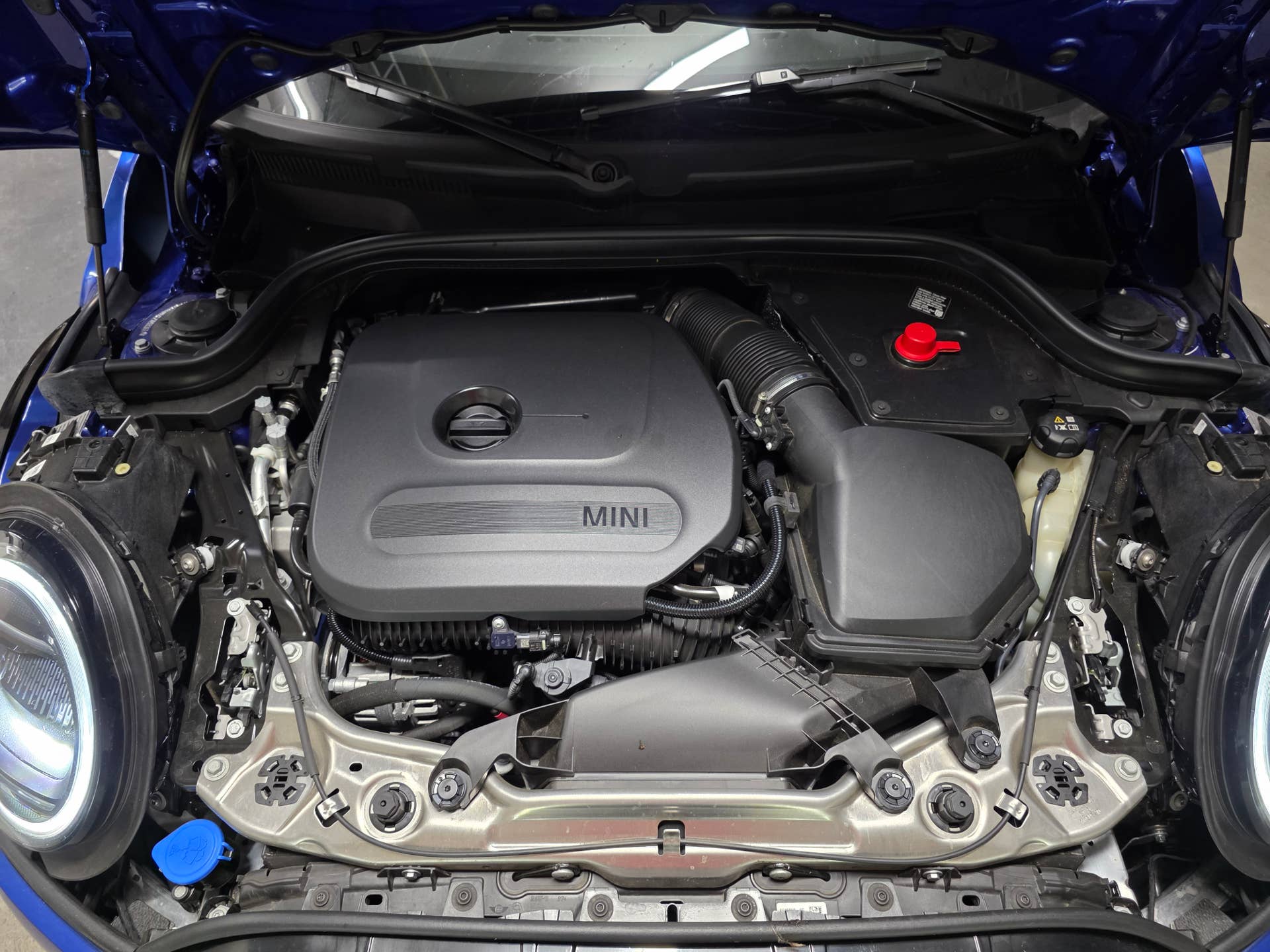
The chassis rides on Mini’s evolved FAAR front-wheel-drive architecture. Up front, you get MacPherson struts, while the rear uses a multi-link independent setup. Both are JCW-specific and come with Dynamic Damper Control, though it is worth noting these are mechanically adaptive dampers, not the electronically controlled units you find on BMW M cars. The JCW also comes with upgraded sport brakes with red calipers.
The Driving Experience
This is where the JCW earns its keep. The engine pulls hard from low revs, and the turbo response is quick enough that lag is barely noticeable in most driving scenarios. Plant your foot and the car digs out of slow corners with real authority. The added torque over the Cooper S is palpable, and the short gearing of the DCT keeps you in the meat of the powerband almost constantly. Mini claims a 0-60 mph time of 5.9 seconds, and in practice, the car feels every bit of that.
The transmission deserves genuine praise. It snaps through ratios with a mechanical crispness that feels well-suited to the car’s character. Downshifts are accompanied by neat throttle blips, and in Go-Kart mode, the whole system sharpens up further with quicker shift mapping and more aggressive throttle response.
Ride quality is firm. There is no way around that. The mechanically adaptive dampers do a competent job on smooth tarmac, but rough pavement and cobblestones will remind you that this is a sport-tuned machine on a short wheelbase.
For a car with this much personality everywhere else, the JCW sounds remarkably muted due to the new exhaust routing required for Euro 7 compliance.
Exterior Design and Features
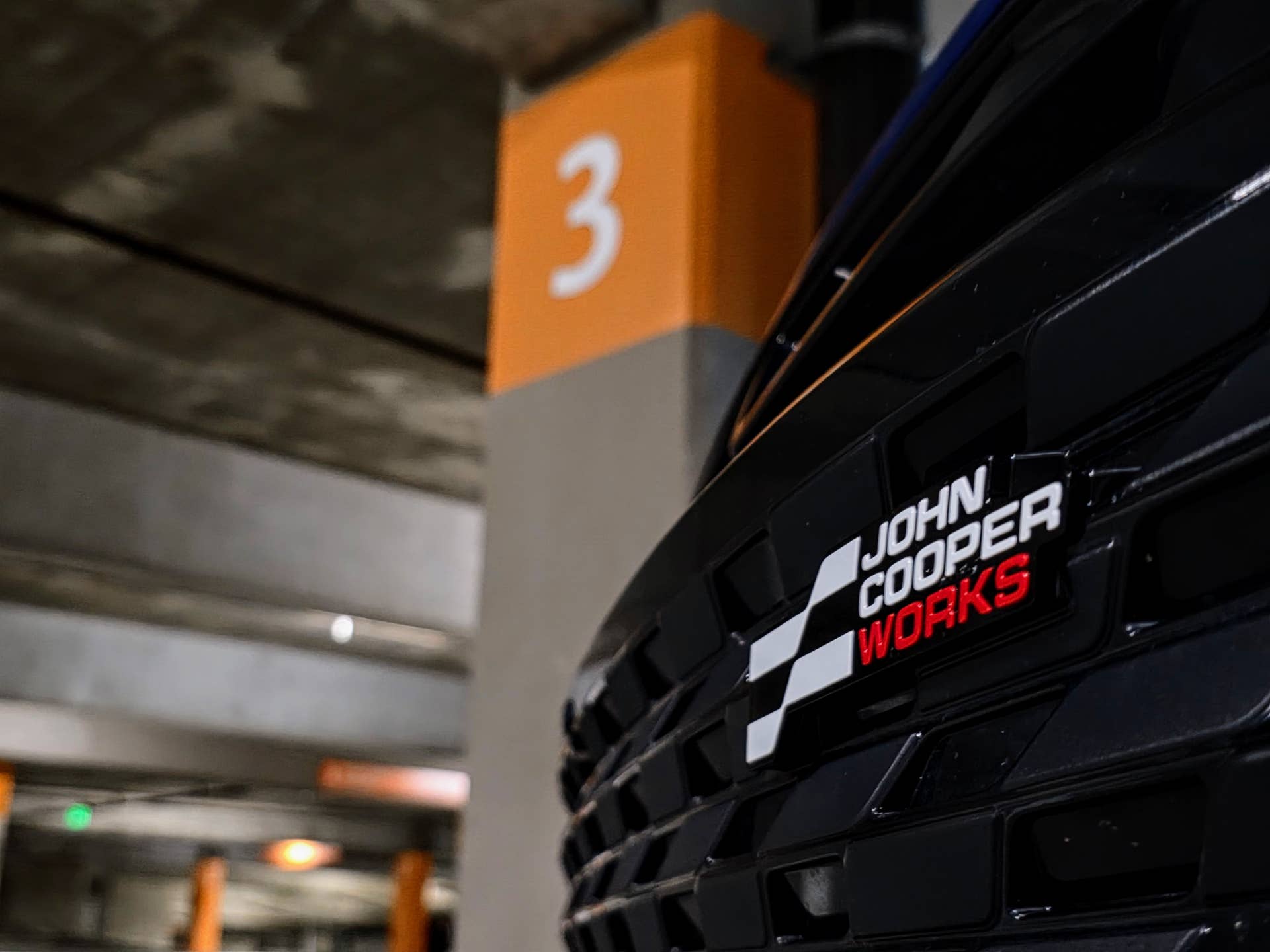
The 2025 JCW looks like a Mini that has been hitting the gym. It is more serious than before, more intentional, but it has not abandoned its sense of fun. The design language is cleaner and more minimalist compared to the chrome-heavy Minis of the past, with a focus on smooth surfaces and bold graphic elements. Up front, the JCW wears a unique octagonal grille finished in gloss black, flanked by enlarged air inlets with Chili Red accents that immediately distinguish it from other Cooper models.
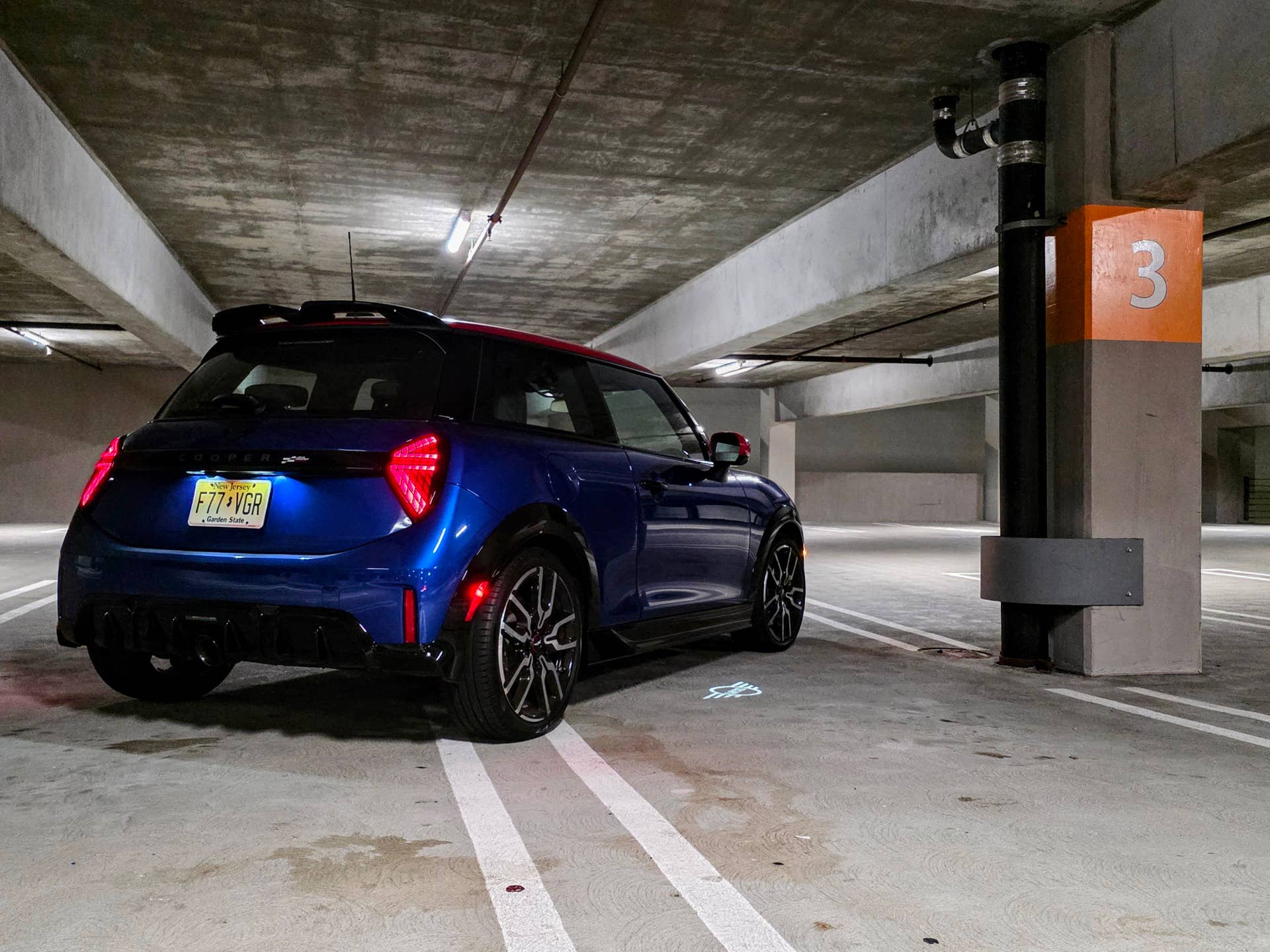
Mini offers 11 exterior colors, including some genuinely bold choices like Sunny Side Yellow and Blazing Blue Metallic. At the rear, a roofline spoiler, a rear diffuser frame for the single center exhaust pipe, and the taillights are standout features. They are reconfigurable, a small touch that adds to the sense that every detail on this car was considered.
Interior Design, Tech, and Ergonomics
Step inside the JCW, and the first thing that strikes you is how much larger it feels than it has any right to. For a car that is barely over 12 feet long on the outside, the interior is surprisingly spacious. There is legitimate headroom and legroom for taller drivers, and the cabin never feels cramped or claustrophobic.
The design is dominated by the 9.4-inch circular OLED display mounted centrally on the dashboard, running Mini’s latest operating system. It is sharp, colorful, and responsive to touch.
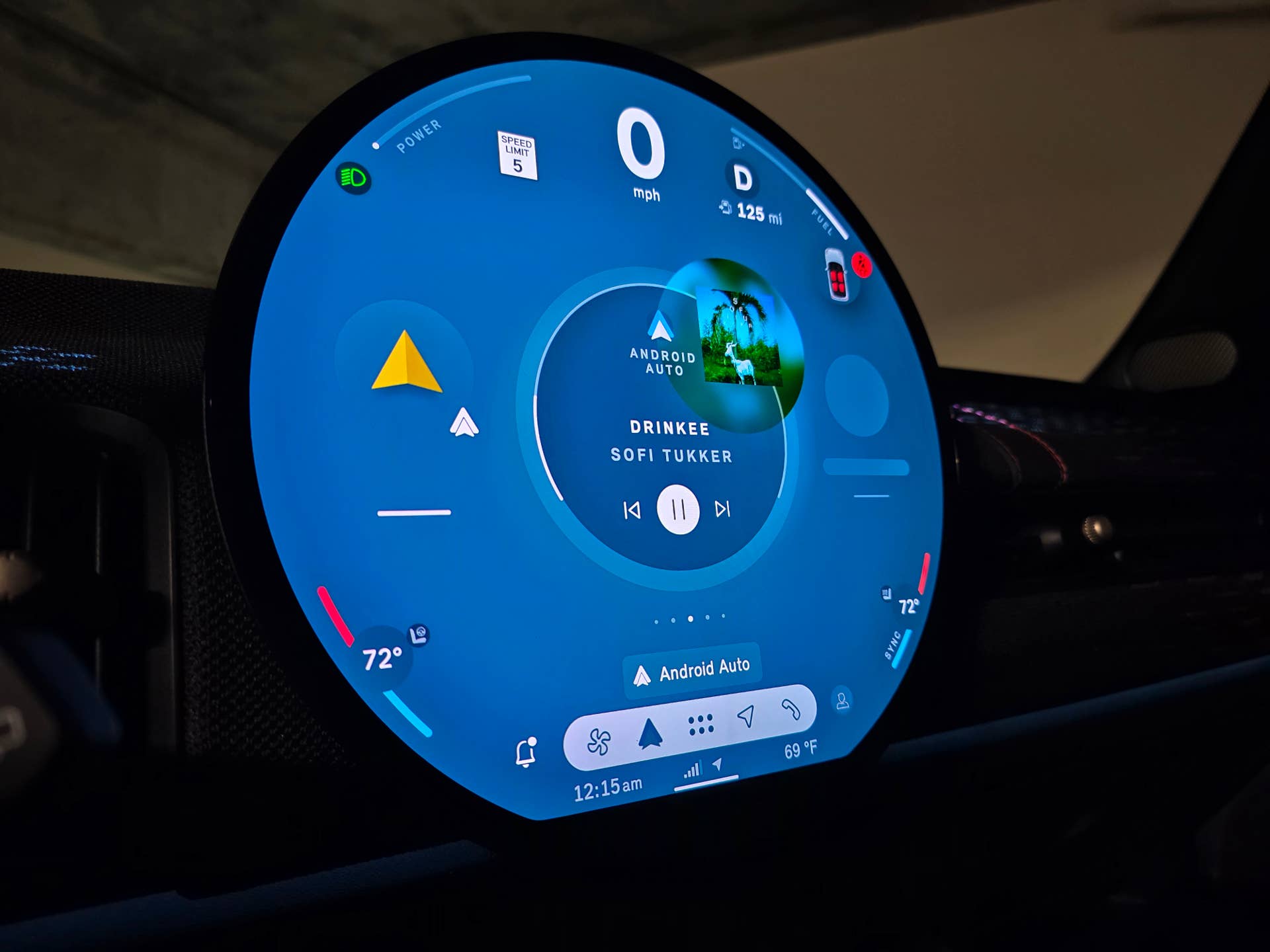
The JCW interior features its own red-and-black color scheme, with racing-inspired touches throughout. The sport seats are upholstered in Vescin synthetic leather with knitted fabric at the shoulders and red contrast stitching. They are comfortable and provide decent lateral support, though they lean more toward daily comfort than aggressive bolstering. The Experience Modes are a unique Mini touch. Beyond the drive modes, you can select visual themes for the screen, from the retro-styled Timeless mode to a Personal mode that lets you upload your own photos via the Mini app. It is gimmicky, yes, but it adds a layer of customization that reinforces the car’s personality-first approach.
Kyle Edward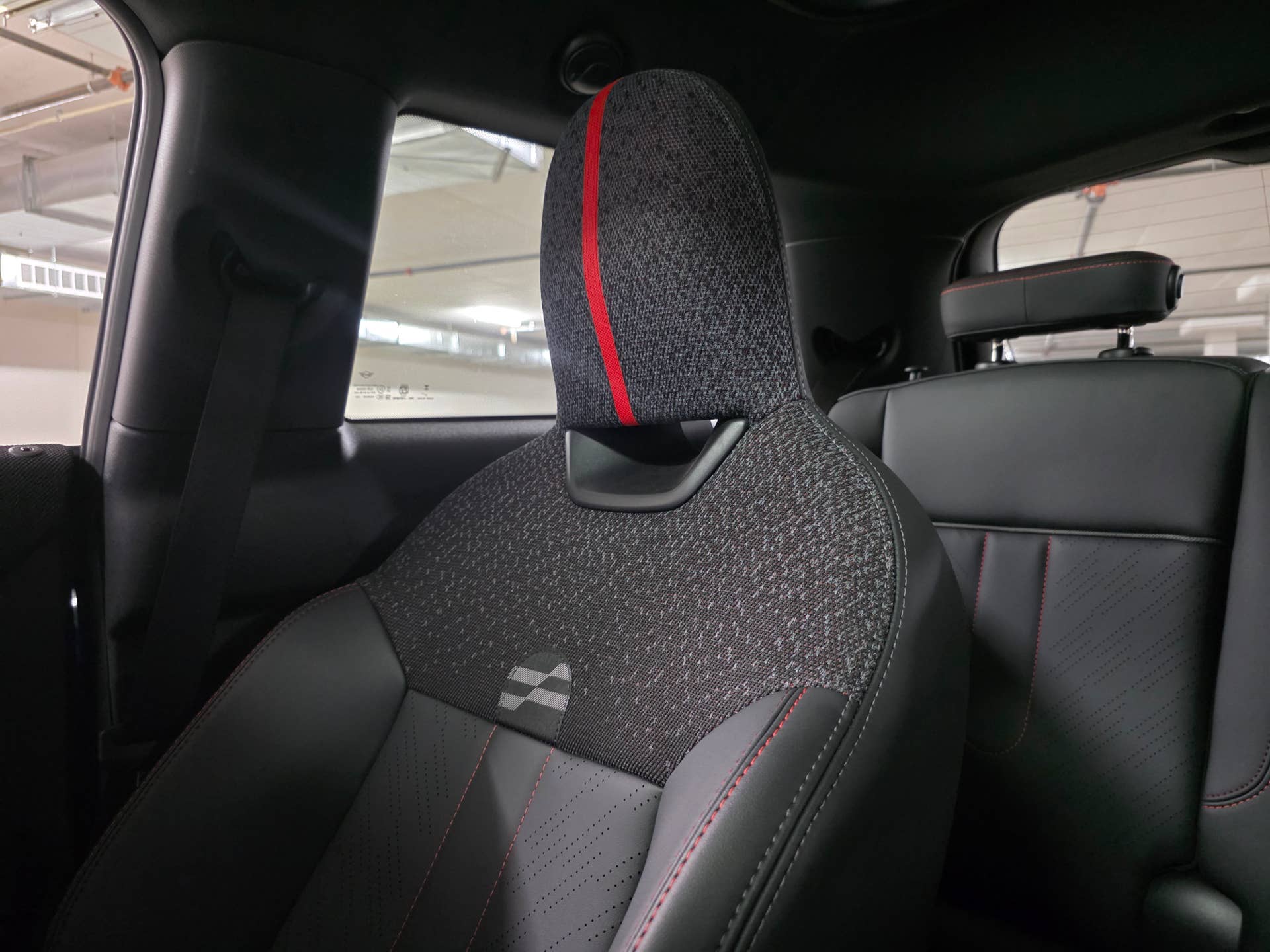
Pricing, Fuel Economy, and Practicality
The 2025 Mini Cooper JCW 2-Door carries a starting MSRP of $38,900 before the $1,175 destination charge, bringing the entry point to just over $40,000. The Iconic trim, which adds power front seats, parking assist, and the full driver assistance package with adaptive cruise control, pushes the price closer to $42,600. A fully loaded example can approach $44,300. That is serious money for a small two-door hatchback with 228 horsepower. Where the JCW claws back some ground is in fuel economy. EPA ratings come in at 27 city, 37 highway, and 30 combined, which is remarkably good for a performance-oriented car. That combined figure of 30 beats the Elantra N by 6 mpg and the GTI by 2 mpg.
Final Thoughts
The 2025 Mini Cooper JCW 2-Door is a car that defies spreadsheet logic. It is not the most powerful, the most practical, or the cheapest option in the performance compact space. On paper, the Golf GTI and Elantra N are objectively better buys if you are comparing horsepower per dollar, cargo volume, or warranty length. But the JCW is not trying to win a spec war. It is trying to make you smile, and at that, it is devastatingly effective. The combination of the punchy turbocharged engine, the snappy dual-clutch gearbox, the sharp steering, and the go-kart chassis dynamics creates something that is genuinely, infectiously fun.