It’s a view held by many that Germany produces the best cars. I’m not so sure that’s true anymore, but at least Germany produces the best car industry gossip. This week’s tea is all about the mess that new Porsche CEO Michael Leiters is stepping into as he takes over the company.
The world is nothing if not complex, and Leiters deserves a chance to untangle some of the complexity. A lot of this has to do with the revision of goals around electric cars, which is extraordinarily complex in Porsche’s now most important market: USA! USA! USA!
Sorry, The Morning Dump has Olympic fever today.
Better to focus on what Americans are doing in Italy than, say, what the courts might do back here to continue to cause a mess for automakers. One strategy at play is from GM, and that’s to keep fewer cars in inventory in order to maintain profitability. This makes sense to me. Renault is running a slightly different strategy, betting it can expand its footprint and taking the profit hit in the near term.
Porsche At 180,000 Cars Is Probably A More Fun Company Than Porsche At 400,000 Cars
I don’t want to be too critical of VW CEO Oliver Blume, who went from CEO of Porsche to CEO of both companies. Many of the problems Blume had to face were inherited ones, and Porsche expanded rapidly under his tenure. It went public. It made billions of dollars.
None of that is easy, even if Blume had the good timing to be in charge at that sweet moment in time for German automakers when Chinese consumers had money to spend, but not as many interesting Chinese vehicles to buy.
Still, the “dual role” of VW and Porsche CEO was never going to last, and the world jolted abruptly under his feet. China built up its industry, the planned electrification of the world hit a snag, and a global sales environment in which Porsche sold 400,000 cars, as Blume planned, suddenly seems remote.
There were a lot of discussions about who might replace Blume, and the boss reportedly had his own ideas. Given the lack of success of Blume’s previous appointees (ahem, Döllner), Porsche’s board went with someone from outside of the Volkswagen CEO’s circle when it appointed ex-McLaren CEO Michael Leiters.
As I often do, I’m leaning on Germany’s Manager Magazin for the gossip from Wolfsburg. There’s a new big feature about the inner workings of the company, and there’s too much to talk about, but here’s what struck me:
He made it clear to his people how he operates: Everyone gets a chance. Leiters wants to understand the true situation. Only then will he take action.
He demanded that his top management present him with the facts: anyone with problems that were not yet known should come forward immediately. Leiters granted a 20-day amnesty. That period has ended.
Several companies have contacted the company, according to sources in Stuttgart. Sales, for example, were less optimistic than at the end of 2025, lowering their forecast for the current year by around 10,000 to just over 250,000 cars.
That little bit about amnesty, with no context, probably sounds dire. I don’t think it’s quite all that bad. Given how public many of the company’s issues have been, including the numerous expensive delays around the electric Boxster, I’m guessing Leiters wasn’t predicting a smoking gun.
Instead, this sounds like someone trying to figure out how to better position Porsche–still an incredibly strong brand–in a new world. This other bit also caught my attention:
Oliver Blume had planned for Porsche to sell around 400,000 cars, and built up the workforce accordingly. Everything was based on the experience of the past 15 years: those who invest heavily and expand ultimately rake in billions. Blume expanded the plant in Zuffenhausen, significantly increased production in Leipzig, and also boosted development. Porsche AG now employs around 42,000 people. In 2015, the figure was just over 25,000. At that time, Porsche sold 225,000 cars. By 2027, the number could fall to a similar level. Works council chairman Ibrahim Aslan (52) has already made a less than enthusiastic demand to secure jobs in Zuffenhausen with a new model.
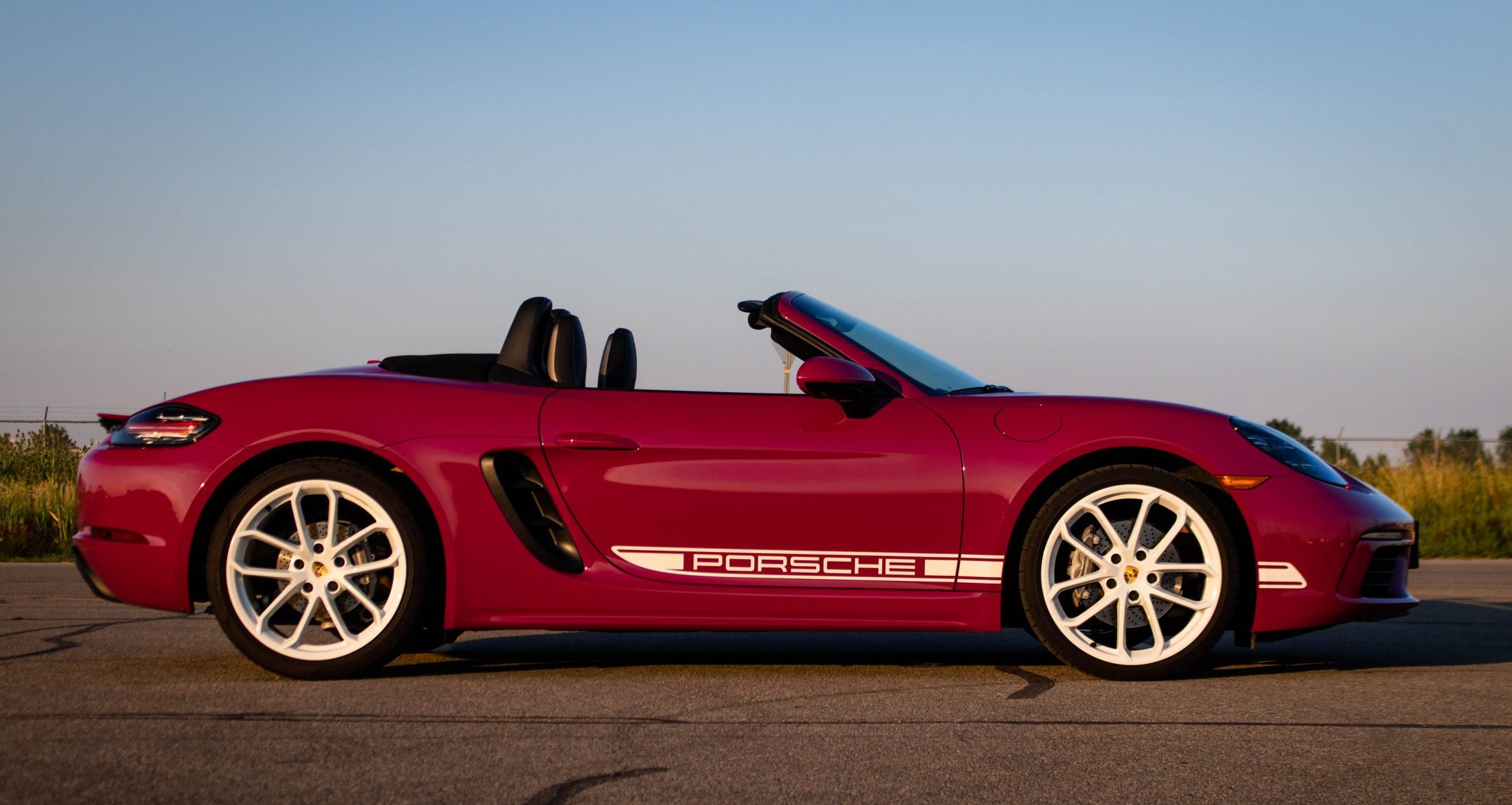
New models, that much is clear, will not be forthcoming for the time being. Many ideas and speculations are circulating: building the 718 as a combustion engine vehicle instead of an electric one, shelving the luxury SUV K1, perhaps having a model developed locally for China? Maybe even a new supercar, after Blume halted the last attempt. Leiters doesn’t want to make a hasty decision.
Porsche in 2015 was, to me, a more interesting company. I’m just not enthused by an EV Macan, and while a 911 T is as great as it ever was, the focus on EVs seems to have led the company to drift away from its core competencies. This isn’t to say that I’m not excited about a new Taycan, as the Taycan is one of the few fast EVs that feels right, but a giant three-row SUV? I think I’d rather have the supercar.
While a lot of Manager Magazin pieces are full of backbiting and backstabbing, it does sound like both Blume and Leiters are trying to set up a relationship of mutual respect and assistance, if not exactly close cooperation.
Volkswagen needs Porsche to be a success, and Porsche needs Volkswagen, period.
We’ve FA’d, Now We’re Going To FO

For all the hand-wringing around the Republican attempts to roll back decades of environmental regulation, until all the lawsuits are done, it’s not clear what will happen, to say nothing of what happens in the next two elections.
The biggest shoe left to drop is whether courts will go along with the revocation of California’s waiver to set its own environmental standards, a long-accepted policy that is mimicked by a bunch of other populous states. This would set up a system where automakers would basically be forced to either build cars for those states and cars for everyone else or, perhaps, just build cars for a much stricter emissions standard.
Here’s a fun quote from a Reuters analysis of the problem:
Mike Murphy, a former Republican strategist who co-founded the advocacy group EVs for All America, said the California-federal standoff highlights how automakers are being “whipsawed” by political shifts that upend their model-development and manufacturing plans. Since Trump’s election, automakers have taken $55 billion in writedowns on EV investments.
“What I hear from all of them is, ‘This short-termism is killing us,’” he said. “We have a monkey at the controls in Washington, and it’s very hard to plan.”
White House spokeswoman Taylor Rogers called California’s lawsuit “frivolous” and said Trump has “canceled unpopular green-energy subsidies that wasted Americans’ hard-earned tax dollars.”
There are some weird areas of consensus between environmentalists and this administration, however, as both have long opposed the government handing out unreasonably generous estimates of how EVs contribute to overall fuel economy averages. The Trump administration is eliminating this bit of regulation, with some interesting support, as The Detroit News reports:
Groups like the Natural Resources Defense Council and the Sierra Club lobbied the Biden administration to eliminate the so-called “fuel content factor,” a multiplier that inflated on-paper mpg ratings for EVs. Those ratings figure into fleetwide averages under federal Corporate Average Fuel Economy rules.
The NRDC and Sierra Club jointly argued in a 2021 petition to the DOE: “Excessively high imputed fuel economy values for EVs means that a relatively small number of EVs will mathematically guarantee compliance without meaningful improvements in the real-world average fuel economy of automakers’ overall fleets.”
This is one of those situations where I can see both sides of the issue. For decades, the assumption was fuel economy rules were going to get stricter. In order to help out automakers, various administrations encouraged ways around that, including by giving more credit for certain technologies. This is how we ended up with stop-start.
Rationalizing the way the government measures fuel economy is probably a net good, right up until the point that a new administration decides to put them back in place. Imagine having to hit a high standard and not getting a break?
GM Isn’t Going To Flood Dealerships With Cars

Of all the former Big Three automakers, GM seems to have learned the most from 2008 and has, for the most part, slowly made the kind of improvements that once seemed difficult to achieve.
A big one is how to manage volumes. The old way, pre-pandemic, was to just produce cars at a huge clip all the time. When demand was high, this meant selling a lot of cars, but when demand waned, this resulted in large swings in profitability due to a need for huge incentives.
As GM CFO Paul Jacobson told a crowd at a conference this week, the company is now carrying about “30 to 40 percent less inventory” than it used to, which might allow it to get off this crazy ride.
Per Automotive News, it seems to be working:
Most GM brands have less inventory than the industry average, according to a Feb. 12 estimate by Cox Automotive. Chevrolet, GMC and Cadillac each had less than the industry average of 98 days of inventory, while Buick was at 115 days, according to Cox.
GM executives have said they aim to keep vehicle supplies between 50 and 60 days. That’s a marked change from before the pandemic, Jacobson said. The pandemic and the ensuing microchip shortage, which each led to widespread parts shortages and factory shutdowns, forced GM to learn how to move quickly and nimbly with less inventory available, he said.
The company cannot stop the cyclical nature of the auto industry, Jacobson said, but by no longer sitting on as much as 120 days of inventory, GM can “get rid of self-induced cyclicality.”
Seems smart to me.
Renault Is Going To Take A Margin Hit

If GM is the American automaker that’s gotten through the wild ride of the last few years the most unscathed, the same can probably be said of Renault in Europe. Somewhat quietly, Renault has managed to keep profits and grow in a mostly tough market.
Given the company’s reliance on Europe, it looks like it’s going to get tougher. Chinese brands are infiltrating the continent and offering low prices. Renault, though, has its own affordable and enticing EVs, and it seems like the plan for now is to eat some profits in order to maintain an edge.
CEO Francois Provost explained some of the logic to Bloomberg:
The French manufacturer sees an operating margin of around 5.5%, it said Thursday. That’s below analyst projections and compares with 6.3% last year. Renault, which plans to expand in Latin America and Asia, proposed a flat dividend of €2.20 ($2.59) a share.
Chief Executive Officer Francois Provost has walked back several decisions by his predecessor Luca de Meo to cut costs. He’s reintegrated Renault’s EV and software arm Ampere, discontinued some mobility businesses and slashed costs at the Alpine sports-car brand. The moves are meant to make the company leaner amid mounting competition from Chinese manufacturers in Europe.
“We changed what is needed in this very disruptive environment,” Provost said in an interview with Bloomberg Television.
Maybe just keep making the Alpine A110 forever?
What I’m Listening To While Writing TMD
Here’s one for the Gen Xers. It’s The Breeders with “Safari.”
The Big Question
What should the next new Porsche be?
Top graphic images: 20th Century Fox; Porsche
The post Porsche’s New CEO Reportedly Had To Offer Employees Amnesty In Order To Find Out How Bad Things Really Are At The Company appeared first on The Autopian.