Backup cameras! Where would we be without them? Probably in the same place we are now, but less well aligned with the stripes in the parking lot (for you back-inners), and with more dings in our bumpers and/or grilles, probably. We’d also have a lot more pedestrians getting backed into, which is surely a bigger deal – especially if you’re a pedestrian.
The first production car equipped with a backup camera arrived in 1987 with the Toyota Crown, and the first car sold with the tech in America was the 2002 Infiniti Q45. [Editor’s Note: Buick had a concept car from 1956 called the Centurion that had one! Oh, and Volvo’s 1972 safety car had one. And the Isuzu VehiCross was also an early adopter. – JT]
Backup cameras grew more common every year thereafter, and in 2018 were mandated as required equipment in all cars sold in America. In 1996, Toyota offered a different spin on better backing-up visibility with a mirror system on the Hilux Surf (4Runner, stateside) sold in Japan that simultaneously offered pragmatic simplicity and joyously unnecessary complexity.
Spacer
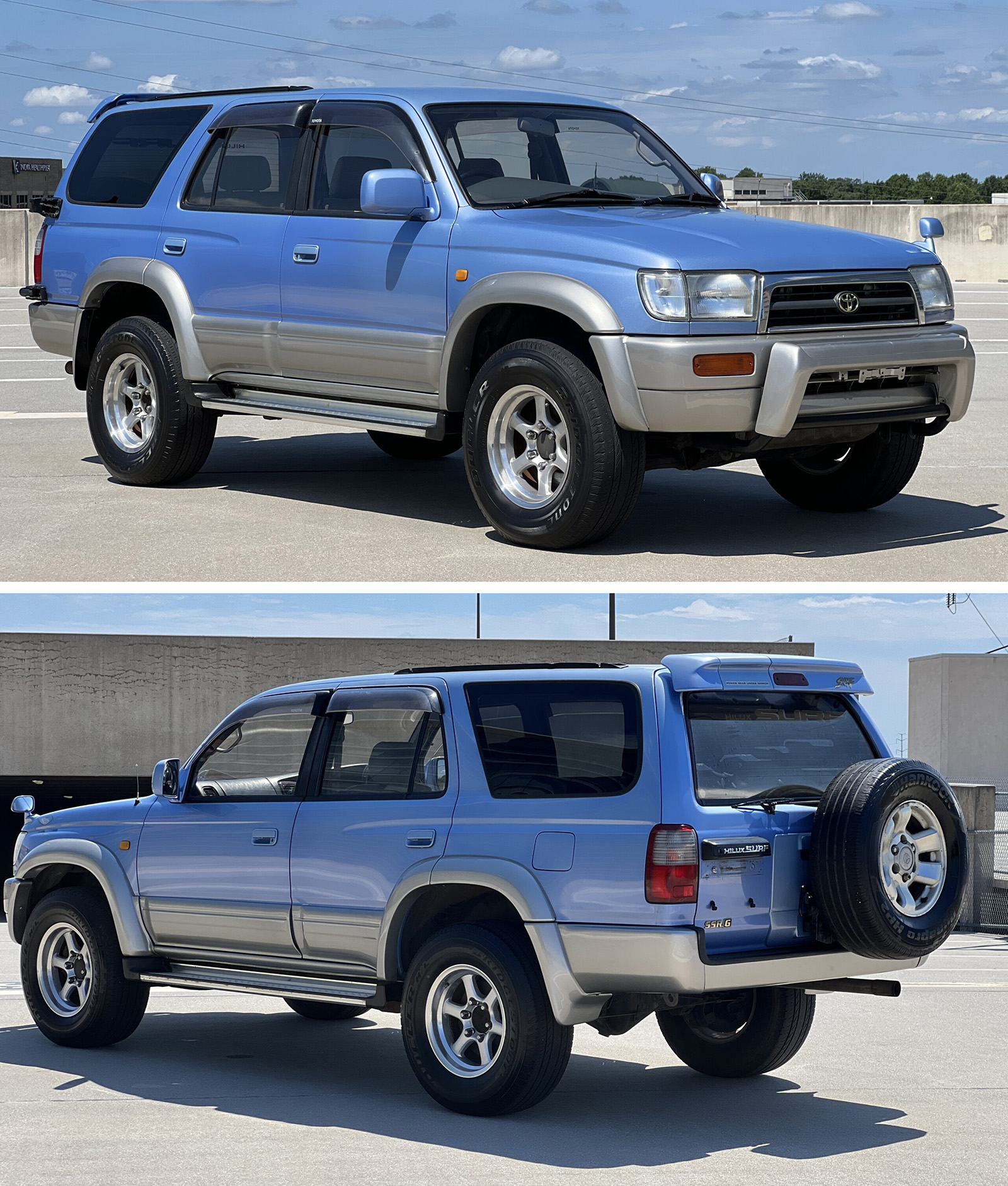
Meet The Power Rear Under Mirror
Though it does sound very much like a Pee-Wee Herman invention, the Power Rear Under Mirror (PRUM, which does not seem to be an acronym Toyota ever endorsed, sadly) is a very smart accessory for an SUV and, as executed by Toyota, extremely cool in action. Watch:
Neat, right? Here’s another look:
If you watched with the sound on, you heard the voice in the second clip (which is not David Tracy, by the way) say that the PRUM was meant to mitigate “SUV’s [being] hard to see out of.” And while that may be true for some SUVs, that was definitely not the problem the PRUM was created to solve. Indeed, whatever SUV earns the awards for “Best Outward Visibility” cannot possibly deliver the view one gets from the PRUM. Nor is the PRUM “a 1990s version of a backup camera,” except in perhaps the broadest sense of looking toward the rear of the car.
OK, So What’s It Really For?
To better appreciate what the PRUM was powerizing, let’s take a look at a static, unpowered version of the same concept:
Now that makes it a lot easier to see what the PRUM is up to. By adding a second mirror to the rear of the car at 45 degrees (give or take, it’s quite a wide-angle mirror), you get a straight-down view of the rear bumper when the secondary mirror is viewed through the primary, windshield-mounted rearview mirror.

This view allows you to snug right up to the back of your garage or another parked car or – and this is what I suspect Toyota was really thinking of – you can get your trailer hitch right up to your trailer for easy connection.
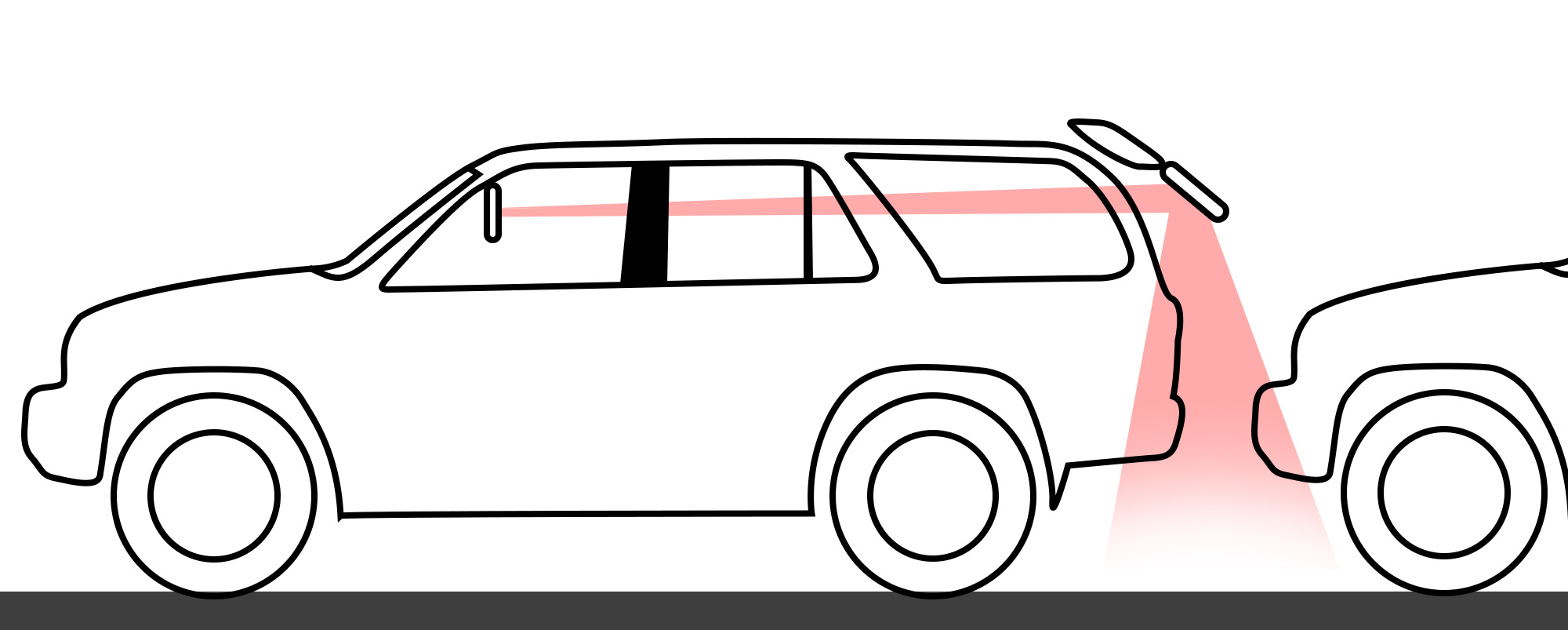
With the PRUM, the Hilux Surf gave you all the benefits of that goofy-looking schoolbus mirror without having a goofy-looking schoolbus mirror cramping your style 24-7. And as we all know, motorized stuff that pops up and/or out is always exceptionally cool.

Today’s backup cameras (not to mention the other cameras cars are festooned with these days) allow far greater visibility and functionality than the PRUM offered, but are they as cool as a chunk of spoiler deploying from the back of your SUV at the touch of a button?
Pffft, it’s not even close. PRUM for the win.
Top graphic images: BuySellJDM.com
The post Before Backup Cameras Were A Thing, Toyota (Sort Of) Did The Trick With Mirrors appeared first on The Autopian.