There’s nothing quite like the beauty and ceremony of watching a damn good film. The laughs that pour in after seeing that Ricky Bobby sold the rights to his windshield visibility, the collective gasp when Brody realizes they’re gonna need a bigger boat, or the thrill the first time you saw Anakin and Obi Wan barrel roll over a Venator into the Battle of Coruscant. Don’t just take it from me, mindless internet blogger #862, take it from the patron saint of cinema, Nicole Kidman.
Good filmmaking should appeal to everyone far and wide, but a way to gain a much deeper appreciation is to watch the behind-the-scenes featurettes that show all the incredible people who make the magic happen, as well as the insane amounts of technology that made it all possible.
Arguably, one of the most important innovations for the film industry in the last 40 or so years is the camera car, quite literally a car designed to carry a camera and operator (or more than one of each) to capture car-to-car action over much greater distances and at higher speeds than camera dollies and tracks or swinging booms could ever hope to. Unbeknownst to me, the Porsche Cayenne has been instrumental in pushing camera car technology further than ever. And whaddyaknow, there’s even a new episode of Galpin’s “My Porsche Story” ready to tell you all about it:
The Crane is Seriously Revolutionary Tech
After years of practicing both photography and cinematography and my brief foray into the crazy world that is the film industry, I’ve learned a lot about what makes a shot work, and sometimes, the hard truth is that it’s not just imagination and talent, but access to some very expensive, highly specialized gear. In my opinion, a drone is the lowest rung on that ladder of super fancy film tech, as you can get one for the relatively low price of $500, and getting your commercial pilot’s license for it is honestly pretty easy. But what happens if you’re willing to spend tens or hundreds of thousands on tech?

The first film I worked on was The Fabelmans, and one day saw us filming at Pierce College for shots of the main character, Sammy, and his friends riding bikes down a city street, and it was my first exposure to a camera car. Production used a low-profile electric buggy that was able to speed by the boys to start the shot before quickly slowing down in front of them to get reaction shots as their crush walks on by.
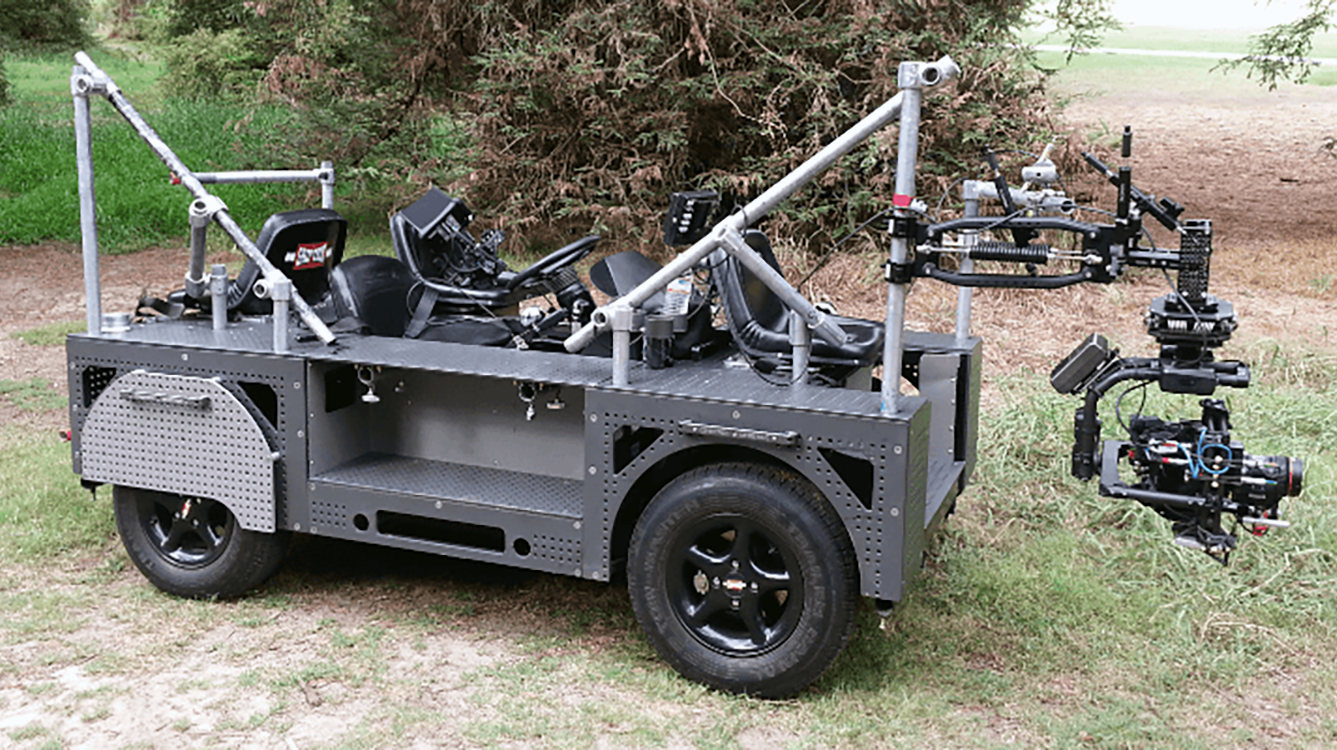
An electric drivetrain made perfect sense here because the torque lets the driver blast by the kids effortlessly, and the propulsion is silent, which is absolutely critical for clean sound on an isolated set. While that was an incredibly cool camera car in its own right and perfectly suited to the shot’s needs, full-size cars are a lot faster and a lot more dynamic, so you’re gonna need something a lot beefier to get those shots.

“When you put a crane on the roof of a car, it creates so many more angles that you weren’t able to get before,” said Jon Chabot, who runs Chase Car Inc. with his brother, Marshall. “You can go high and go low. You can go close to the trees. You can go over the embankment or a guard rail.” In essence, you can put the camera anywhere.

When shooting rollers of Torch and our lovely readers going down the Vegas Strip during our incredible road trip in the $800 Copart taxi, camera position was limited to wherever Matt could safely drive and how far I was able to extend my arms from the car. It works, the shot above is lovely, but imagine being able to swing up and over the cab, or push in closer and pull farther away, all while operating the camera remotely. That’s what camera cars with massive cranes and remote-controlled heads that can boom in and out up to 20 feet can do, making it possible to effectively get any shot you can imagine, and in any direction. Not only is it insanely dynamic, it’s much more time efficient – and if there’s any place where time truly is money, it’s a film set.

In the before times, you’d maybe set a crane on the side of the road and film a pass, call cut, reposition, and do it again, spending a whole day getting b-roll shots of cars in traffic, but not anymore. “They go from using just a black arm or something and […] they’d schedule their whole day,” Jon said. “[With the camera car], We’ve got it all shot in two hours.” Time matters in an industry where every minute is so extensively and expensively itemized.
But all that is just about the beauty of a camera car in general. What is it about the Cayenne that rocks?
How A Car Named After a Pepper Changed It All
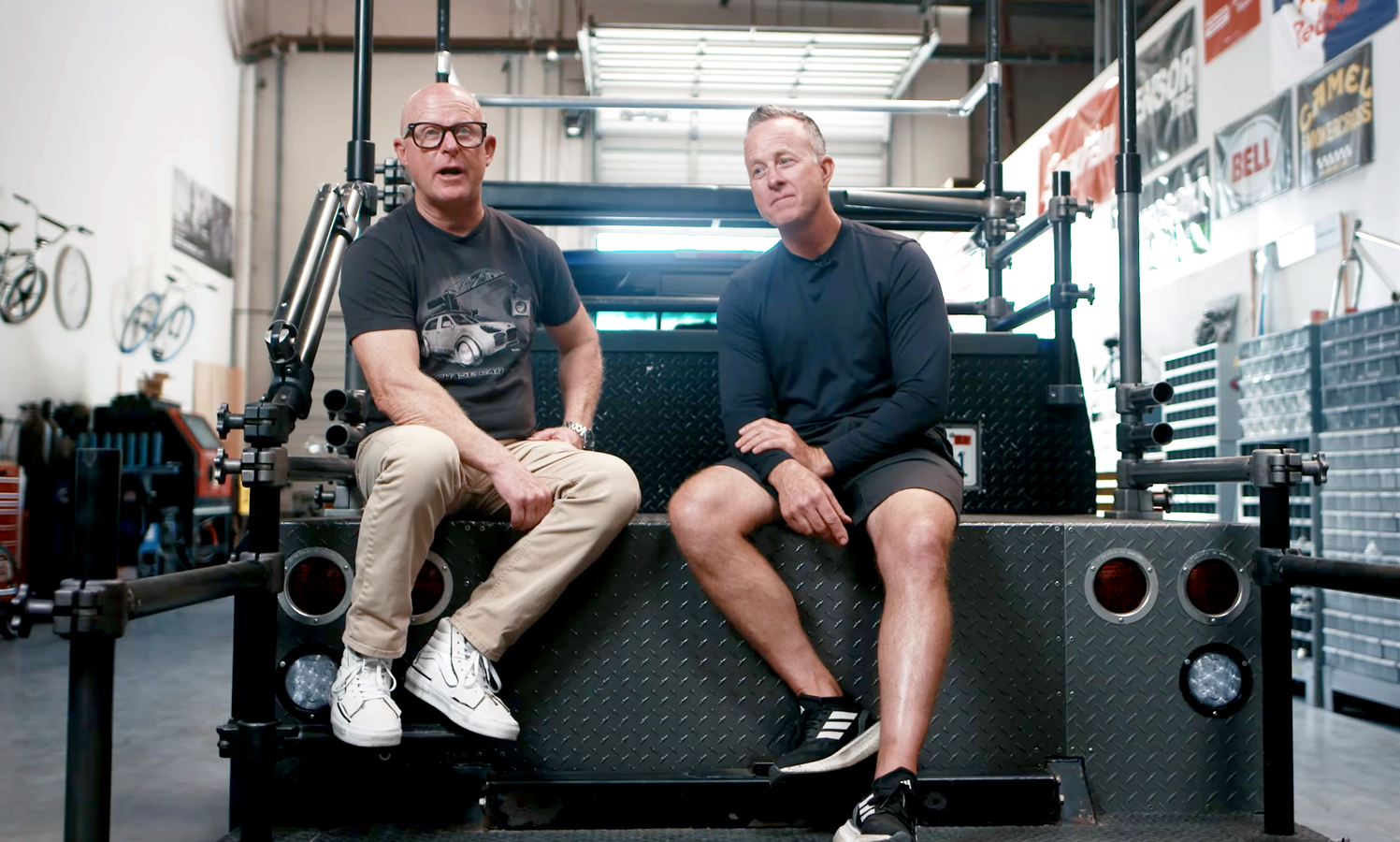
As Marshall and Jon of Chase Car Inc. explain in the video, they often used trucks before the Cayenne came along, which makes perfect sense on the surface. Cinema cameras weigh a lot, so do cranes, and a bunch of people used to have to walk around to manually manipulate the cranes, so why not use a vehicle whose sole purpose on this earth is to lug shit around? Well, size for starters.

“Yeah, a truck’s big, but it’s cumbersome and it’s slow,” Marshall said. “On narrow roads, you can’t really go stuffing it in next to another picture car because you just run out of room.”
I know I struggle parking big trucks in parking spots around town, so I can’t imagine having to worry about precision driving one with a massive, 16-foot, thousand-pound arm on top of it. And speaking of weight, here’s more from Jon about other camera cars:
“You had to constantly change the springs cause it would just ruin them. You’re constantly looking for different springs, and nobody has made anything that really fits that application that was sprung that hard. You ended up just driving something that was sacked out, the ride was terrible, and it just destroyed the vehicle because the thing would sit mainly on the bump stops.” The Cayenne’s answer to that question? Active suspension.
“You put that crane up there, it’s 1000 pounds, and you put six people inside the camera car, so now you’re talking a thousand pounds of people,” Marshall said. “Another 2000 pounds, then the active suspension just automatically puts the car back at its proper ride height.”
That same active suspension is what makes the car so adaptable as well, allowing it to eat some rough terrain when raised, or it can drop down and lower its center of gravity before hitting the tracks.
“You can just kinda haul into the corner and not have as much body roll. I mean, there’s still a ton of body roll, but [active suspension] will alleviate a lot of stuff,” Marshall said.
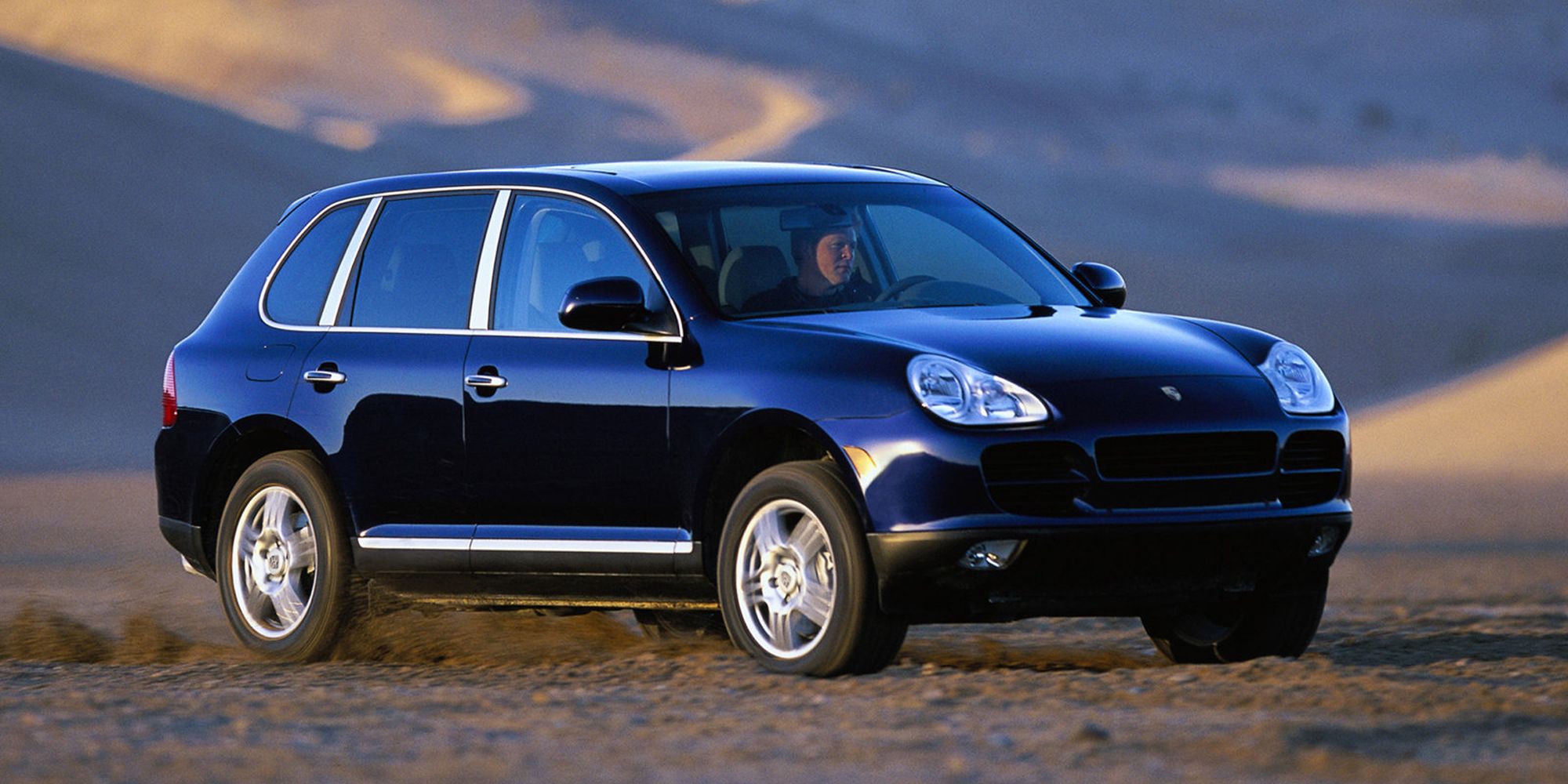
The Cayenne obviously isn’t the only sports SUV in the market that could do this, but others just don’t do quite as well. According to Jon, the Mercedes ML series (which was the Cayenne’s main competitor back in the day) isn’t as good in the mud, and the BMW simply isn’t as strong as the Cayenne, which has a full frame like a light truck instead of a unibody construction. Interestingly enough, even newer Cayenne’s don’t pass the test due to less room in the cabin for the camera crew, thanks to a smaller trunk and a steeper sloping roof line.

.jpg?t=163122206990)
And, while Jon admits that the Cayenne isn’t perfect in every use case, it’s still the right one for pretty much every use case.
“Of course you can’t beat a Raptor or a TRX with a crane on it out in the whoops, but the problem is everybody hates renting those things because […] it’s terrible on the street,” Jon said. “The Cayenne can go do a little bit of that work, and then it can come back out on the street, and it’s it’s comfortable and it gets that done. It’s the whole thing.”
When I asked them if there’s anything they could change about it for a future, dream camera car kind of build, Jon straight up said there’s nothing, purely because they have yet to find a single task that the car isn’t up for. I mean, these guys filmed a frickin’ Red Bull F1 car carving it through downtown San Francisco. Can you imagine a truck doing that?
There’s always a right tool for the right job, and sometimes that’s just an operator holding a camera, a tripod parked on a sidewalk, an FPV drone giving you nausea as it flips all over the place, and sometimes, it’s people like Jon and Marshall bringing their car to set. If that is the case, just look for the two in their first gen, matte black Cayenne, and take solace that your piece is gonna have some damn good looking shots put to screen.
“If I could buy a brand new ‘04 turbo Cayenne every year, I would probably buy one,” Jon said. “There’s nothing to replace it.”
To learn more about them and show love to our people at Galpin, you should really watch the video, linked again here. It’s worth it.
Big thanks again to Marshall and Jon for speaking with me and fsharing their cool rig. I’m unspeakably jealous of your toys.
Top graphic image: Galpin Media
The post How The Porsche Cayenne Changed Filmmaking Forever appeared first on The Autopian.