There’s just something enchanting about an Italian automobile, and for good reason. Like anything made by humans, cars reflect their origins, and Italy is just really good at making tasty, gorgeous, engaging, and otherwise desirable stuff. Think cacio e pepe, or anything styled by Pininfarina, or “Cinema Paradiso”. While entrancing, Italian cars don’t have the greatest of reputations on this side of the Atlantic, with jokes about durability and poor resale value now just common talking points. While the reliability of modern Italian cars is largely better than expected, the pundits seem to have been right on that last point because early examples of the reborn Alfa Romeo Giulia are now selling for less than $10,000. Bad news for original owners, but utter temptation for automotive romantics.
Flash back to the early 2010s, and Alfa Romeo was looking to mount a comeback. Looking to go after BMW, former FCA CEO Sergio Marchionne decided a dream team was needed in order to remind everyone that the sports sedan originated in Italy. The head of this team? None other than Ferrari 458 Speciale chassis engineer Philippe Krief. Over the next two-and-a-half years, this team would move at warp speed to strike the BMW M3 right between the eyes. Guess what? It did.
Right out of the gate, the Giulia Quadrifoglio was a high-water mark for modern sports sedans, a beguiling and effervescent 505-horsepower, 191-mph love letter to the art of driving. It was sharp without being nervous, playful without being a handful, and thanks to a few tricks learned from one of the greatest modern supercars, it flowed with the road like a blade over ice. Alfa’s supersedan carved hairpins, sliced through chicanes, and etched itself into the dreams of anyone lucky enough to get behind the wheel. However, Alfa Romeo also knew that it couldn’t simply rely on a low-volume prizefighter. It needed a more affordable Giulia, and that’s where the standard car came in.
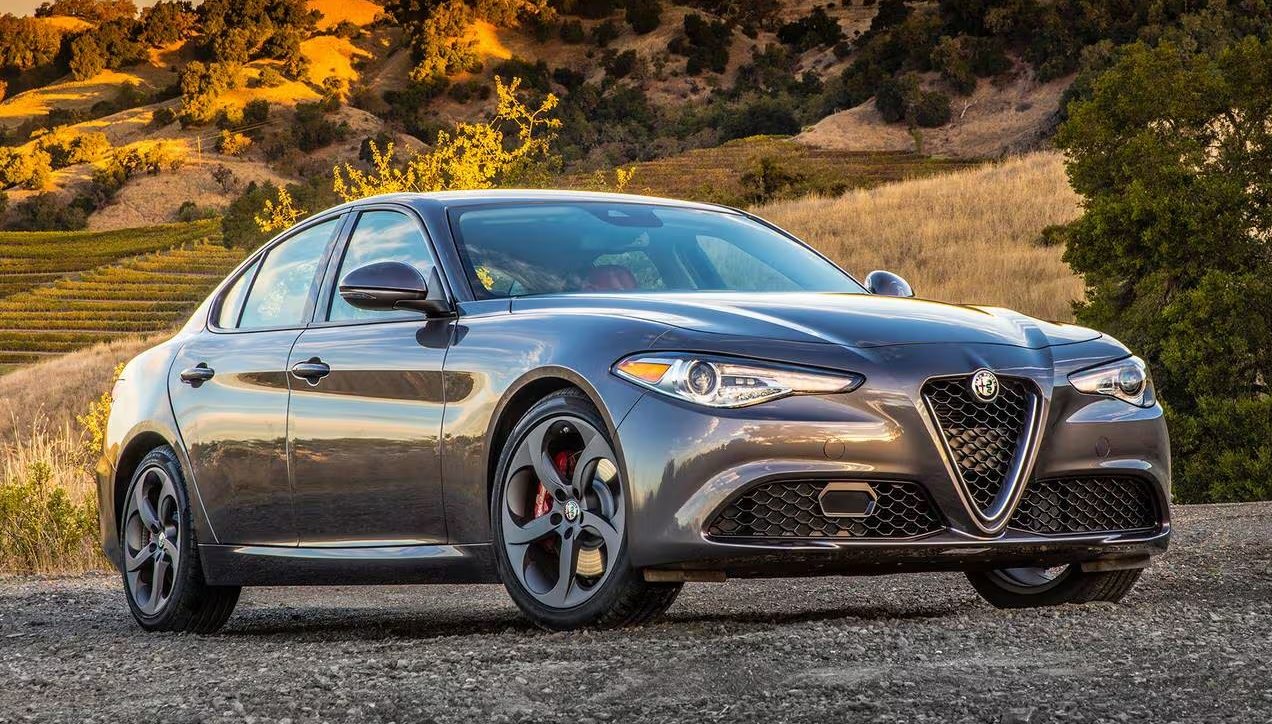
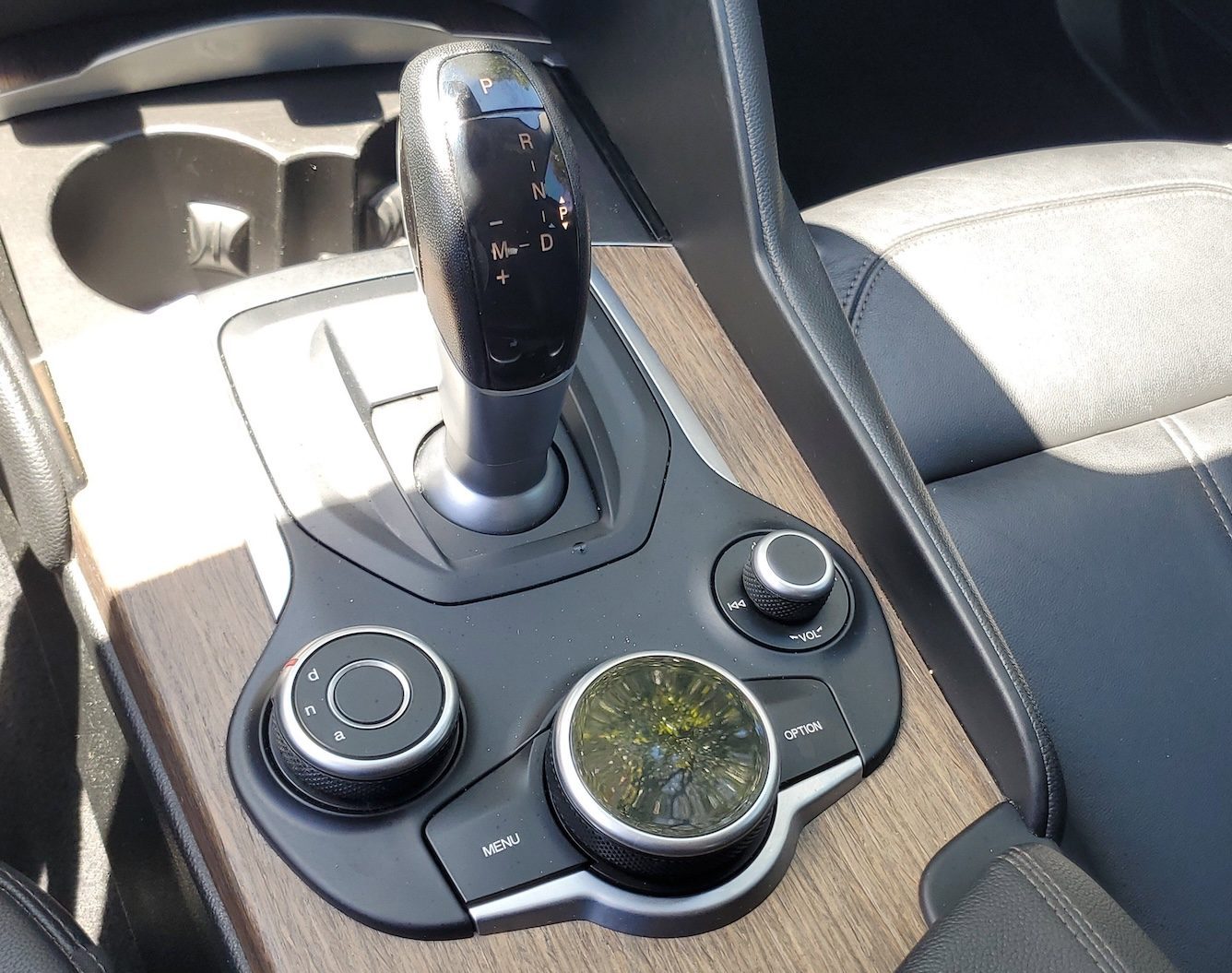
What does garden variety mean here? No Ferrari-derived V6, no borderline cheater-slick 60-treadwear Pirellis, and no carbon-shelled seats for starters. However, much of the Quadrifoglio’s inherent goodness trickled down into the more everyday Giulia. The base car got the same superhuman 11.8:1 steering ratio, roughly the same drop-dead gorgeous looks, and even a similar carbon fiber driveshaft. What’s more, you could option it with giant column-mounted metal paddle shifters, a rear limited-slip rear differential, and adaptive dampers. It just featured a four-banger under the hood instead of a fire-breathing V6.
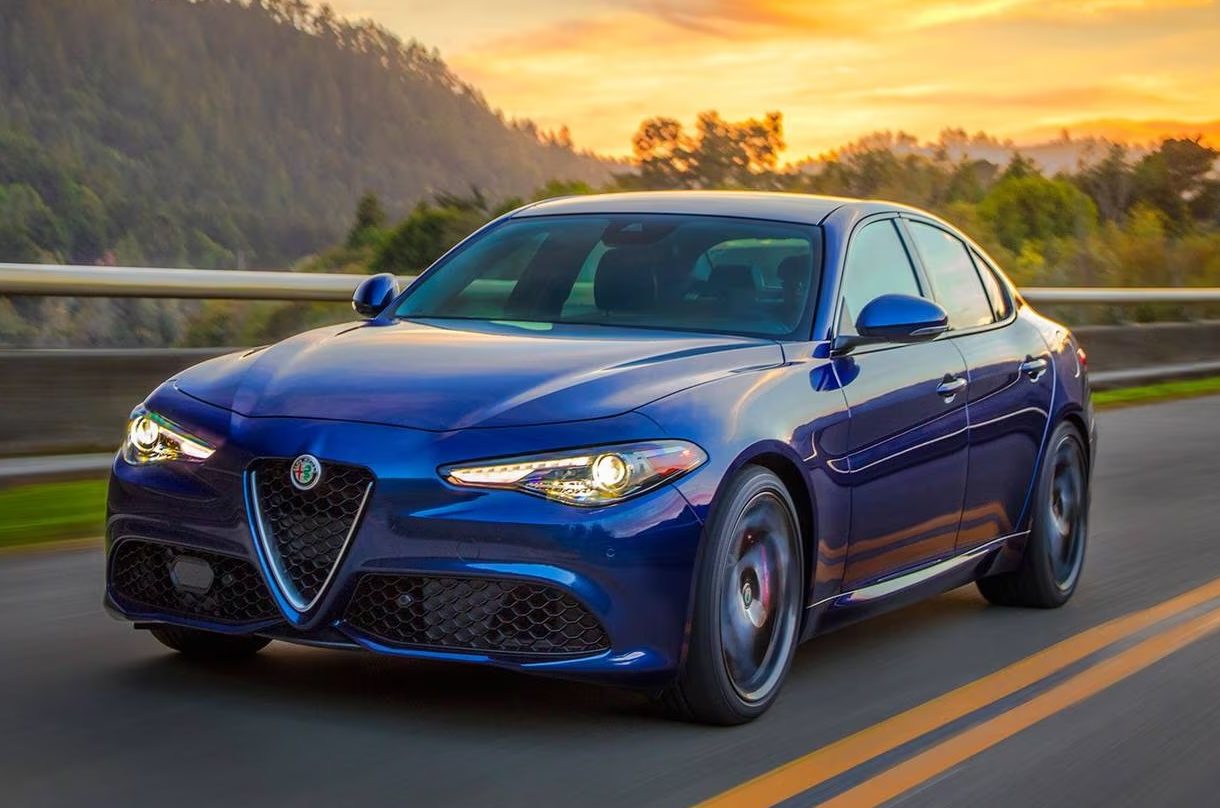
Mind you, that four-cylinder engine wasn’t a slouch. It’s the same sort of two-liter turbocharged GME T4 unit you’d find under the hood of a Jeep Wrangler, which means it pumped out 280 horsepower and 306 lb.-ft. of torque. Hitched to a gold standard ZF 8HP eight-speed automatic and employed in a roughly 3,600-pound car, it had the motivation to sprint from zero-to-60 mph in 5.2 seconds and run the quarter-mile in 13.8 seconds at 100 mph in Motor Trend testing. Those numbers nip at the heels of a stick-shift BMW 335i, a sports sedan with two extra cylinders and an additional turbocharger.
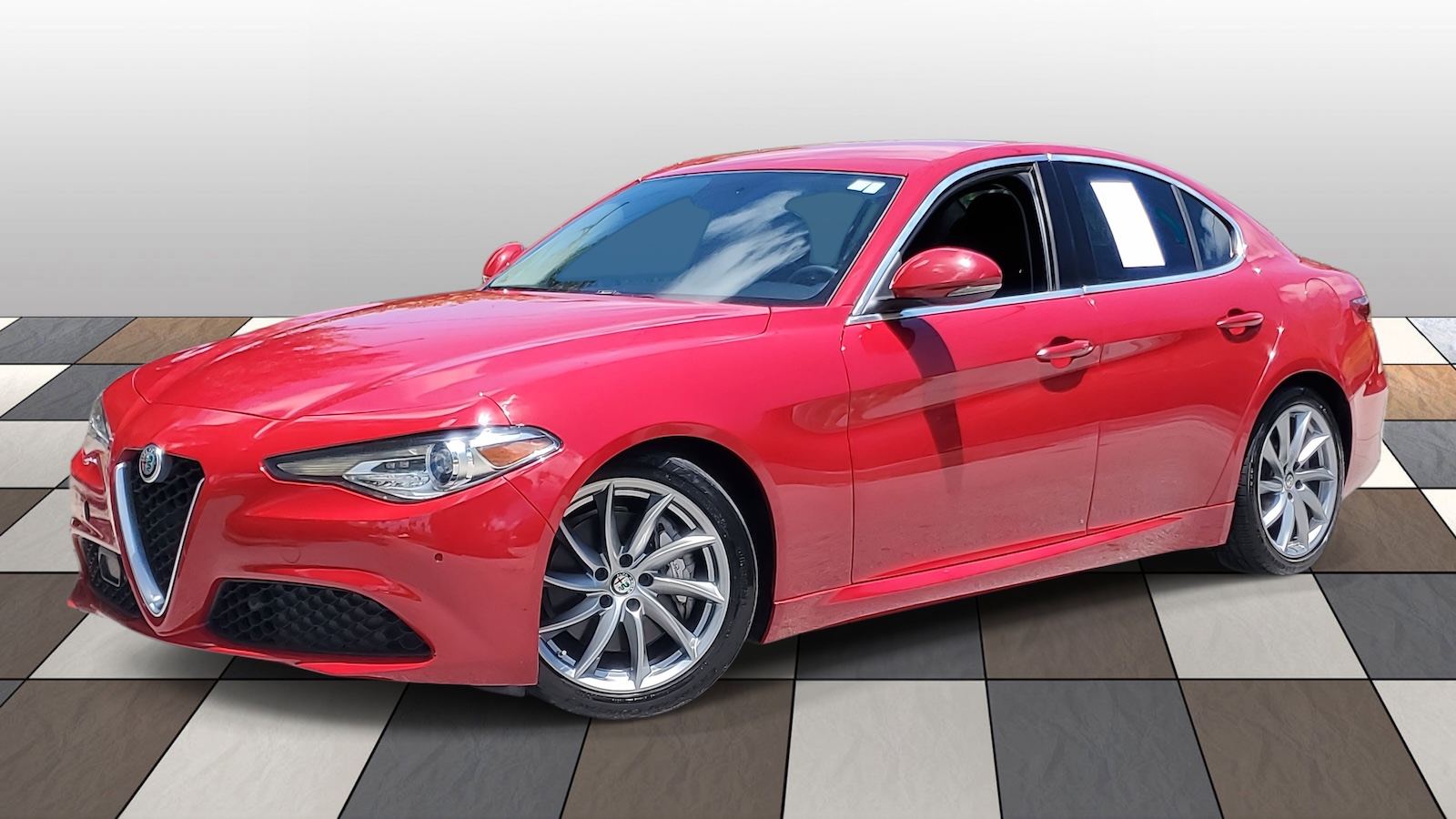
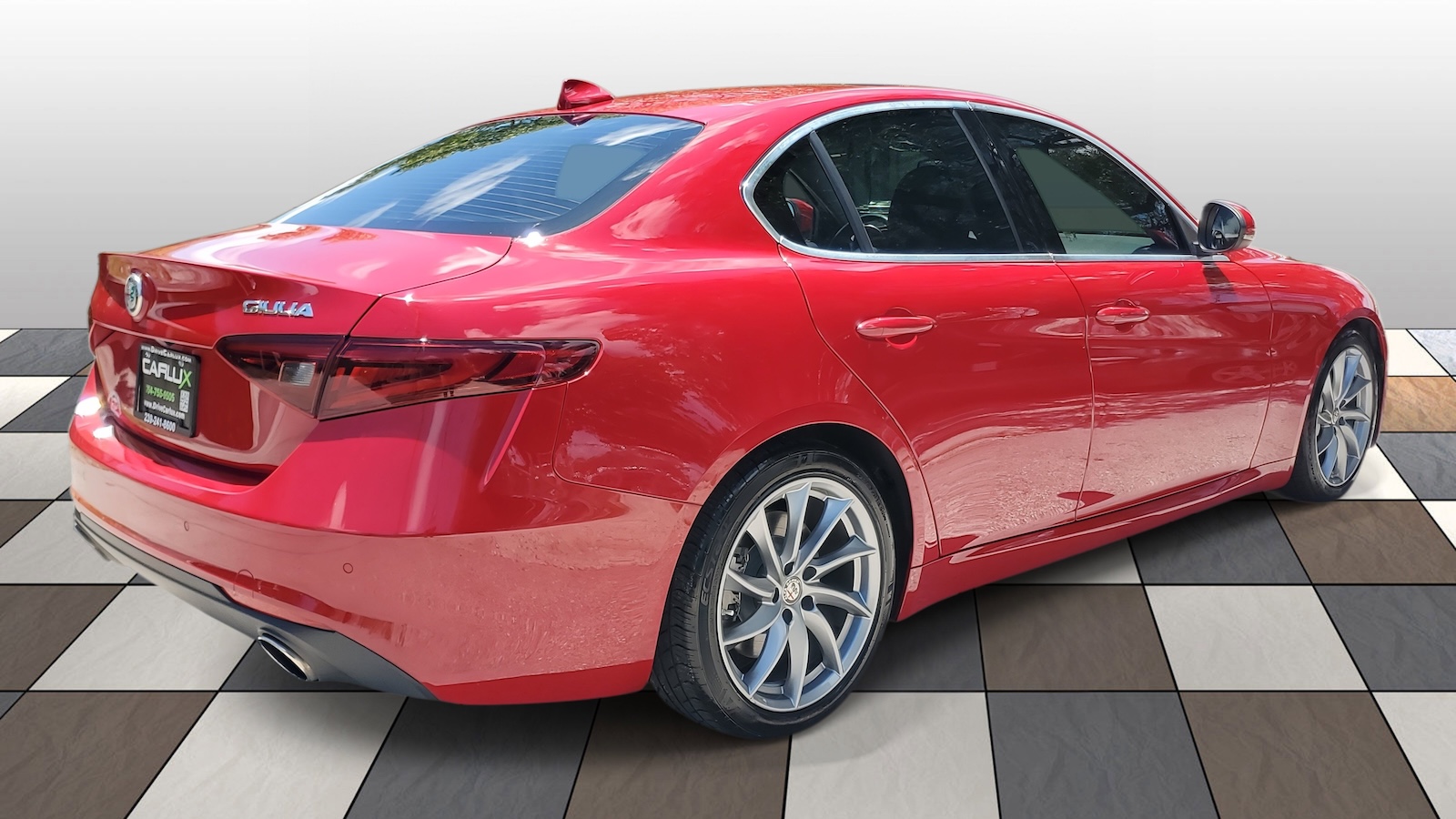
However, it’s now been nearly a decade since the Giulia went on sale in America, and that means there are bargains to be had. Check out this 2017 Giulia Ti up for sale in Florida. Sure, it may have covered 76,658 miles since new and not be option with the limited-slip differential or the giant paddle shifters, but it has a clean history report and the asking price is a mere $7,926. Yeah, less than eight grand.
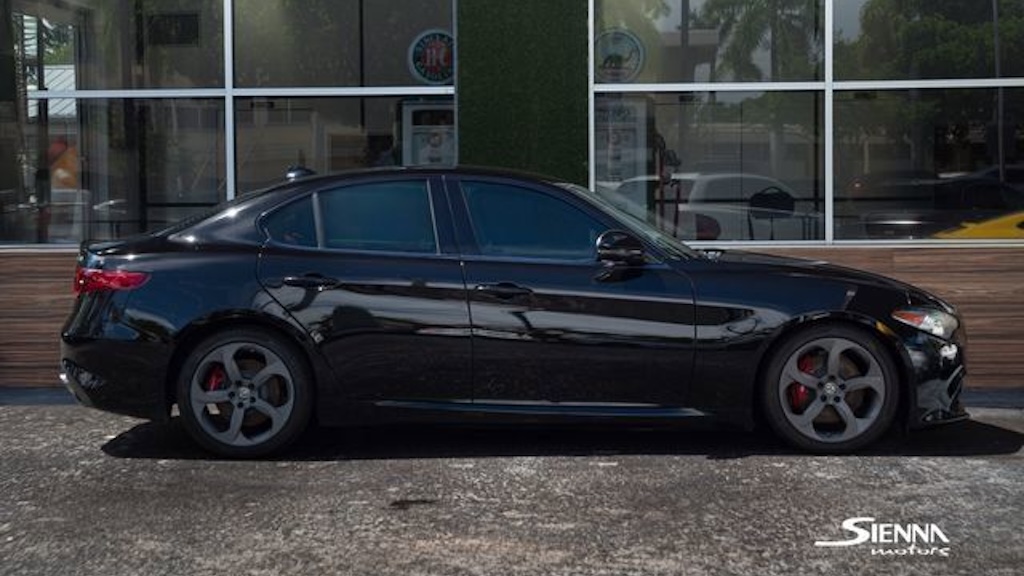
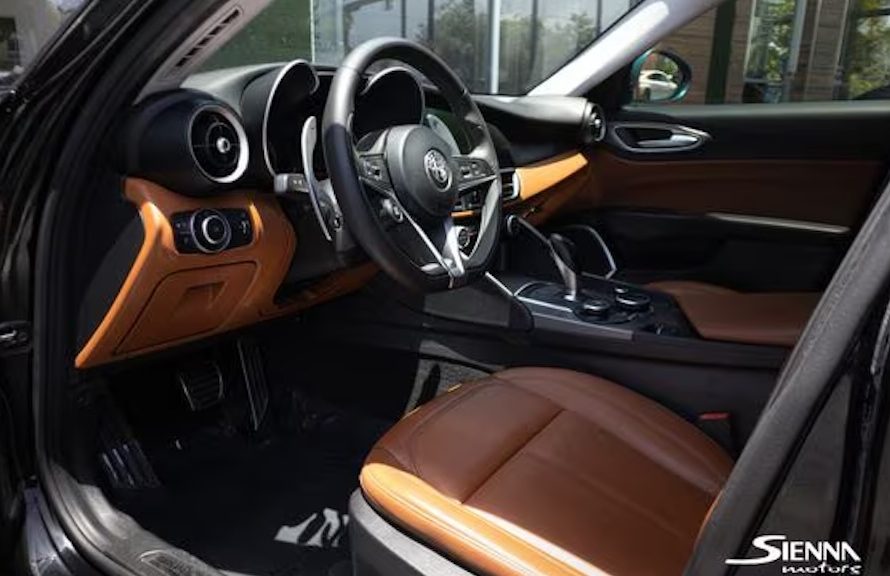
Alright, here’s another one, also for sale in Florida, albeit from a different used car dealer. This one’s a Sport trim, which means it gets the huge paddle shifters, and the original owner specced it with a gorgeous saddle interior. It does have a whopping 129,049 miles on the clock, but it’s a year newer than that red 2017 model, and it also has a clean history report. The asking price on this one is $8,900. Worth it for the paddles? It might be.
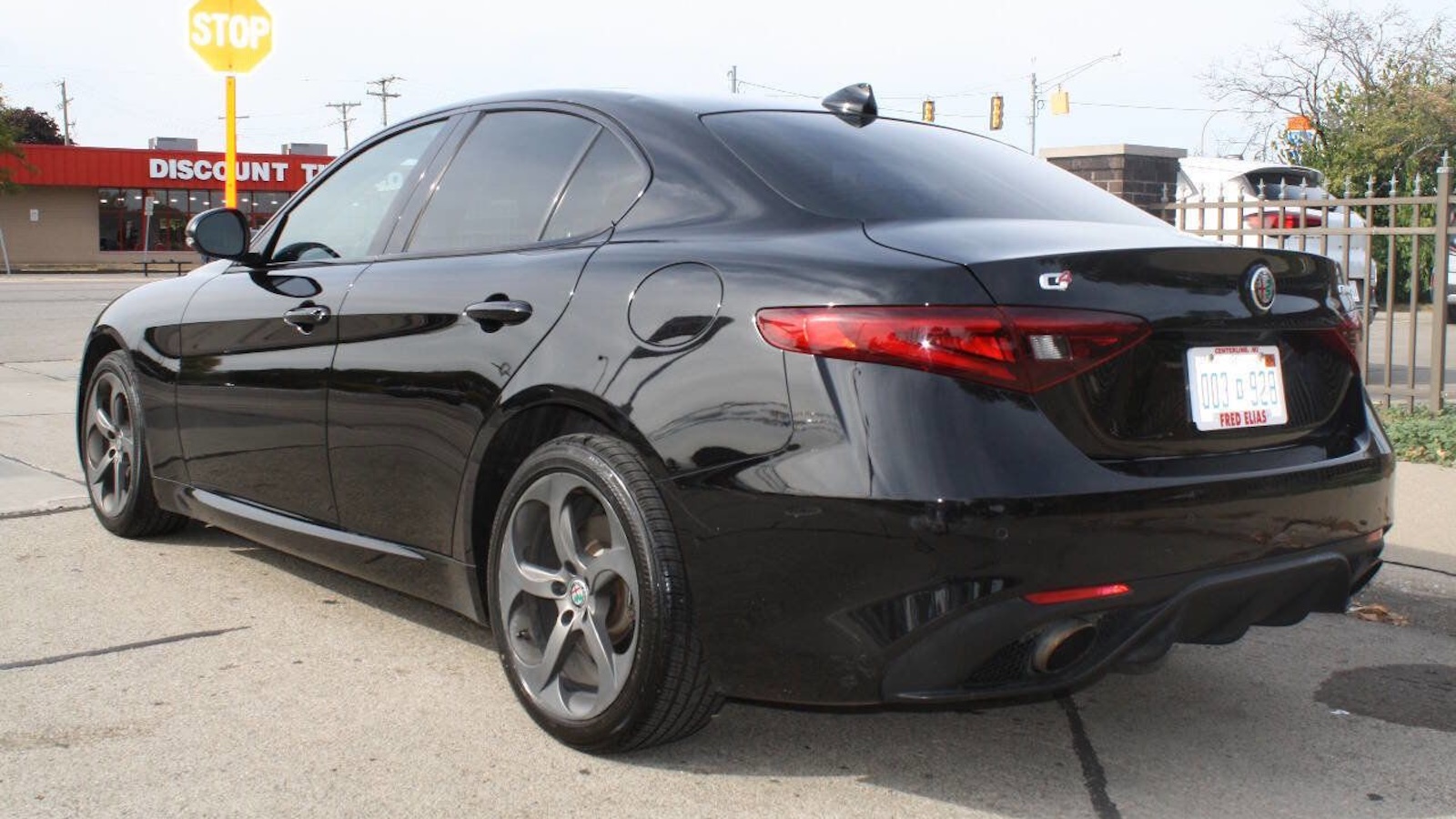
Then again, if all-wheel drive is your cup of tea, you might want to look at something like this 2017 model up for sale in Michigan. It’s a pretty basic spec aside from the dual-panel moonroof and the 8.8-inch infotainment screen, and it’s covered 114,777 miles, but it’s also listed at $8,995. That’s a considerable amount of sports sedan for the money.
So far, this all sounds great, but I bet you’re wondering what the catch is. Well, the big catch seems to be an undeserved reputation. Sure, the high-output Quadrifoglio models have their issues, but the base Giulia models have a surprisingly good track record for a European sports sedan. The eight-speed automatic transmission is stout, and owners haven’t reported many issues with the GME T4 engine. The plastic coolant bleed screw is known to give up with a set of metal replacements costing $37 from Alfissimo, a $50 coolant return hose gets brittle over time and should be replaced proactively, and a worn wastegate arm and the resulting low boost pressure code can be solved with a $140 aftermarket wastegate arm, but the biggest common problem is low-voltage electrical weirdness caused by old and failing batteries. Otherwise, you’re pretty much just looking at normal used car stuff, keeping an eye out for leaks and sticking to the recommended maintenance schedule.
In fact, the real catches come by way of equipment. For one, you can’t turn stability control off on the base car, which is annoying if you want to autocross it. However, Squadra Tuning has a way to fit Race Mode from the Quadifoglio on a 2.0T Giulia. Secondly, if you want paddle shifters on a car that doesn’t have them, you might need to retrofit them yourself, which can be a bit expensive. A set of paddles will run you north of $600, then you’ll need programming and possibly a security gateway bypass module. However, there is a tuning community around these cars, one that’s been cooking up some good stuff.
So, if you’ve always dreamt of owning something Italian and slightly exotic, you’re basically just a Spirit flight away from making those fantasies reality thanks to the Alfa Romeo Giulia and the magic of depreciation. Plus, if you can handle a used BMW or Mercedes-Benz, you can absolutely handle one of these Alfas. If you’re looking for a newer-but-still-well-used sports sedan daily and the electric power steering era of BMW is wholly unappealing, maybe it’s time to go red, white, and green.
Top graphic image: Autotrader seller
The post You Can Buy A Gorgeous Alfa Romeo Giulia For Less Than $10k And It Probably Won’t Bankrupt You appeared first on The Autopian.