If you want to take your car camping today, you’re stuck with either putting a rooftop tent on your car, towing a tiny trailer, or building out its interior. But this wasn’t always the case. Back in the 1960s, so long as you owned a station wagon, you were able to buy this, the ToteMotel. This wild camper was effectively a backpack that you put on your car to turn it into a motorhome, and it’s awesome.
The RV industry has gone through a lot of booms throughout history. During the Great Depression, many men searched for work around the country by building their own teardrop campers and towing them behind their cars. The next boom came not long after as manufacturers and homebuilders discovered the strength, beauty, and longevity of building a camper out of aluminum. America’s post-World War II boom and the then-fresh Interstate Highway System sent Americans hitting the road, often with campers in tow.
In the 1960s and 1970s, interest in the outdoors hit a fever pitch in the nation, and suddenly, RV camping became the next big thing. All sorts of people wanted to experience the outdoors, and now they had all sorts of fun implements to take into the wilderness, from the Ford Bronco to the Ski-Doo snowmobile. When the fun stopped, those people wanted to sleep in campers. But even if you weren’t interested in high-octane thrills, chances are you wanted to take your family on a great road trip. As the RV Industry Association notes, many iconic RV brands cut their teeth during this mid-century boom, including Winnebago and Boler.

The era also produced some of the wildest ideas. Motorhomes were so hot that the Clark Forklift Company got in on it, and so did Grumman. There were also new and novel motorhomes built specifically around off-roading, combining two of America’s addictions into one vehicle. Truck slide-in campers also got ridiculous, with units like the Del Rey Sky Lounge and the Kamp King managing to pile three levels of living space into truck beds.
But not everyone had a pickup truck, the space, or the money to buy a travel trailer or a motorhome. What I loved about this RV boom is that there was something for everyone. The era even saw the creation of car tents that hung from the hatch of a car, just like the famous Pontiac Aztek tent. The station wagon was the family car of the 1960s and the 1970s, and they weren’t left out, either. Thanks to the ToteMotel, the owner of any standard station wagon could turn their car into a sweet motorhome for a weekend away from home.
Camper-Toting Wagons
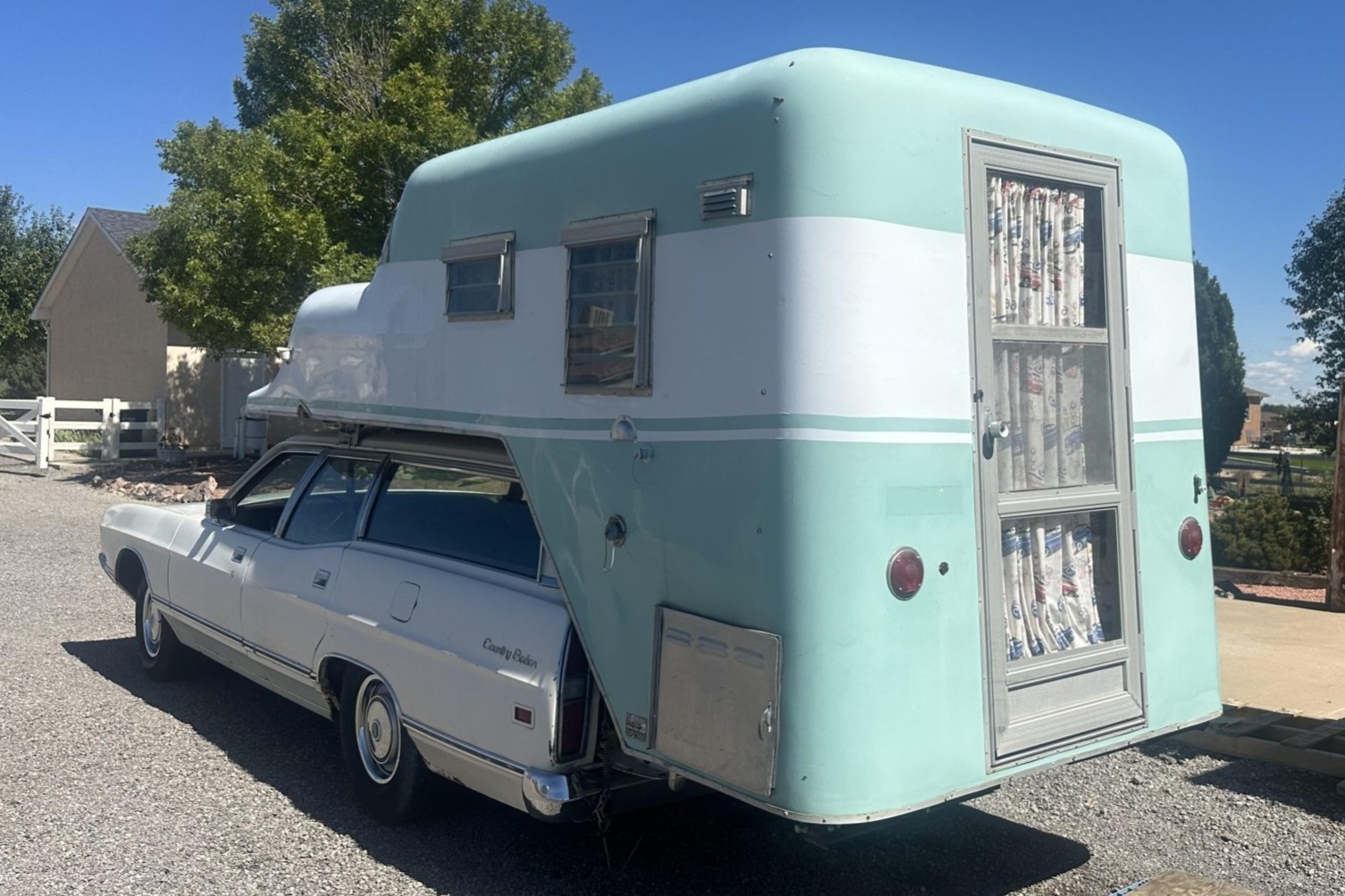
The ToteMotel was a creation of ToteMotel, Inc., which was a division of Fiberglass Fabricators, Inc. of Phoenix, Arizona. According to a 1964 issue of the Colorado Springs Gazette Telegraph, the ToteMotel was designed as a way to give station wagon owners their own private lodge with “four separate sleeping rooms” while retaining the car’s ability to drive at highway speed.
The ToteMotel is built out of fiberglass and weighs just 375 to 400 pounds. When bolted to a wagon’s roof, the complete vehicle towers eight feet, five inches off the ground. When dismounted, the newspaper says, the camper is six feet, four inches tall. The camper is 14 feet long, six feet wide, and has six feet, two inches of headroom. Honestly, the part that blows my mind here is that this is a 14-foot camper that weighs only 375 pounds. But I suppose it does make sense, as a lot of the camper’s length is what sits on top of the roof of the wagon.
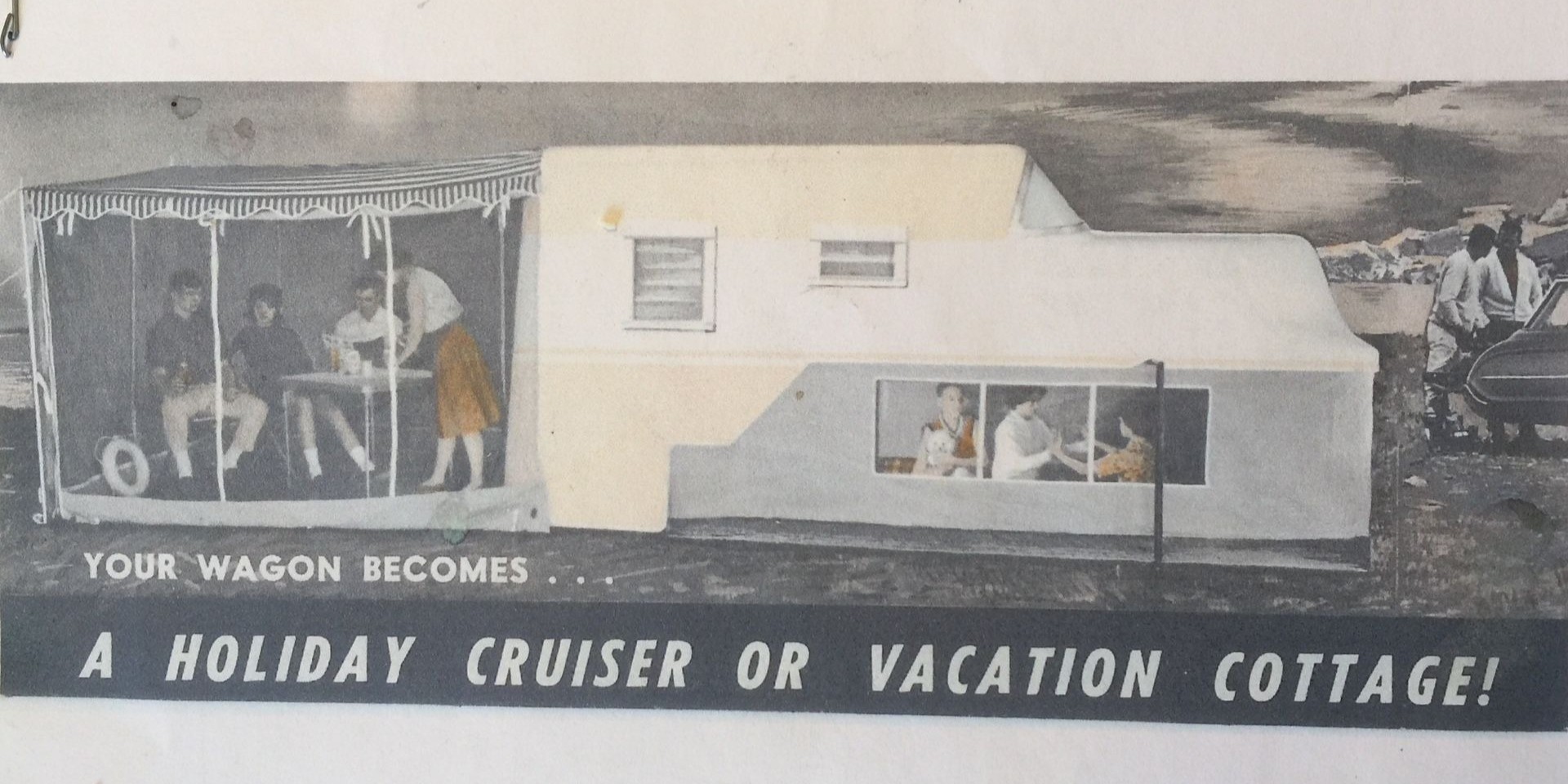
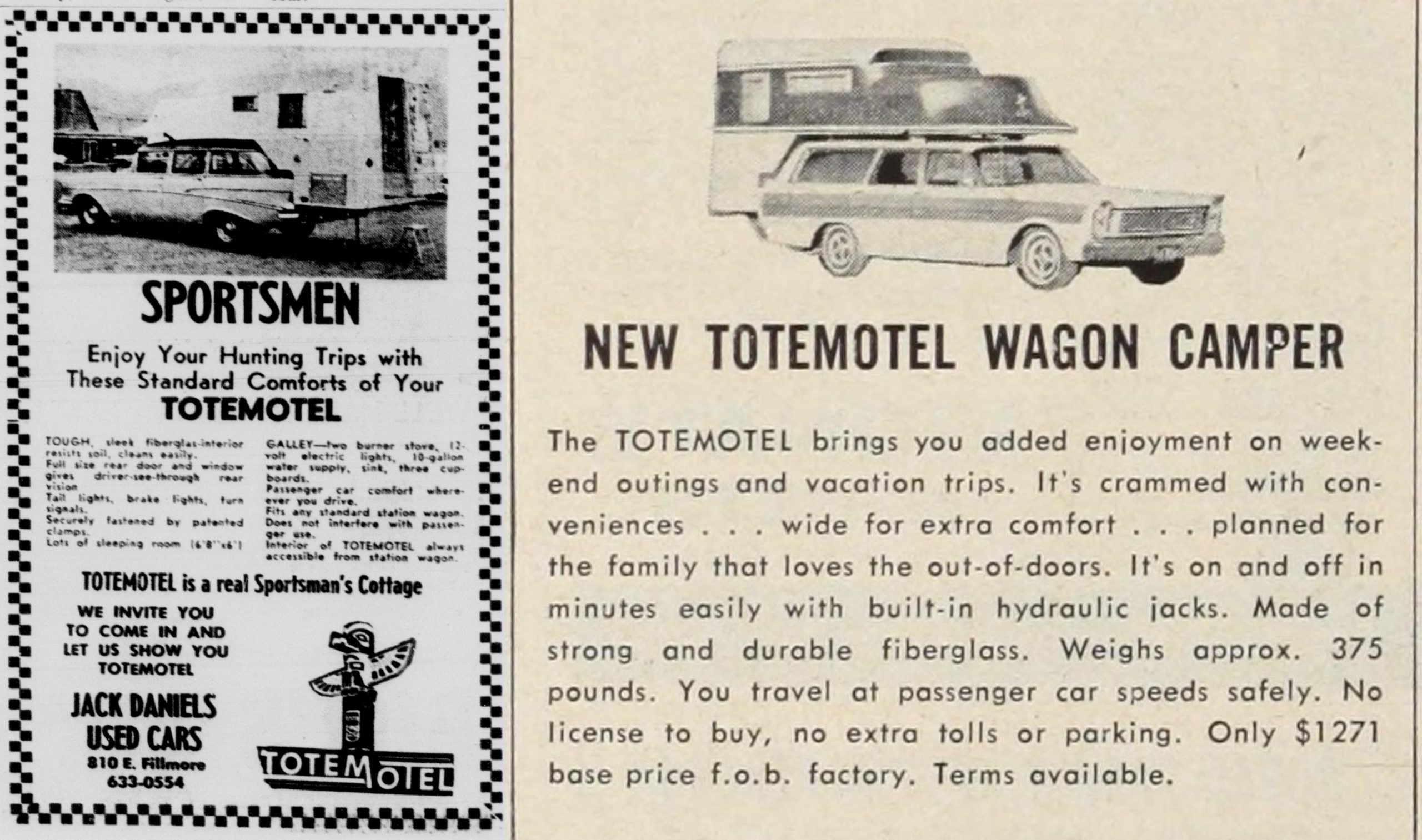
What’s also neat is that the ToteMotel is well-equipped. The Colorado Springs Gazette Telegraph notes 12-volt lights, a two-burner stove, an ice box, three cupboards, a wardrobe, and a 10-gallon water tank. Options included a king-size four-inch polyurethane mattress, a “Pow-Wow Room,” and a “Papoose Room.”
Here’s how these rooms worked: You would detach the camper from your wagon with help from the camper’s built-in hydraulic jacks. Then, you deployed the “Pow-Wow Room,” which was a covered patio behind the camper, and the “Papoose Room,” a glorified tent that attached to the bottom portion of the camper that now no longer had a car under it. The even camper had a pass-through in its bottom. This meant that occupants of the wagon could move into the camper as the car drove down the highway. This also permitted the occupants of the lower tent room to access the camper without going outside first. ToteMotel Inc. said that with both optional rooms, the ToteMotel had sleeping capacity for up to 11 people.
It’s unclear when the ToteMotel went on sale, but in a 1966 issue of the Tucson Daily Citizen, ToteMotel claimed to have sold $1 million ($10,187,924 in 2025) in units between 1964 and 1965. The company was expanding at the time, and hoped to increase sales to $1 million in units a year. According to the newspaper, the ToteMotel sold for $1,700 ($17,319 in 2025) in the early 1960s and took 40 hours to build. However, ToteMotel managed to cut $200 from the price, getting it down to $1,500 ($15,281 in 2025).
ToteMotel was not the only game in town. In the mid-1960s, Studebaker had also decided to get into the station wagon camper business and joined forces with the McNamee Coach Corporation of El Monte, California. The Studebaker camper was more of a traditional stick-built truck bed camper, and its 800 pounds of weight reflected that. This camper slid into the unique Studebaker Wagonaire and had a base that utilized the wagon’s sliding roof for extra space. Because of this, only the Wagonaire, a pickup truck, or maybe a modern GMC Envoy XUV could sport the Studebaker camper.
This Rare ToteMotel
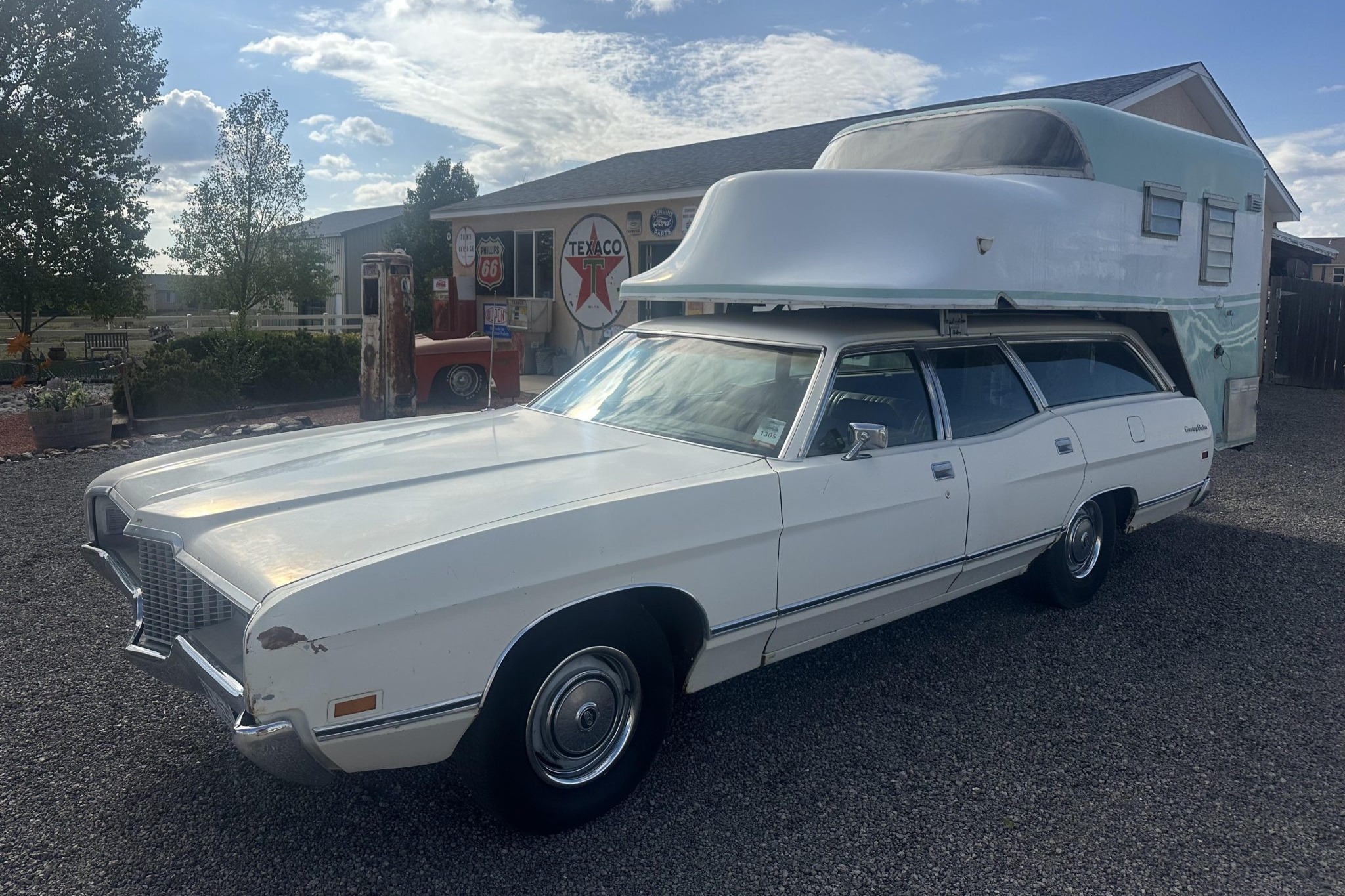
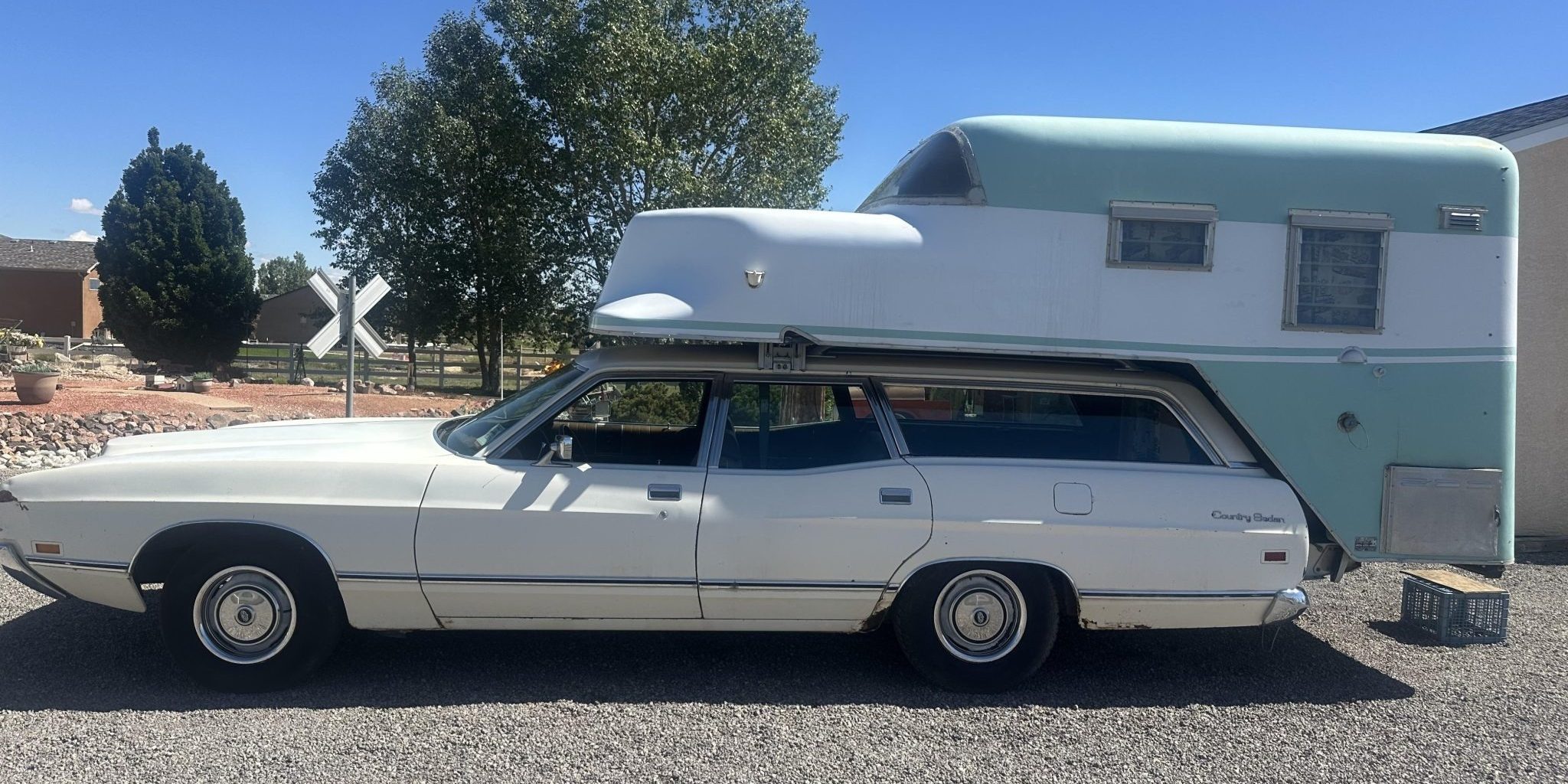
That brings us to the ultra-rare ToteMotel and 1971 Ford Country Sedan that’s up for grabs on Bring a Trailer today.
The Ford Country Sedan entered production in 1952 and would be sold for 22 years as Ford’s full-size mid-trim station wagon. Below the Country Sedan was the Custom 500 and the Ranch Wagon, and above it was the flagship Country Squire. In 1971, Ford marketed the Country Sedan as the “Galaxie 500 Country Sedan,” and it was pitched as being “so much like the LTD” in terms of luxury and style, but with a more affordable price.
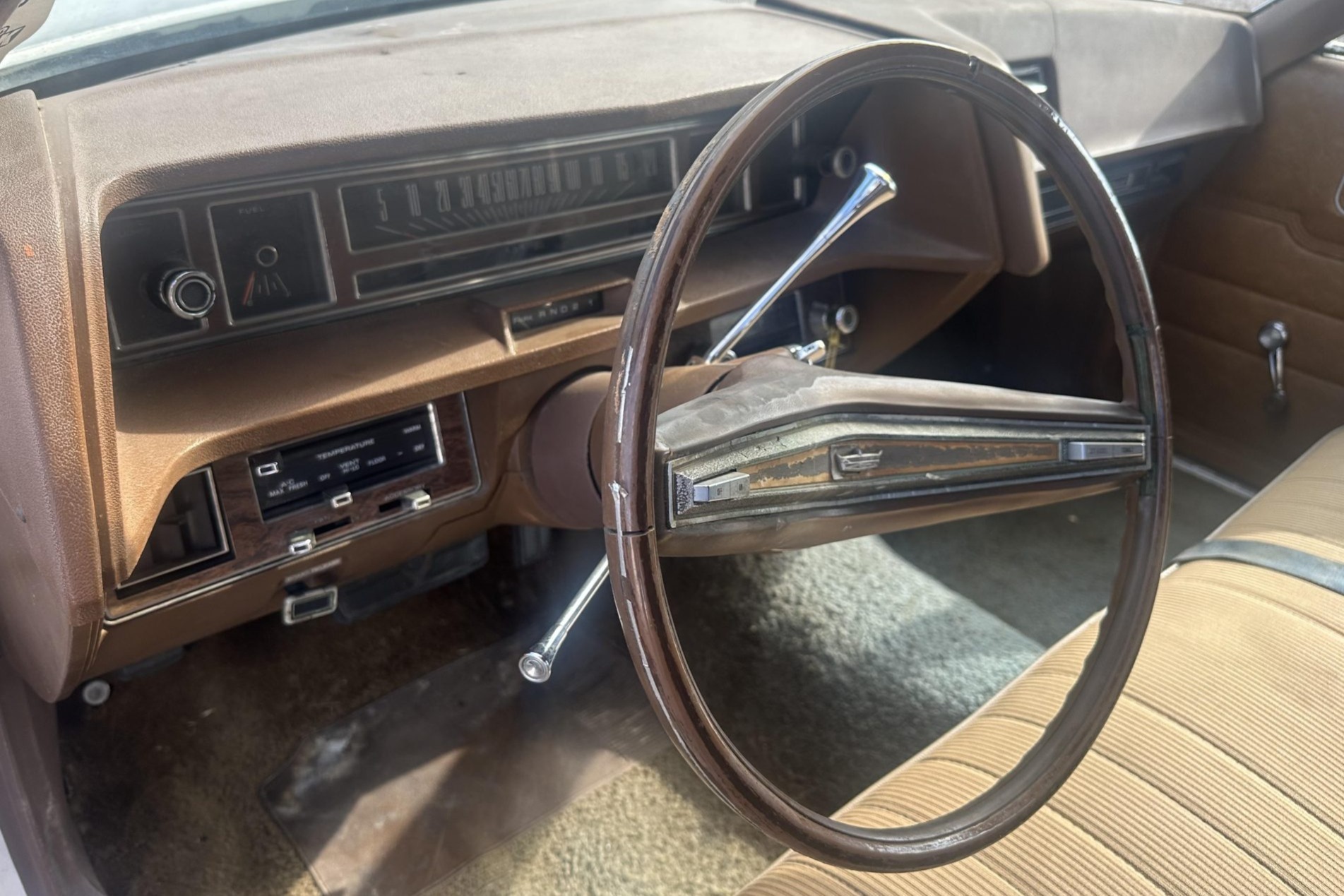
The car portion of this ride sports cloth and vinyl upholstery, fake woodgrain trim, and seating for eight, thanks to two benches and two additional seats that fold into the cargo floor. Power comes from a 400 cubic inch V8, which was good for 260 HP when it was new. A three-speed automatic gets the power to the rear wheels. The car appears to be in okay shape, with some rust holes present in addition to non-functional equipment, including the horn and air-conditioner.
The headliner of this auction is clearly the camper. The listing says that the camper is attached to the car through the tailgate opening, the roof rack, and brackets attached to the car’s drip rails. The camper shows some cracking here and there, but it is in remarkable shape, considering its age.
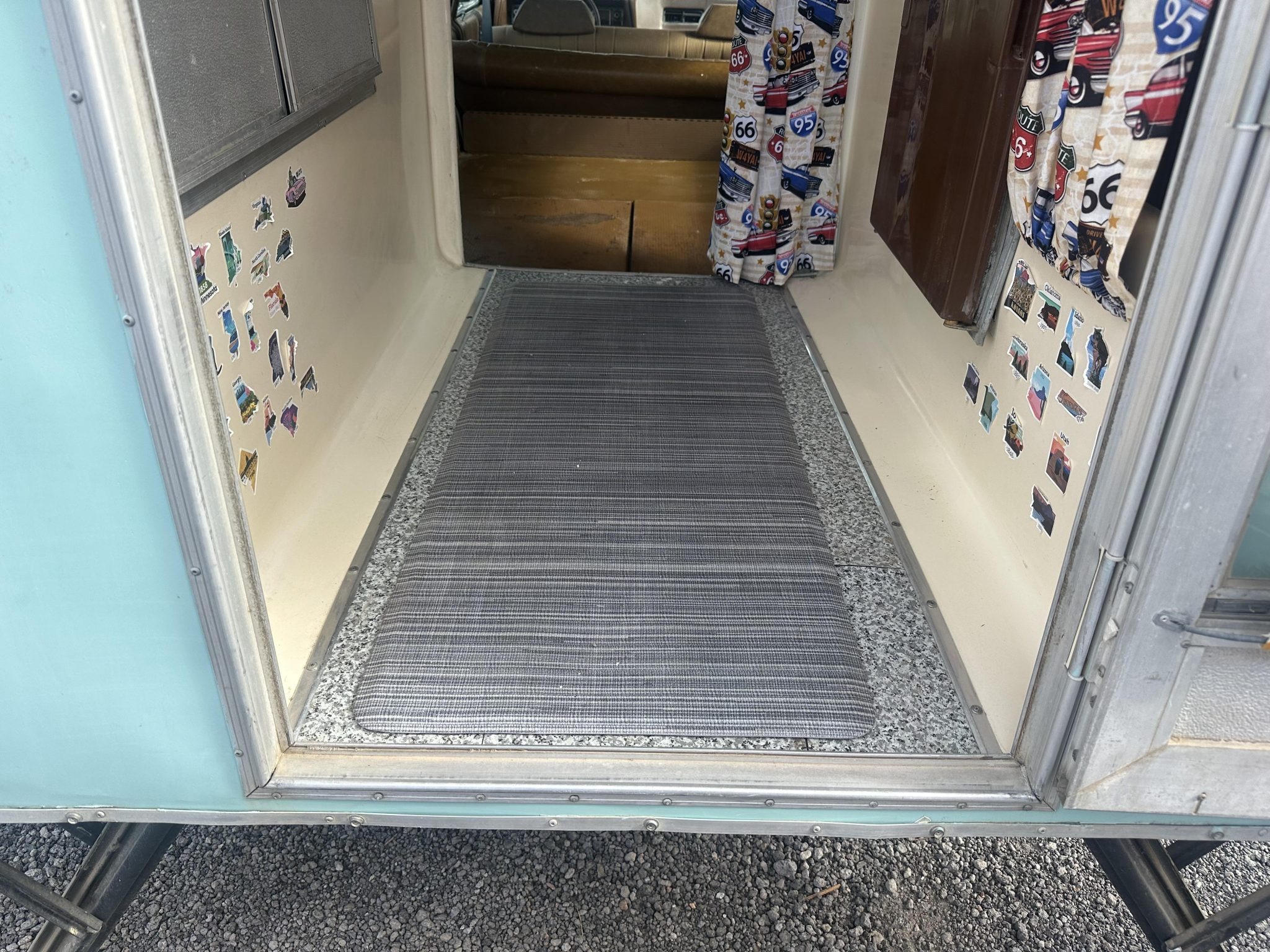
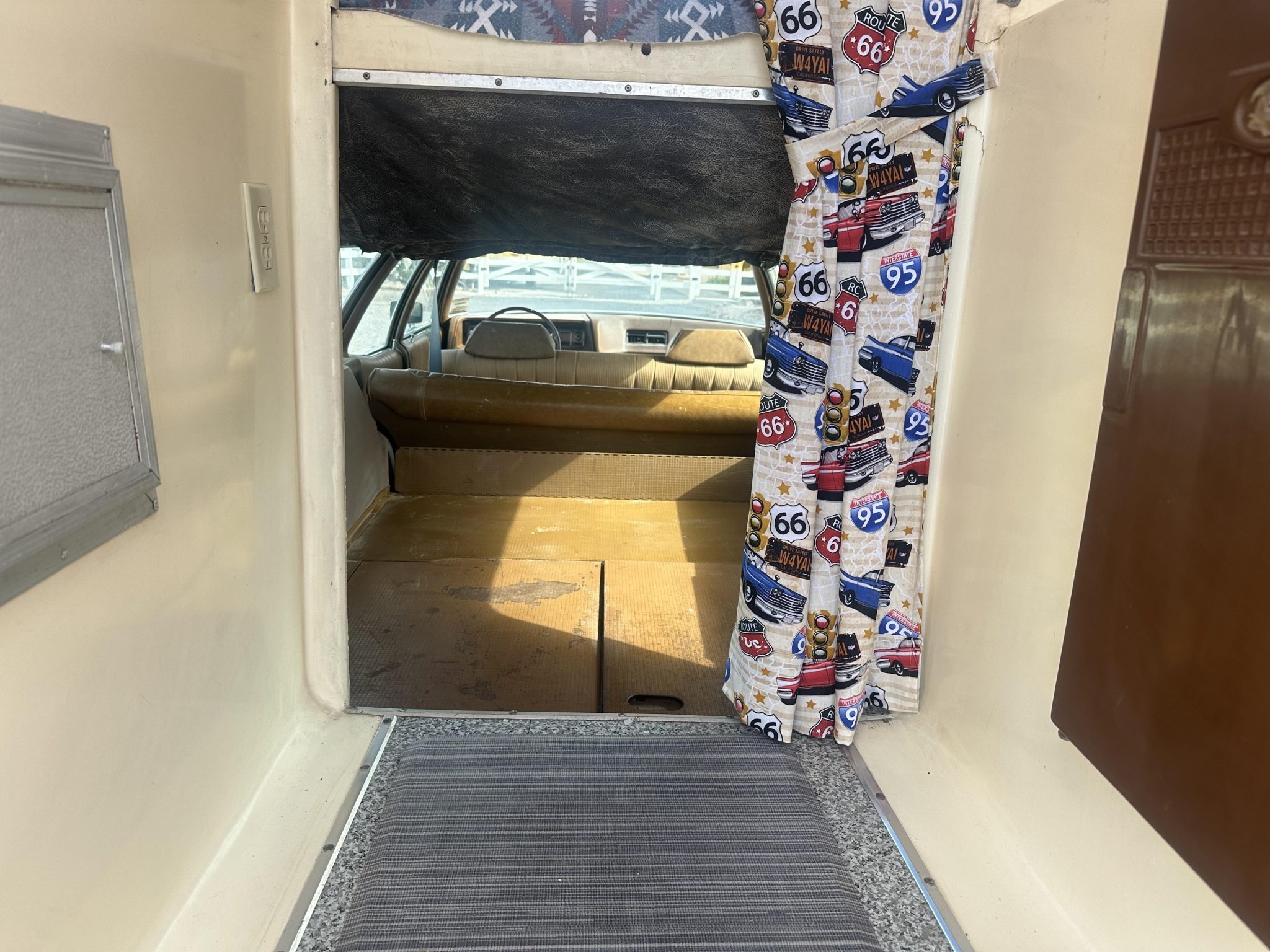
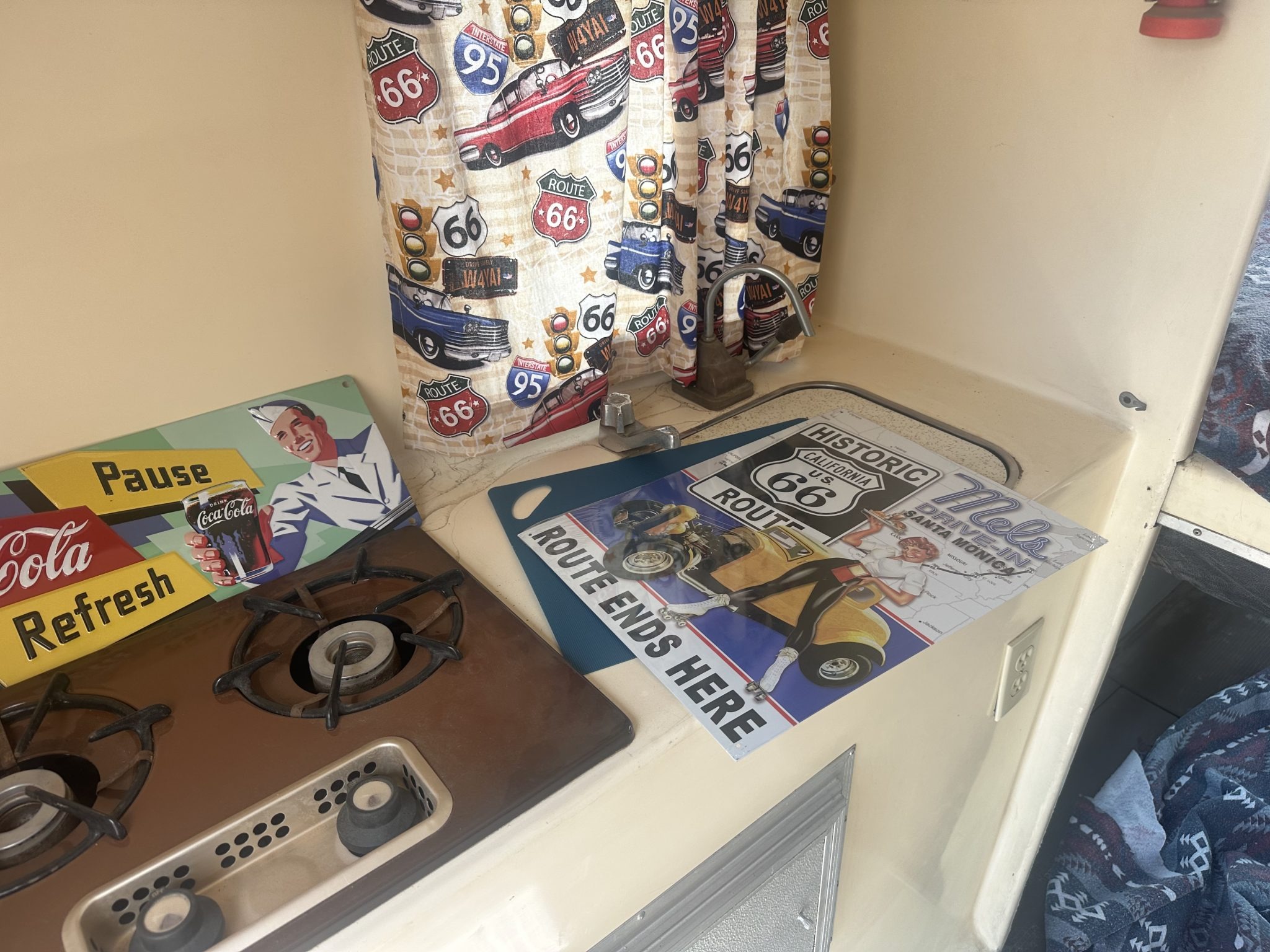
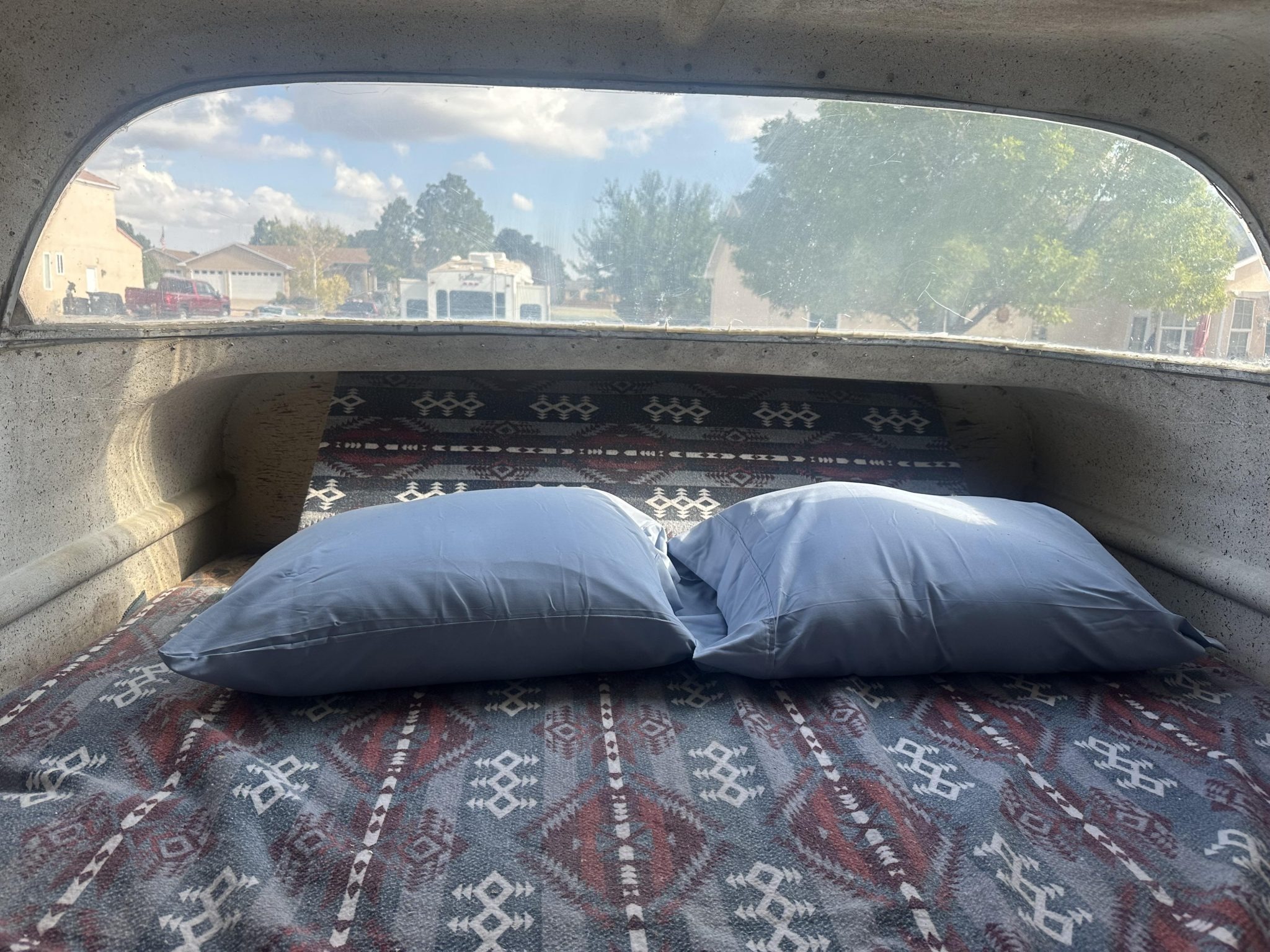
The images in the Bring a Trailer auction aren’t the greatest. Here’s a wider shot of the main interior of a different ToteMotel from an old OfferUp listing:
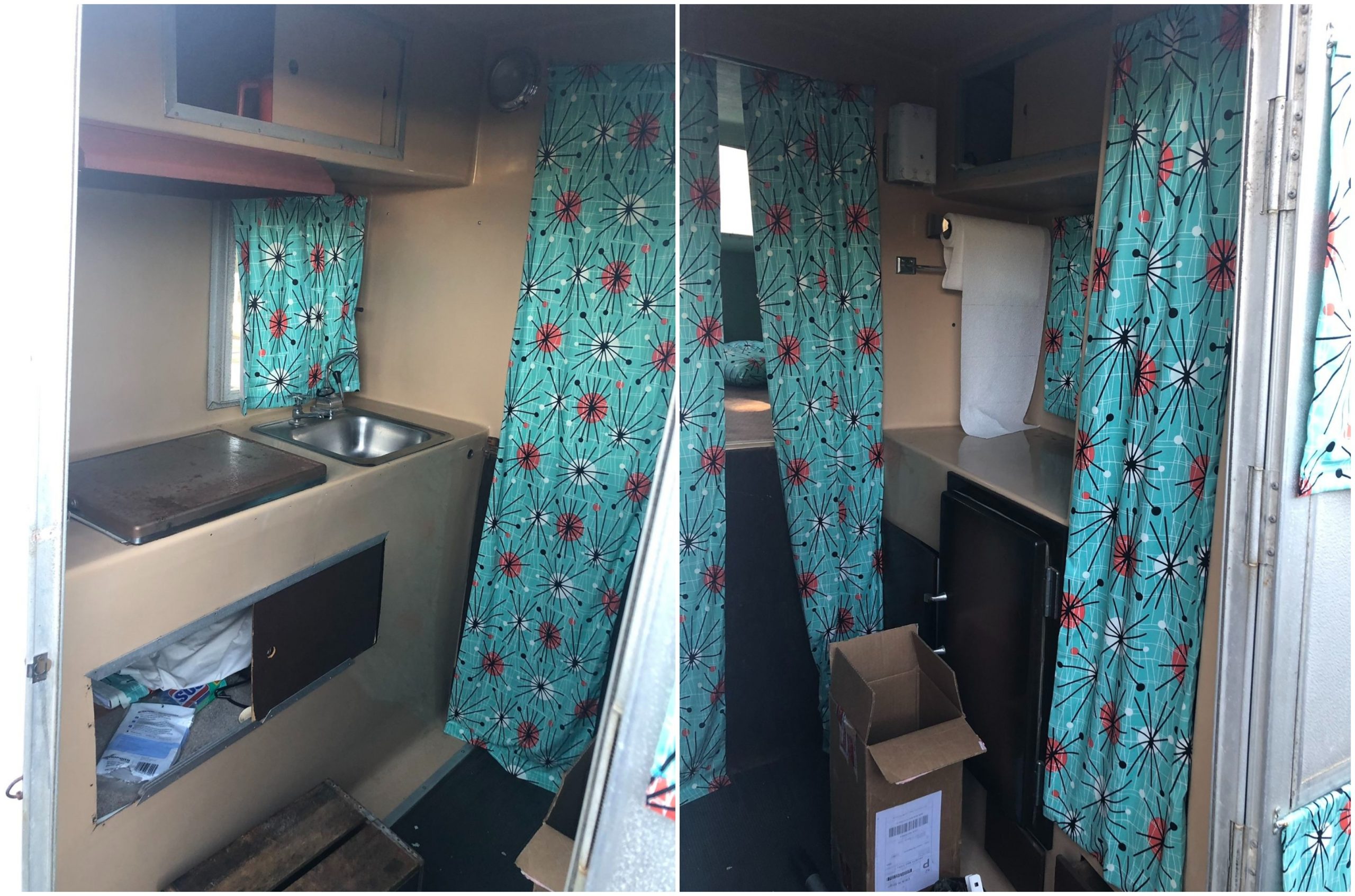
All of the features that I mentioned earlier are intact here, including the ice box. That part is amazing, as old campers like these almost always get those ice boxes pulled out for refrigerators. But the owners of this camper have kept it largely faithful to its original specification.
Fans of the ToteMotel believe that it was sold for only a few years. Based on the claim that ToteMotel sold $1 million units in two years, that’s 588 units, based on $1,700 a unit. It’s unclear how many more units were sold after the publication of that article in 1966, but let’s just say, just for the sake of argument, that ToteMotel sold $1 million worth of units over the next year at $1,500 as planned. That’s only an additional 666 units. So, there just weren’t many built, and who knows how many are left.
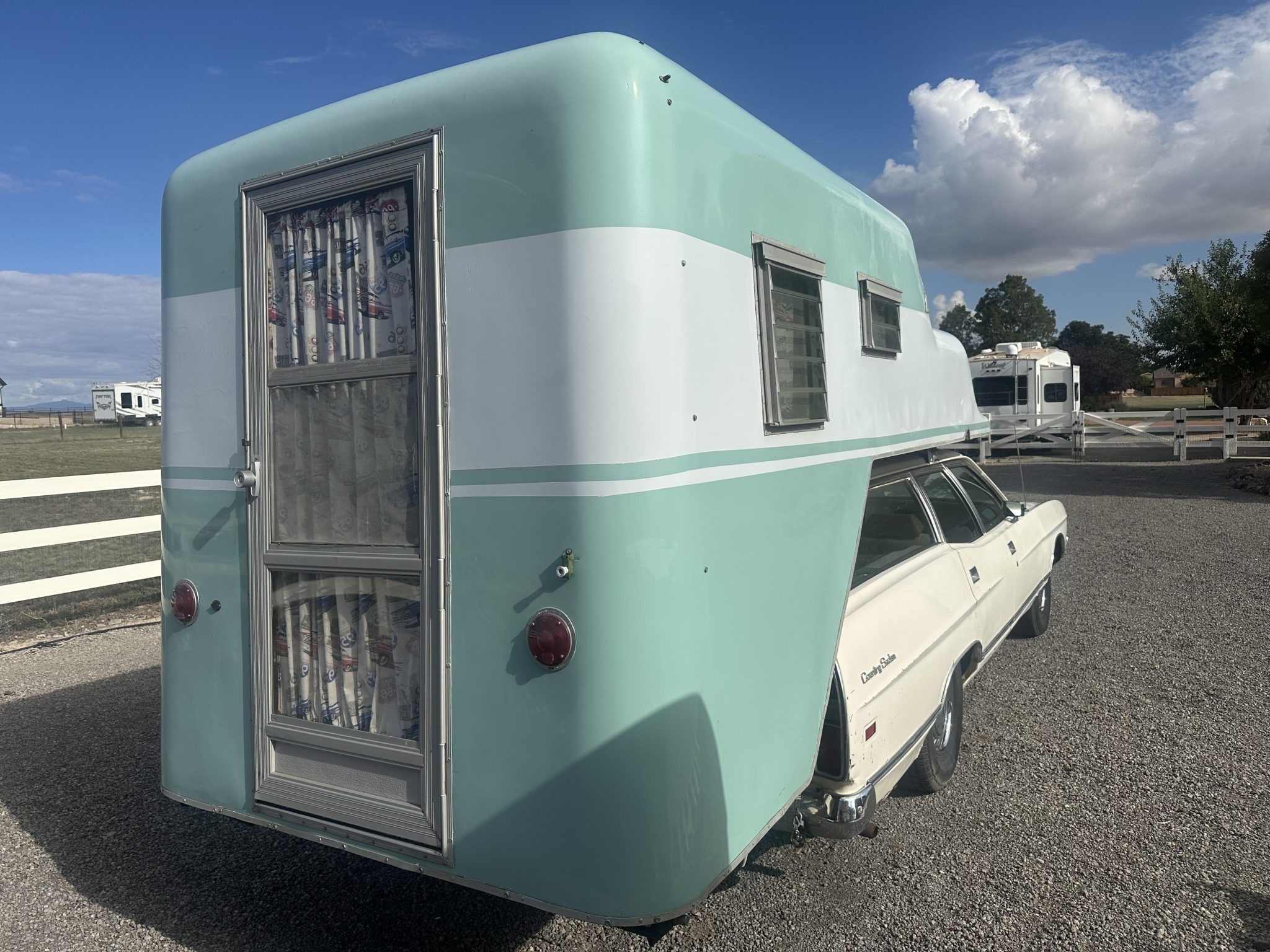
This one is not perfect, but who knows when the next time you will see another, and who knows what condition it will be in? It’s for that reason, I think that whatever price this lands on will probably be a great deal for whoever buys it. That being said, bidding is at $3,182 with six days to go on Bring a Trailer.
The ToteMotel was a camper from another time. America was so addicted to RVs in the 1960s and the 1970s that forklift companies and warbird builders were making RVs. So, it only makes sense that one company was crazy enough to try to turn large station wagons into motorhomes. Later, we’d see this concept in other weird car-campers like the Toppola, but it’s still fascinating to see a big classic American wagon sporting a fiberglass camper. I wonder what would have happened if the wagon had remained the family car of choice, and not minivans, SUVs, and then crossovers. Would there be a modern equivalent of this?
Support our mission of championing car culture by becoming an Official Autopian Member.
The post This Awesome 1960s Fiberglass Camper Turned Any Standard Station Wagon Into A Fully-Featured Motorhome appeared first on The Autopian.

