In the pantheon of foreshadowing phrases, nestled between “hold my beer” and “watch this” sits “how hard could it be?” While there’s no way of verifying whether this sequence of words ever came up during the development of the Pontiac G6 Convertible, I’d like to imagine that someone at Pontiac took a look at the hardtop convertibles coming out of Europe and thought something to that effect. It looked pretty sharp by the standards of the day and was cheap for a four-seat hardtop convertible, but behind the scenes, there were allegedly some moderate calamities.
America’s first taste of GM’s Epsilon platform was the Saab 9-3, and that was quite good. Granted, Swedish engineers had reworked so much that the 9-3 got unique suspension arms, engine management, and cabin electronics from other U.S.-market Epsilon platform cars, so people were in for a bit of a shock when the 2004 Chevrolet Malibu hit the scene. This was a car that, at best, was usable as a transportation device. From its soulless Fisher Price-reject interior to its milquetoast styling to its overboosted steering, it sent a message: “So, you couldn’t afford an Altima?” From Scandinavian sensibility to a machine seemingly designed to put middle managers with company cars in their place, the Epsilon platform certainly had range. Now GM just needed to fill in the middle.
The first sign of life on that front came from Pontiac with its replacement for the Grand Am, the Oprah-famous G6. Worlds away from the dowdy Malibu, the G6 had smart, rakish styling, a cabin that didn’t look bargain-bin, and nifty available features like a multi-panel retractable panoramic moonroof. Launched as a sedan, a coupe would soon follow, and Pontiac even made the promise of a convertible for serious sun-seekers.

While the Saab 9-3 already offered a convertible variant with a soft roof, Pontiac decided to take a different approach. A longer wheelbase than the 9-3 meant that a new mechanism was required, and since the hot thing to have in the 2000s was a power-retractable hardtop, GM contracted out. Development was supposed to be a joint venture between Karmann Technical Developments, the American arm of the firm that built and lent its name to the Volkswagen Karmann Ghia, and American Sunroof Corporation. Early production was expected to get up and moving late in the third quarter of 2005, but that didn’t happen. Instead, not only did the joint venture fall apart, causing Karmann to pick up the pieces left behind by ASC, but production was pushed back from September 2005 to early 2006. As Autoweek reported in January 2005:
“Initially, it was supposed to start in September,” says Pat Sweeney, president of UAW Local 5960 at GM’s Orion Township, Mich., assembly plant, where the G6 is built. “But that was pushed back a few months until sometime in January.”
Sweeney declined to discuss what caused the delay. A supplier familiar with the project says GM is having trouble building a retractable hardtop on a unibody vehicle.
This seems like an unusual reasoning, given that roof assembly production seemed to have gone to a firm with huge convertible experience, but there were a few mitigating factors. After all, Karmann’s experience with large retractable hardtops hadn’t quite yet extended to its American subsidiary, and GM was still responsible for bodywork, interior revisions, and ultimate assembly. Indeed, later in 2005, Autoweek reported that production had been pushed back again, allegedly due to failed durability testing and questionable assembly.
The top is supposed to survive two life cycles of openings and closings, for a total of 16,000 to 20,000 cycles, supplier sources say. But a supplier close to the program says the roof has failed after fewer than 10,000 cycles.
A poor fit between the deck lid and rear fenders is another problem, the source says.
Those are some fairly serious allegations, so how did General Motors respond?
GM spokesman Jim Hopson said the convertible’s top “meets and exceeds” all of the automaker’s current life-cycle requirements, but declined to say what those requirements are.
“I’ve never been involved in a vehicle program that didn’t have some problems,” he says. “Our intention, at this point, is to have the vehicle available in the first quarter of 2006.”
Ah yes, nothing says everything’s fine quite like “I’ve never been involved in a vehicle program that didn’t have some problems.” Still, production did come online during the first half of 2006, and while examples of the G6 Convertible started shipping, they weren’t without their faults.
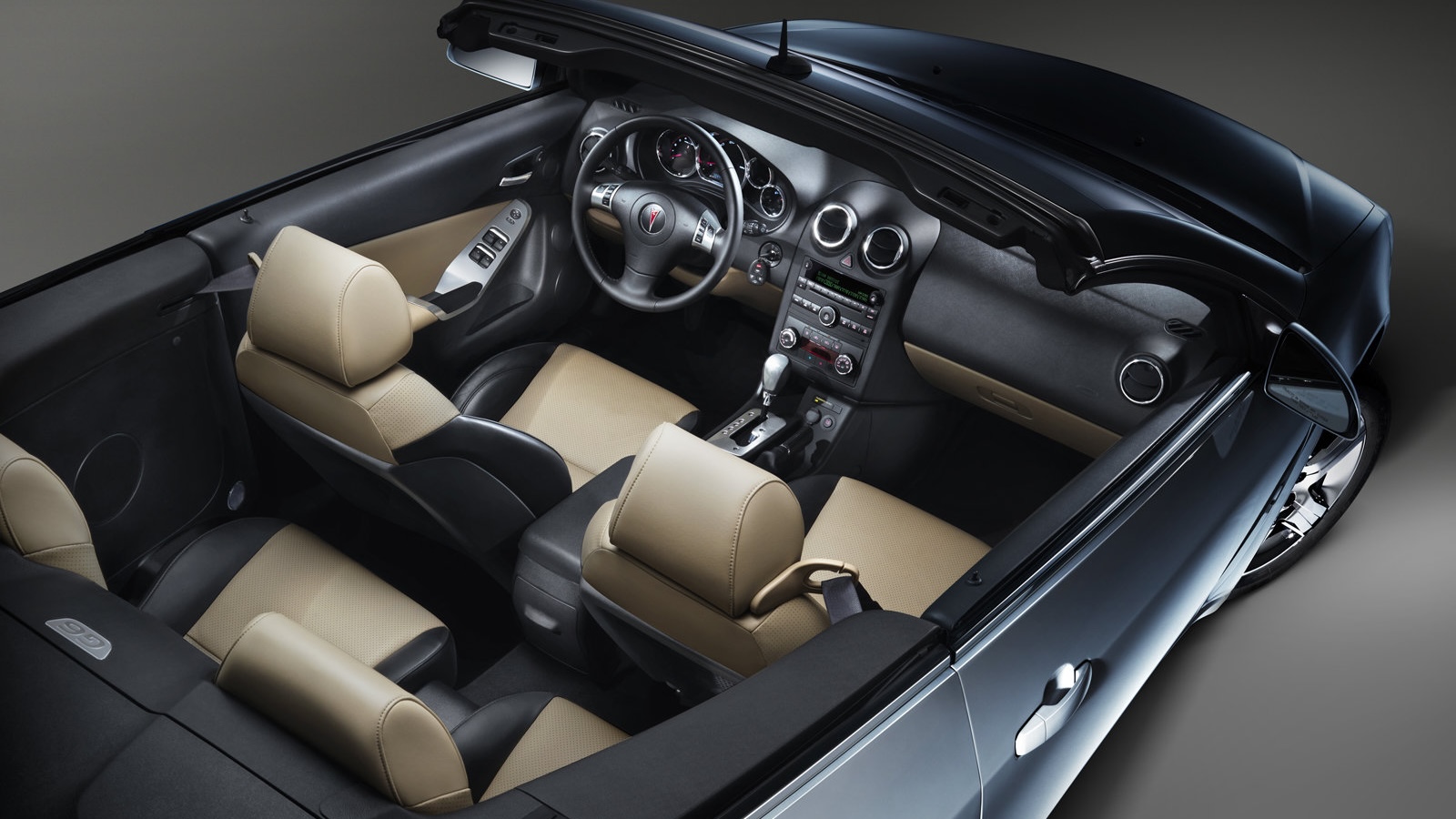
When you think about it, a unibody car is basically a big cereal box. Stable and sturdy, up until a critical point. Cut one side out of the cereal box, however, and things get bendy. Convertible variants of closed-roof cars often require substantial modifications to restore composure lost to the removed roof. To that end, the G6 Convertible not only gained structural bracing, it also got a unique suspension package to cope with the extra weight and twist of the drop-top treatment. Unfortunately, measures like these could only do so much. Motor Trend noted that “With the roof up, the car is acceptably rigid and remarkably quiet, but with the top down, the G6’s body loosens up considerably.” That’s not good, and Consumer Reports agreed, writing:
The Pontiac G6 convertible is mediocre at best. The retractable hard top rattles and exposed wires in the trunk make the car look unfinished.
Not exactly high praise, and to make matters worse, Autoweek went even further, writing:
We noted considerable wiggle and jiggle in our testing, and Pontiac’s own figures support our findings. Pontiac’s testing shows the G6 with the top down is only marginally better in torsional rigidity, and is worse in bending stiffness, compared to a similarly priced ragtop competitor with the top down. Once the solid roof clicks into place, wind and road noise are more isolated than in a comparable soft-top convertible, but rigidity improves only slightly.
That translates into noticeable squeaks from the hardtop—the kind that would drive us crazy over time, even in a convertible. But to be fair, we tend to notice those little noises more than most; owners of traditional cloth-top convertibles will likely find the silence beneath the closed roof satisfying.
Right, flexy and squeaky. What else? Well, there was the packaging and operation of the folding roof itself. While raising the deck lid by fewer than two inches compared to the coupe preserved the G6’s lines, it did make for miserly trunk space with the roof stowed. In an August 2007 comparison test against the Chrysler Sebring Convertible and the Ford Mustang Convertible, Car and Driver noted that the G6 Convertible offered a mere two cubic feet of trunk space with the top down. The magazine also wrote that the roof itself took a whopping 34 seconds to retract and 30 seconds to deploy, respectively 22 seconds and 18 seconds longer than the textile roof on a Mustang Convertible.
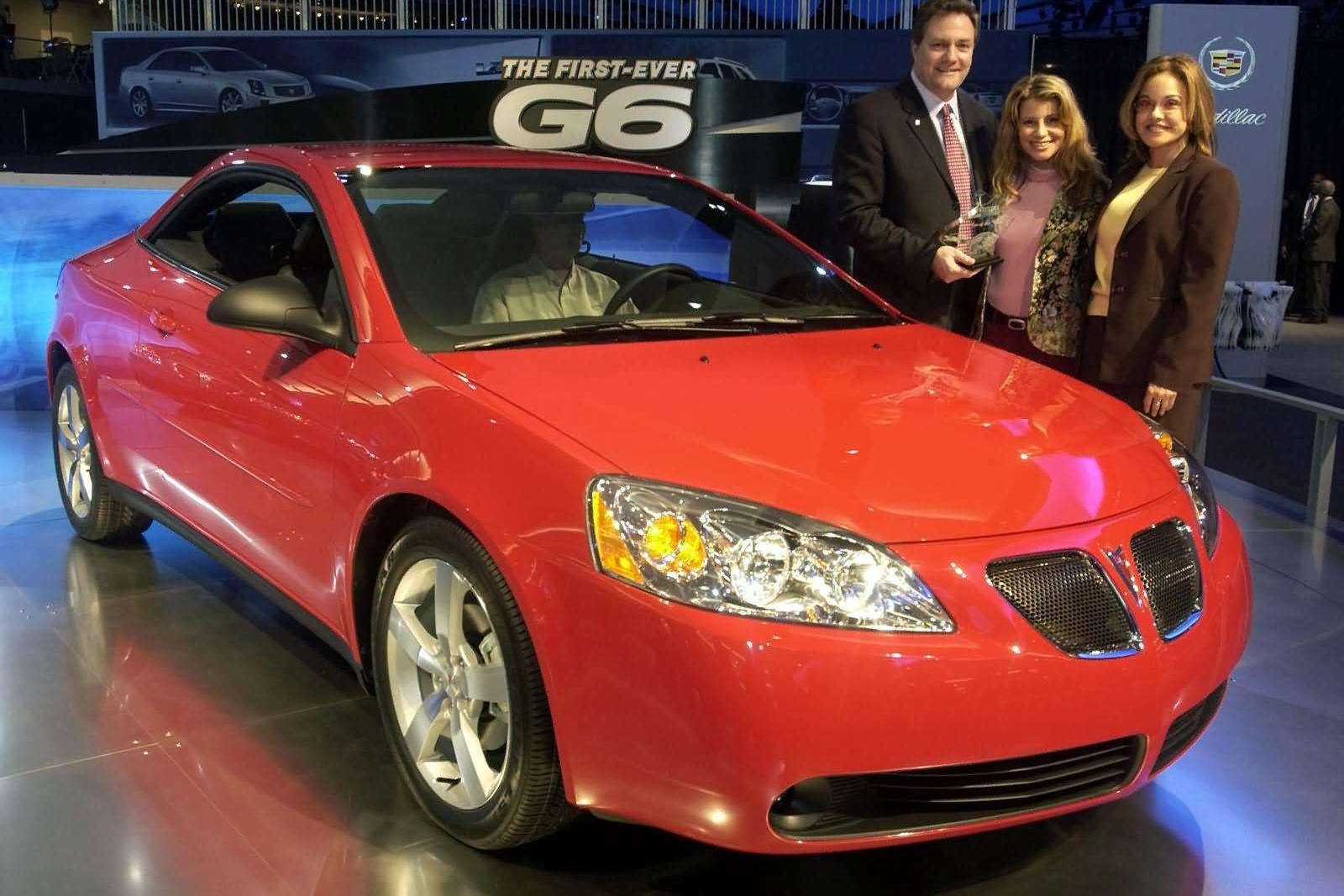
Despite these substantial setbacks, the Pontiac G6 Convertible was relatively well-received, if largely due to the tepidness of the segment. The third-generation Chrysler Sebring Convertible didn’t have any virtues worth writing home about, and the V6 Ford Mustang Convertible of the time was a dog with its own cowl-shake issues. It also helped that the drop-top G6 technically started under $30,000, certainly not an enormous sum for a hardtop convertible.
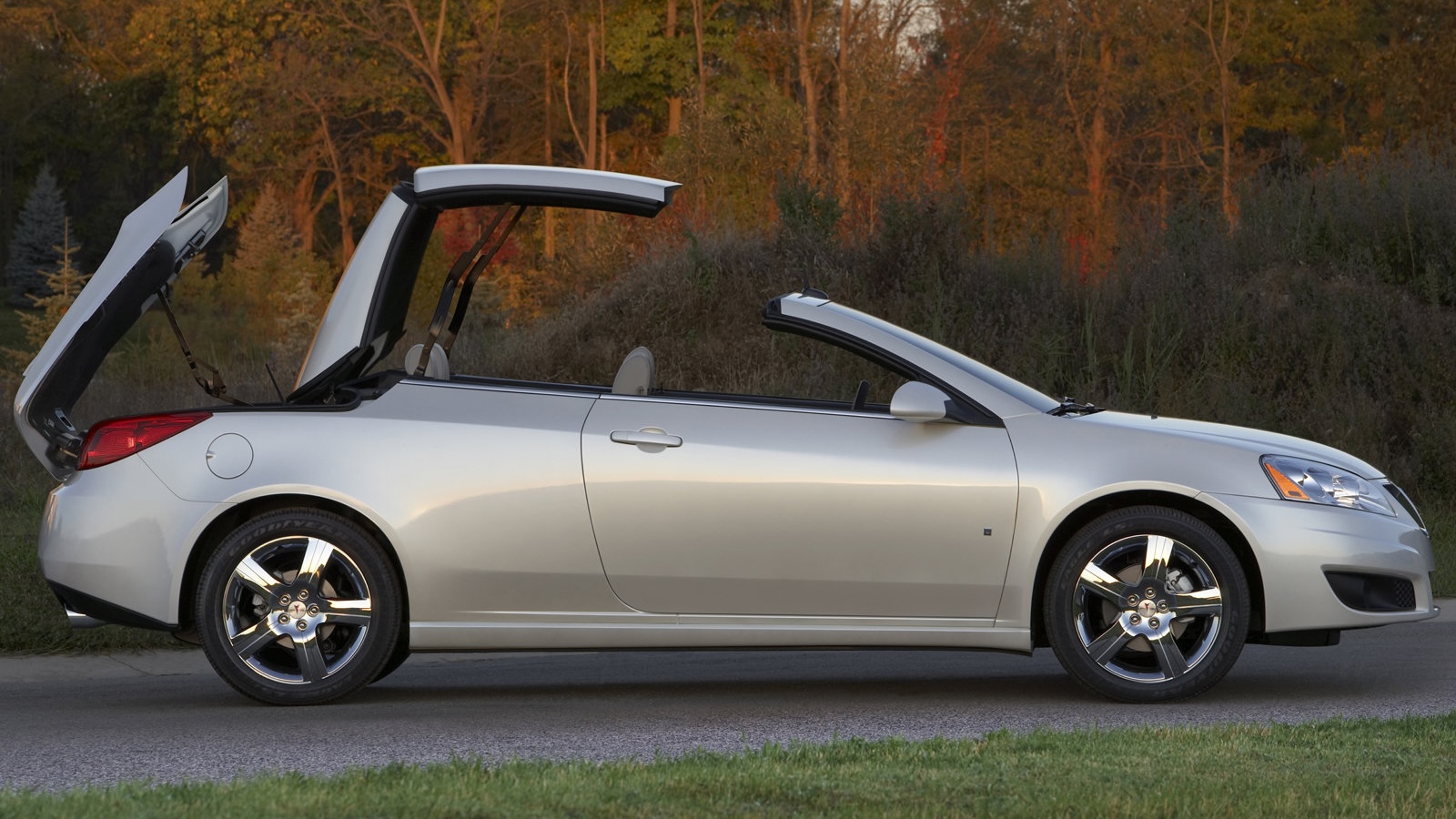
In an attempt to make things a little bit better, Karmann re-worked the hardtop to reduce noise shortly before a production shutdown for the 2007 to 2008 holiday season. As Ward’s Auto reported:
Sources tell Ward’s the auto maker’s supplier, Karmann GmbH subsidiary Karmann USA, made the fix late last year and GM shipped several units with a more robust retractable top to dealers. The fix focused on a panel-to-panel latch on the 2-piece clamshell lid, which folds into the trunk.
GM is “perfectly happy with where it’s at now,” the source tells Ward’s. “The fix virtually eliminates the squeak-and-rattle issues.”
However, just a few months after the updated hardtop assembly was introduced to the G6 Convertible, General Motors ran into a teeny-tiny, itty-bitty, minuscule, really a footnote of a setback called, um, starting to run out of cash. The General had been totting up losses in the billions for years prior, and by late 2008, executives were flying to Washington seeking government funding to keep going. A proposal for a sustainable path forward and a bridge loan came and went, and by June 2009, General Motors filed for Chapter 11 bankruptcy protection. The resulting bailout and restructuring would see an end to the entire Pontiac brand, along with Hummer and Saturn. Saab would be sold, but this meant the Pontiac G6 Convertible was dead by the end of the 2009 model year. Just over three years of production, an engineering effort that seemed to bite off more than it could chew at the start, and that’s all she wrote.
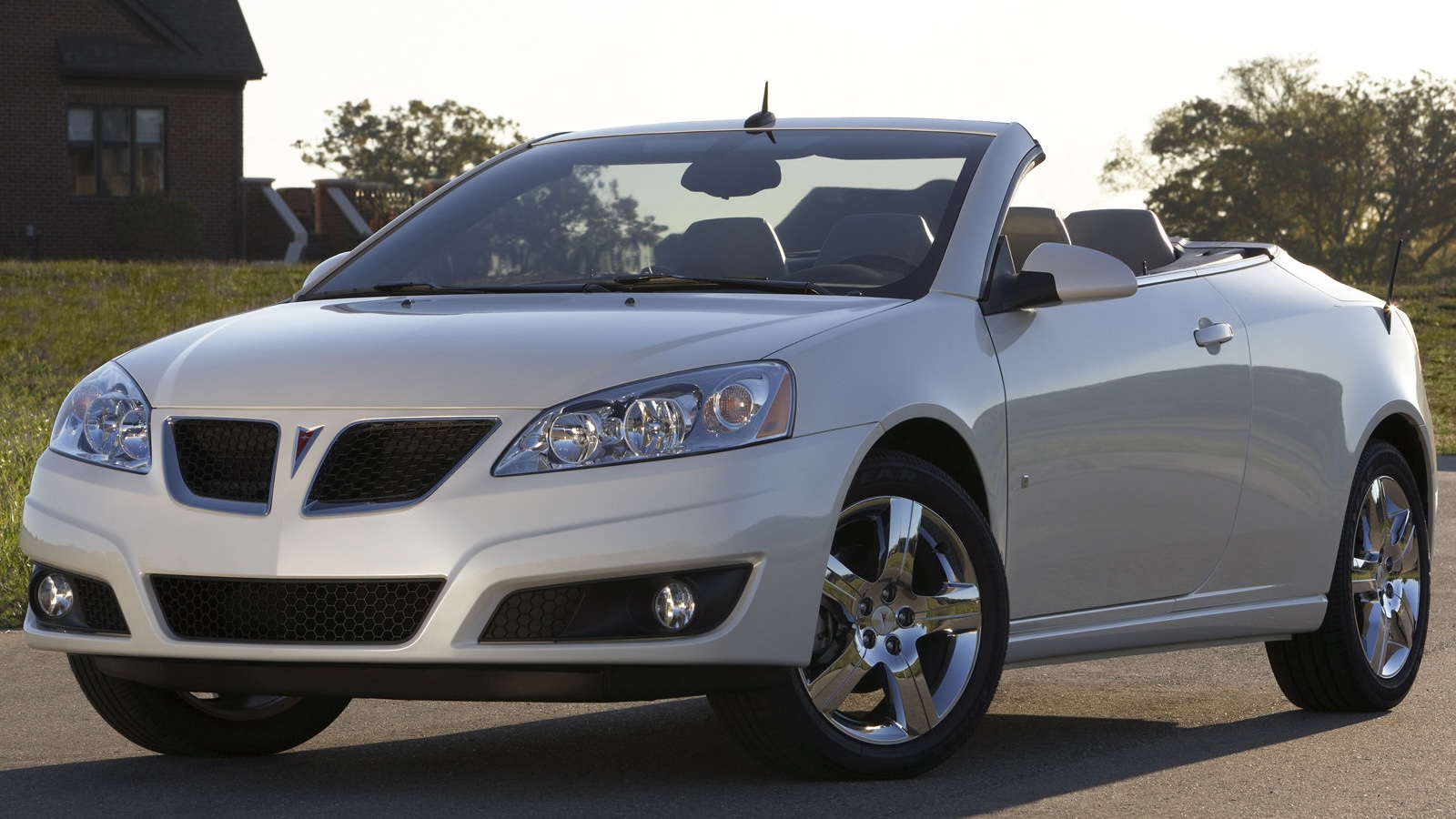
As these power-retractable hardtops aged, it didn’t take a rocket surgeon to realize that a roof with eight microswitches, five hydraulic cylinders, and 13 unique diagnostic trouble codes would become a known problem child, and pages and pages of threads at the G6 Owners Club forum attest to the car’s retractable hardtop problems. Over time, a wide variety of parts for the convertible top including sensors, trim pieces, latches, and glass have been discontinued, making this a real orphan of a car.
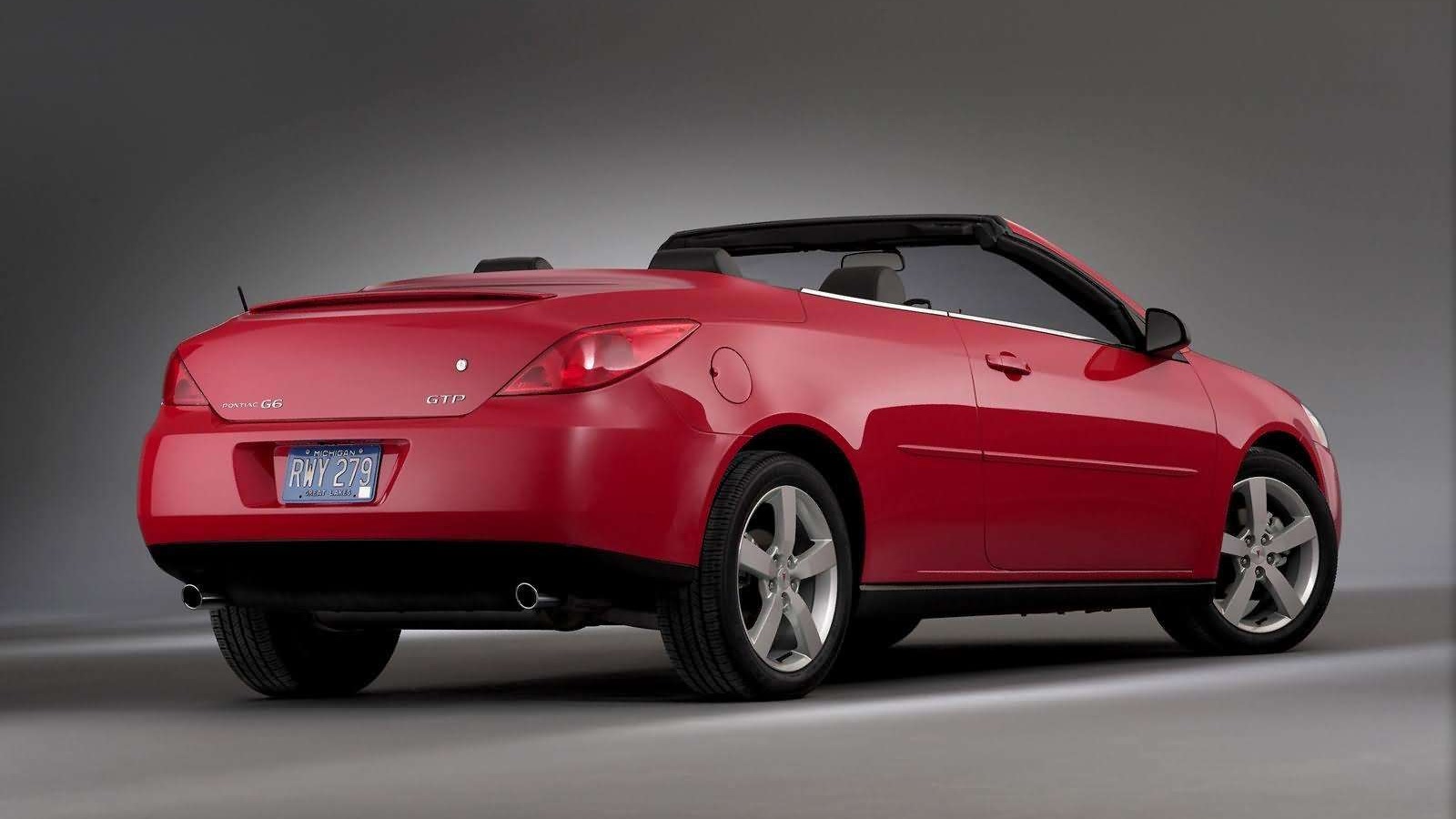
So, even though the Pontiac G6 Convertible might look somewhat attractive as a cheap top-down biff-about, this power-retractable hardtop is probably one to avoid. Early ones had noise, vibration, and harshness teething issues, all of them have parts availability problems, and at the end of the day, it’s not the only cheap four-seat convertible out there on the secondhand market. General Motors definitely took a big swing with this thing, but success with niche two-seat hardtop convertibles like the Chevrolet SSR and Cadillac XLR didn’t translate to a seamless launch of longevity in the four-seat hardtop convertible arena. In that regard, the G6 Convertible is a miss with a lot of gumption.
Top graphic image: Pontiac
Support our mission of championing car culture by becoming an Official Autopian Member.
The post Why The Pontiac G6 Convertible Was Simply Too Ambitious appeared first on The Autopian.

