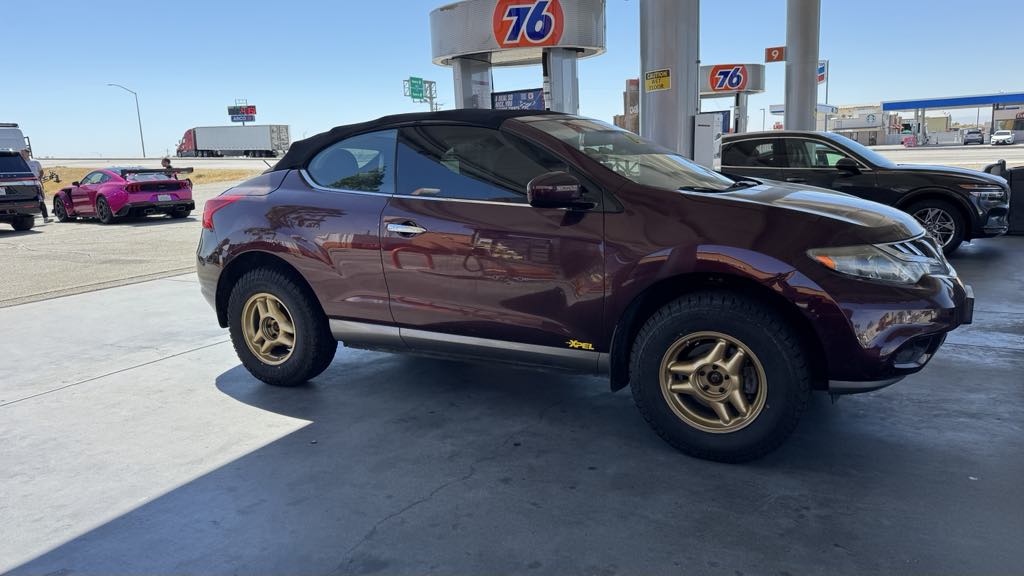
The Nissan Murano CrossCabriolet (like The Autopina’s XPEL CrossCab) is one of the biggest misfires in automotive history. When it was revealed in 2010, Nissan was proud to proclaim itself as the first to mass-produce a convertible crossover. It had what Nissan North America’s then-vice president described as an “extraordinarily engineered convertible top,” a phrase that even then they had to know was tempting fate. As it happened, nobody really wanted a convertible that was both uglier and more conspicuous than the alternatives. After just a few disappointing years, the CrossCabriolet was discontinued. The ones it did sell? Fraught with problems, and it’s almost entirely because of that quirky convertible roof.
Understanding what’s wrong with the CrossCabriolet’s roof requires us to rewind back to how and why Nissan built the vehicle in the first place. Apocryphally, the wife of then-CEO Carlos Ghosn loved her Murano, but wanted a roof-down experience. Despite being known as an austere CEO, Ghosn forced the unconventional CUV through development according to Car and Driver. Whether it was to test a radical new niche product or to satisfy Ghosn’s wife, the CrossCabriolet was born, and with it came a substantial reengineering of the Murano it was based on.
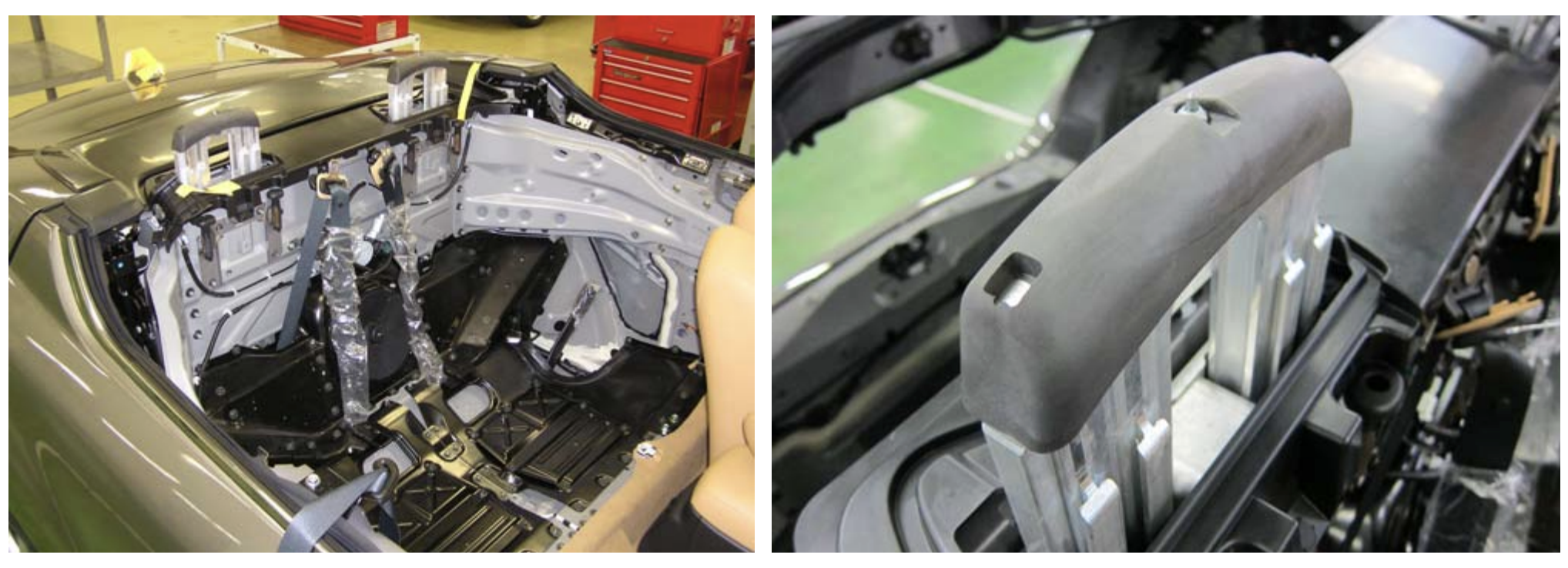
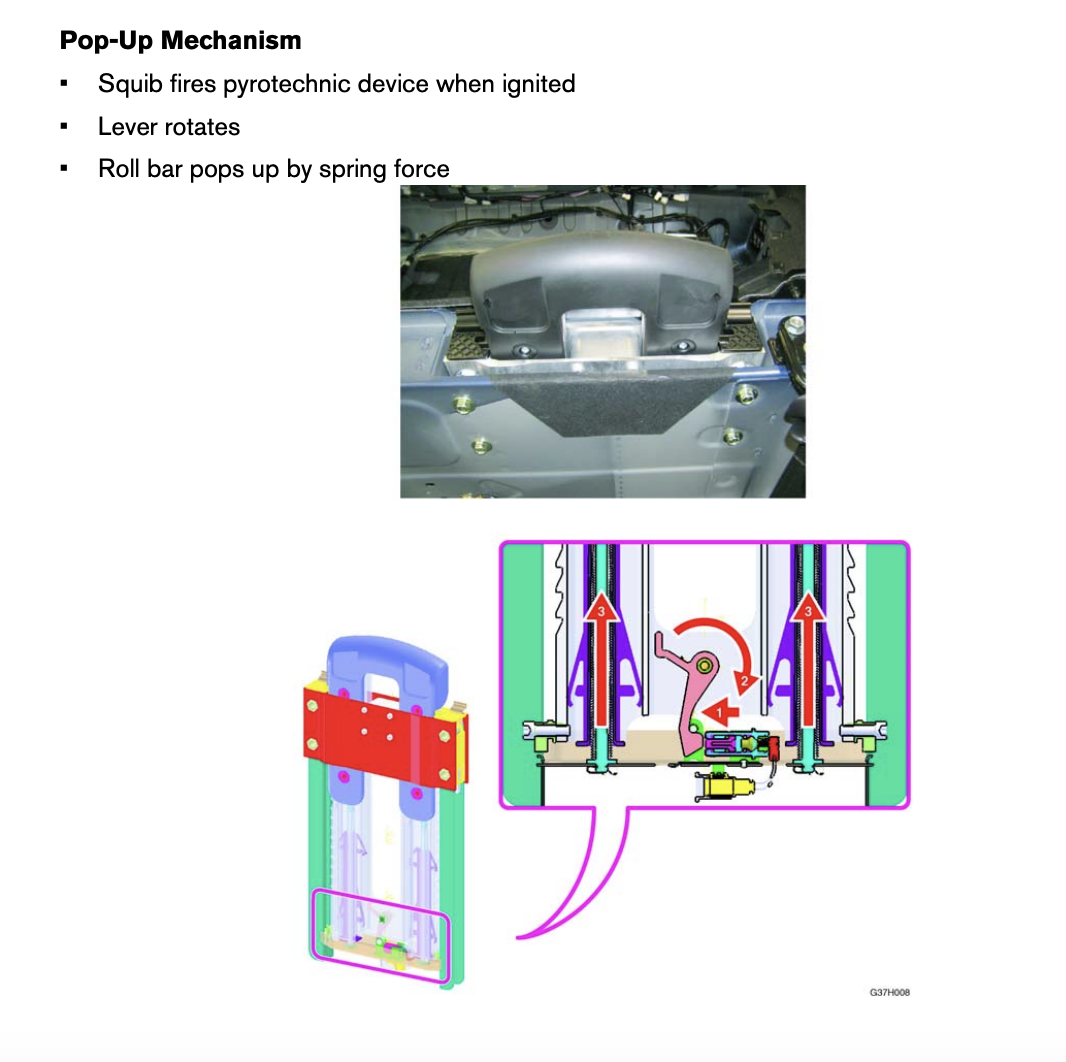
The CrossCab reused the Renault-Nissan D-platform of the regular Murano, and became the only vehicle on said platform to feature a convertible top. With no fixed roof, the B-pillar was eliminated to make the CrossCab a two-door, using doors almost eight inches longer than the four-door model. That also required reinforcing the A-pillar and adding pop-up rear roll hoops behind the back bench, which now sat two to the hardtop’s three. [Ed Note: This isn’t that important to this story, but I can’t not show you the rear structure of the CrossCab, and the roll hoop pyrotechnic functionality:
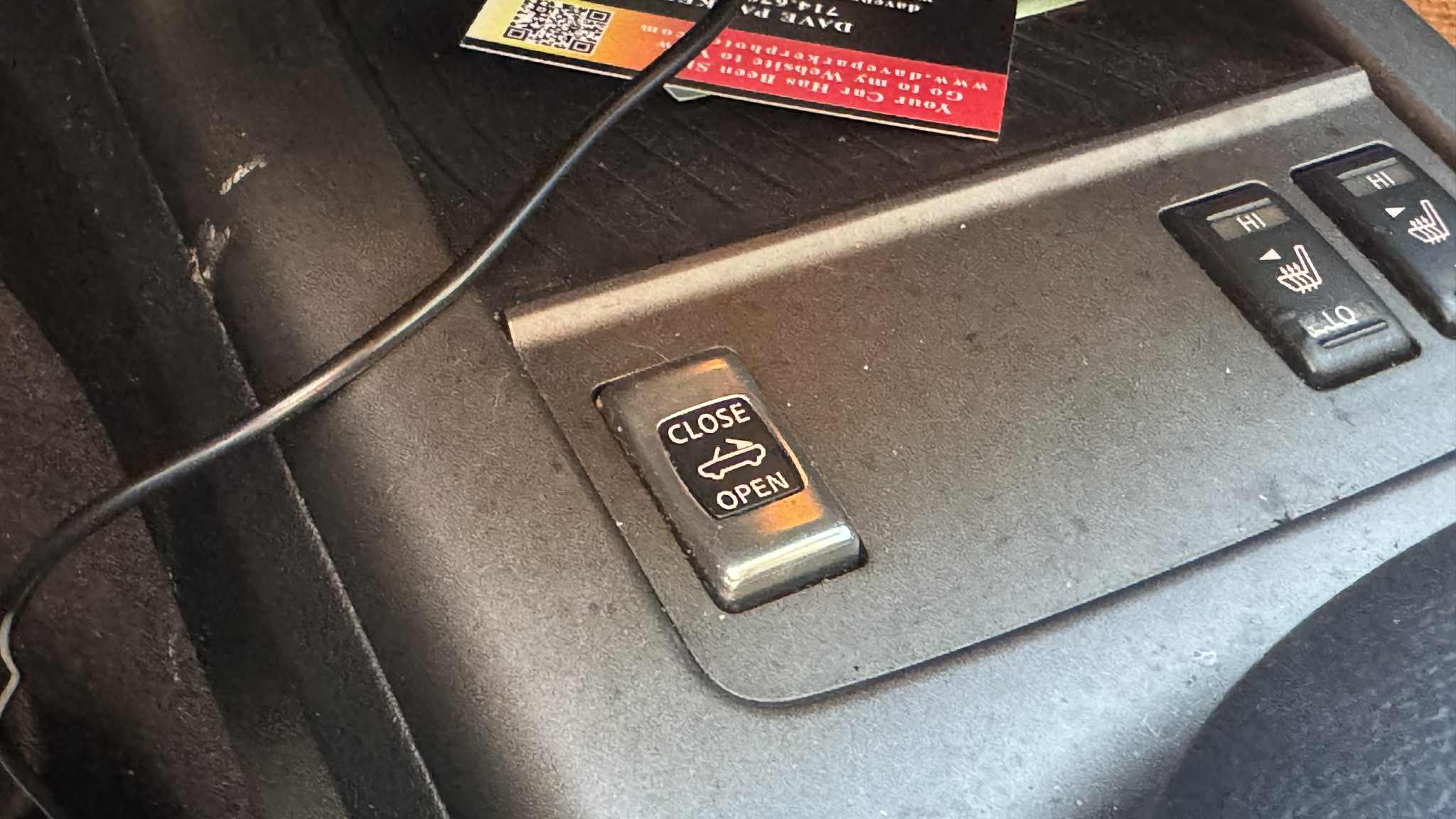
The CrossCabriolet’s trunk was reconfigured to accommodate the roof mechanism, which could be actuated by a button on the center console or “request switches” on the outside door handle. There are various issues with how the roof was packaged, designed, and controlled, so let’s start with the system that moves it—the hydraulics.
The Hydraulic System
While the idea of a hydraulic roof is deeply offensive to me as someone who’s taken multiple DOT4 showers trying to bleed my MR2’s dragging clutch, it’s a common style of convertible roof mechanism. According to aftermarket hydraulics supplier Top Hydraulics, the basic design is shared by the 2008-2014 Ford Mustang, BMW Z3 and Z4, the C6 and C7 Chevy Corvettes, Chrysler PT Cruiser, McLaren 650S, and many others. If it’s fine for the everyperson’s car and the oligarch’s alike, then a hydraulic roof should be fine for the CrossCab too, no matter how I feel about them. Maybe it’s the lifelike throbbing some of them do that disturbs me, but I digress.
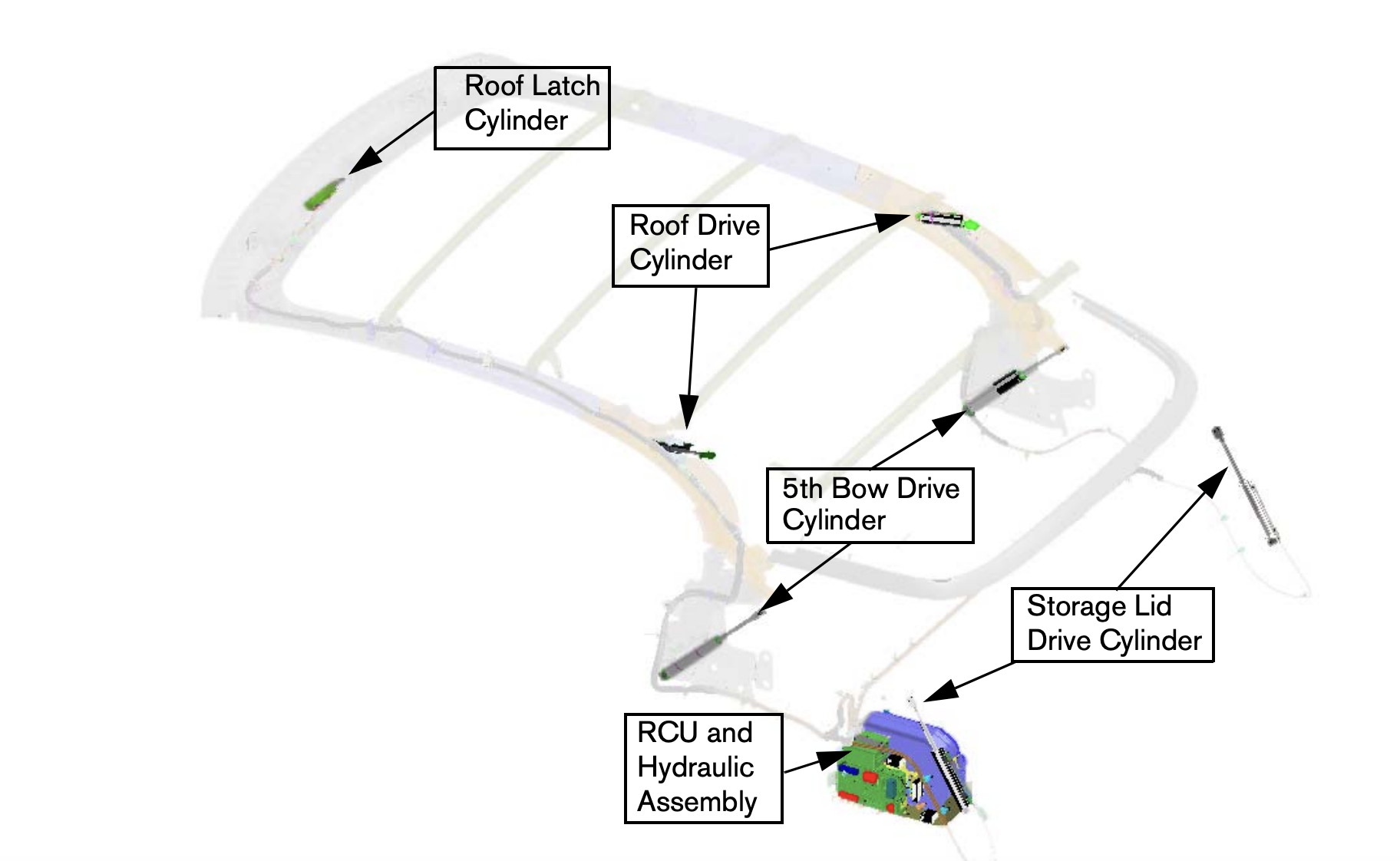
In the CrossCab, the hydraulic roof is controlled using body-interfacing electronics, chiefly a roof control unit (see above) that operates the pump based on input from various sensors. The rest is a series of hydraulic lines, cylinders, motors, and switches strung through structural “bows” that use bungee cords to keep the headliner in place through the roof’s range of articulation. When you take the top down, a lid behind the headrests opens up by extending over the trunk, so the whole assembly can collapse into an area partitioned off from the trunk. Here’s a look at it in action — it doesn’t go well:
TSB’s Out Of The Gate
Problems with the CrossCab’s roof presented themselves immediately upon market-launch. The CrossCab’s roof alone accounts for several Technical Service Bulletins dating back to January 2012 according to NHTSA’s database. For those unfamiliar, TSBs are not quite recalls, though some can be handled at no cost to the customer when a car comes into a dealer for work. They differ from recalls in that they’re typically for fit and finish issues rather than safety problems, though not exclusively. Some can address mechanical issues that can lead to early part failure, like this one advising Ford techs to replace turbo oil supply filters to prevent early turbo failures from recurring.
Anyway, TSBs for the CrossCab started with something basic: adjusting the bolts for the convertible top’s outer flap. Nissan’s TSB doesn’t even specify a functional issue, so it seems this one was just about appearance. But trouble would arrive in December 2013, when Nissan determined the top’s rear skylight could come loose from the frame. That’s this rather confusingly small window up top:
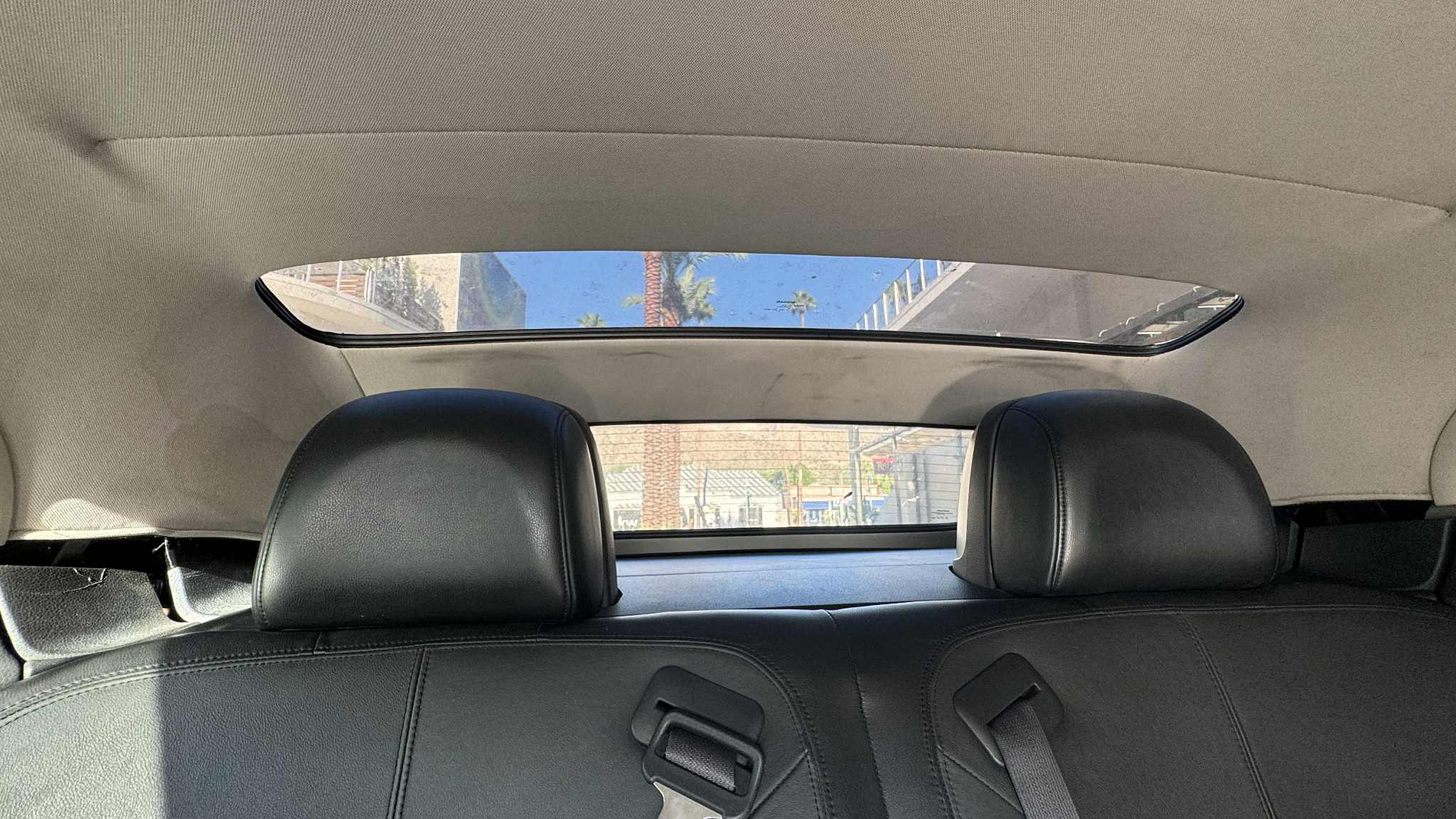
April 2014 saw another pair of bulletins come through, this time for improperly adjusted “pressure links” that could cause the top to look all rumpled, not to mention more problems with the skylight glass. One document says it’s “normal for the headlining to contact and rub on the tops of the rear headrests when opening and closing the soft top.” The last quality-related TSB came through that November, reporting manufacturing errors with the roof cover hinge. Part of the hinge could have a burr along its edge that could fray the fabric top, though it was a simple fix. Sand it smooth with emery cloth, repaint the area, and it was good to go.
The Trunk Situation Is A Problem
From there, TSBs tended to concern the availability of replacement parts, though we’ll get to that later. Instead, CrossCab owners found more immediate problems with their cars’ roofs. Remember how I said the roof storage compartment had been partitioned off from the trunk? Well, Nissan didn’t use a hard plastic or metal divider, but something closer to a plain fabric tonneau cover.
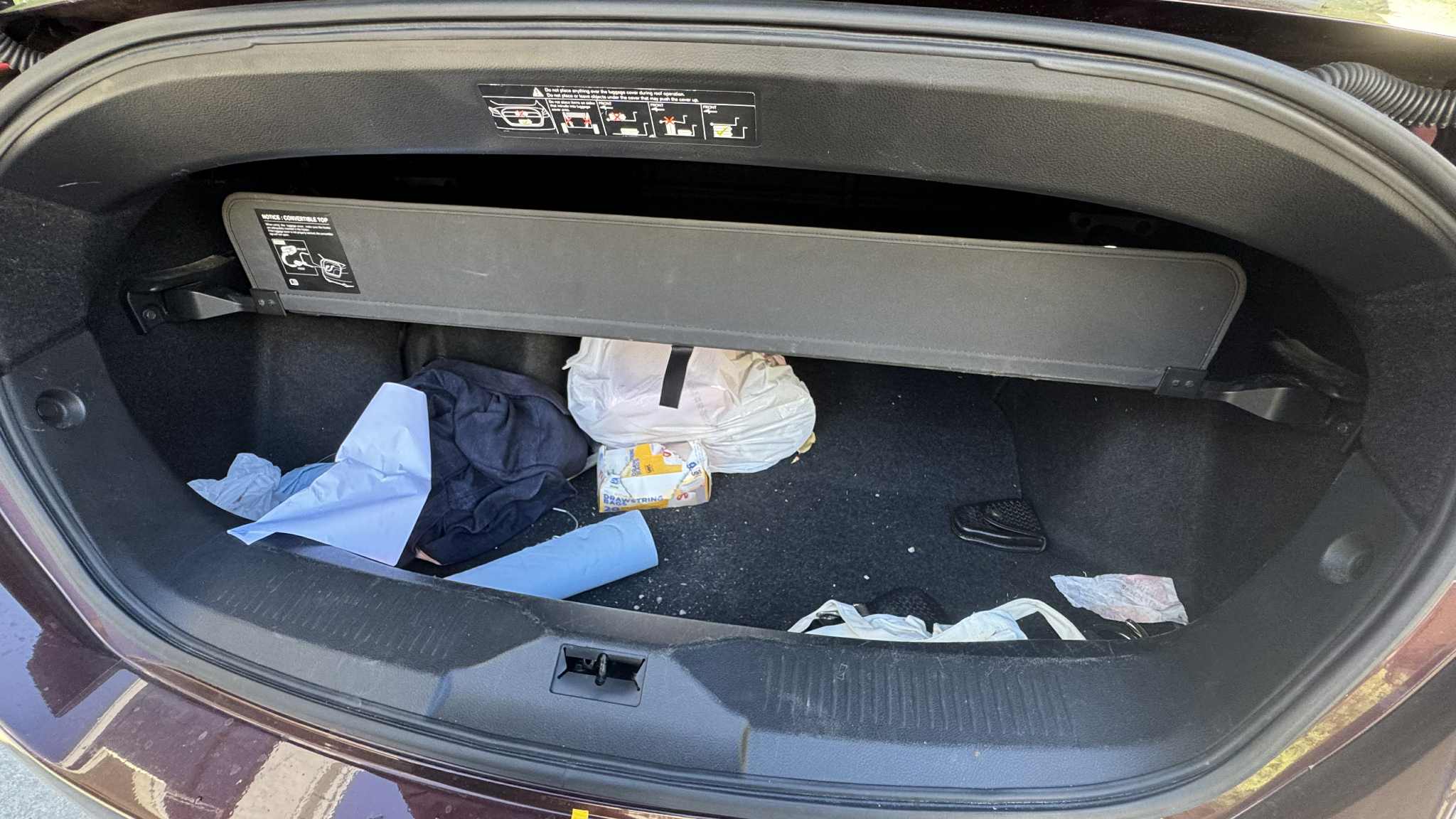
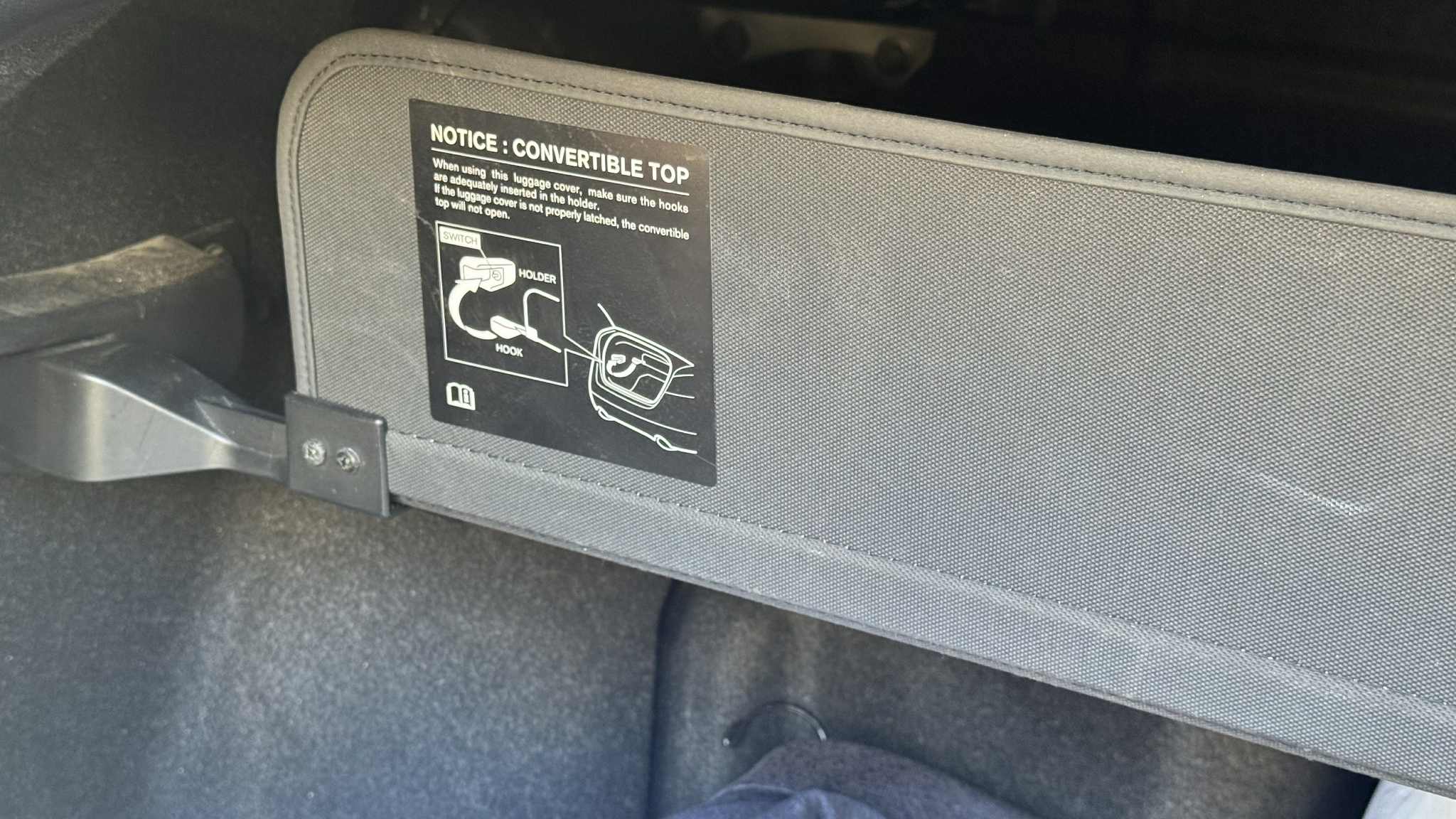
This was presumably so owners could make use of the space the collapsed top occupies while the roof was up. Trunk space is sorely limited either way, with 12.6 cubic feet of space with the roof up and just 7.6 with it down. That’s negligibly more than you get in a McLaren 750S.
What little owners could fit had to be loaded in accordance with warning labels found inside the trunk. In short, they prohibit wedging in anything that could deform the cover in any way. If that were to happen, the partition has a removable crossbar with a sensor that will signal the roof not to open if the partition isn’t in place. Wouldn’t want anything to jam it up, of course. This can also happen if the mount for the crossbar comes loose for any reason, as one technician on a shop management forum noted.
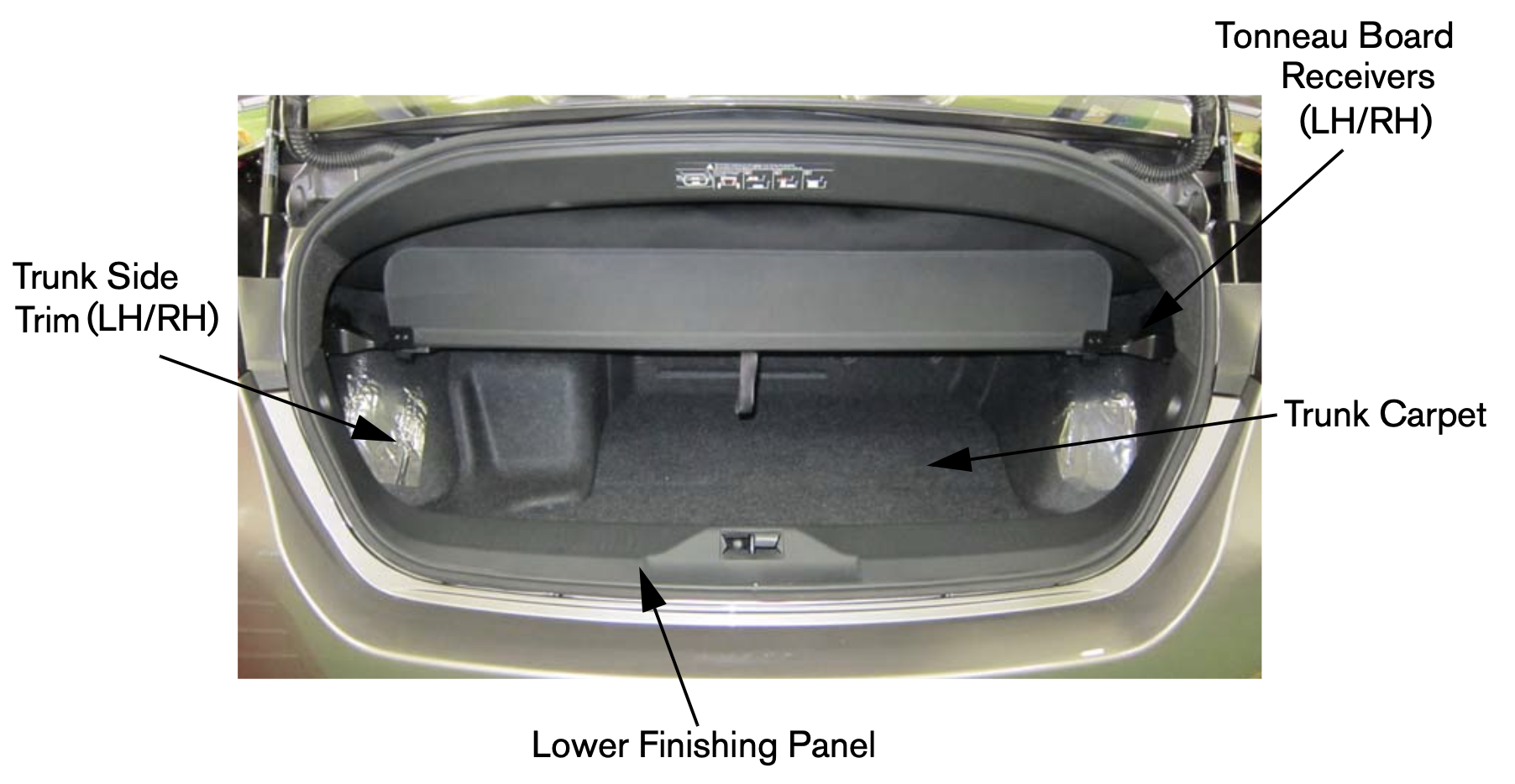
While Nissan hoped the label would be enough to prevent owners from loading the trunk incorrectly, a sticker doesn’t make up for the fact that the CrossCab’s trunk is a small, oddly shaped space. It also goes without saying that things can move around inside the trunk while you drive, and get into places they aren’t supposed to be. If you know Murphy’s law, you know that’s an inevitable outcome. Even if it’s an edge case, it can still make things a whole lot worse when it coincides with one of the CrossCab’s other design oversights.
Let’s say you’re a snowbird who puts their CrossCab in storage for the winter, as I’ve seen multiple owners attest to doing. It’s the first sunny, 70-degree day of Spring, and you’re hauling your CrossCab out of storage for a cruise. Only, it seems you forgot to hook up the battery tender last fall—rats! A dead battery. Well, that’s an annoying errand to run, but not the biggest issue. You exchange the battery, and the CrossCab fires to life. Only, something’s wrong. The dashboard displays an error message about the roof being partially open, even though it’s fully closed. The windows don’t work either.
While you could say there’s some user error involved in failing to hook up the battery, batteries can also go bad if a car’s alternator gives out or if it develops a parasitic draw somewhere. When any of these happen, they reveal a peculiarity of many modern cars’ body electronics when 12-volt power supplies go faulty. Insufficient current or total loss of power can cause body modules to lose calibration, which is to say they lose track of where the mechanisms they control are.
With power windows, resetting them is often as simple as running them through their whole range of motion and holding the switch after you’re done, as this Wikihow article illuminates. This is obviously more complex in a convertible that has to keep track of the roof’s position, but in the CrossCab, there’s another layer of problems. When its body module loses track of the top, it defaults to thinking the roof is partially open rather than fully up or down.
Because the computer thinks the top is moving, it thinks the roof’s cover is open, and therefore in the path of the trunk lid. That disables the trunk’s electronic latch release, meaning the CrossCab’s trunk—along with the potentially offending cargo divider sensor—become inaccessible through normal means. They aren’t fully sealed off, but opening the trunk from here requires a method most CrossCab owners have never had to employ up to this point: A hidden physical key.
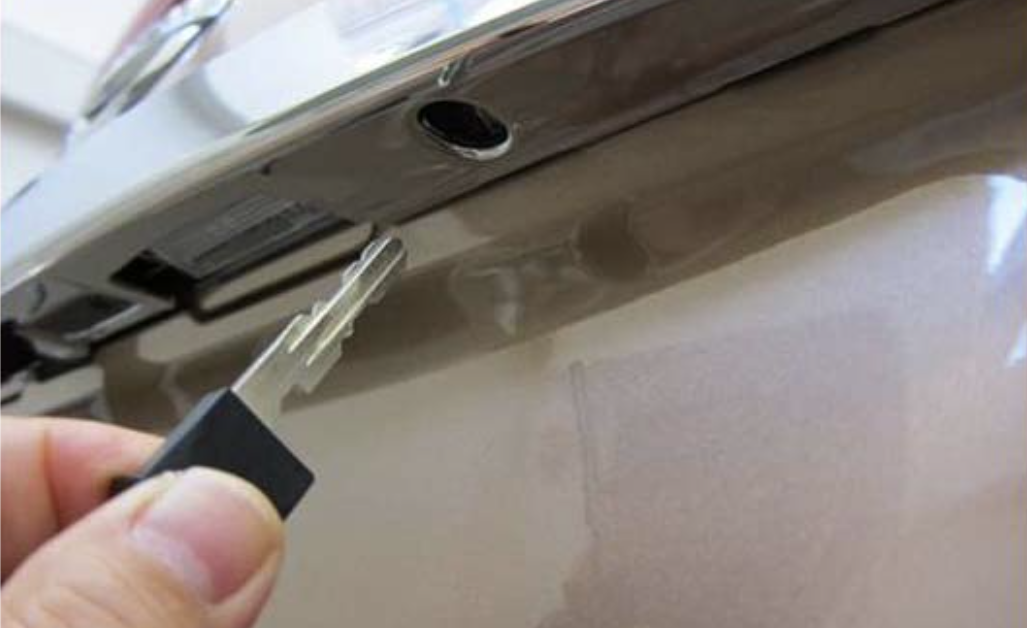
CrossCabs’ key fobs contain slide-out physical backup keys, which like most automotive keys are double-sided (meaning teeth on both sides of the blade). Unlike most car keys though, there is a right and a wrong way to insert it into the CrossCab’s trunk lock cylinder, which is hidden above the license plate. The key’s plastic bow (the technical term for the grip) must be oriented downward with the key’s offset blade upward for the key to go all the way in and turn the lock cylinder. And because the physical key is almost never used, the cylinder tends to be almost seized, and require significant force to turn. If that sounds stupid, then you’re in agreement with a professional locksmith I talked to about the problem. (Hi Kim!)
It Can Be Opened By Hand, But It’s Tricky
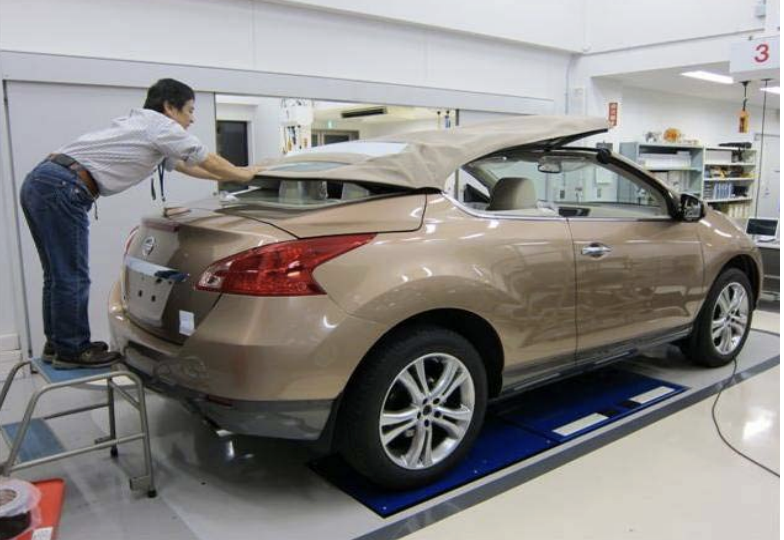
Once the trunk is open, though, owners can rearrange its contents to un-trip the partition sensor. If something more serious is wrong, the convertible top can be opened and closed by hand according to Nissan service literature. That said, the manual says it requires two people, tools, and stripping pieces of trunk trim out, so it’s not something owners can do in a pinch. While onerous, the procedure itself is also still easier than finding someone willing to perform it. Or for that matter, do any kind of service on a CrossCab’s roof.
Owner’s Aren’t Thrilled
Many owners who haven’t had the instructions laid out for them (or don’t have the mechanical ability to follow them) have taken their cars to dealers, only to be met with various frustrations. Owners’ forums are littered with reports of dealers outright refusing to work on CrossCabs’ roofs, with YouTuber savagegeese (who bought a well-kept example) claiming he watched a dealer tech profanely state they’d sooner be fired than work on a CrossCab’s roof.
“Fuck that. You’ll have to fire me before I work on that car.” – Nissan dealer technician quoted by savagegeese
When owners aren’t turned away, they’re often quoted truly astronomical repair costs. Owners have received estimates of $1,800 for a motor replacement when side flaps won’t retract, $8,000 for a repair that reportedly failed, $10,000 to fix concerning noises at just 29,000 miles, or even $19,000 for an entire new roof. This goes without mentioning some of the other roof issues that have presented over time, such as at least two reports of bent frames. The Savagegeese video linked above relayed verbal instructions not to operate the top in weather colder than 40 to 50ºF, which may sound extreme, but it’s a more cautious (and probably safer) boundary than the 32ºF minimum specified in an August 2014 TSB.
“I am so screwed by Nissan I can’t even begin to tell you. I have the 2011 Nissan CrossCabrolet and the top broke. Apparently it is the hydraulics and the top is stuck in the down position and the top cover wont go all the way closed. The top always had a problem because it would hit the back seat going up, but I would help it and that usually did the trick. Anyhow, I was putting the top up and the whole thing froze. Apparently, the hydraulics froze up. THE COST OF THE REPAIR IS $19,000. I REPEAT $19,000. I am not kidding. Apparently the parts run $16,000 of that repair cost.” – Brad S. on CarComplaints.com
Of course, some owners have circumvented these extreme costs. One forum poster says they were quoted $2,700 plus labor for a replacement body control module, only for an indie shop to pop the trunk and fix the top within five minutes. Another owner who was asked $9,000 for a replacement roof controller bought a $2 set of vise grips to open the trunk, reinstalled the partition bar, and restored their roof to operation on their own. Whether it’s greed, incompetence, or both, dealer service departments are about useless when it comes to fixing CrossCab tops.
“$8,000 is a true figure of what they charged us to fix the convertible roof. Now it is broken again and they won’t do anything about it…. It has low mileage because my husband only drove it in the summer. He loved this car. We bought this car after he recovered from a server [sic] stroke. He has dealt with [a Nissan dealership] and also Nissan Corp. Right now it is not drivable because the roof is half way down. My husband called a tow truck and they refused to tow it because it was not safe with the roof half way down. He called the dealership and asked if some one could send someone out to look at the car since he could not get it towed and they said no. They have our $8,000 and we have a car we cannot use.” – Susan H. on CarComplaints.com
But there’s less and less that DIYers and indie shops can do as roof problems get more serious. According to the Nissan service manual, there is no way to service the roof hydraulics. Zero. Zip. None. Here’s the direct quote:
“The hydraulic pump assembly is located in the trunk on the left side, with a cover installed over it for noise reduction. The hydraulic pump is not serviced separately. If the hydraulic pump requires replacement, it is serviced as an assembly with the hydraulic cylinders and lines.”
One owner tells of a machine shop installing bleeder valve-equipped hydraulic cylinders into their car’s top, though they emphasize it was an extreme fix forced by Nissan’s apparent apathy toward serviceability. Multiple owners have described the CrossCab as an “orphan” vehicle, and it’s even easier to understand when you see how dire the parts availability situation has historically been.
The Supply Of Replacement Parts Is Dire
Though the CrossCab lasted into model year 2014, a June 2015 TSB stated that parts availability for the roof assembly, hydraulic system, and cover were already “restricted.” That was at least partially reaffirmed as of a June 2019 TSB, which addressed only the complete roof assembly. As of this April, one owner (who themselves faced a $13,000 repair estimate) claimed there are just seven new replacement tops left in the United States.
“I straightened out the bent linkages and was able to manually close the top, but with the interior trim pieces broken, the top was not taut. The vehicle is in great shape and my wife loves the car, so we bit the bullet one time. […] After examining the top, which couldn’t be repaired this time, [dealer] technicians looked over the entire car and gave an opinion to/not to replace the top. This is an expensive option (13K) but the top was FUBAR.” – PaulE on NissanMurano.org
The computer that operates the roof, known as the Top Control Module (also called Roof Control Unit), is also in questionable supply. Mechanics have sometimes misdiagnosed other malfunctions as TCM failures, and have sometimes pushed owners toward this pricey repair when it’s not needed. Those that don’t thoroughly research their cars get stuck looking for a replacement, and the small number of CrossCabs sold means few are in junkyards. Ergo, used parts are hard to come by for those who don’t already have parts cars. (Savagegeese’s video noted they’re far from unheard-of in this community.)
TCMs do indeed fail though, and while one CrossCabber says they’ve successfully repaired two TCMs, many have had to depend on new-old parts stock. It’s as eye-wateringly pricey as we’ve come to expect from this car, too: This Nissan dealer quotes more than $2,600 while other sites list it for even more—and that’s assuming they can actually provide it. As anyone who’s owned an old JDM vehicle knows, parts retailers themselves often list out-of-production items as being in stock, only to update their listings and refund customers when their suppliers inform them otherwise. At times, I’ve waited weeks for parts to ship, only to get a refund and an email saying the parts don’t exist. I’m sure CrossCab owners have been through the exact same ordeal.
“Brought the car to a local Nissan dealership. They say they looked at it, and then suggested I should replace the entire roof because one of the small bars in the corner of the roof frame is bent, and that bar is not available. The entire roof will cost about $15,000. This does not surprise me. They are trying to make it so ridiculously expensive that I will go away.” – Freefall Wile on NissanMurano.org
[Ed Note: Let’s dig into the actual Nissan service manual. It begins by stating the conditions needed for the top to move:
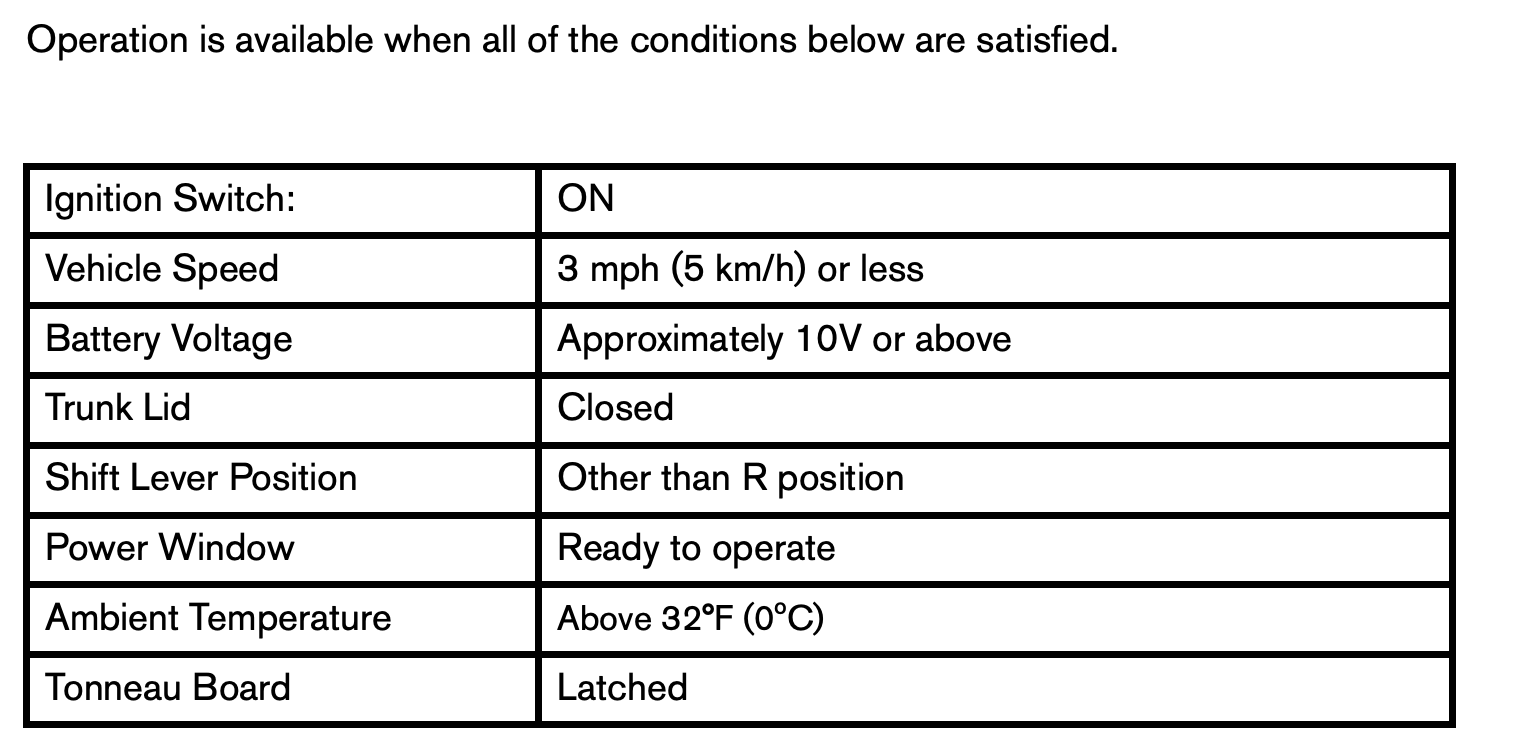
The document then discusses the basic mechanism by which the roof moves; it involves bungee cords:
As the convertible top is articulated, the bows act on bungee cords to fold the headliner material as the top folds. The bungee chords can be serviced seperately from the headliner if needed. There are two guide pins and two strikers mounted on the first bow; one hydraulic cylinder operates the two strikers. There is a position sensor on each striker to monitor the position of the locking mechanism. The position sensor is provided on the 1st bow to monitor the lock status.

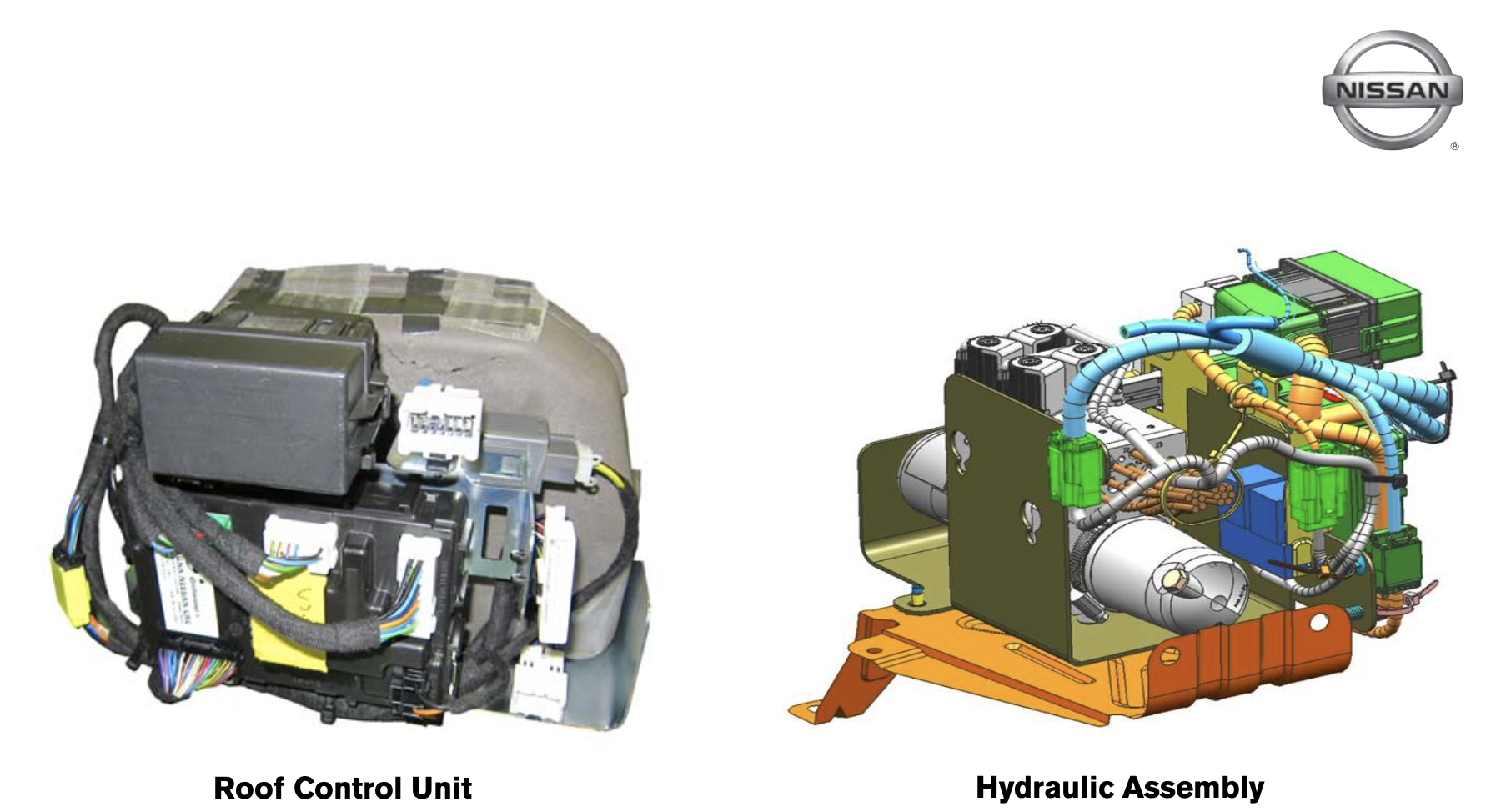
And here’s the part about the Roof Control Unit and the hydraulic pump assembly, whose CAD image you can see below:
The roof control unit is mounted to the hydraulic pump assembly, located in the cargo area behind the trim panels. The Roof Control Unit (RCU) is replaceable. When replacing the RCU, remove the pump bracket from the body first because the 3 RCU securing hooks are behind the pump bracket.
The RCU does not require initialization because it reads each actuator position each time it is operated. The hydraulic unit consists of a hydraulic pump motor that drives the hydraulic pump; hydraulic pump relays 1 and 2; switching valves 1,2,3,4 and 5; and the hydraulic pump temperature sensor. The hydraulic pump controls the hydraulic system operation according to control signals received from the roof control unit. Hydraulic pump relays 1 and 2 control the direction of the hydraulic pump motor rotation. The switching valves control the hydraulic circuits for each cylinder. The temperature sensor mounted on the hydraulic assembly measures the temperature of the hydraulic pump and fluid
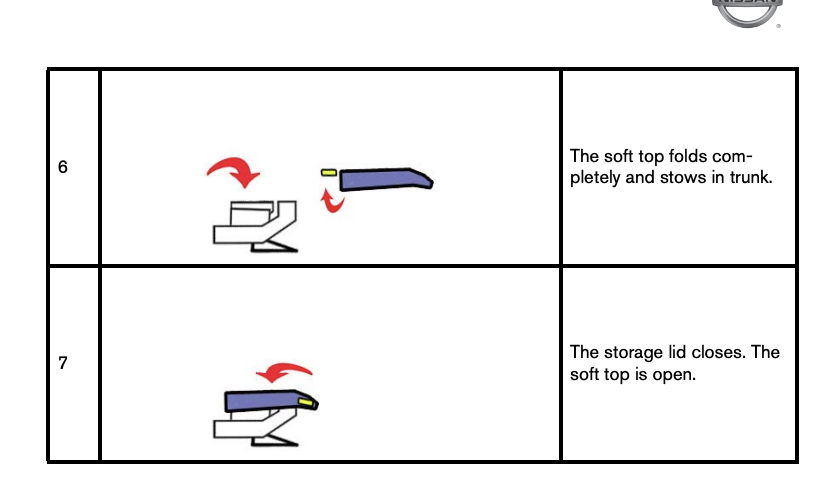
Here’s how Nissan shows the top operation using five little shapes:

And here’s a cool diagram describing the kinematics of how the system works:
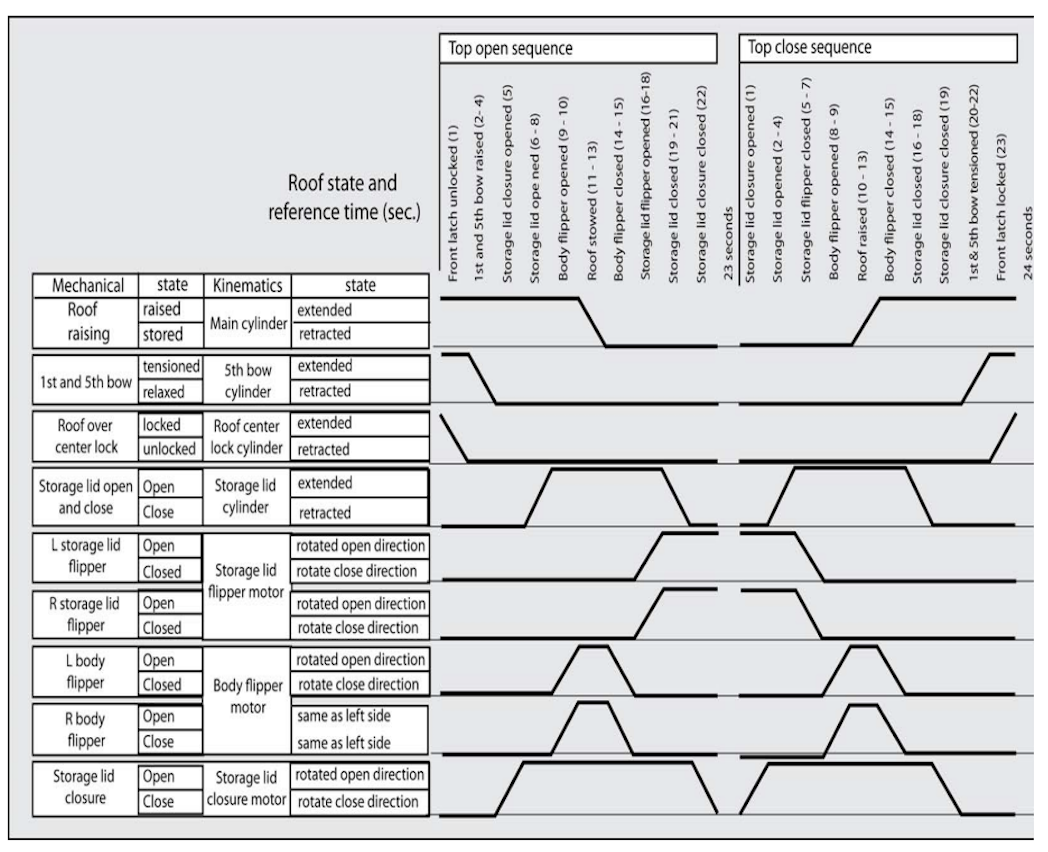
Anyway, I thought those diagrams were interesting. -DT]
So what of the CrossCab’s long-term future? As eminently hateable as this car is, there are vanishingly few other cars that offer the same high-riding, open-top driving experience without the ricketiness of a Jeep Wrangler. It retains a dedicated fanbase of longtime owners, plus new emigres drawn specifically by the revulsion that the CrossCab instills in people. The very features that make the CrossCab a one-of-a-kind driving experience are the ones that make it so polarizing, and therefore appealing to hardcore enthusiasts like us.
Whether or not any of us like the CrossCab, we can agree: It gives us something to unite over. It’s kind of like a Tesla Cybertruck in that regard, only better-engineered, not as ugly, and for nicer people. I’m not trying to suck up to David Tracy here because he bought one, I just haven’t seen any CrossCab owners praise Hitler.
Happily for them, they’re not up shit creek when it comes to maintaining their vehicles. They share leads on shops that won’t snub their business, and speak of reproduction roof frames and tricks to compensate for failing hydraulics. Love it or hate it, the CrossCab’s stalwarts will fight for their silly cars’ continued existences. And frankly, I hope they win.
With every passing year, fewer and fewer of these already rare ragtops will remain. Some of you may have already seen your last roadworthy example and not known it. Lasts often come and go unannounced that way, recognized only in retrospect. Appreciate the Nissan Murano CrossCabriolet before it becomes even more of a unicorn, because with a roof this finicky, it’s probably a matter of time before the only ones left are in museums.
The post The Nissan Murano CrossCabriolet’s Roof Was Riddled With Engineering Flaws appeared first on The Autopian.