The rooftop tent seems to be one of the most enduring trends in the off-road world. It seems no overland build is truly complete until it’s capped off, literally, with a tent that costs more than a cheap used car does. But what happens if you want to live the rooftop tent life but don’t have a brawny SUV? Thule thinks it has a solution with the Thule Outset, a rooftop tent that attaches to your car’s trailer hitch instead. But this tent has a huge catch or a few, and I’m scratching my head.
I get why the whole rooftop tent trend exists. A rooftop tent (RTT) has some advantages over a standard ground tent. Rooftop tents are often easier and faster to set up and tear down than most ground tents. They also sit high off the ground, keeping your sleeping space free from flooding, ice, and smaller critters. Plus, since a rooftop tent is stored on your vehicle’s roof, it doesn’t subtract from your vehicle’s interior space. There’s no tiny tent bag to fight, either!
Of course, adding a rooftop tent to your off-road build also makes your truck, car, or SUV look like it means business. If you ask some of the influencers out there why you should buy a rooftop tent, “cool factor” sometimes comes up as a big reason.
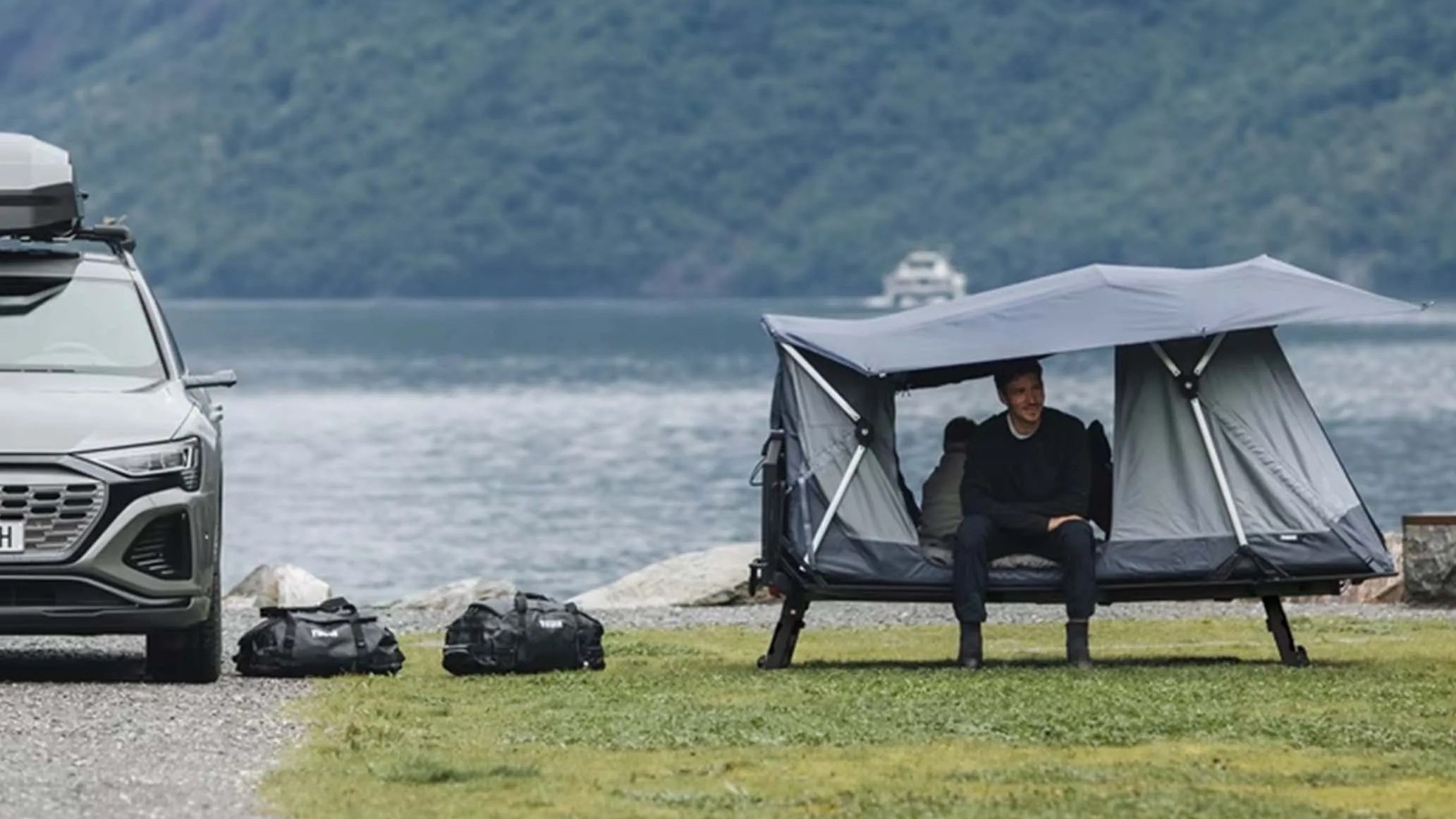
But what if you don’t have a vehicle with a roof rack and still want to rock a roof tent? Or, what if you think rolling around with a heavy rooftop tent on your roof isn’t how you’d like to roll? Outdoor accessory maker Thule thinks it has the solution. The Thule Outset is a rooftop tent that still sits off the ground, but doesn’t actually go on your vehicle’s roof.
Why Thule Is Making This Tent
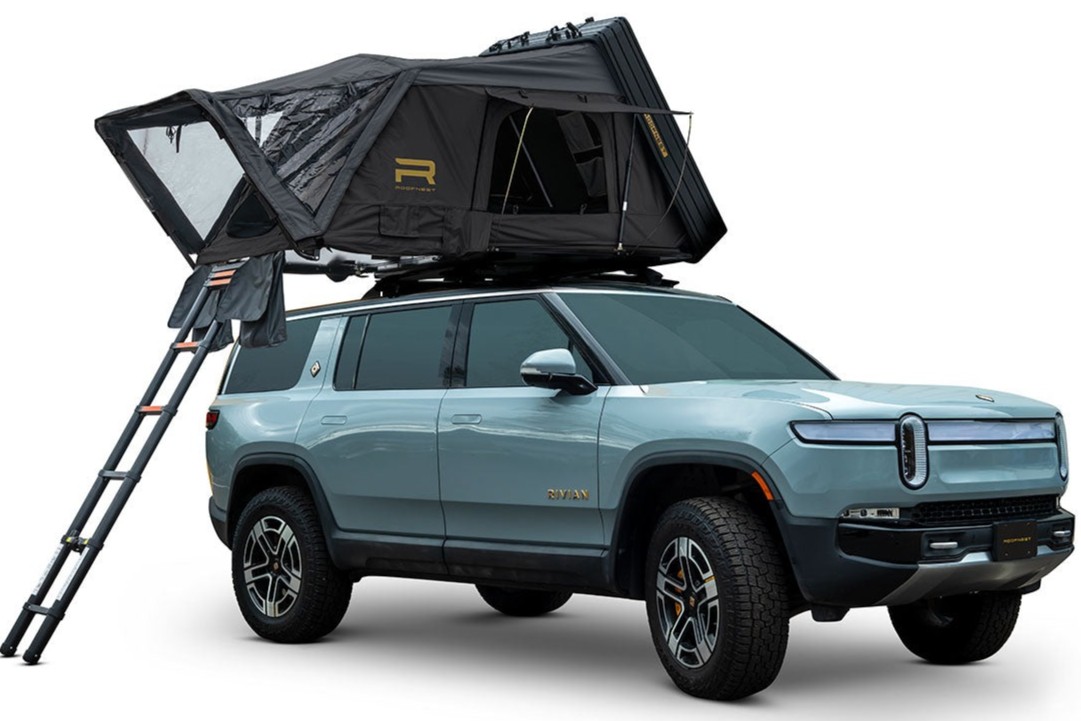
While rooftop tents have advantages over ground tents, they have potential downsides. One of the primary downsides of a rooftop tent is that it’s a huge and heavy brick on the roof of your vehicle. Take the ARB Altitude for example. ARB is one of the most famous names in the off-roading game right now, and the Altitude is a popular option. This rooftop tent has a fiberglass shell and walls made out of durable canvas. Its weight? 233.3 pounds.

Roofnest is another popular brand, and its Condor Overland 2 Air is pretty much a camper that you strap to your vehicle’s roof. Its shell is made out of aluminum, and it has an electrical system inside. That one weighs 180 pounds.
There are lightweight options out there, but even light rooftop tents still weigh around 100 pounds. This is a potential downside for a multitude of reasons, from the negative impact on your vehicle’s driving dynamics to the fact that installation and removal of the tent from your vehicle’s roof can be a difficult job requiring more than one person. Consider that the roofs of these vehicles are already seven feet off the ground, if not higher, after huge tires and suspension mods.
Now, I’ve seen people buy hoists or build Rube Goldberg-style machines to facilitate the installation or removal of rooftop tents, so solutions for the problems noted above do exist. Also, it’s not like you’re taking your overland build to the Tail of the Dragon, so a lot of folks don’t care if putting 200 pounds over their vehicle’s roof makes it handle worse. Rooftop tents are often bad for fuel economy, too, as they add aerodynamic drag. But to be fair to the tent, all of your other mods also likely hurt fuel economy, so it’s not like adding the tent is going to be the worst thing.
If you have a rooftop tent and love it, I don’t want to yuck your yum here. As I said, these are only potential downsides, because everyone’s needs, wants, and desires are different! Some of my favorite custom camper builds have rooftop tents on them.
The Outset
Of course, none of the above matters if you either are not interested in putting a tent on your roof or you own one of the many vehicle models out there that cannot carry a tent. Thule says it created the Outset for those people:
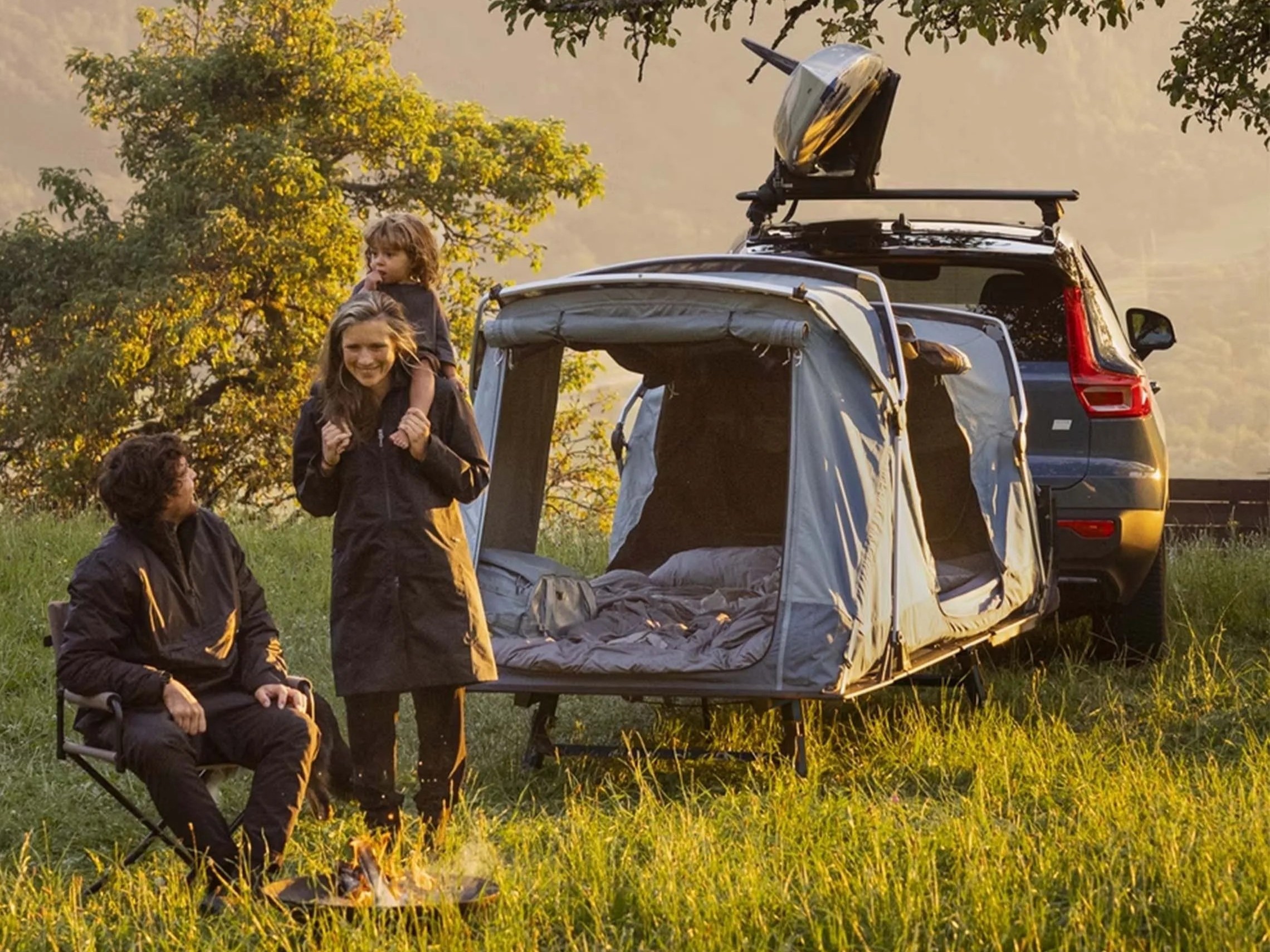
With its position at the back of your car, Thule Outset is a great option if you don’t want to carry anything on the roof of your vehicle or if you want to leave the roof free for other gear. Not only that, but the aerodynamic rear location of the tent means little to no impact on fuel economy or battery range.
Thule continues that one of its grand ideas for this tent was to turn any vehicle with a trailer hitch into “a luxury adventure vehicle.”

So what is this thing? Well, it’s basically just a rooftop tent, but not on the roof. The Outset launched in Europe last year, and now it’s made its way over to America.
The tent has a metal frame and uses 600D polyester for its canopy fabric. When the tent is open, you get 88 inches by 52 inches of sleeping space, which Thule says is good for three people. Those people have up to 44 inches of headroom at the peak of the tent. Inside, the primary feature is a very thin 2.7-inch mattress. That’s it. This tent doesn’t offer any electrical systems or any of the snazzy equipment offered by other manufacturers.

Really, the highlight feature is that this 154-pound tent attaches to your vehicle’s trailer hitch. When it comes time to deploy the tent, a set of legs extend to keep the tent a little bit over the ground. In theory, this gives you most of the benefits of a rooftop tent, with fewer of the downsides. You’re still at least a little bit off of the ground and you still get the ease of setup and tear down that you get in a rooftop tent. But now, the weight isn’t on your roof and isn’t disrupting your vehicle’s aero as much.
The Catch
All of this is great in concept, but Thule loses me almost immediately because this thing costs a whopping $4,699.95.
Now, I want to clarify that Thule has not exactly reinvented the tent here. There is a type of ground tent called a “tent cot,” and as you’re imagining, these are oversized cots with tents attached to them. These tents are just like the Outset and sit slightly above the ground using legs. While Thule pitches the Outset as a sort of rooftop tent that doesn’t need a roof, it’s probably closer to being a tent cot that attaches to the bumper of your vehicle. You can get a cheaper tent cot for a couple of hundred bucks and a nice one for around $500 or so. Is Thule’s hitch attachment system and quick setup worth an extra $4,000?
I’m also struggling to find a market for this. I’m sure some Jeep Wrangler and Ford Bronco owners would love this because it now means that they can have a rooftop tent thing and drive around topless. I could also see some crossover owners and side-by-side owners loving these, too. However, putting this on their trailer hitch means that they will no longer be able to tow a motorcycle or a personal watercraft. It will also impact the departure angle for off-road vehicles.
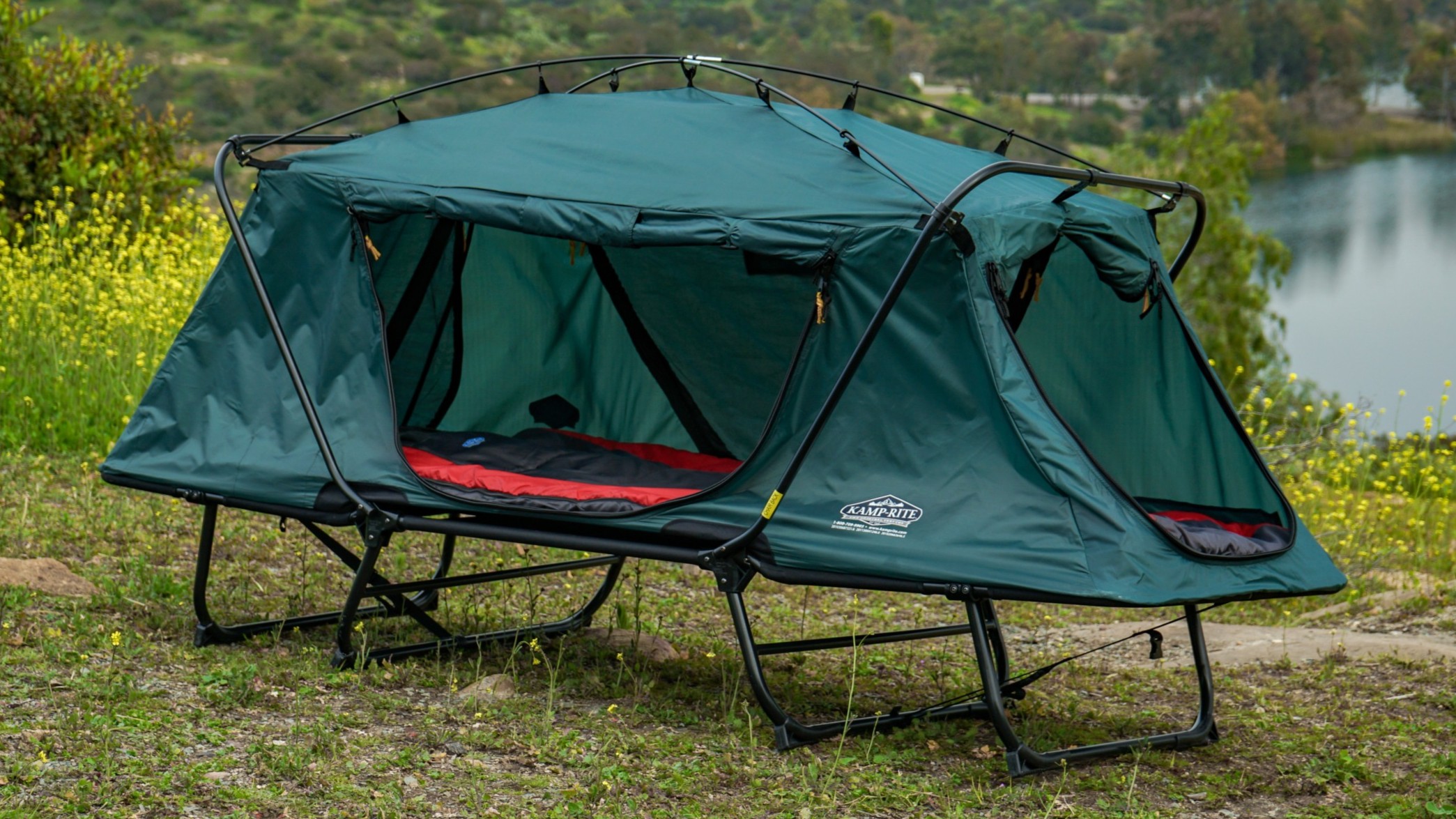
Likewise, this can only be attached to vehicles that have a European-style towbar or a trailer hitch. If your vehicle doesn’t have one available, as is the case with many smaller vehicles in the U.S. market, you cannot install an Outset. At that point, I’d rather just get a tent cot and deal with losing some interior cargo space. Or, I could take my existing Coleman instant tent and put it on a platform.
The other problem that I see is that the Thule Outset doesn’t look sexy or “tactical,” so it might not even attract the people who buy rooftop tents based on the aforementioned cool factor. I think this could make much more sense at maybe 25 percent of the cost. You can buy entire used camper trailers for the cost of one Outset. There are good quality rooftop tents that cost less than an Outset.

The Thule Outset is available right now and can be purchased directly on Thule’s website.
Maybe I’m being too hard on the Outset, and I’m about to see these all over dispersed campsites. The great thing about camping is that there are millions of ways to do it, and what doesn’t work for one person might work for someone else. I could see some folks really digging the Outset. I just wish it didn’t have such a hefty price.
Top graphic image: Thule
The post This New Rooftop Tent Wants To Change The Car Camping Game By Not Needing A Roof, But There’s A Big Catch appeared first on The Autopian.