I arrived in Los Angeles today, because there’s Important Autopian Business to be done that requires me to nod thoughtfully to and feign understanding, as well as preparing for our upcoming trip to Monterey for the always-exciting Car Week. I’m staying in a kinda crappy hotel near Galpin HQ, but it is, as the brochures note, parking lot adjacent.
That’s a nice perk, with achingly beautiful views of the vast slabs of asphalt, studded with resting cars, such as the one by the Taco Bell next door. In this lot is where a car caught my attention, and, while it didn’t seem to be what I thought it was at first glance, nevertheless proved to be a fascinating (to me, at least) challenge of VW year identification.
The car, as you can see, looks like a Mexico City Volkswagen Beetle (Vocho, as they say there) taxi:
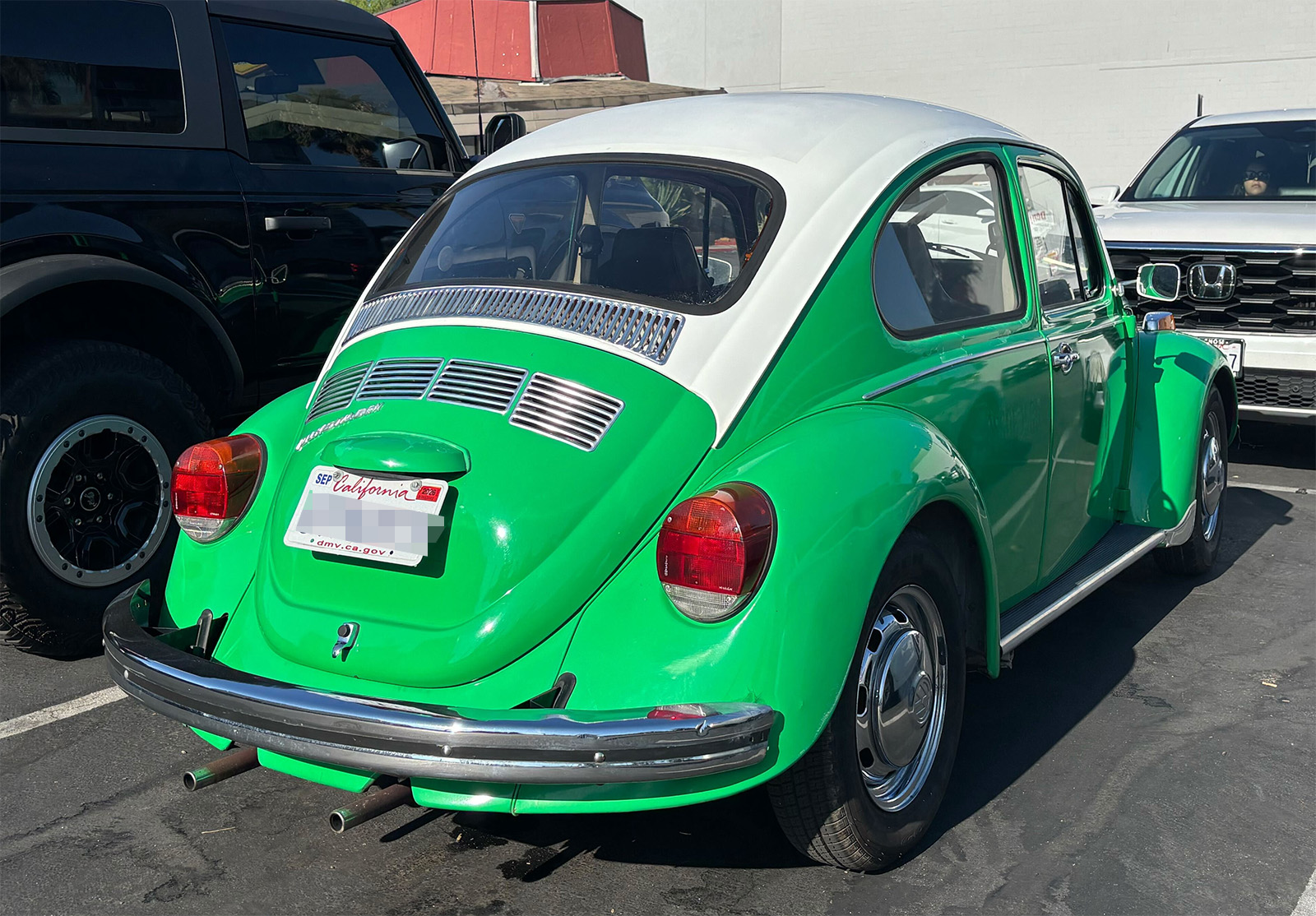
Holy crap, a Mexico City Taxi! These used to be the dominant taxi in Mexico City, and there were thousands of them buzzing along the roads, until the city outlawed two-door taxis (it seems two doors made kidnapping just too easy) back in 2012. Most were destroyed, sadly, though a few made it out. Could this be one of the survivors?
As much as I was hoping it would be, a little bit of scrutiny soon made me realize that what I was looking at seems to be a replica or perhaps tribute to the old Vocho taxis.
Here’s a real one, for comparison:
@evansrediscoveries My newest bug! Pocho the Vocho! He’s a Mexican beetle taxi! Future videos of the progress of going through it’s original engine and making it run like a top! #vocho #vwvocho #savethevochos #mexico #vw #vwbug #thebugmovie #taxi #retro #vintage
That one I know is real, because this one was rescued by my friend Tory and made a cameo in a Beetle documentary I was in, holy crap, about a decade ago. If you look at it, you’ll notice some details it has that are characteristic of Mexican-built VWs of the era: bumpers with a thicker center stripe/groove, and front turn indicators inset into the bumpers; unique steering wheel and dash controls, unique taillight lenses, and so on.
This Beetle doesn’t seem to be a Mexican-spec one, and, interestingly, I think it’s older than some of its details lead one to believe. Let’s see if we can figure out what year this faux-Mexican taxi is!
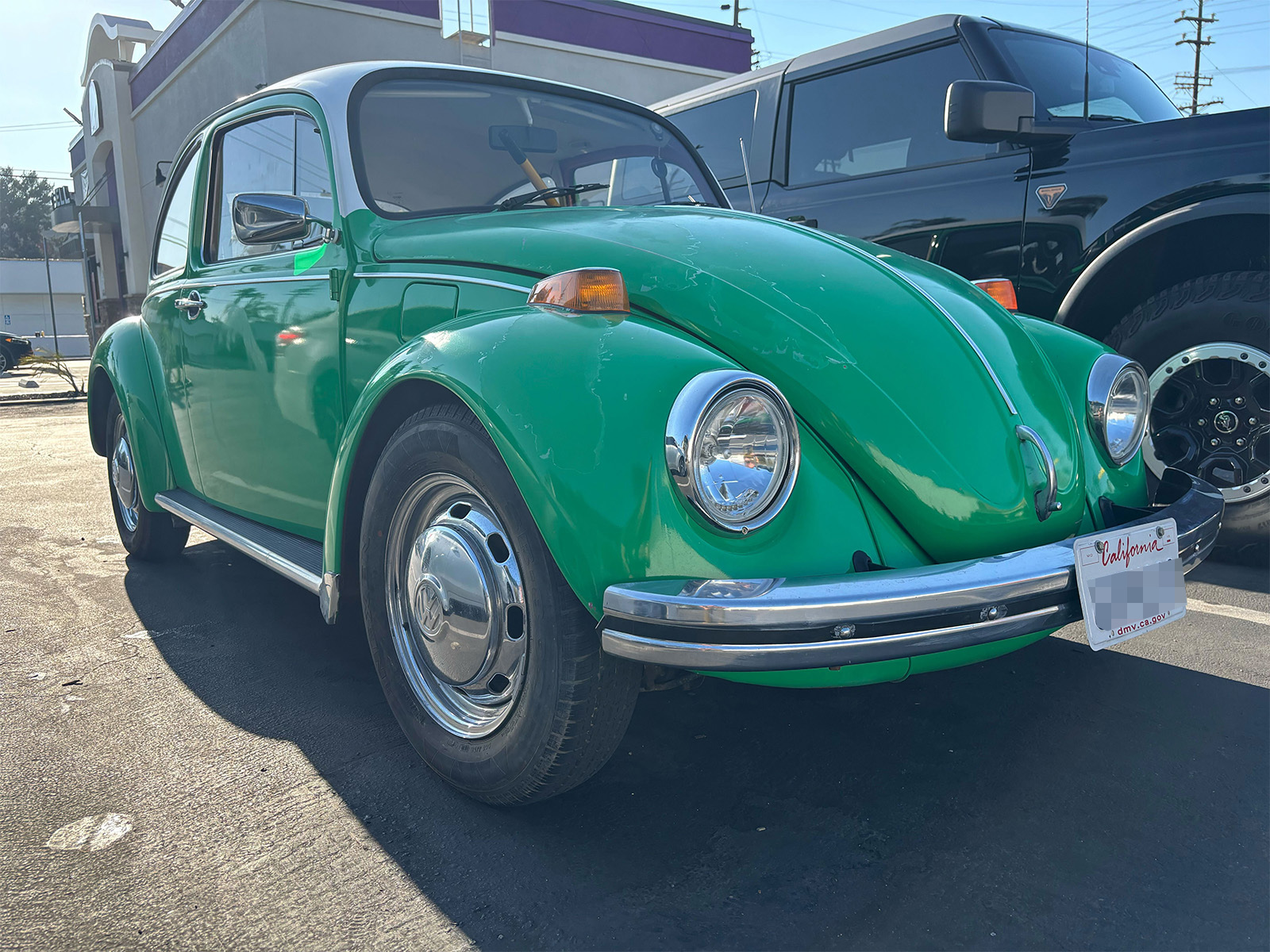
A good number of parts have been swapped out on this car, but I think there’s enough original, unswappable details remaining too get a good sense of the year. The front has US-spec “Europa”-style bumpers, which came on the scene in 1968. The front turn indicators, if they’re orginal, are ones first seen in 1970, and continued on US-spec Beetles until 1979/1980, when the Beetle stopped US sales. This front end is definitely ’68 or newer.
There’s a hint here though that will let us narrow down the year:
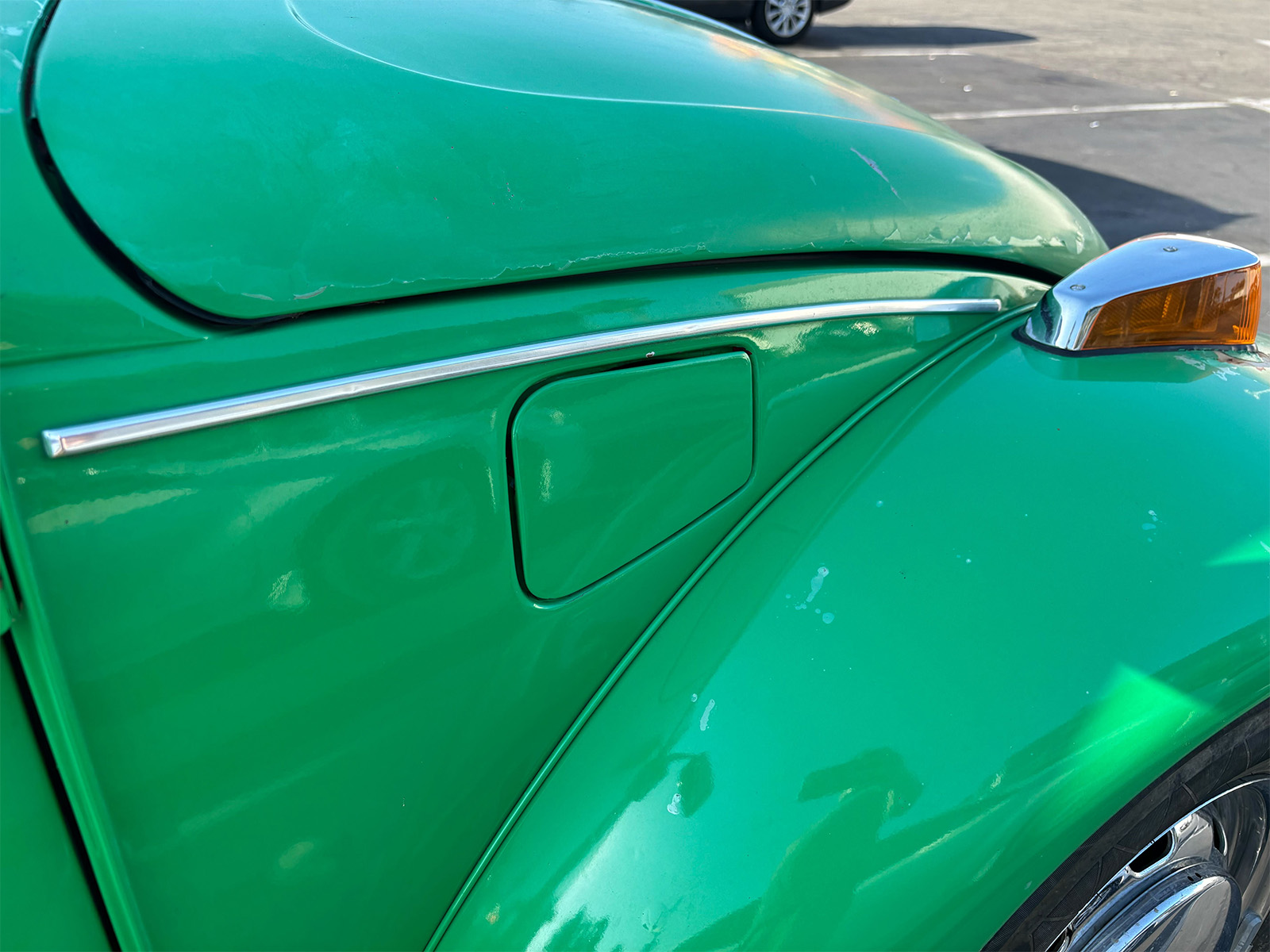
The fuel filler door! Starting in 1969, the fuel filler door lost the little divot for a finger and gained an interior remote release. This big of lavish decadence continued until 1972, and the next year the remote internal release was gone and the little thumb-divot was back.
This would be an incredibly difficult thing to add to a Beetle that didn’t come this way, so I’m thinking that means this car is between 1969 and 1972. But we can narrow that down further!
There’s a hint at the back here. Now, don’t be fooled by that engine lid with the four groups of cooling slats and those “elephant’s foot” taillights – which are actually the slightly different design used on Mexican-market Vochos, so good job to the builder there.

The four-vent engine lid started in 1972 and was by far the most common type for Mexico City taxis; the taillights were first used in 1973, and were also by far the most common Mexico City taxi types. So those parts I think are from newer cars. But the key is right here:
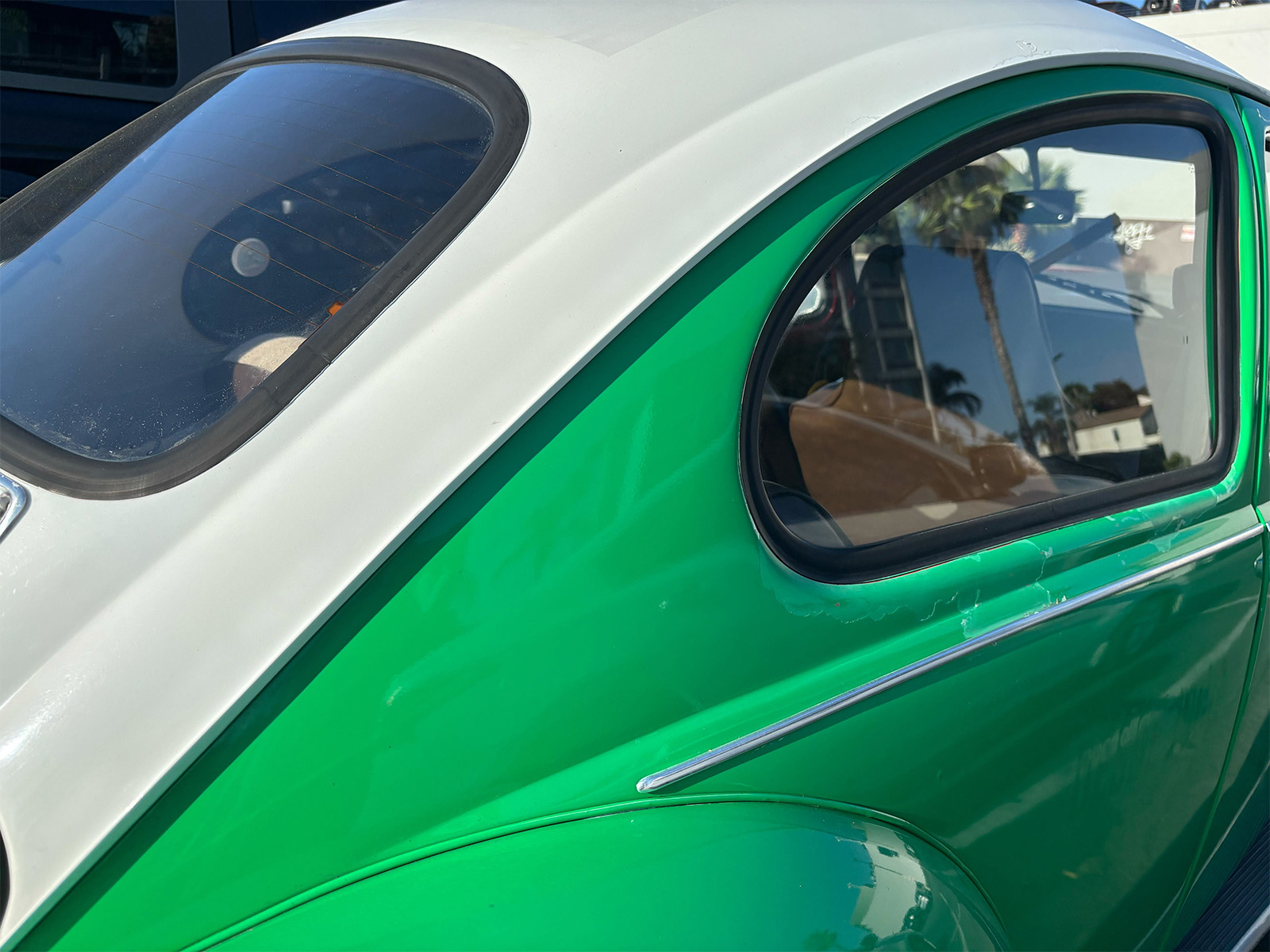
There’s no (-shaped fresh air extraction vent behind the rear side window, which came about in 1971. You can see them here on my 1973, behind the rear windows:

Mexican Beetles had these too, for a while, but they were discontinued in the 1990s, but the little body stamping detail still remained, as you can see on this Mexican Beetle I saw the last time I was in LA:

So, the lack of the fresh-air extraction vent suggests to me that this car has to be a ’69 or ’70. I peeked inside, too, and while I could tell the speedo was changed out for a ’73 and up one, the Oh Shit Handle was dash-mounted (it would move to above the passenger door in 1973) and the control knobs all looked like ’69 or ’70 ones.
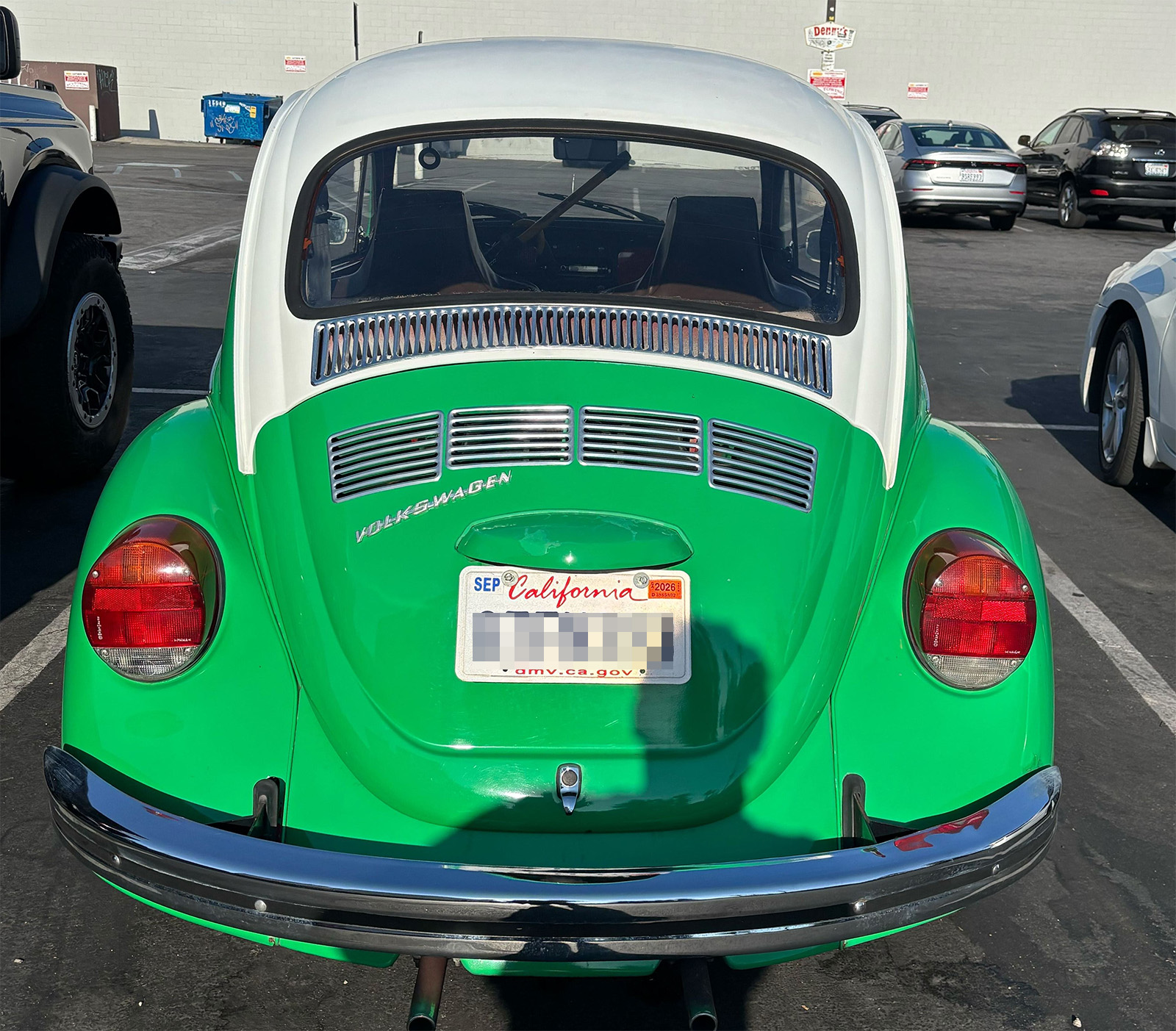
So, which one is it? Well, I think based on the shape of the seat headrests, which were reduced in size in 1970, we’re looking at a 1970 Beetle here, done up to look like an ’80s or so Mexico City taxi.
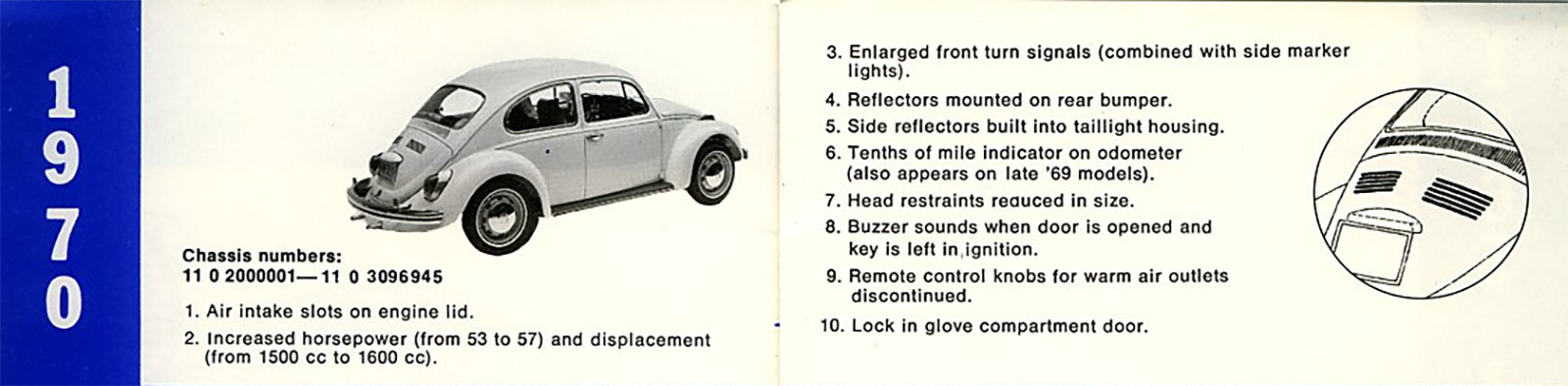
I really like seeing that someone has decided to make a Mexico City taxi tribute car, and while I was able to tell it wasn’t real, I think they did a fantastic job and this should pass for most casual VW fans.
I suppose it could just be a two-tone green-and-white Beetle, too, but I think the similarity to the Mexican Taxi livery is just too damn close, right?
The post Here’s A Great VW Beetle Year-Identification Challenge With A Faux Mexico City Taxi appeared first on The Autopian.