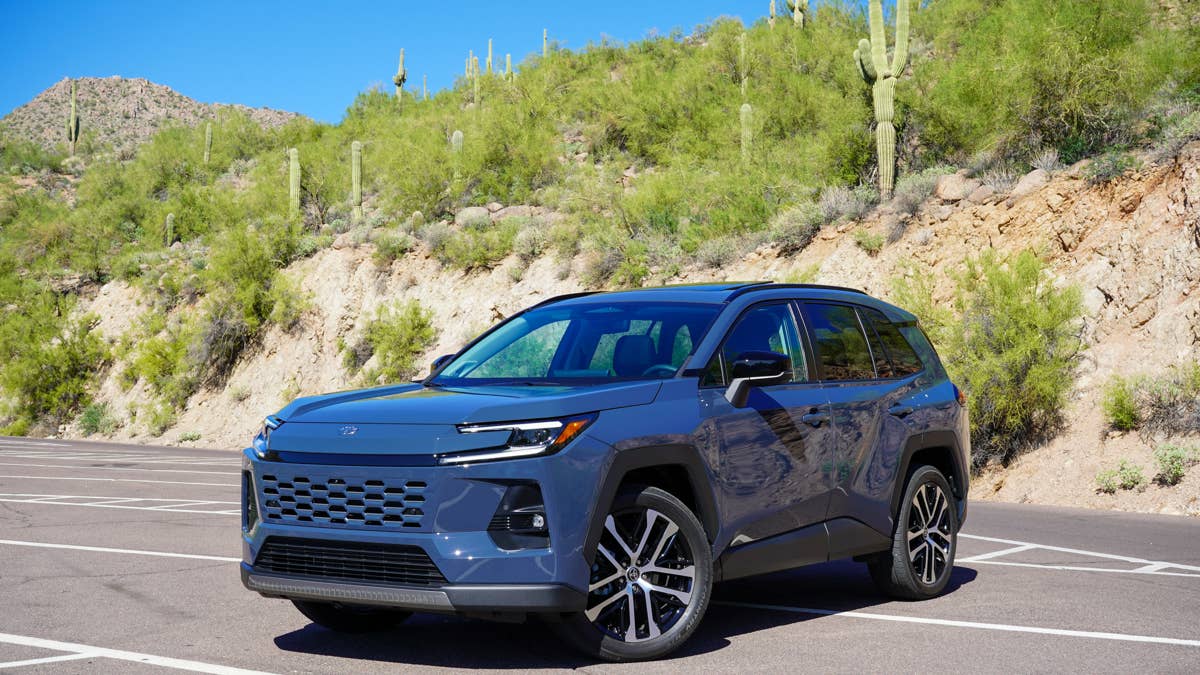
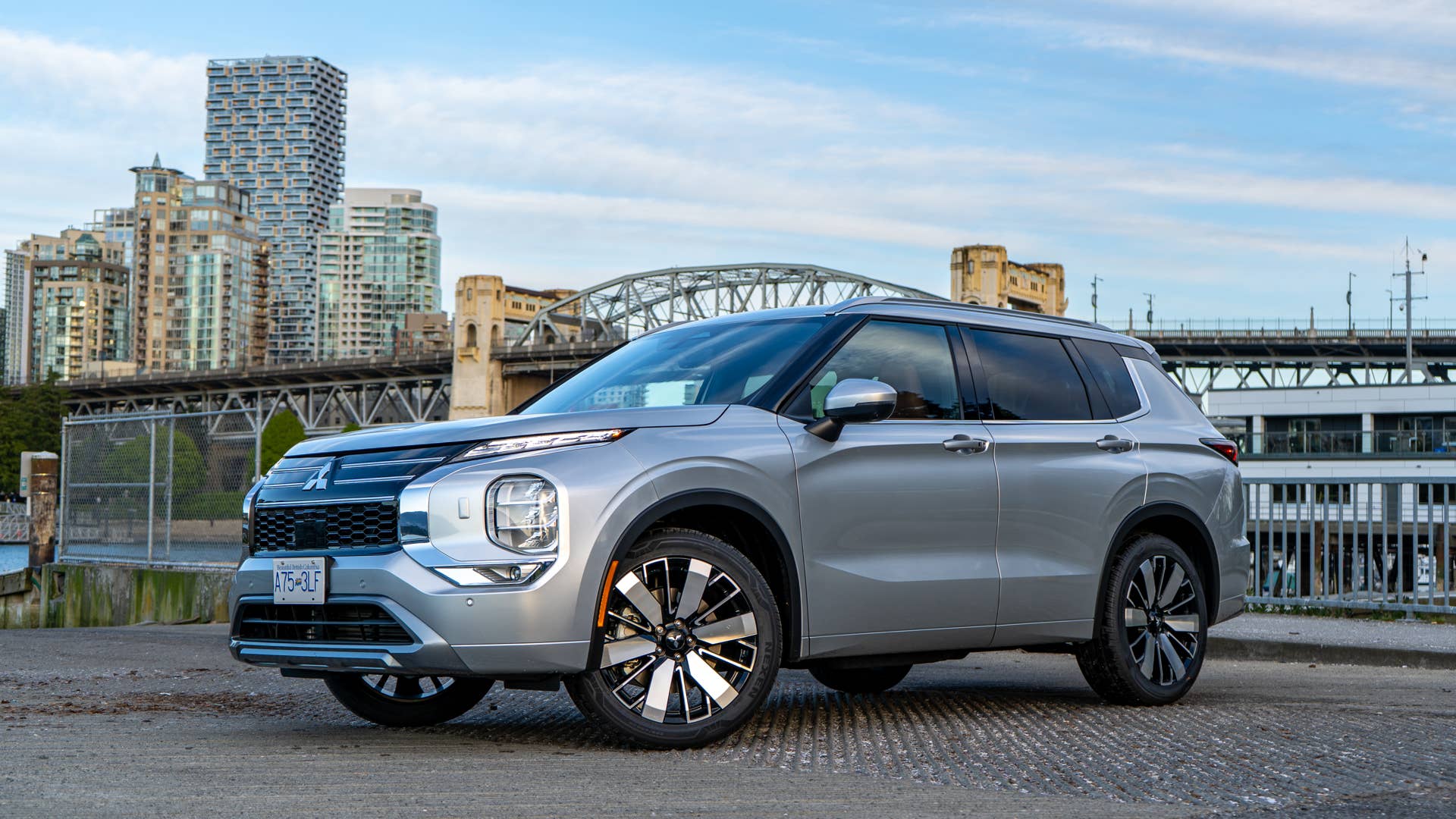
The 2026 Toyota RAV4 is the family SUV equivalent of a sensible pair of running shoes—they’re like Adidas Sambas. They aren’t necessarily glamorous, but they are everywhere, they work for almost everyone, and they’re still stylish enough to be taken seriously. The 2026 Mitsubishi Outlander, by contrast, is more of a left-field proposition within the contemporary compact SUV roster. It’s not the default choice, nor does it carry the RAV4’s cultural weight, resale reputation, or household-name familiarity. In fact, last year, Toyota sold roughly ten times as many RAV4s as Mitsubishi sold Outlanders in the U.S. alone. But after spending proper time with both, I still came away thinking this comparison is much closer than the sales charts would suggest, and that the Outlander might still be worth a second look even in the face of its fiercest competition.
Nowadays, these two SUVs overlap more directly than ever before. The redesigned 2026 RAV4 is hybrid-only, with standard HEV power and available plug-in hybrid models. The 2026 Mitsubishi Outlander, meanwhile, has moved to a new mild-hybrid setup for its standard model, while continuing to offer an Outlander PHEV. In other words, this is no longer a simple comparison between Toyota’s electrified efficiency and Mitsubishi’s conventional three-row practicality. Both are now trying to sell families on a cleaner, more premium, more efficient, and more versatile compact SUV experience. But can the Mitsubishi still justify itself to families who need more than just a third row of seats to be persuaded away from the RAV4? That depends on what “more” you’re looking for.
Cole Attisha
The RAV4 wins the numbers game more often than not
The trouble for the Outlander is that the RAV4 did not become America’s default family SUV by accident. Toyota has spent decades turning it into a product that is easy to recommend, easy to understand, and increasingly difficult to dismiss. In standard form, the 2026 RAV4 uses a 2.5-litre four-cylinder engine, paired with a parallel-series hybrid system, to produce up to 226 horsepower with front-wheel drive or 236 horsepower with all-wheel drive. Front-wheel-drive RAV4 Hybrids are rated for up to 48 mpg in the city, 42 mpg on the highway, and 44 mpg combined, depending on the trim, and all-wheel-drive models are rated for 45 mpg city, 39 mpg highway, and 42 mpg combined. More importantly for families who tow, Toyota lists certain 2026 RAV4 Hybrid trims with up to 3,500 pounds of towing capacity—unusually strong for a compact hybrid SUV; the Outlander can tow just 2,000 pounds.
The Outlander’s standard mild-hybrid setup competes with the RAV4 Hybrid in positioning, but not quite in execution. The 2026 Outlander MHEV uses a turbocharged 1.5-litre four-cylinder with mild-hybrid assistance to produce up to 174 horsepower and 206 lb-ft of torque. The Outlander’s mild-hybrid system makes it feel more modern than the outgoing non-hybrid version, but it doesn’t offer the same kind of fuel-saving, full-hybrid experience Toyota offers. In the city, the Outlander MHEV is rated for just 26 mpg and 31 mpg on highways. The RAV4 moves with greater electric smoothness, better low-speed polish, and stronger efficiency credentials. The Outlander MHEV helps Mitsubishi keep pace with where the segment is going, but the RAV4 Hybrid still feels like the reason the segment is going in that direction in the first place.
Need New Tires? Save Up To 30% at Tire Rack
Find the perfect tires for your exact vehicle and driving style. Click here to shop all top-tier brands, including Michelin, Bridgestone, and more, directly at Tire Rack.
Cole Attisha
But the Outlander feels more upscale than the RAV4
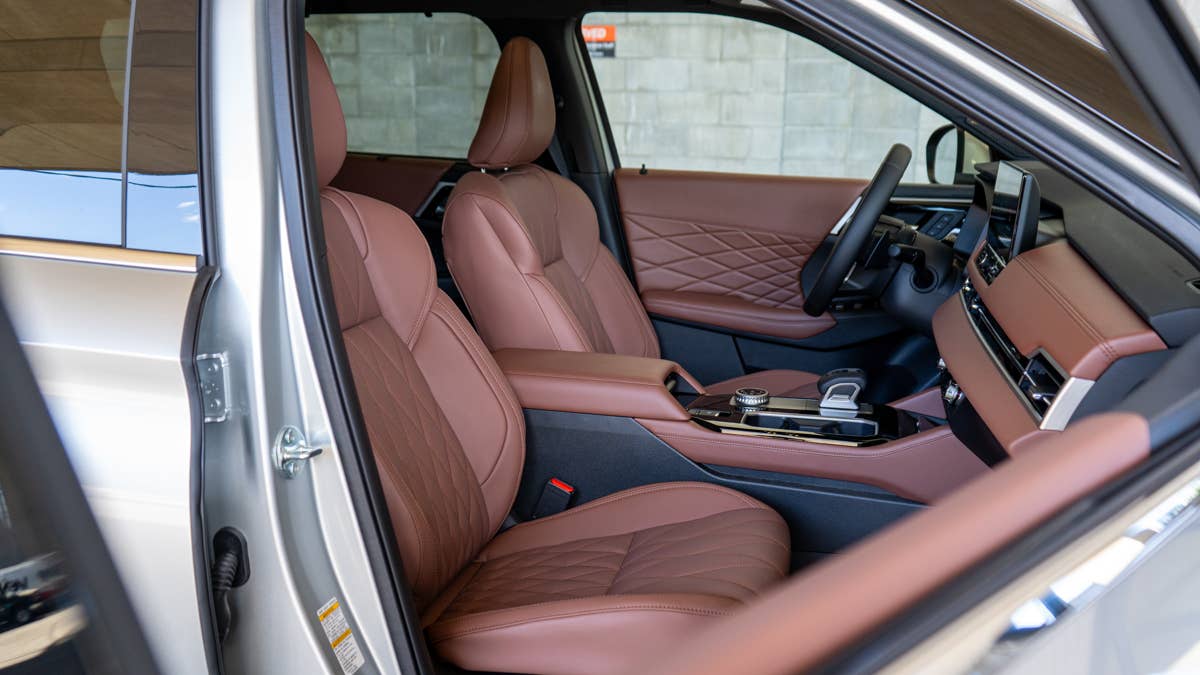
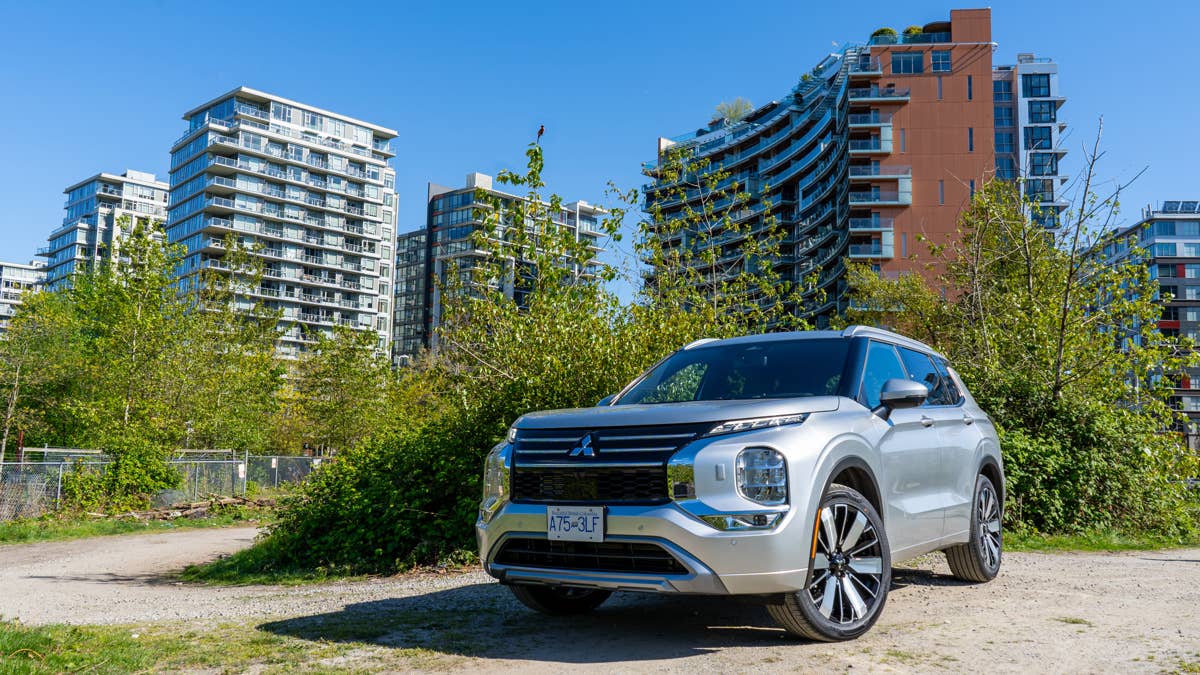
The RAV4 may win the measurable arguments more often, but the Outlander fights back through atmosphere. In the right trim, especially the high-grade Canadian-market GT S-AWC model I tested (similar to the U.S.-market SEL Premium Package), the Mitsubishi feels surprisingly rich inside. My tester had brown semi-aniline leather-appointed seats and the upgraded 12-speaker Yamaha audio system, both of which go above and beyond what Toyota leaves out of the RAV4, instead reserving such niceties for its Lexus-branded platform mate. The impression the Outlander leaves, especially in its cabin, is one of a class above, whereas the Toyota feels more functional, as if the brand’s C-suite didn’t want it to cannibalize Lexus NX sales by getting overly carried away with premium materials.
Cole Attisha
The Outlander’s cabin doesn’t feel like a budget alternative to the Toyota, even if its price tag might suggest otherwise. It feels warmer, more substantial, and more upscale. The seats are comfortable, the available panoramic moonroof gives the cabin a pleasant openness, and the 12-speaker Yamaha system is genuinely excellent. Although the RAV4’s available JBL system is still well worth commendation, its 9-speaker setup feels better matched to the 8-speaker Yamaha unit found in mid-range Outlanders. That 12-speaker upgrade is more competitive with the RAV4’s Lexus-branded twin, the NX, which offers an optional 17-speaker Mark Levinson surround-sound system.
Cole Attisha
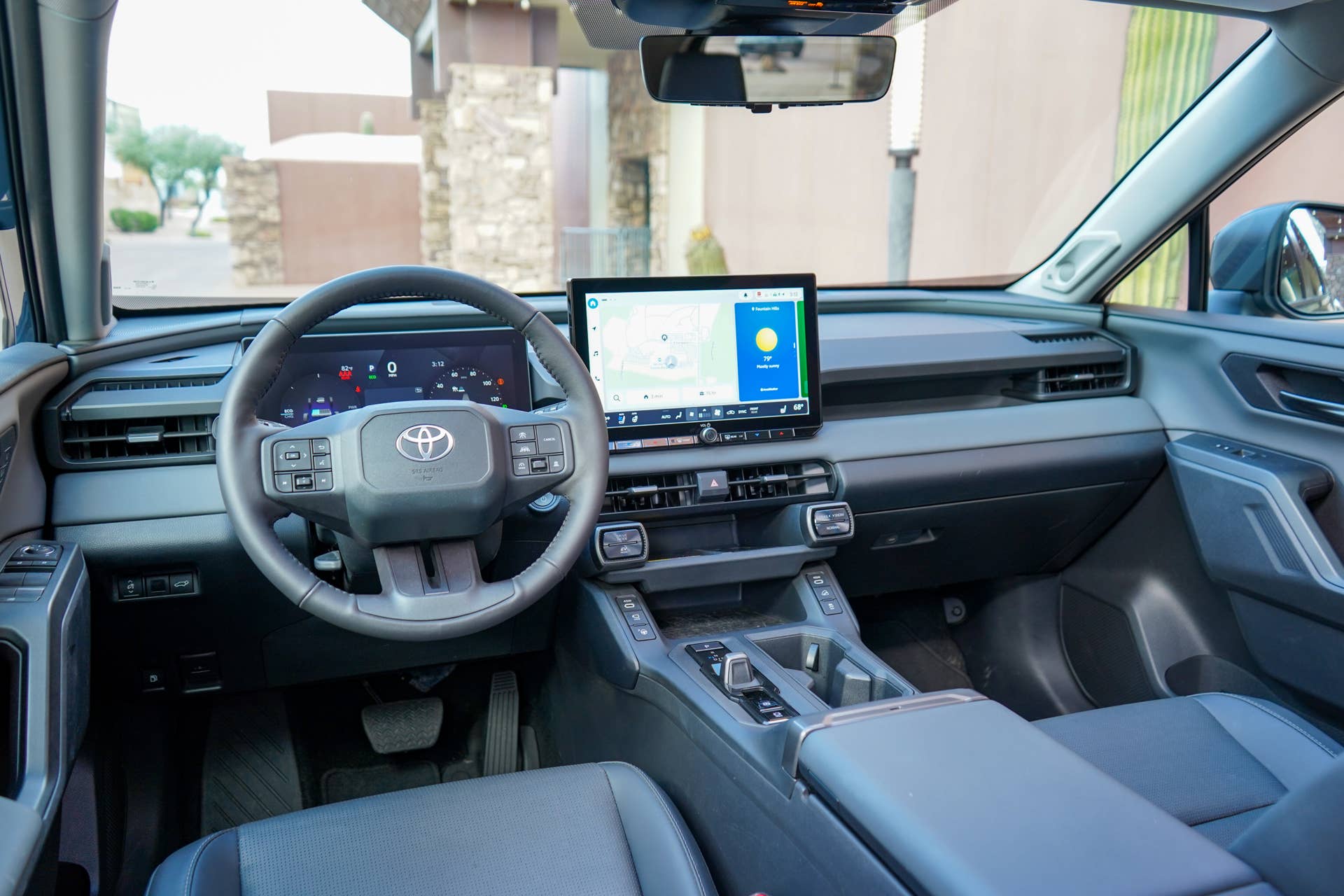
The RAV4 has improved dramatically inside, and the new infotainment system is a major step forward. It looks cleaner, responds quickly, and feels far more modern than Toyota systems of old. But even in higher trims, the RAV4 still does not feel especially upscale. It feels functional, durable, and smartly designed, but not luxurious. The Outlander, especially in richer specifications, gets closer to that feeling. Many family SUV buyers are not just shopping by spreadsheet—they are shopping through daily experience. The RAV4 gives you confidence, but the Outlander gives you a bit more sense of occasion.
Cole Attisha
PHEV vs PHEV: Toyota brings the power, Mitsubishi saves you some pocket change
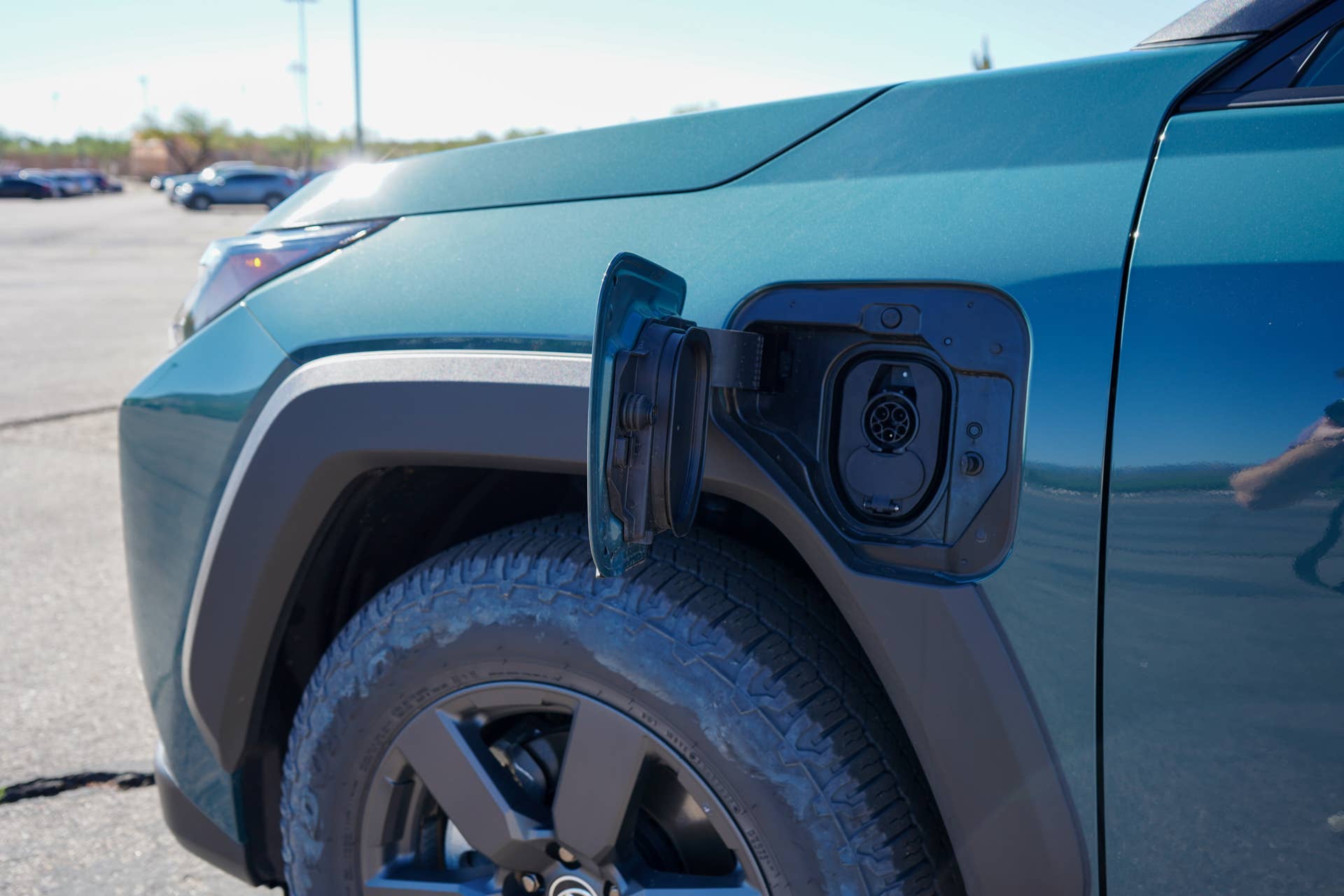
Both Mitsubishi and Toyota also offer plug-in hybrid versions of their popular compact crossovers. The Outlander PHEV has long been one of Mitsubishi’s strongest products, and arguably the version of the Outlander that makes the most sense. It gives the SUV a more premium, more technically interesting identity, and it aligns well with buyers who want electric commuting without going fully electric. But Toyota has become far more aggressive with the 2026 RAV4 Plug-in Hybrid. The RAV4 Plug-in Hybrid makes 324 net combined horsepower and offers up to 70.4 cubic feet of cargo capacity and 3,500 pounds of towing capacity, according to Toyota. Toyota also claims that PHEV-powered RAV4s can benefit from up to 52 miles of all-electric driving.
The Outlander PHEV counters with three-row availability, S-AWC, and a more comfort-oriented personality, but it cannot match the Toyota’s performance story. Mitsubishi claims the 2026 Outlander PHEV has roughly 65 cubic feet of cargo space and a towing capacity of 1,500 pounds. That towing figure is still useful, but it is well behind the RAV4 Plug-in Hybrid’s 3,500-pound rating. The RAV4 is more efficient, too, claiming up to 107 MPGe in SE/XSE guise, whereas the Outlander PHEV claims just 73 MPGe and can cover roughly 45 miles on pure electricity. Though the Outlander PHEV has a lower starting price ($40,445 for 2025 models—2026 Outlander PHEV pricing is not yet listed) than the RAV4 PHEV, the RAV4 offers notably superior efficiency, all-electric range, power, and towing capacity for not all that much more money. RAV4 PHEV SE models start at $41,500, and both Mitsubishi and Toyota equip all-wheel drive as standard on plug-in models.
Cole Attisha
Woodland vs Trail Edition: Toyota Has the More Complete Adventure Trim
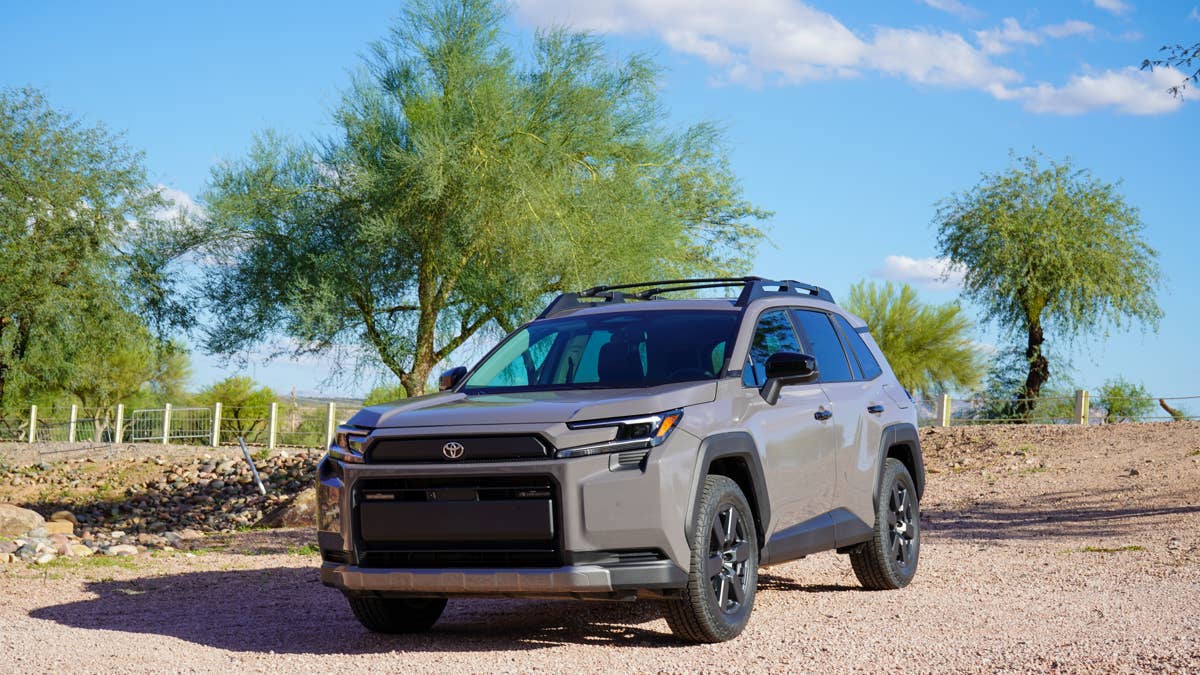
The RAV4 Woodland and Outlander Trail Edition are natural rivals in concept, even if they are not perfectly matched in execution. Both exist for buyers who want their family SUV to look a little more outdoorsy and feel a little more weekend-ready. The Outlander Trail Edition gives Mitsubishi a much-needed rugged-looking trim, and Mitsubishi advertises it around adventure accessories such as cargo gear, bike racks, roof storage, kayak racks, ski racks, mud flaps, protective trim, and Trail Edition-branded equipment. It looks the part, and for buyers who mostly want visual toughness with light-adventure usability, it makes sense.
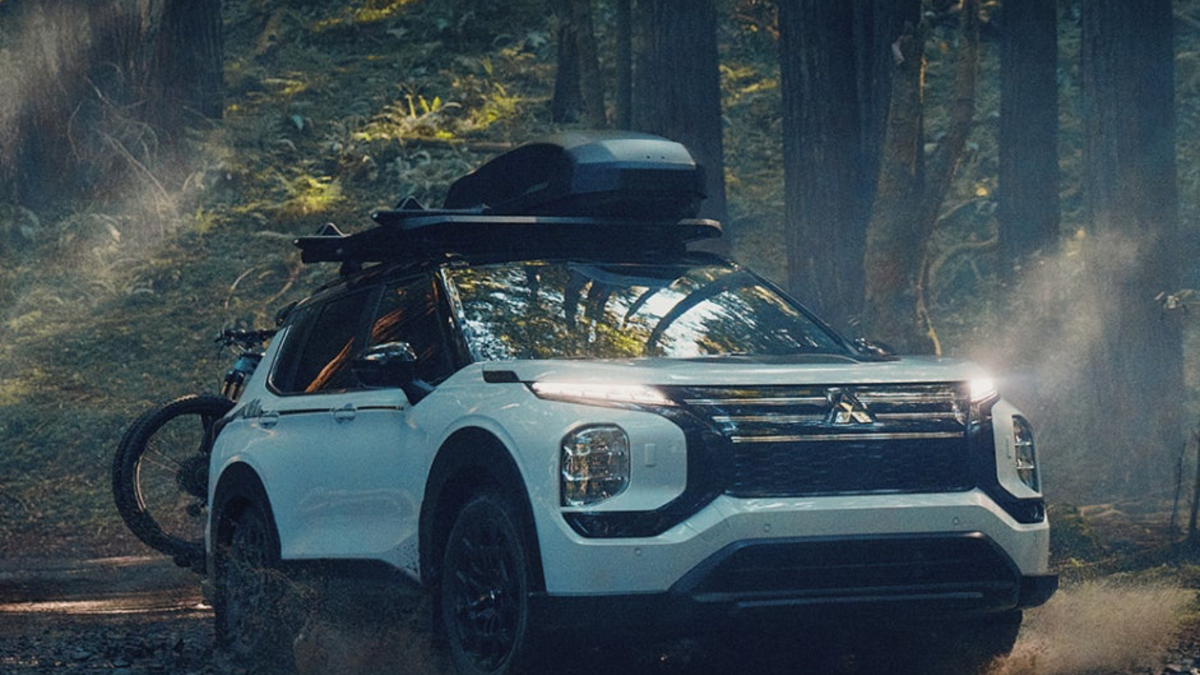
The RAV4 Woodland, though, feels more baked into the vehicle’s identity. It benefits from Toyota’s hybrid-only foundation and is also available as a plug-in hybrid, whereas the Outlander Trail Edition is not. That makes the Woodland more compelling as a complete package before we even consider off-road credentials. The RAV4 Woodland benefits from 8.5 inches of ground clearance, versus the Outlander Trail’s 8.3 inches, which is no higher than the standard Outlander. Plus, the RAV4 Woodland integrates Rigid Industries LED lights into its grille and offers two unique paint colours (Urban Rock and Everest). How can you not love that?
Cole Attisha
GR Sport: Mitsubishi has no answer
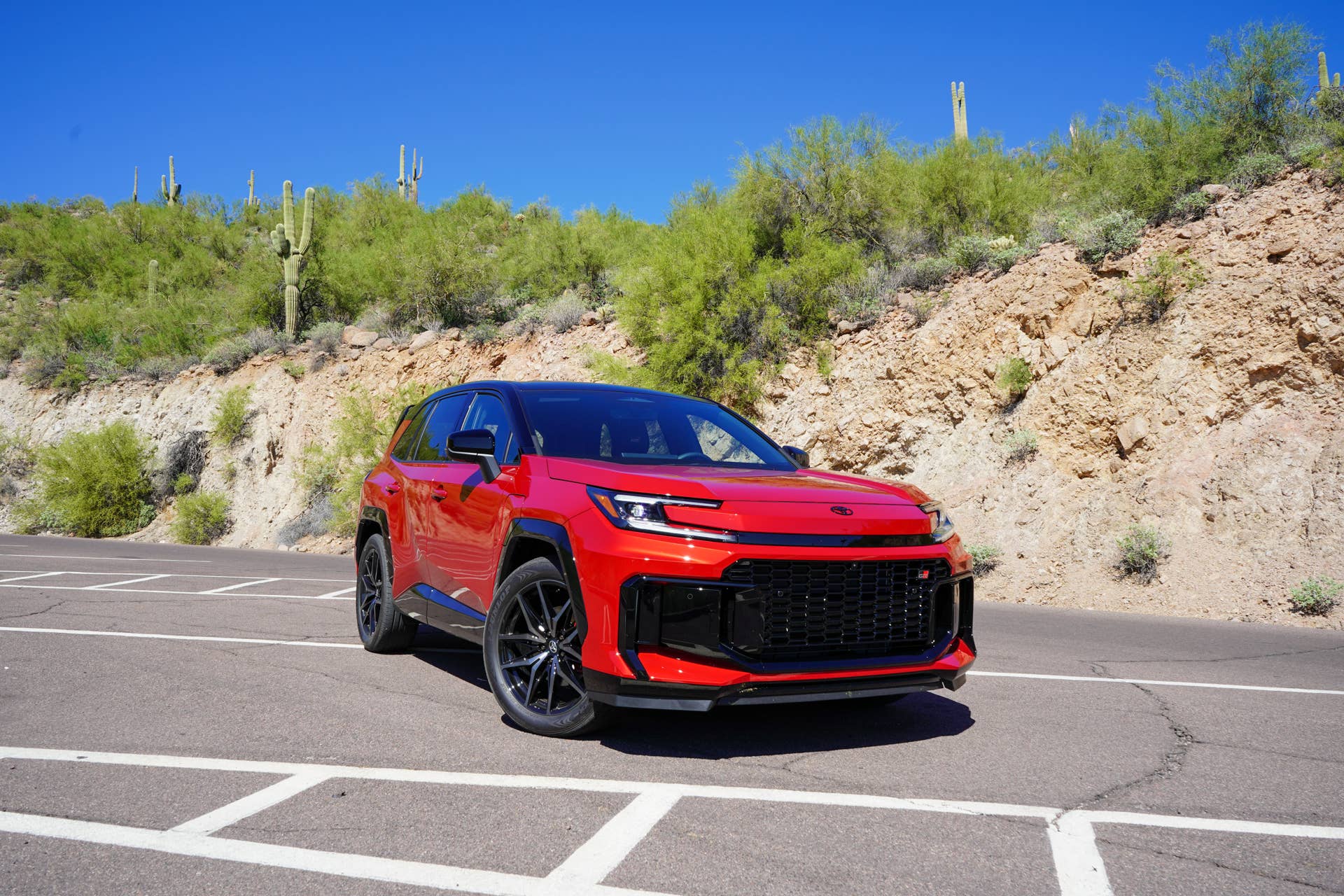
The RAV4 GR Sport offers a package that the Outlander has no answer to. It gives the RAV4 Plug-in Hybrid a more athletic identity, with Gazoo Racing-inspired design cues, chassis and suspension tuning, and a more track-and-field-inspired personality, and is priced from $49,950 in the U.S. It also packs the RAV4 PHEV’s 324-horsepower mill as standard equipment. Mitsubishi can offer bolder styling packages and rugged-themed trims, but it does not offer a high-output, performance-flavoured Outlander that lines up against the GR Sport. The GR Sport, then, gives Toyota access to another kind of buyer: someone who needs a family SUV but still wants the thing to feel special. With unique variants like the Woodland and GR Sport, the RAV4 lineup feels broader and yet more personalized. Toyota can sell you the sensible hybrid, the rugged Woodland, the premium Limited, the plug-in XSE, or the sportier GR Sport. Mitsubishi’s lineup has improved, but it simply does not cover as many bases.
Cole Attisha
Pricing and value: The Outlander’s case depends on what you prioritize
The Outlander’s underdog argument becomes more convincing when we consider its pricing. The RAV4 is the better-known product, and in many ways, the better-rounded one. But better-rounded does not always mean better value for every buyer. The RAV4’s value is built around efficiency, resale confidence, hybrid polish, and a diverse trim walk. It is the lower-risk purchase, and for many buyers, that’s enormously important. Toyota has made the 2026 RAV4 even easier to recommend by electrifying every version, even if the MSRP is certainly not bargain-basement cheap.
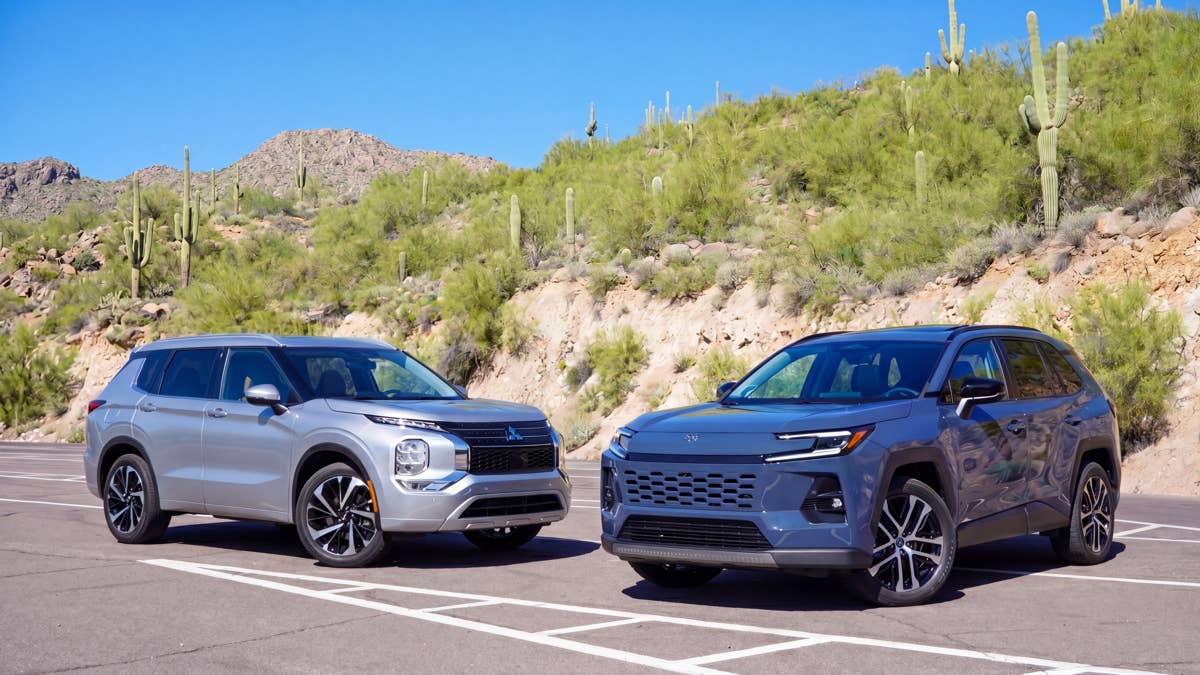
On paper, the Outlander has the clear price advantage. The 2026 Outlander starts at $29,995, or $31,795 with all-wheel drive, while the 2026 RAV4 starts at $31,900, or $33,300 with all-wheel drive. Higher Outlander trims include the SE 1.5T S-AWC at $36,145, Trail Edition at $39,645, and SEL 1.5T S-AWC at $40,845. The RAV4 lineup starts at a higher price, but every 2026 RAV4 is a true hybrid rather than merely a mild hybrid with a 48V battery system, creating an interesting value split. The Outlander offers a lower entry point and more seating flexibility. If you care about third-row availability, a more premium-feeling cabin in upper trims, and a long list of features for the money, the Mitsubishi has a strong argument. But Toyota’s higher base price is easier to defend because the RAV4 offers a more useful hybrid system across the board, better efficiency, and the sort of long-term resale reputation that Mitsubishi still cannot match. For many buyers, the RAV4 will feel like the safer choice, but the Outlander still offers plenty of value, especially if you can find a good deal on one.
Cole Attisha
Verdict: The RAV4 is better, but the Outlander still has a point
The 2026 Toyota RAV4 is, plainly, the better all-around family SUV. It is more efficient, more powerful in hybrid and plug-in hybrid form, stronger on towing, and broader in trim variety. The Woodland gives it a convincing adventure model, while the GR Sport gives it something Mitsubishi simply does not have: a genuinely distinctive performance-oriented plug-in hybrid trim. But that doesn’t mean the Outlander is just a worse RAV4 with a third row. Its third row is useful, yes, but its appeal goes beyond that. In the right specification, it feels richer inside than the Toyota. It has a warmer cabin, a more premium atmosphere, and a sense of occasion that the RAV4 still does not quite deliver. It also offers genuine family flexibility, especially for buyers who occasionally need more than five seats but do not want to switch to a larger SUV.
So, does the Outlander justify itself over the RAV4 in ways beyond seating? Sometimes, yes. If you want maximum efficiency, towing strength, resale confidence, and hybrid polish, buy the RAV4. If you want a more upscale-feeling cabin, occasional third-row flexibility, and something less obvious than the default family SUV answer, the Outlander deserves the second look most buyers probably never give it. But, for most people, the RAV4 will likely still be the smarter choice.