Have you ever seen the Coen brothers’ movie No Country for Old Men? It’s great. I mean, maybe a little unsettling, but great. It’s an adaptation of a novel by Cormac McCarthy, a writer known for a distaste for punctuation and his bleakly pessimistic and spare worldview. The movie takes place primarily in West Texas in 1980, and the film, like all Coen brothers films, is very carefully produced and crafted. There’s almost nothing anachronistic in the film, with wardrobes and scenery and everything very painstakingly selected to be appropriate to that time and place.
That includes, of course, the cars.
The movie is full of great and mundane mid-Malaise-Era iron. There’s very little flashy about these cars, mostly midrange domestic family cars and trucks. There are hardly any imports, hardly anything fancier than a Buick. It’s pretty much what you’d have seen on a rural West Texas street in the summer of 1980. It’s clear the car casting was taken seriously.
I think that’s why this detail is so fascinating to me, because it shows how important the filmmakers felt the car-casting should be, and the lengths they’d go to make sure everything was just right. But at the same time, it’s also hilariously half-assed. It’s in this scene; see if you can spot what I’m talking about: [Ed note, and spoiler alert: feel free to stop the video after Anton Chigurh (Javier Bardem) gets out of the patrol car, if you’re averse to mild screen gore – Pete]
It doesn’t have anything to do with the white Ford Granada with the one broken reverse lamp; I think a smashed reverse lamp was a factory option for those. It has to do with the Chevrolet Caprice cop car behind the Granada. Take a look at the cop car; does anything look sort of … off? 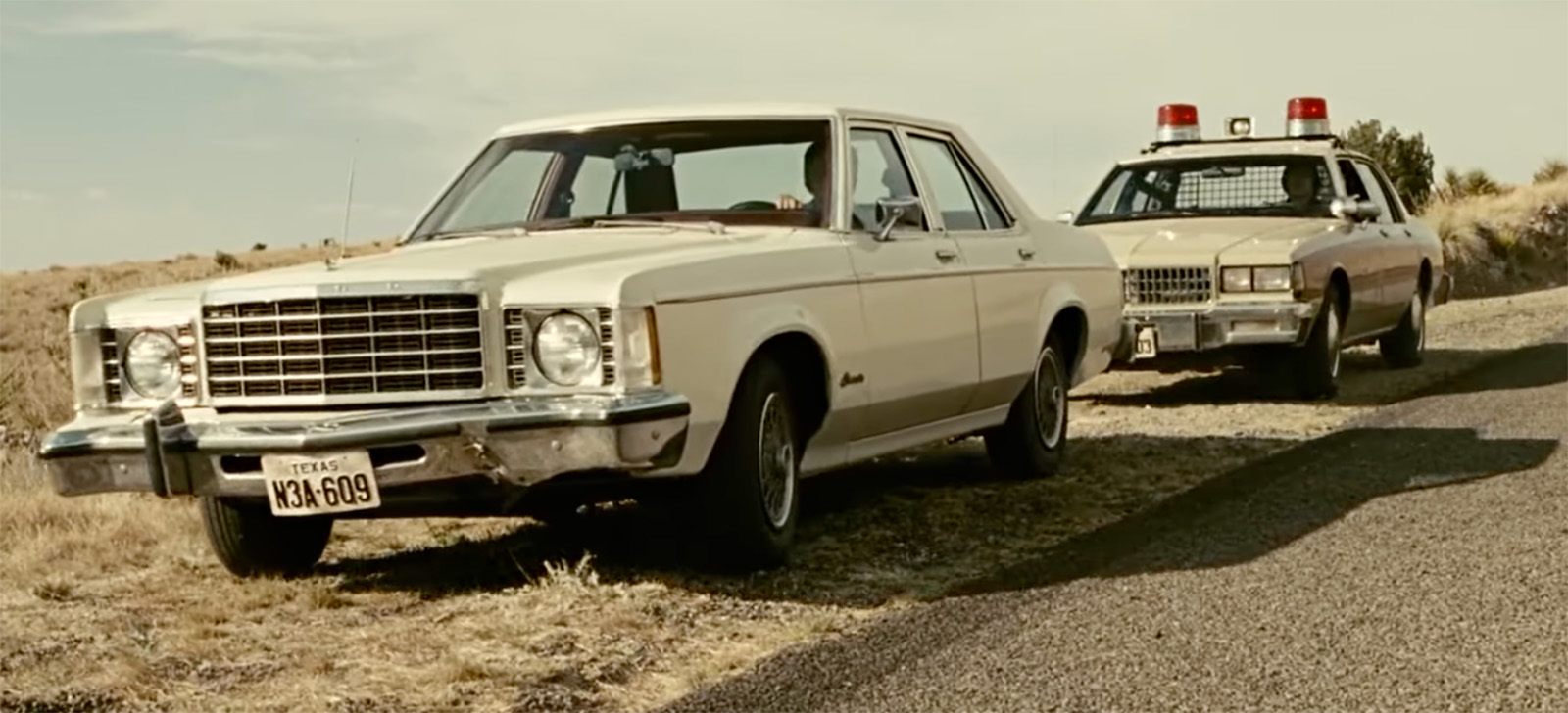
Here, let’s get a little closer. Computer! Zoom and enhance!
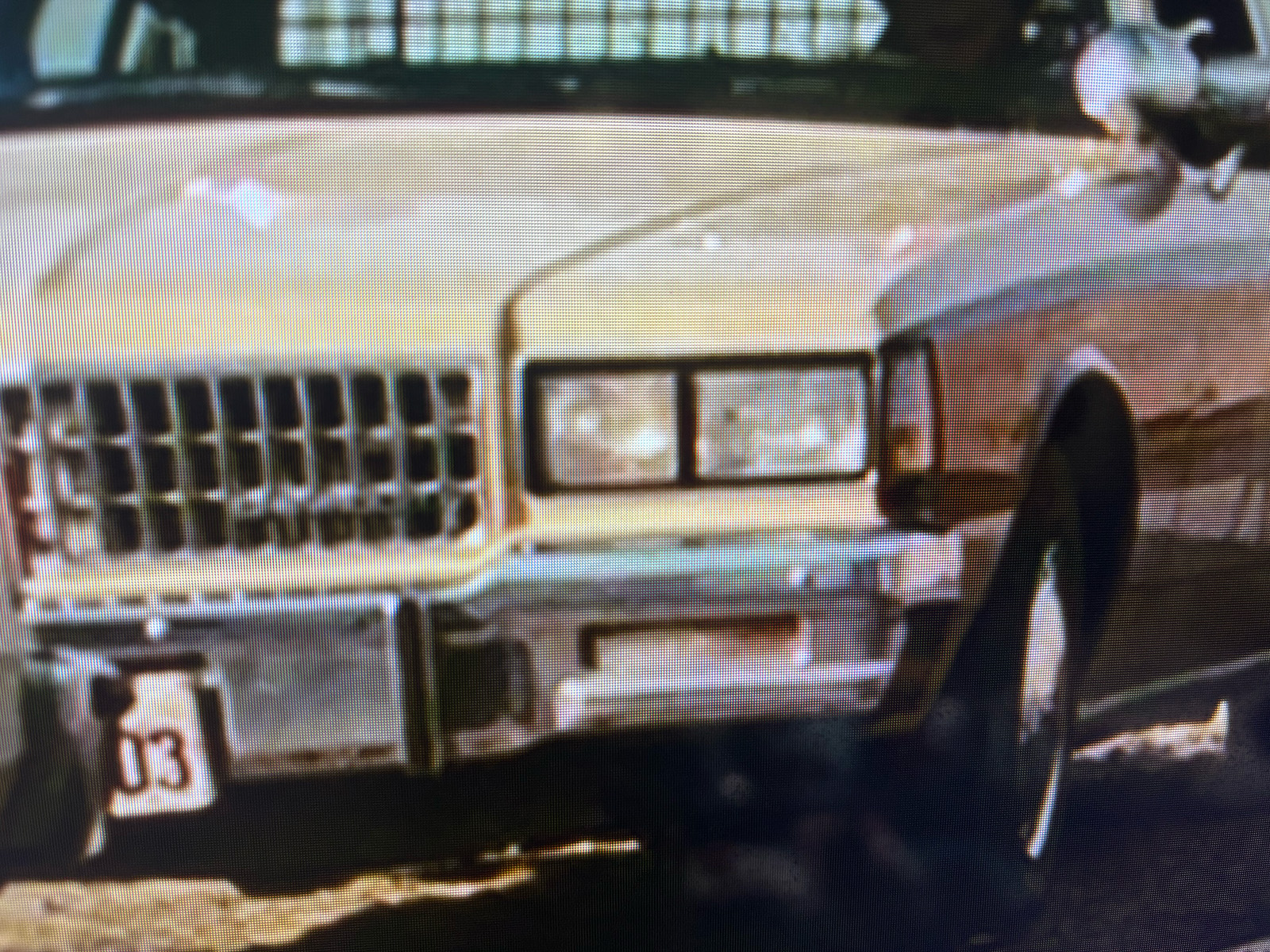
See it now? Look that the headlights; what’s going on with those lights? Why is the outboard light about, oh, 10% bigger than the inner one? And, wait a minute – are those even two separate headlights? Why do their borders look kind of wonky?
There’s shenanigans happening here. Shenanigans involving what appears to be black gaffer’s tape, being used to visually disguise one wide, rectangular composite headlamp into what appears to be two rectangular sealed beam headlights! But why?
Well, the reason why is pretty straightforward: anachronisms.
You see, this generation of Chevy Caprice – the third generation – lasted from 1977 to 1990, but during that healthy lifespan, the car received three facelifts. The first sub-generation was from 1977 to 1979, then tweaks were made for the 1980 to 1985 cars, and then one final refreshing in 1986, continuing until that generation ended in 1990.
That means for the movie to be accurate, only the first sub-generation and the very first year of the second could be used. Those wide composite headlights didn’t appear until the final facelift in 1986, well after the scope of the movie.
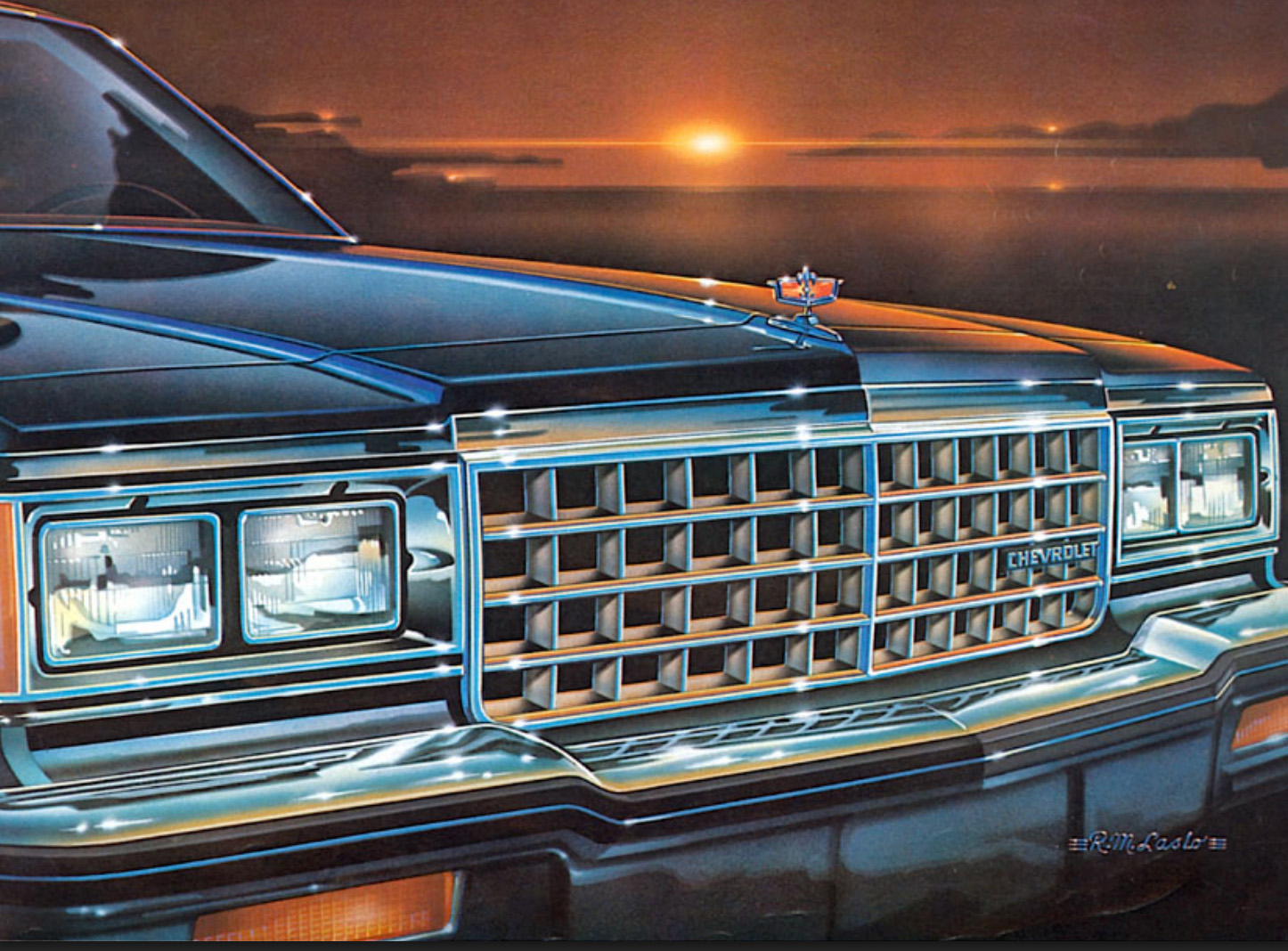
For reference, here’s a 1981 Caprice’s face:
…and here’s a 1990 one:
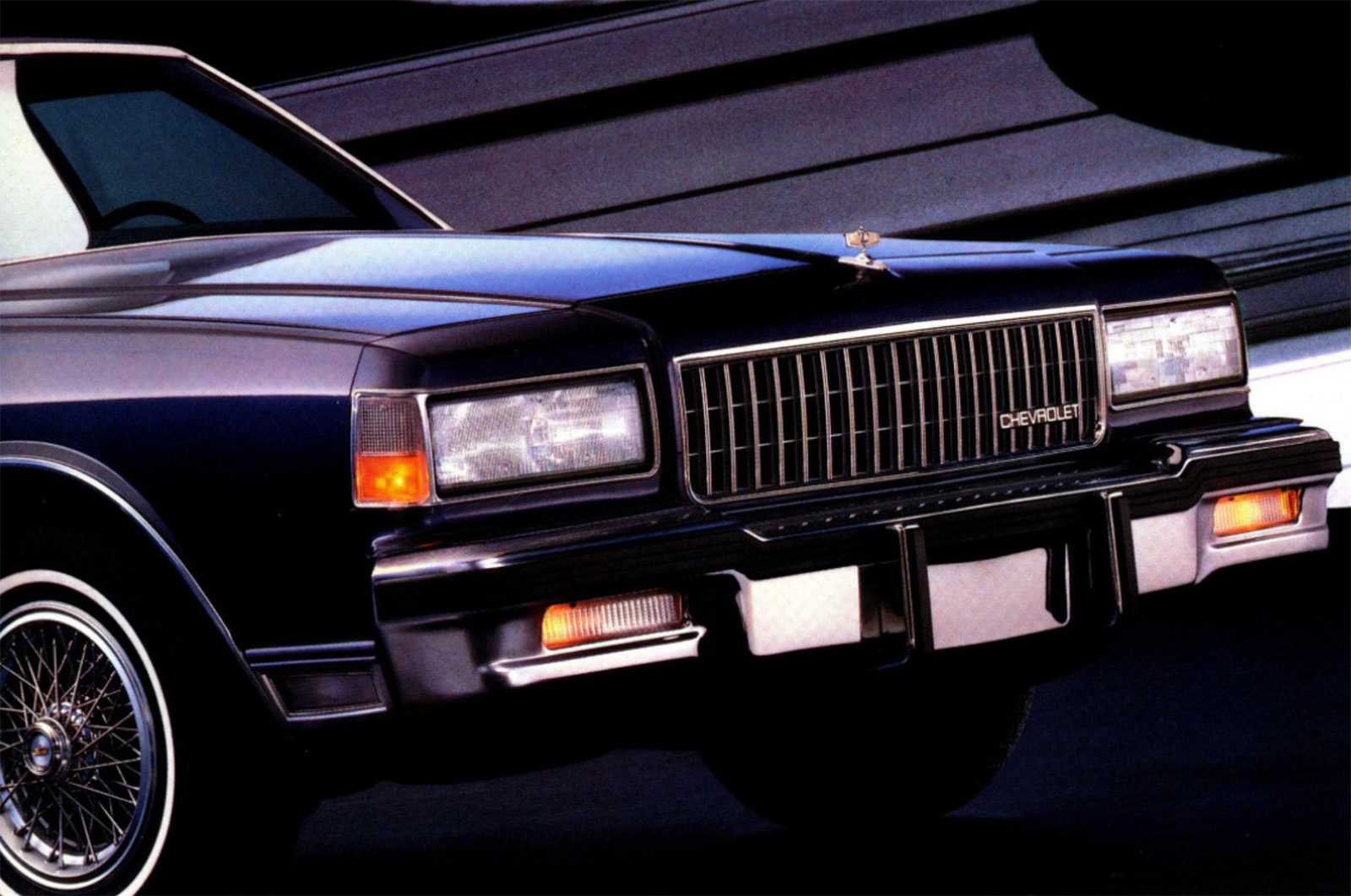
There’s some other minor differences – grille size, shape, mesh pattern, and so on – but arguably the most readily noticeable difference are those headlights. The wide composite lamps just change the look of the car a surprising amount, and they just feel like something of the 1990s, not 1980s, at least in America.
So, this is what we have going on:
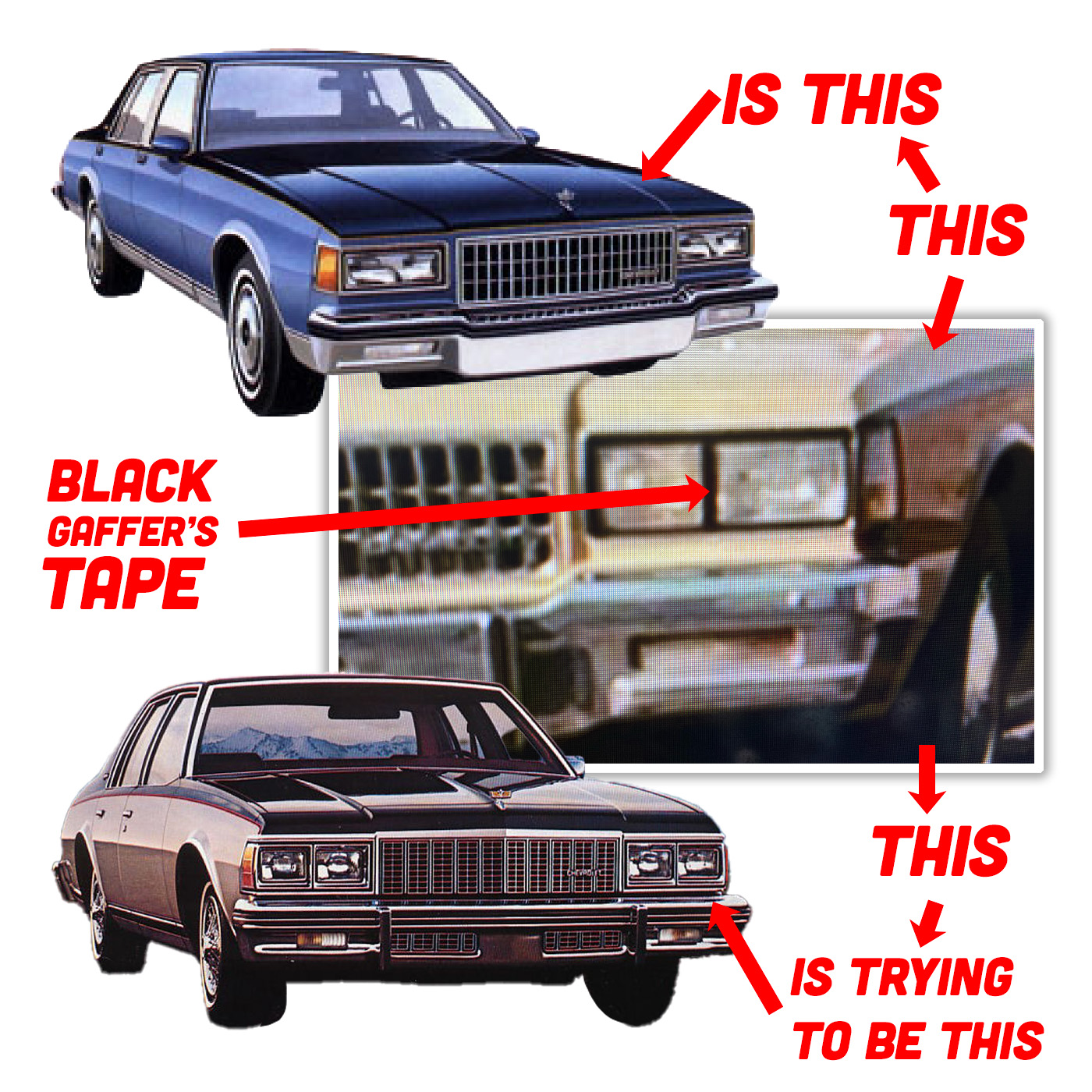
They had a 1986-1990 Caprice police car, and they needed to make it look like a 1980 (at latest) Caprice police car. But the headlights were too big a giveaway, hence the gaffer’s tape.
According to the sleuths over at the Internet Movie Car Database, the No Country for Old Men Caprice cop car is a 1990, based on the door-mounted seat belt. They also note other attempts to make the car look older, like the removal of the CHMSL from the rear package shelf.

That car above there is an example of a 1980 Caprice police car. There’s a good bit different from the No Country for Old Men car, but I think the prop people made the right call in that the headlights are the most important element to try and reconcile. But even then, I have to wonder why they just did it with gaffer’s tape?
I mean, if it was important enough to change at all, and it clearly was, why didn’t they try and find a period-correct car? The car isn’t just a background car, it’s used by one of the main characters for an extended period of time. It seems like it’d be worth getting the one you actually want?
Maybe finding a good cop car with a more rural Texas-type livery – not a classic big city black-and-white – was harder than they expected. Maybe that was the only car they could use. If that was the case, why not actually change out the headlight units?
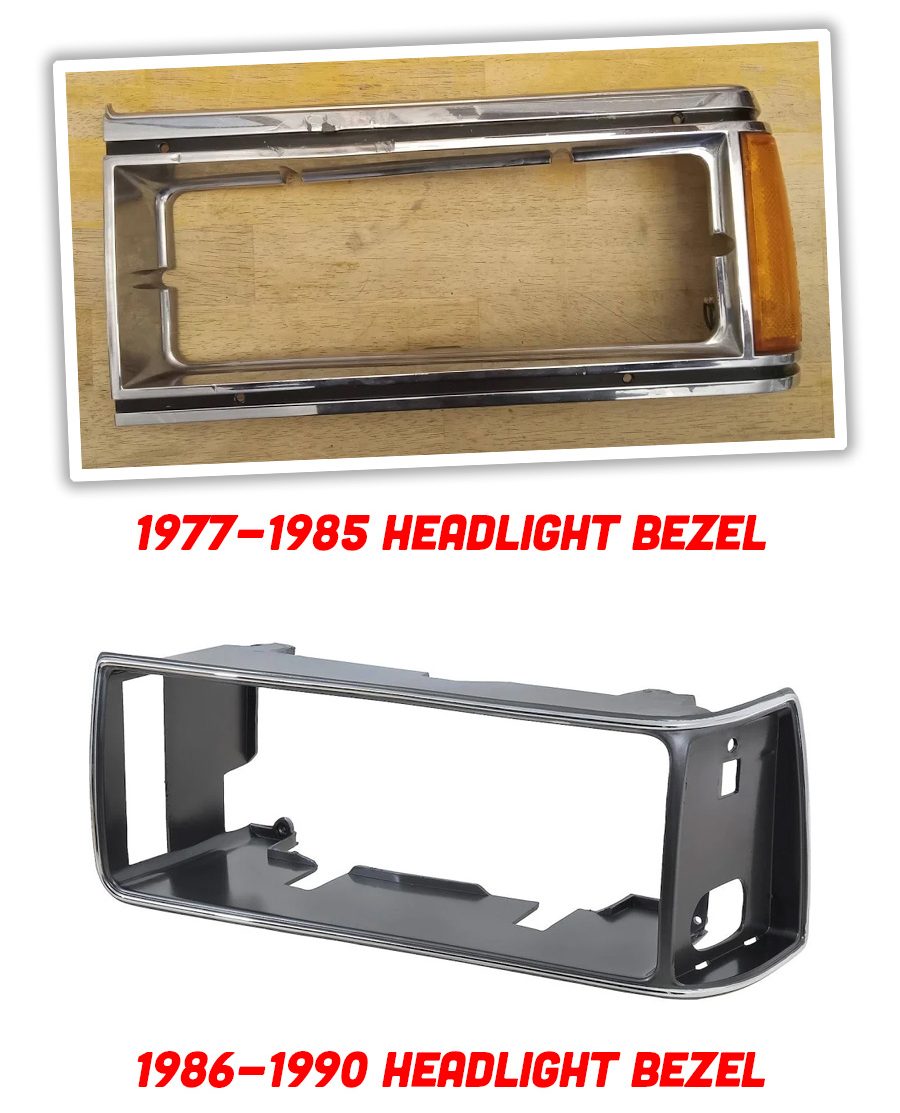
It wouldn’t have been hard or expensive; the size and shape of the housings between the two types of lights are basically the same. One should bolt right into place of the other. They could have picked up the older headlight bezels and inner headlight buckets for probably, what, $150 total? They’d bolt right in! These are daytime shots so they wouldn’t even need to wire anything up!
But instead they picked tape?
I’m just baffled. If this is important enough to do something about, why did they do something so half-assed? I mean, they could have at least measured and put the damn dividing line in the center!
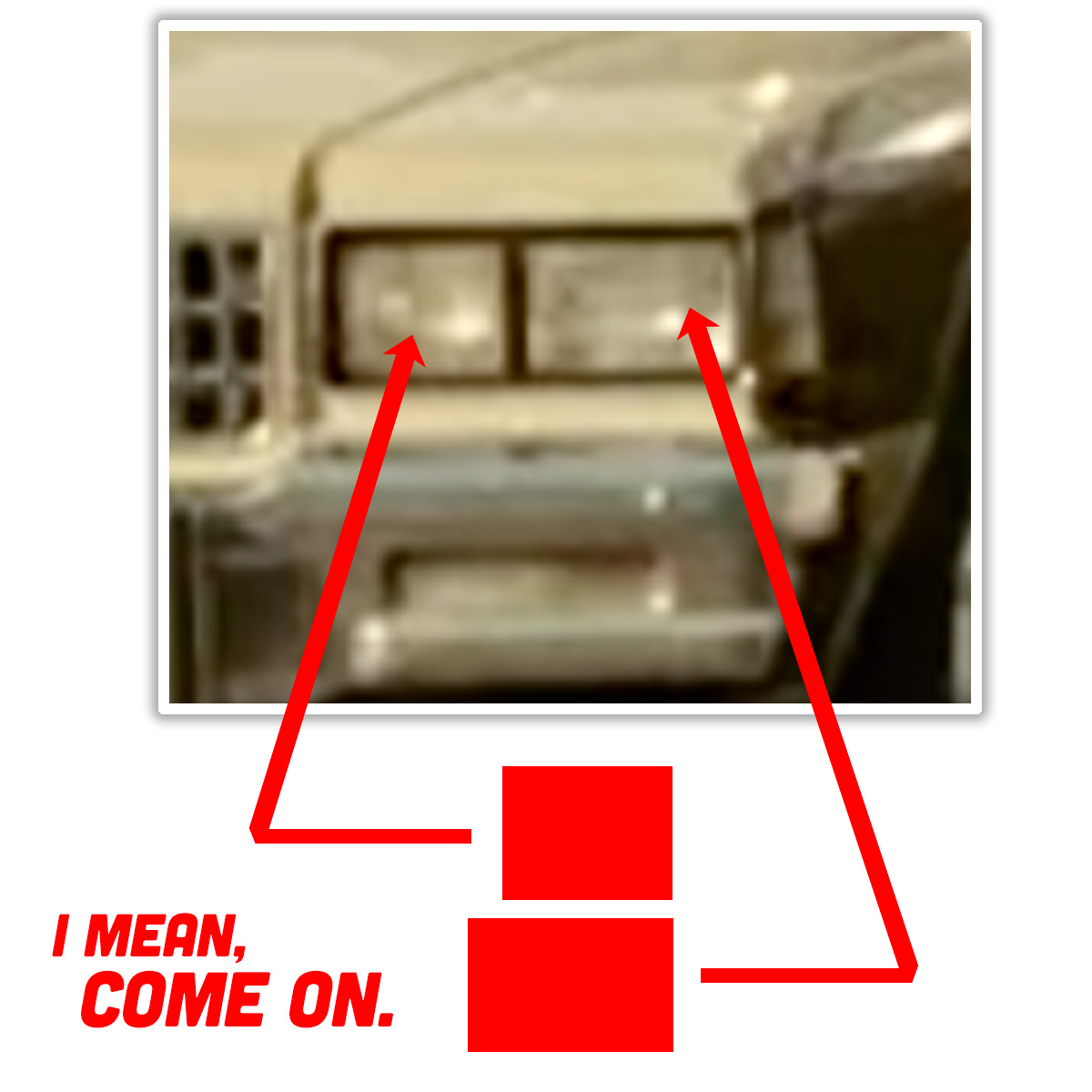
I know all those gaffers have tape measures on them. It’d have killed someone to measure this? The fact that the size difference is noticeable even at a distance is ridiculous.
I’m not entirely sure what to think about all this – it’s such a strange contradiction or maybe juxtaposition or contrast or one of those words about how two things relate to one another where incredible care was paid to the idea, but less so in the execution.
It doesn’t hurt the movie at all, though, and I never even realized it until the Bishop pointed it out to me today, so I suppose in the grand scheme, it hardly matters. Still, I can’t stop thinking about it, and I’m kind of delighted to know it’s A Thing.
Also, if I’m honest? The tape basically works. It’s probably good enough.
Maybe if the Coen brothers decided to release a re-mastered version, they’ll use CGI to superimpose the proper headlights over those goofy taped-up ones. Seems like a good use of money.
Top graphic image: Miramax
The post This Tiny Detail About A Cop Car In ‘No Country For Old Men’ Is Baffling And Fascinating appeared first on The Autopian.