It’s no secret that the march to electrification has hit a few roadblocks in recent times. Some automakers are canceling projects while others have seen reduced sales. Yet, hybrids are showing strength with customers practically piling into showrooms to pick them up. What do you do if you’re an automaker that designed a BEV platform and suddenly want to go hybrid? Horse Powertrain has an idea. This is the new X-Range C15 Direct Drive, and it’s essentially an all-in-one hybrid drivetrain that’s supposed to help automakers quickly adapt BEV platforms to HEV.
Thankfully, the sky is not falling with EVs. But the market today is a bit different from how it used to be. The federal government ended the New Clean Vehicle Credit, the Previously-Owned Clean Vehicle Credit, and the Qualified Commercial Clean Vehicle Credit last year. That cut some incentive to buy an EV. Then there are the tariffs that make it harder for Americans to access EVs that aren’t built here. Add in a heavy dose of political change, and, as we reported in March, EV registrations have fallen in America from 8.3 percent of the light vehicle market to 5.1 percent of the market.
We’ve now seen a bevy of canned EV projects from Chevrolet’s brilliant BrightDrop vans to Honda’s American EV strategy. The Honda-Sony Afeela 1 is gone, as is the Ram 1500 EV, the Ford F-150 Lightning, the Volvo EX30, and others. Meanwhile, Toyota’s hybrid defiance looks like it was a smart call. Horse Powertrain thinks it has a solution for the companies that engineered BEV platforms and now suddenly want to compete with more hybrids. How? Horse wants an automaker to bolt its X-Range C15 Direct Drive into the backside of an existing EV platform to get a hybrid for less time and cost.
Cleaner Engines For OEMs
Horse Powertrain isn’t really a name that the common driver or enthusiast will interact with, but it is a pretty big deal for OEMs. It started in 2024 as a joint venture by Renault and Geely, with the goal of combining over a century of engineering knowledge from the two brands into developing cleaner internal combustion and hybrid powertrains. Last year, Saudi Arabia’s state-owned oil company, Aramco, also joined Horse.
Today, Horse operates 18 manufacturing plants and five Research & Development facilities across three continents. Currently, Horse pumps out more than eight million powertrains per year to several customers. Horse makes powertrains for Geely and Renault, but also for Volvo, Nissan, Mercedes-Benz, Proton, and Mitsubishi.
One of Horse’s big debuts last year was its C15 engine. This little 1.5-liter inline-four, direct-injected mill is shaped like carry-on luggage and pumps out up to 94 HP when naturally aspirated and up to 161 HP when paired with a turbocharger. Horse also developed it to be able to run on e-fuel, if that were to ever become commercially available in the future. It has a built-in generator and is intended to be the engine used in a range-extended EV.
This engine is only a single model in Horse’s engine portfolio, which contains everything from the 108 HP three-cylinder, 1.0-liter Horse S10 to the 280 HP turbocharged four-cylinder, 2.0-liter Horse V20 Performance. Horse wants to offer OEMs at least a dozen different engine options, and, depending on the model, they might run gasoline, diesel, hydrogen, methanol, e-fuel, or LPG. These engines can also be bolted to hybrid systems or be used as an EV’s range extender.
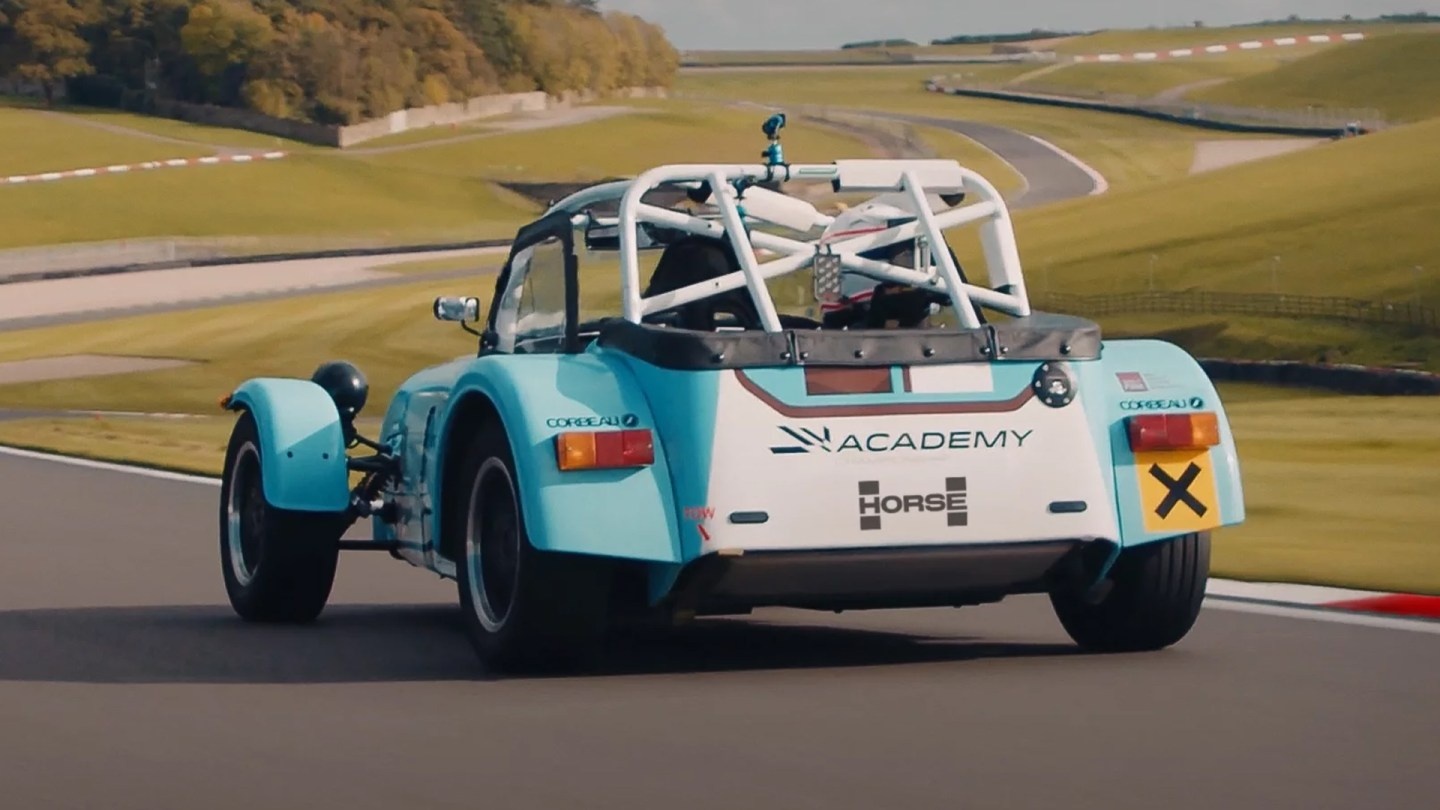
Not all of Horse’s applications are meant for electrification. For example, the Caterham Academy runs Horse HR13DDT engines in its lightweight track cars (above). Sadly, Horse doesn’t sell its powertrains to the general public, so you can’t easily obtain one of the company’s engines for your next track build.
All-In-One Hybrid-Powertrains
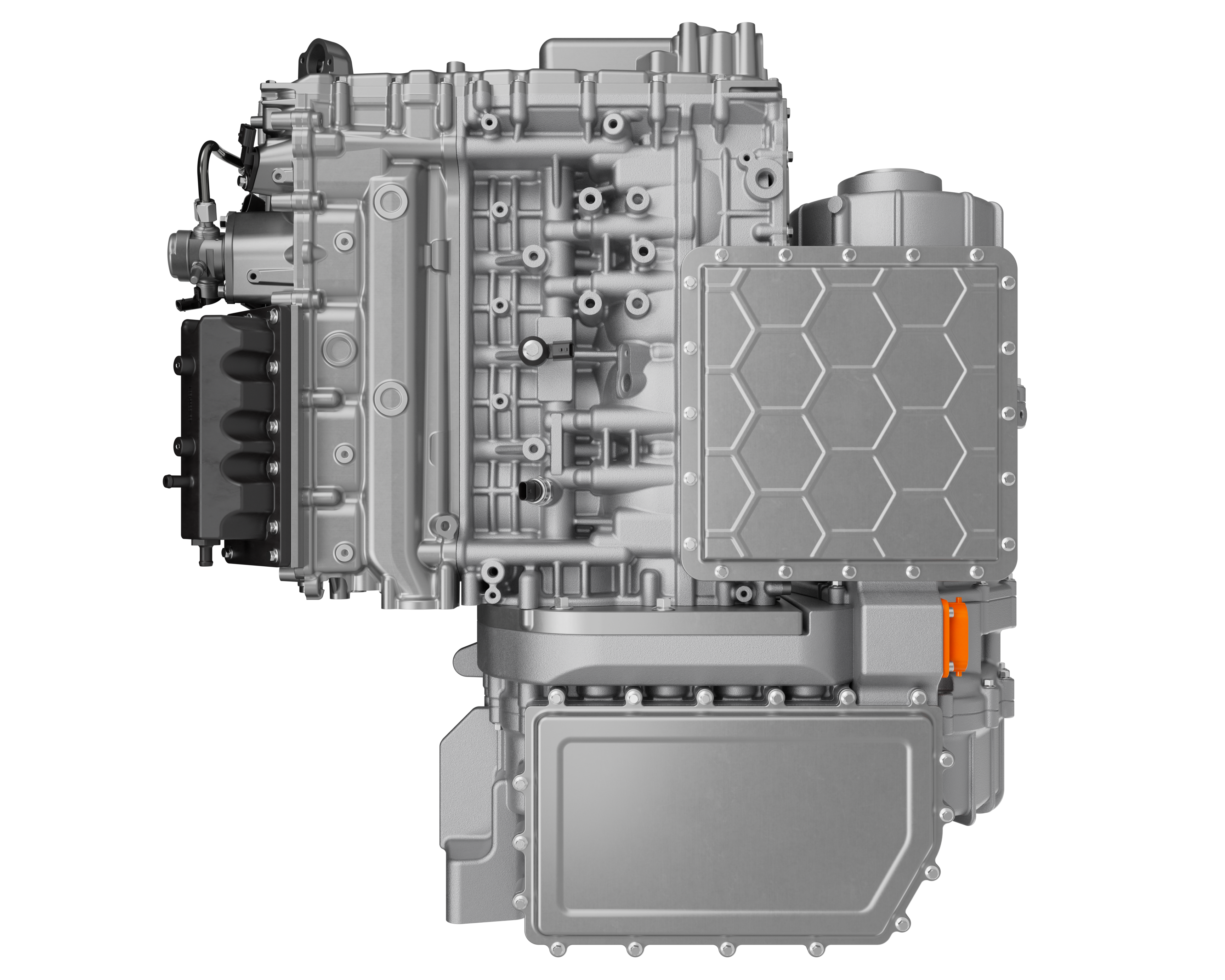
These engines, along with Horse’s selection of transmissions, are supposed to ease an automaker’s stress. Instead of having to develop a new car from top to bottom, Horse can take some of the load off. Then there’s Horse’s fascinating X-Range powertrain system. The whole idea behind X-Range is that an automaker that suddenly wants to make a parallel-hybrid, a series-hybrid, a plug-in hybrid, or an extended-range EV on an existing BEV platform can now do so more easily.
[Ed Note: I want to note that “easily” is relative, here. It’s certainly easier (especially financially) than developing an all-new platform, but adapting an EV platform to accept a combustion engine is far from trivial. There are numerous packaging constraints (gas storage, exhaust routing, etc.), crash performance implications, and emissions considerations. There are all sorts of validation tests (thermal, vehicle dynamics, and on and on) that need to be gone through. It’s not exactly easy to do this, and it’s likely you’d end up with something far from optimized given your platform was designed to have a gigantic battery pack between the axles, and its aerodynamics package was developed around limited cooling system capacity (as EVs don’t require a ton of cooling). I do think a range extender is a great way to offer both an electric model and a more palatable, higher-range, less-concerned-about-infrastructure option. But to implement it into an existing vehicle: tricky. Going to a regular hybrid would seem even trickier. -DT].
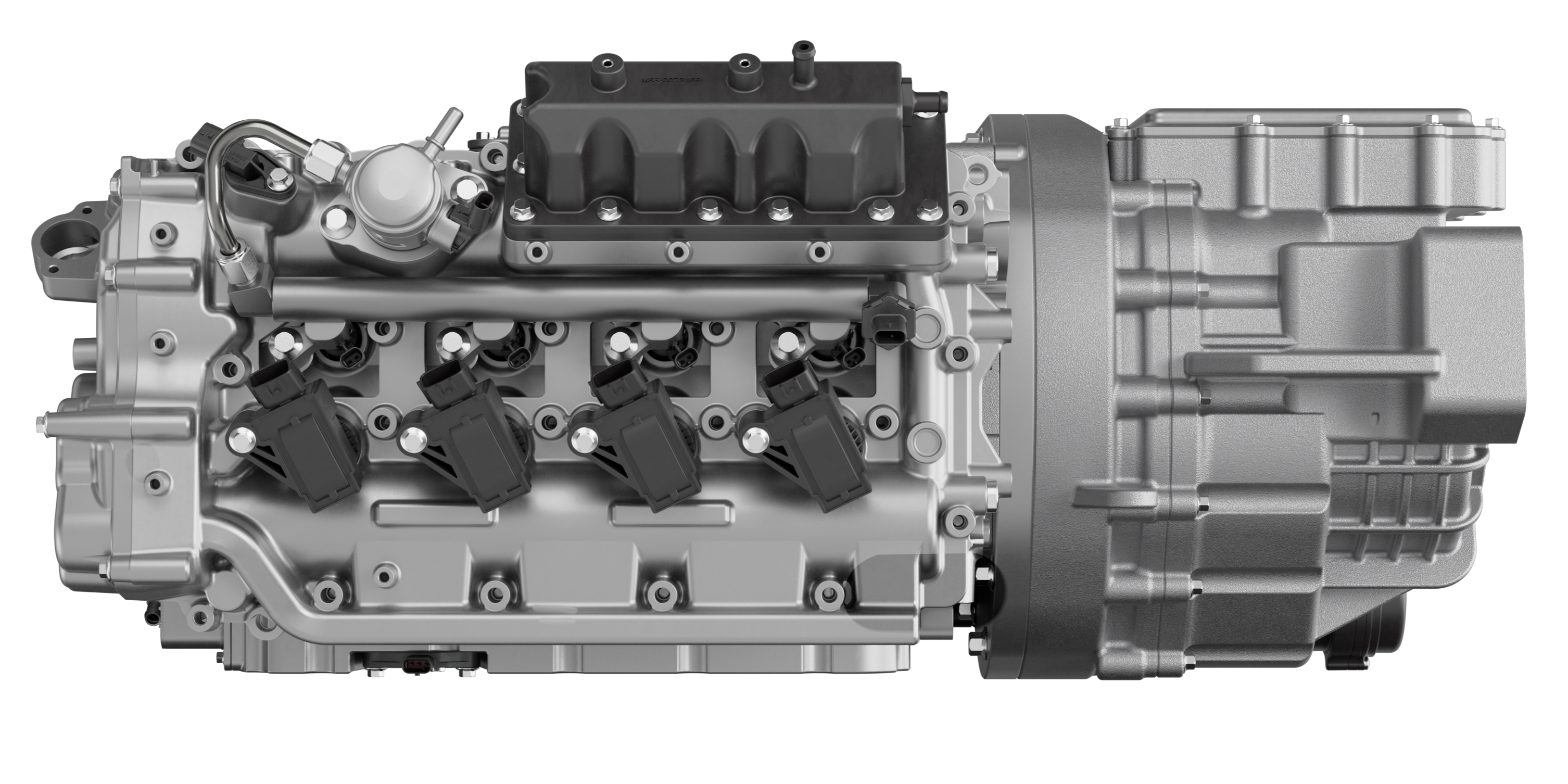
The X-Range C15 Direct Drive packages the aforementioned C15 engine paired with a dedicated hybrid transmission and two electric motors. One of the electric motors acts as a generator in parallel or series modes. The second motor drives the vehicle, and it can either drive the vehicle by itself, as would be the case in an extended-range EV configuration, or drive the vehicle in tandem with the engine, like a standard hybrid.
The engine pumps out the same power I noted above, while the eTraction system is said to be able to push out more than 268 horsepower. Attached to all of it are all of the electronics required to make the hybrid system work, and the package is designed to integrate with other components like a DC to DC converter, an on-board charging system, and an 800-volt charging booster.
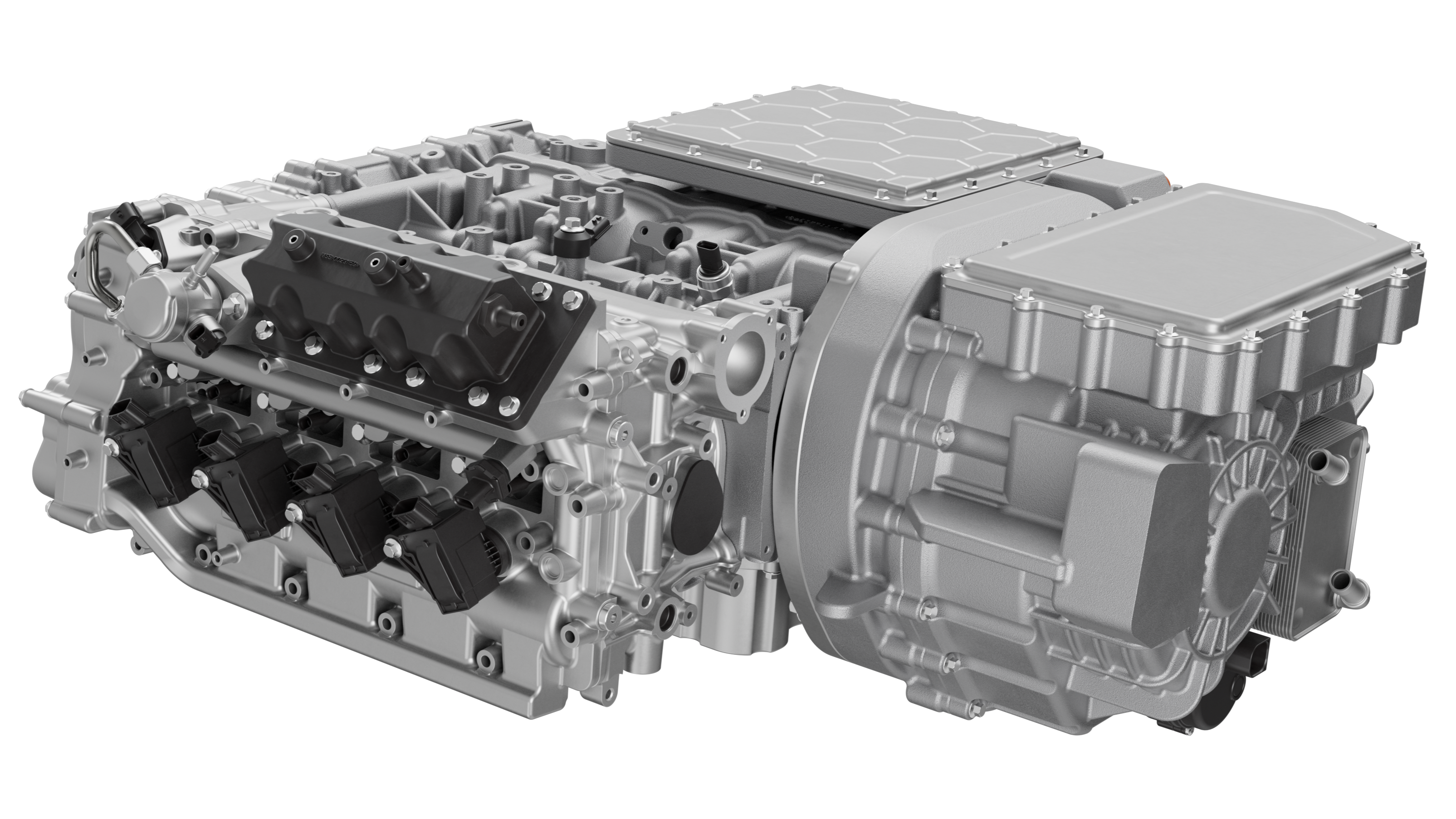
All of this equipment is packaged neatly up into something that resembles a big metal suitcase, and it’s supposed to replace the rear axle motor of a pure BEV. It can then be combined with a front drive motor to provide AWD, if desired. Horse is pitching the X-Range C15 Direct Drive as an easier and cheaper way to spin up hybrid production. Of course, “easier” in this case means compared to starting from scratch. This is not going to be a direct swap by any means and will require additional engineering to function. From Horse:
Matias Giannini, Chief Executive Officer of Horse Powertrain, said: “The X-Range family of powertrains is about reflecting today’s market realities, allowing automakers to pivot from BEVs to hybrids and range extenders on a single platform, quickly and at scale. The X-Range C15 Direct Drive is an ‘all-in-one’ powertrain, allowing BEV platforms to be converted to HEVs, PHEVs, and REEVs with little redesign or tooling changes required, dramatically reducing time-to-market, amortizing BEV investments, and catering to the diverse array of mobility needs in today’s global market.”
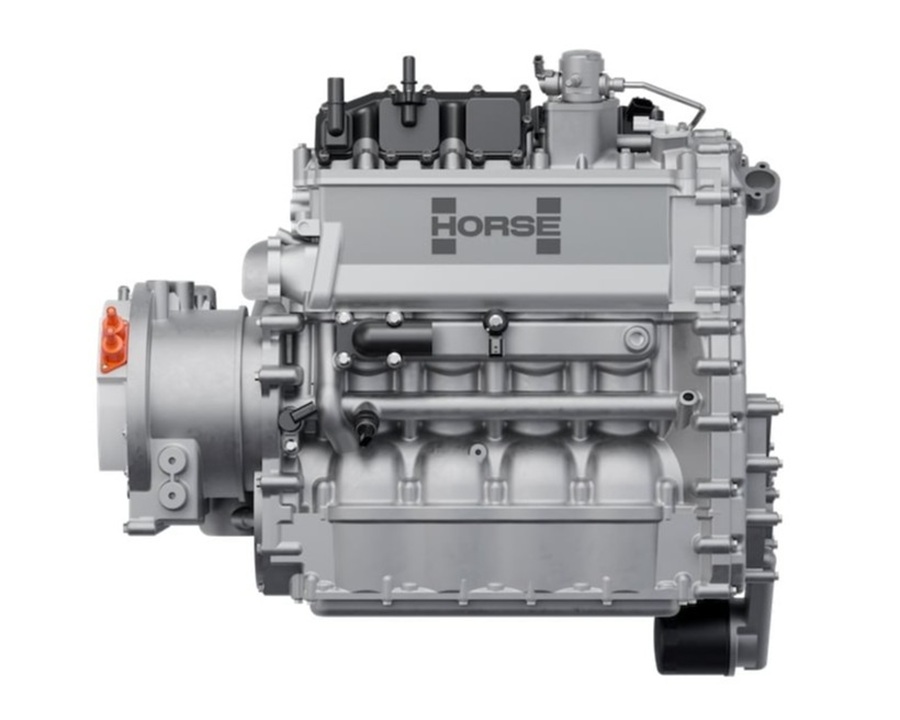
The X-Range C15 Direct Drive is actually the second all-in-one solution offered by Horse. The other is the X-Range F15 Direct Drive, which follows the same concept, but replaces a front electric motor with the all-in-one hybrid system. Notably, the F15 (below) is a vertical setup that would take up some front-end volume, while the C15 is more of a pancake.

Who Will Be First To Use It?
In theory, both of these powertrains are great ideas. Instead of just abandoning their BEV platforms and blowing billions of dollars, an automaker could make adjustments and offer hybrids. Or, an automaker might be able to be relatively flexible when regulations get upended.
It’s unclear how close to production the X-Range C15 Direct Drive is. It’s also unclear what automakers might pounce on this idea. For now, Horse Powertrain says that you can find the X-Range C15 Direct Drive on display at the 2026 Beijing Auto Show, Hall A1, Booth A111, on April 24.
Honestly, while being able to convert a BEV into a hybrid sounds pretty cool, I’d love to see what a backyard engineer could do with the package. A hybrid kit car? An upgrade for an old and tired early-generation hybrid? I guess we’ll have to wait and see what comes of these packages.
The post Automakers With Slow-Selling EVs Might Soon Be Able To Turn Them Into Hybrids Using This All-In-One Drivetrain appeared first on The Autopian.