If I could go back in time to college, I probably would stop my ex-girlfriend from serving me that vodka drink she thought up freshman year. I’d also take more economics classes. I love the merger of data and human behavior, as well as the fact that even with data, no one ever seems to agree on anything.
EV fast charger build-out is a great way to understand the EV market and is, in a way, even more powerful as a data point than, say, sales. America keeps adding chargers and keeps needing them, even as pundits (sometimes me) keep reminding us that EVs aren’t as popular as everyone once thought. What’s going on? The Morning Dump is going to dive into it.
Part of EV demand waning has to do with cost, and Lexus has an interesting answer: The EV version of the new ES is cheaper than the hybrid version. That might be a first! What’s not a first is yet another market cycle where drivers are super underwater. When will it end? Maybe soon. Maybe never.
And, finally, Tesla holds onto its management-friendly union for a little bit longer.
Here Comes The Used EV Wave

There’s a great Bloomberg article out this week that points out a fact that may surprise you, which is that not only are more EV fast chargers being built, but demand continues to grow at a quick pace:
US chargers have become more reliable and far faster, which encourages more people to use them, according to Paren, a data platform focused on EV infrastructure. Charging networks added about 11,300 ultra-fast cords across the US last year, up 48% from 2024. And the high-speed buildout is only accelerating: In the fourth quarter, nearly one in four new chargers were capable of pumping at rates of 250 kilowatts or more, which can typically add 100 miles of driving range in less than 10 minutes.
Despite the uptick in the number of chargers and their ability to sling electrons faster, the average US charging station is still fairly busy most of the time.
The number of charging cords in the EVgo network has roughly doubled in the past three years. Yet each cord, on average, has steadily pumped more electrons in a given period.
There are a few obvious reasons for this. The first is that EV charger demand is about the total number of EVs on the road, not new EVs sold. Even if EV sales drop by half this year, that’s still more than 600,000 new vehicles out there driving around. Another reason for more chargers is that there are still federal and state funds flowing into projects, though politicians (primarily from the Republican party) have tried to curb some of that.
The biggest reason why I expect growth both in usage and distribution has less to do with how many EVs there are and more to do with who is buying them. Electric cars remain popular (and often required) for ride-hailing services, and those users tend to rely on fast-charging.
Maybe more important is the used EV market. As I’ve mentioned before, a quirk in the way the Inflation Reduction Act was enforced led to a huge number of cheap EV leases. Those leased EVs are starting to be returned, and now a bunch of consumers are going to have access to affordable, high-quality electric cars.
Those consumers are also probably more likely to live in apartments or other places where they don’t have home charging access. I live in a building, and neither of my parking spaces has charging as an available option. If I were to buy a used EV, I’d be forced to use the local public chargers.
This is one of those outcomes that’s good for the larger EV market, as the increase in demand means an increase in chargers, which helps solve one of the concerns that would-be buyers have about charger access.
The Lexus ES EV Is Cheaper Than The Lexus ES Hybrid
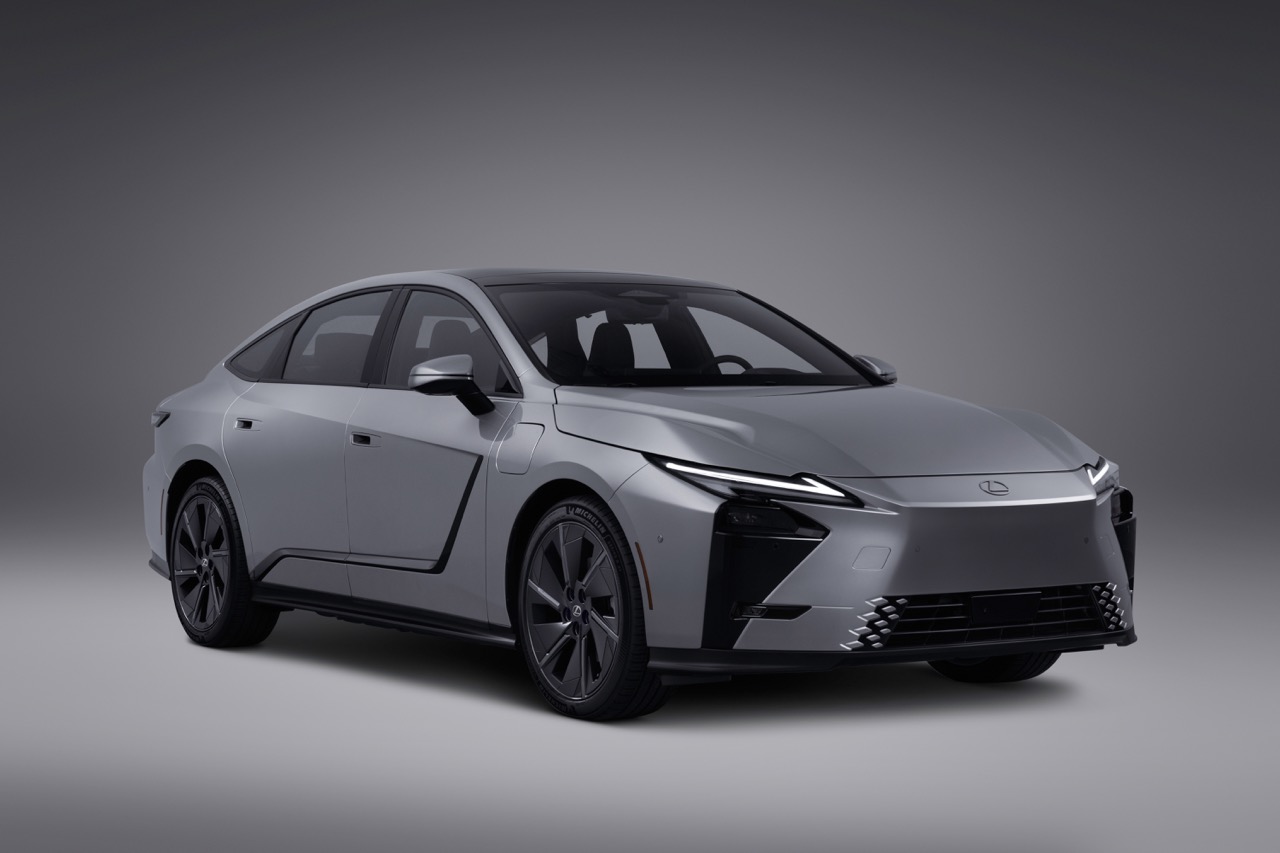
The 2026 Lexus ES is a big departure from the outgoing model, and now only comes as either a hybrid or an electric car. Curiously, the low-end EV version is now the cheapest of all the models.
The ES350h hybrid, which is roughly equivalent to last year’s ES300h (the gas-only ES250 and ES350 models are gone), makes a big jump in price up to $50,995. That base price is $6280 higher than before, which is likely accounted for by the new ES’s larger size and, presumably, additional standard equipment. Lexus hasn’t yet detailed what comes in the base Premium trim, or what you get by paying extra for the ES350h Premium+, starting at $55,795. The other significant change to the hybrid lineup is the option of all-wheel drive; it costs $1400 extra on both trims, and both the ES350h FWD and AWD models have 243 horsepower.
While EVs often cost extra compared to their gas-powered equivalents, the electric ES350e is the least expensive ES of the bunch. Starting at $48,795, it comes with front-wheel drive, 220 horsepower, and a claimed 300 miles of range. It’s offered in the base Premium trim, along with a Luxury trim for $57,195. To get all-wheel drive in the ES EV, you have to opt for the more powerful ES500e, which starts at $51,795 for the Premium and $60,195 for the Luxury. It has dual motors for a total output of 338 horsepower, but claimed driving range is lower, at 250 miles.
The loss of the Inflation Reduction Act probably plays to the benefit of certain automakers as it levels the playing field, and while $49k isn’t cheap, it’s the cheapest, and that’s quite the change.
IG Metall Loses Bid To Take Over Tesla Berlin
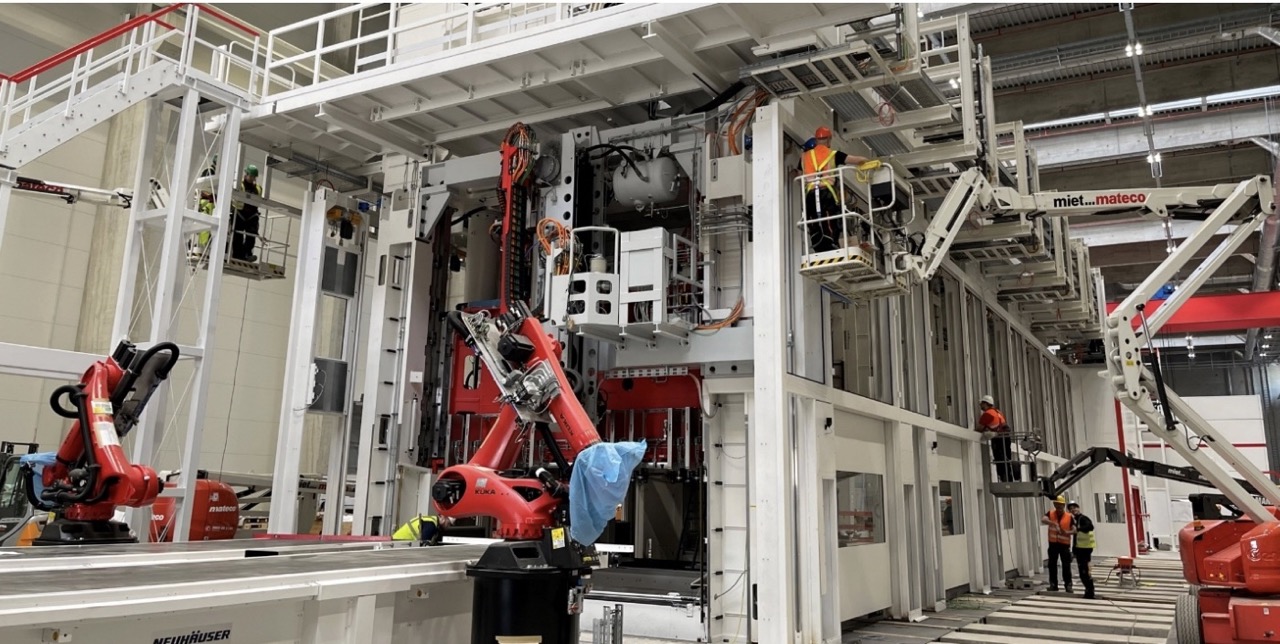
Last week, I pointed out that Germany’s biggest auto union, IG Metall, was trying to take over the works council at Tesla’s Berlin factory. It was contentious, but it sounds like workers there are fine with the status quo.
IG Metall, which has been fighting for more influence at Tesla’s gigafactory in Gruenheide, said it secured 13 of the works council’s 37 seats, leaving the committee’s majority in non-unionised hands.
Voting at the plant, the U.S. electric car maker’s only European production site, had started on Monday.
The current council is also dominated by non-union members, with IG Metall, which has for years been fighting for better working conditions, holding 16 of the council’s 39 seats, meaning an actual loss in representation.
Germans may be down on Tesla’s cars, but Tesla employees seem to like things the way they are.
How Long Will People Be Under Water?

Being underwater on a car loan means owing more in financing than the actual value of the car. It’s not great, and this usually happens in the hangover of some sort of financial event. In the case of the current market, a lot of this has to do with inflated prices during the post-pandemic period.
Is it turning around? Automotive News talked to some experts, and the answer is: Maybe, maybe not.
Scott Normandin, sales manager at Normandin Chrysler-Dodge-Jeep-Ram-Fiat in San Jose, Calif., said his dealership has seen “people coming in [$10,000], $20,000 dollars upside down.”
Nationally, a record 27 percent of all underwater new-vehicle buyers carried at least $10,000 in negative equity during the fourth quarter, according to Edmunds.
The problem was most acute on electric vehicles, particularly higher-end ones, Normandin said. He gave the example of an $80,000 EV for which “50 percent of the value is just gone” after two years.
“So I’m hoping it’s going to get better,” he said.
Patrick Manzi, National Automobile Dealers Association chief economist, presented negative equity volume and dollar amount data for new and used deals in a NADA Show speech Feb. 3. Those figures, from J.D. Power, followed a similar path as Edmunds’ statistics.
One possible out for buyers stuck on this cycle of needing new cars, but not being able to afford them, is leasing.
What I’m Listening To While Writing TMD
Who wants some bebop? Here’s Dizzie Gillespie doing “A Night in Tunisia” live.
The Big Question
What is stopping you from buying an electric car?
Top graphic image: Electrify America
The post Why America Needs Even More EV Fast Chargers As EV Sales Slow Down appeared first on The Autopian.