You may think of your freezer and grill as places where only food goes, and where nasty, oily car parts very much do not belong. But, having now rebuilt a transmission, transfer case, and engine, I can tell you that this is just not true. A grill and a freezer are must-have wrenching tools; here’s why.
Let me just get straight to the party trick.
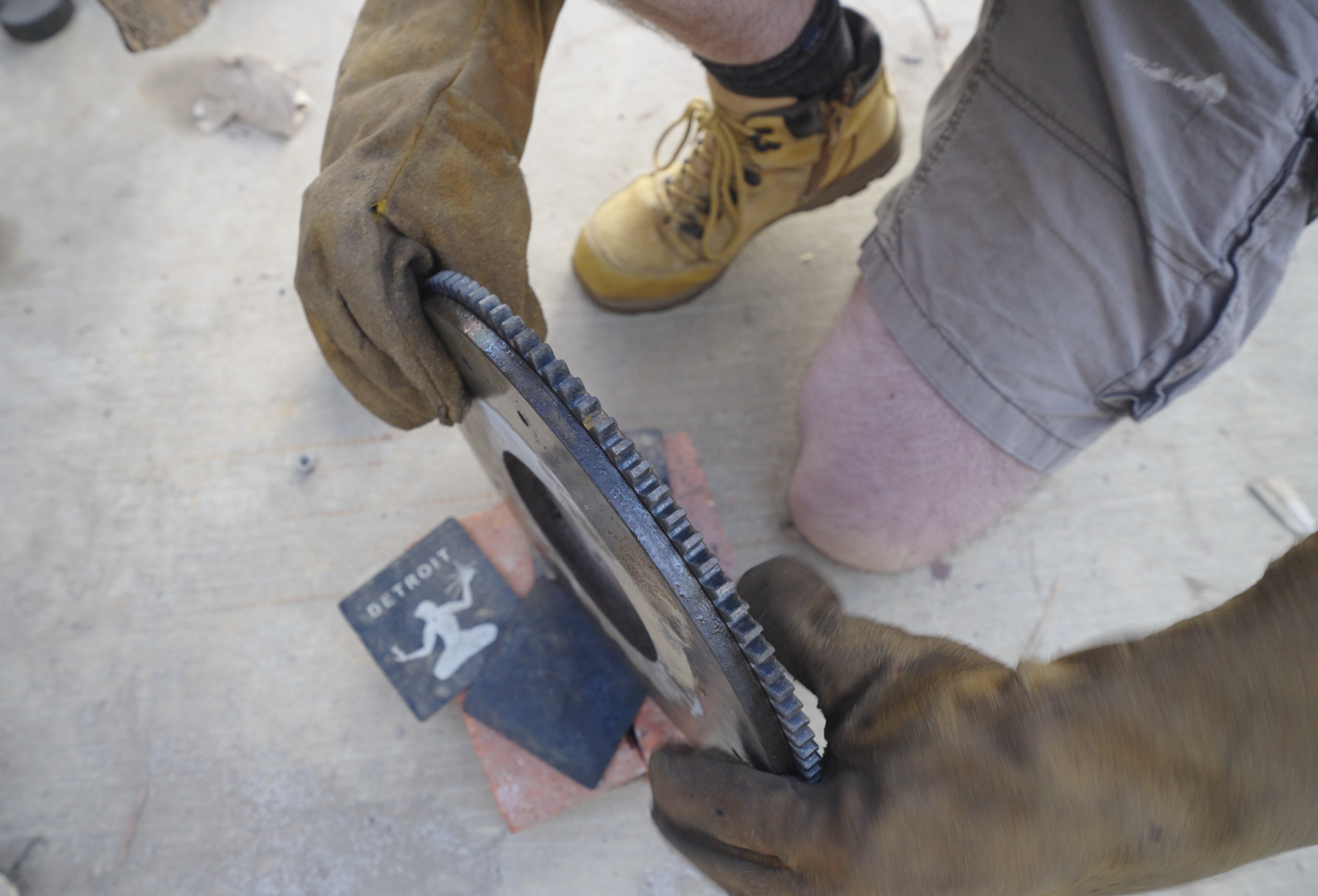
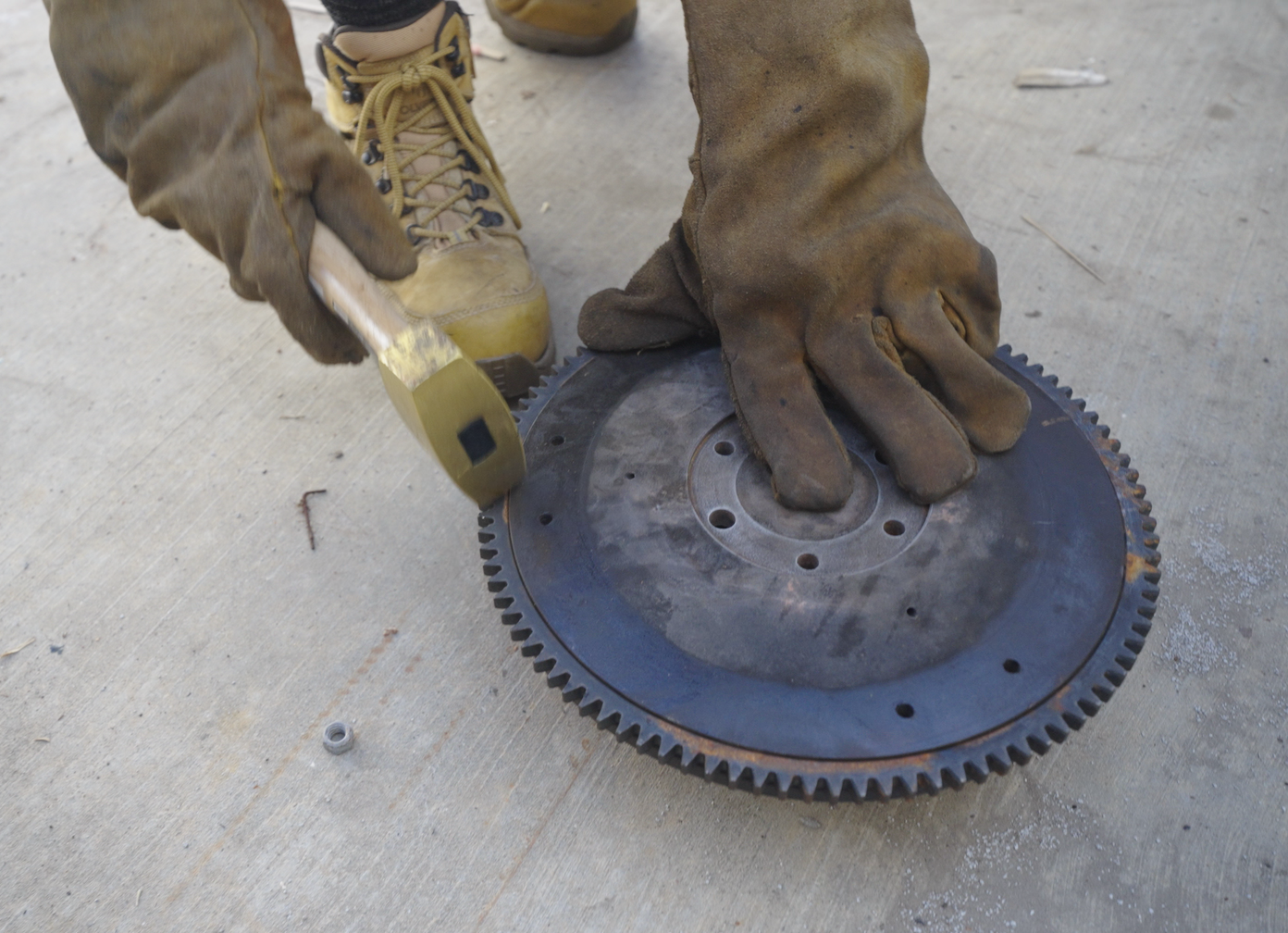
Watch as Laurence takes a flywheel ring gear off the grill and simply drops it onto a flywheel we had placed in the freezer:
I had just brought my flywheel back from the shop, who had machined it nice and flat. They had offered to remove the ring gear and install the new one I’d purchased on eBay (see below), but I decided I wanted to try something I’d read about on online forums.

For years, I had known that installing a ring gear required heating that gear up, so I Googled it, only to find that people had just used their grills to get the ring gear up to temp. So my Australian friend Laurence did just that:

We had banged my flywheel’s old ring gear off with a punch, and then we’d placed the heavy flywheel in my auxiliary freezer in the garage, with Laurence’s placement of the heavy flywheel only slightly denting the freezer’s interior. The new ring gear was on the grill at around 400F.
With a huge delta in temperature, the contraction of the flywheel and the thermal expansion of the ring gear made it so that Laurence could simply drop the ring gear onto the flywheel:

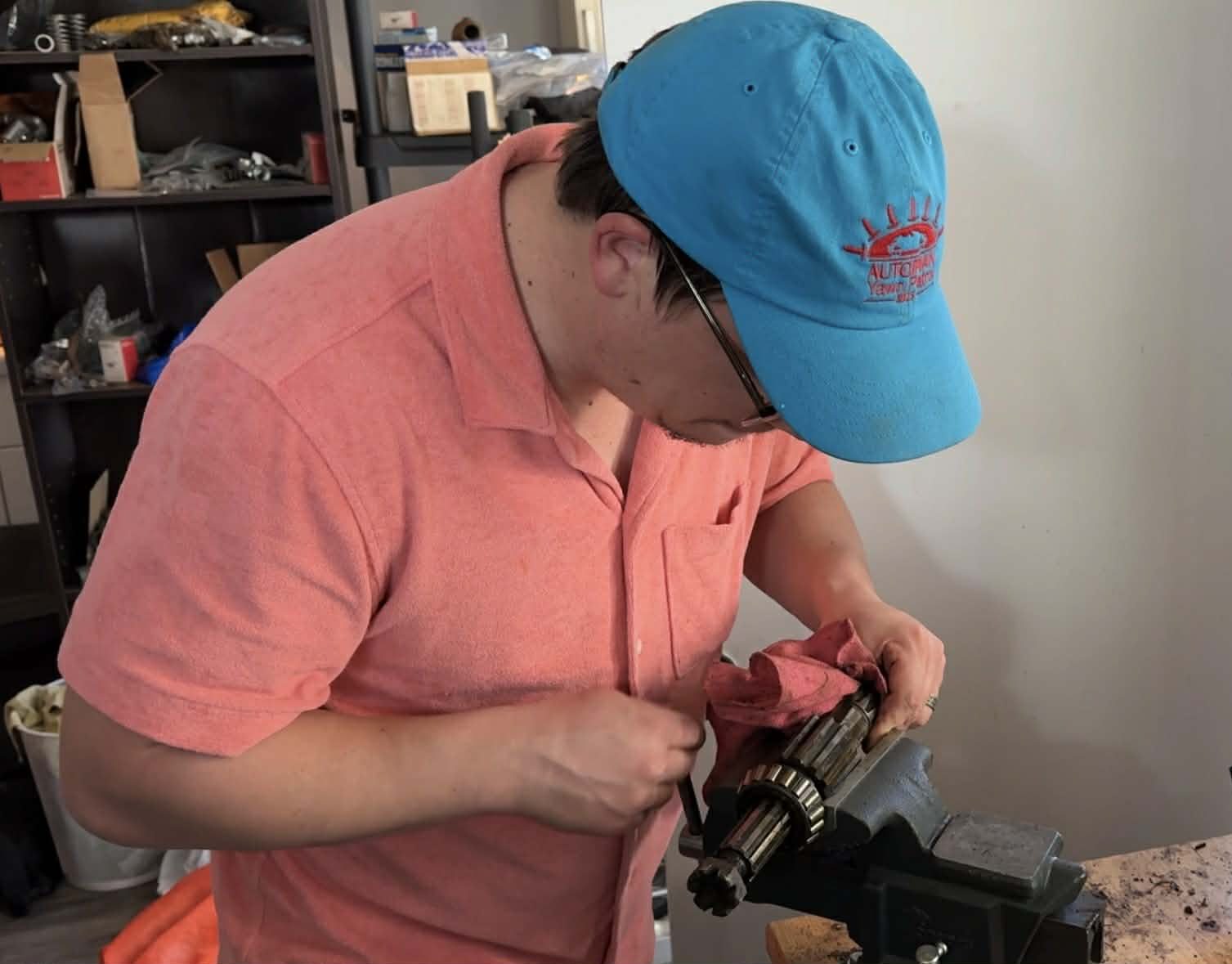
This is just one example where thermal expansion came in handy. It was also useful when my friend Brandon and I rebuilt the Jeep’s transmission — specifically when banging a new bearing onto a shaft: 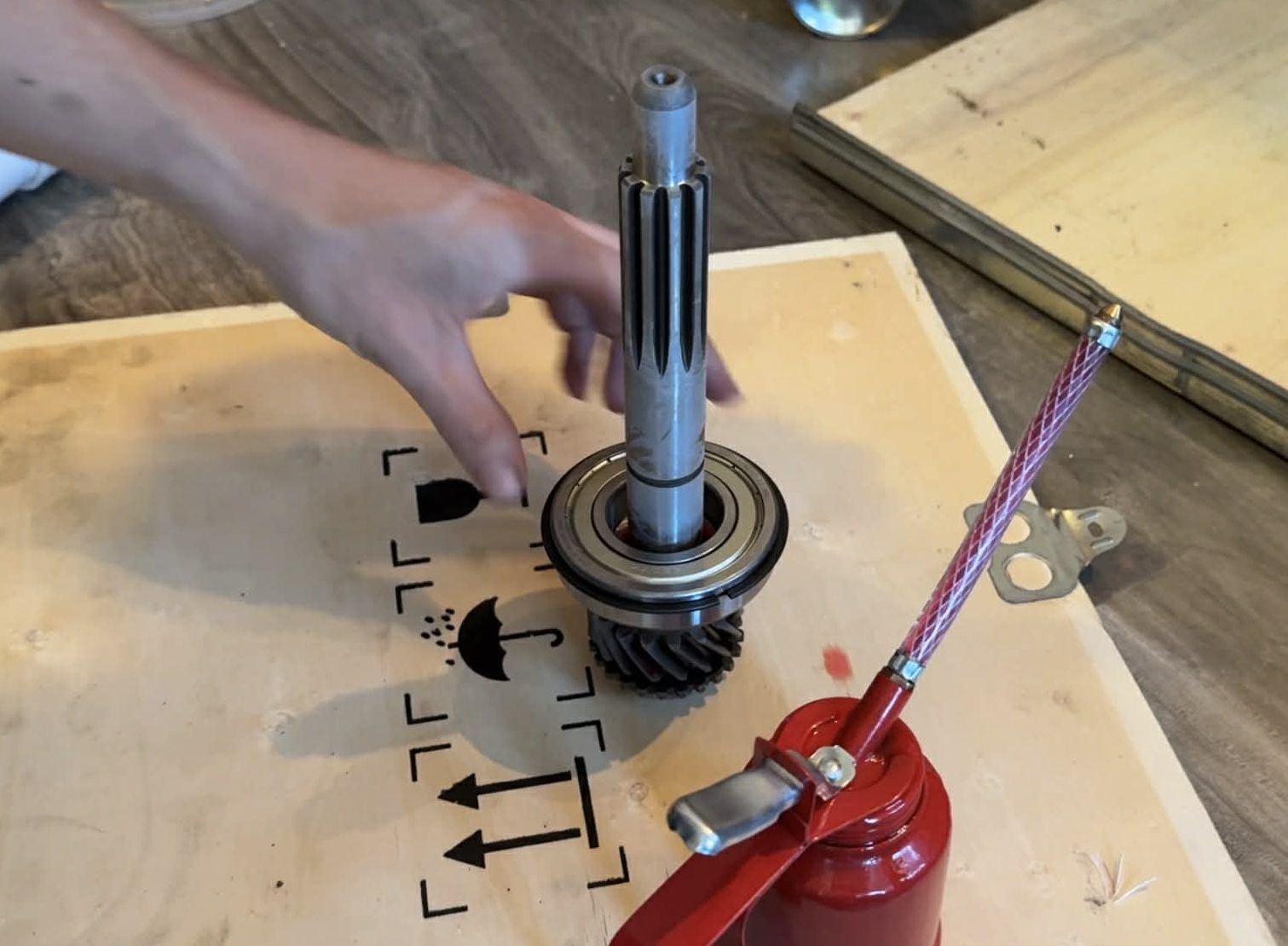
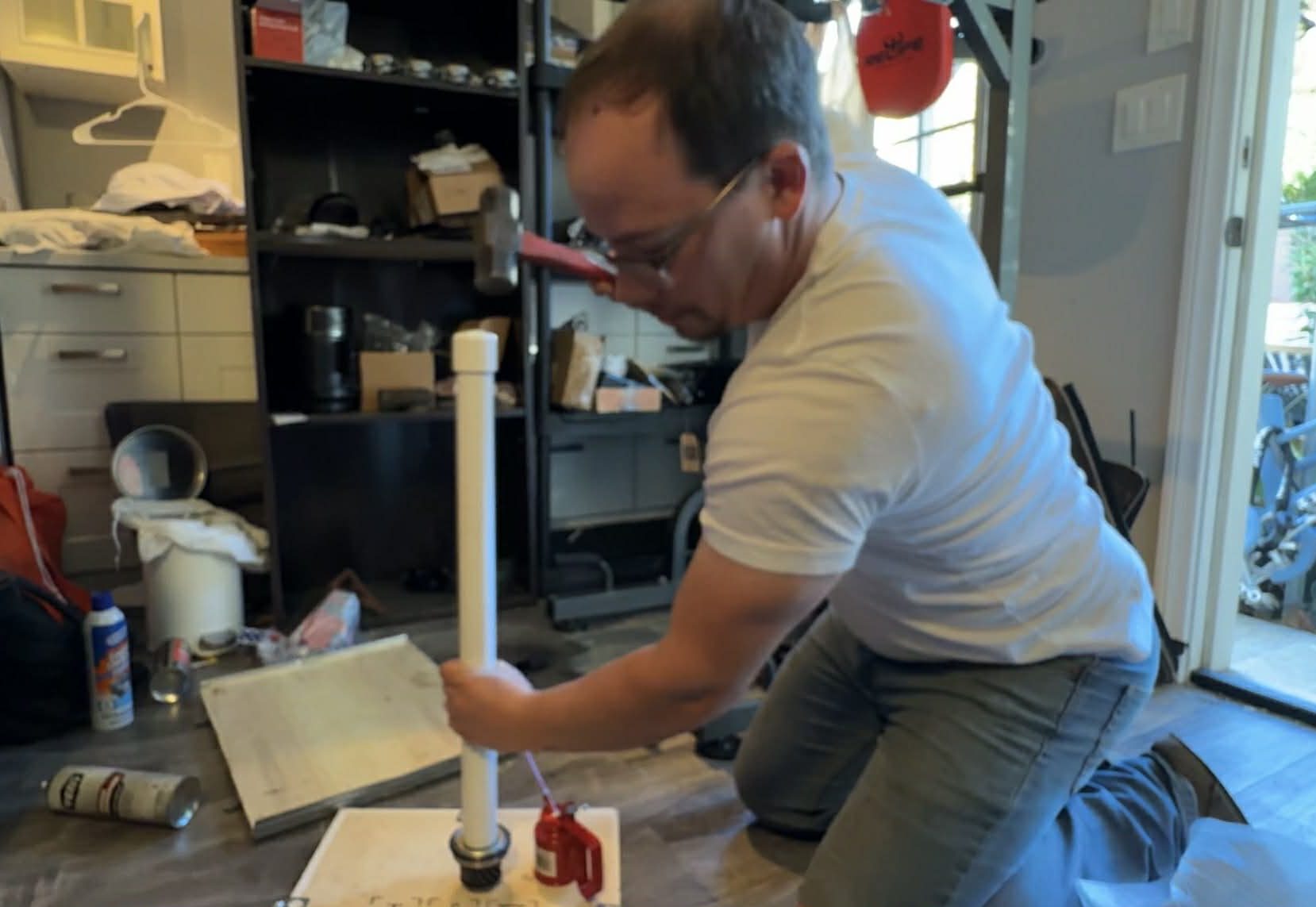
I also froze the transfer case main shaft to get a new bearing on:
I froze my piston wrist-pins so that they would more easily slide through my pistons and into my rods (which feature a slot that you can wedge open a bit wider using a flathead):
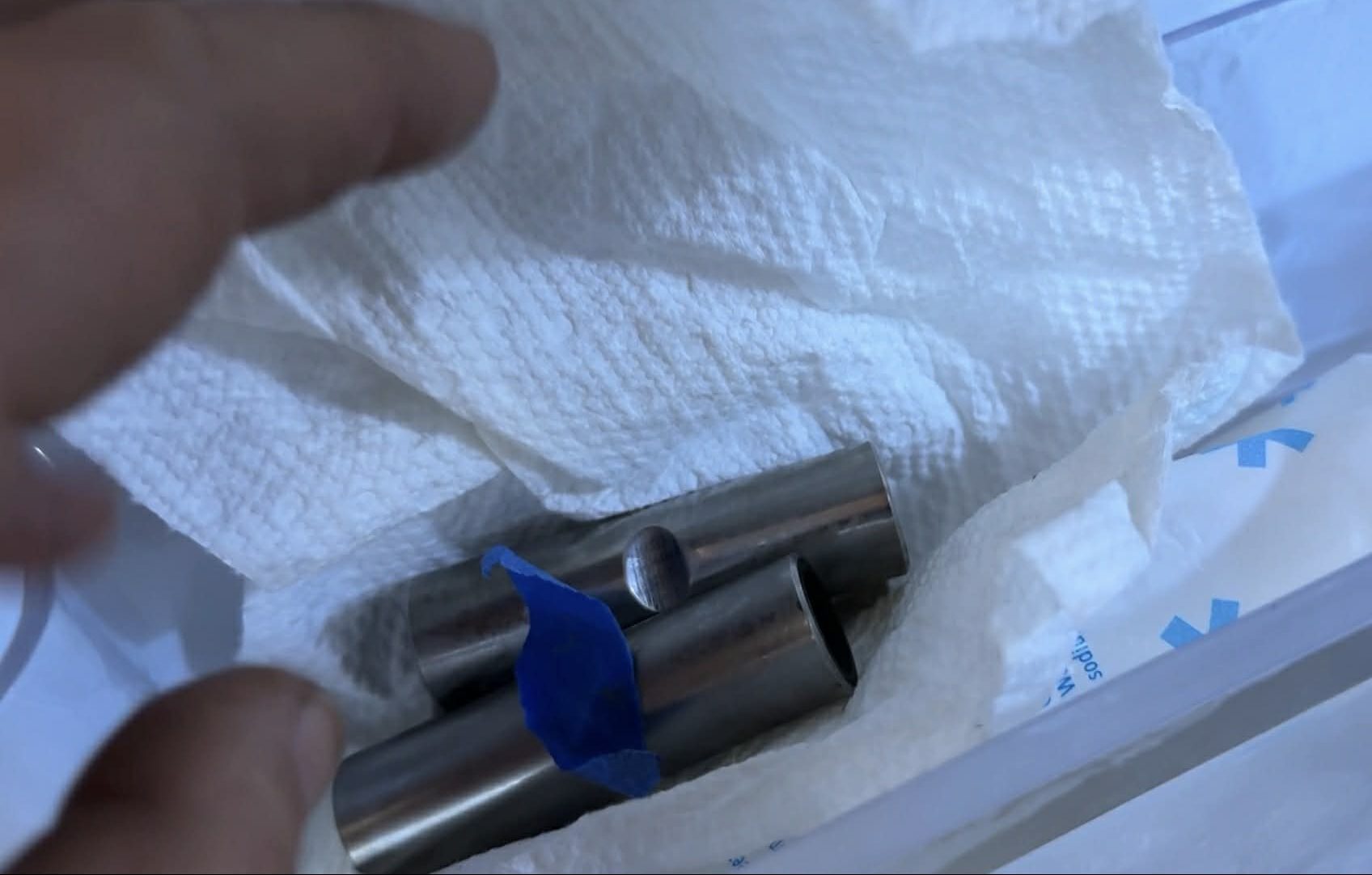

And I froze my steering box’s new bronze bushings before pressing them into the casing:

If you’re curious about the material science behind thermal expansion, here’s how Caltech defines the phenomenon:
Thermal expansion occurs because a material’s atoms vibrate more as its temperature increases. The more its atoms vibrate, the more they push away from their neighboring atoms. As the space between the atoms increases, the density of the material decreases and its overall size increases.
Back in engineering school, I did a lot of thermal expansion-related math problems in my Material Science and Strength of Materials classes — specifically, using this equation:
Change in Diameter = Initial Diameter * Alpha * Change in Temperature
Alpha is a material property called the coefficient of thermal expansion, which for steel is typically around 11 or 12 x 10^-6/C, and for Bronze (a common bushing material) is around 18 x 10^-6/C.
For fun, let’s just say I have a one-inch (0.254 meters) steel rod onto which I have to press a bronze bushing, with the bushing being about 0.001″ smaller to maintain a press fit. If it’s 77F outside (25C), and I heat the bushing up to 450F (232C) and freeze the rod to 3F (-16C) then I can calculate how much smaller the rod gets by plugging into the equation above:
Change in diameter = 0.0254 meters * (12×10^-6/C)*(-16C-(25)) = -1.25*10^-5 m. That’s about 0.5 thousandths of an inch of shrinkage.
And I can calculate how much the 0.999-inch bushing expands when I heat it up to 450F (232C):
Change in diameter = 0.0254 meters * (18×10^-6/C)*(232-25) = 9.6*10^-5 m. That’s about 4 thousandths of an inch in expansion.
That’s gone from being a 1-thousandths-of-an-inch press fit to a 4.5 thousandths-of-an-inch slip fit. When both materials reach room temperature again, they’ll be joined together with that initial 1-thousandths-of-an-inch press fit, but at the moment the bushing leaves the grill (or torch or whatever) and the rod leaves the freezer, there’s 4.5-thousandths of gap that will make slipping that bushing onto that shaft an absolute breeze.
This is the power of thermal expansion — a mechanic’s best friend.
[Ed note: David mentioned the idea of building a brand new WWII Jeep to the team at eBay, and they loved the idea so much they said, “How can we help?” Their financial support and David’s Jeep-obsession are the fuel behind this crazy build. – MH]
Top graphic images: David Tracy; Superutensil
The post Why A Freezer And Grill Have Been Such Useful Tools For My eBay WWII Jeep Project appeared first on The Autopian.