So much of car design – well, so much of anything, really – is about compromise. That’s because restrictions are what really get creativity going, I think, and it’s how we deal with the parameters and barriers that we can’t change that pushes us to do our best. Car design is like this, of course, and it can be exciting to see how compromises are made and dealt with. Sometimes these compromises are made with the grace of a gilded swan making love to a French horn on a polished marble floor, and sometimes with the clumsiness of a bulldog violently humping a car tire on a wet tarp. I think one of the best places to witness this spectrum of compromise is via the lens of rear side doors from sedans used on wagons.
Yes, that’s right – some station wagons (estate cars if your toast had beans on it, break if your toast was a beanless baguette) use rear side doors right from the sedan version of that car. Sometimes the design is so well done that you never even suspect the doors weren’t an integral part of the design from the beginning, and sometimes it’s screamingly obvious. And that’s not always bad?
Let’s take a look at some examples of this phenomenon, because I think there’s a lot to be learned here.
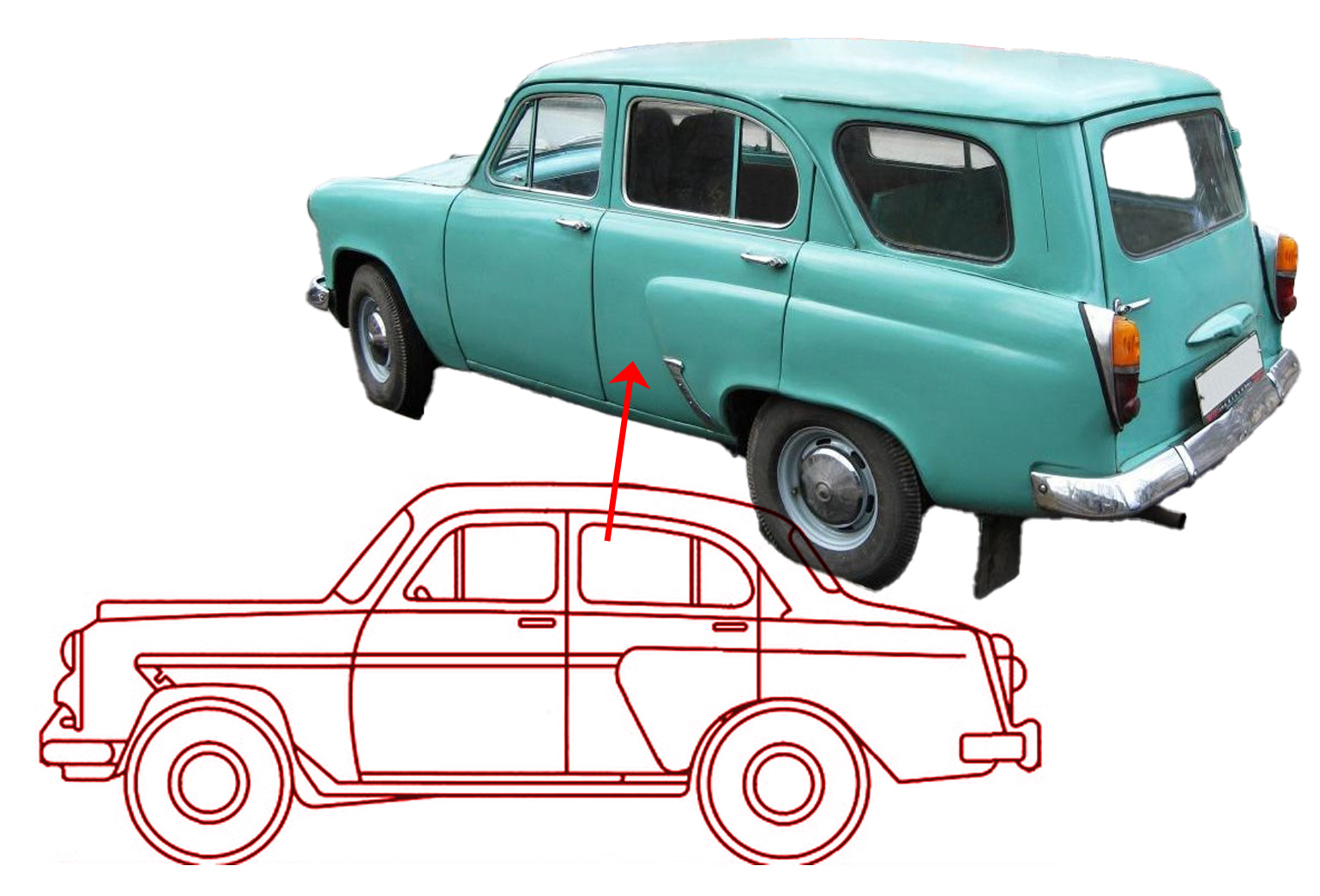
This is a strange example, I suppose, but it’s an early one, and it’s nice and obvious. The Moskvitch 423, introduced in 1957, was the wagon version of the Moskvitch 402, and was one of the earlier Soviet station wagon options. As you can clearly see, the rear doors are from the sedan version, and even the curved line of the rain gutter continues to follow the sedan’s roofline, even though the wagon’s long roof is clearly different. Let’s be honest: it’s pretty clumsy.
That curved C-pillar is something of a hallmark of wagons with sedan rear doors, and sometimes I really love the way it looks, even when quite obvious, like on the second-generation Saturn SL wagon, which gets a very curvy rear door from the sedan:
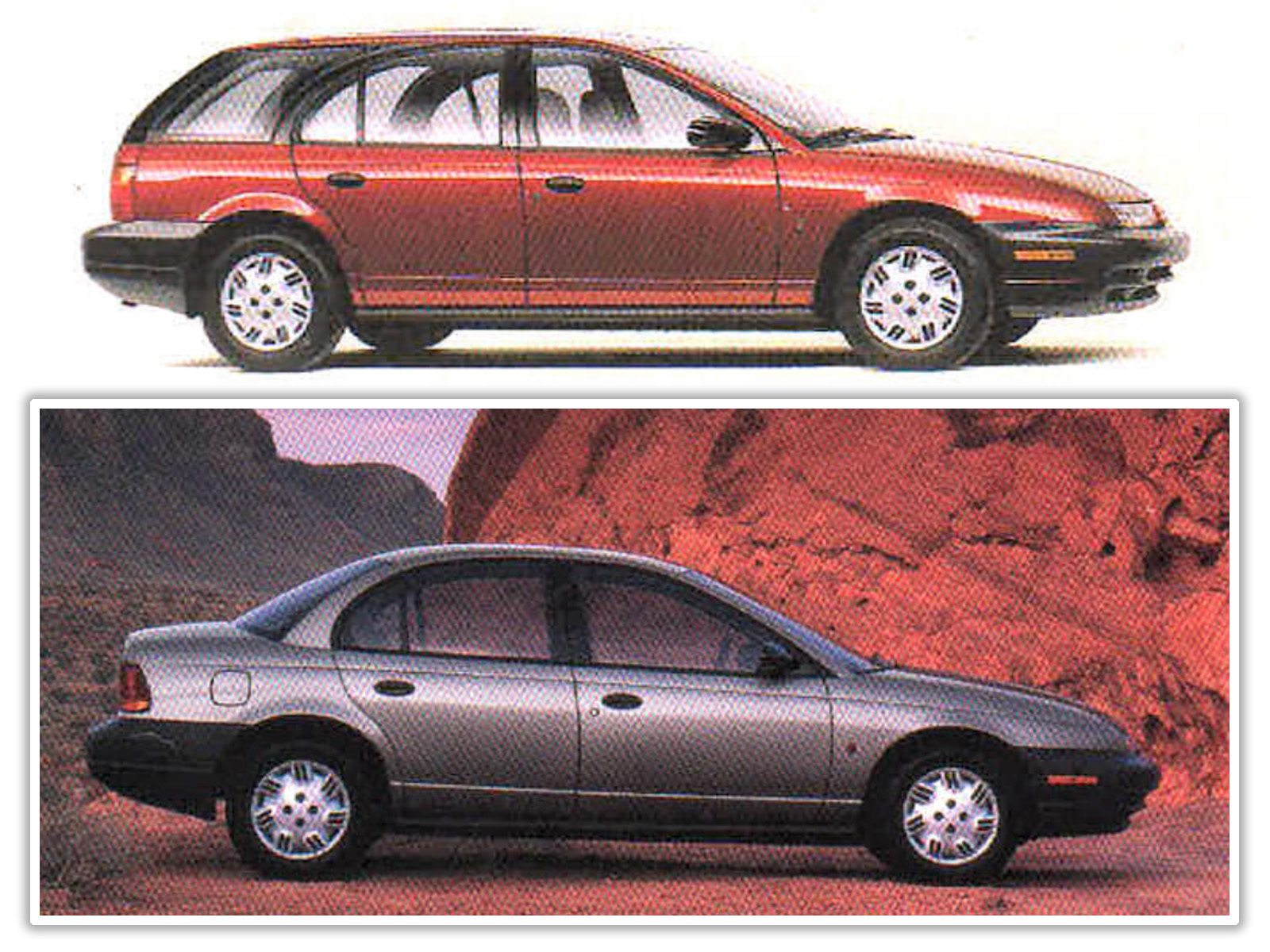
There’s no hiding that this is the same door, but what I like is how the Saturn wagon embraced that curved C-pillar, and made it an integral part of the design, just accepted it, made no attempt to disguise it, and as a result, I think it’s one of the most memorable visual cues of the wagon. The previous generation wagon had a pretty conventional, slightly angled C-pillar, and I thought it looked boring. Here, Saturn took a restriction and made it into a feature.
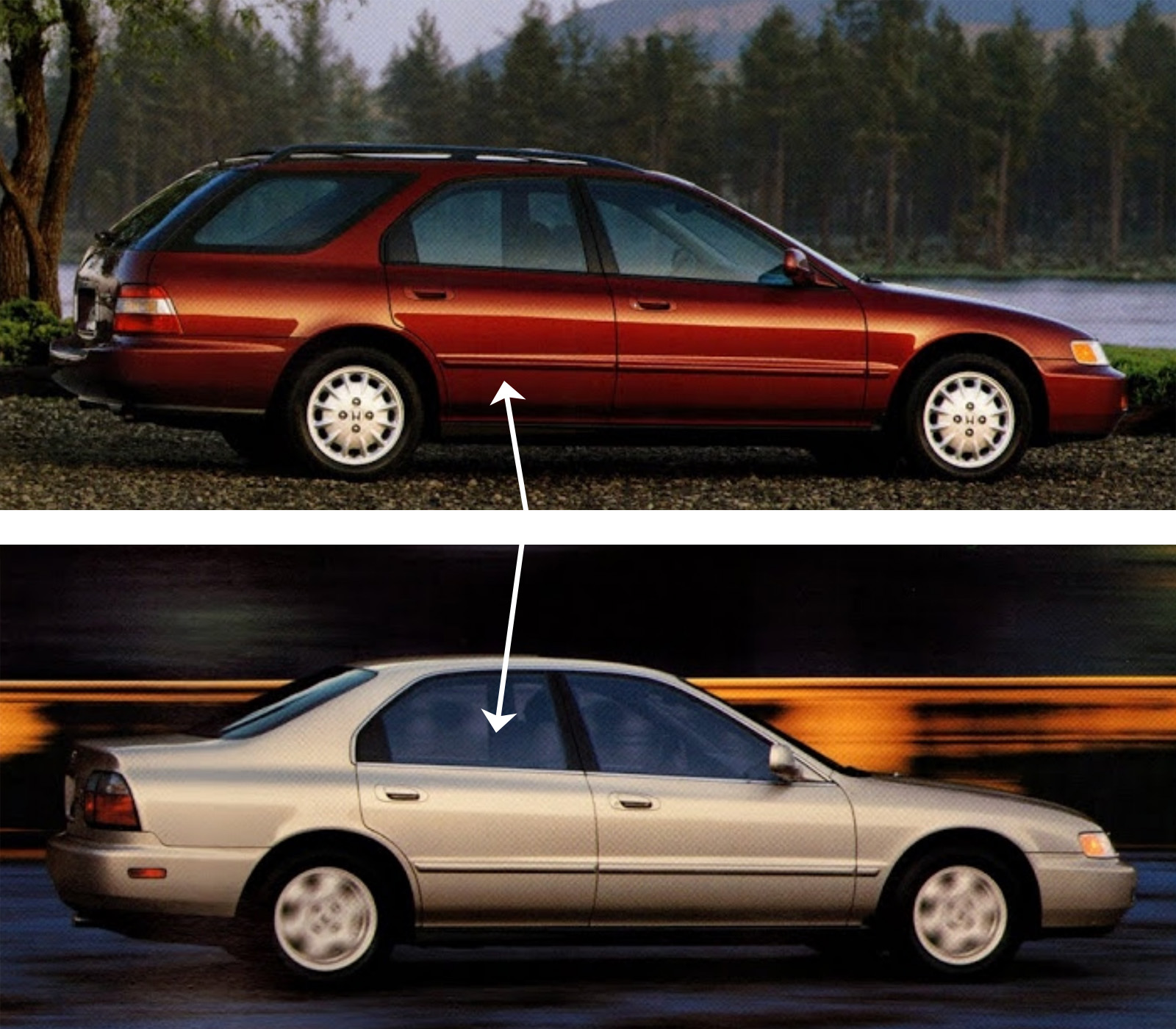
Other wagons with sedan doors that had to deal with dramatically raked C-pillars handled it in different ways; Honda, for example, managed to integrate a very forward-raked C-pillar in a quite harmonious way by mirroring the angle for the D-pillar and forming a trapezoidal rear side window. I always liked the look of these, and I think if they weren’t informed by that sedan rear door, they wouldn’t have come out looking so good.
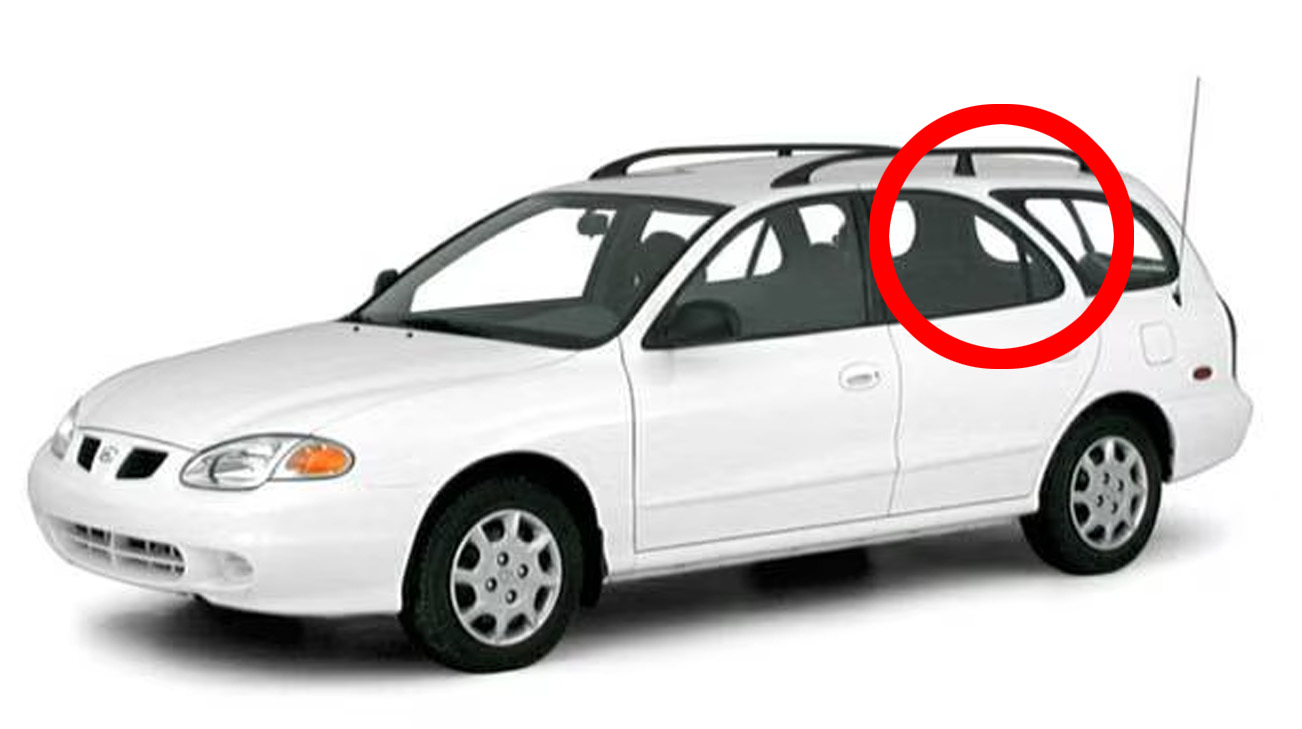
The 2000ish Hyundai Elantra wagons were faced with a similar dilemma as the Honda and Saturn ones, and while I don’t think this is terrible, I don’t think it was executed as well as the others. Interestingly, unlike the Saturn, the Hyundai does not black out the C-pillar, leaving it body colored, suggesting at least some degree of confidence in the design.
Weirdly, when Ford made a third-gen Taurus wagon, they seemed to have designed something that used common doors for the wagon and sedan from the get-go, as it had that distinctive, heavily raked and curved C-pillar look:
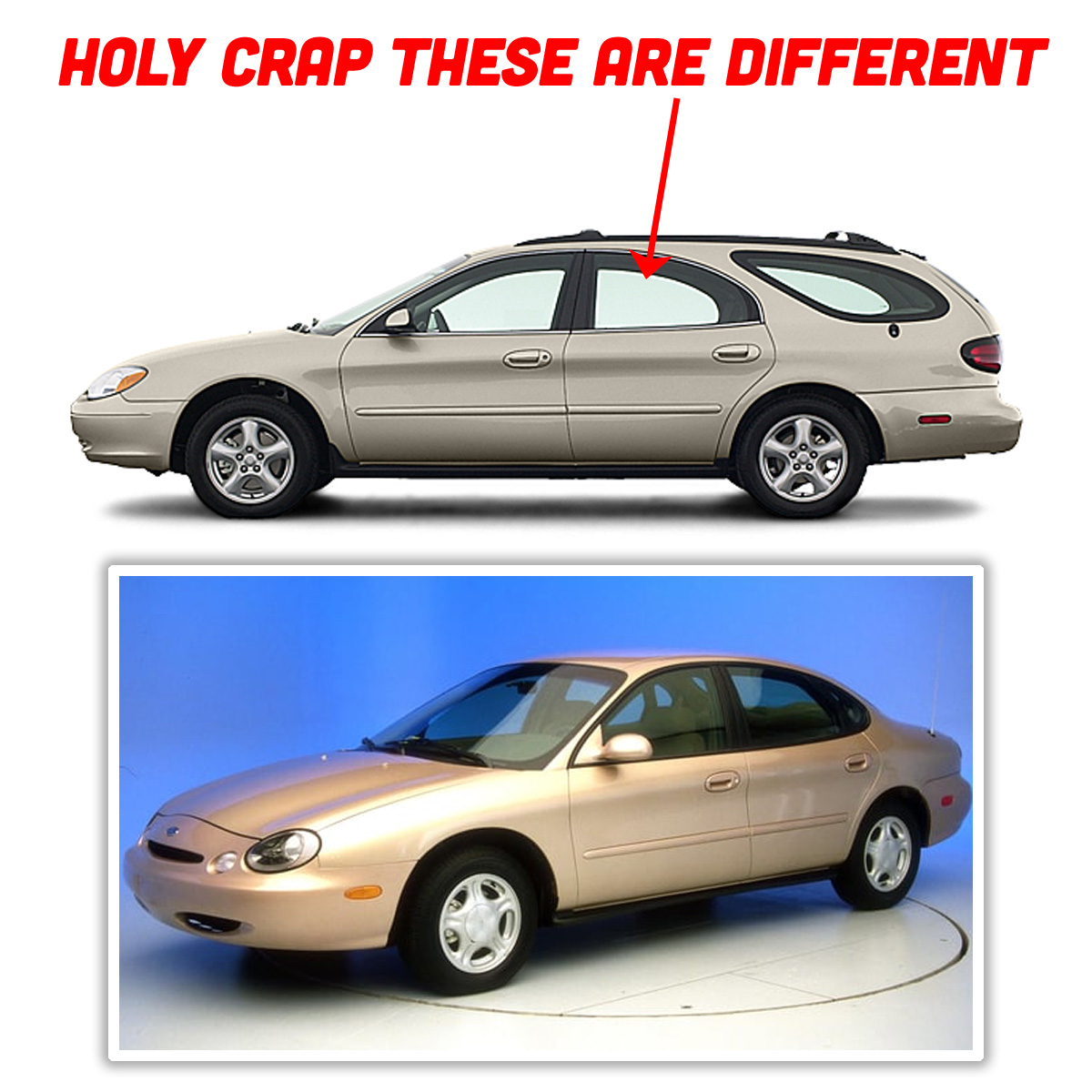
But they didn’t! Those doors are not the same! It seems ridiculous to design a wagon that looks like that and not reuse the doors! The cost savings have to be significant, so…why didn’t they try a little harder? Ford isn’t the only one guilty of this kind of baffling decision; look at the rear doors on the Plymouth Volare sedan and wagon:
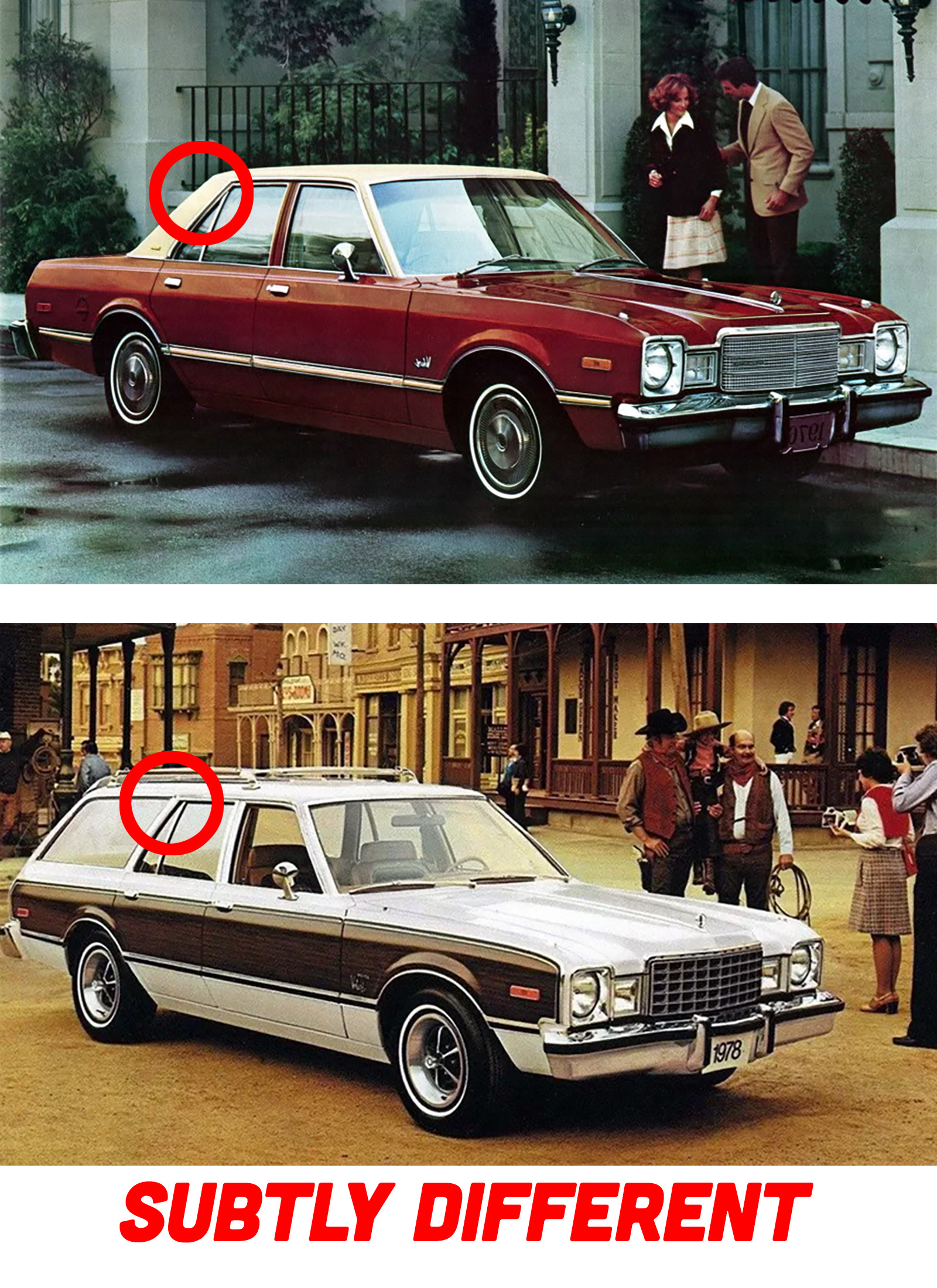
Look how subtle that difference is! Both doors are upright and angular, and the only difference is a slight degree of slant at the trailing edge of the window, which you can only really see by looking at the angle of the point of the bit of triangular fixed glass. They couldn’t have figured out how to make one door work for both of them? Where were the bean counters? I thought they loved this kind of crap.
Speaking of subtle, this may be the most fascinating case of door-sharing. Volvo, a company perhaps most famous for its wagons, started with wagons that had pretty dramatically different rear doors for sedan and wagon. Look at the Amazon, for example:
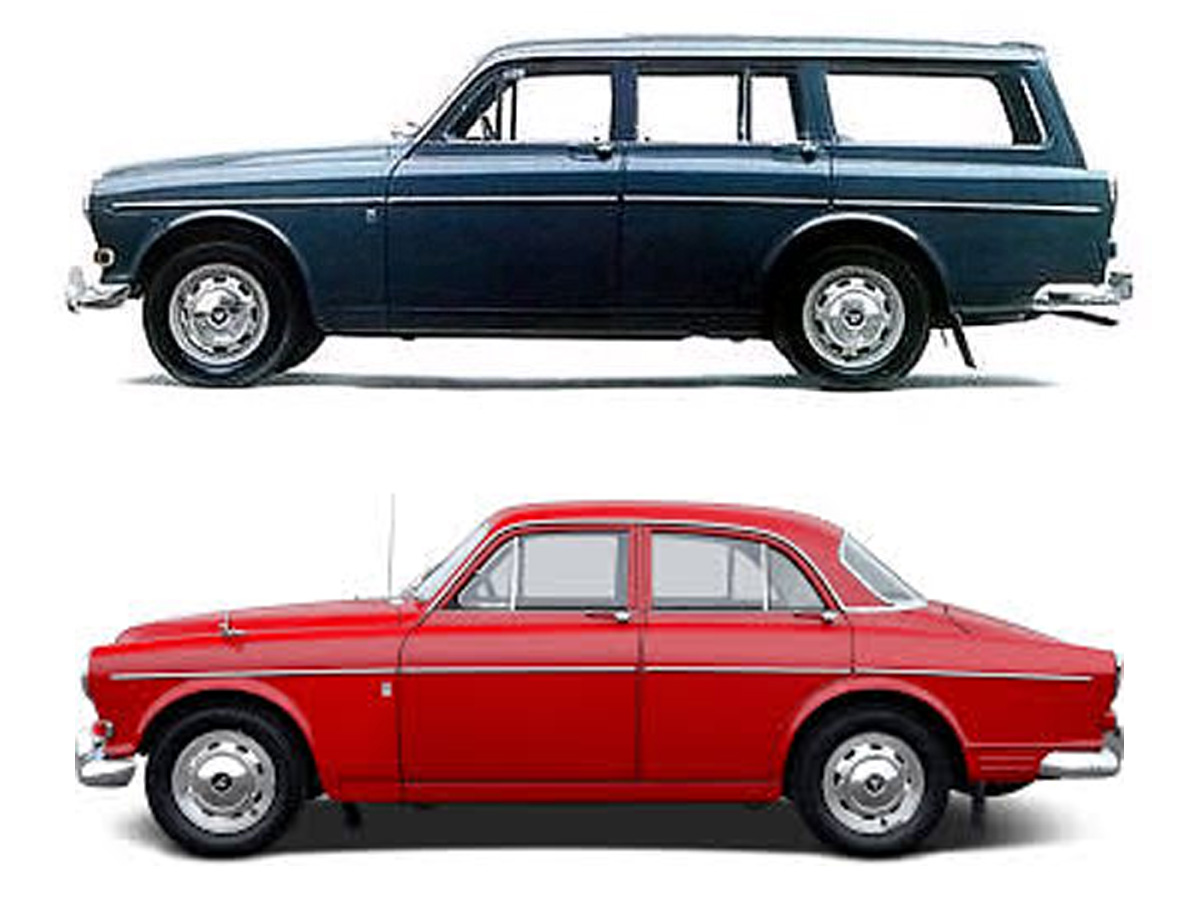
That was essentially a complete redesign from the B-pillar rearward, with no sheetmetal shared in the back half between the wagon and sedan. That gives a lot of design freedom, but it’s not cheap.
So, when it came time for Volvo to develop the Amazon’s successor, the Volvo 140 series (which later evolved into the 200 series), designer Jan Wilsgaard had a chance to try and design something that could share more parts between wagon and sedan. Parts like doors.
And he really tried his hardest, though the results weren’t exactly perfect, which I think just makes the car more interesting.
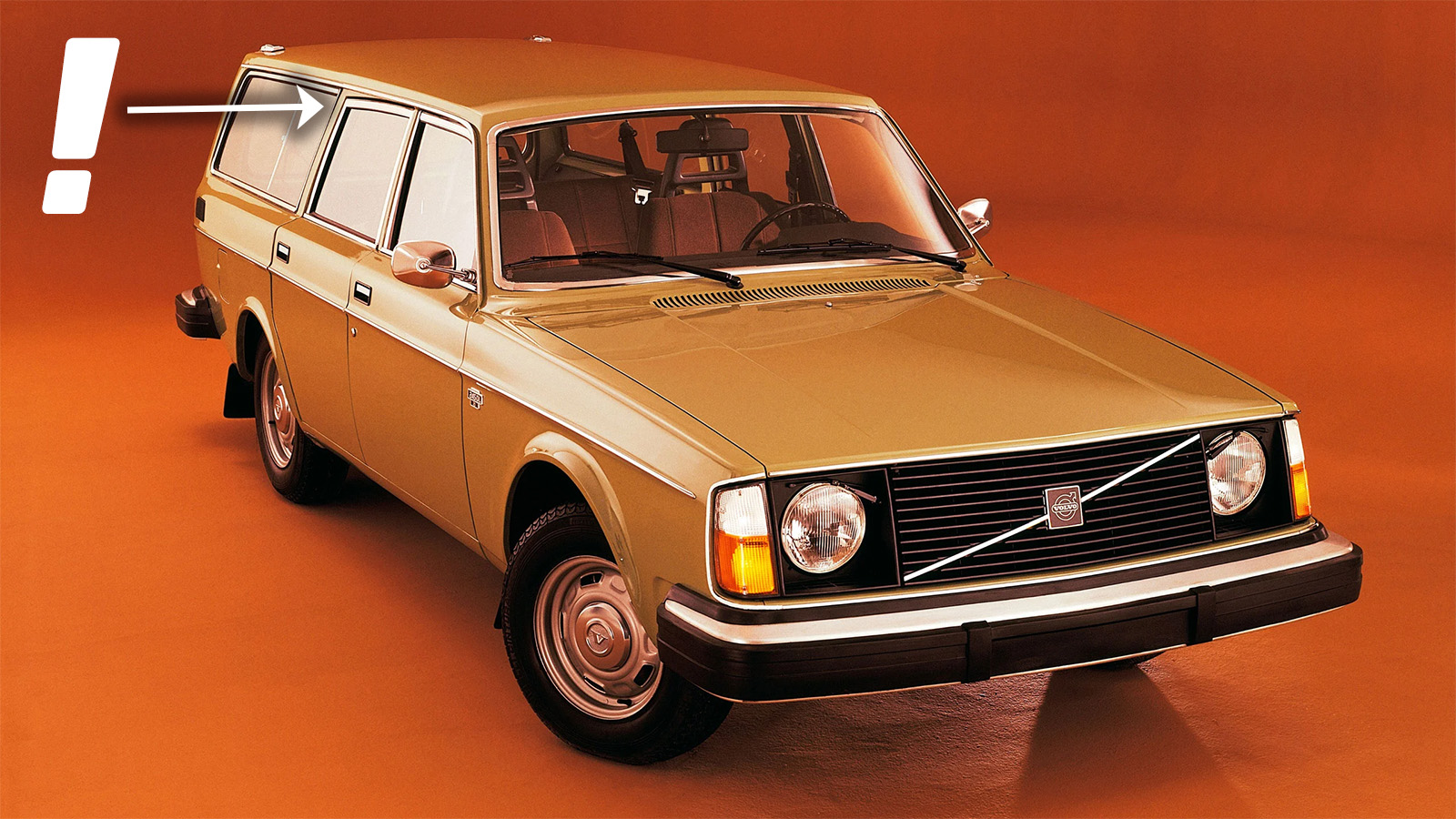
Wilsgaard made a choice to favor the sedan when it came to rear door design, a choice that, based on how popular Volvo wagons became, may have been the wrong one. As a result, a Volvo 145 or 245 wagon’s rear doors aren’t exactly in line with the roof: they have a very slight slope downwards that matches the slightly sloping roofline of the sedan.

I suspect most people barely even notice it, but once you’re aware of it, you can’t not see it. It’s not perfect. It doesn’t quite fit. And yet, somehow, I think this little imperfection just adds more character, like a gap in the teeth of someone’s pretty smile or an interesting mole or fetching scar.
It’s a subtle visual reminder that the world isn’t perfect, and sometimes we have to make do with what we have, the best way we can. I think that’s a pretty good thing to be reminded of in the shape of a car door.
Top graphic image: Saturn
The post A Controversial Detail To Appreciate: Wagons With The Same Rear Doors As Sedans appeared first on The Autopian.