The hotspot for EVs
The San Francisco Bay Area is home to several state treasures. Great surfing, the Golden Gate Bridge, the wacky streets, coffee, and Top Dog in Berkeley, redwoods in Oakland, and all the tech and EV companies coming out of Silicon Valley, like Lucid, ChargePoint, and Bollinger. One of those companies, of course, is Rivian, with its HQ established in the heart of Palo Alto. It originally started in Florida as Mainstream Motors but became Rivian after relocating to California. Since then, the company has flourished, with two key products: the R1T, an electric pickup truck, and the R1S, an EV “adventure” SUV.
Kristen Brown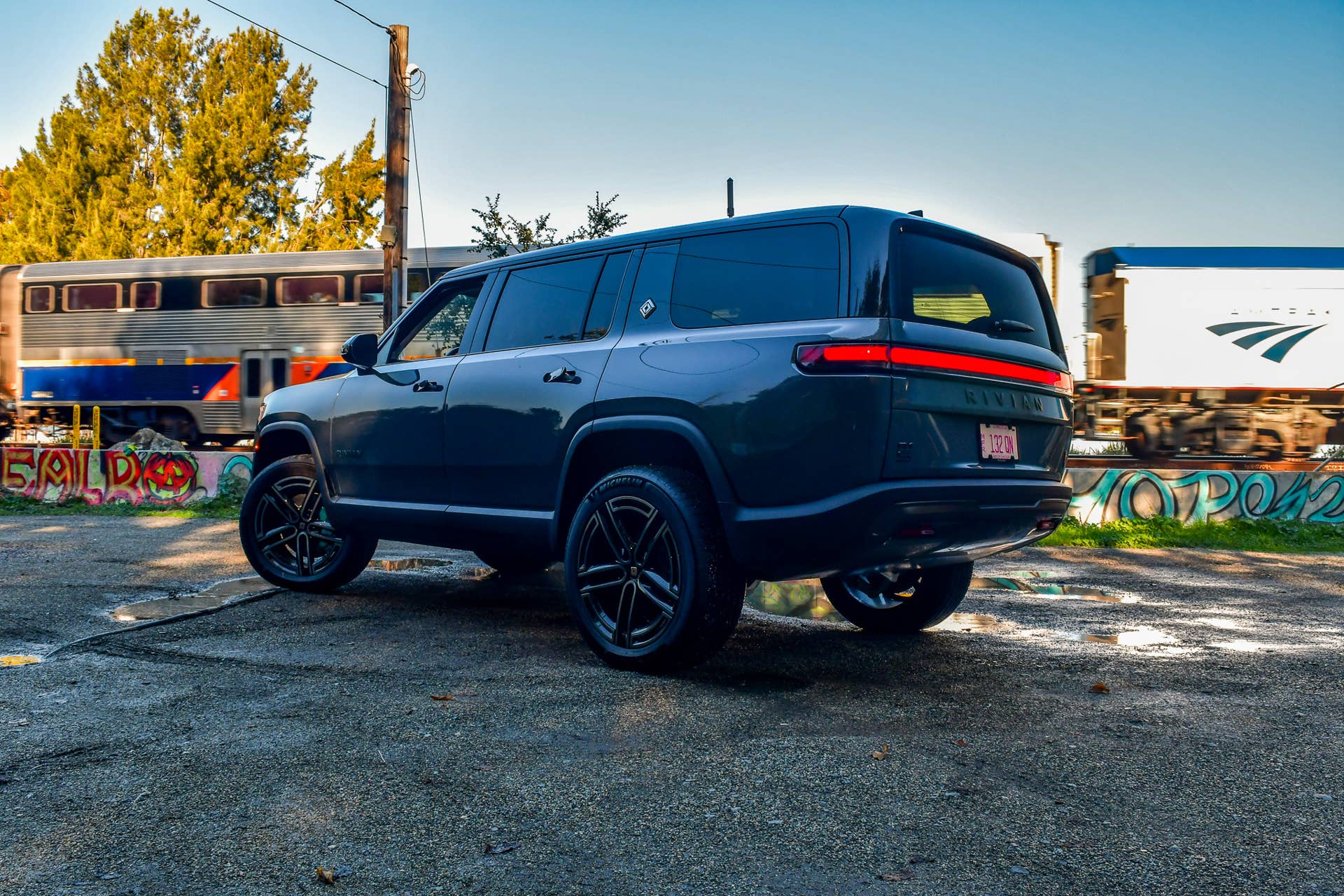
There are four trims of each, with the separating factors being motor count and battery size. They both boast a respectable range regardless of AWD, a good amount of horsepower, excellent software, cargo space, and a wide price range to appeal to buyers within all sorts of tax brackets. I had the chance to review a 2026 Rivian R1S Quad Motor, and therefore, a chance to see if the $121,990 MSRP SUV was worth the money if most of my time in it is spent in traffic. After seven days with it, here are my thoughts.
The Advanced Highway Driving Assist is a game-changer
Even with one pedal driving, sitting in traffic sucks. You’re on, and off the accelerator pedal, it’s a strain on the eyes (especially since Bay Area traffic tends to get up to 45 mph, someone cuts someone off, and the entire lane halts to a quick stop because everyone tailgates), and after about 40 minutes and only going about five minutes, it’s mentally exhausting. There’s no joy in making sure you don’t crash your six-figure EV SUV into someone else’s expensive car.
A lot of manufacturers are coming out with their own versions of semi-autonomous cruise control systems, like GM’s Super Cruise, Ford’s Blue Cruise–you get the idea. Rivian has its own version of that, which is aptly named “Advanced Highway Driving Assist.” Clicking the steering wheel dongle (for lack of a better term, I’m sure there’s a smarter-sounding word for it) forward twice will activate it if there’s a light blue icon that looks like cartoon hands near a steering wheel. From there, you can set a maximum speed, and the R1S quite literally does the rest. You can adjust the following distance between the car in front of you; it’ll start and stop as traffic moves (or doesn’t), it’ll keep you in your lane so you don’t have to worry about steering, and the advanced radar and LiDAR systems will slow down if they detect a car moving in front of them, too.
Kristen Brown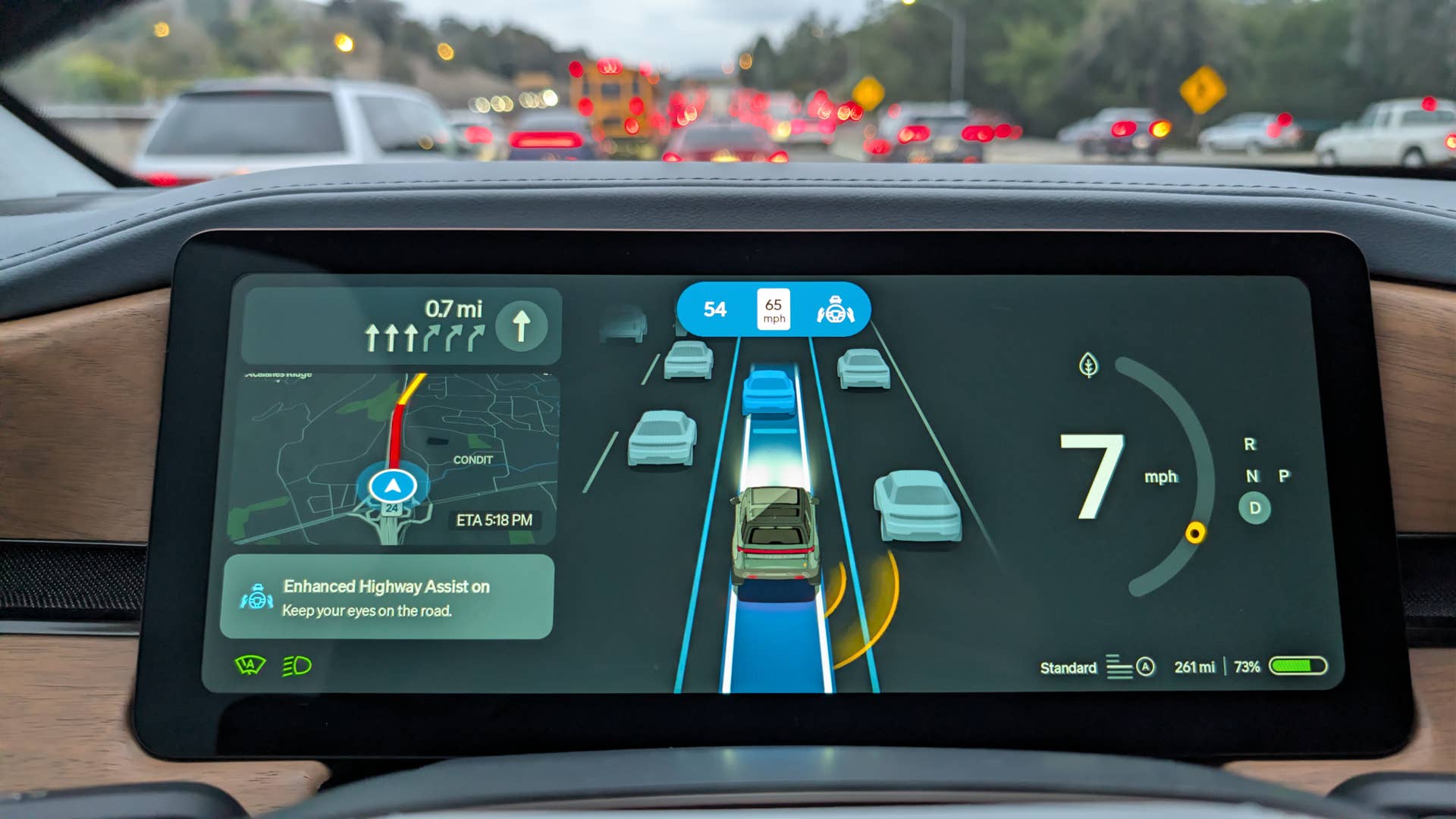
The only thing that was a bit sketchy was how closely it follows, even when I set it to the maximum distance. When someone would cut in front of me, which felt like it happened about every 20 seconds, the R1S would slow down to make space, but barely–and it made me incredibly nervous. If the car in front of me slammed on its brakes, the R1S would have little to no time to react, and while I’m sure the LiDAR and radar systems have a much more reliable reaction time compared to mine, it was nerve-racking. So, near highway junctions or merge lanes that involved people cutting in front of me, I didn’t use it. In normal situations, though, I used it as often as I could and loved every second. I could fetch my screaming kids a snack, help them reach the water bottle that they dropped for the millionth time, navigate the screen to play their favorite song (K-pop Demon Hunters’ “Golden”), without worrying about crashing.
Using the lane change assist was easy, too. You just click the turn signal in the direction you want to change lanes twice, and the R1S will make the lane change when it’s safe and then center itself. It was scary with the Bay Area’s aggressive and horrible drivers, but it did it effortlessly. Feeling and seeing the behemoth move itself so smoothly was amazing, and it made keeping my kids quiet in traffic so much easier.
It has over 1,000 horsepower, but drives incredibly smoothly—unless you change the drive mode
The R1S Quad Motor doesn’t brag about the fact that it has five more horsepower than the famed Tesla Model S Plaid. It’s very subtle in its advertising, with just a Gear Guard badge on the rear door, and a very small “Quad Motor” badge just below the normal R1S badge. It has teal accents on the exterior badges, and the calipers are the same color, but otherwise, the only people who would be able to tell it apart from the base model R1S would be people who are privy to the R1S trim levels. No wide finders, no special wheels, no changes to the interior, no spoilers, none of that—from the inside and out, it looks like a regular ol’ SUV.
Unless, of course, you rummage through the RAD Tuner and put it in Sport mode. Then the R1S’s attitude is very quickly adjusted. The suspension would quickly lower, and in an instant, there’s more power under the pedal. A slight increase in pressure on the accelerator pedal feels like you’re being launched into space. It’s ready, it’s willing, and very capable of smoking any unsuspecting car that pulls up next to you at a stoplight. Even in Conserve, if you push the accelerator down, it goes. And it goes hard. It was my favorite party trick, actually, to seize any opportunity I could to accelerate quickly. Of course, a giggle was involuntary. It brought a smile to my face every single time, without fail. Even my toddlers appreciated it. They don’t know the difference between a zero-to-60 time of 2.3 seconds or 3.2, but they ended up begging me to go faster every time they rode with me.
Kristen Brown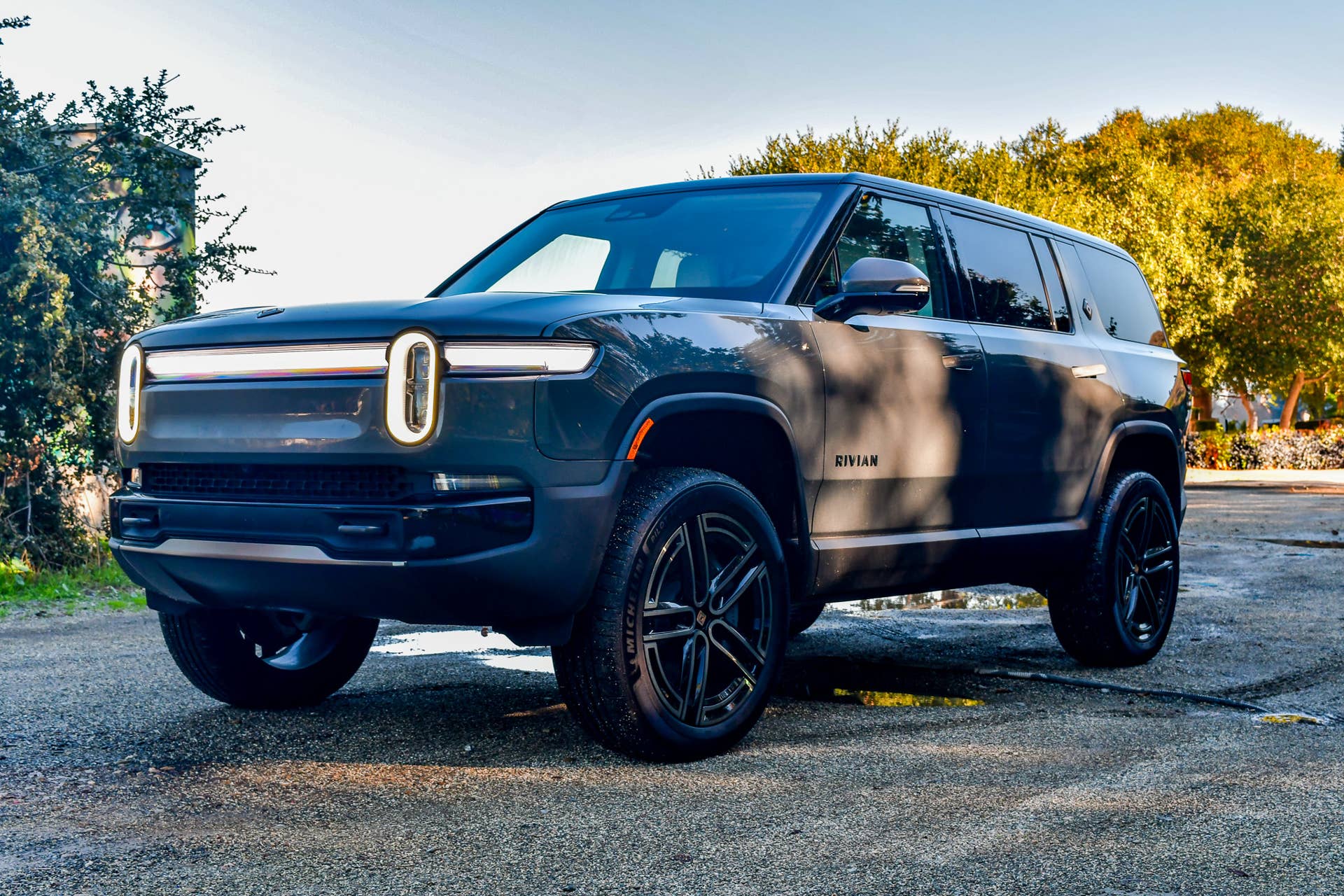
When I wasn’t busy trying to get a giggle out of my toddlers or husband, I kept it in conserve mode, which kept the ride incredibly smooth and the range at around 330 miles on a full charge. It was a bit cold during my time with it, so I used the climate control system to keep everyone warm, and that definitely made the battery drain a bit faster than it might otherwise, but in between jaunts, I typically used around 5-10% of the overall range. Not too shabby. If it were a gas car with 1,025 horsepower, consumption would be a lot higher (and a hell of a lot more expensive). Since it’s an EV, I wasn’t worried about burning gas or only getting a mileage score of about 6 mpg. There are off-road modes, too, but I didn’t get to use those this time around–but I will try them out with the R1T.
The third row is one of the most comfortable I’ve ever experienced, making it great for families
I’m a parent with two kids who will inevitably want friends to come over, so I’m very hard on three-row seats. Cars like the Subaru Ascent or the Toyota Highlander have some of the worst excuses for third-row seats in the industry. So far, I’ve only been impressed by the third-row seats in the Toyota Grand Highlander (or Lexus TX), Hyundai Palisade, and Hyundai IONIQ 9. I was skeptical about the third row seats in the R1S, but when I folded them out and slid the second row seats as far as they could, the third row looked a lot more appealing.
Kristen Brown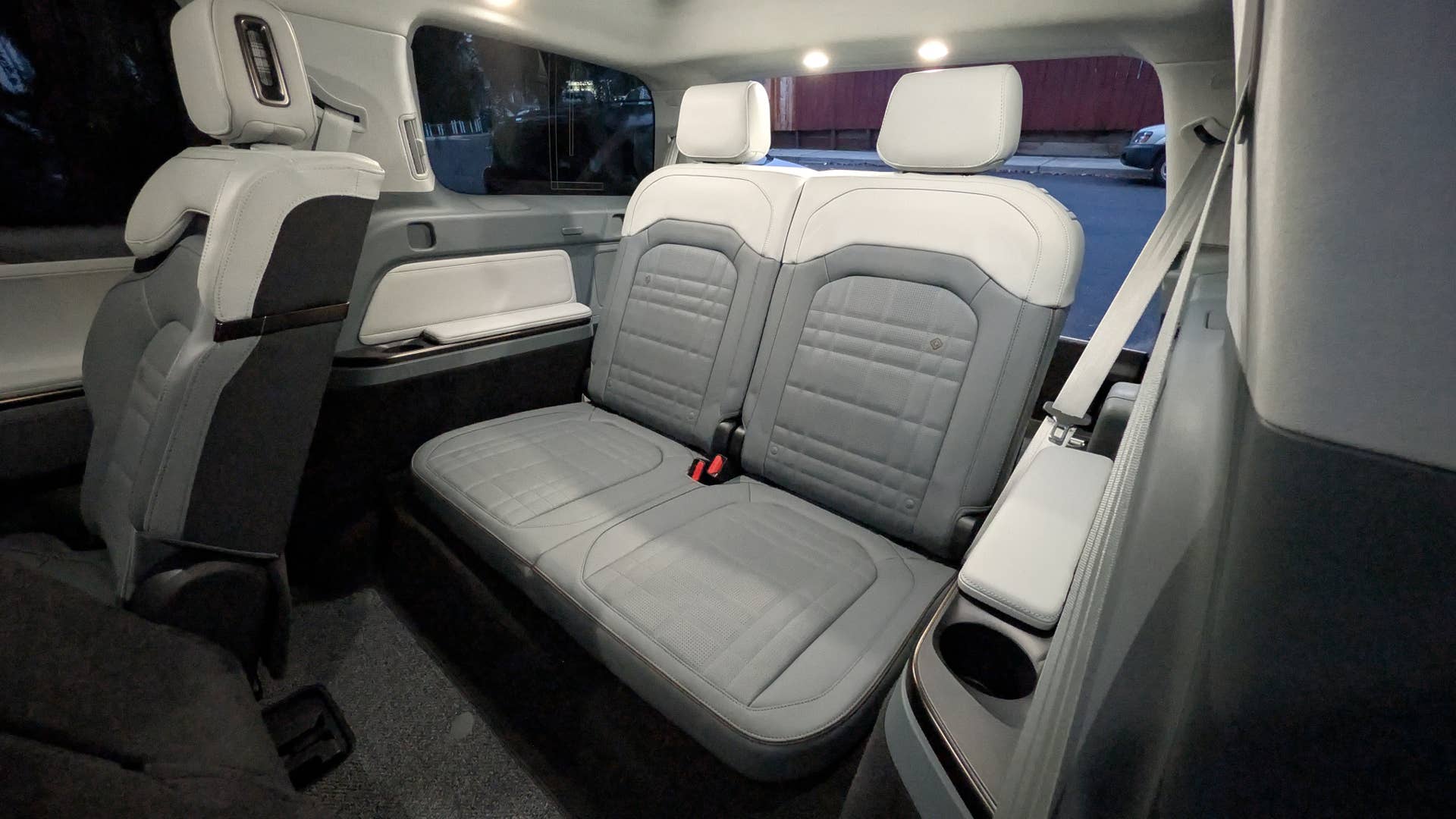
The seats were just as comfortable as the driver’s seat. There was a large window in the rear just for them, a sunroof above them to help let in more light (and therefore prevent or ease carsickness), speakers, dedicated A/C vents, a storage cubby under the armrest that hides a USB-C charging port, and lights that you can adjust the brightness for by tapping them. Behind the third row isn’t the greatest amount of cargo space, but there is the frunk to consider–so there’s enough cargo space to keep a family of five or six happy and cozy, no matter how far you’re going.
Because it’s the Bay Area, there were public chargers everywhere
California is one of the best places to own an EV because of how plentiful public chargers are. I live in the East Bay, and within a 10-mile radius, there are more than a dozen Tesla Supercharger stations. There are other EV chargers at places like Starbucks, Walmart, Target, Albertson’s, and even at Whole Foods. I was able to get a quick charge at Kohl’s, of all places. More businesses are partnering with charging companies constantly, so they’re bound to become even more plentiful.
Kristen Brown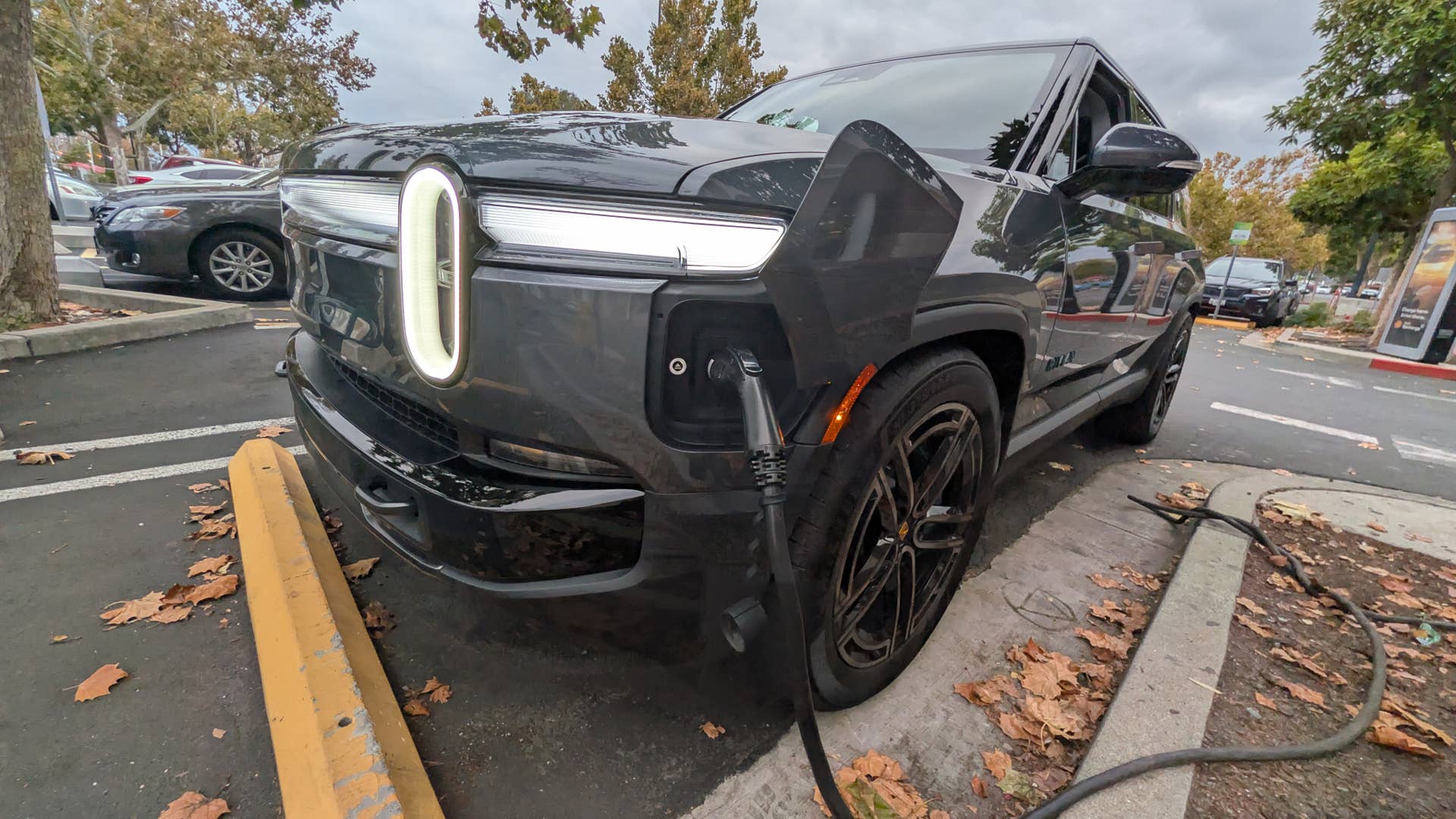
I would never recommend relying on public charging because of how many variables there are to consider compared to charging at home, but this told me that in an emergency or a pinch, like you were stuck in traffic on a hot day and ate up so much juice you wouldn’t make it home, you’d be able to charge it almost anywhere. That’s thanks to an NACS part from the factory, as well as two adapters that come with the car: a J177C and a CCS adapter, both of which came in handy. You’ll need it because the regenerative braking wasn’t as effective as that of other EVs I’ve tested.
Rivian’s in-house software is so good, I barely noticed I wasn’t using Android Auto
I mentioned this before, but Rivian’s webpage for either the R1S or the R1T describes either vehicle as being “software-defined.” That’s only a bad thing if the software that powers it is bad. The software Rivian uses for their cars is made in-house, and it comes with common apps built in, like Google Maps, Spotify, Apple Music, and Google Cast to power media and navigation. Everything else was built, designed, and is maintained by Rivian employees. This is a big deal because Rivian can access the car remotely to help diagnose any issues, repair is quicker and more reliable, security is tighter and quicker to respond, updates are more consistent and faster, and it separates it from other EVs. No wonder Volkswagen invested literally billions in help with software. It’s amazing software.
Kristen Brown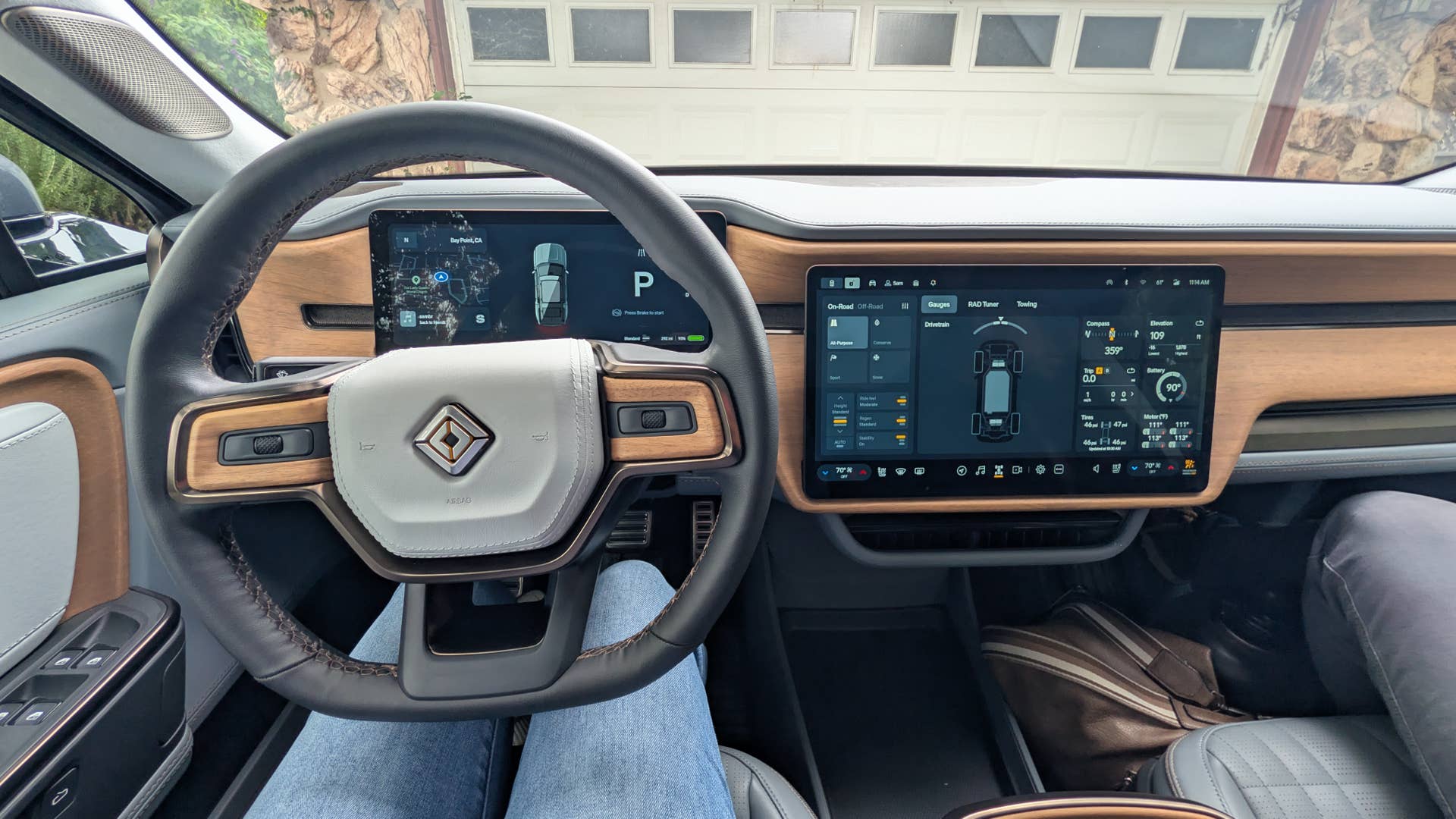
It’s so good, I barely noticed that after I connected my phone to Bluetooth, I wasn’t looking at an aesthetically different version of Android Auto. Everything was where I’d assume it was, all settings were easy to access and manipulate, and the screen was incredibly responsive. Not a single lag was experienced from the driver’s seat of the R1S. Even while navigating tricky traffic, finding everything I needed was intuitive and quick. Which, when you have two crazy kids in the car demanding to listen to the K-pop Demon Hunters soundtrack for the sixth consecutive playthrough, is especially appreciated. But don’t be fooled–the nice screen in the back can’t be used with Google Cast, even if you’re parked. You can’t use it while driving on the front screen, either, so don’t count on the R1S to come through for you on that front. Be prepped with road trip songs and games.
Final thoughts: 10/10, would sit through traffic in it again
Every SF Bay Area resident knows that living in the area is synonymous with traffic. Everything is planned around the traffic, how to avoid it, and if you can’t avoid it, what to do if you’re stuck in it. The Rivian R1S not only made life easier, but the Quad Motor made it 1,025 times more fun. Fun, as a parent of toddlers, is very hard to come by because life becomes a string of chores and errands to run. When those chores and errands are done from the driver’s seat of a Quad Motor, even driving to the dentist for a root canal becomes something to look forward to.
Kristen Brown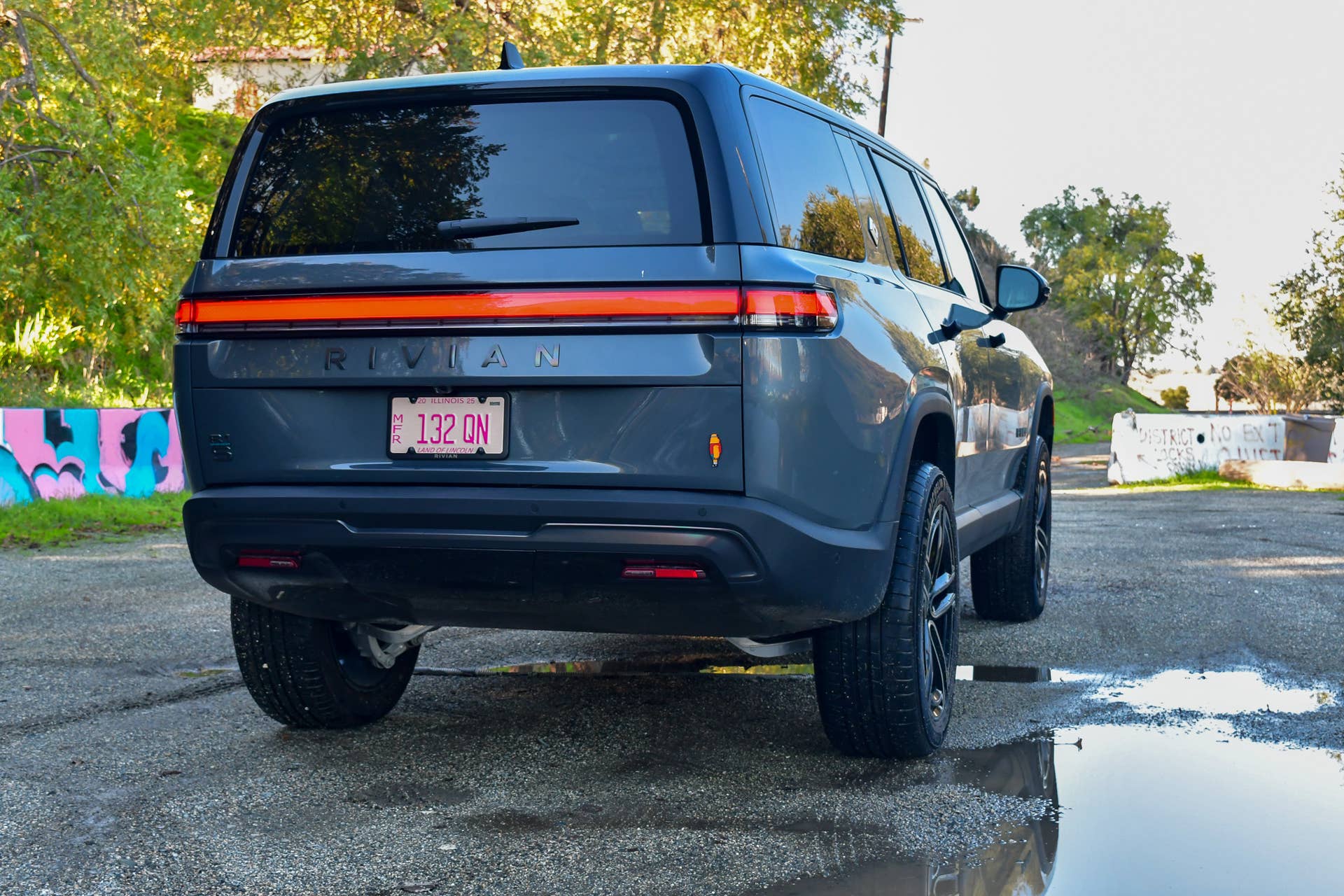
When I got a notification that I’d been removed as a driver for it, I felt like I’d just been dumped over text. I can say this with certainty: the 2026 Rivian R1S Quad Motor will be a tough one to top, as it checked literally every box. It can even tow 7,700 lbs, so it’s not only fast and pretty, but it’s also useful. It can replace your truck, your family SUV, and your fun car. It’s a complete package. Now, if only I could afford to make over $1,300 a month in lease payments.