My immediate thought whenever I need to write about either Volkswagen or the ID.Buzz electric van, is to point out that I’m a fan of both. Mostly, this is because writing about either positively has been kind of hard lately. Whatever happens, I don’t want it to seem like I’m kicking a brand when it’s down.
There are many issues, but some of those are not exactly VW’s fault (you can’t exactly blame the company for tariffs or the tax credit expiration). It’s also not the only company to have given in to EV hype, and the picture in North America is a lot different from the picture in Europe, where VW and its other brands (like Škoda and Cupra) are still finding ways to sell electric cars.
Here, we think mostly about the ID.4 and ID.Buzz. These were not successful products. I appreciate the company’s try-everything approach, but when you try everything, you sometimes risk letting the failures overwhelm you. Is Volkswagen headed that way with its autonomous ID.Buzz? That’s the risk.
Established automakers in China face their own dilemmas when it comes to adding a suite of advanced capabilities–which Chinese consumers demand–so Huawei is there to help. Let’s talk about HIMA, which is not a K-Pop band your kids love.
Both Rivian and Tesla had a good Q3, but how long will that last? While I’m talking about electric cars on TMD, lemme get into a fun one: GM sold more EV trucks after introducing a lower-tier model!
Is The VW ID.BUZZ AD Going To Work?
I quote Manager Magazin a lot around here because they are quite well-sourced around Wolfsburg and get some deeply amusing quotes. As a business magazine, they are great at the “What if it doesn’t work?” form of journalism. It’s a valuable exercise to question the success of an important enterprise. It’s also important to realize that at an early phase in any enterprise, there are going to be moments that will look like absolute failures.
If you viewed Tesla at the moment when Elon Musk was struggling to deliver a hundred Roadsters and extrapolated from there, you’d assume the company was a failure, and not the biggest EV automaker in history.
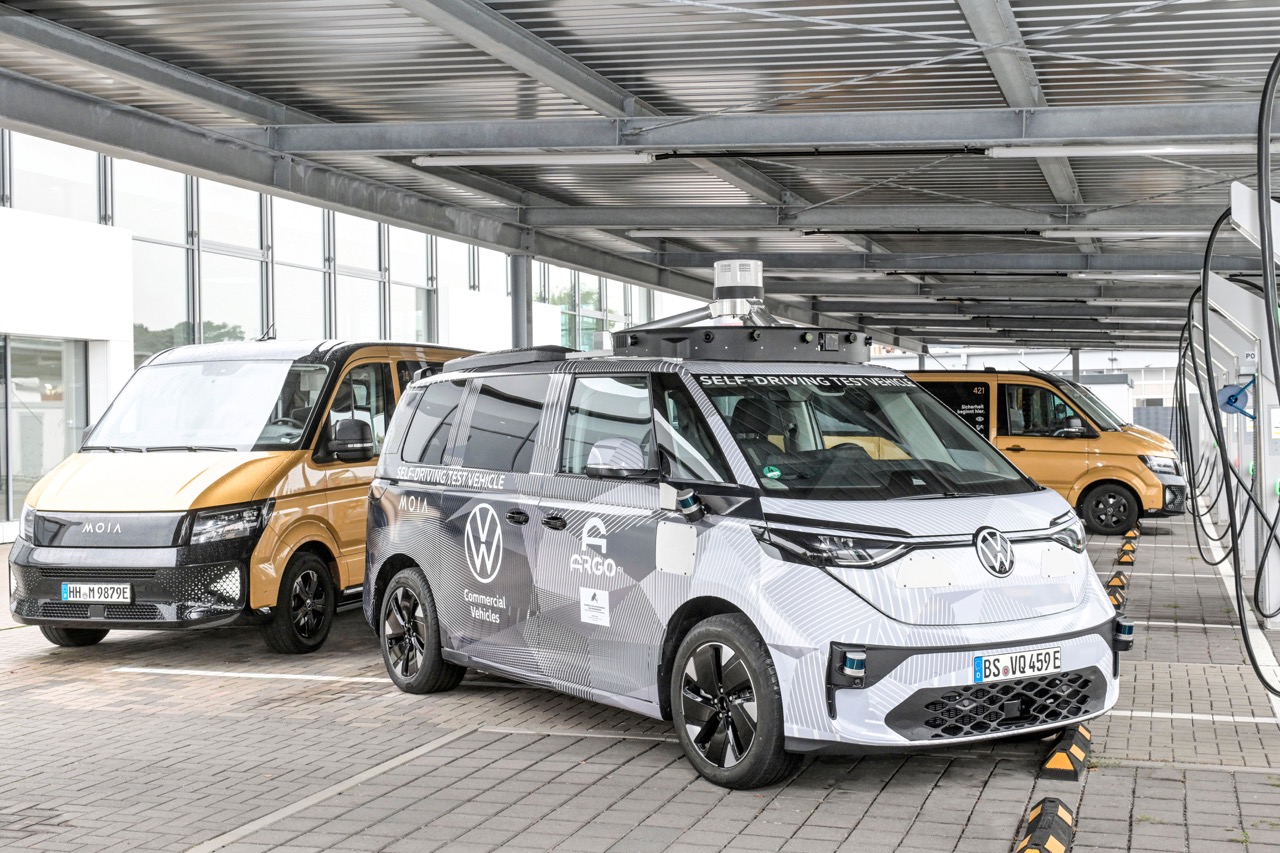
Volkswagen has had a hard time making autonomous products work, and has partnered with various companies. Remember Argo? It didn’t work. Instead, Volkswagen shifted to a deal with a Chinese company and with Intel-owned, Israel-based Mobileye. Let’s check in on that project, via Manager Magazin (translated):
Oliver Blume, casually dressed in a black T-shirt, jacket, and white sneakers, presents Volkswagen’s first autonomous production vehicle. This isn’t about what will happen in the 2030s, he emphasizes, but rather “about the present, the 2020s.”
Blume’s message is clear: With the ID.Buzz AD, Volkswagen is ushering in the autonomous future and positioning itself “at the forefront of a multi-billion dollar global growth market.” The VW subsidiary Moia offers a “turnkey solution”: autonomous mobility systems that they can easily put into operation. Hamburg’s Hochbahn and the Berlin public transport company have already taken the bait.
However, there’s a problem: Customers will have to wait. The production-ready vehicle is already here, but the most important piece is missing: the software that will enable the van to drive autonomously.
While there are test vehicles, it sounds from the article like there’s been a bit of a struggle with getting a full roadworthy version from Mobileye. Oh, right, Moia. Volkswagen is like Star Wars after being purchased by Disney; an endless number of spinoffs you can barely remember. Moia is the autonomous driving one (or one of the autonomous driving ones).
One of the benefits of the Mobileye-VW relationship is that, unlike Waymo, VW won’t be retrofitting existing vehicles but building technology into the vehicle. This should make the vehicles better and cheaper. However, the article implies that the tech isn’t quite up to par yet, with Rivian (another VW spinoff, sort of) dumping Mobileye in order to use its own system based on Nvidia chips.
The fact that the vehicle being used is an ID.Buzz is sort of sad, given what the ID.Buzz represents now: A great idea too delayed, too expensive, and too imperfect. There’s a risk that this could turn into yet another VW failure. Ok, one quick quote from former Waymo/Hyundai boss John Krafcik, who is always amusing:
“Volkswagen is arguably the automaker with the most failed autonomous partnerships, and Mobileye is probably the supplier with the most failed autonomous driving timelines,” summarizes John Krafcik (64), longtime head of the Google -founded robotaxi company Waymo. An alliance between the two is “a somewhat unfortunate constellation.” Any chance of success? “Unlikely.”
Never change, John.
Enter The Harmony Intelligent Mobility Alliance (HIMA)
A lot of people in the United States only think of Huawei as the Chinese company that’s constantly getting into trouble with Western governments. In China, it’s a large part of the tech/cell/consumer ecosystem.
China has a bunch of legacy automakers that have, for the last few years, taken a backseat to the BYDs, NIOs, and Teslas of the world. Those companies are suddenly fighting back, and one of the big tools is HIMA. Whereas Apple was successful in entering the automotive space via CarPlay, its actual car never materialized.
Huawei’s approach is multifaceted, but one of them is a CarPlay-like system that also adds a suite of advanced driver systems. Here’s S&P Global Mobility explaining how that works:
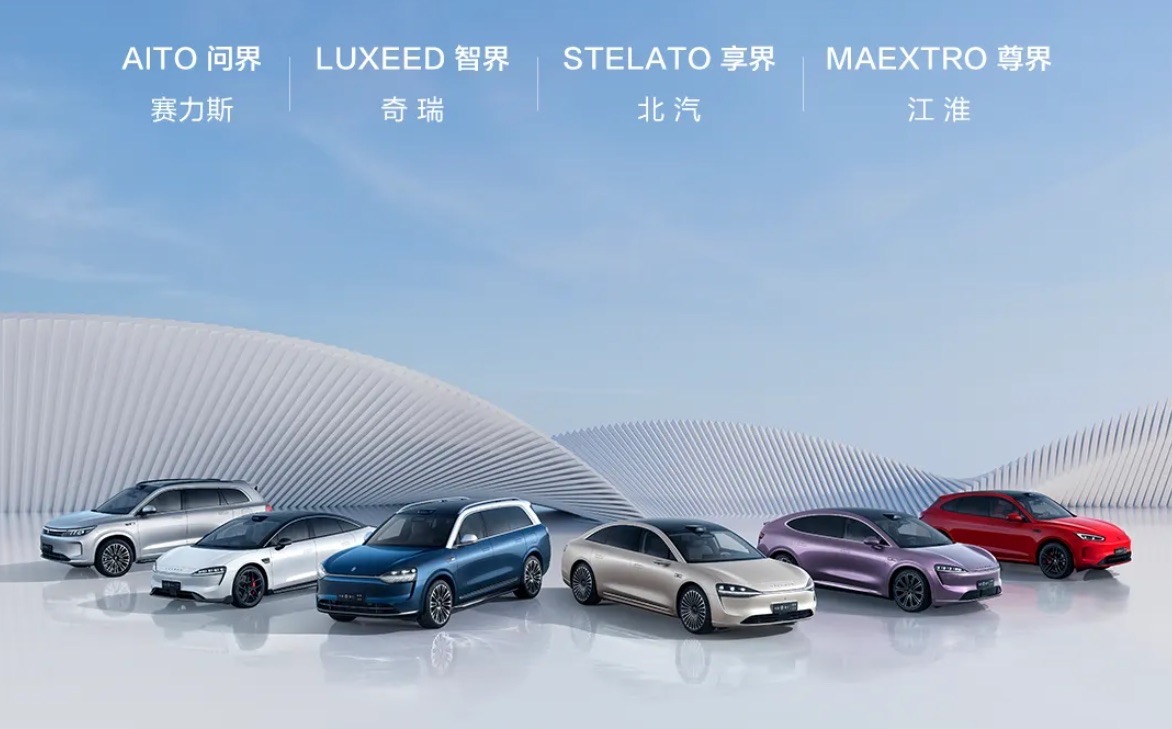
HIMA is growing, with more partners and models. In late September, SAIC became the fifth automaker to join HIMA Huawei, following BAIC, Chery, JAC and Seres. Yu Chengdong, CEO of Huawei’s Consumer Business Group, introduced the Shangjie H5 and the 2026 AITO M7 models at HIMA’s Autumn New Product Launch Event on September 23.
Like other HIMA models, the H5 features Huawei’s Qiankun ADS 4 intelligent driving system and HarmonyOS smart cabin system, the two most appealing Huawei tech features to new car buyers. The H5 will also be showcased along with HIMA’s earlier launches at selected Huawei stores across mainland China.
HIMA is Huawei’s key platform to scale its smart EV business and connect directly with car buyers. The alliance now offers 10 electric models across five brands: AITO, Luxeed, Maextro, Shangjie and Stelato. Huawei and a mainland Chinese OEM partner to introduce each new brand: for example, AITO with Seres Group, Luxeed with Chery and Maextro with JAC.
Although Huawei doesn’t own these brands, consumers view HIMA Huawei models as “Huawei cars,” since the tech giant is perceived as the driving force behind their development.
This is what Apple should have tried.
Tesla And Rivian’s Good Quarters Lead To…

Tesla had a great third quarter as it pushed out a ton of vehicles ahead of the expiration of the tax credit. So did Rivian. What about the rest of the year?
It’s going to be tough, per Automotive News:
Rivian Automotive reported a 32 percent surge in third-quarter deliveries compared with a year earlier to 13,201 vehicles as U.S. buyers took advantage of the expiring federal EV tax credit.
But the Irvine, Calif., automaker cut the high end of its 2025 delivery outlook. Rivian adjusted the full-year forecast to between 41,500 and 43,500 vehicles from 40,000 to 46,000 previously.
Rivian shares were falling about 7 percent after its Oct. 2 sales report.
And here’s Bloomberg on Tesla:
Tesla Inc. shares fell after the automaker posted a record quarter of vehicle sales that will be difficult to replicate now that federal electric-car subsidies have expired.
The company delivered 497,099 vehicles worldwide in the most recent quarter, 7.4% more than a year ago. Although the total far exceeds the roughly 439,600 average analyst estimate compiled by Bloomberg, Tesla’s shares slumped Thursday following a record monthly gain in market capitalization.
The divergence illustrates how investor sentiment has become increasingly detached from Tesla’s core electric vehicle business, focused instead on the potential profit to be reaped by its still-developing robotaxi, artificial intelligence and robotics ventures, which Musk has said will drive company’s future market value.
Maybe Elon Musk’s pivot away from EVs was perfectly timed… or maybe he’s just spinning even more plates.
Hey, A Cheap Sierra EV Sells
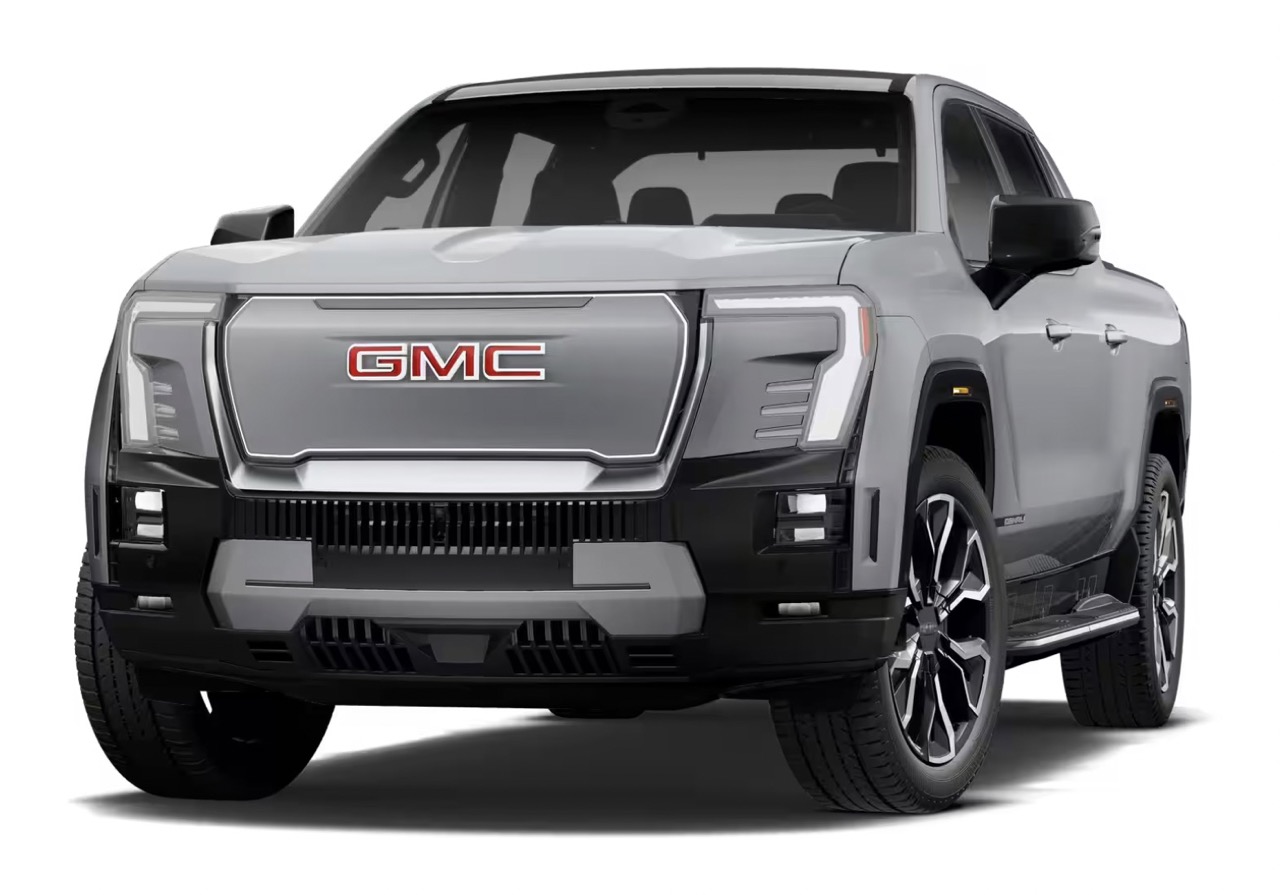
I sometimes see a GMC Sierra EV, and I think it looks fantastic. I’m not sure about the effectiveness of shoving an unholy number of battery cells into a truck when, like, EREVs exist, but it’s still an extremely cool truck, and I do want to try it.
It hasn’t been a big seller, though it has had a lift recently. Other than expiring tax credits, how has GMC found more customers? Automotive News has a theory:
At Chevy, sales of the Equinox EV compact crossover were up 157 percent, while the Silverado EV full-size pickup nearly doubled. Sales of the Sierra EV rose to 3,374 from just 387 a year earlier on increased production of lower-priced configurations.
That’s the GMC Sierra Elevation, which gets about 283 miles of range, a lot of the features you’d want on a GMC truck, and still has that killer aesthetic. At about $65k, I think that’s something I’d rather have than a Cybertruck.
It’s almost like the EVs are too expensive.
What I’m Listening To While Writing TMD
I made a joke about CHVRCHES a few TMDs ago, and I’d just like to clarify that I am a CHVRCHES fan. Please enjoy “Recover.”
The Big Question
What is the best thing that VW does right now?
Top Photo: VW
The post Volkswagen May Have Found A New Way To Doom The ID.Buzz appeared first on The Autopian.