It’s only been about two weeks since Porsche announced that the next 718 Boxster and Cayman will get high-end combustion-powered variants, but in hindsight, this was inevitable. The customer base exists to sell a fossil fuel-burning mid-engined sports car alongside an electric one, and in limited volumes at a high enough margin, why not?
Of course, as soon as word got out, everyone started wondering just what engine these new models would use. Would it be a naturally aspirated screamer like the 718 Boxster GTS 4.0 uses, would it be a straight-up GT3 engine like in the 718 GT4 RS, would it be basically the same three-liter turbocharged flat-six as the base 911 Carrera? As Autocar reports, incoming combustion variants of the next Porsche 718 might use none of the above.
Instead, the new “top” 718s are expected to adopt the compliant T-Hybrid set-up introduced in the 911 Carrera GTS. Autocar understands this is because that set-up’s new flat six is 110mm shorter than the 911’s standard twin-turbo engine, which is crucial for the 718’s packaging.
Huh. Let’s unpack this rumor for a minute. The new Porsche 911 GTS T-Hybrid uses a 3.6-liter flat-six called the 9A3B6, a substantial redesign compared to the 9A2 evo engine offered with turbocharging in non-hybridized 911 Carrera models and naturally aspirated in the outgoing 718 Boxster and Cayman GTS 4.0. The big packaging draw of this engine is that it sits 4.33 inches or 110 mm lower than the 9A2 evo in order to accommodate hybrid power electronics packaged atop the engine in the 911 Carrera GTS T-Hybrid.
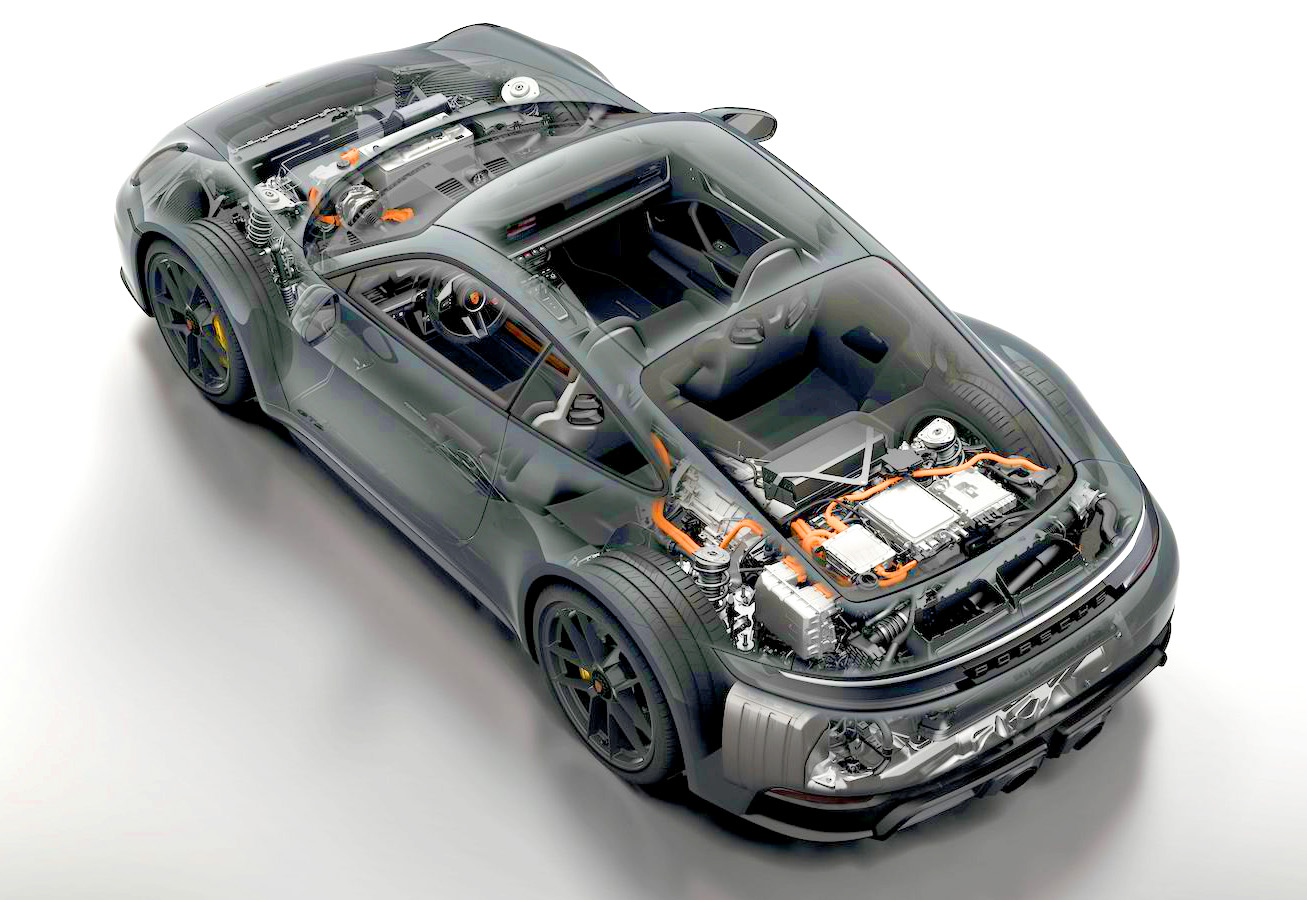
This line of thought begs the question: what platform will these combustion-powered “top” variants of the 718 use? As it stands, the outgoing 718 shares its MMB (short for Modularer Mittelmotor Baukasten) platform with the current 911, so it would make sense to reengineer it to be compliant with European GSR2 regulations mandating advanced driver assistance systems, including driver monitoring systems and intelligent speed assistance. It’s yet to be seen what platform the battery electric variant uses, but it would be surprising if it works out cheaper to reengineer the EV variant to accept combustion power than it would be to update the bones of the old 982 to be GSR2-compliant. If Porsche takes the latter path, the non-hybridized 9A2 Evo engine should fit just fine because it fits fine in the old 718 GTS 4.0.

Indeed, the big draws of the 9A3B6 engine, other than turbocharged power, are its emissions compliance and lightness. It’s designed to run at Lambda 1, or the stoichiometric air-fuel ratio of 14.7:1 parts of air to fuel, throughout its entire range of operating conditions. Compared to enriching the fuel-air mixture at wide-open throttle like most engines do, the Lambda 1 strategy cleans up the exhaust but has a lower envelope for detonation, or pinging. As a result, engines designed around this plan use less aggressive timing advancement, but Porsche seems to be making up for this with measures like added displacement and greater intercooler capacity. In addition, without the power electronics, the 9A3B6 is lighter than the 9A2 Evo, and lightness is good.
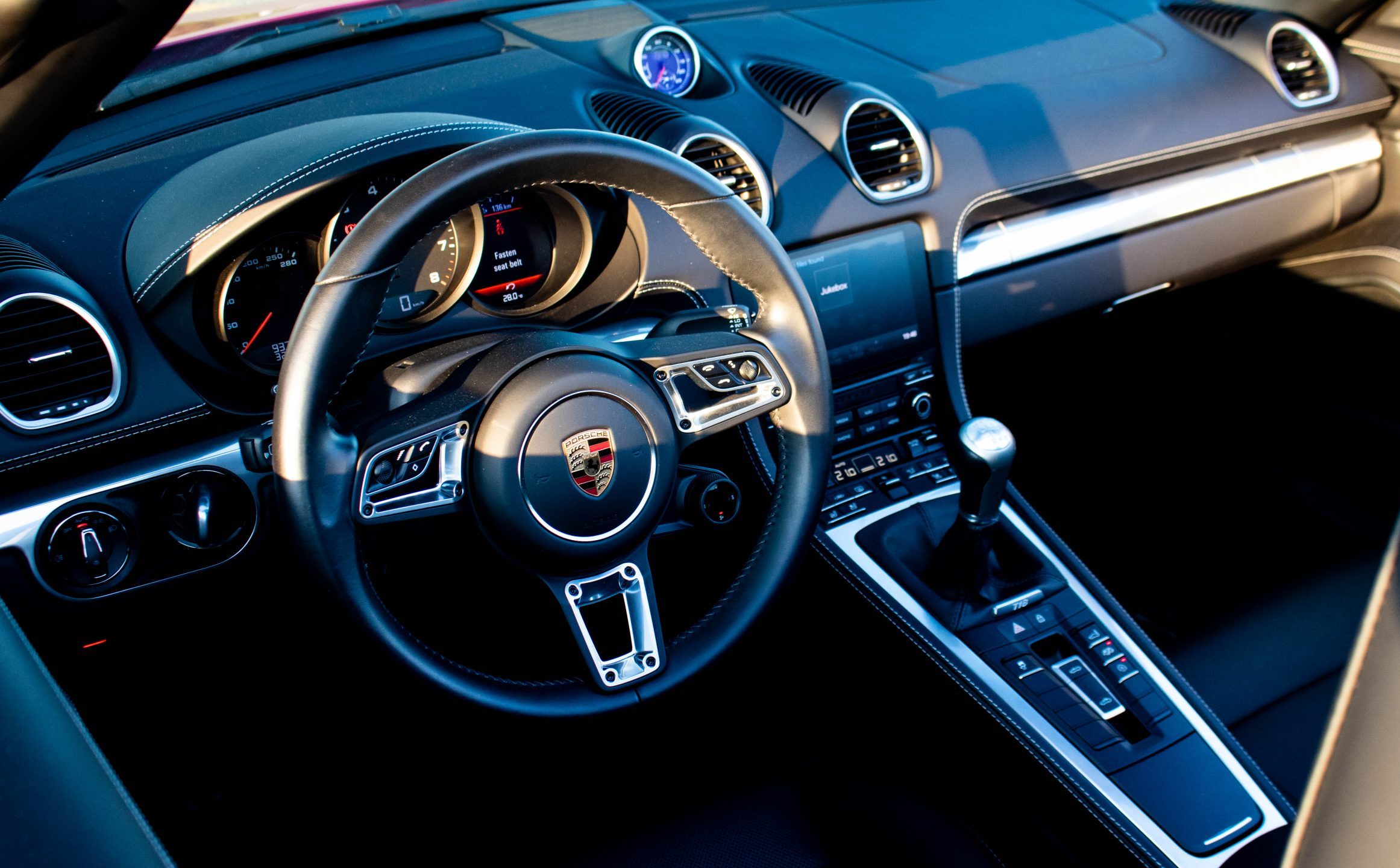
Of course, the big downside to using the 9A3B6 in the next combustion-powered 718 Boxster and Cayman is that it’s not currently available with a manual transmission, and the market has already spoken about its desire to row its own gears. Late-model high-end Porsches with manual transmissions typically pull a resale premium over their dual-clutch automatic counterparts, and given that high-end 718 buyers are looking for a smaller, more focused, more raw experience than the current 911, going two-pedal-only would be a miss despite the awe-inspiring power of the 9A3B6 and its T-Hybrid setup.
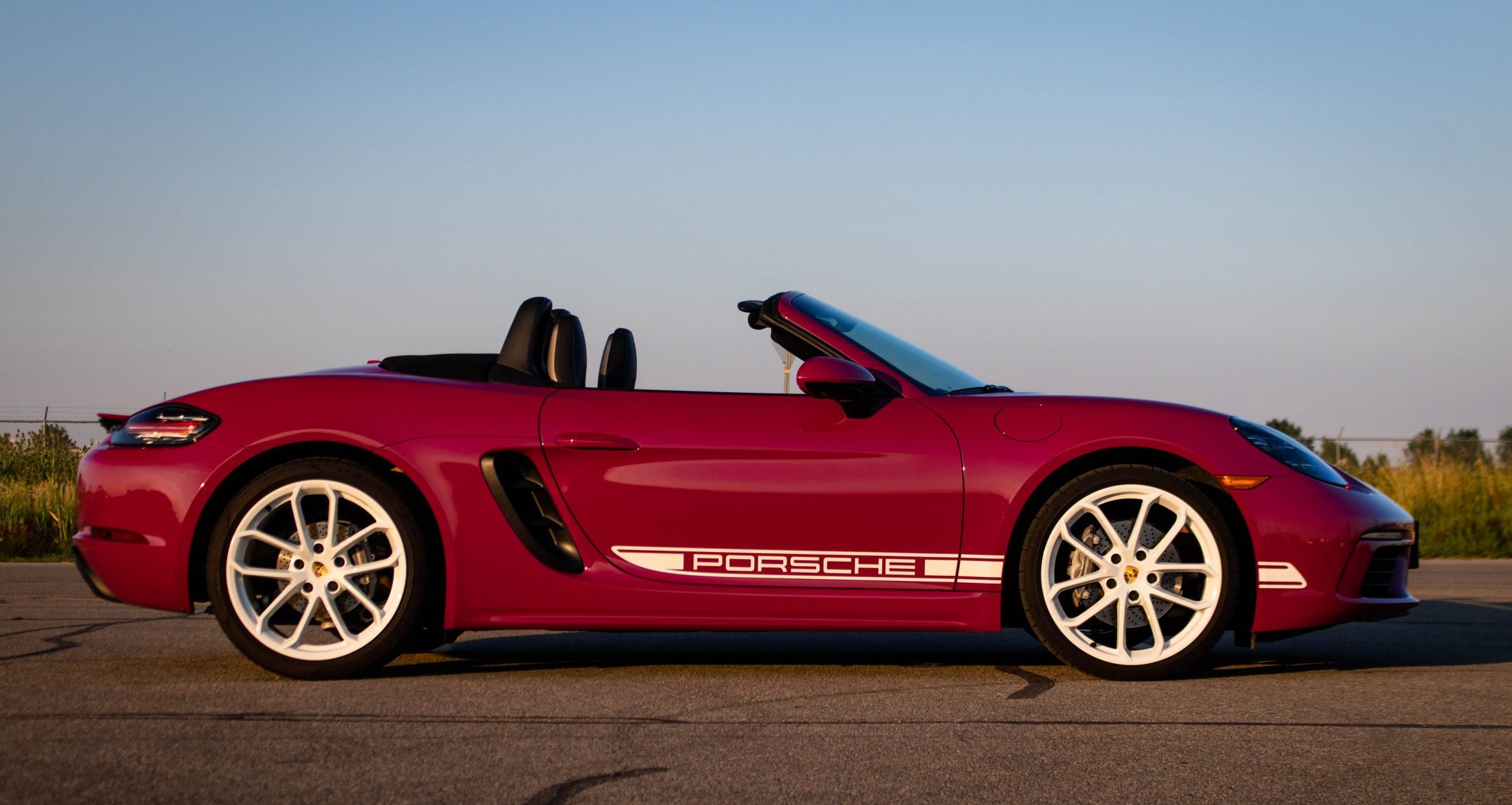
Still, with an expected relaunch date closer to the end of the decade, a lot could happen with next-generation combustion-powered 718 Boxster and Cayman development over the next few years. It’s possible a variant of the 9A3B6 could be used with a manual transmission, moving the Boxster closer to its roots as a mid-engined 911 sibling with a lower-output engine.
Top graphic image: Porsche
Support our mission of championing car culture by becoming an Official Autopian Member.
The post The Next Gas Porsche 718 Might Not Have The Engine We All Expected appeared first on The Autopian.