I feel like I should thank all of you for being so perpetually indulgent with all of my obsessive posts about Volkswagen Beetles over the years. I realize many of these tend to focus on details so obscure and bafflingly specific that many of you may be left dizzy and seeking the counsel of a trusted clergyperson. But, deep down, I think you’ll realize that all of this is worth it, filling a chasm deep within you that perhaps you never even realized needed filling. That’s why I’m coming to you today with this important and fascinating rarely-seen detail about one of the most obscure Beetles ever.
The Beetle in question is specific to one specific market, built by one of VW’s many satellite factories, each of which operated with varying degrees of independence from the Wolfsburg Mothership. That market was South Africa, and the Beetle in question was known as the 1600L, or Super Bug.
I’ve written about these before, years ago at the Old Site, but I suppose a little refresher course is in order, about what are colloquially known as the Beetle and Super Beetle. The Super Beetle (also known as the 1302 and later the 1303) we the most radical changes VW ever did to the Beetle, mostly in an effort to modernize the front suspension and improve cargo room in the trunk.
The way they did this was by switching from a space-greedy torsion bar front suspension to a MacPherson strut-type suspension, which opened up a lot more room between the wheels. The 1302 Super Beetles came out in 1971, and then were updated again in 1973 (the 1303) to have a much bigger, curved windshield and a “real” dashboard instead of the archaic flat padded dash panel Beetles had before.

The Super Beetle trunk was about twice as big as the standard one, and really did improve luggage accommodation significantly:
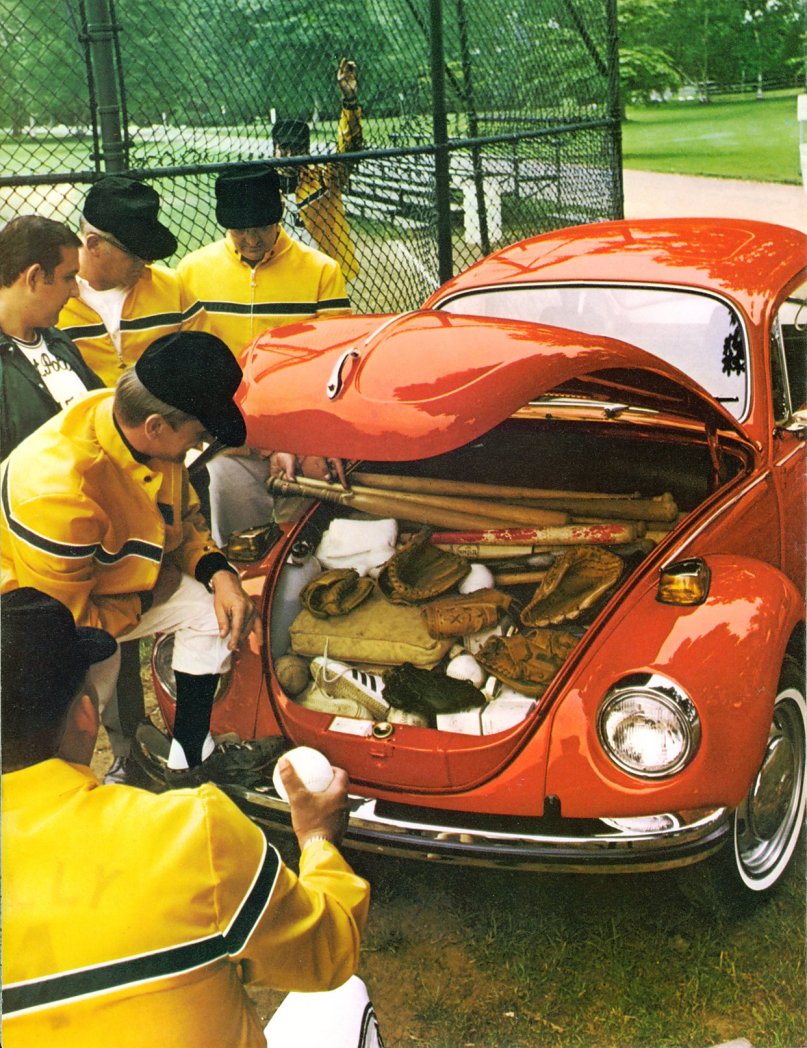
Look at that whole ball team’s worth of stuff fitting in there, easily! Also, would it kill those coaches to organize that stuff a bit?
Now, in VW of South Africa, they noticed this bold new Beeticular Innovation from the Mothership. They got a 1303 (big windshield ’73 and up Super Beetle) to evaluate and found a lot they liked. They wanted to build one of their own, but didn’t have the tooling or resources to build a true MacPherson-strut-type Beetle. So, they picked out the bits they liked, and figured out a way to graft those onto the older torsion-bar-suspended Beetle:
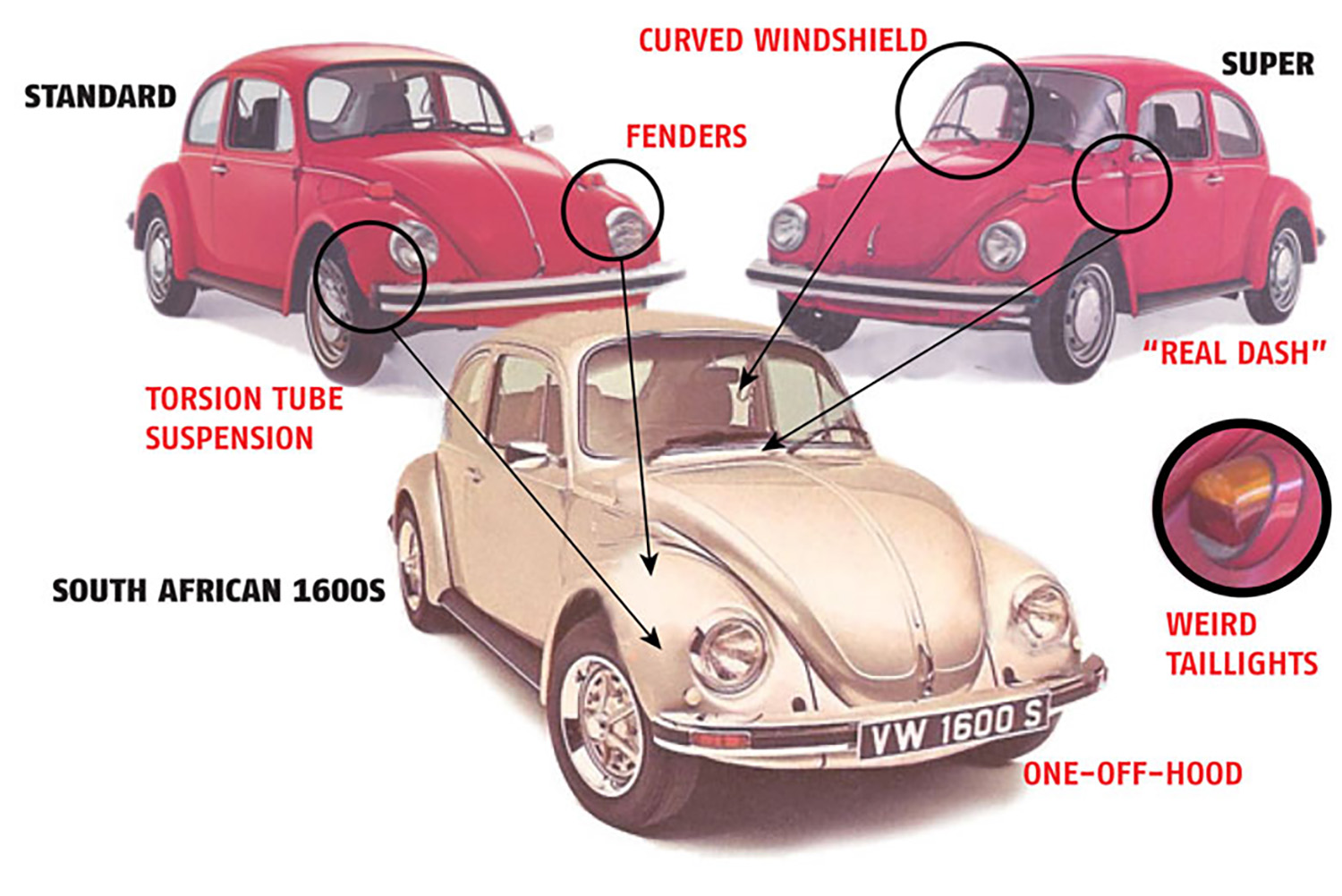
It’s kind of a Frankenstein’d thing, but I think the VWSA did a pretty good job integrating the parts to make this hybrid beast. Here’s what their Super Bug looked like next to their standard Beetle; the Super is on the right:
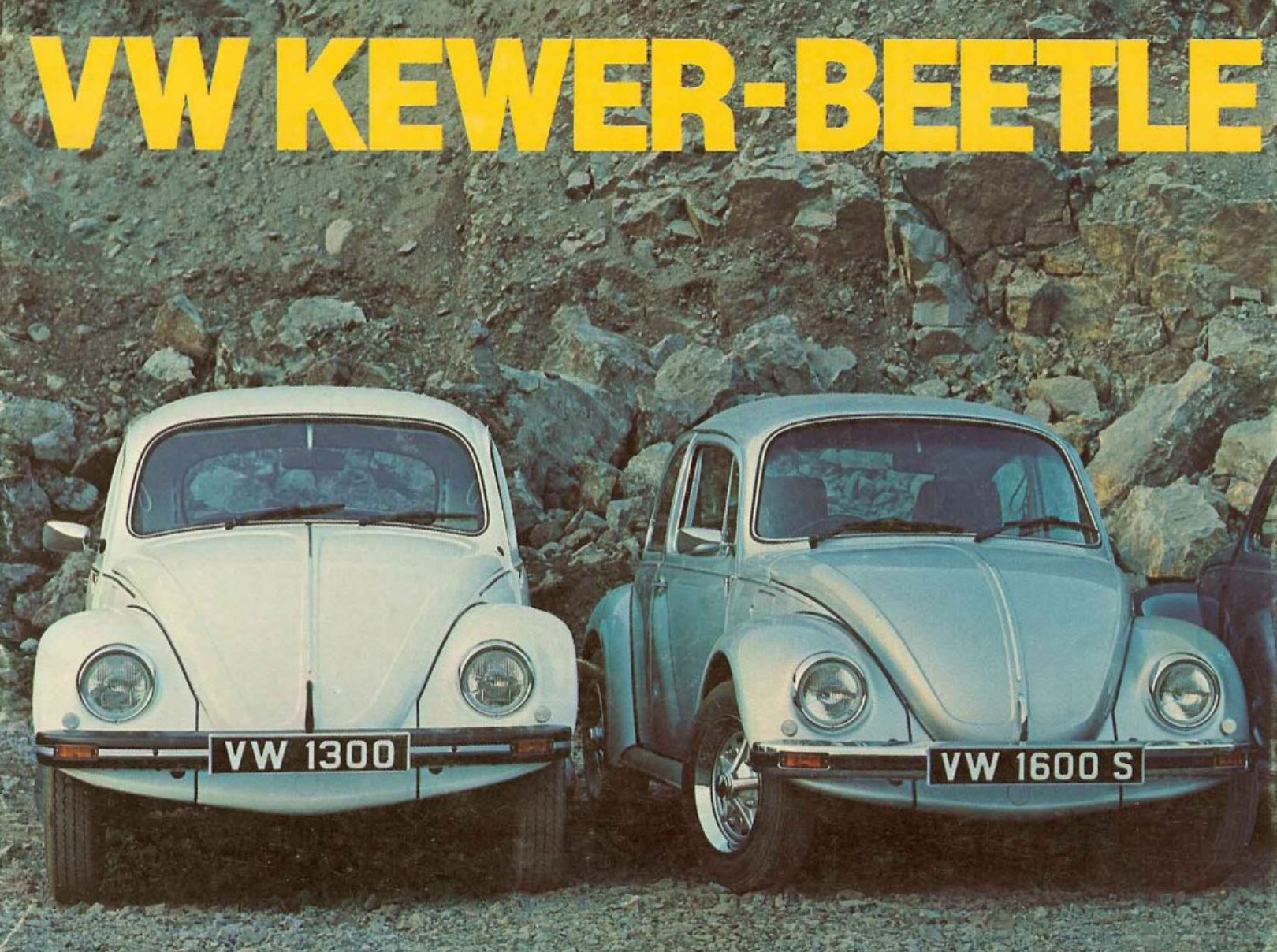
So, a bit more subtle than the difference between the German Super Beetle and standard Beetle, but you can see the difference in the hood and windshield. There were other upgrades, of course, befitting that “Super” moniker, which is a lot to live up to, but if you were into headrests, they had to covered:
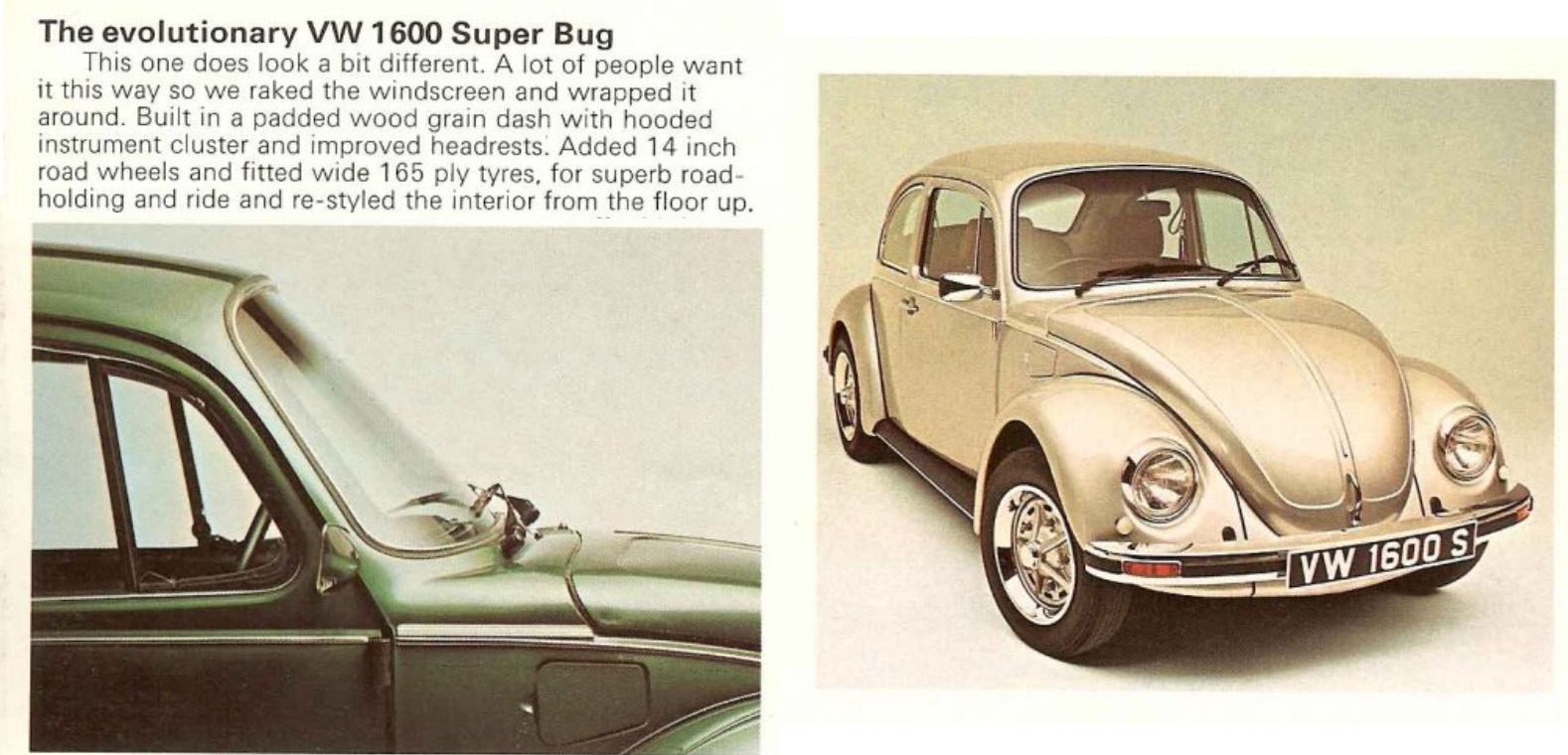
Here’s a couple other details from the example in the Franschhoek Motor Museum:
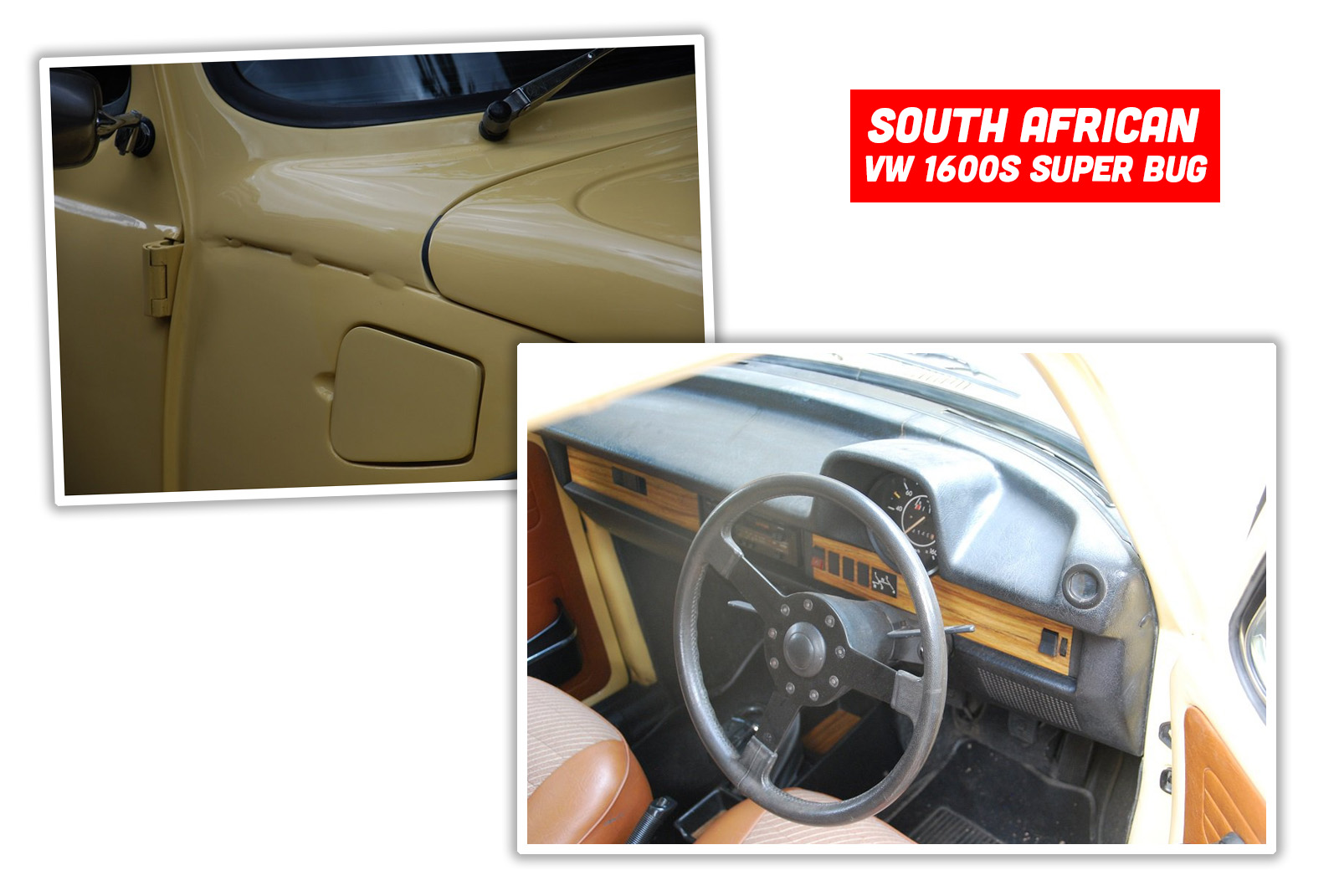
In the upper left there you can see where the upper roof/windshield panel was welded to the sides of the body, and that answers a question I’ve had about Super Beetles for a while, which is What Does It Look Like Under This Weird Trim Piece?
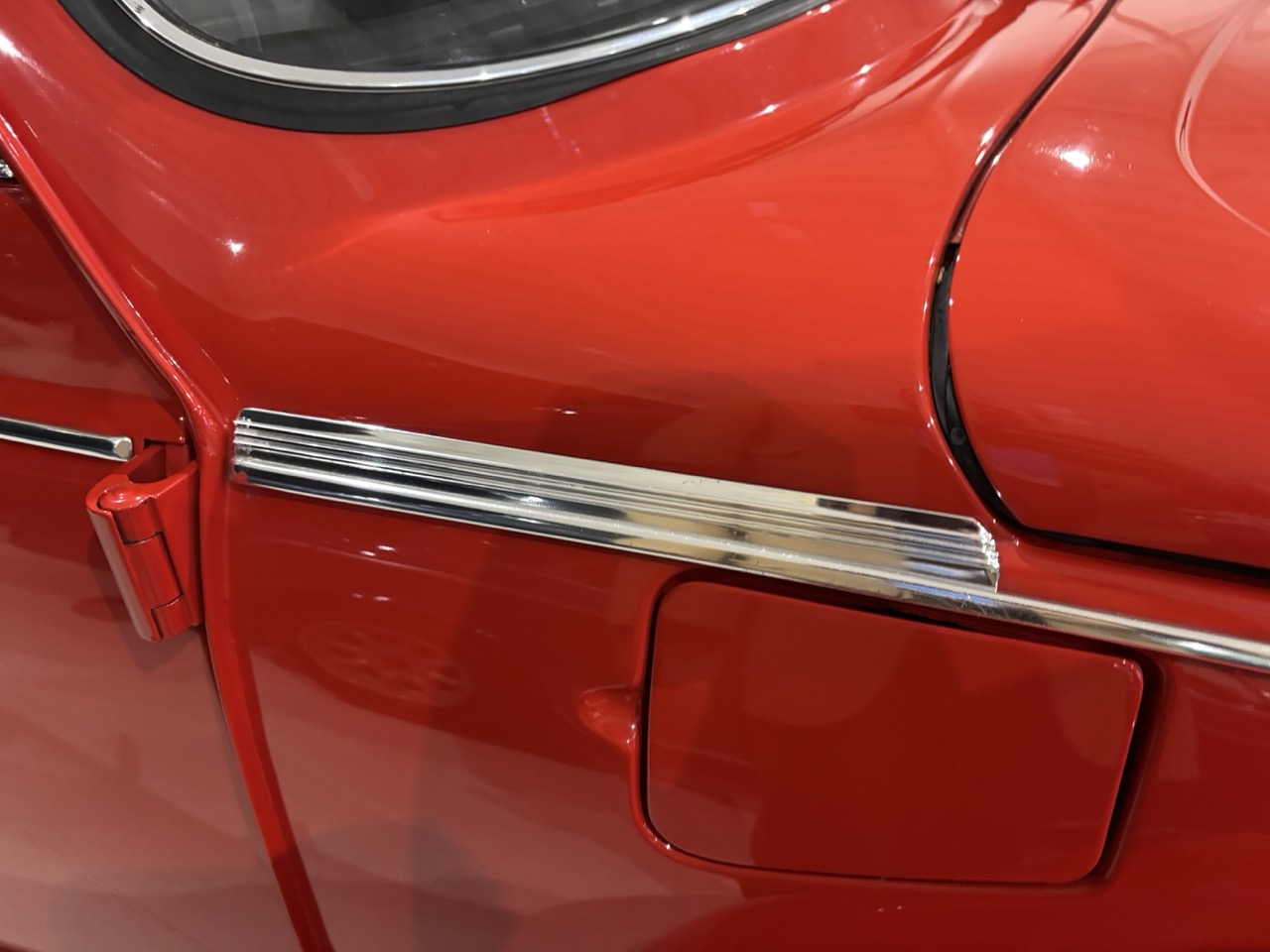
That’s from a US-Market 1303 Super Beetle, but the South African ones used this same trim bit. Now we know what the welds looked like underneath! The Dashboard with its hooded instruments looks pretty much the exact same as the 1303’s from the rest of the world.
But the part I’ve never seen before, the whole point of writing this, is that I’ve never seen what the trunk looks like on these SA 1600S cars, and I’ve wanted to. Once again, thanks to the people of the Franschhoek Motor Museum, I finally have my chance. Are you ready? Here we go:
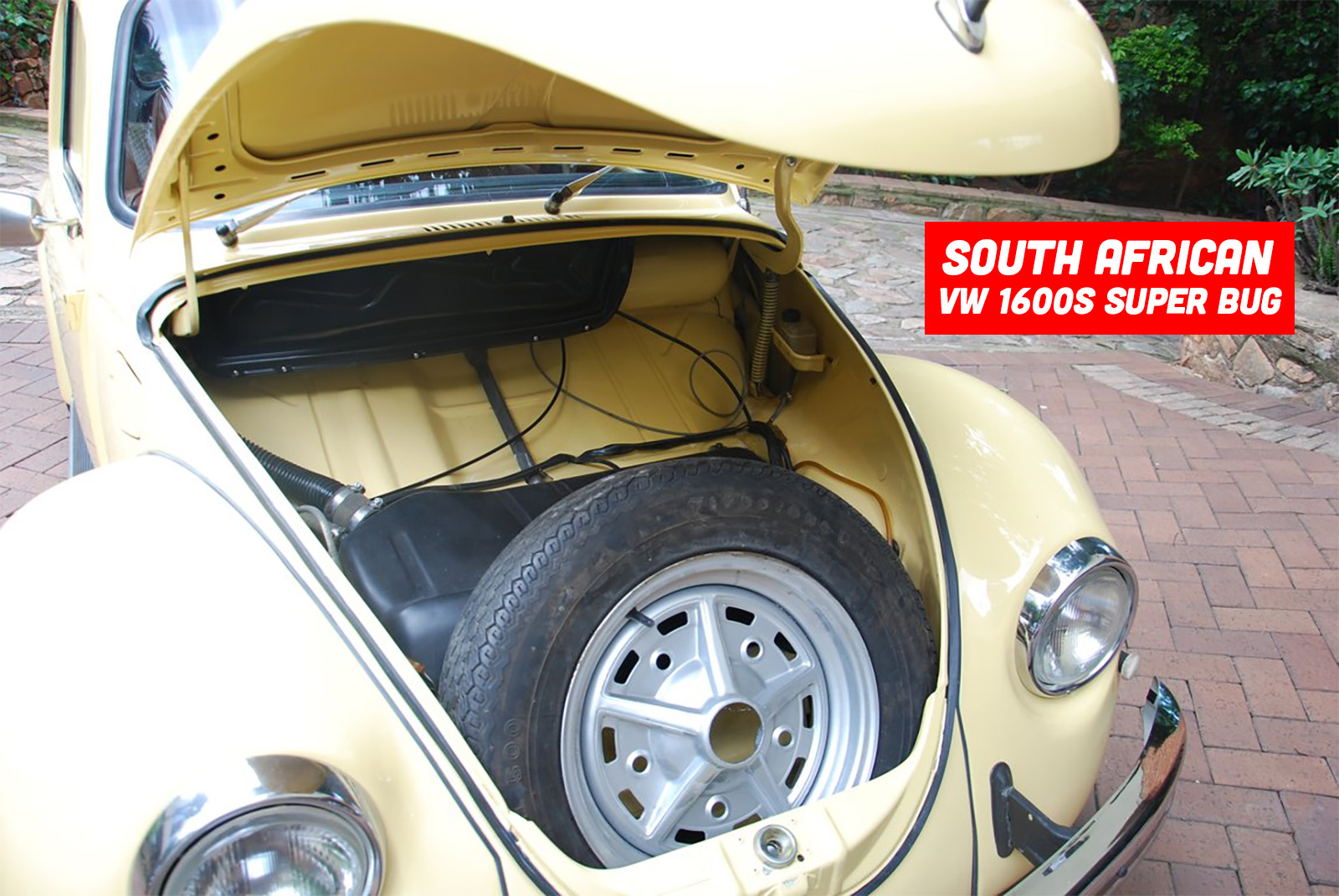
Huh. Well, that’s pretty much just like a standard Beetle’s trunk. I’m not sure what I was hoping for – the spare tire would need to be in the same spot there to clear the torsion tubes and all that, so it’s pretty much the same size trunk. Well, maybe it’s a little bigger, with that slightly more bulbous unique-to-SA 1600S-front hood? I hope it is, at least a little.
Anyway, this is a big day for me, another mystery revealed! Oh, and one other thing about these South African Beetles: they used a similar sort of “elephant’s foot” taillight, the kind we’ve seen in two versions on 1973 and up Beetles:

…only in South African there was a third variant, which differs in two crucial ways:
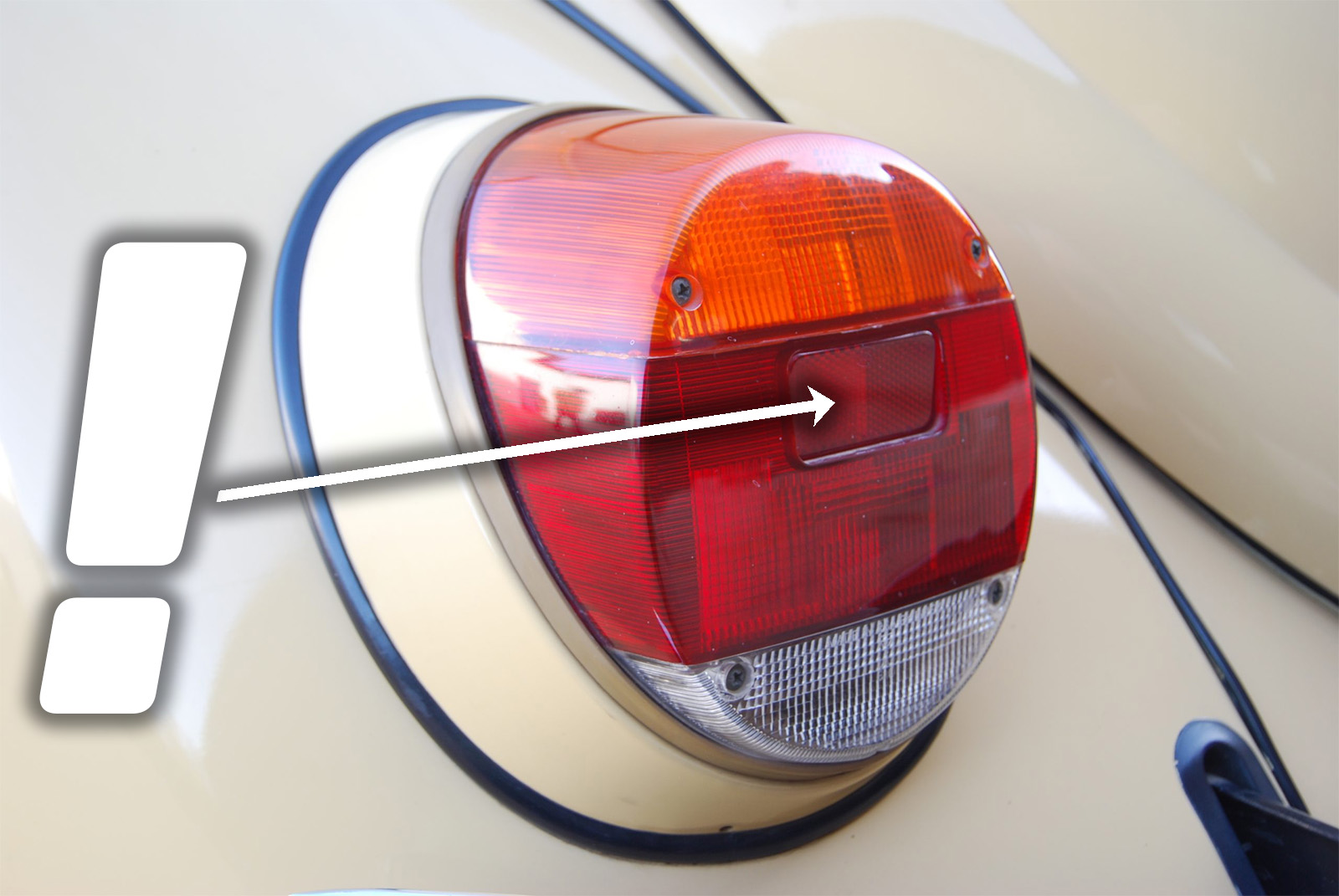
First, it has this weird smaller inset reflector, instead of the full-width reflector of the Global/Mexico variant or the squarish doubling-as-a-taillight-lens one of the US-spec one, next to the separate brake lamp section. Also, the SA-market ones had that funny body-colored cuff to mate these new lights to the older-style rear fenders still used in that market.
See? I warned you this would be kinda obsessive!
The post Here’s A Strange Detail On A Strange Beetle That I’ve Somehow Never Seen Before appeared first on The Autopian.