The 2026 Mitsubishi Outlander poses a solution to a problem most manufacturers seem to have given up on in the North American market: what if buyers need three rows of seating for their families, but live in dense urban centres and would therefore prefer not to subject themselves to a gas-guzzling giant that shares its platform with a quarter-ton pickup truck? The American buyer once had far more choice in this matter—MPVs like the Mazda5, the Kia Rondo, and even the Dodge Journey offered a taste of minivan versatility without minivan price tags or minivan footprints. But these days, this is a far thinner segment, so the Outlander now occupies a niche with only a handful of alternatives, like the Hyundai Santa Fe, the Kia Sorento, and the Mercedes-Benz GLB-Class. My mission throughout the week I spent with the Outlander was to see just how much it leans on that third row of seating to justify its value in one of the most competitive corners of the automotive marketplace.
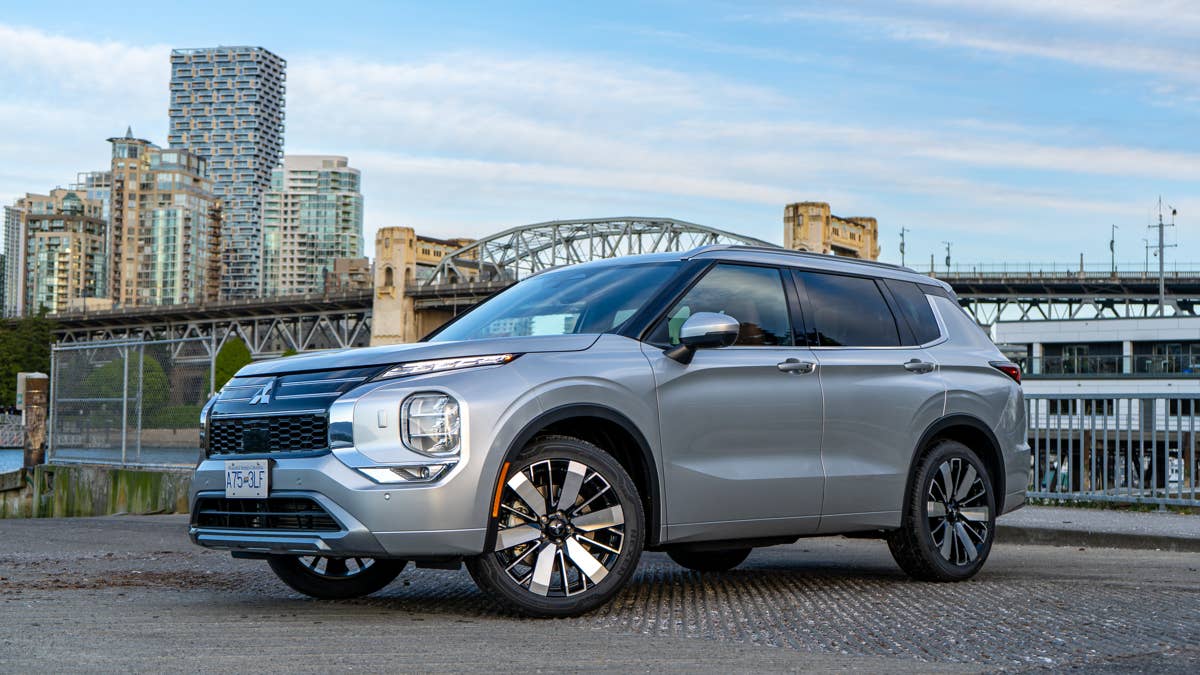
My tester was a Canadian-market 2026 Mitsubishi Outlander 1.5T GT Premium S-AWC, finished in Sterling Silver over a Semi-Aniline Leather-Appointed Brick Brown interior. Before we go any further, that needs some clarification. My Canadian GT Premium S-AWC tester is not sold in exactly the same form in the United States. The closest American equivalent appears to be the 2026 Outlander SEL Premium Package, which Mitsubishi lists for $43,895. The general U.S. Outlander lineup starts at $29,995, or $31,795 with S-AWC all-wheel drive. In Canada, the Outlander starts from C$36,398, while the GT Premium S-AWC starts from C$48,398. So, for my American readers, think of this as a look at a heavily equipped, luxury-leaning Outlander, rather than a direct review of a trim name that they can walk into a U.S. dealer and order exactly as tested, although the SEL Premium Package is essentially identical, aside from the mandatory black-painted roof and a few other packaging oddities.
Need New Tires? Save Up To 30% at Tire Rack
Find the perfect tires for your exact vehicle and driving style. Click here to shop all top-tier brands, including Michelin, Bridgestone, and more, directly at Tire Rack.
Cole Attisha
Powertrain & Driving Dynamics: 7.0/10
First off is what I enjoyed least about the 2026 Outlander. It’s powered by a 1.5-litre turbocharged four-cylinder engine with a new 48-volt mild-hybrid system and a belt-driven starter generator, which can power accessories using energy captured through regenerative braking. The whole package produces a total of 174 horsepower and 206 pound-feet of torque. In Canada, Mitsubishi rates it at 9.4 L/100 km city, 7.8 L/100 km highway, and 8.7 L/100 km combined; U.S. figures vary by drivetrain, with the front-drive model listed at 28 mpg combined, while S-AWC versions lose 1 mpg over FWD on the highway, but remain identical in the city. On paper, its powertrain sounds like it should be more than enough. But in reality, it’s the Outlander’s least convincing trait.
The engine itself is smoother than expected, and the mild-hybrid system likely deserves some credit for that. Around town, the Outlander rarely feels harsh, and, in fact, rides quite nicely. It’s not painfully slow, either. The issue isn’t that it’s sluggish; it’s more about how leisurely its power is delivered. You often have to dig far deeper into the throttle than expected before the Outlander gives you what you’ve asked of it. It’s not unusual for a small-displacement turbocharged SUV, but here the sensation is amplified by the continuously variable transmission. The CVT is undoubtedly the weak link here, even if that feels a bit like a cop-out. Mitsubishi has tuned in simulated shift points, presumably to make it feel more like a traditional automatic, but I have yet to be convinced that this is a better solution than simply letting a CVT behave like a CVT. The simulated shifts can feel artificial, and the transmission occasionally tends toward joltiness rather than smoothness. Paddle shifters are fitted, but using them only further reveals just how numb the overall driving dynamics are. The responses were so dull and so delayed that I just stopped bothering.
Cole Attisha
“Numb” is the word I kept returning to here. The Outlander is comfortable and, generally speaking, drives just fine, but it still feels distant—even more so than many of its rivals in a segment which isn’t exactly known for being overly engaging from behind the wheel. The steering is light, and the body motions are soft, so the whole vehicle moves through the world with the personality of something designed to make driving as uneventful as possible. For many family-SUV buyers, that will not be a dealbreaker and might even be a positive. For someone who enjoys driving, though, it does take some of the shine off the experience.
The auto stop/start system also annoyed me. It cuts the engine before the vehicle has fully stopped, which can feel unintuitive in creeping traffic or awkward low-speed situations. I did appreciate the auto-hold function, which made stop-and-go driving easier, but the overall powertrain calibration never felt as polished as the cabin it surrounded. The upside, though, is that S-AWC gives the Outlander a real sense of traction and stability. My week with the SUV was mostly warm and sunny, so I cannot pretend I stress-tested it through a torrential downpour or over snow-covered hills. Still, there is confidence in the way it puts power down and moves through corners. It’s not exactly fun, but it does feel secure.
Cole Attisha
Exterior Design: 8.0/10
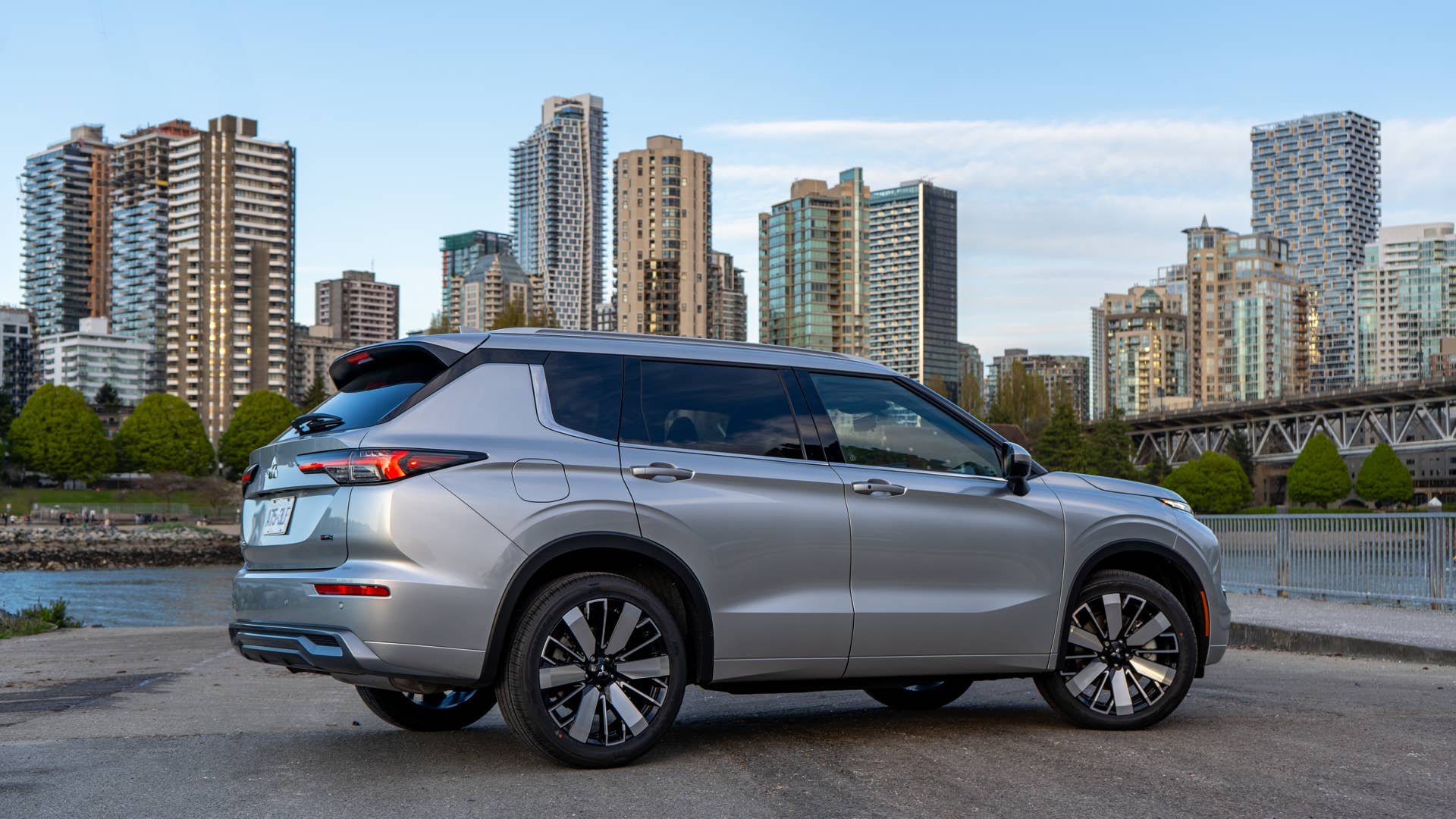
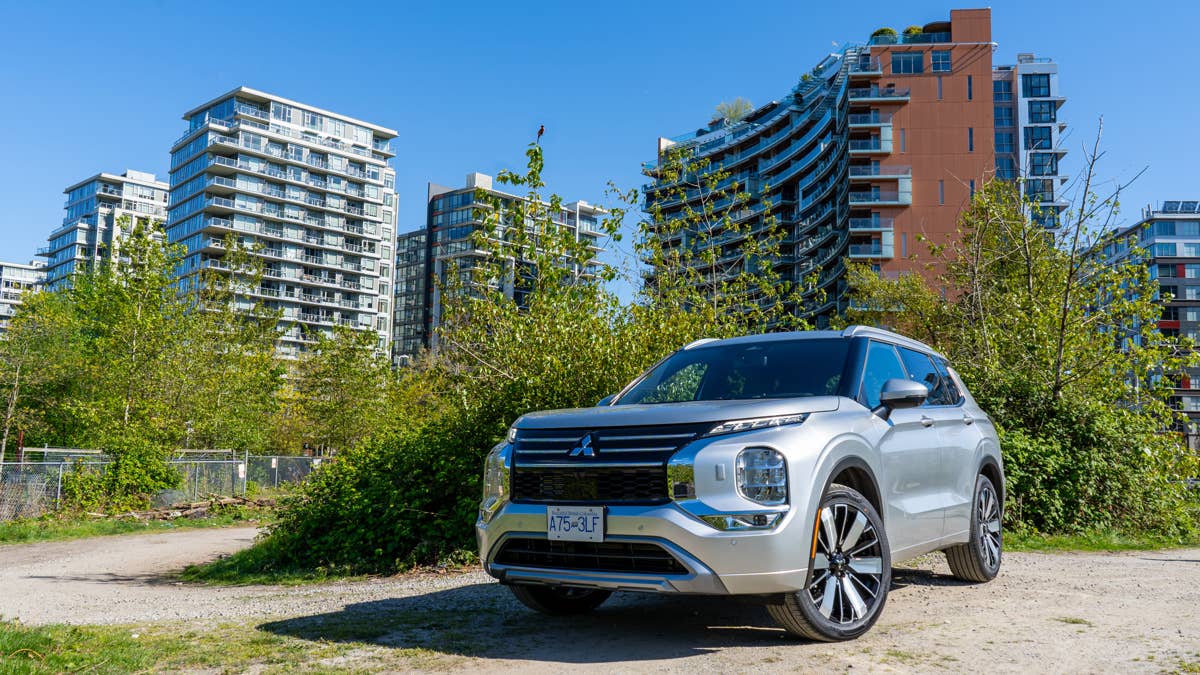
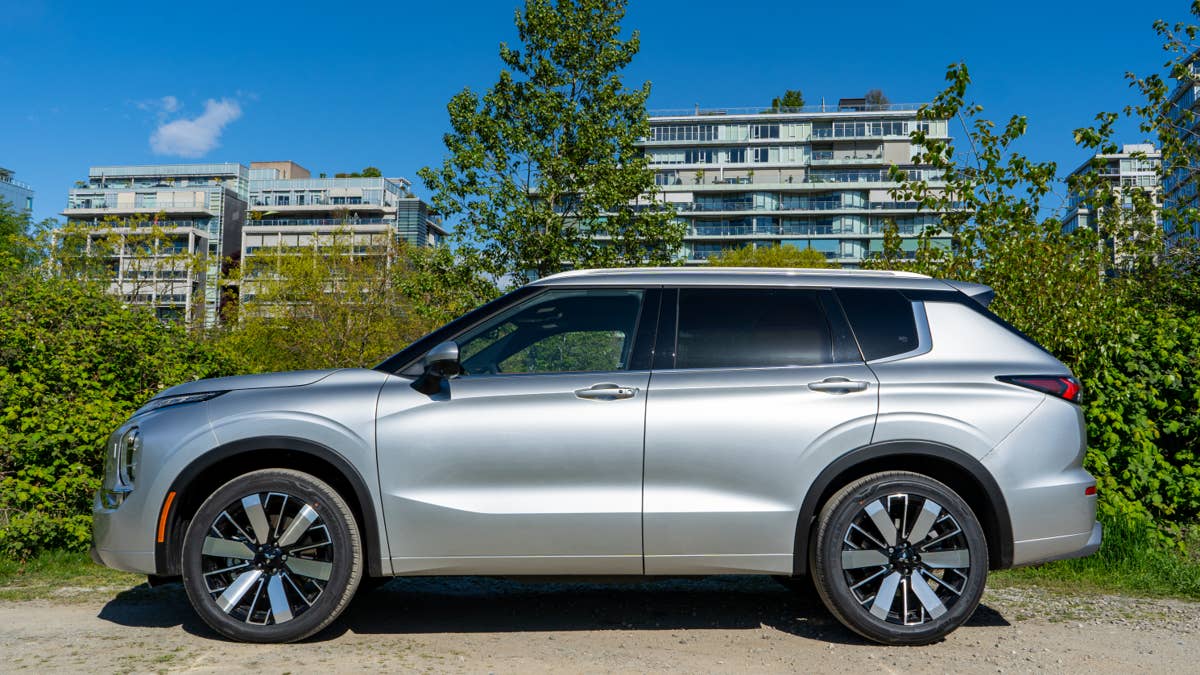
At a glance, the Outlander is far more handsome and composed than it is necessarily exciting, but that’s not at all a criticism. Some buyers want their family SUV to look modern and subtly elegant, not like it’s been designed to appear as if it time-travelled from the future. In Sterling Silver, my tester had a bright, rather classy look. The chrome accents helped, and the updated wheel design did a lot of heavy lifting in making the Outlander feel more current and upscale. Without those wheels, I suspect the design would lose some of its presence. With them, the Outlander looks far more premium than its badge suggests.
It is not as adventurous or as visually striking as the Santa Fe, per se, but it is also far less polarizing. The Mitsubishi takes a more traditional approach to its cosmetic appointments: upright, bright, broad-faced and mature. The split-light front end still gives it a recognizable identity, but the overall effect is more formal than playful. It looks like an SUV for someone who prefers dignity to attention.
Cole Attisha
Technology: 8.8/10
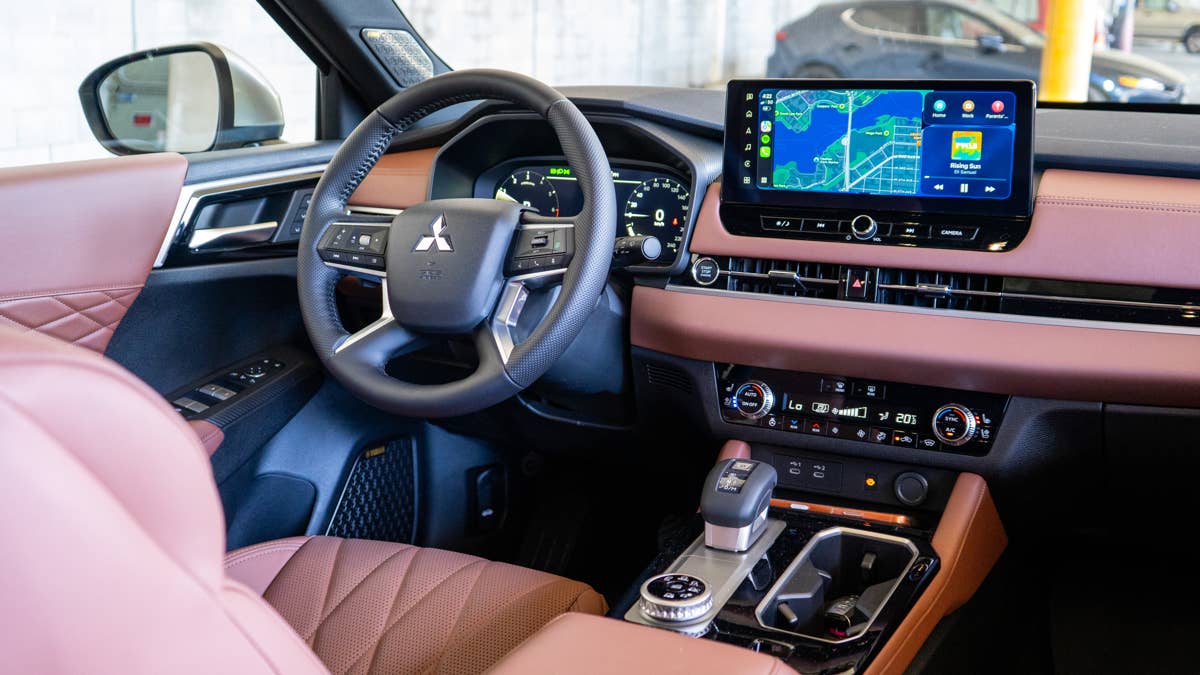
The Outlander’s technological experience is much more compelling than its driving experience. The infotainment system behaved well; wireless Apple CarPlay worked seamlessly; the wireless device charger registered my iPhone and charged it effectively; and the 360-degree camera system was genuinely useful in tight spaces. It became especially useful in the Metropolis at Metrotown underground parkade—a chaotic maze full of inattentive drivers and parking stalls designed decades ago, when cars weren’t all so huge. To its credit, the Outlander was easy to maneuver there. Its visibility was helpful, the cameras were clear, and the SUV’s relatively manageable footprint made it feel less cumbersome than many three-row vehicles do. This is, of course, one of the Outlander’s greatest party tricks: it gives you three rows without forcing you into something enormous.
Cole Attisha
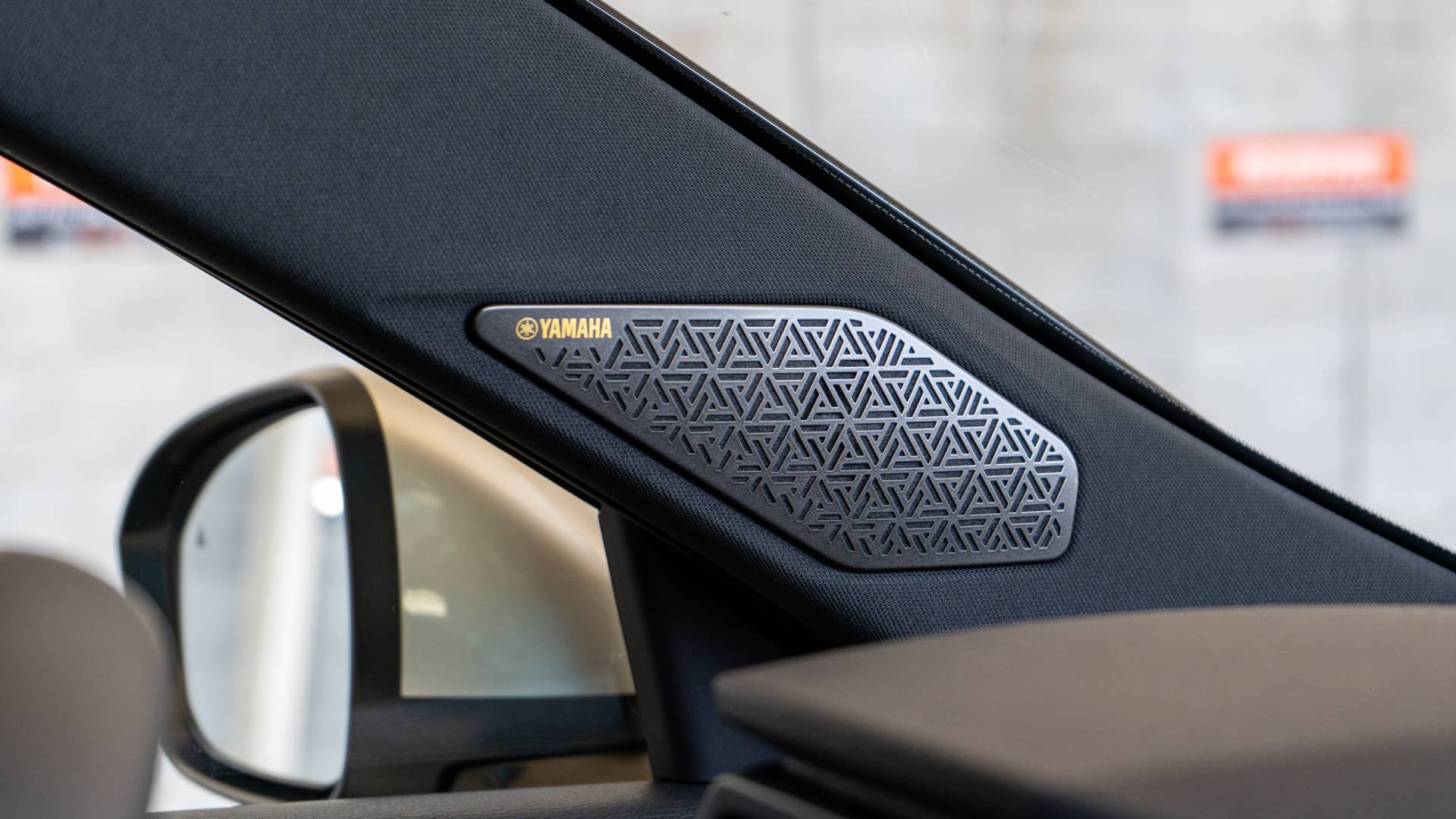
The active safety systems also deserve praise for not being obnoxious. Too many modern vehicles heighten anxiety more than they settle the nerves, screaming at the driver as though every lane marking, parking pillar, and somewhat optimistic merge were an existential threat. The standout highlight, though, was the sound system. The 12-speaker Dynamic Sound Yamaha Ultimate setup in my tester was genuinely impressive. It had enough clarity, punch, and fullness to become one of the vehicle’s defining features. I preferred it to the Bose system in the Hyundai Santa Fe Calligraphy. And yes, the old joke still applies: no highs, no lows? Must be a Bose. Yamaha, on the other hand, is known for powering concert halls, theatres, live music venues, and, of course, having acoustically tuned the legendary Lexus LFA’s earth-shattering exhaust noise. There’s always a sense that this sort of obsession with acoustics made its way into the development of Outlander’s available upgraded sound system in a way that the Bose systems almost every automaker seems to equip these days doesn’t quite live up to.
Cole Attisha
Interior Design & Quality: 9.2/10
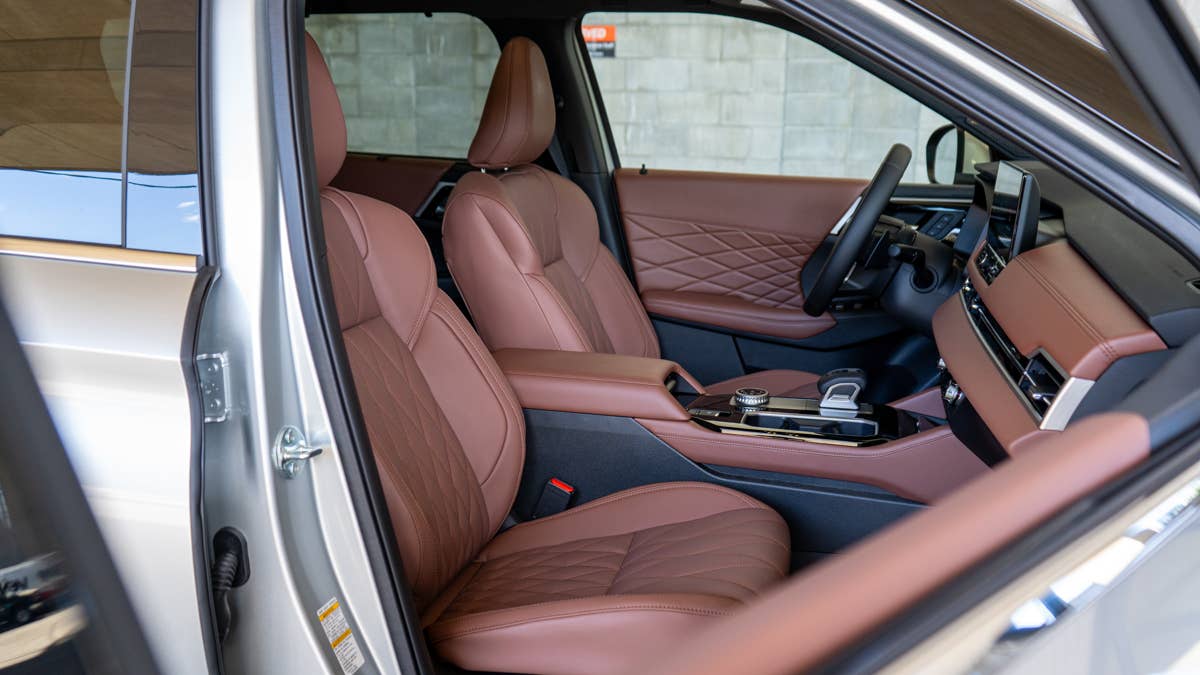
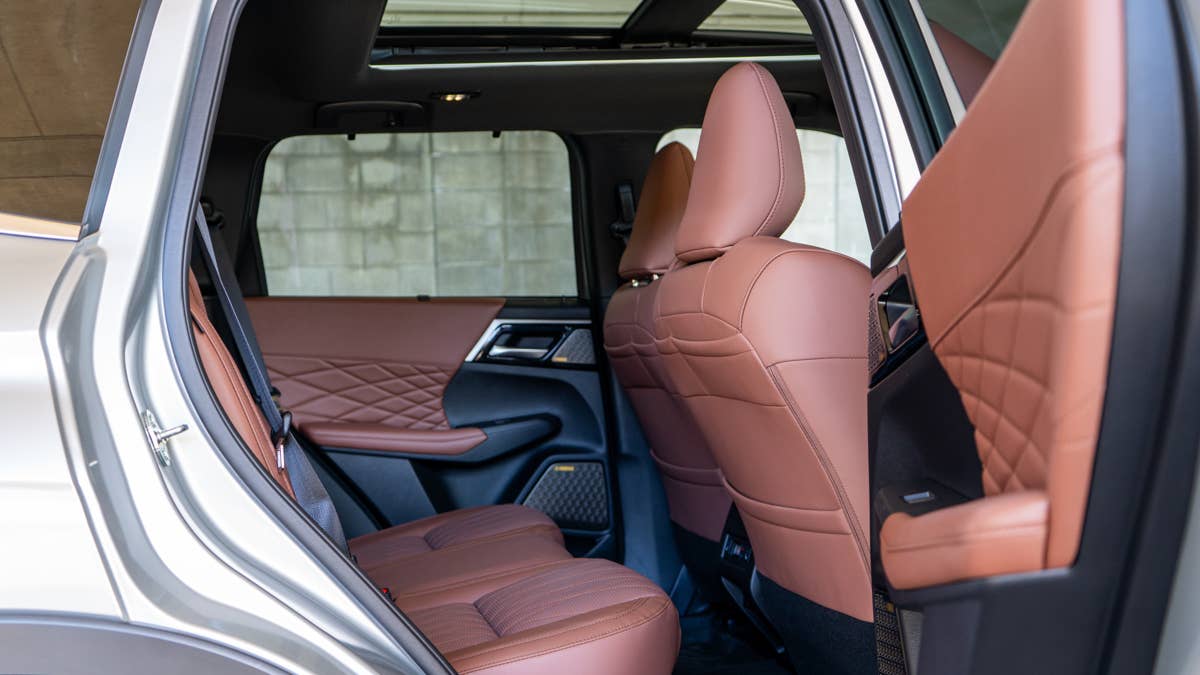
The way the Outlander’s cabin presents itself, especially in diamond-stitched, high-grade form, is what really made me understand why I see so many of these SUVs on the road. The Brick Brown semi-aniline leather-appointed interior in my Canadian GT Premium tester completely transformed the vehicle from budget appliance to something borderline decadent. The colour brought warmth to the cabin, the stitching added texture, and the materials felt far more expensive than what I had expected. It doesn’t exactly feel like something exponentially more costly and perhaps of European descent, but it was at least enough to make me think to myself more than once: “Wow, this is a Mitsubishi?”
The cabin also feels more modern than the platform’s age might suggest. The current Outlander shares its underpinnings with the Nissan Rogue, but the Outlander somehow feels far more sophisticated, whereas the Nissan now feels a generation behind. The Outlander’s cabin design, screens, materials and detailing do a much better job of disguising the vehicle’s mainstream bones. The front seats were genuinely comfortable, not just soft enough to impress you when you first sit down; the driving position was solid and easy to adjust, and the ventilation was far more effective than so many other vehicles I’ve driven, which I especially appreciated during a week that finally showed some of Vancouver’s first true signs of summer—a blessing aided only further by a cool, breezy, buttocks and a reprieve from what would otherwise have been a pretty sweaty backside.
Cole Attisha
The Outlander’s noise refinement was also worth commending, with one predictable exception. When you ask the engine for real power, it gets loud, as if it’s moaning about having been dragged out for a morning jog with a regular Strava user. Of course, that tends to be the nature of a small turbocharged four-cylinder paired with a CVT, especially in a vehicle carrying three rows of seating. It just never felt as mechanically coherent or as finely tuned as the Hyundai Santa Fe does from the driver’s seat. The simulated shift points and mild-hybrid assistance do, at least, help prevent the engine from droning as much as it otherwise might at cruising speed. In this upper-trim form, though, the Outlander really does create a genuine sense of occasion, and I have to commend this if merely for the fact that I absolutely did not expect to feel this way about it. The leather, metallic window-switch details, stitching, moonroof, and audio system all work together surprisingly well to elevate not just the cabin environment but also the vehicle’s overall appeal.
Cole Attisha
Space, Comfort & Practicality
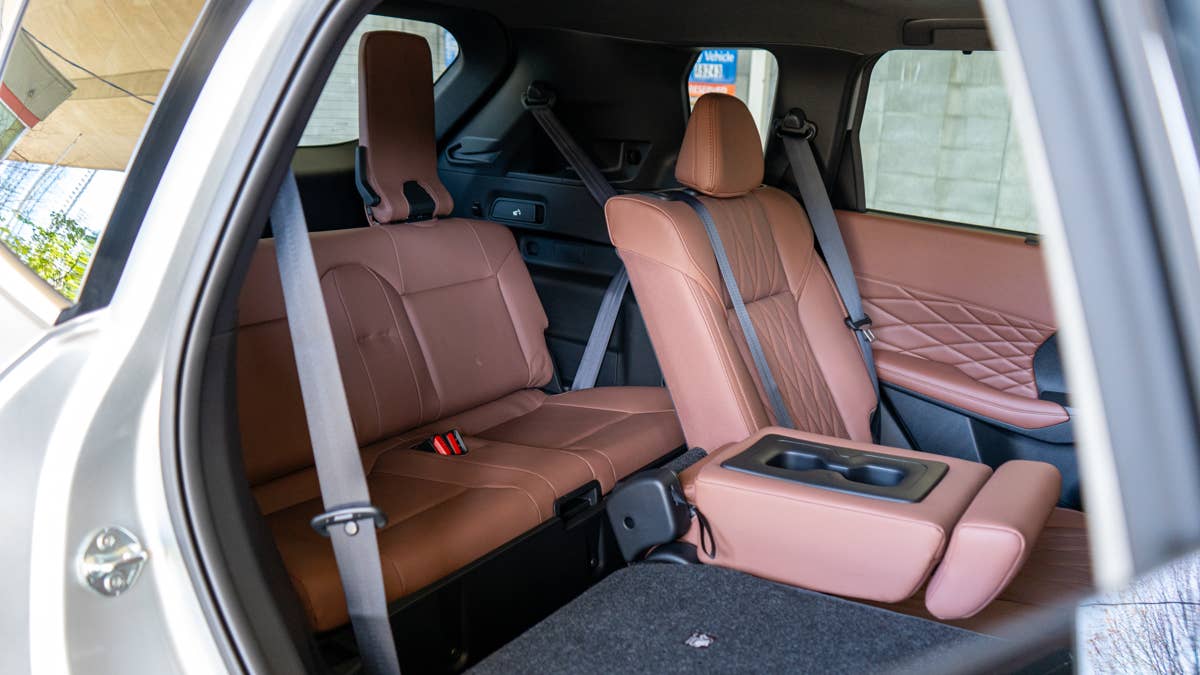
I want to make a somewhat quick side note here, separate from the typical scored sections. The Outlander’s three-row, seven-seat layout is both one of its greatest strengths and its biggest asterisk, so it’s worth spending a bit of time talking about. The first and second rows are genuinely usable, and with the second-row seats pushed all the way back, there is tremendous rear legroom—up to 39.9 inches. Adults will be perfectly comfortable in both, and the sliding second row adds helpful flexibility, which is crucial because the third row is, admittedly, extremely tight, with just 18.7 inches of legroom, though this can be increased slightly by sliding the second-row seats forward. I would advise against subjecting an adult to it unless the alternative involved trudging through rain or, heaven forbid, taking public transit. For kids with short attention spans or emergency adult use, it makes sense. But if I ordered an UberXL and one of these showed up, I’d make a beeline for the middle row.
Of course, the Outlander doesn’t pretend to be a Chevy Suburban. It aims to give compact-to-midsize SUV buyers an occasional-use third row without forcing them into a gigantic vehicle. The flexibility of its cargo space supports that philosophy, too. The Outlander offers 10.9 cubic feet behind the third row, 30.6 cubic feet behind the second row and 64.3 cubic feet behind the first row. Those numbers mean the third row does reduce cargo space, of course, but it does not make the vehicle useless when raised. There is still a deeper-than-expected well behind it, and even with the third row raised, the Outlander can remain a practical everyday family hauler.
2026 Mitsubishi Outlander 1.5T GT Premium S-AWC Cole Attisha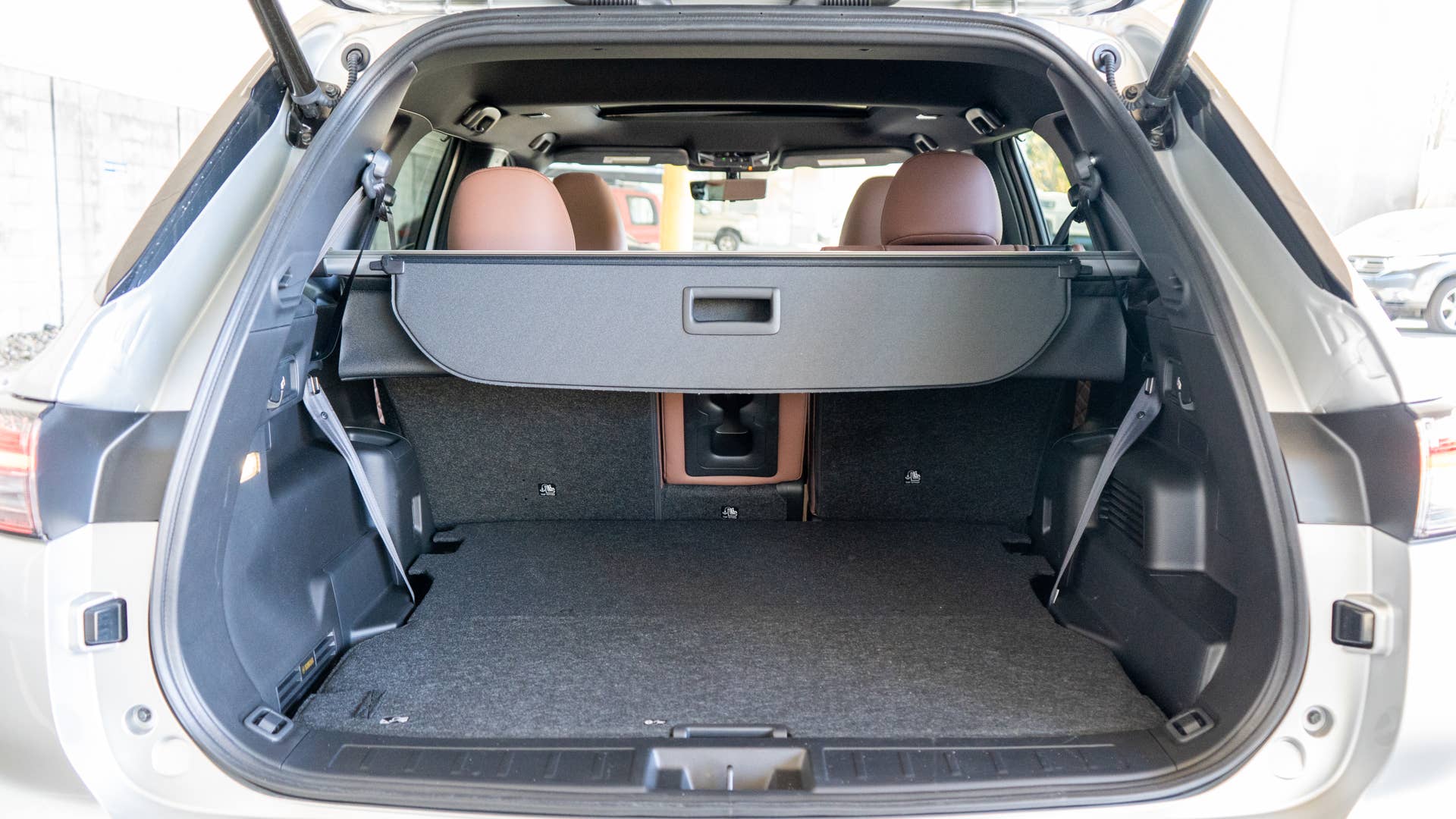
Pricing & Value: 9.0/10
Despite what you might hear in comment sections about the Mitsubishi brand these days, the Outlander does not intend to be a low-budget SUV. However, because the driving dynamics are too ordinary, and the powertrain is too compromised, the Outlander can, of course, not fully sustain a luxury proposition. But as a bargain three-row family SUV with a surprisingly premium cabin in upper trims, it makes an understandably strong case for itself. The U.S. Outlander starts at $29,995, while S-AWC starts at $31,795. The Hyundai Santa Fe, for reference, starts at $35,050—a steep jump from the Outlander’s base offering. The SEL Premium Package, which is the closest American analogue to my Canadian GT Premium tester, starts at $43,895. In Canada, my GT Premium S-AWC tester starts at C$48,398. Those figures place the Outlander in a unique position in the marketplace: slightly more expensive than basic compact SUVs, yes, but far less cumbersome and generally less expensive than much larger three-row family haulers with equal or even lesser occupant capacity.
The real question here is what buyers value most. If you need three rows but do not want to drive something enormous, the Outlander is a fantastically sensible purchase. If you want a plush cabin, effective ventilation, a panoramic roof, a powerful audio system, and the security of all-wheel drive, it allows you the option to do so. If you just want a daily driver with more seats than frills, more modestly-equipped trim packages are at your fingertips, too. The caveat is that if you do care deeply about driving feel, steering response, and powertrain polish, the Outlander’s value argument might ultimately find itself overpowered by the way other rivals sink their teeth into your appetite for something more dynamically polished. So while it saves money and space compared with larger three-row SUVs and delivers more cabin richness than expected, every time the Outlander’s CVT gets clumsy, or the powertrain feels numb and disconnected, the premium spell breaks a little.
Cole Attisha
Final Verdict: 8.4/10
The 2026 Mitsubishi Outlander GT Premium S-AWC surprised me, just not in the way a driver might hope for. It did not win me over with sharp handling, eager power delivery or a rewarding transmission. It is soft, distant and appliance-like on the road, and the CVT remains the kind of transmission that makes me wish automakers would stop pretending CVTs need fake gears to feel normal. What won me over, though, was how well the Outlander understands the unique needs of its many loyal buyers. It’s a family vehicle that offers the convenience and versatility of an MPV, disguised as a stylish SUV. Whereas a Mazda5 or a Kia Rondo might have proved too awkwardly proportioned and perhaps a bit wimpy, the Mitsubishi Outlander can fulfill a family’s needs just as well as those vehicles, but with a media-trained smile, available all-wheel drive, up-to-date tech, and a more upscale cabin.
The sum of its parts makes the Outlander a genuinely strong alternative if you need three rows of seating but do not want something huge. But, for some, it might not just be an alternative—for many, it might just be the only vehicle on sale today that ticks all your new-car-purchase boxes. If your priorities are comfort, equipment, maneuverability, occasional seven-seat flexibility, and a cabin that feels nicer than its badge suggests, the Outlander deserves your attention. While its less-than-sophisticated driving dynamics might justify the Santa Fe’s added cost for some, it is nonetheless a surprisingly convincing family SUV, especially given its charitable price point.
The Outlander, then, is like all-dressed chips—there’s a little bit of everything baked into it, and yet the culmination of its ingredients results in a flavour profile that tastes nothing at all like its donors, and in fact, becomes something entirely unique in and of itself, thereby earning itself a lucrative niche following. It is the clear result of relentless market research and customer polling, and it demonstrates a surprisingly effective effort by Mitsubishi to market a product that is, beneath its glistening silver surface, the modern evolution of the MPV that everyone else gave up on, perfected down to a science. Outlander loyalists don’t care about horsepower or steering connectedness—they just want to be able to shove all their kids in their SUV as quickly as possible and fit in the “small car” spots at the mall. For all the down-to-earth urban families out there, the Mitsubishi Outlander is truly one of a kind.