Some cars you choose with your head, and other cars you choose simply because you fall in love with them. The redesigned 2026 Nissan LEAF is precisely the kind of EV people buy using logic alone. The 2025 Fiat 500e Giorgio Armani Collector’s Edition, on the other hand, is one that you buy with rose-tinted glasses. Both are compact electric hatchbacks aimed at buyers who want lower running costs, city-friendly sizing, and modern EV convenience. But after driving both, it’s clear that they solve the same problem in incredibly different ways, aimed at incredibly different people. The LEAF is a rational solution, but the Fiat is a stylish plaything. Here’s how I felt they compared after spending some time behind the wheel of each modern compact EV.
Cole Attisha
What’s Actually Different Between the Fiat 500e and Nissan LEAF?
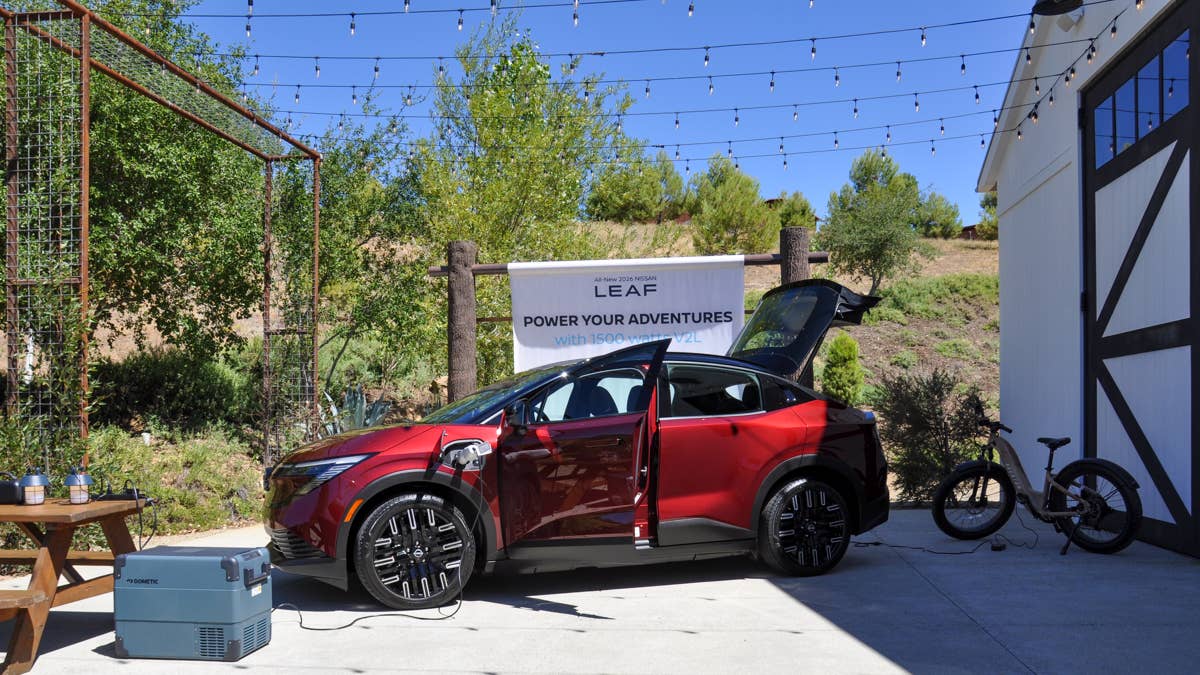
The Fiat 500e is a true city EV. It uses a 42-kWh battery pack, a front-mounted electric motor producing 117 horsepower and 162 lb-ft of torque, and is rated at 227 km (141 miles) of range in Canadian specification, while consuming 19.0 kWh/100 km (roughly 3.3 mi/kWh). It is tiny, light, and optimized for urban life. The redesigned LEAF is larger, roomier, and intended to be a genuine everyday EV for more households. It offers significantly more range, more cargo space, and greater charging flexibility than the Fiat, including both CCS and NACS charge-port compatibility, depending on the market specification. In the U.S., the extended-range S+ uses a 75-kWh liquid-cooled battery, produces 214 horsepower, and offers up to 303 miles of EPA-estimated range. Nissan rates it at up to 114 MPGe combined (roughly 30 kWh/100 miles), with DC fast charging up to 150 kW and an estimated 10–80% charge in 35 minutes under ideal conditions.
The size difference is as chasmic as its mechanics. The LEAF stretches to roughly 173.4 inches long and offers 20.0 cubic feet of cargo space behind the rear seats, expanding to 55.5 cubic feet with them folded. That places it in an entirely different class of practicality than the Fiat’s 7.5 cubic feet behind the rear seats and 26.0 cubic feet max. If the Fiat is like an espresso shot, then the LEAF is a full continental breakfast.
Need New Tires? Save Up To 30% at Tire Rack
Find the perfect tires for your exact vehicle and driving style. Click here to shop all top-tier brands, including Michelin, Bridgestone, and more, directly at Tire Rack.
Cole Attisha
Driving Review: City Fun vs Real-World Capability
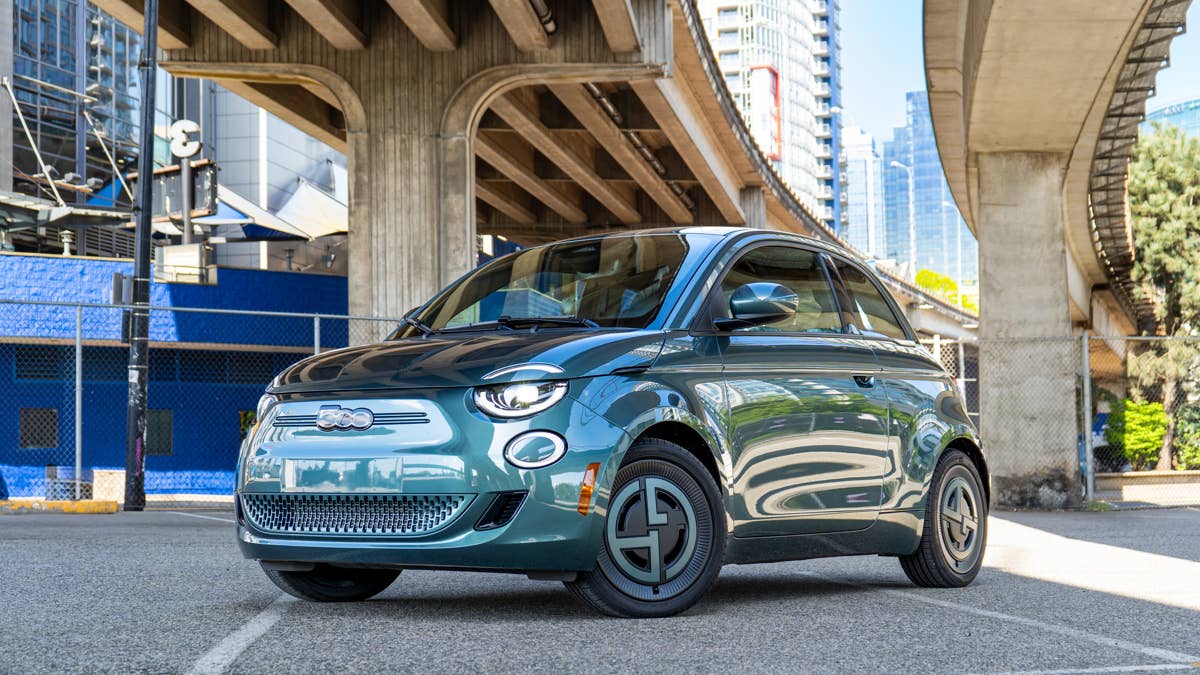
The Fiat wins the first five minutes. Its low mass, short wheelbase, and tiny footprint make it hilariously entertaining in dense urban environments. Around downtown Vancouver, Kitsilano side streets, Richmond parking lots, and the tighter roads around UBC, it feels eager, playful, and delightfully overqualified for errands. The steering has a more communicative feel than the LEAF’s, too. It’s light but not numb, quick without being nervous, and easy to place exactly where you want it. Its 117 horsepower certainly won’t frighten anyone, but in city traffic, the instant torque and low weight make it feel quicker than expected. From stoplight to stoplight, the Fiat often feels just as lively as faster cars.
Cole Attisha
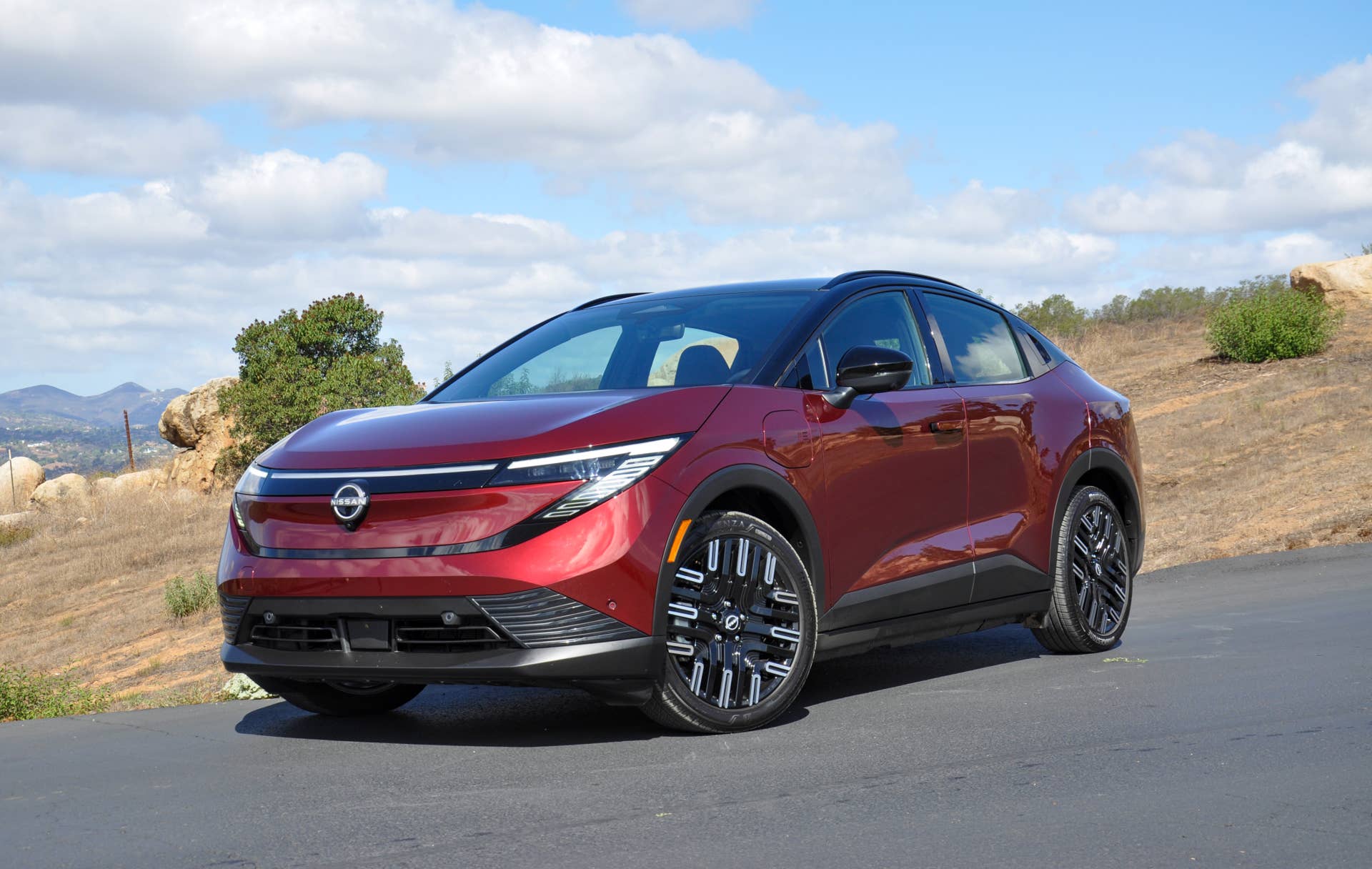
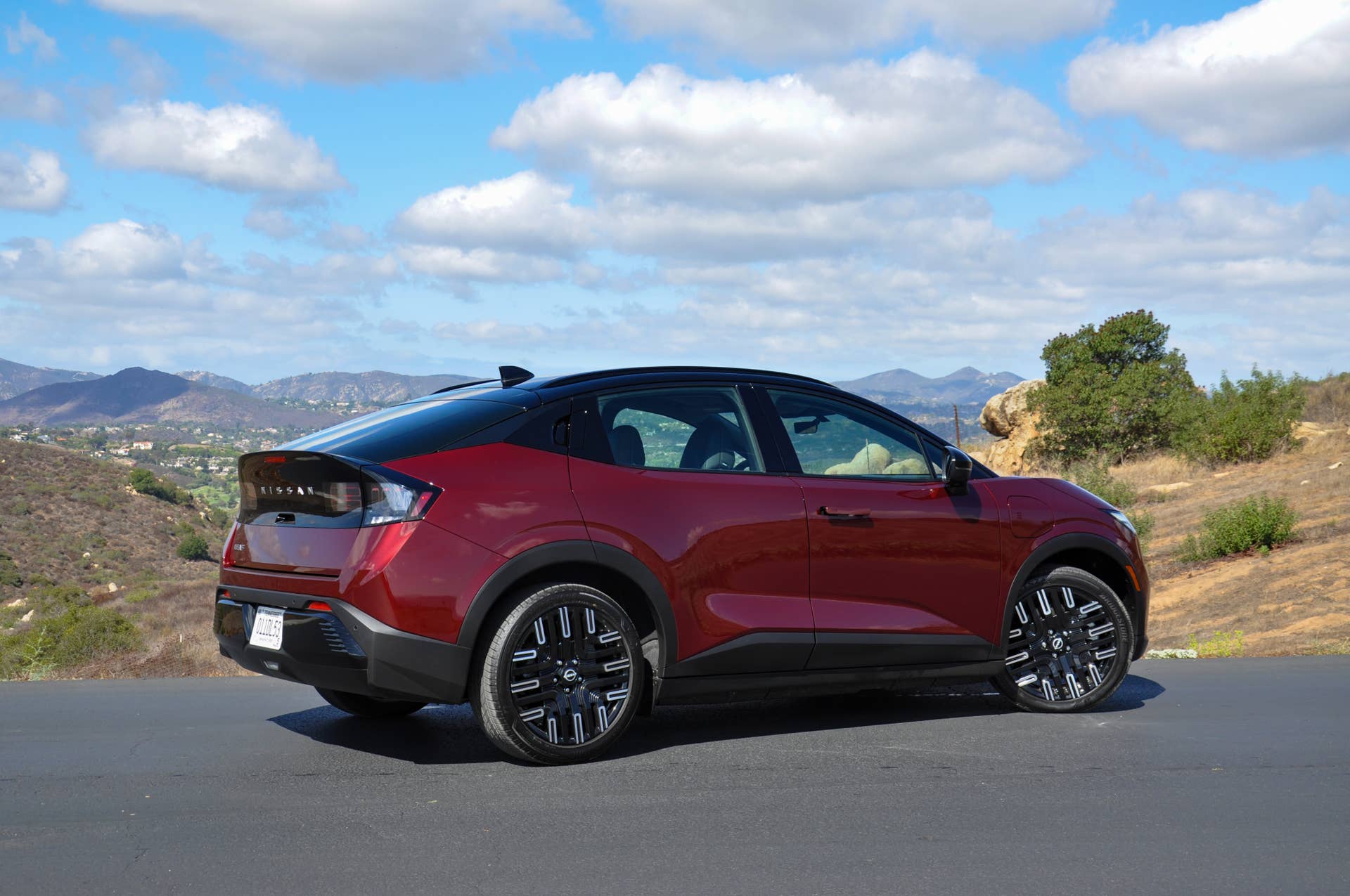
The LEAF counters with genuine muscle, comparatively speaking. With 214 horsepower, it’s significantly more robust at higher speeds. When merging onto highways, climbing steep grades, or accelerating from 50 to 75 mph, the Nissan pulls harder and requires less effort. That power is backed by greater composure thanks to its added mass. On freeways and open roads, the LEAF feels far more substantial. It tracks straighter, feels less affected by crosswinds, and isolates occupants better from the outside world. Ride quality is closer than expected, though. Both absorb rough pavement reasonably well, though the Fiat can feel bouncy over sharp impacts due to its short wheelbase.
Cole Attisha
Efficiency, Range, and Charging
The Fiat is no competition for the Nissan here. During my week with the Fiat, I saw roughly 200 km (124 miles) of real-world range in mild spring temperatures while driving normally—and often enthusiastically. Its official rating is 227 km (141 miles). For city use, that is perfectly adequate, but for spontaneous road trips or one-car households, it is limiting. The LEAF’s available 303-mile range changes the ownership equation entirely. That is enough for commuting, weekend escapes, and longer regional drives without constant planning around inconsistent charging infrastructure. Charging capability itself also favours the Nissan. Its maximum 150-kW DC fast-charging capability can quickly replenish the battery under optimal conditions, and the inclusion of both CCS and NACS compatibility dramatically improves public charging convenience. The Fiat is simpler and certainly more niche: charge at home, use around town, rinse and repeat.
Cole Attisha
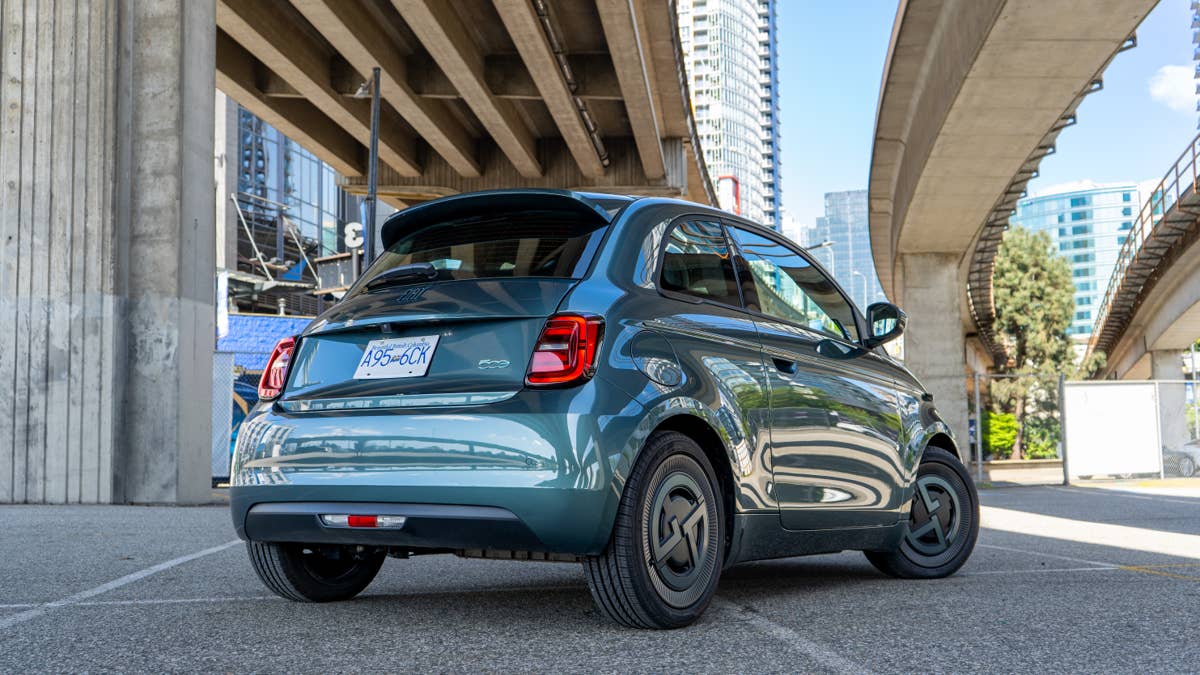
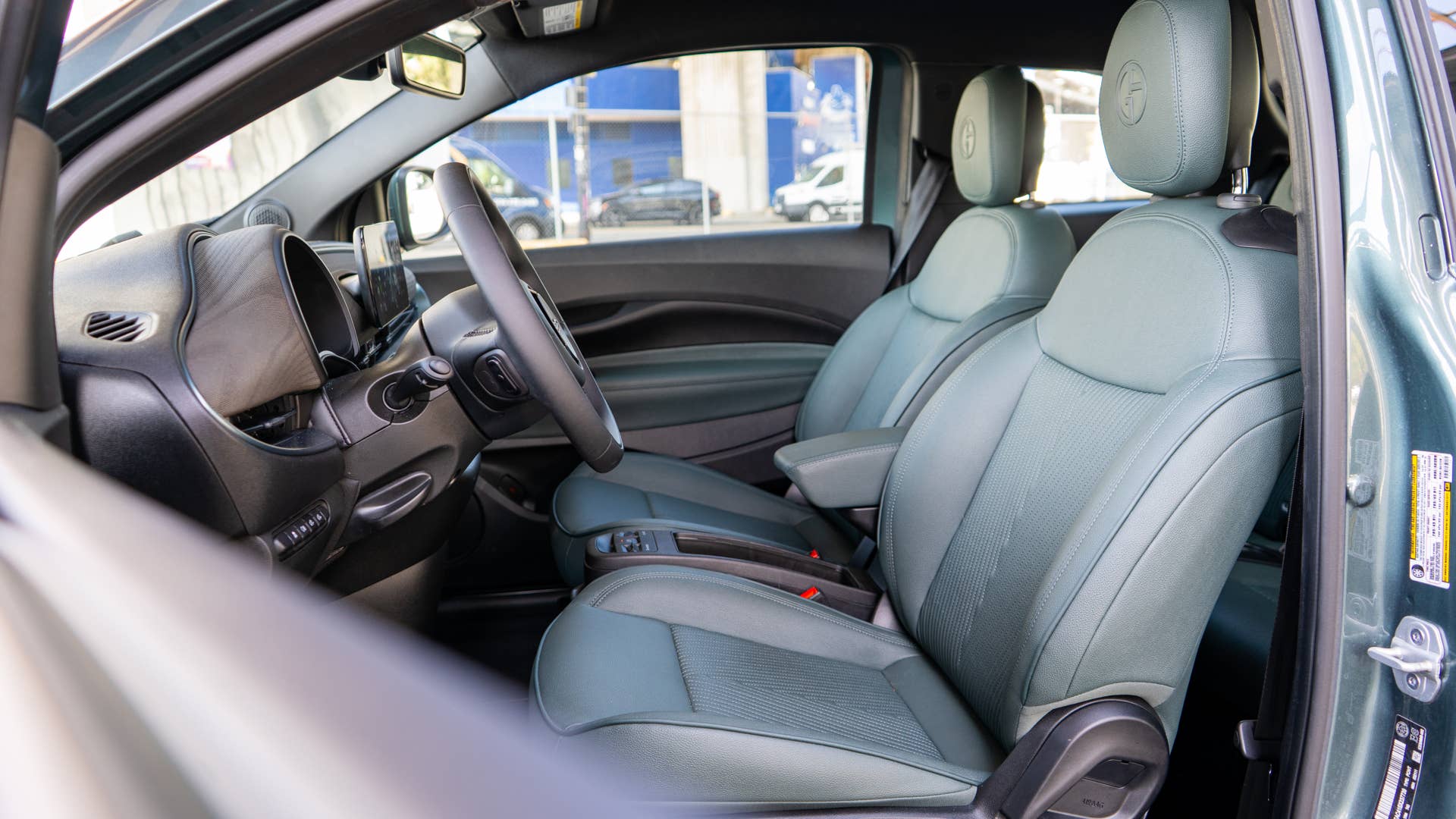
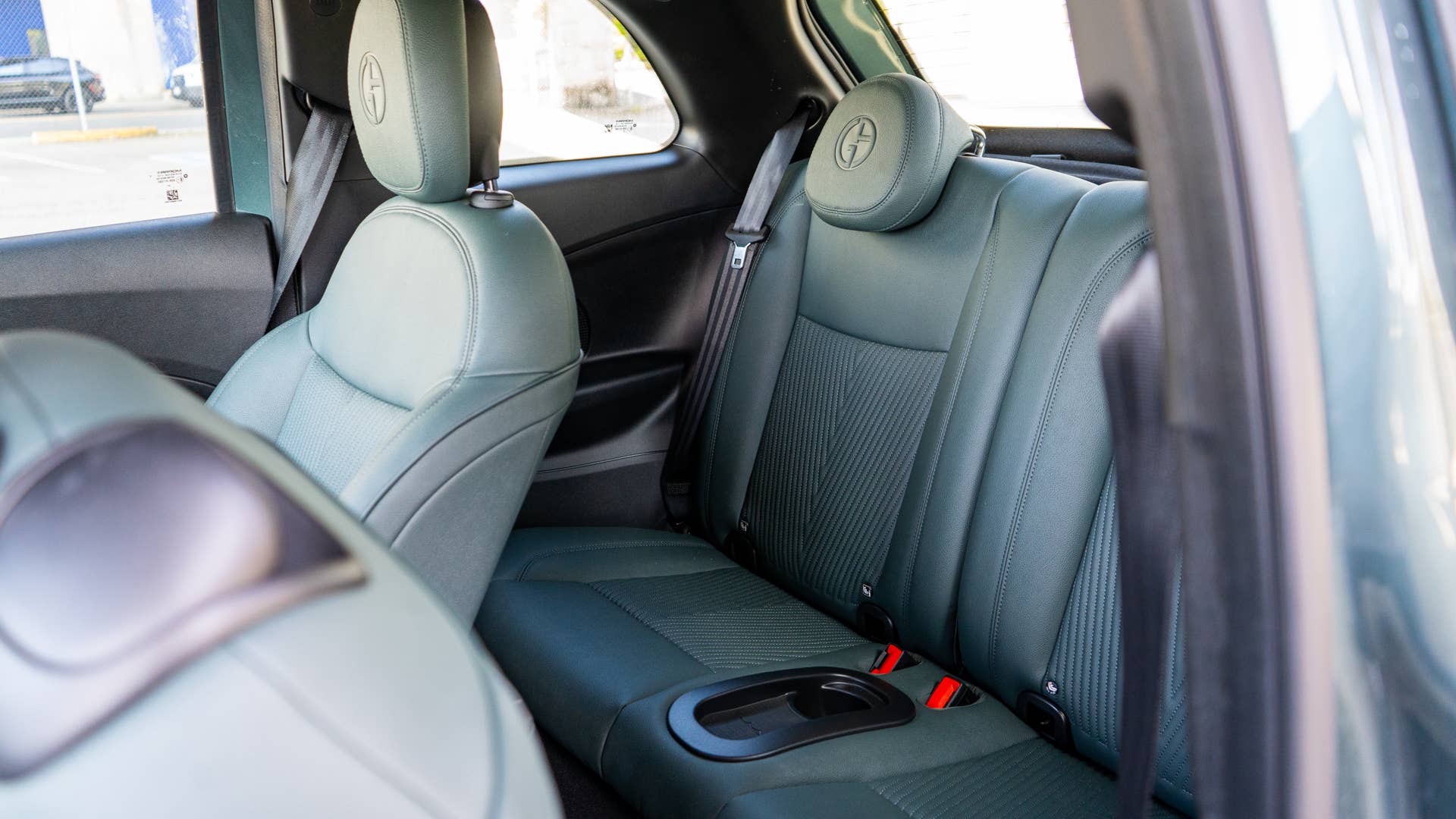
The Fiat surprised me with how intelligently it uses such minimal space. Despite measuring just 143.0 inches long, it offers 41.8 inches of front legroom, enough for taller drivers to get comfortable, while the upright roofline helps create a more open cabin than the exterior suggests. Rear passengers receive 29.4 inches of legroom, which is tight on paper but more usable in practice than many alternative coupes or low-roofed small cars. For short city trips, adults can fit back there without suffering immediate spinal stiffness. Cargo space measures 7.5 cubic feet behind the rear seats and expands to 26.0 cubic feet when the rear seats are folded. That means groceries, backpacks, camera gear, and a couple of soft bags are easy enough to accommodate, but this is not the car for airport runs with four people and hard-shell luggage.
Cole Attisha
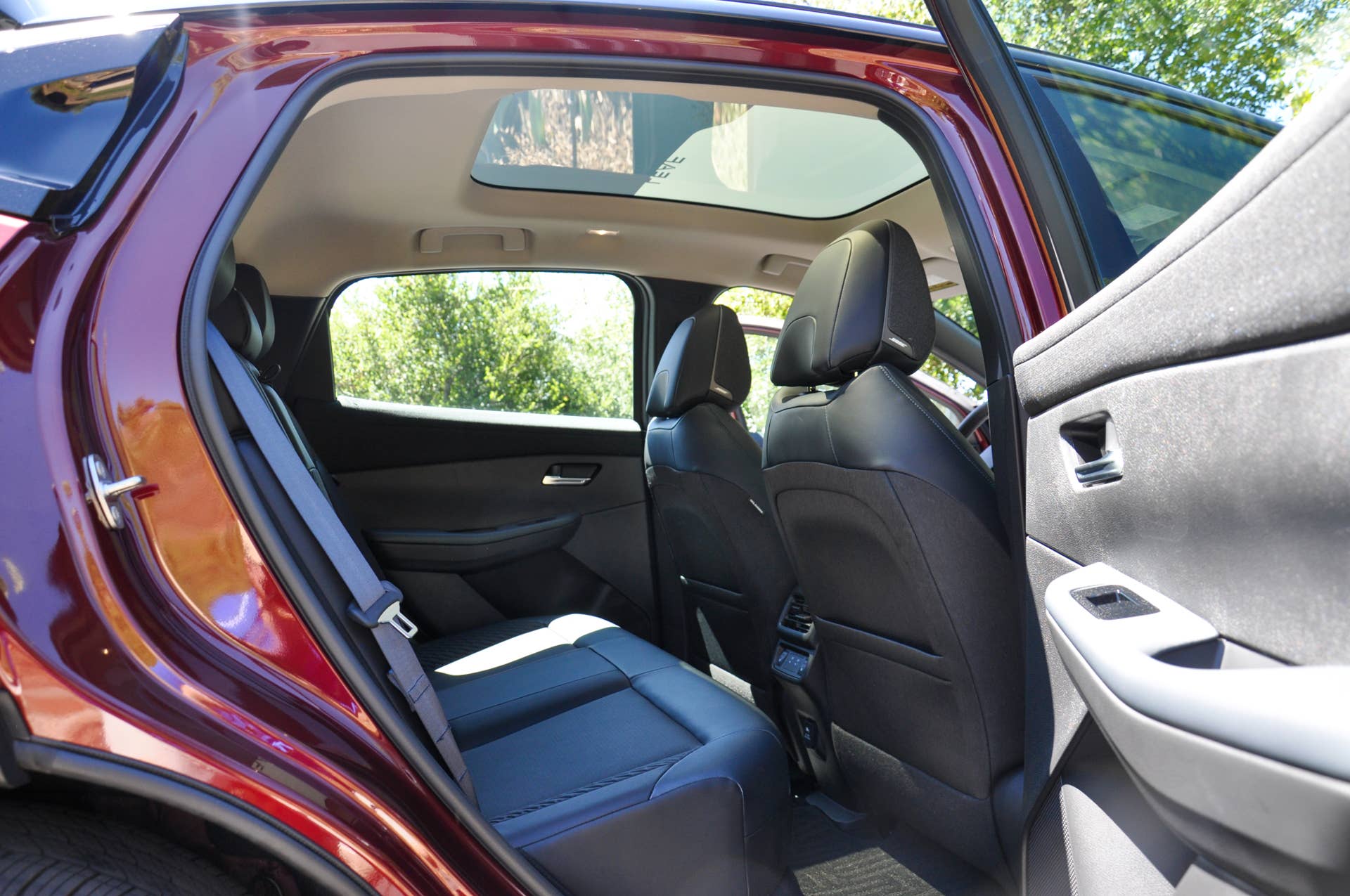
The LEAF operates in an entirely different class here yet again. Its larger body and longer wheelbase create a cabin that feels meaningfully roomier in every direction. Front passengers get 42.4 inches of legroom, while the rear seat is genuinely adult-friendly for longer drives rather than short-hop tolerable. Cargo space also jumps to 20.0 cubic feet behind the second row and 55.5 cubic feet with the rear seats folded, giving it the sort of versatility many small crossovers would envy. And, of course, four doors will always be more practical than two. Seat comfort is another notable strength of the Nissan. The LEAF’s standard Zero Gravity front seats remain among the better seats in the segment and were noticeably superior to the Fiat’s seats over longer stints behind the wheel. The Fiat, however, fights back with undeniable style. In Giorgio Armani trim, with embossed headrests, upgraded upholstery, and thoughtful signature detailing, the Nissan creates a boutique ambience that the Nissan cannot match. The Fiat is more fashionable, the LEAF is more functional.
Cole Attisha
Technology and Driver Assistance
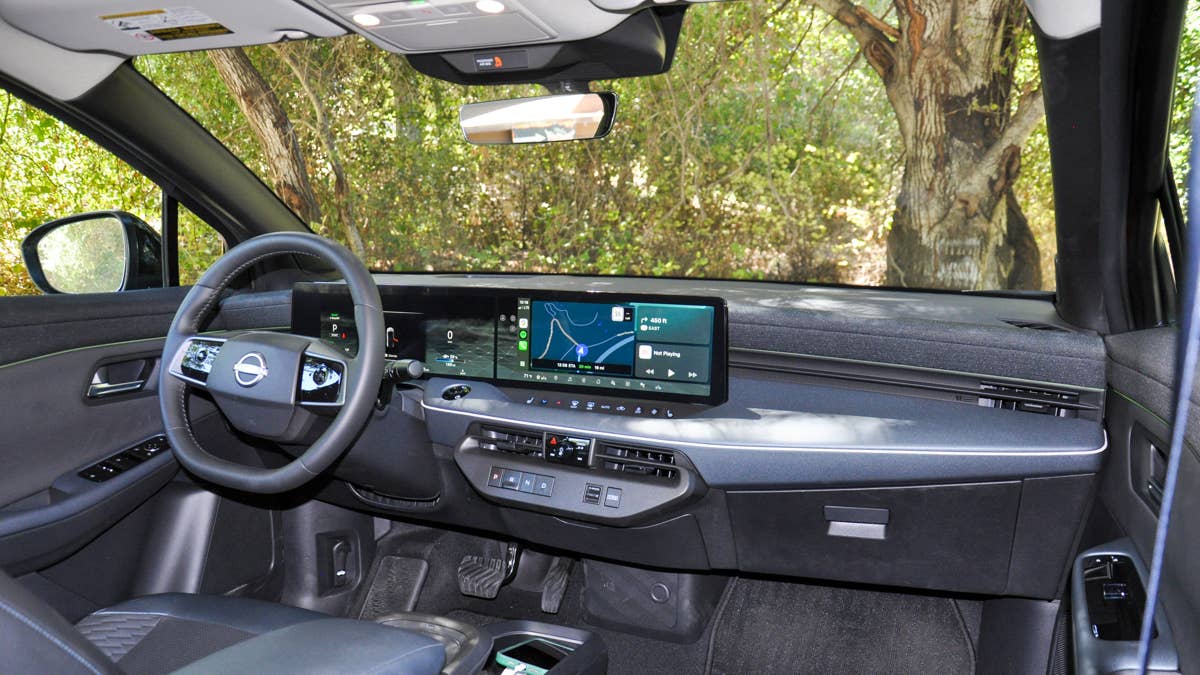
The LEAF’s infotainment system is quicker to respond, easier to navigate, and more modern in day-to-day use than the Fiat’s occasionally laggy setup. Menus load faster, interactions feel cleaner, and the overall experience is simply less frustrating. The Fiat’s system is workable once fully awake, and wireless Apple CarPlay functioned reliably during testing, but startup delays and intermittent hesitation feel out of place in a premium-priced special edition. Some controls also work against it. Gear selection relies on physical buttons that occasionally require repeat presses to register inputs, while certain switchgear feels cheaper than the Armani branding might suggest.
Cole Attisha
The Fiat does deserve credit for its sound system, which was genuinely impressive, and for a clear, high-quality backup camera that made city parking even easier. Driver-assistance calibration, however, strongly favours Nissan. The LEAF’s systems feel smoother and better judged in their warnings and interventions. The Fiat’s forward-collision warning can be so startlingly loud that it inspires panic more than awareness.
Cole Attisha
Styling and Presence
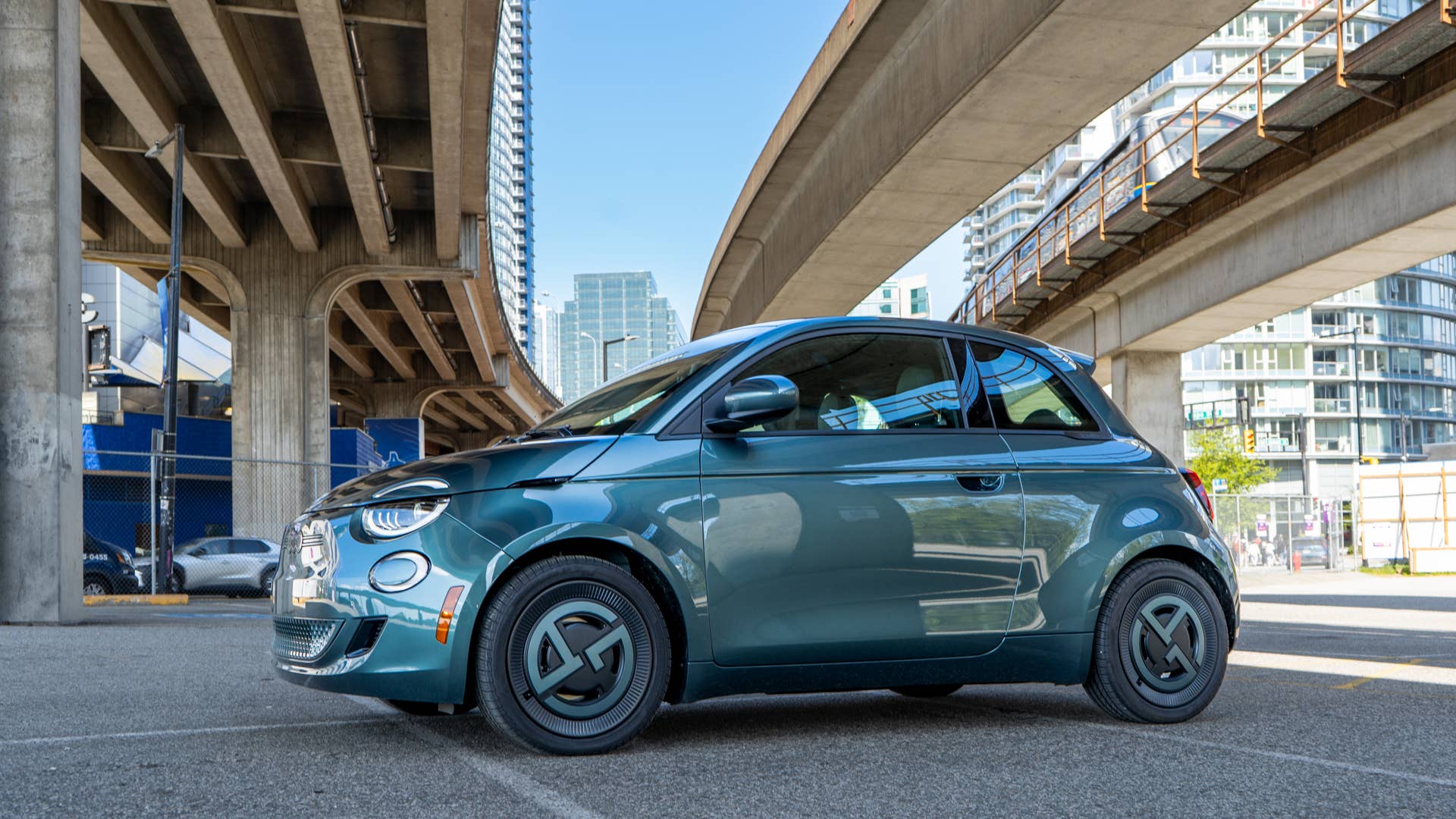
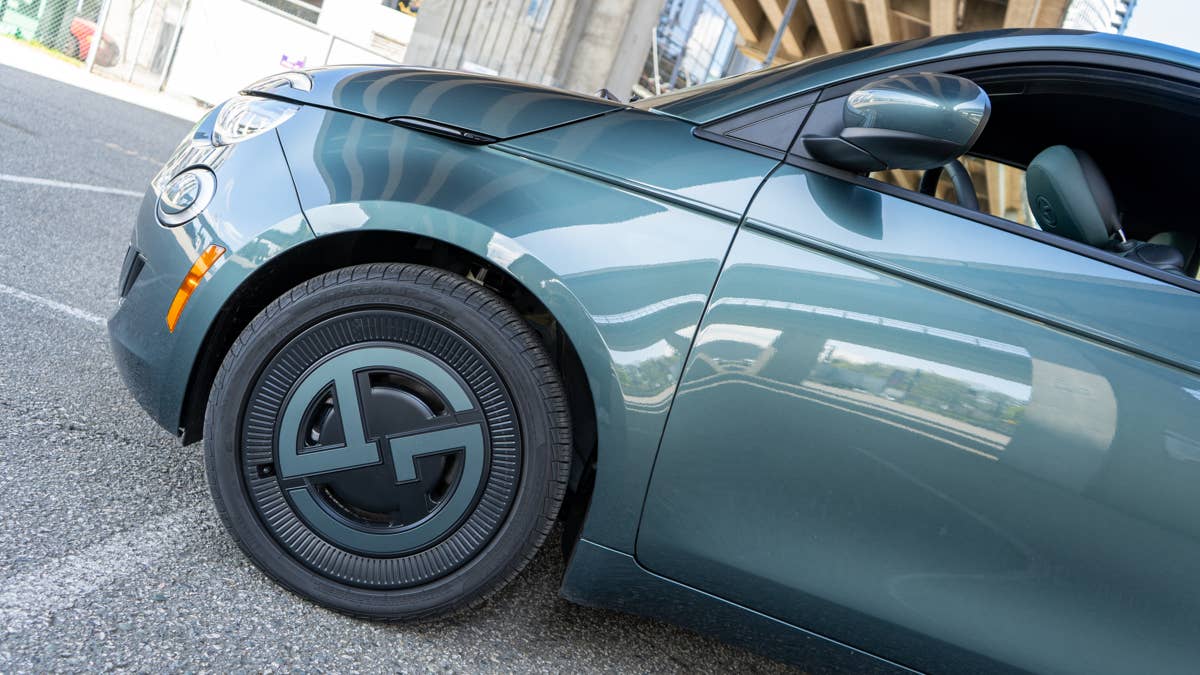
The redesigned LEAF is genuinely handsome. It is a dramatic improvement over older generations that often looked awkward and bug-like, and it now carries itself with real distinction. Cleaner surfacing, sharper proportions, and a more modern stance give it a visual identity that finally matches its mission. But the Fiat still wins the attention war every single time. During my week with it, strangers constantly smiled at it, turned their heads, and even commented on it. Its rounded lamps, compact proportions, and upright silhouette make it look almost animated, as though it has eyelashes. Few modern cars project friendliness so effortlessly. The Giorgio Armani Edition elevates that appeal further with unique wheels, subtle badging, richer upholstery treatments, and tasteful premium touches throughout. The LEAF looks great, but the Fiat feels truly special.
Cole Attisha
Pricing and Value
The 2026 Nissan LEAF starts at US$29,990 for the S+ trim before destination, while a loaded Platinum+ model reaches roughly US$39,790 before destination. Nissan’s pricing is aggressive considering the LEAF offers up to 303 miles of range, available fast charging up to 150 kW, a roomy hatchback body style, and enough practicality to serve as many households’ only car. That means even a mid-level LEAF can undercut many rival EVs while still delivering more usable range than far pricier alternatives.
The 2025 Fiat 500e Giorgio Armani Collector’s Edition tells a different story. In Canada, my tester rang in at C$48,885 as equipped, including destination. Converted roughly to U.S. dollars, that lands in the mid-$35,000 USD range depending on exchange rates. For mid-tier LEAF money, the Fiat offers just 141 miles of rated range, far less interior space, and limited practicality. On paper, the value case is difficult to defend, but in true Italian fashion, the Fiat was not designed to make the most sense on spreadsheets. It sells style, charm, microcar maneuverability, and the kind of personality missing from more rational EVs. If meaningful lease incentives or dealer discounts are available—and Fiat’s dealers have historically leaned on those—the equation changes dramatically. At the right monthly payment, the 500e can be a truly tempting urban indulgence rather than an overpriced novelty item. If buying outright at MSRP, the Nissan is the clear winner. If leasing cheaply and using it exactly as intended—short commutes, city errands, second-car duty—the Fiat isn’t as easily ruled out as you might expect.
Cole Attisha
Final Verdict
Perhaps rather obviously, the 2026 Nissan LEAF is the better electric vehicle for the vast majority of buyers. It offers dramatically more range, stronger highway composure, faster and more flexible charging options, a roomier cabin, greater cargo capacity, better technology, and pricing that makes genuine sense in today’s market. Starting under $30,000 in the U.S., it feels like one of the more complete mainstream EV packages currently available. If you need one car to handle commuting, family duty, weekend trips, and everyday life without compromise, the LEAF is the easy recommendation.
But surprisingly, I still can’t rule out recommending that you at least give the 2025 Fiat 500e Giorgio Armani Edition a fair chance—just go and drive one and you’ll understand. It is so much lighter on its feet, more playful in dense city environments, easier to park, and vastly more charismatic. It turns routine errands into something amusing, attracts smiles from strangers, and feels like an electric Vespa with climate control and airbags. In Giorgio Armani form, it also adds a sense of style and occasion that few cars at any price can replicate. But, of course, charm does not erase limitations. Its modest range, tight cargo space, smaller rear seat, and pricing make it difficult to recommend as a primary vehicle for most households. So, really, the answer to which one truly wins here depends entirely on what kind of buyer you are. If you want the smartest EV here, buy the LEAF. If you want the most memorable one, buy the Fiat.