Lately, it seems like much of the progress we strive for in the automotive world comes at far too great a cost, especially in the luxury space. Everywhere I look, giant screens and material scarcity disguised as minimalism are replacing genuinely thoughtful design and unorthodox yet memorable ergonomic layouts. Austere styling is being mistaken for sophisticated modernism, and so many automobiles are being engineered so entirely around efficiency that driving them feels more like operating a household appliance than piloting something with an authentic human spirit. Many of these cars are competent, plenty are even fast, and almost all are very clever, but these days a luxury car rarely feels truly indulgent. Rarely do they sear themselves so deeply into one’s memory the same way they once did.
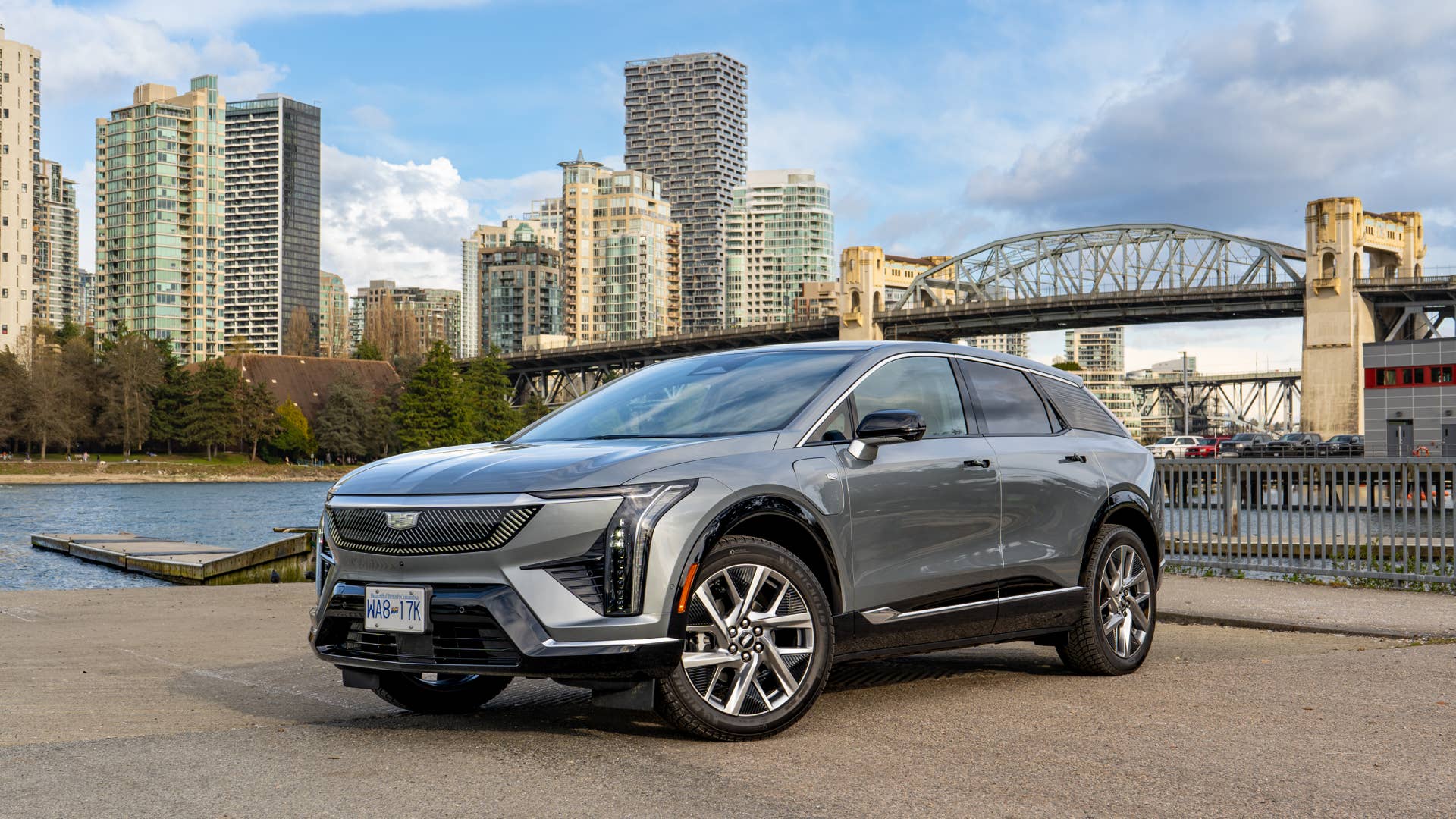
Much to my surprise, however, after driving a 2026 Cadillac Optiq Premium Luxury AWD around Vancouver, B.C. for a week, using it to chauffeur friends and family visiting from out-of-town around to some of the city’s most fashionable dining experiences, tourist attractions, and, of course, the odd airport pickup—not to mention a quick early-morning jaunt up the mountainside Sea-to-Sky Highway to see whether any of Cadillac’s V-department madness has trickled down into this SUV—I never felt the sort of resentment towards it that I tend to do of some other cars which lean too hard into the whole “I’m from the future” trope. On paper, it is Cadillac’s entry-level electric luxury SUV, slated below the Lyriq and starting from US$50,900 in the U.S. or C$57,399 in Canada before fees and taxes. In all-wheel-drive, dual-motor form, it makes 440 horsepower and 498 lb-ft of torque, with an EPA-estimated range of 303 miles. My Canadian test vehicle, a Premium Luxury AWD finished in Argent Silver Metallic over Phantom Blue, stickered at C$70,972 as tested, or roughly US$51,800 at current exchange rates.
Its pricing is critical because the Optiq is playing in one of the most crowded and ideologically diverse sandboxes of the market. The Tesla Model Y remains the obvious populist benchmark, with a U.S. starting price of $50,630 for the Premium All-Wheel Drive model, including destination and order fees. Meanwhile, the 2026 Genesis Electrified GV70 starts at $64,380 in the U.S., and offers 429 horsepower, 516 lb-ft of torque, and an EPA-estimated 263 miles of range. The Cadillac, then, is trying to split the difference: more style and theatre than a Tesla, with less of a blow to your wallet than a Genesis. And after spending a week with it, I think Cadillac may have found something that many electric luxury crossovers still lack: a distinct personality that doesn’t feel overtly performative.
Cole Attisha
Powertrain & Driving Dynamics: 9.0/10
The Optiq being seriously quick doesn’t even remotely surprise me. Nearly every dual-motor luxury EV is capable of whiplashing you off the line these days. What surprised me is how neatly it deploys its performance. So many electric vehicles still struggle with throttle calibration—the power is there, but it arrives as if you’ve been violently rear-ended by a tractor-trailer. They are often too abrupt, delivering a harsh shove as if to give drivers a chance to scare their passengers into understanding why they spent all this money on a car that, at the end of the day, was meant to be economical. Refreshingly, the Optiq doesn’t feel like this, perhaps unless you throw it into Sport mode and mash the throttle from a total standstill. Its throttle tuning is, frankly, exceptional. In Tour mode, especially, Cadillac has tuned out the lurchiness that still plagues far too many EVs. Around town, it feels smooth, gradual, and deeply intuitive. When you want to drive gently, it complies. When you want to lean on all 440 horses, it responds with real conviction.
What impressed me most, though, was how naturally all of the major controls were calibrated. Steering, braking, throttle response—it all feels thoughtfully resolved, as though different departments inside Cadillac actually communicated with one another before the SUV was signed off. The brakes are not merely good “for an EV.” They are good, full stop. The steering is appropriately weighted, and the body motions are well-controlled. And despite the expected heft that comes with a dual-motor electric crossover, the Optiq never feels as lazy as old-school Caddies often do. In fact, the best description of how this car drives comes from a somewhat childish source. As Lightning McQueen from Pixar’s Cars put it so eloquently, it “floats like a Cadillac, stings like a Beemer.” That iconic line is impeccably accurate here. The ride has the supple, floaty character you expect from a proper, red-blooded Cadillac, but in corners, especially on a great, windy road like the Sea-to-Sky, the Optiq hunkers down and responds with an athleticism that feels almost rebellious for something this cushy. Its low center of gravity inherently helps contain body roll, and while you never forget about its near-5,200-lb mass, I did admire how neatly it disguised it.
Cole Attisha
The cabin is also absurdly quiet. There is essentially no tire noise to mention, and even at highway speeds, wind intrusion is almost nonexistent. Long-distance comfort, then, is genuinely impressive. The Optiq feels equally at home threading through downtown traffic and stretching its legs on that one great stretch of asphalt you look forward to on your way home every day. One-pedal driving is the one caveat. I appreciated that Cadillac offers a genuinely aggressive driving setting, because any EV that offers the driver more engagement rather than less deserves credit. But this one requires real finesse, especially in its most aggressive setting. As the person behind the wheel, I enjoyed the added challenge. As a passenger, I suspect my weak stomach would hate you for using it badly. There is a difference between rewarding and nauseating, and the Optiq’s stronger regen setting lives close enough to that chasm that it insists upon a delicate right foot to keep other occupants happy. Still, this is an EV that can easily be driven lazily with Super Cruise and all the usual modern conveniences, or one you can actually drive yourself and enjoy. That dichotomy will earn it plenty of points with driving enthusiasts and those who see driving as a chore alike.
Need New Tires? Save Up To 30% at Tire Rack
Find the perfect tires for your exact vehicle and driving style. Click here to shop all top-tier brands, including Michelin, Bridgestone, and more, directly at Tire Rack.
Cole Attisha
Exterior Design: 9.3/10
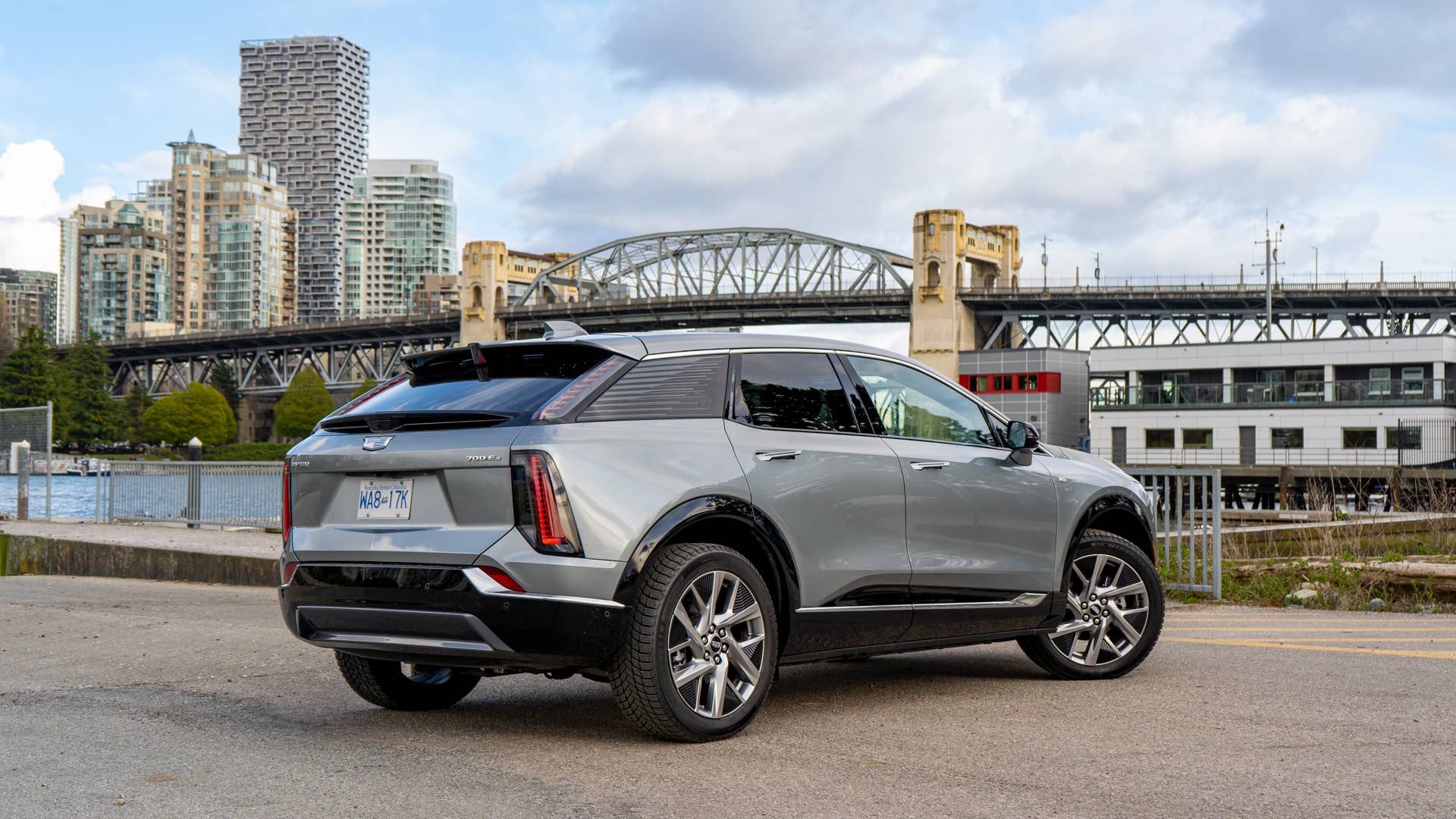
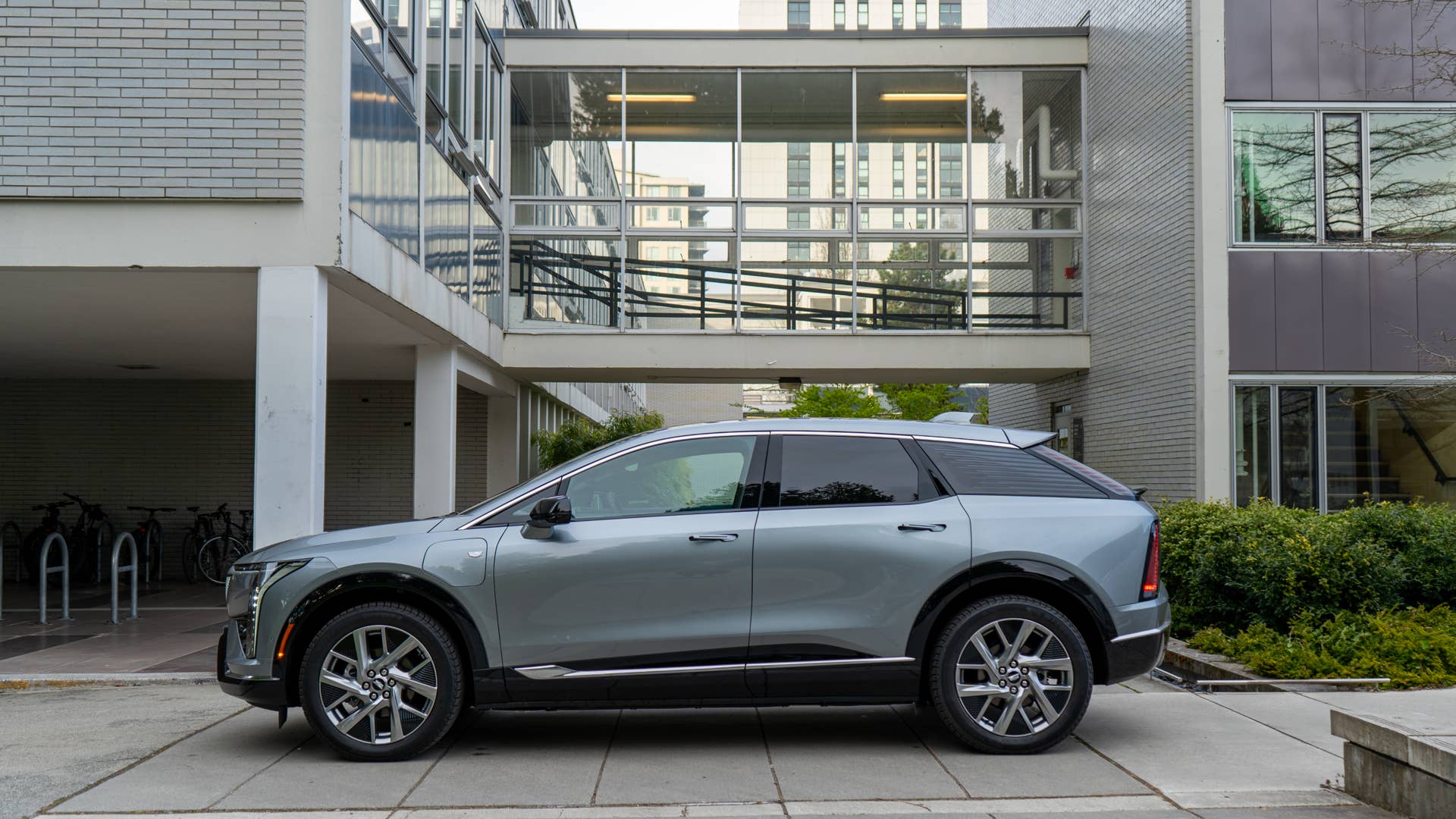
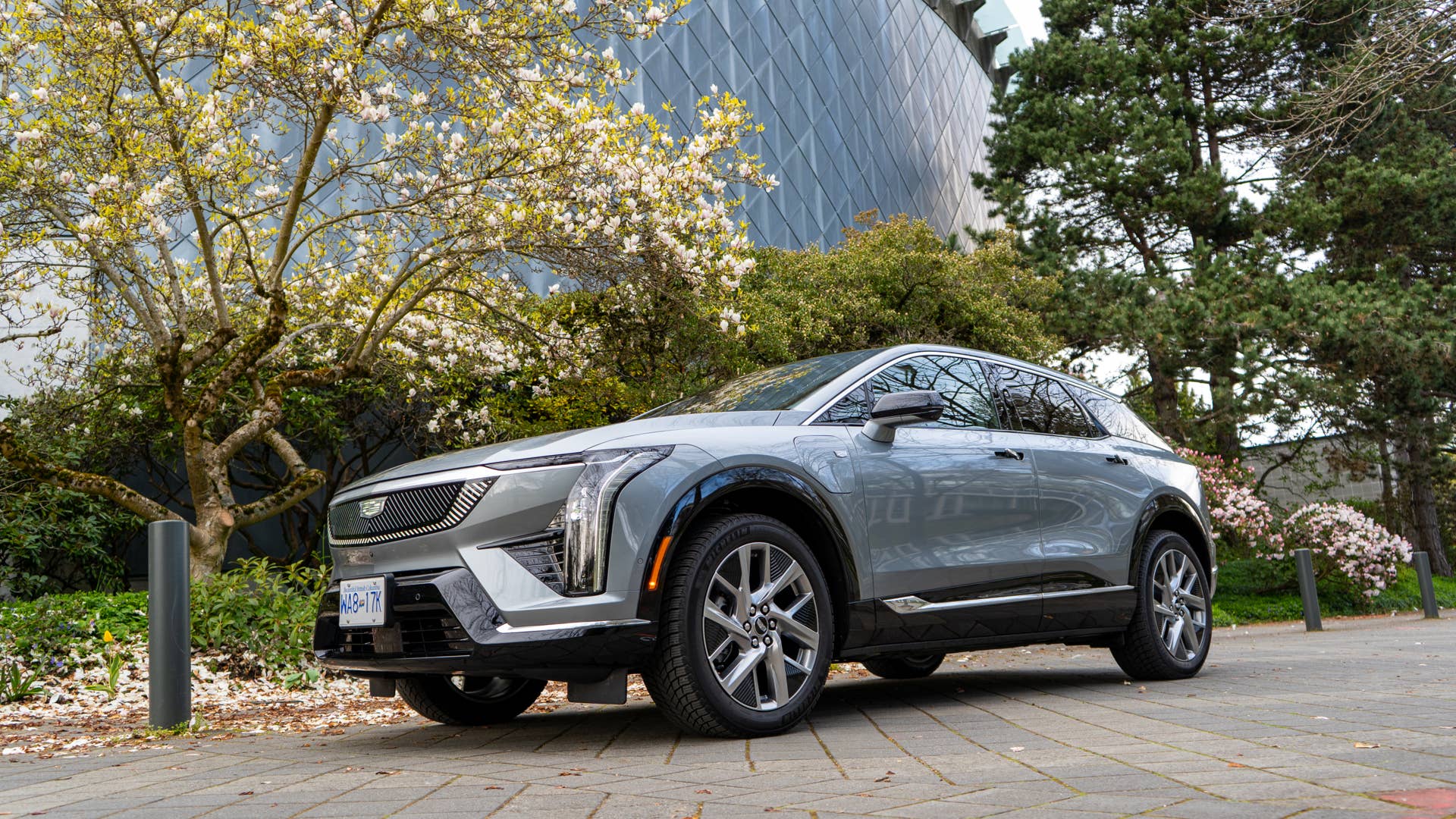
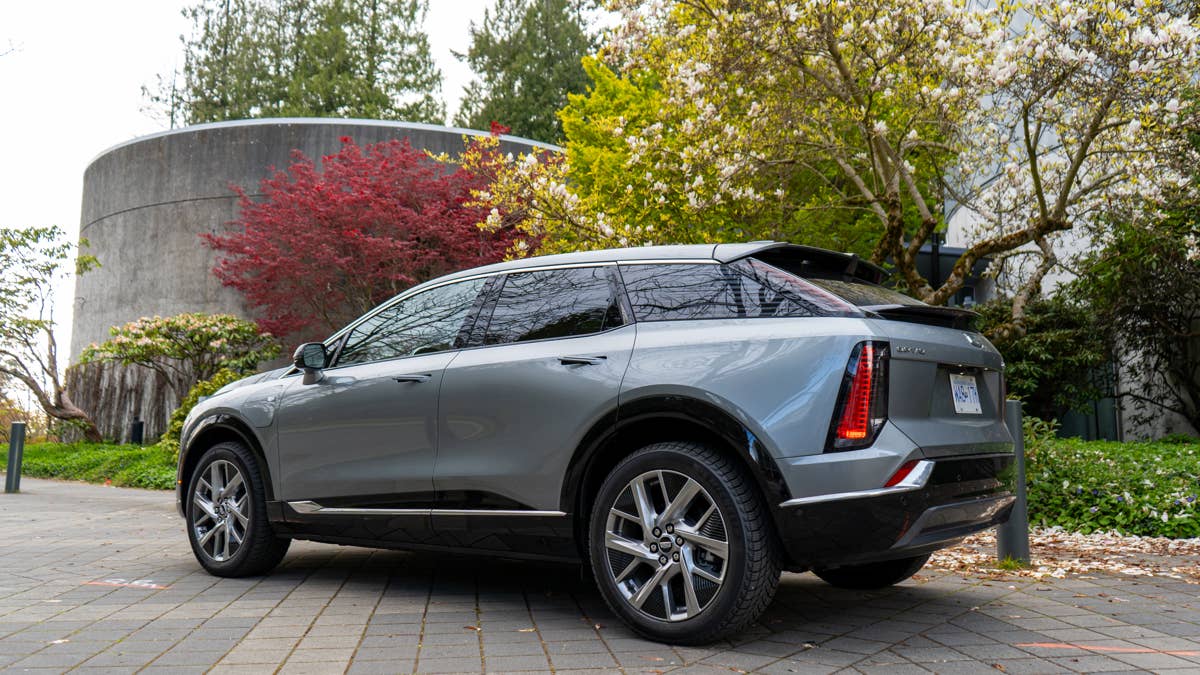
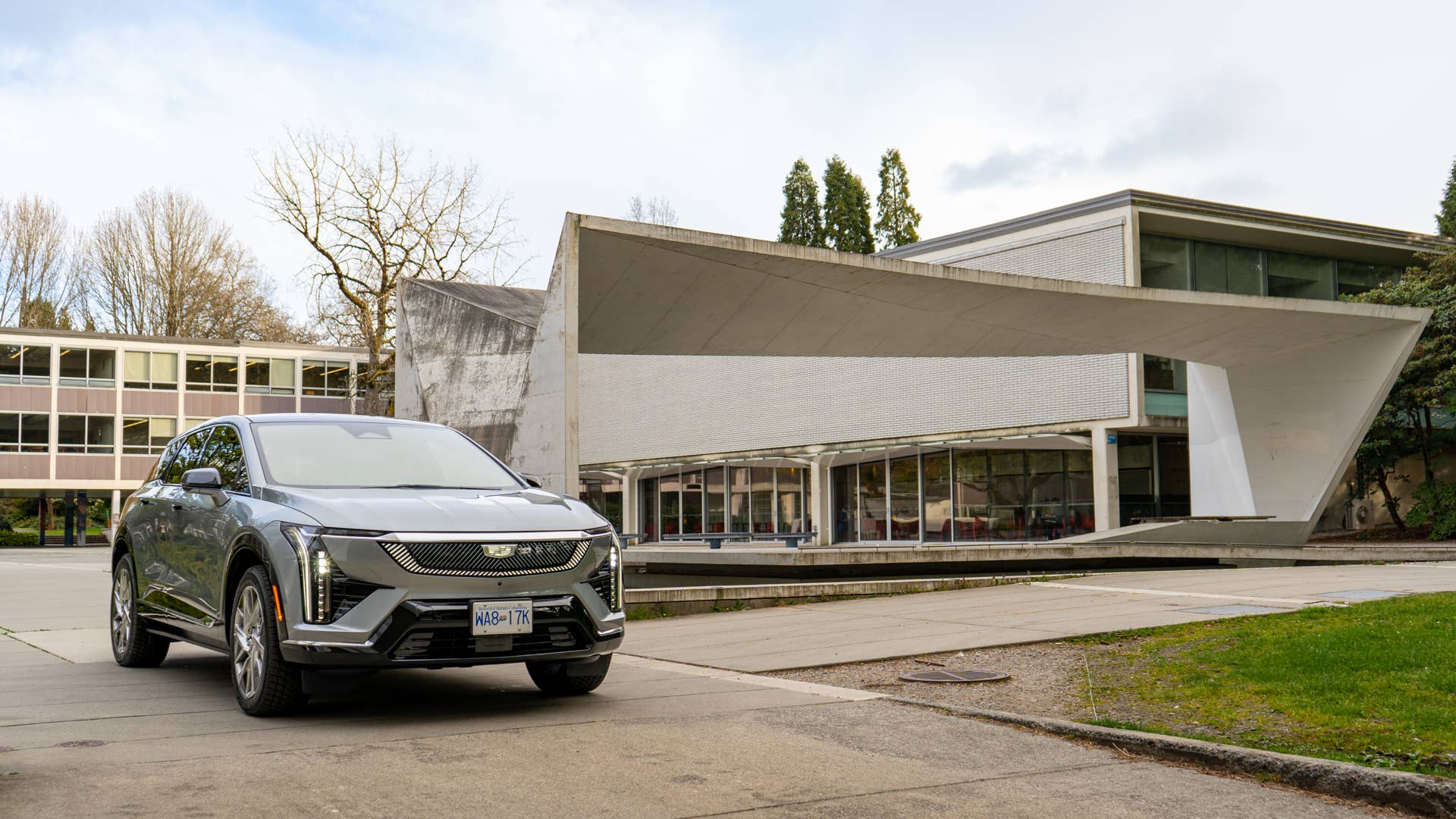
Outside, the Optiq is gorgeous. More importantly, it is gorgeous in a way that feels contextually intelligent. It doesn’t lean on retro-revival design, nor is it one of those dreary minimalist exercises that could wear any badge and somehow get away with it. The Optiq looks modern, urban, and expensive, but it still feels recognizably Cadillac. It would look perfectly at home in Manhattan’s concrete canyons or gliding along Chicago’s Lake Shore Drive while your family watches the fireworks through its glass roof. Its proportions are strong, the lighting signatures are sharp, and the surfacing holds just enough tension to feel current without appearing too busy. And one of my favourite details remains the striped treatment in the rear quarter window, which gives the profile a real sense of visual motion. It’s a small flourish, but it makes the car feel as if it were already moving, even when parked.
Cadillac also deserves credit for understanding that “modern” shouldn’t have to mean anonymous. The Optiq’s face is sharp and expressive—distinctively Cadillac. Its black lower-body contrast treatment gives it enough attitude without feeling cartoonish. And the overall shape avoids the bloated, overinflated look that so many electric crossovers now suffer from. At 190 inches long on a 116-inch wheelbase, the Optiq occupies a useful middle ground: it’s substantial enough to look premium, but compact enough to feel city-friendly. If anything, the only visual risk is that its refinement may be too subtle for buyers who still equate luxury with sheer size. But those buyers are precisely the ones the larger Lyriq, Vistiq, and Escalade IQ are meant for.
Cole Attisha
Interior Design & Quality: 9.5/10
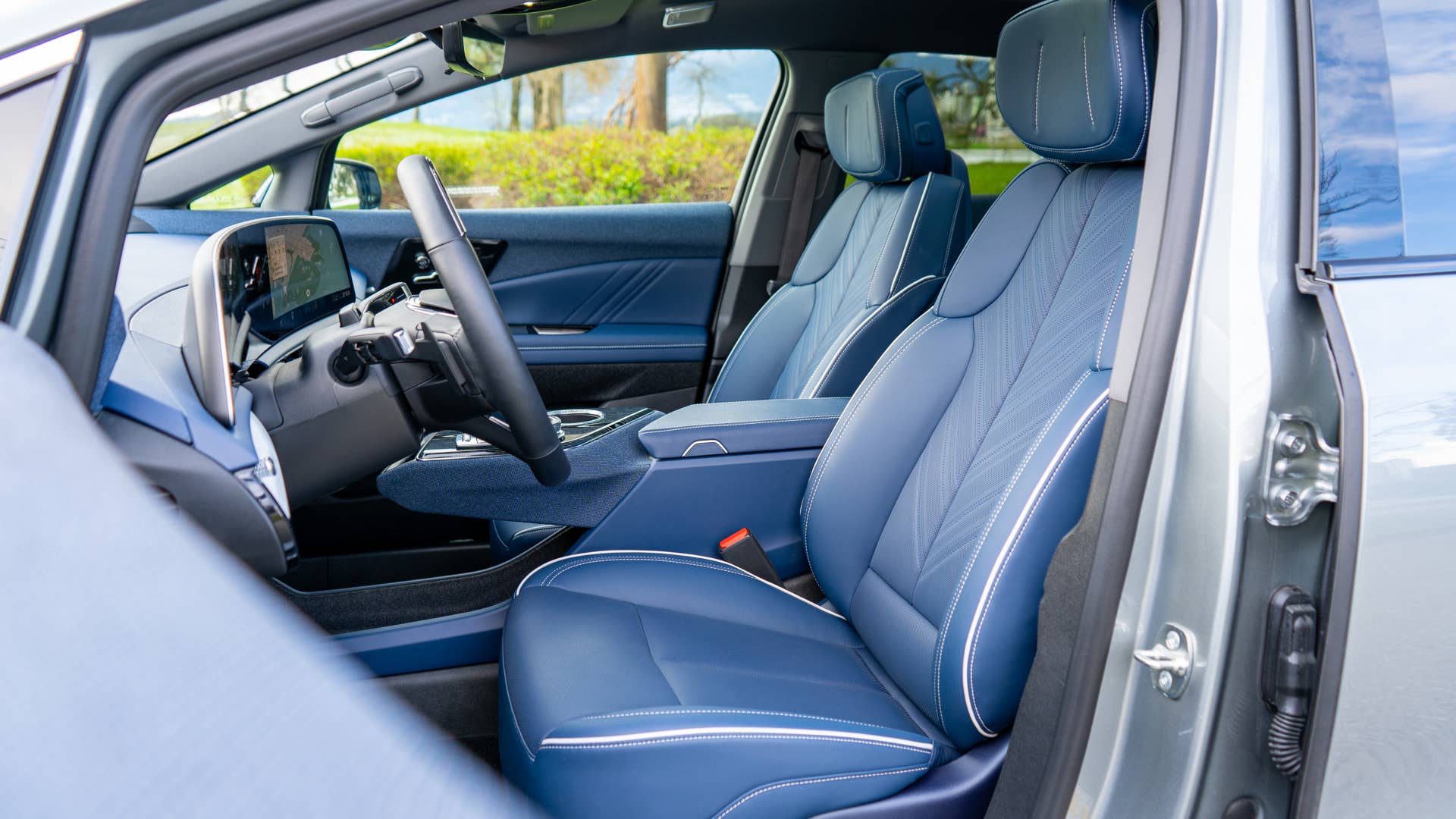
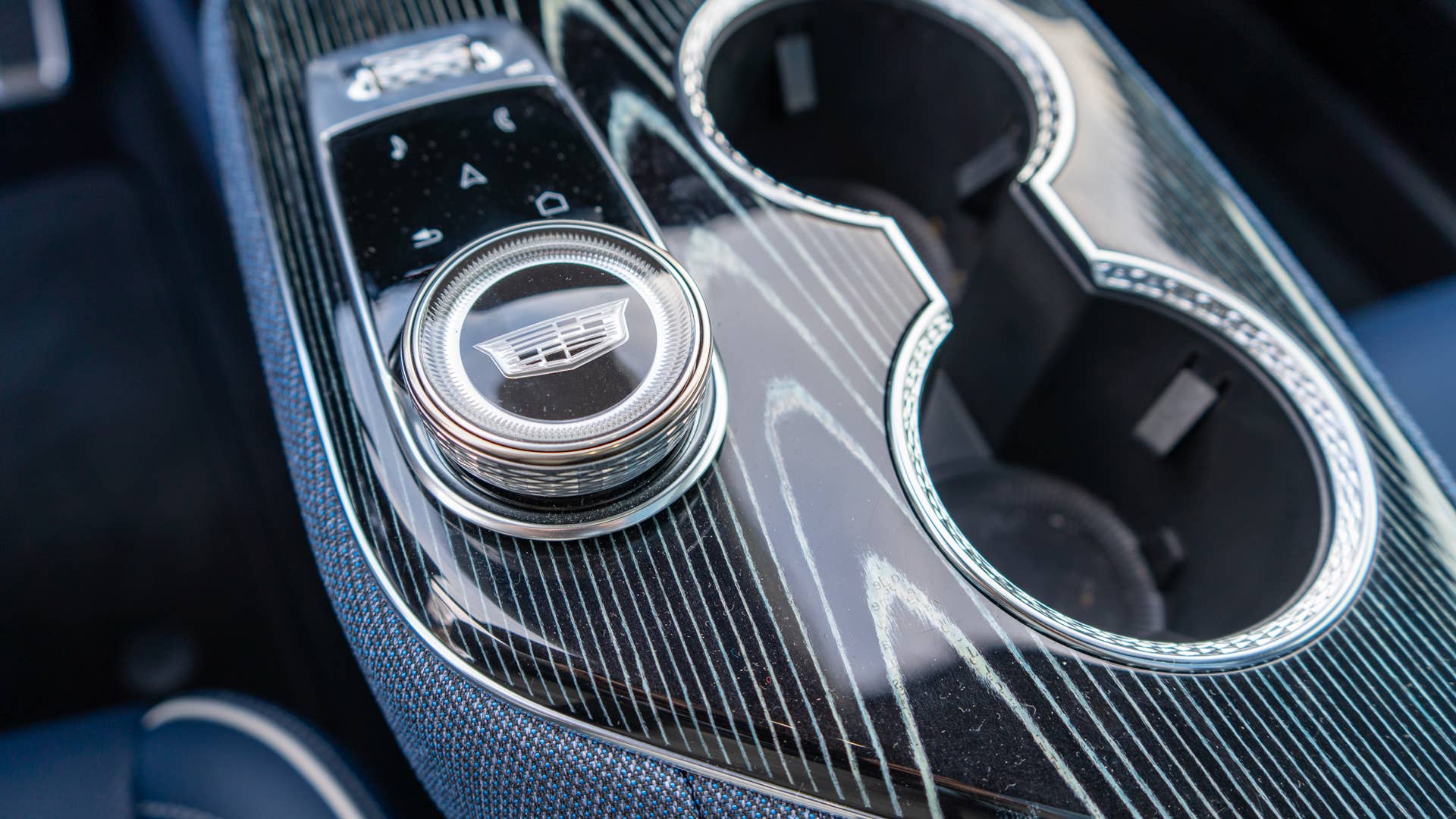
This is the round where I feel the Optiq really lands most of its punches. Plenty of vehicles in this class offer soft-touch surfaces, pretty screens, and bold contrast stitching. The Optiq goes above and beyond by offering a real sense of occasion. The Phantom Blue interior in my tester brilliantly complemented its silver exterior, much like how the Pacific Ocean’s cerulean reflections create a striking contrast against the shiny glass high-rises of Downtown Vancouver’s picturesque skyline. The mix of various materials is unusually successful here, too. The metal bezelling is generous without seeming gaudy, the steering wheel has that necessary Cadillac chunkiness, and the recycled trim details—Cadillac says they incorporate paper-wood veneer with recycled newspaper content—add a layer of intrigue rather than one of self-congratulation. You can even make out traces of the printed ink in certain pieces, which only makes the whole thing more interesting. This is sustainability presented with style, not sanctimony.
The Optiq’s sense of occasion revealed itself in the smaller moments, too. One evening, I drove my girlfriend and an old friend visiting from out of town to a contemporary neighbourhood Italian restaurant called Giusti, which we all had yet to experience and which came highly recommended by family friends, for melt-in-your-mouth bruschetta, handmade pasta, and tender veal chops. For such an indulgent, high-end evening, the Optiq was surprisingly appropriate—its rich atmosphere only complemented the decadent experience rather than detracting from it with the kind of EV coldness that so many of its rivals exhibit. Driving everyone home after dinner, the Optiq glided along Vancouver’s streets as smoothly as whipped ricotta piped atop spongy, rustic bread, and its plush interior offered an experience as rich in texture as our handmade potato gnocchi.
Cole Attisha
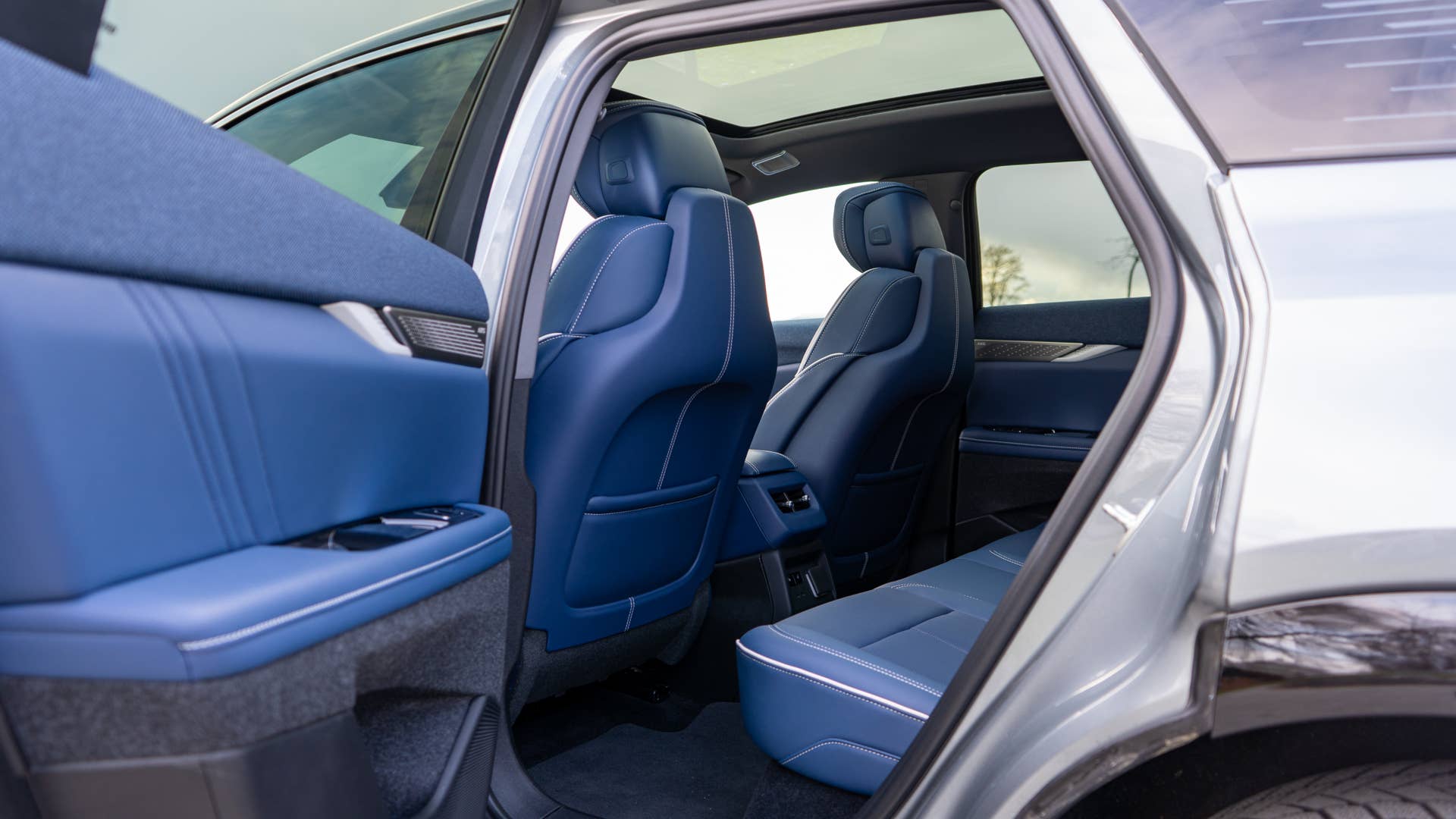
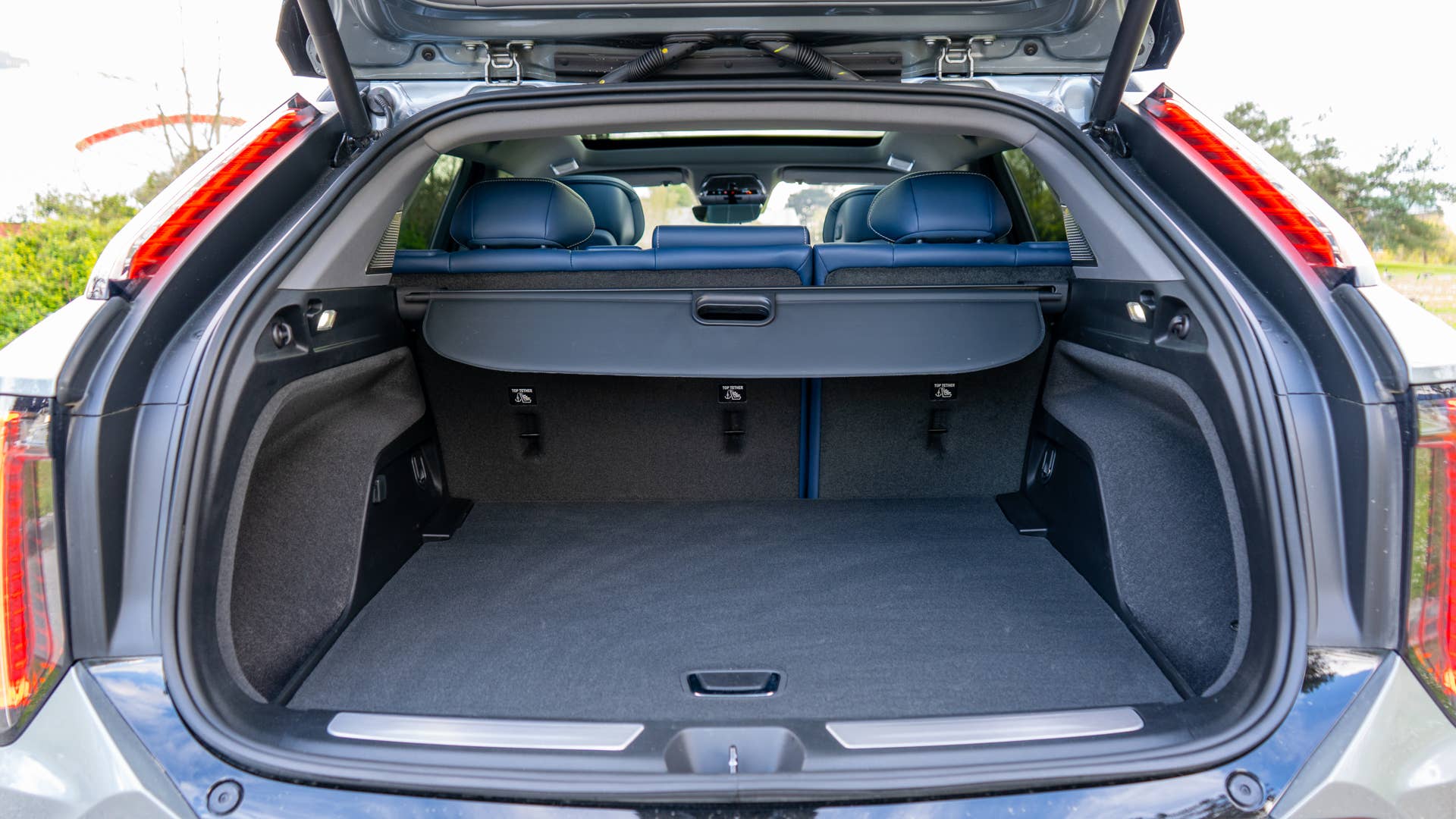
More than once, people seeing the interior for the first time were visibly impressed, and I completely understood why. The Optiq deploys modernism, rather than minimalism. There’s real intention in its design, both inside and out. It retains a sense of regality that all Cadillacs must ooze to be deserving of the badge, not just a subtraction of buttons and a big glass screen subbing in for true personality. Seat comfort is also as excellent as you’d expect. Cadillac has managed to preserve the brand’s traditional sense of couchiness without falling too far into senile armchair droopiness. The front chairs are plush, well-bolstered, and genuinely comfortable over longer distances, while the rear seat proved spacious and accommodating enough that passengers had nothing but praise. The Optiq offers 41.6 inches of front legroom, 37.8 inches of second-row legroom, 26 cubic feet of cargo space behind the rear seats, and 57 cubic feet with the rear seats folded.
Cole Attisha
The cargo area also felt genuinely useful. Nothing about the sloping rear design seemed to meaningfully compromise day-to-day practicality. Honestly, aside from the non-functioning wireless device charger and the fingerprint-prone glossy controls, I don’t have much to criticize here at all. I knew for sure when I dropped that same friend—from dinner—off at the airport the next day. All of his luggage fit neatly in the back without needing to fold the rear seats, which was fine. Better still, though, he left Vancouver with an impression far more memorable and cinematic than if he had been shuttled to YVR in a yellow Toyota Prius taxicab or, perhaps worse, a Tesla Model 3 Uber. The Optiq is all about the experience it offers, and it seems that at every moment and no matter the use case, it never forgets that.
That reaction was not limited to seasoned car enthusiasts, either. Later in the week, I picked up my girlfriend’s cousin from the airport in the Optiq, and she was immediately taken aback by its sheer presence, especially once she stepped inside. More importantly, it made the right kind of first impression. She was not merely relieved to be off the plane; she was excited to finally be in Vancouver. The Cadillac transforms “arriving” into “showing up,” and it turns a routine airport pickup into a genuinely memorable occasion.
Cole Attisha
Technology: 8.7/10
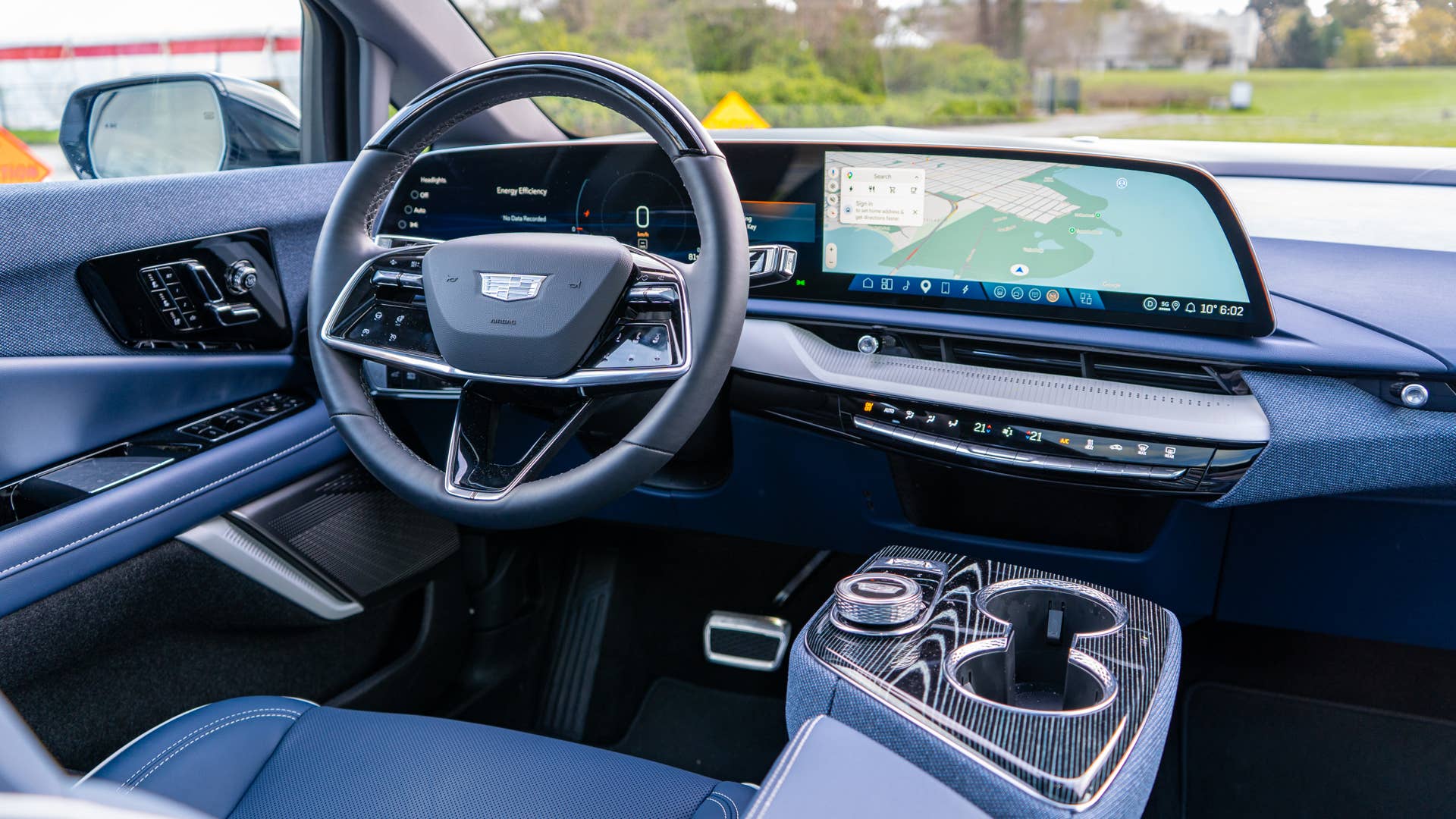
The Optiq’s tech suite is modern without feeling oppressive, which is far less common these days than it should be. Cadillac’s curved 33-inch diagonal LED display looks excellent in person and, more importantly, behaves properly. The interface is crisp, the layout is attractive, and the whole thing is coherent rather than gimmicky. Google Built-In is particularly useful here, as voice commands are easy to use, navigation is intuitive, and the overall system proved simple enough to live with for a full week, so my initial annoyance over the absence of Apple CarPlay quickly faded into the background. I still prefer Apple Maps in my own life, but by the end of my time with the Optiq, I would not call the lack of CarPlay a dealbreaker.
The fact that Cadillac did not purge every physical control helps, too. There are still enough actual buttons and touch-accessible shortcuts to keep the cabin from feeling like an ever-evolving software experiment. The head-up display is useful, and the active safety features intervene when appropriate without always intervening like an overly strict schoolteacher. Plus, the available AKG 19-speaker audio system sounds excellent, delivering the high fidelity even the most discerning audiophiles expect at this price point.
Cole Attisha
There are, however, a few annoyances here. The glossy haptic surfaces pick up fingerprints almost immediately, and the wireless phone charger in my tester simply never worked properly. I was also disappointed that Cadillac’s delightful fireplace mode cannot be left on while driving. Yes, I understand the probable reasoning, but I still don’t care. Cruising around a city at night in a blue-leathered, glass-roofed Cadillac with a digital fireplace glowing softly across the dash sounds like exactly the kind of harmless decadence the modern car industry should be encouraging more often, not less. If EVs in China can get away with having literal animal mascots jumping around on their dashboard screens, then we should, at the very least, be trusted not to get distracted by a simple fireplace while harmlessly driving around town on a cool spring evening.
Cole Attisha
Pricing & Value: 8.8/10
Making sense of value in this segment is always a somewhat philosophical exercise. The Optiq is certainly not cheap in any absolute sense, but it is compellingly priced relative to what it delivers. In the U.S., it starts at $50,900, while my Canadian-market AWD Premium Luxury tester came in at C$70,972 as equipped. That places it in an interesting spot: close enough to the upper trims of a Tesla Model Y to be cross-shopped, but comfortably below the price of a 2026 Genesis Electrified GV70, which starts at $64,380 in the U.S. and offers comparable power, range, space, luxury, and a similarly compelling sense of occasion.
Against the Model Y, the Cadillac’s case is simple. Tesla no longer wins the argument for charging infrastructure now that the Optiq is equipped with a NACS port, but it still remains the segment’s default choice for many shoppers. The Cadillac, however, counters with a far more indulgent interior, a more theatrical sense of occasion, a quieter cabin, and a driving experience that feels more carefully calibrated and more genuinely luxurious. Tesla may still win on the spreadsheet, but the Cadillac wins in its humanity. Against the Electrified GV70, though, the Optiq is even more interesting. The Genesis is lovely, fast, and beautifully trimmed, but the Cadillac gets remarkably close to that same sense of theatre and premium drama while asking significantly less of your bank account. Given that the Genesis offers 429 horsepower and 263 miles of EPA-estimated range, while the AWD Optiq delivers 440 horsepower and 303 miles of range, the Cadillac’s value proposition becomes even harder to ignore, especially considering that it costs five whole figures less.
My real-world efficiency was 5.4 km/kWh, which works out to roughly 3.36 mi/kWh. That is a healthy number for something this substantial, and, more generally, the Optiq is one of the first EVs I have driven from a traditional legacy automaker that genuinely made my range anxiety disappear. This AWD version is rated for 303 miles in U.S. EPA testing, while my Canadian spec sheet listed 488 km of range and 21.1 kWh/100 km. The one regional caveat is charging hardware. My tester’s NACS charge port is theoretically future-proofed, but in my area of Vancouver, CCS fast chargers were actually still easier to find. That will depend entirely on where you live, and it is not really a fault of the car itself, but it is worth mentioning for early adopters in places where infrastructure transitions are still catching up.
Cole Attisha
Final Verdict: 9.1/10
The 2026 Cadillac Optiq is for people who appreciate progress but don’t want to sacrifice indulgences. That, in the end, is what makes it feel like a true Cadillac rather than merely another electric crossover that just happens to wear a Cadillac badge. It’s quiet, handsome, comfortable, beautifully appointed, and unexpectedly engaging to drive. It has flaws, certainly—some fingerprint-happy controls, an overzealous regen mode for passengers, a wireless charger that was useless in my tester, and a charging-port reality that may not yet suit every city—but nothing that can’t be said of almost every other modern automobile. The Optiq doesn’t ask you to compromise the experience you expect from a high-end Cadillac for the sake of economy, nor does it confuse coldness for contemporary sophistication. It understands that luxury, even in the electric era, should still feel a little indulgent. Driving should feel as satisfying as biting into a tender veal chop, not like enduring the sogginess of plant-based “chicken” tenders. In that sense, the 2026 Cadillac Optiq succeeds in three ways: it’s an excellent EV, an excellent modern luxury vehicle, and, perhaps most importantly, an excellent Cadillac.
Cole Attisha