It’s no secret that the car industry’s in a big moment of upheaval. Between instances of financials strife and big shifts in business plans, a number of cars have effectively been swallowed up by the void. Given the sheer volume of cars appearing and quickly disappearing like America’s Got Talent contestants, it’s worth taking a moment to pause and reflect. We’re living in an obscure car gold rush and while not all of these models are interesting right now, they’ll be neat things to see in the future.
This automotive shower thought came after learning that the Nissan Rogue Plug-in Hybrid, a rebadged Mitsubishi Outlander PHEV, might essentially be a one-and-done proposition. A new conventional hybrid Rogue is on the horizon by year’s end, and Carbuzz reports that the plug-in Roguelander “will most likely be phased out after 2026 to make way for the new 2027 Nissan Rogue Hybrid e-Power.”
Why launch a badge-engineered model for what may be just a single model year? I kid you not, search engine optimization. As Nissan global product head Richard Candler told The Car Guide, “It was important to quickly offer a hybrid SUV in this segment, which also allowed us to rank higher in online searches.” This is undeniably a weird reason to homologate a car, but it sort of makes sense as a way of priming the pump.

If the Rogue Plug-in Hybrid gets discontinued after just a single model year on sale, it won’t be the only recent car with an exceptionally short-lived production span. While typical model cycles generally go for five-to-seven years, save for the Chevrolet Express van which has been in production since Mariah Carey and Boyz II Men topped the Billboard Hot 100, recent topsy-turviness means there are more one-model-year wonders in recent history.

Pretty much right after unveiling the reborn 2027 Chevrolet Bolt, GM announced that its most affordable U.S.-market EV would soon be dead again. With conventional crossover production expected to take the Bolt’s place in GM’s Fairfax Assembly plant early next year, this restyled, repowered EV will also be a one-year-wonder. There’s something a bit frustrating about an automaker bringing back a highly-desired vehicle, only to lay it to rest. Especially when the new model gets significant improvements like roughly three times the peak charging speed and a proper NACS port.

Then there’s the tragicomedy of the Acura ZDX. No, not the first one, which was a less practical MDX; I’m talking about the second one. The one that was essentially a Cadillac Lyriq with Apple CarPlay and window trims that look like landau bars if you squint hard enough. Acura actually sold 19,396 of these GM-built EVs before pulling the plug last autumn. The weird part is, it had already skipped the 2025 model year at that point, meaning all second-generation ZDX crossovers are 2024 models. This thing’s obscure enough that you’ve probably already forgotten its existence, and with Honda’s great U.S.-built EV push cancelled, the ZDX left showrooms without a proper successor.

While we’re on the subject of GM, we need to talk about the BrightDrop electric step van. I’ve driven one, and it’s great, feeling more like an overgrown minivan than a massive commercial vehicle. The refinement and creature comforts are light years ahead of the rattly step vans of old, but saying demand wasn’t enormous was an understatement. Through the end of 2024, GM managed to sell just 2,172 of them in America, making this delivery vehicle supercar-rare. Granted, a production pause from October 2023 to April 2024 affected things, but last autumn, GM pulled the plug for good.

Of course, the poster child for short-lived cars of recent history is the Fisker Ocean, a quirky electric crossover tethered to a business plan that crashed and burned spectacularly. In the beginning, it sounded promising: Fisker would design the crossover, and Magna would build it in the same Austrian assembly plant as the Mercedes-Benz G-Class and Toyota GR Supra. It lasted just two model years before Fisker 2.0 went bust, but these things are still out there making the streets a little bit weirder.
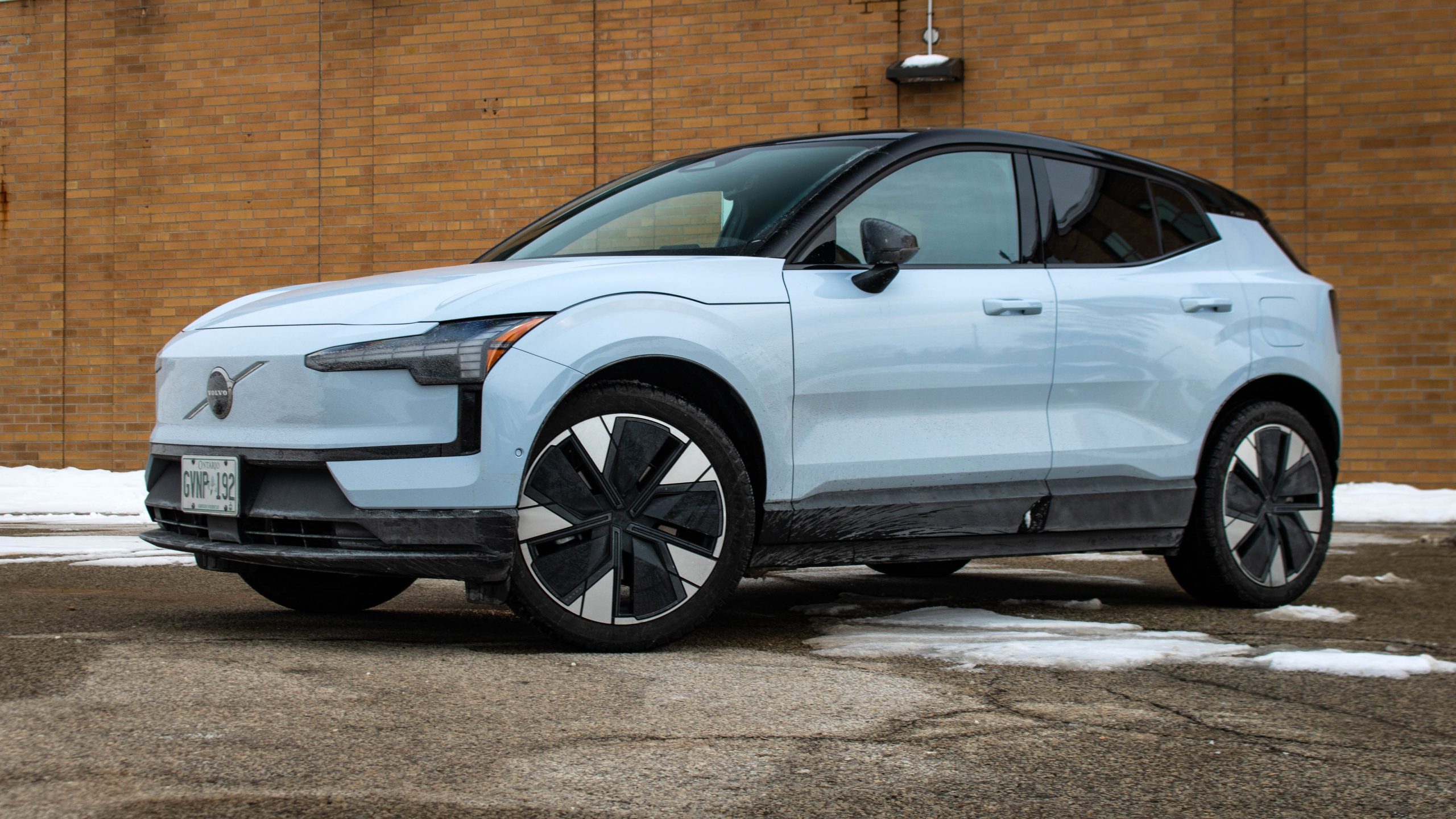
Want more? You’ve got it. The Volvo EX30 is one of those vehicles where I wish it were better than it is. The form factor’s great, the use of color is fun, but the software is rather infuriating. Maybe economic concerns from the get-go should’ve been a sign. Volvo initially planned on shipping these entry-level EVs to America from China, only to be met with a 100 percent tariff roadblock. After nearly two years, a second line was up and running in Belgium, and EX30s were finally making it to America for the 2025 model year. Good news, right? Well, last month, The Drive reported that 2026 would be the last model year for the EX30 stateside. According to the report, “All current orders in the system will be produced with production winding down for the U.S. after the summer.”

Oh, and then there’s the gloriously weird Hyundai Ioniq 6, a streamliner sedan that’s going into a refresh with an unusual strategy for America. There will be no standard models sold in the United States, with only the high-performance 641-horsepower Ioniq 6 N making the boat ride over from Korea. It’s a shame because beneath the charmingly quirky exterior, this was a big, comfortable sedan with serious range and properly fast charging.

This whole trend makes me wonder, will these short-lived recent cars be nostalgic hits a quarter-century into the future? Just look at Radwood, a show for cars from the ’80s and ’90s. Sure, the big-ticket poster cars are cool to see in person, but the big crowd-pleasers are the obscure weirdos of the automotive landscape. Strange models like the Eagle Premier-based Dodge Monaco, the Nissan Vanette, and anything with a Citroën badge. Likewise, it’s not uncommon to experience a weird sort of glee seeing a Suzuki Verona or a Daewoo Nubira out in the wild. Cars that weren’t hugely common or massively special when new, but now triumph as surviving examples of chapters in automotive history.

A couple of decades from now, if I were to stumble upon a Nissan Rogue PHEV or a Chevrolet BrightDrop out on the street, I’d probably want to take a picture and send it to my friends because it’s a living reminder of a crazy-ass moment in automotive history. In a weird way, the shifting landscape around electrified vehicles might actually make some of them future classics. Not in a blue-chip way, but in a “Bro, look at this!” way. And isn’t the implausible survival of obscure vehicles often more interesting than seeing cars that were always meant to be cherished and preserved?
Top graphic image: Nissan, Acura, Chevrolet
The post We’re In A New Golden Age Of Obscure Cars And Barely Even Know It appeared first on The Autopian.