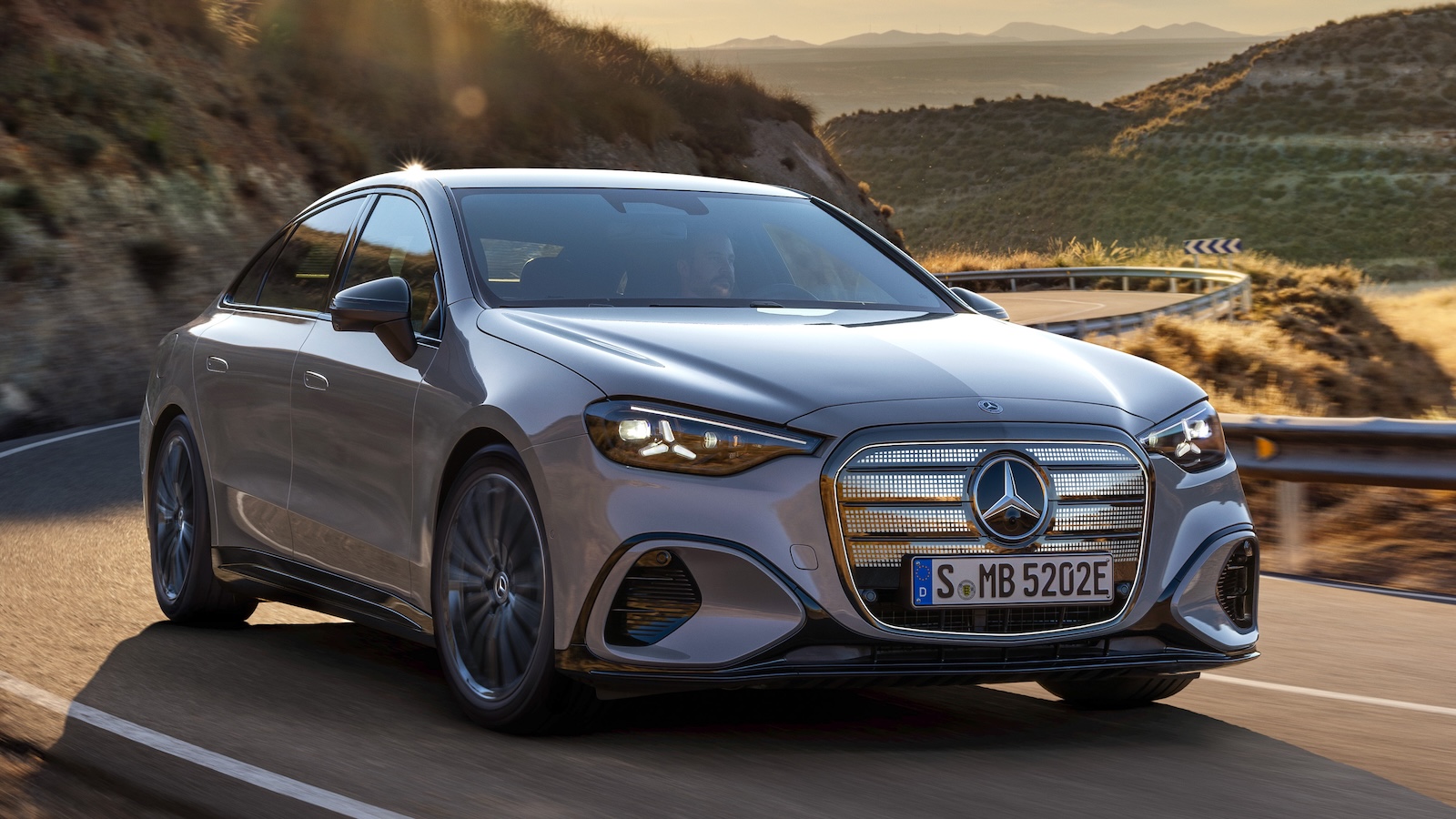
The modern history of electric Mercedes-Benz models is decidedly weird. It started with the bonkers SLS AMG Electric Drive, pivoted to the Tesla-co-developed B-Class Electric Drive, then returned after a lull with a series of models that looked like fancy Dodge Intrepids. Models like the EQS and EQE were certainly polarizing, so it shouldn’t be surprising that we’re now seeing another change in direction. This is the new electric 2027 Mercedes-Benz C-Class, and you can think of it as the sedan equivalent of the new electric GLC crossover. The drivetrain is actually quite fascinating, but the styling is a blend of everything people don’t like about modern Mercedes-Benz.
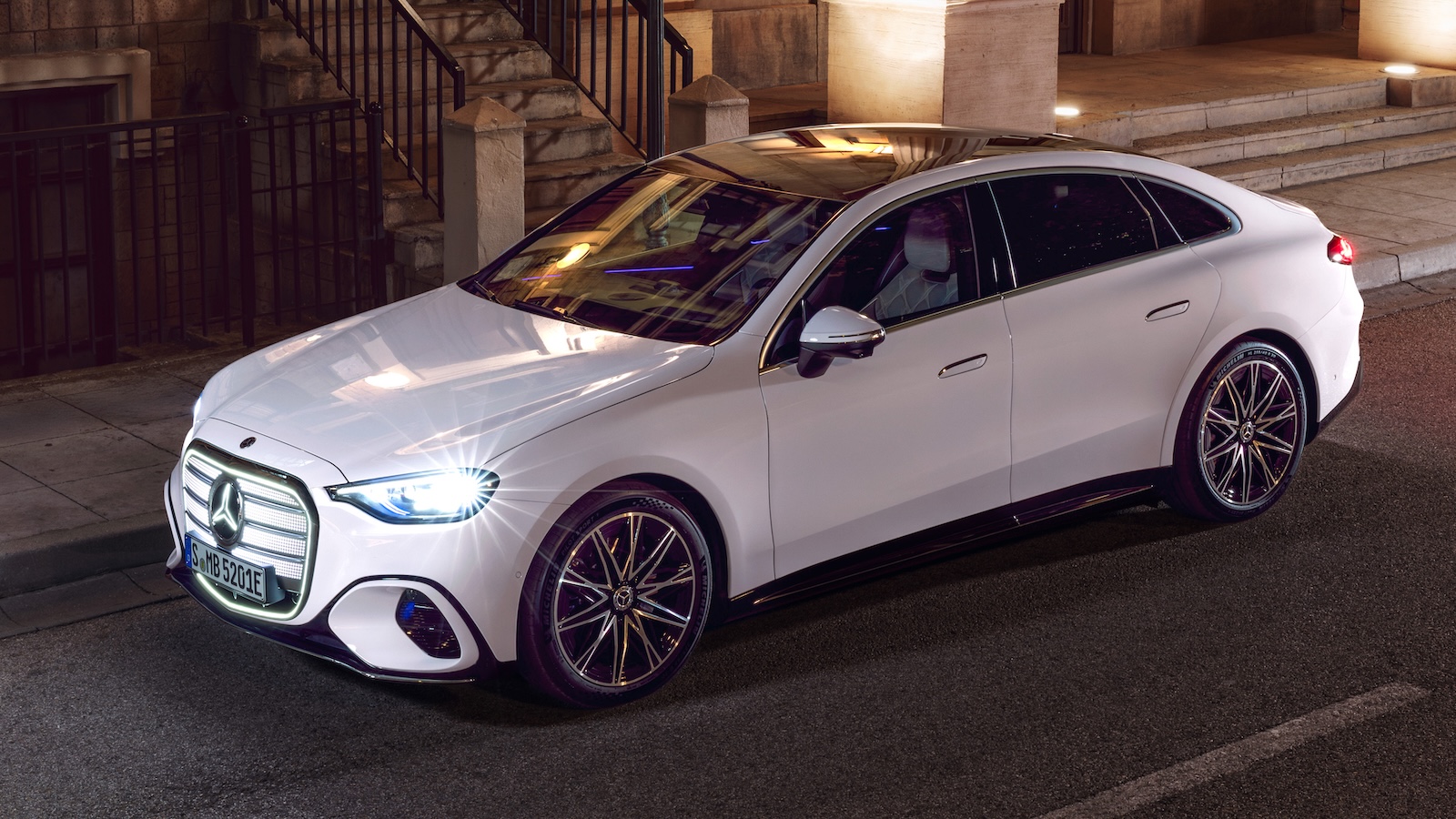
Compared to the fairly elegant C-Classes of the past decade or so, this new electric model looks simultaneously gawky and generic. Even beyond gauche details like three-pointed stars in the headlights and that enormous vertical faux-grille, this thing features tall proportions and some fairly generic surfacing. Even with black trim on the sills in an attempt to chop visual height, there’s still a lot of metal to the profile of the new C-Class.
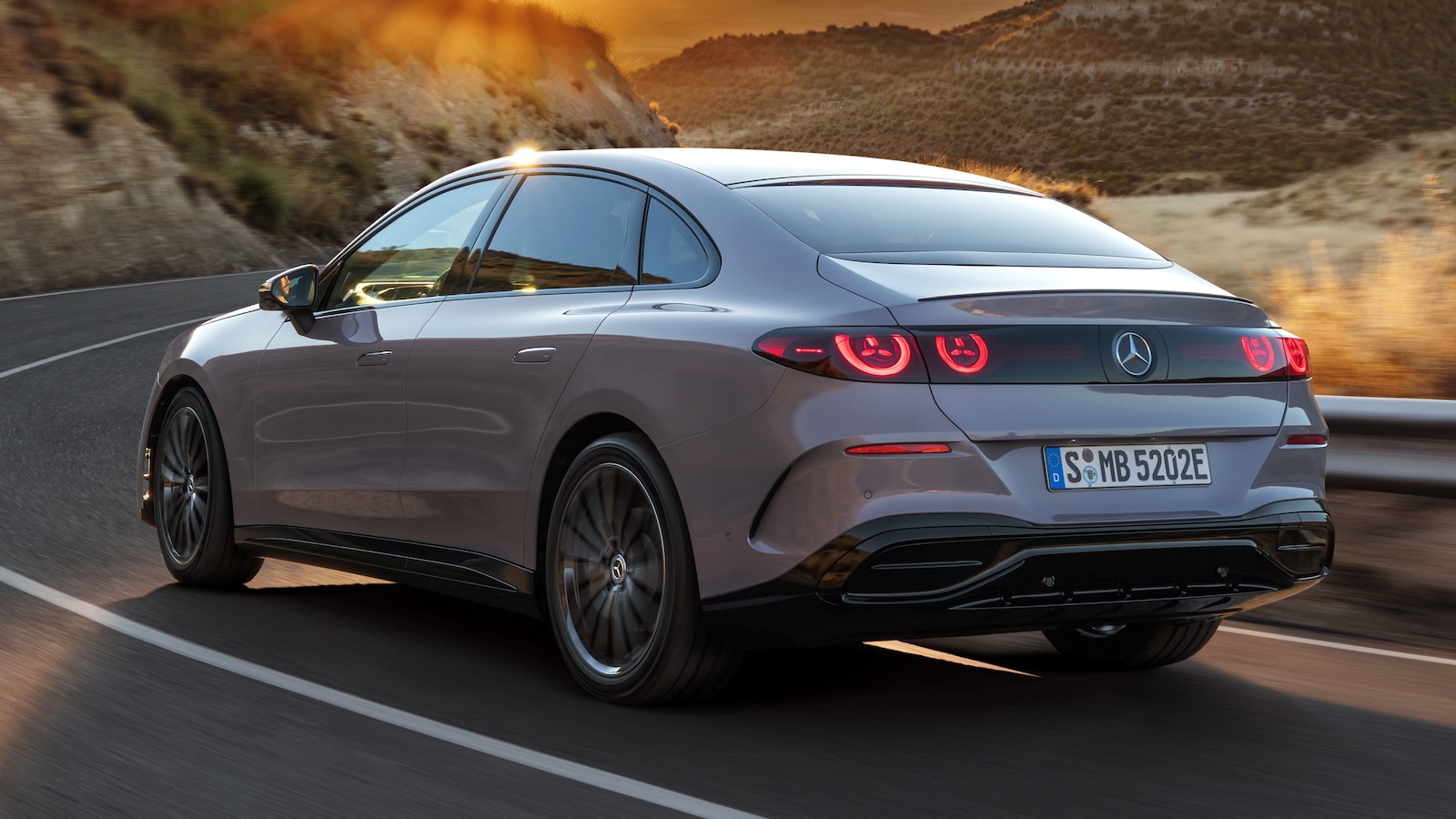
Pair that with a bulbous roofline, and it’s fair to question how the overall look will age. Probably better than the EQS, but it still feels like Mercedes-Benz needs to find its feet again. Oh, and surprise: This thing isn’t a hatchback. You get a mail-slot trunk opening, which seems like a miss when the BMW i4 is already a liftback.
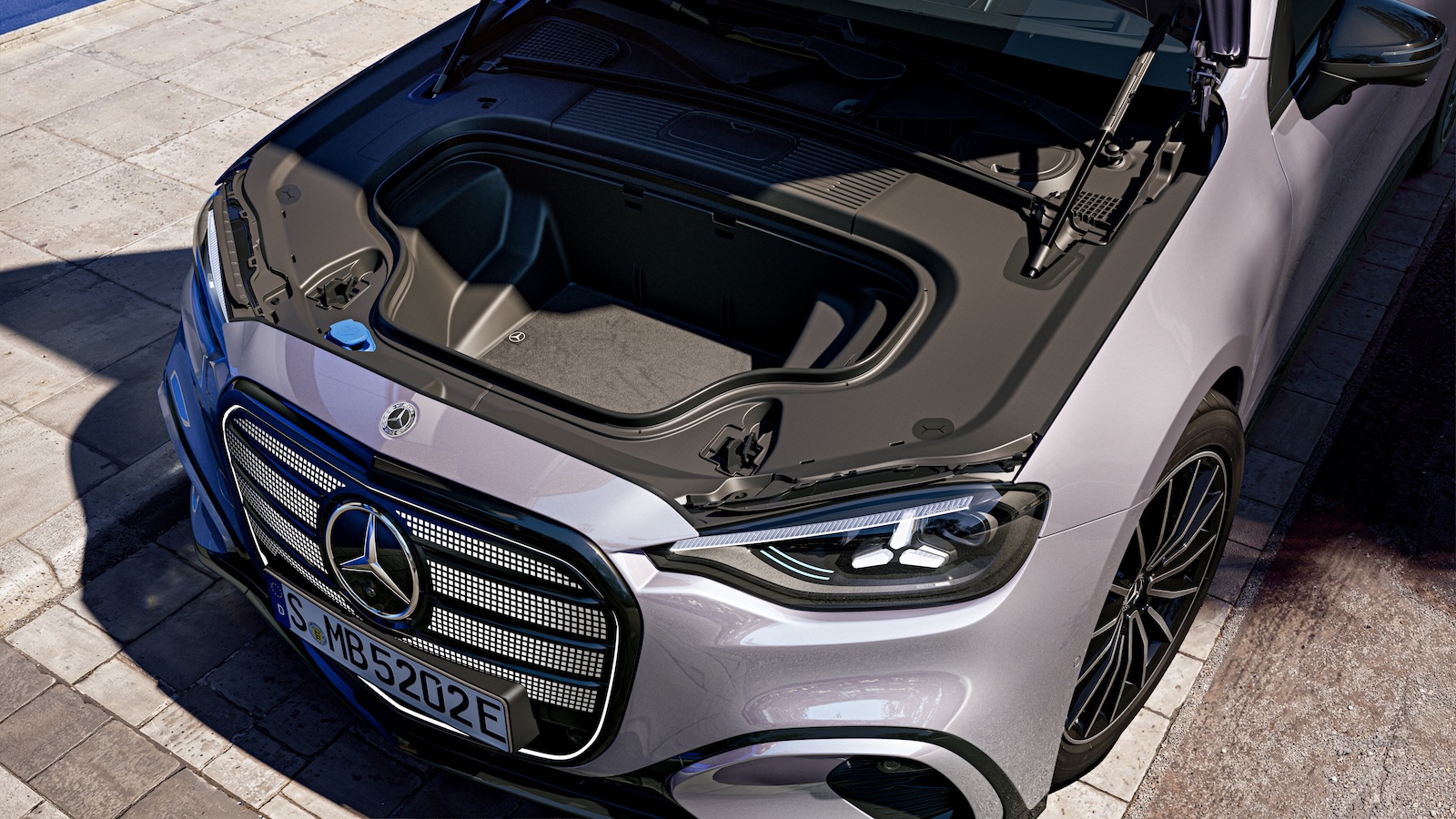
That being said, the heavy-set silhouette of the new C-Class does come with some packaging benefits. Mercedes-Benz was able to expand trunk space from 12.6 cu.-ft. to 16.6 cu.-ft. and carve out additional room in the nose for a frunk. Of course, cutting a silhouette some 5.2 inches longer than the gasoline-powered model helps in that regard, even if an overall length of 192.2 inches means this thing probably shouldn’t be classed as a compact anymore.
The questionable aesthetic choices continue on the inside, with the giant optional 39.1-inch “Hyperscreen” I wrote about last week taking center stage. Not only is it visually enormous, it also comes jam-packed with stuff you probably didn’t ask for, like ChatGPT-4o and Microsoft Bing and Google Gemini. It’s the same stack of AI assistants seen in the new CLA, and while the new C-Class glides along on clean electric power, surely the environmental impact of generative AI puts a dent in its decarbonization efforts.
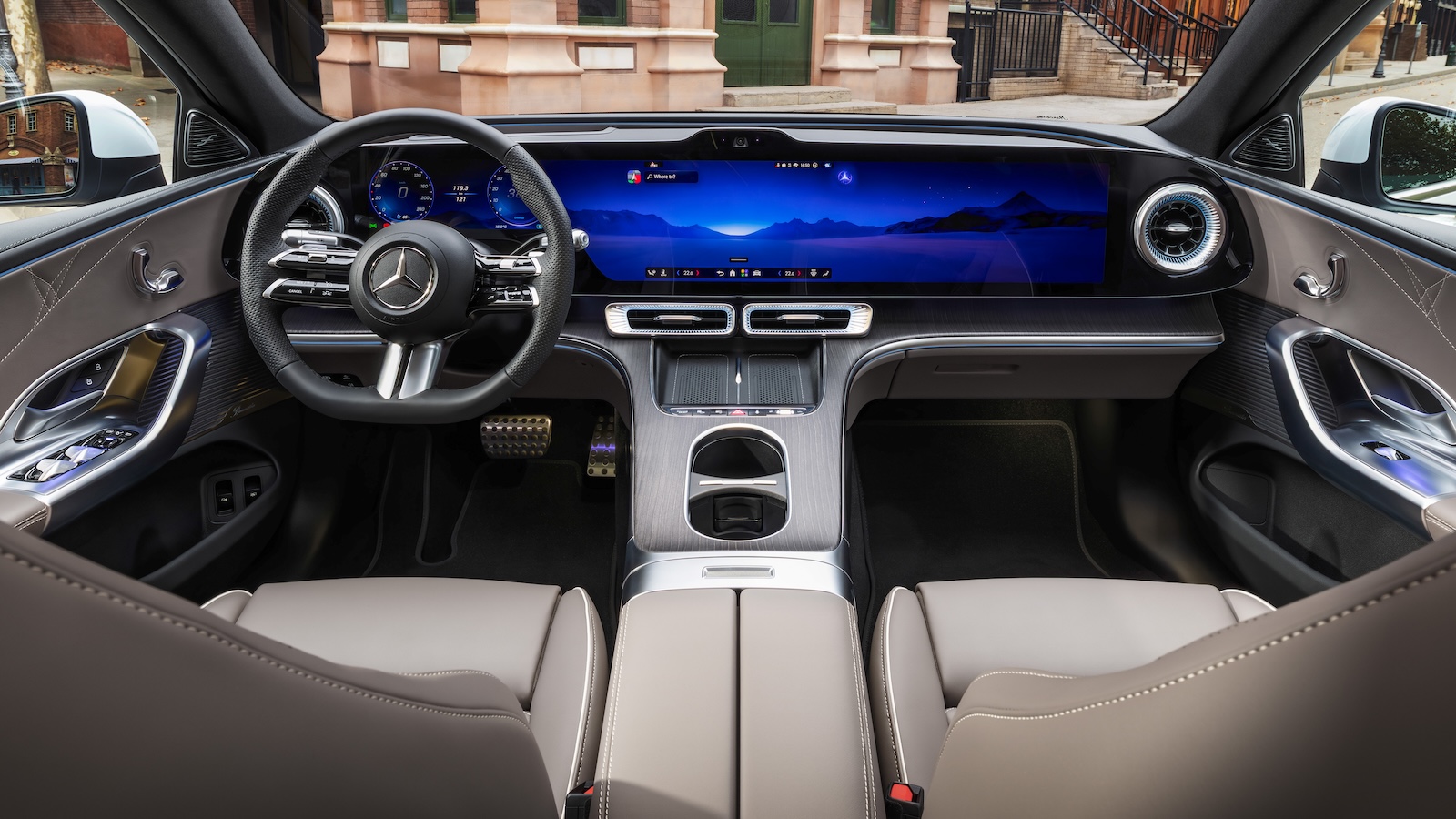
While the cabin does look a bit richer trimmed out in beige leather and open-pore wood, the infotainment setup overwhelmingly dominates the look in here. How well this setup might age is a legitimate concern, but if you’re simply leasing, that probably won’t matter.
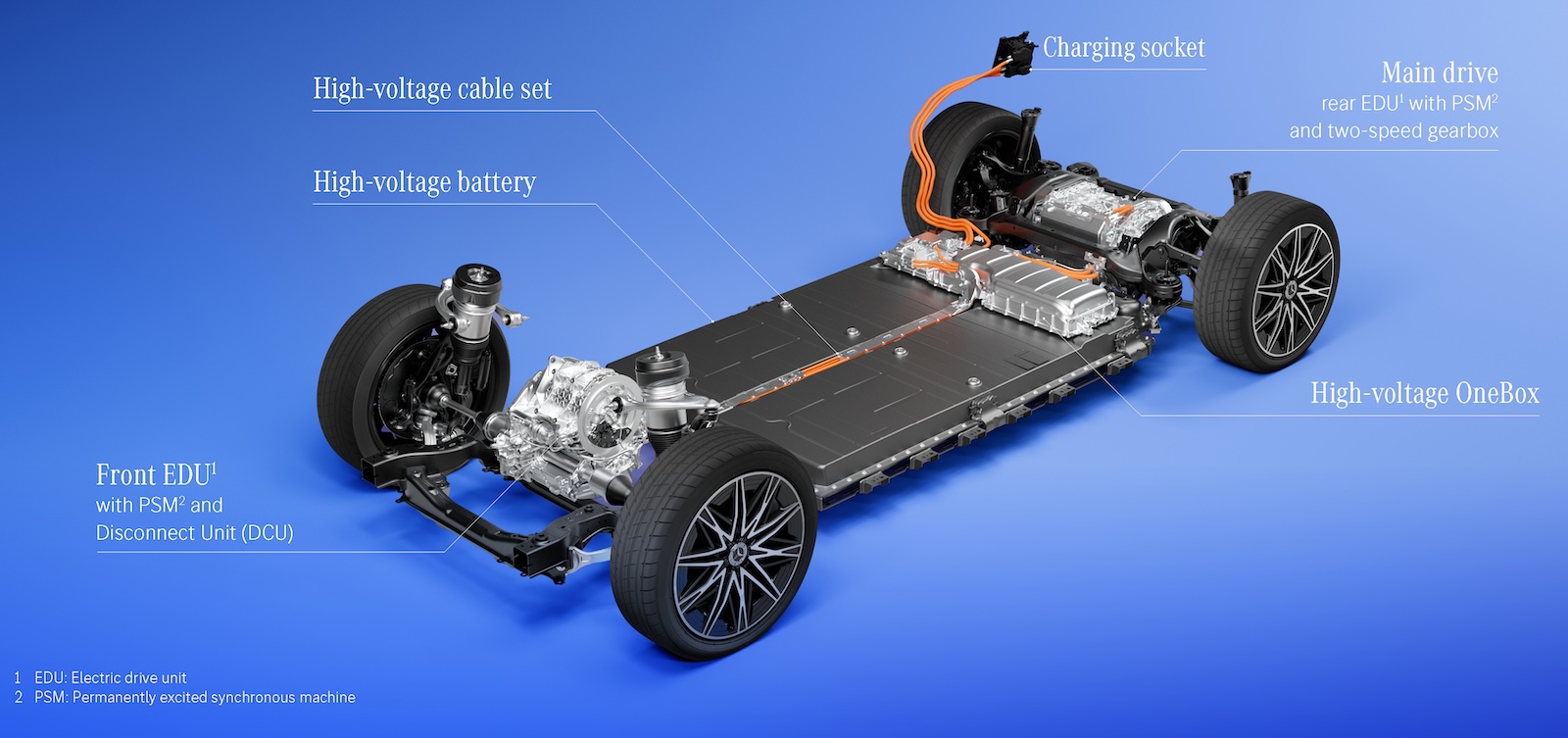
Really, everything interesting on the new C-Class is going on underneath the skin. In the launch-spec C 400 4MATIC model, buyers will get a 94 kWh battery pack hitched to dual electric motors with a disconnect on the front axle and a two-speed transmission on the rear axle. Not only does this pump out a considerable 482 horsepower and 590 lb.-ft. of torque to squeeze the zero-to-60 mph time under the four second mark, Mercedes-Benz claims it offers 762 kilometers, or 473 miles, of WLTP range. For context, a Hyundai Ioniq 6 will do 382 miles on the WLTP cycle, and a Tesla Model 3 long-range RWD will do 466 miles on the WLTP cycle, so Mercedes-Benz is right in the mix.
Unsurprisingly, this is an 800-volt EV so it can take advantage of high-kW stations, pulling up to 330 kW from the right sort of DC fast charger. Oh, and it features 300 kW of regenerative braking. It’s worth noting that the forthcoming BMW i3 promises 900 kilometers or 559 miles of WLTP range along with 400 kW charging, but in the broad scope of the segment, the new electric C-Class is still competitive.
Then there’s the chassis and suspension, which offers something you previously couldn’t get in a C-Class: Optional air suspension. While this does sound like one more complicated system to potentially break in 15 years’ time, Mercedes-Benz has been clever with this application because it should function as an aerodynamic aid. Pulling data from Google Maps, it knows when the car’s on a divided highway and drops the ride height to cut through the air, even when experiencing moderate traffic. It works to complement predictive adaptive dampers that can slacken off if there’s, say, a speed bump ahead. Add in rear-wheel-steering that shrinks the low-speed turning circle to 36.7 feet, and the new C-Class promises a certain level of ease.
Fundamentally, the new electric Mercedes-Benz C-Class seems like a bunch of interesting powertrain technology wrapped up in a package you might not actually want. The powertrain sounds promising, air ride should be super comfy, but the interior and exterior don’t have that instant desirability a Mercedes-Benz ought to have. Plus, when the new C-Class goes on sale in the first half of 2027, it won’t be alone. It’ll have to go up against the new BMW i3 which offers more range and a dashboard that isn’t entirely screen. Decisions, decisions.
Top graphic image: Mercedes-Benz
The post All The Interesting Bits Of The New Electric Mercedes-Benz C-Class Are Under Its Slightly Frumpy Skin appeared first on The Autopian.