AI-generated images are getting harder and harder to spot every day. I can’t tell you how many times my mom has sent me a photo of a cute animal shared to Facebook, only for me to have to break the news to her that it was made from AI. Thankfully, AI isn’t nearly good enough to create AI-generated images of cars without hawk-eyed enthusiasts being able to immediately spot them.
That’s why The Autopian crew was shocked to see Dodge’s and Ram’s official Instagram channels share a trio of images on Friday featuring a handful of Dodge cars and Ram trucks that looked to be either partially or fully generated by AI. Some of the cars have small inaccuracies, like incorrect wheels, while others have totally wrong fascias.
This is obviously a terrible look for whoever’s running the Dodge and Ram accounts, who definitely should’ve caught this before it went live. If any account should be publishing accurate historical photos of past Dodge and Ram models, it’s the manufacturer itself.
Despite the dozens upon dozens of comments calling Dodge out on the obvious use of AI, the slideshow still hasn’t been deleted from the page as of this writing. Here it is:
In case you can’t see the above, I’ve screenshotted every image, which you can see below. Here’s the lead photo, which features a Neon with a fascia I’ve never seen before alongside a third-generation Ram 1500 with some flame graphics and an elongated cab that never came from the factory:

The second image shows a first-generation Dodge Viper with four-spoke wheels instead of the iconic tri-spokes, next to a Dodge Dakota that actually looks pretty true to the real thing. There’s also an image of a different Dakota, as well as the original Dodge Viper VM-02 concept from 1989, embedded into the fog of the upper portion of the image.

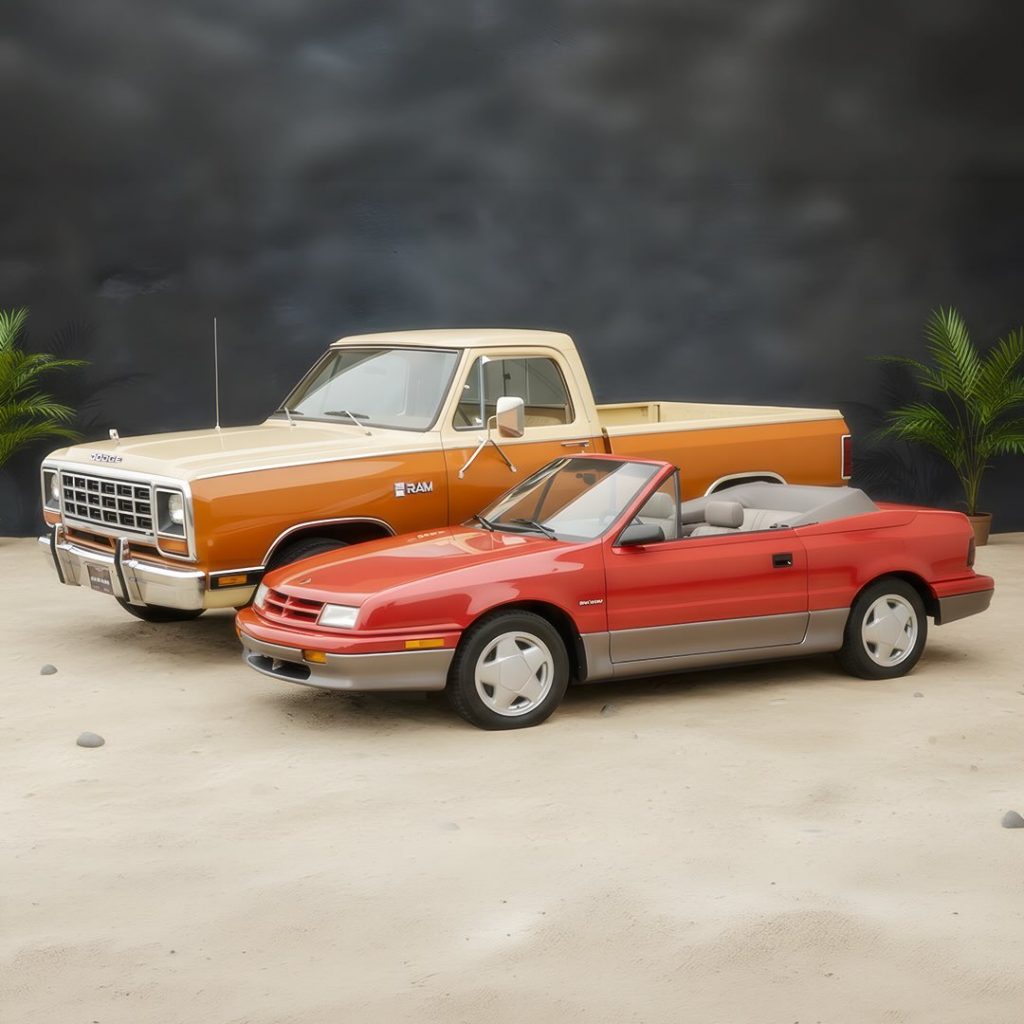
The last image shows a first-generation Ram behind a Dodge Shadow convertible that looks like it’s had its face smushed down by an inch or two.
These images, almost instantly, whipped up a frenzy in the comments section. Most people simply called out the use of AI “slop,” while other wondered why Dodge would resort to using AI when it has a huge collection of press photos in its archives.
Here is just a small selection of the comments currently under the post:

Curious to know how the hell these images made it live, The Autopian reached out to Dodge directly via email. Here’s what a spokesperson told us:
“Yes, the two vehicles in the shared image are from product correct photography, but the AI-generated background unfortunately distorted some vehicle features. We appreciate the quick feedback. Details matter, and we’ll do better.”
Okay, a couple of things. First, I hope they meant images, and not just the first image, because all three have at least one car with some sort of distorted or incorrect aspect. And second, I can sort of see why Dodge might’ve wanted to use AI to spruce up old press images for a fun Friday-afternoon throwback post. But it’s one thing to upscale photos, and another thing to have AI mess up those photos, and yet another thing to publish those images to your combined nine million followers.
Going by that comment, it sounds like whoever made these images fed original stock photos into a generative AI program, which spit out what you see above. Going through parent company Stellantis’s archives, I managed to locate some images that look somewhat similar. Let’s see if I can spot all the differences.
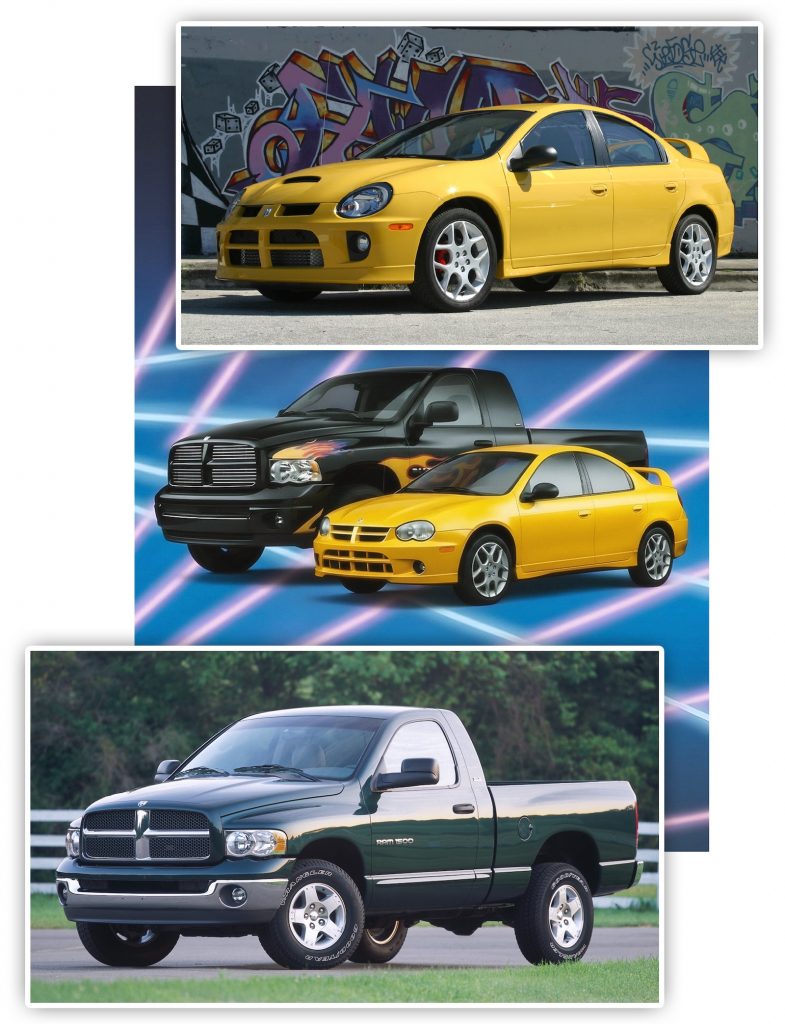
For the Neon and third-gen Ram, there are some pretty obvious callouts here. The Neon’s face is, of course, all wrong. No version of the Neon came with lights shaped like that—if I had to guess, the generative AI melded the Neon’s lights with the lights from something like a Chrysler 300M, and that’s what came out. The grille is also incorrect, with a lot more slats and cutouts than it should have.
The Ram 1500 is a bit more correct, but there is one glaring error: Dodge never made a third-gen 1500 with an extended regular cab like the one shown above. You could get a regular cab, with no extra space behind the seats, a quad cab with four doors, or the legendary mega cab, which stretched the rear area for more legroom. It seems like the AI added the extended portion of the body found on the mega cab to this two-door Ram, making the Frankenstein cab you see above.
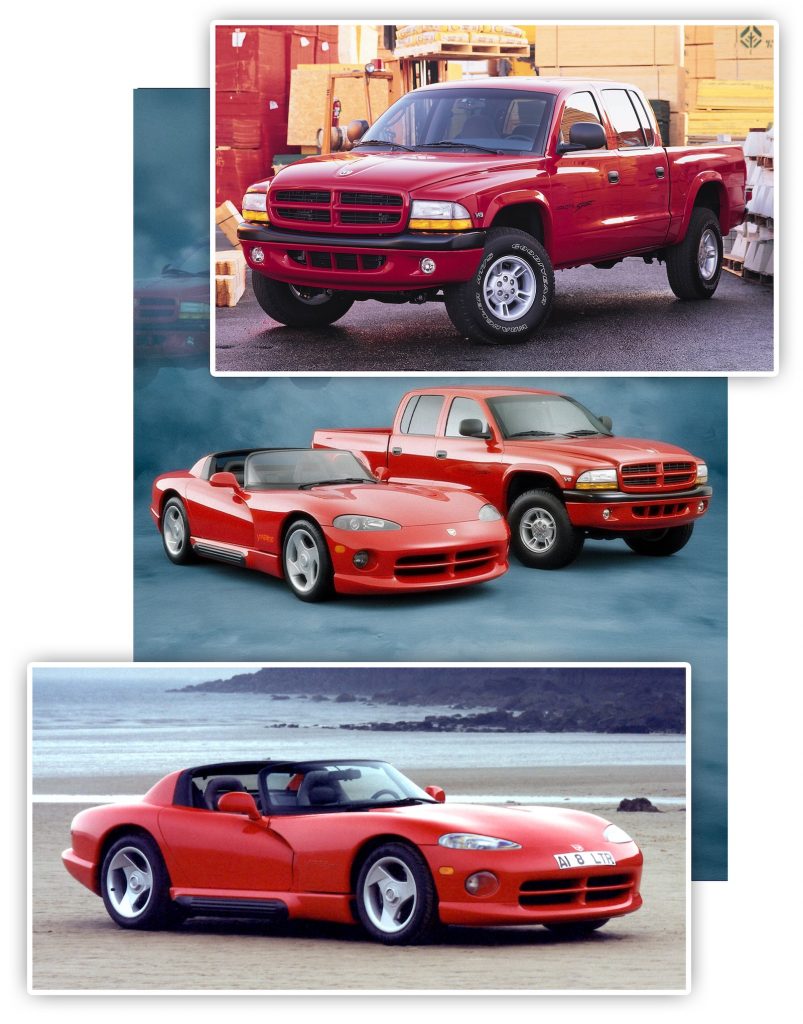
As for the second image, the only glaring mistakes I see are with the Viper’s too-thin windshield surround and extra wheel spokes. The rest of the car looks pretty accurate, and the Dakota to its left seems fairly spot-on.
As for the two cars floating above in the ether, both look to be real images that haven’t been modified much (or at all). Here’s the original link to the Dakota picture, and the link to the VM-02 photo.
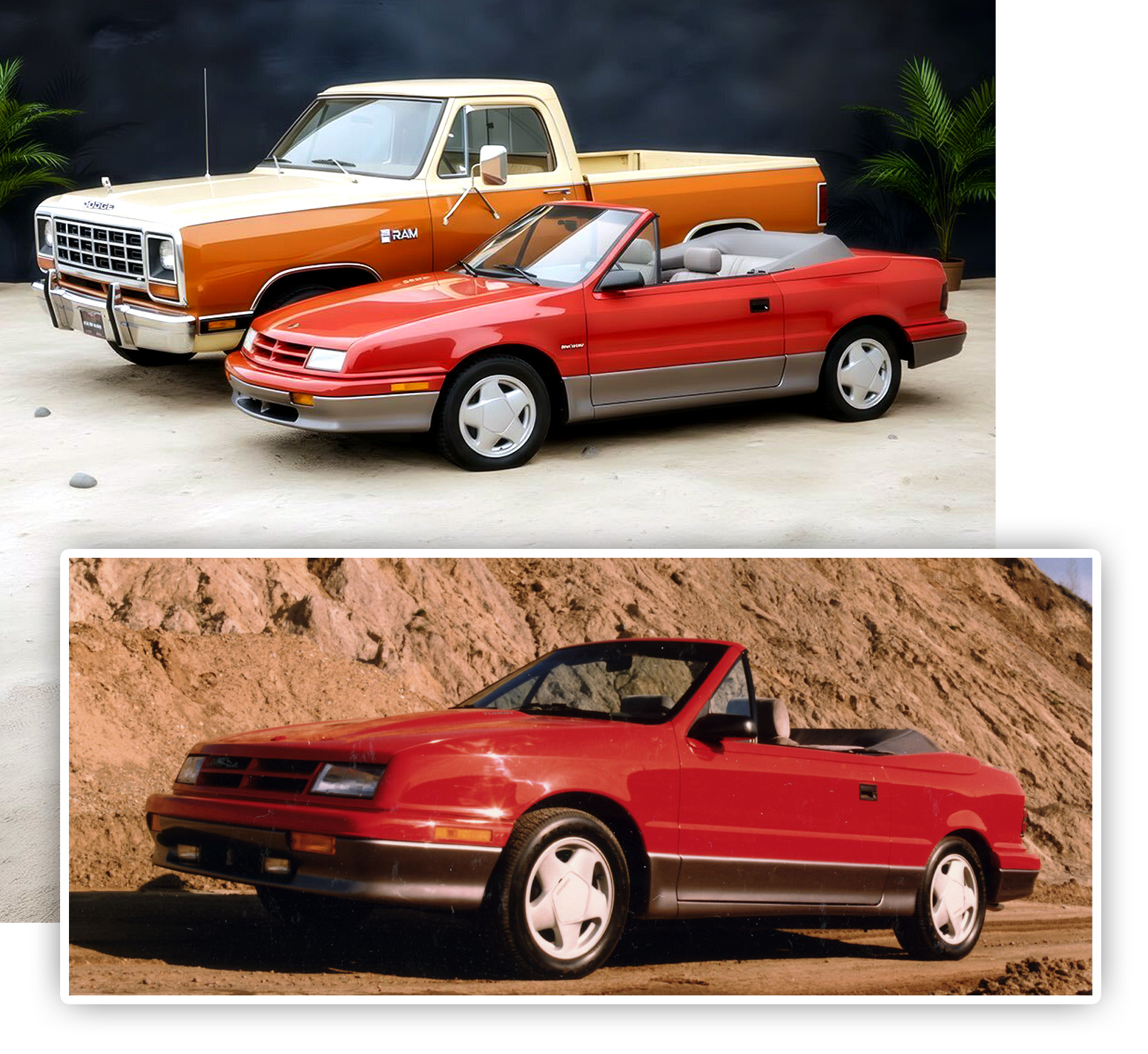
In the final photo, the first-generation Ram truck looks to be pretty accurate, but the Shadow is anything but. The general shape is the same, but the real Shadow’s nose doesn’t slope down nearly as severely as the AI image depicts. It’s far more blocky in real life.
To me, the weirdest part about all this is that even after the comments erupted, Dodge and Ram still haven’t deleted the slideshow from Instagram, even five days later. Showing off products that neither brand ever produced is incredibly strange, and it doesn’t sound like some rogue marketing agency posted these photos under Dodge’s nose—the company answered our inquiry about it and admitted it made a mistake using AI. So the brand is fully aware it’s hosting AI-slop versions of its cars on its pages.
At this point, it might be better to leave up the slideshow as a reminder to social media managers worldwide that you should take caution before using AI to modify images of your product. You could also make the argument that all engagement is good engagement—this slideshow has generated nearly 600 comments so far, which is way more than any Dodge or Ram post usually gets. Whether it was worth making a bunch of fans angry, though, is anyone’s guess.
Top graphic image: Dodge / Ram; DepositPhotos.com
The post ‘We’ll Do Better:’ Dodge And Ram Admit AI Error Caused Hilariously Bad Instagram Post appeared first on The Autopian.