Plastic is not often used as the primary building material of a camper. There are lots of fiberglass designs out there, but plastic is such a rarity that the fact that there’s only one semi-major American company, International RV, that’s making thermoplastic travel trailers right now is pretty wild. I have found yet another camper in history that eschewed wood and rubber for plastic. This is the Outbacker by Teardrop American. It’s an obscure camper that you’ve probably never heard of that has a cabin that’s so light it might weigh less than you do!
In theory, thermoplastic offers similar benefits to fiberglass. A camper with a plastic shell has no wood to rot, no rubberized roof to leak, no metal to rust, and fewer points of entry for water. Plastic is also cheap and quite lightweight. Of course, plastic also has its challenges, such as possibly becoming brittle and fragile after many years in the sun. In building its Lightweight Innovative Vehicle, International RV says it solved the aging issues of plastic while also making a rigid structure.
What’s been fascinating to see is that there haven’t been a bunch of companies lining up to make their own plastic campers. I’ve seen an inflatable camper trailer, all-steel trailers, a trailer made out of marine composites, and even trailers with automotive-style panels and finishes. But plastic? That remains a curious rarity. Yet, as this weird Teardrop American Outbacker shows, the concept of making a camper out of plastic goes back decades.
A Mystery Company
Finding information about the Outbacker has been impressively difficult. It was built by Teardrop American, Inc., of Wenatchee, Washington, in 1989. Allegedly, the whole business went bust only a year later. From what I could find, the company itself might have gone back as far as 1987, as that was the year when the company submitted VIN decoder information to the National Highway Traffic Safety Administration. The name associated with that document was Janice L. Hedman.
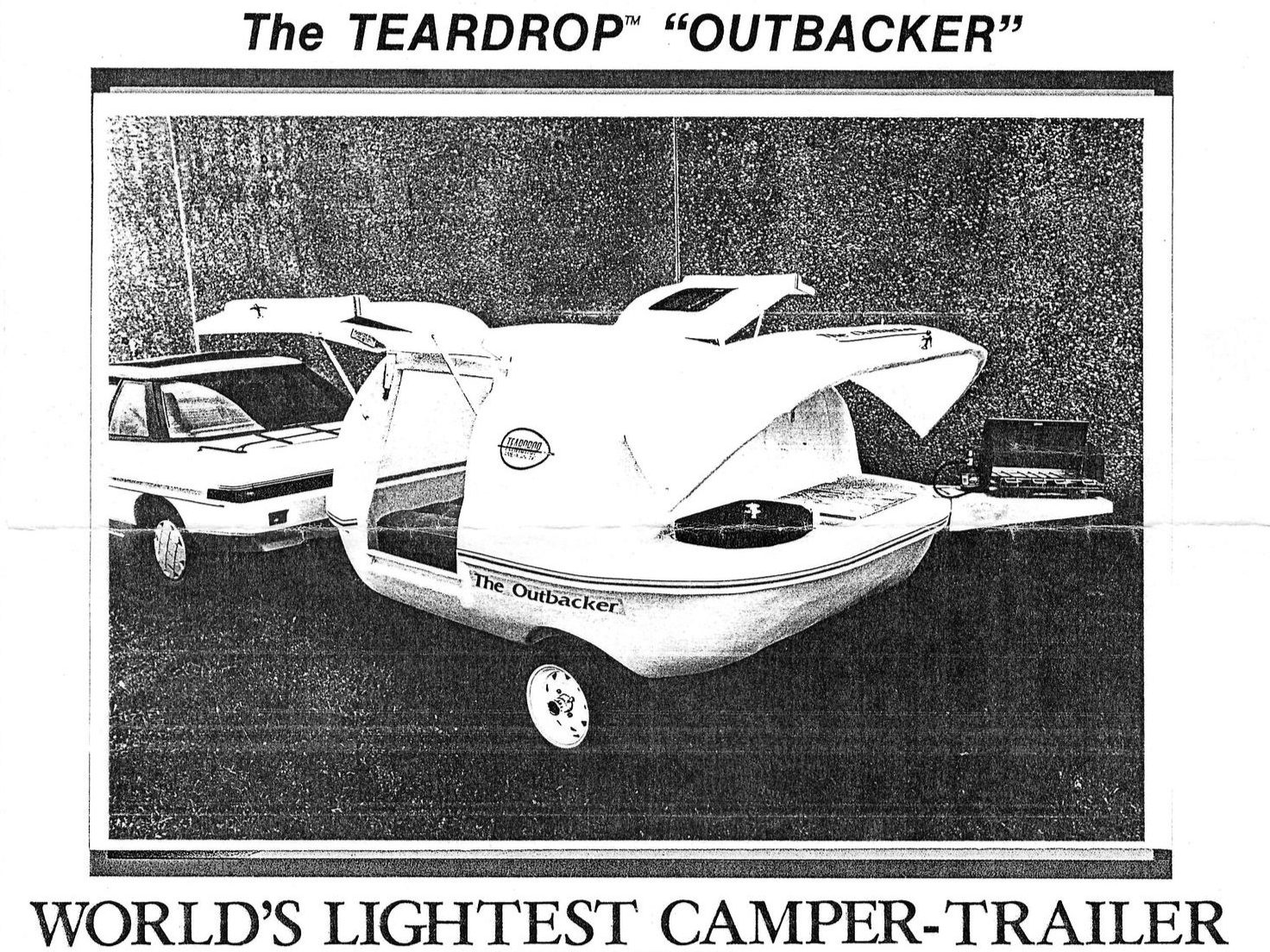
That’s it, that’s everything that I was able to find about Teardrop American, Inc. Autoevolution wrote about this camper recently and got even less information. Thankfully, one piece of surviving information about the Outbacker is its brochure, which provides a treasure trove of information.
The Outbacker
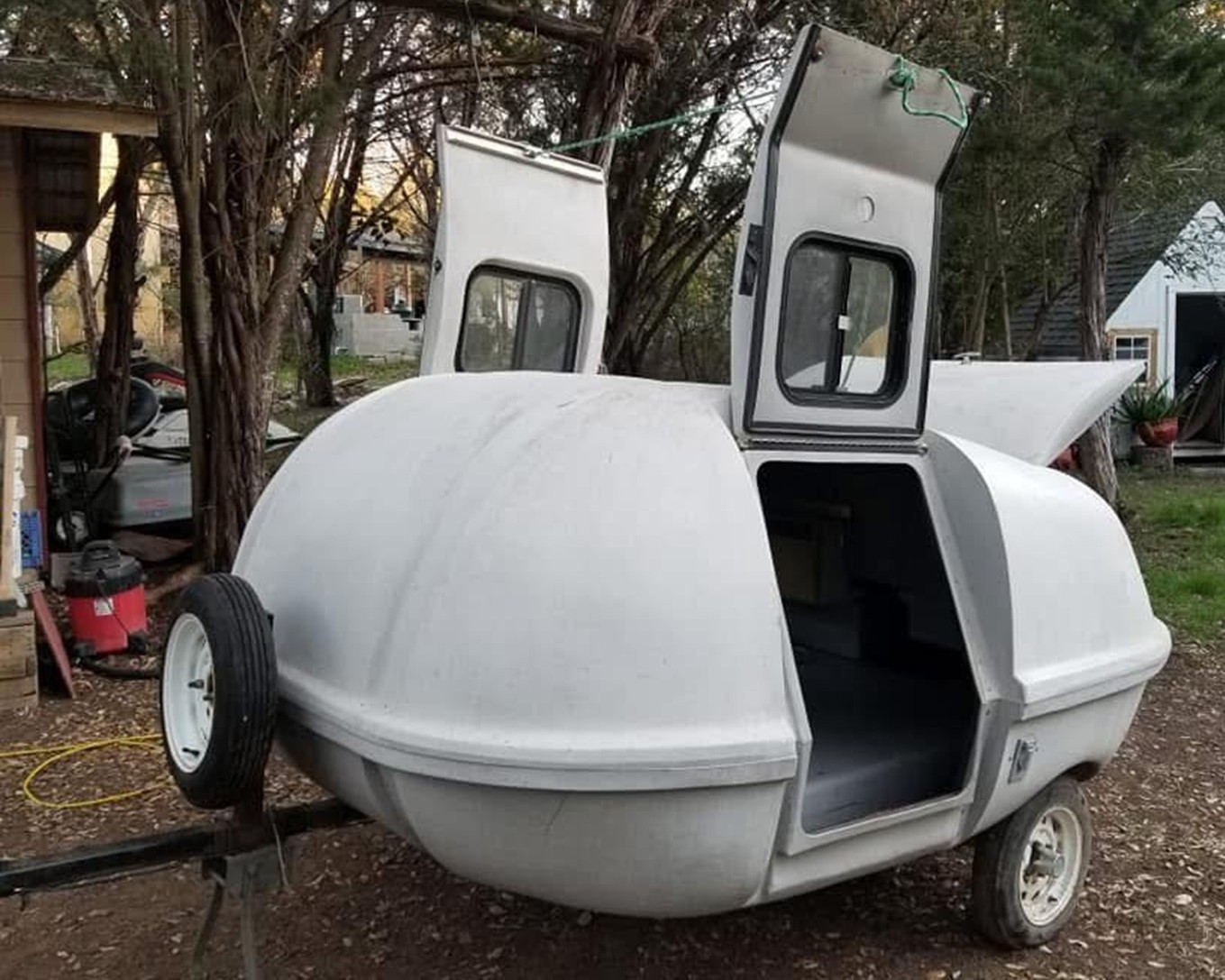
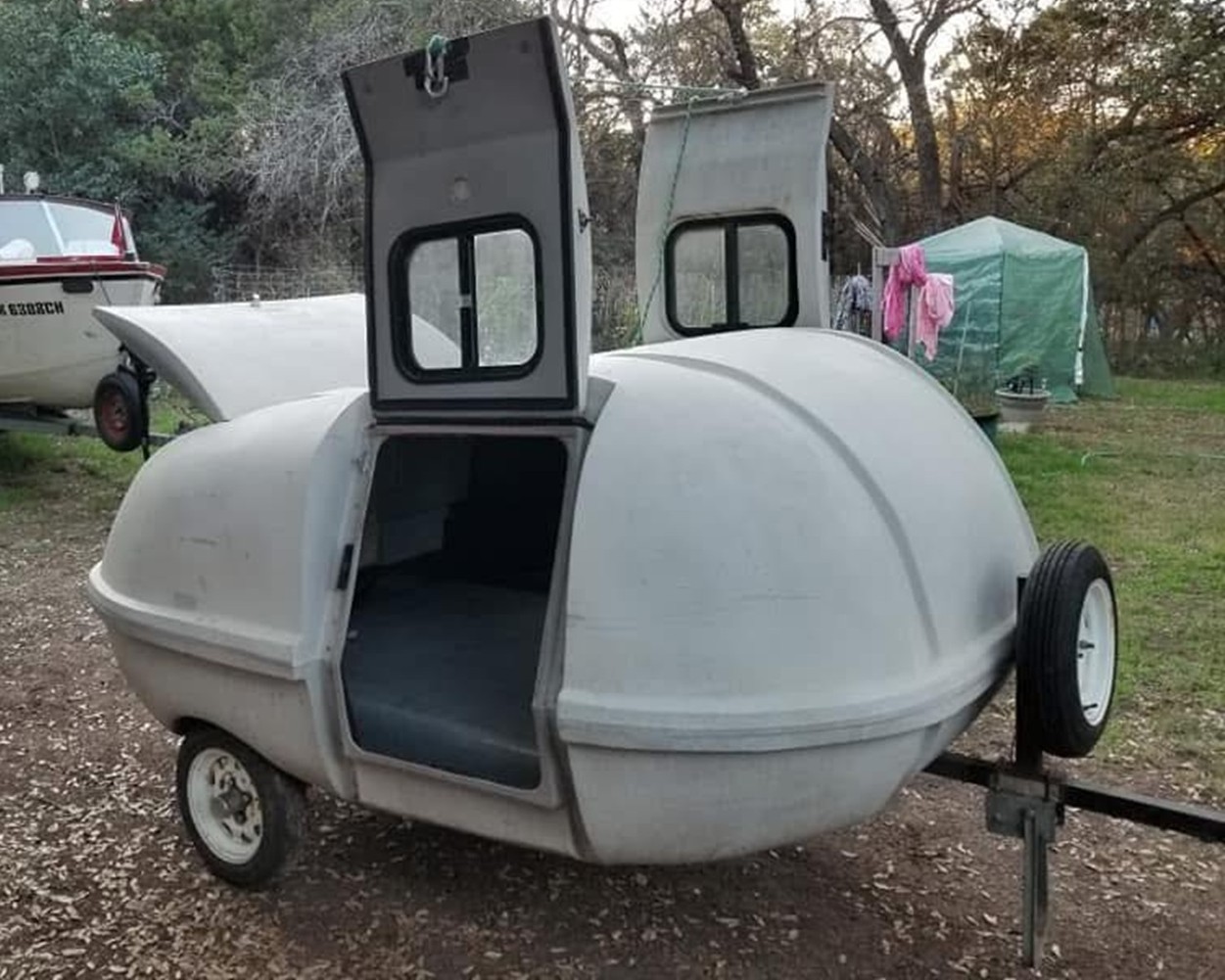
According to the camper’s brochure, the trailer is built out of color-impregnated polyethylene. Like a fiberglass camper, the Outbacker is made out of an upper shell and a lower shell that’s bonded together at a central beltline. This, like most fiberglass “egg” campers, allows the Outbacker to be a single large piece of plastic.
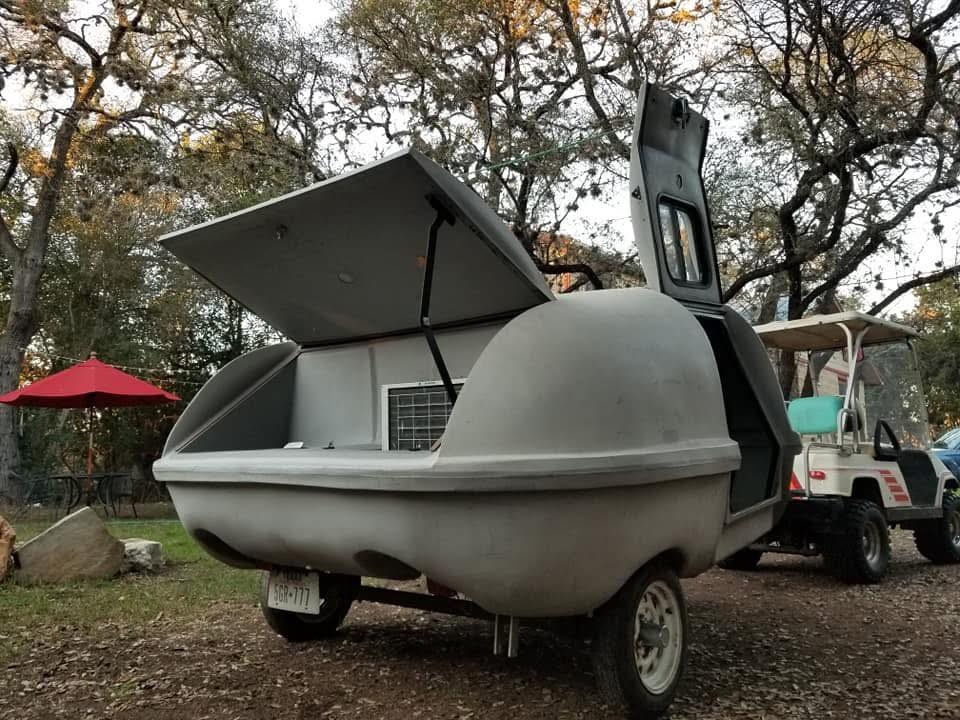
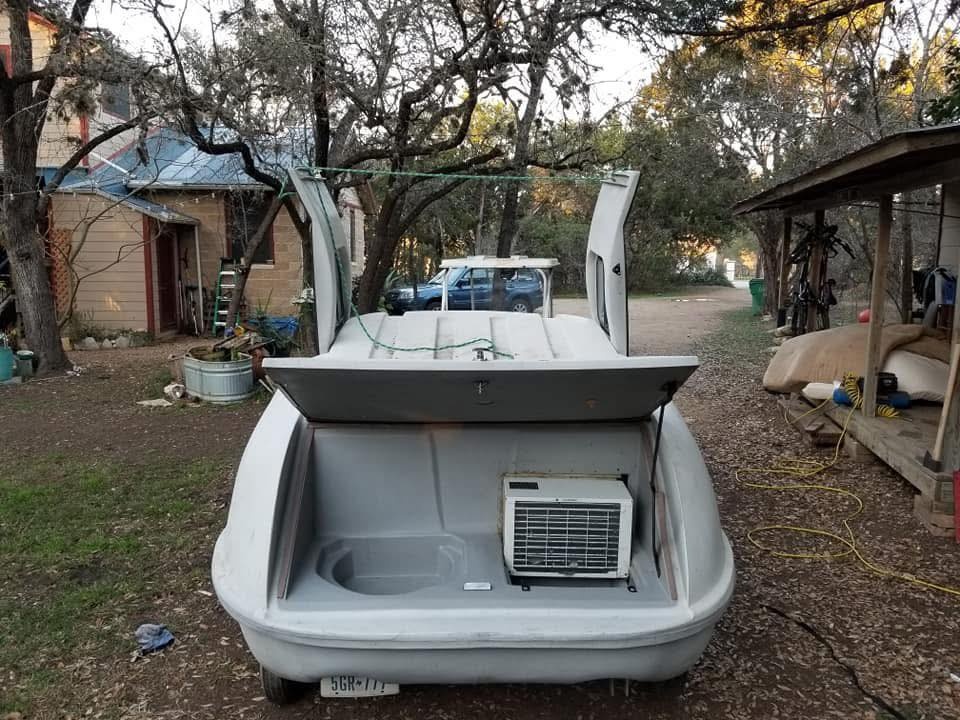
The camper body was interrupted in only a couple of places. The Oubacker has a pair of plastic gullwing doors plus a rear hatch. Features included exterior lights, a battery-powered interior light, a 12′ by 12′ awning, and an air mattress. In the standard model, the back hatch reveals an empty space for food storage and for you to build your own kitchen. Optional was a kitchen kit added a propane stove, a plastic sink, and an icebox.
The hat trick of the Outbacker was that the plastic body was technically independent. The trailer underneath was little more than a utility trailer with a system to pop the camper shell on and off. Teardrop American advertised this as being able to have a camper when you want it or a cargo trailer when you want it.
The brochure says that the camper body weighs only 110 pounds. However, owners claim that it’s actually closer to 225 pounds. Either way, that’s not a lot of weight! There are some folks out there who weigh more than that. Add in the trailer underneath, and the complete weight is around 400 pounds.
That means the Outbacker can be towed by basically anything with a trailer hitch. The brochure even illustrates a snowmobile pulling one. The flexibility also means that, if you have someone with you, the camper body could be placed on the ground and used like a tent or placed into the back of a flatbed truck.
It was a tiny thing, too. Teardrop American said that the Outbacker was 8’6″ long, 6’6″ wide, and 5’4″ tall on its trailer. The trailer portion rode on 12-inch wheels and had a 1,000-pound axle.
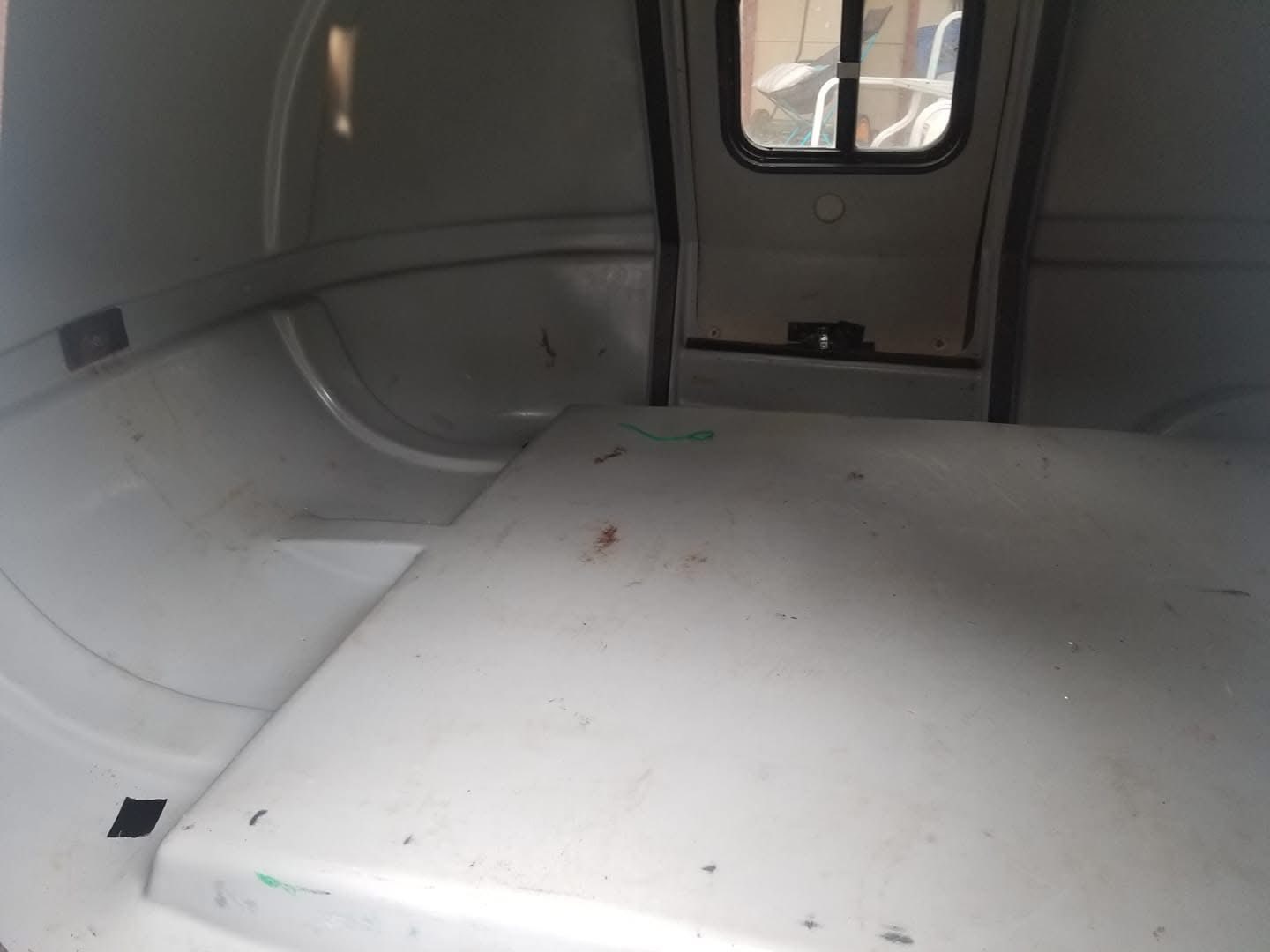
Sadly, few of these campers exist. It’s believed that only 400 or so examples were ever built. I found only one for sale in the entirety of America. The unit I’ve found for sale doesn’t have the kitchen, but someone added an air-conditioner, which is an interesting touch.
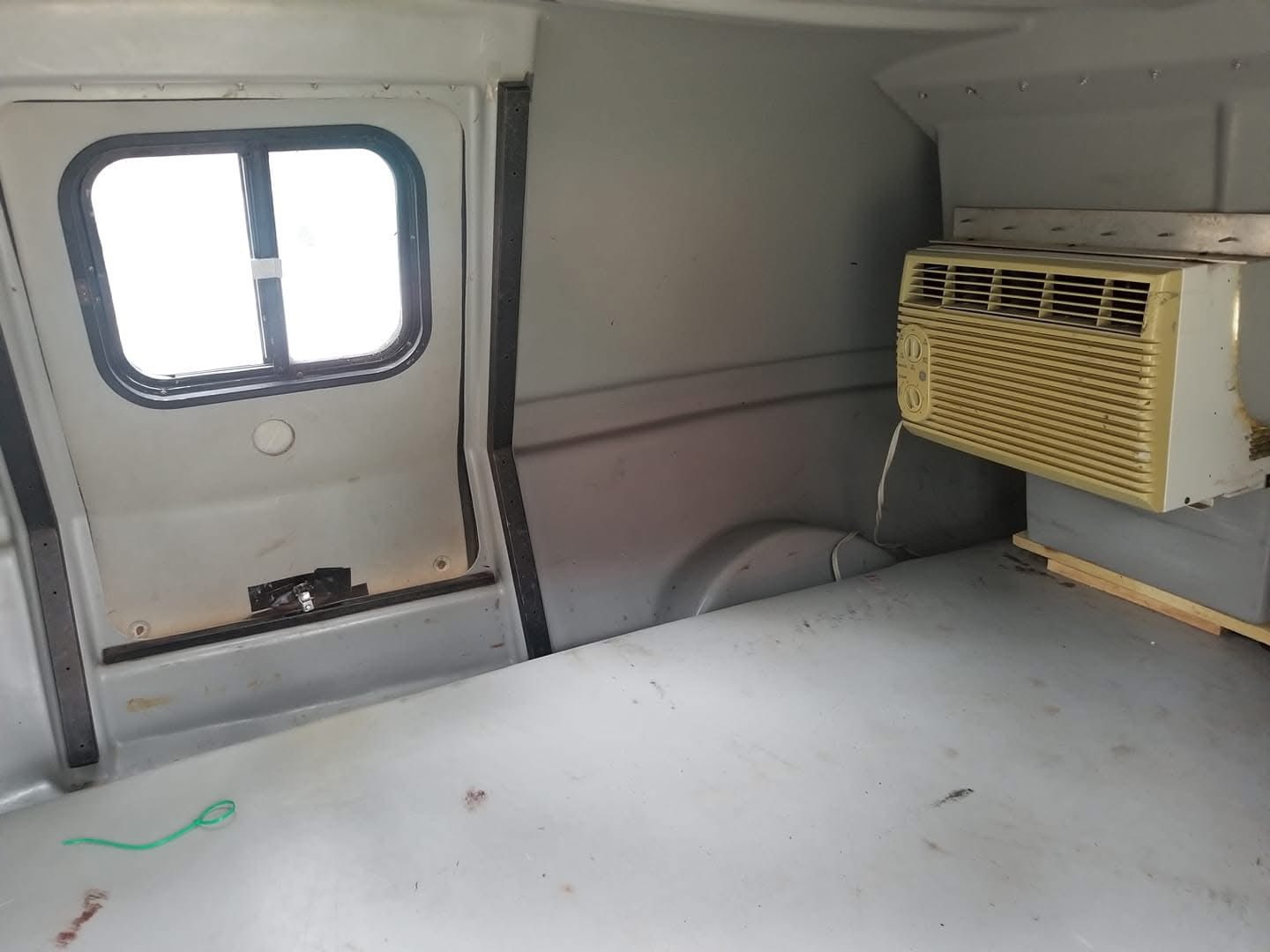
These trailers have seemingly been proven to be about as sturdy as advertised, with only a few caveats. Some owners have reported issues with the distinctive doors leaking water. Apparently, if the trailer’s suspension wears out, the tires can rub the wheel wells of the trailer, eventually wearing through the plastic.
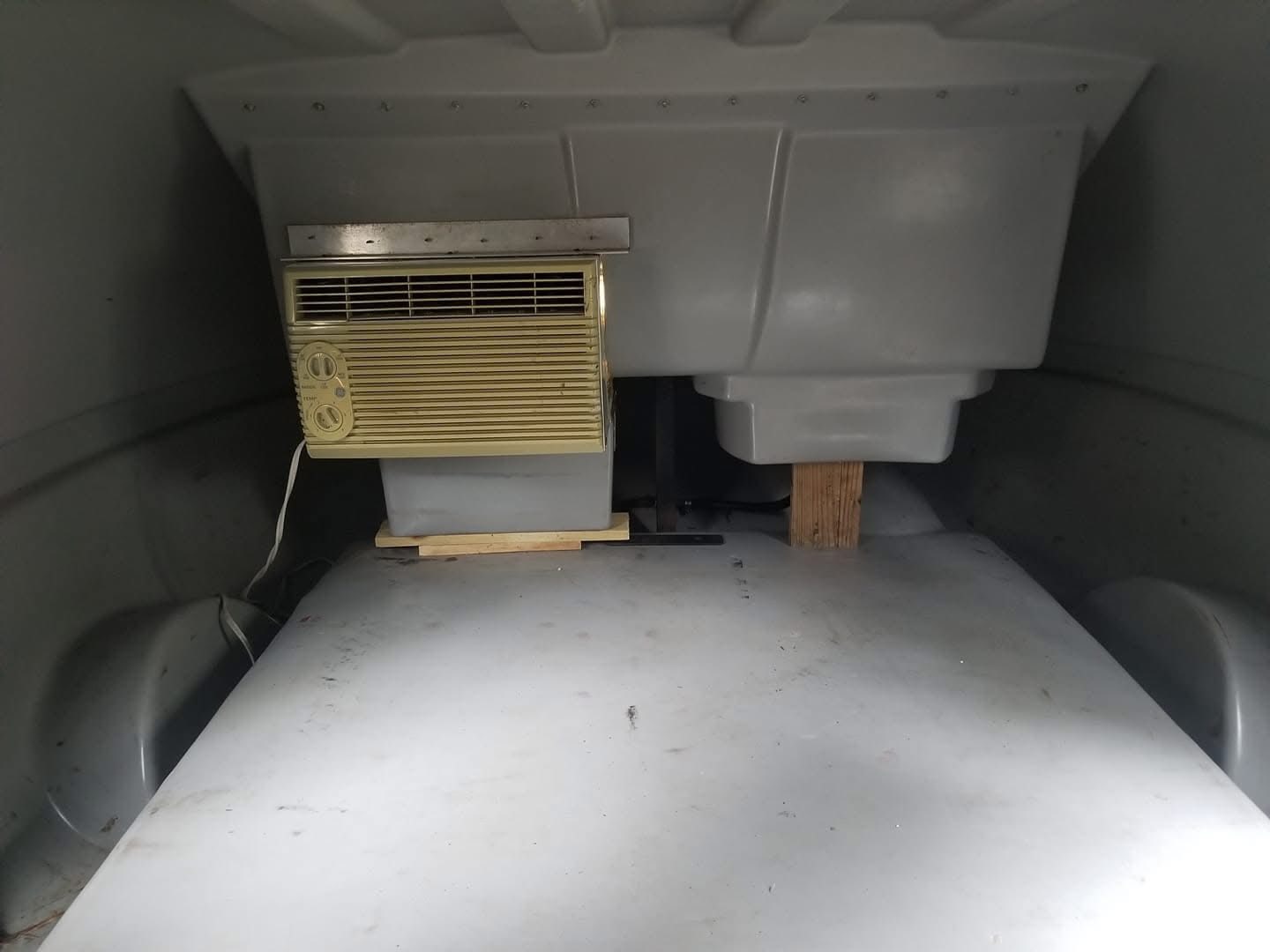
Otherwise, these campers are extremely simple with very little to go wrong. Think of the Outbacker as being a literal step up from a tent. But it’s a step up from a tent that could be towed by anything from a Volkswagen Beetle to a Smart Fortwo. It could even be towed by a motorcycle!
If you’re interested in the one that’s for sale, it’s up for grabs for $4,000 in South Bend, Indiana.
I Need To Know More
The part that impresses me the most is that, at some point in the past, someone decided to make a teardrop camper out of plastic. Fiberglass was already a popular and well-known entity in the 1980s. So, to make a camper out of plastic was a conscious decision. What inspired that decision? It’s also incredible to me that I haven’t seen more experiments with plastic. I know plastic truck caps exist, as well as the couple of plastic or plastic-adjacent campers I’ve written about, but it’s still rare.
I hate leaving stories unfinished, and I have spent so much time on this to find no results. If you know anything about Teardrop American, Inc. or the Outbacker camper, please drop me a line at mercedes@theautopian.com. I would love to tell the full story of this cutie!
Top graphic image: Facebook Marketplace
The post This Vintage Plastic Camper Is So Light That Its Body Might Weigh Less Than You Do appeared first on The Autopian.