If you find yourself within a 10-mile radius of an elementary or middle school, you’ll notice that among the herds of Honda Pilots are almost an equal number of Hyundai Palisades. They’re popular for families with school-aged and even infant children for several reasons: both are roomy, clever, have a usable third row, all-wheel drive is optional, both have a great V6 paired with a traditional transmission, and at the top of the line, they’re fairly priced. The Hyundai Palisade has been redesigned for 2026, and aside from the general boxiness, it’s been reimagined with families in mind, with an even better third row, and, unlike the Pilot, a hybrid option (more on that coming soon).
Kristen Brown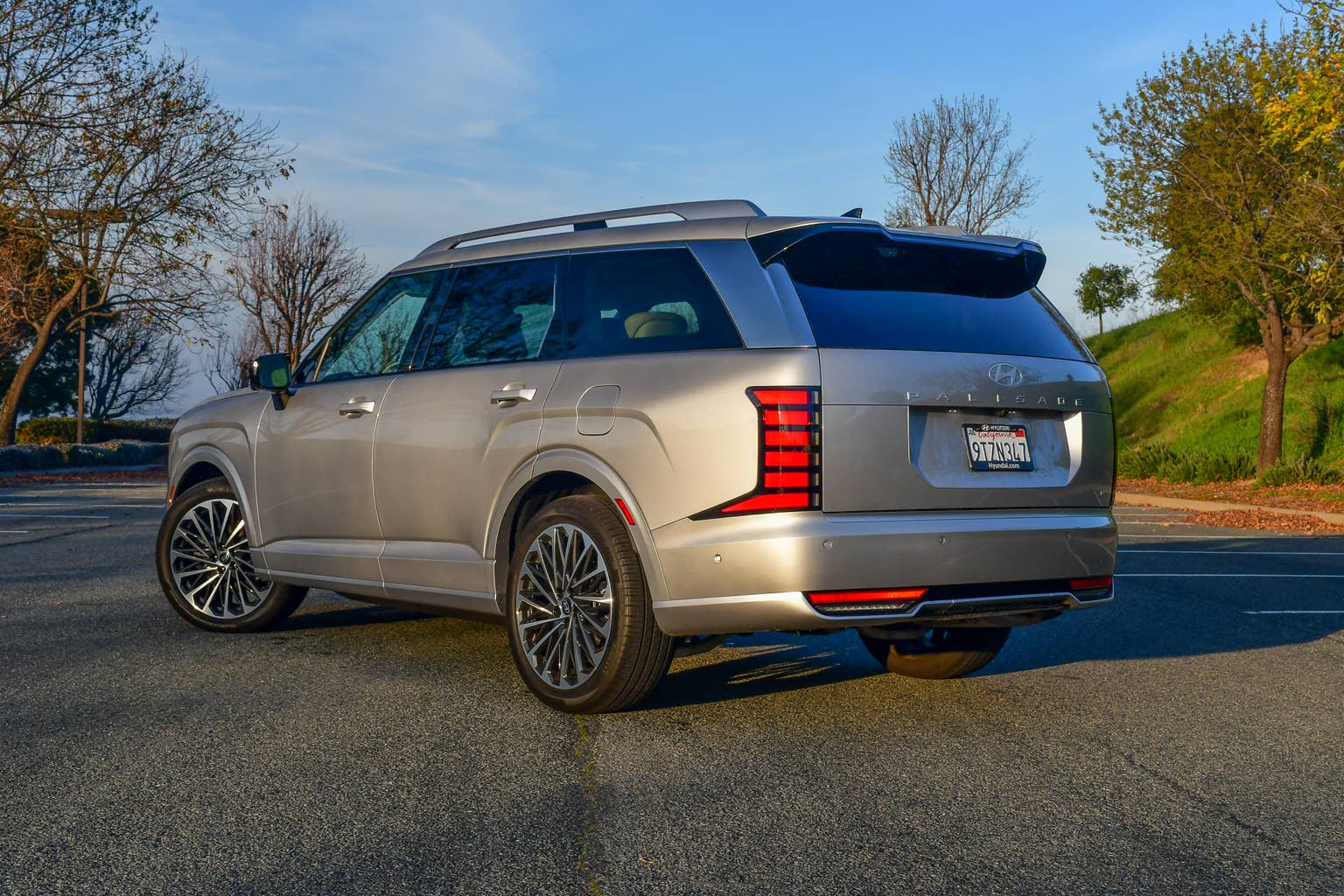
With many automakers axing their popular (and I’d argue) reliable V6s in favor of turbocharged four-cylinder engines for the sake of extra miles per gallon, it was refreshing to see a brand-new car come with a V6. But does it necessarily work for an average family of four in the San Francisco Bay Area? I packed my family into a $57,800 Calligraphy AWD mode for a day trip to find out. And let’s just say, I was pleasantly surprised.
There’s no mistaking it, it’s quite a large SUV—but it doesn’t drive like one
The Hyundai Palisade was large from the get-go. In case you’re not well-versed in the Palisade’s history, the first model year was 2020, and it was large back then. Until the Hyundai IONIQ 9 debuted, it was the company’s biggest SUV. It’s still incredibly long, with a length of 199.2 inches (200.4 inches for the XRT Pro), it’s one of the longer SUVs on the market, save for the land yachts like the Cadillac Escalade, Lincoln Navigator, or Ford Expedition. But it’s still a marvel that it fits on a standard, two-car driveway like mine. Seeing that, though, I expected the Hyundai Palisade to feel as big as it is.
Kristen Brown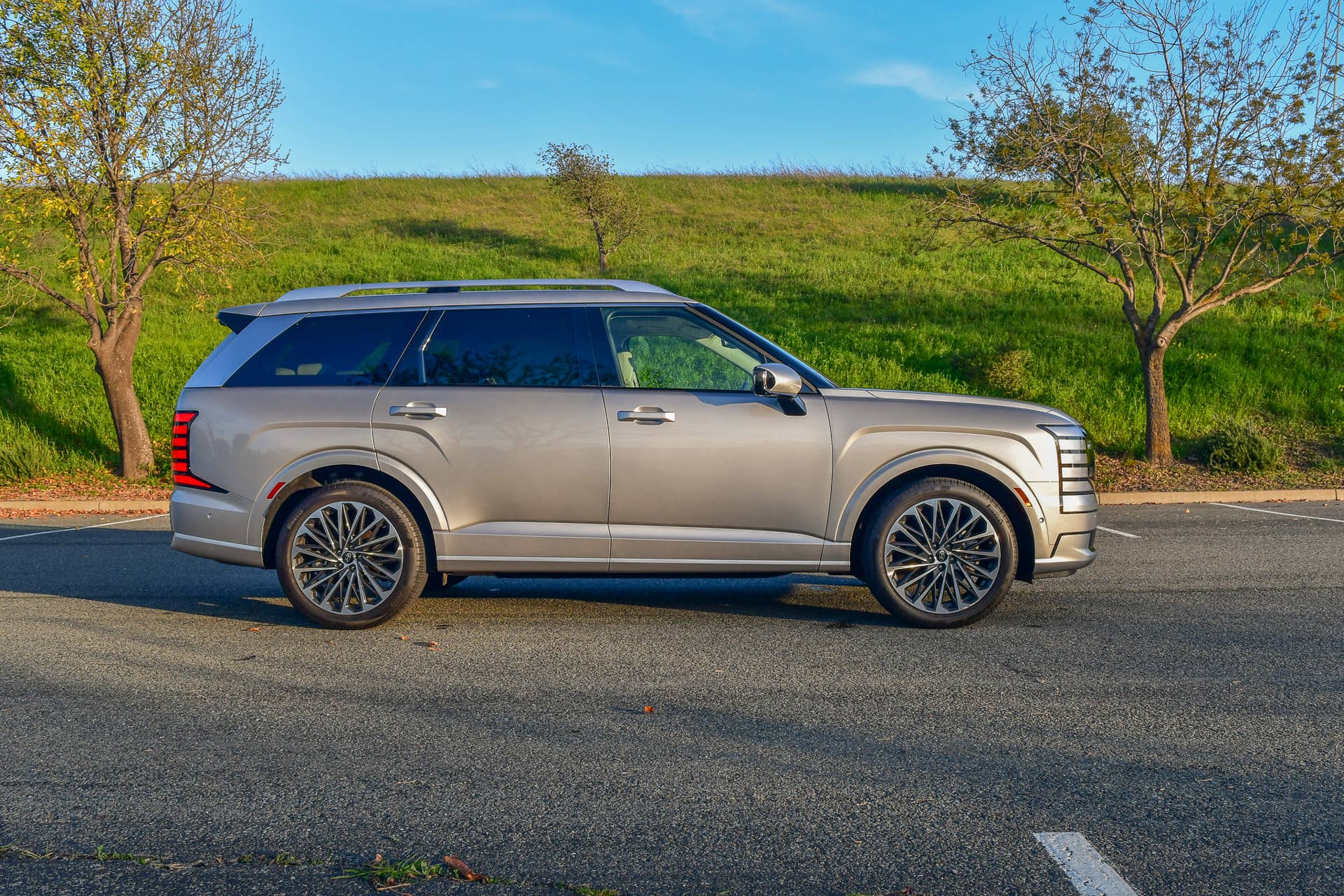
But it didn’t. It has self-leveling suspension in the rear, so it automatically adjusts the rear’s ride height to keep the Palisade level when carrying heavy loads or towing. It uses sensors to detect cargo weight, increasing pressure in the rear shocks to prevent sagging, ensuring better stability, control, and keeping the ride height consistent. It was something that came in handy when I had my two toddlers in the second row, my nephew and sister-in-law in the third row, and then my mother-in-law in the front passenger’s seat. However, that feature is only available in the higher trims, like the Limited, XRT Pro, and the Calligraphy AWD. That feature isn’t in the front, just the rear—and that worked out just fine (it also keeps the costs fairly low).
Kristen Brown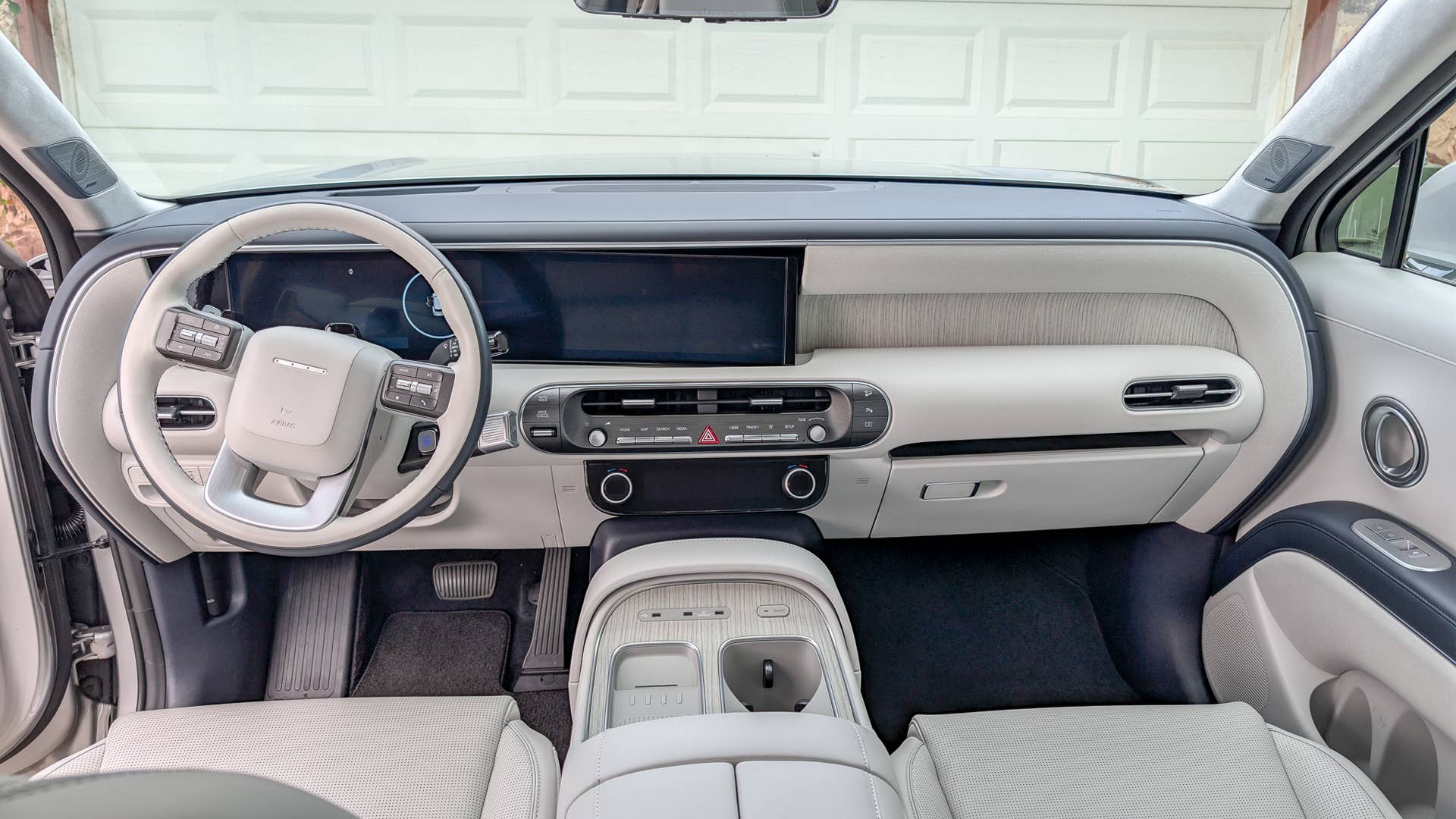
Even when every seat had a butt in it, it didn’t ride like a school bus. It kept its cool as we rode up to the Little Farm in Tilden (which means fairly tight, narrow, and windy roads in the Berkeley Hills), and I especially appreciated the bolstering in the driver’s seat because it helped keep me planted, sturdy, and confident, even when the roads became a bit sketchy. Maybe it’s because of the lower seating position, tall ceiling, and large windows, but visibility was great, too, making it easier to move the behemoth. My only quip was how thick the A-pillars were. I had to lean quite a bit to look into any right turns on the mountain roads, though that would just be something I’d have to get used to with ownership.
Related: Road Ethos Launches: The New Automotive Lifestyle Site You Should Read
Speaking of visibility, no one felt car sick, thanks to the rear sunroof and large windows
My kids never had an issue with car sickness, but I do when I’m not the one driving—and I love the third row of the Palisade. I’m about 5’8”, so it’s hard for me to feel comfortable in most modern third-row seats. But the Palisade, next to the Toyota Grand Highlander and Honda Pilot, is one of the best 3-row SUVs I’ve sat in. Not only was the seat comfortable, but there were also plenty of accommodations like a dedicated A/C vent, speakers, and my own USB-C charging port and cupholder. But what really made the difference were the large porthole windows in the third row, and the second sunroof right over the second row.
Kristen Brown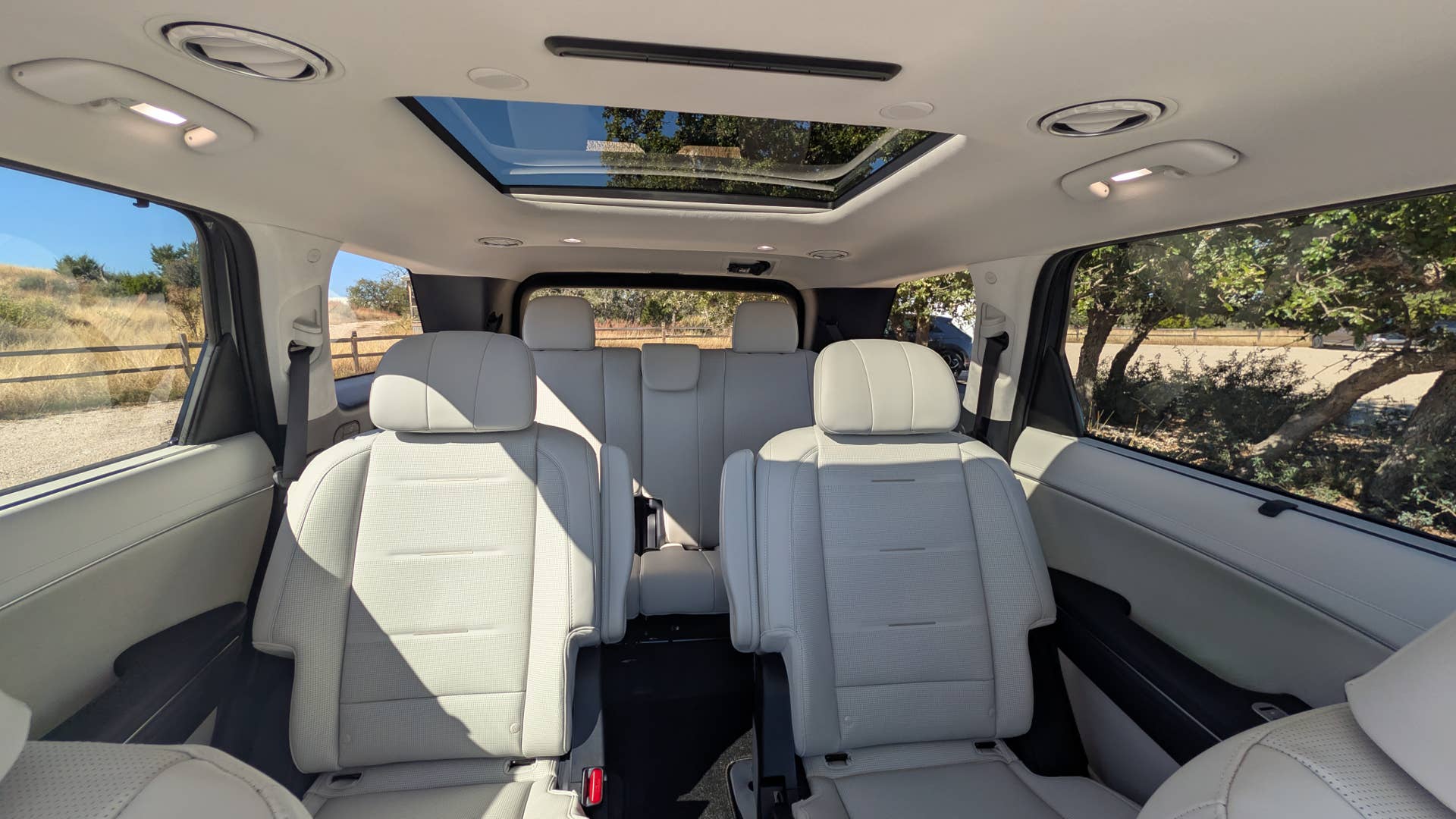
It helped open up the third row tremendously, so it didn’t feel like the seat you got stuck with because no one else wanted to sit there (for those of us who grew up with old trucks, the term I’m thinking of rhymes with itch feet). It’s comfortable, it’s roomy, and it’s open. Even my husband couldn’t help but make a remark about its comfort and space. Combined with the self-leveling, it made for a comfortable drive. And it was especially nice that the rear didn’t feel like it was bottoming out over every bump.
Hyundai’s V6 is strong, but it’s not very efficient
Unsurprisingly, the 3.5-liter V6 that’s in the Palisade, while tried, true, and torquey, is not very well acquainted with efficiency. Around town, I averaged about 17.8 mpg. When it was filled with three toddlers, their car seats, and four adults, I saw about 15.7 mpg. If you were towing, it would probably drop quite a bit. Which, for the amount of stopping and going I was doing on the regular, with two kids and two adults in tow, isn’t all that bad. But, in California, where regular grade gasoline is regularly hovering at just over $4 per gallon, that can become a thorn in your side fairly quickly. Then again, if you were spending a few Gs short of $60,000, that’s probably not a major concern of yours anyway.
Kristen Brown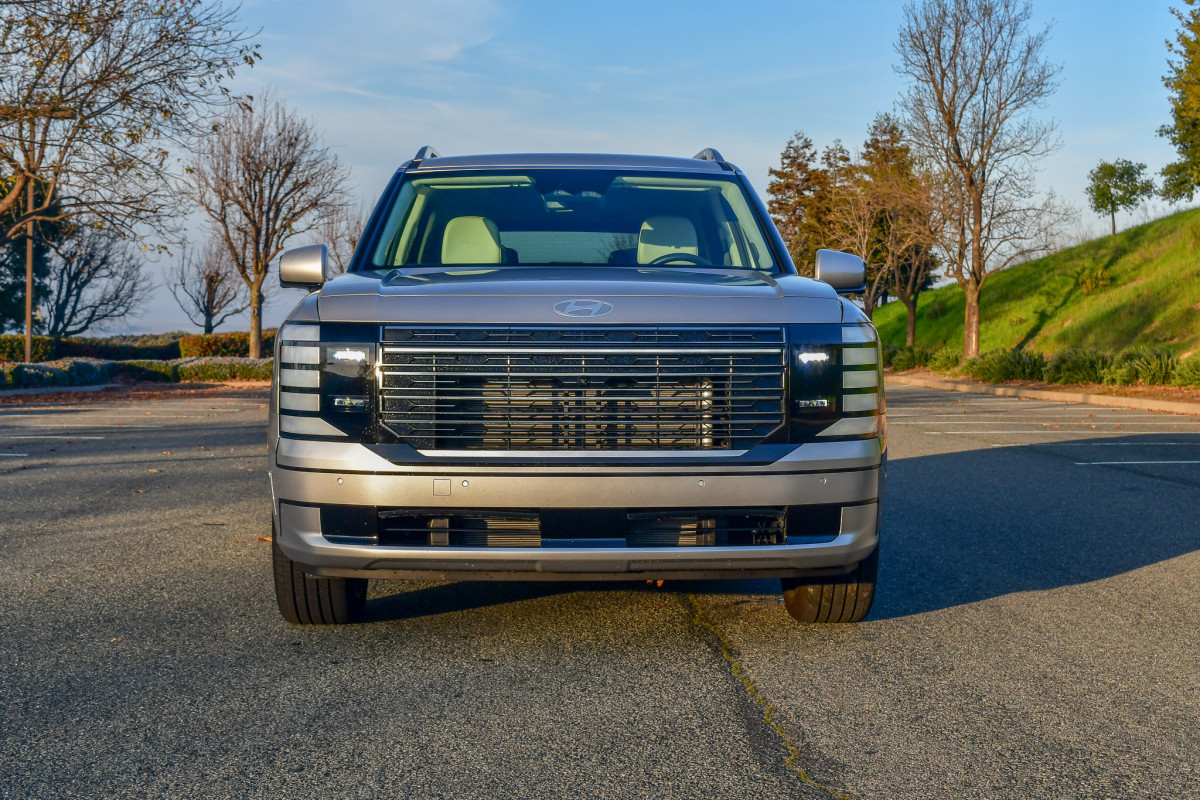
Mileage aside, I did appreciate the power balance of a V6 in an SUV that size. The horsepower figure of 287 wasn’t the heavy hitter; it was the 260 lb-ft or torque. Most people don’t realize that torque in an SUV is more important than they think. Once it’s loaded with gear and people, it’s the torque that helps keep the SUV from feeling sluggish, not the horsepower. Because it had more torque, it felt more appropriate. And, call me old-fashioned, but it sounded a lot better than a turbo four, too.
Related: The Top New Three-Row SUVs I’d Recommend to Families, As a Parent
Shocking to no one, the cargo space was excellent
The 2026 Hyundai Palisade offers a generous amount of space behind each row, and I’ll reinforce that with some serious-sounding numbers. With all three rows upright, you get 19.1 cubic feet of room behind the third row—enough for a week’s groceries, backpacks, or a folded stroller without having to play cargo Tetris. Folding the third row expands the space to 46.3 cubic feet, which comfortably handles luggage for a family road trip or bulkier gear like camping bins or sports equipment. You’ll notice that’s a bit more than the previous generation, thanks to the Palisade’s longer wheelbase and redesigned body structure for this new generation.
Kristen Brown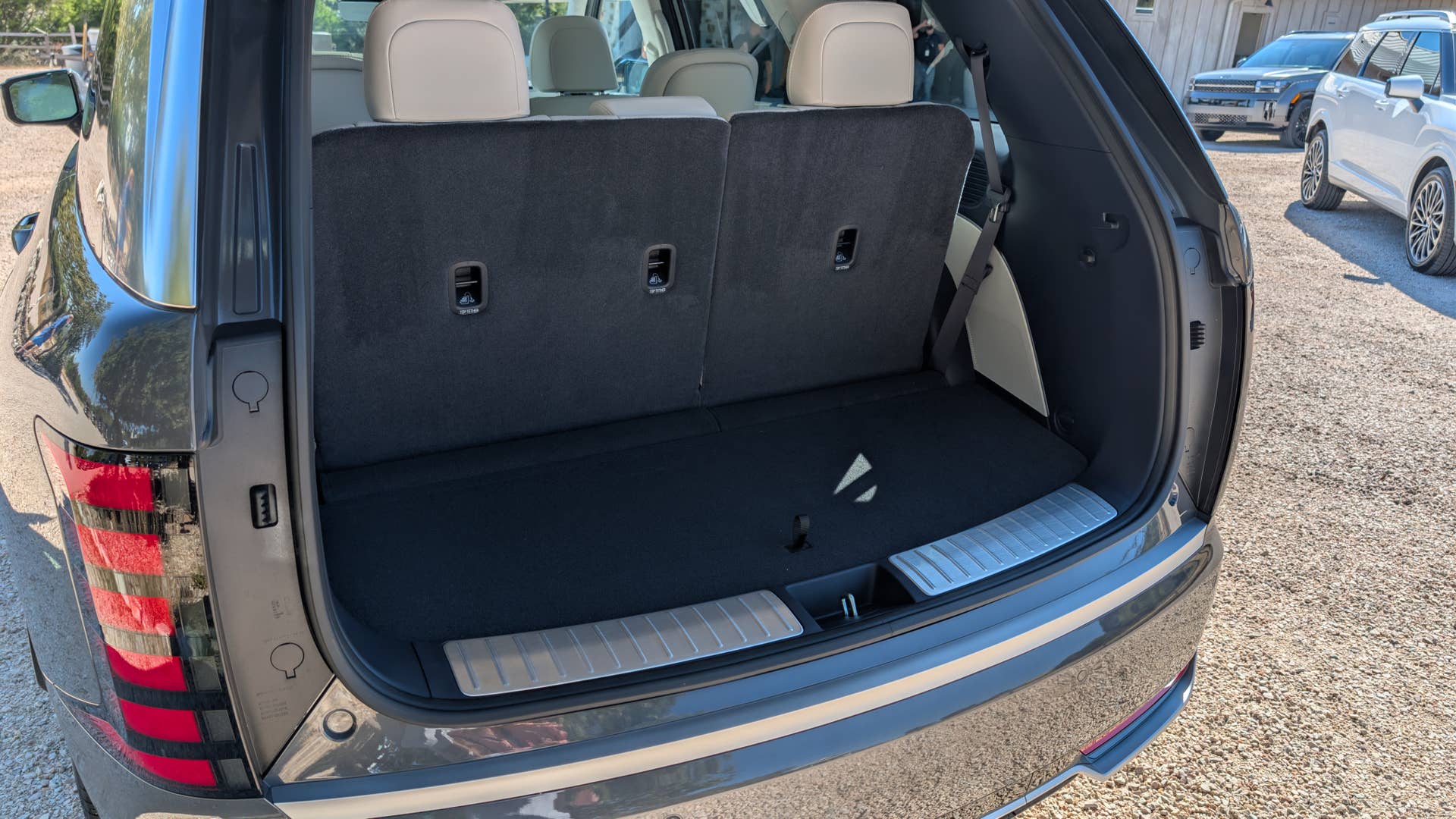
Drop both the second and third rows, and the Palisade opens up to a maximum 86.7 cubic feet, creating a nearly flat, van‑like cargo area that can swallow furniture, home‑improvement supplies, or multiple large boxes with ease. Hyundai also builds in thoughtful touches—like an underfloor storage compartment for valuables or loose items (I’d use it for emergency supplies or muddy shoes)—that make the space more functional day‑to‑day. The wide rear opening and flat load floor simplify loading, and the power‑folding third‑row seats make it easier to fold both the second and third row without having to pull a strap or lever.
Hyundai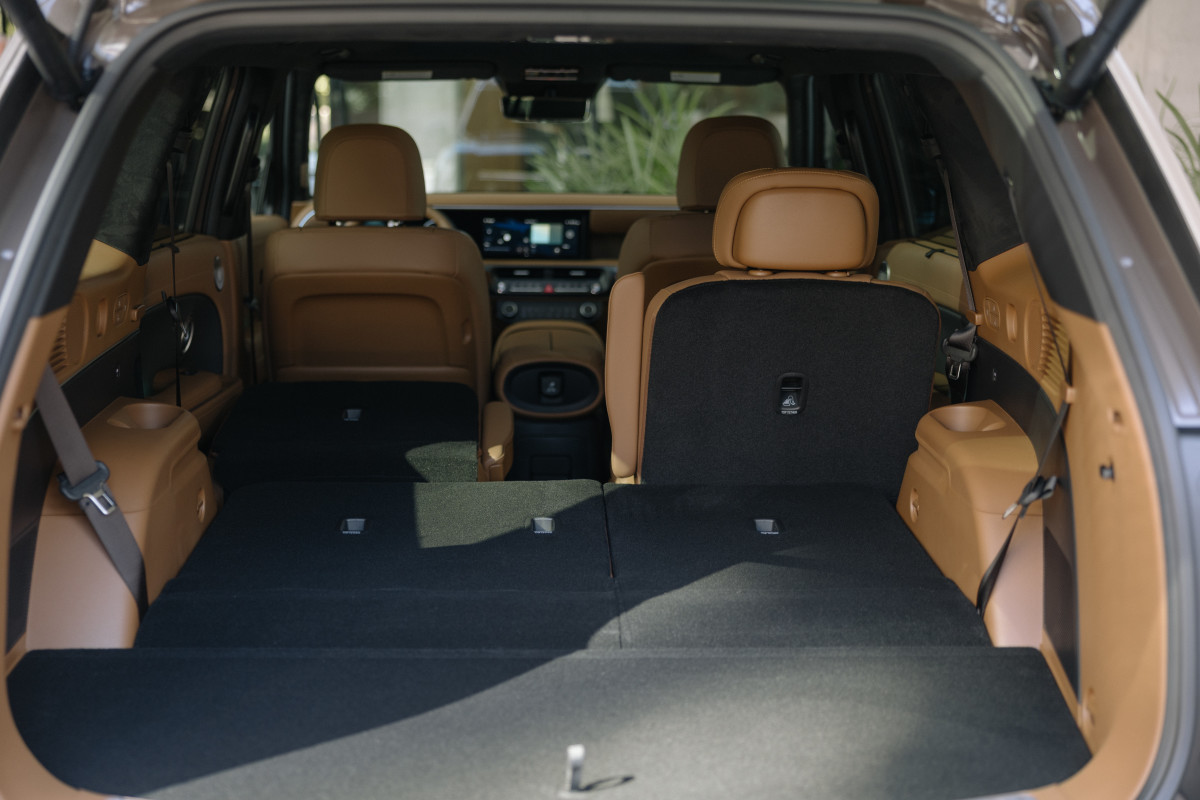
With my nephew and in-laws in tow, there was plenty of space for my daughters’ items and his, along with all three of our purses. I especially liked the storage space under the center console for my purse, so I didn’t have to put it in the passenger’s or rear passenger’s footwell. The storage cubby under my right elbow was great, too. I was able to store four water bottles, snacks, two pairs of sunglasses, and an energy drink with room to spare. My mother-in-law liked that she could push the button and access everything without my having to move my elbow while driving, since there are two sides that open. Plus, there are 17 cupholders in that baddie. For beverage goblins like myself, it was much appreciated.
The technology was simple, intuitive, responsive, and much-appreciated
Like every other Hyundai or Kia I’ve ever driven, it had two 12.3-inch screens that spanned from the edge of the driver’s door to over the center console and HVAC controls. The driver information display was customizable (and it was easy to do so), and I commonly switched between the fuel economy screen and the hybrid power distribution display because I got so much satisfaction watching the battery be charged. But the digital gauges were responsive and easy-to-read.
One thing I have a love/hate relationship with in HMG products is the “buttons” used for the air conditioning, heating, seat ventilation, heaters, and rear HVAC controls. I put that in quotes because they’re not physical buttons. They’re more like a separate touchscreen that gives you haptic feedback that feels like buttons when you “press” them. I love that they’re separate from the central screen, so you don’t have to dig around in the screen to access those features, but I’m a fan of physical buttons for those common amenities because they’re a bit more reliable. But that might just be me.
Kristen Brown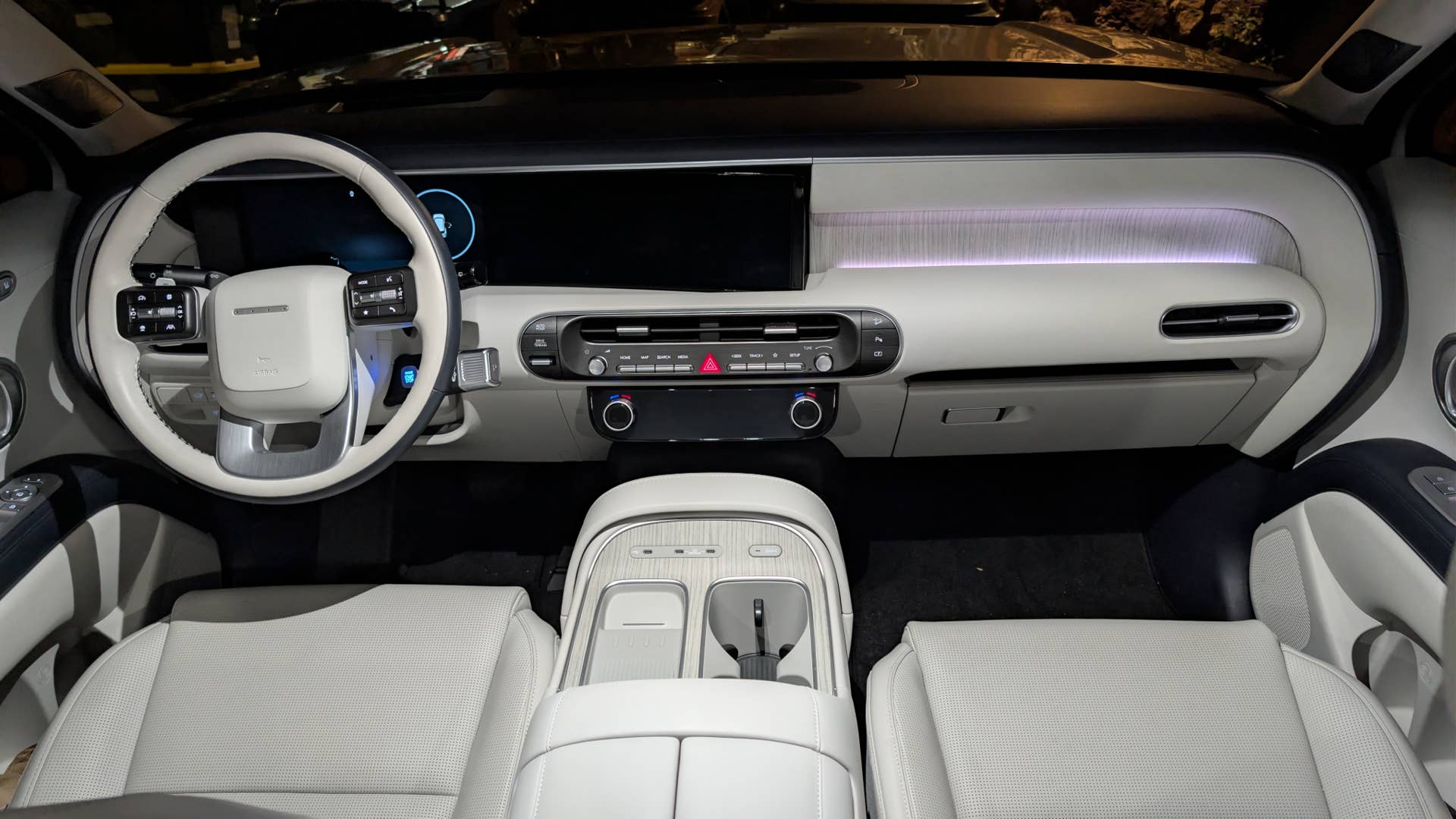
Otherwise, I appreciated that everything was easy to find. The cruise control settings and the driver display customization settings were on the left side of the steering wheel, and the media controls and right-hand driver display customization settings were on the right side. It makes sense. Everything else was to the right and below the steering wheel: gas filler opener, manual parking brake (though it would come on automatically), and manual trunk and hood opener, which were easy to access and had easy-to-interpret symbols. There wasn’t a single time I had to Google anything because it was all very, very easy to figure out. If I were buying a new Palisade, the optional Bose sound system would be a non-negotiable.
For what you get, the price makes a decent amount of sense
The Hyundai Palisade I tested was the cream of the crop, top-of-the-line, fully loaded model with optional all-wheel drive, with an MSRP of $57,800. In my opinion, the pricing is pretty fair. Especially when you factor in the creamy and premium-feeling white leather (by the way, all trims—even the lower ones—come with leather), captain’s chairs, massaging seats in the driver’s seat, and all the customization options. That price is pretty on par with the other SUVs it competes with, but it looked, felt, and drove like it had a price tag closer to $70,000. No wonder they’re so popular in the suburbs. My neighbor has a previous-generation model, and he couldn’t help but walk over and take a gander at the new one.
Kristen Brown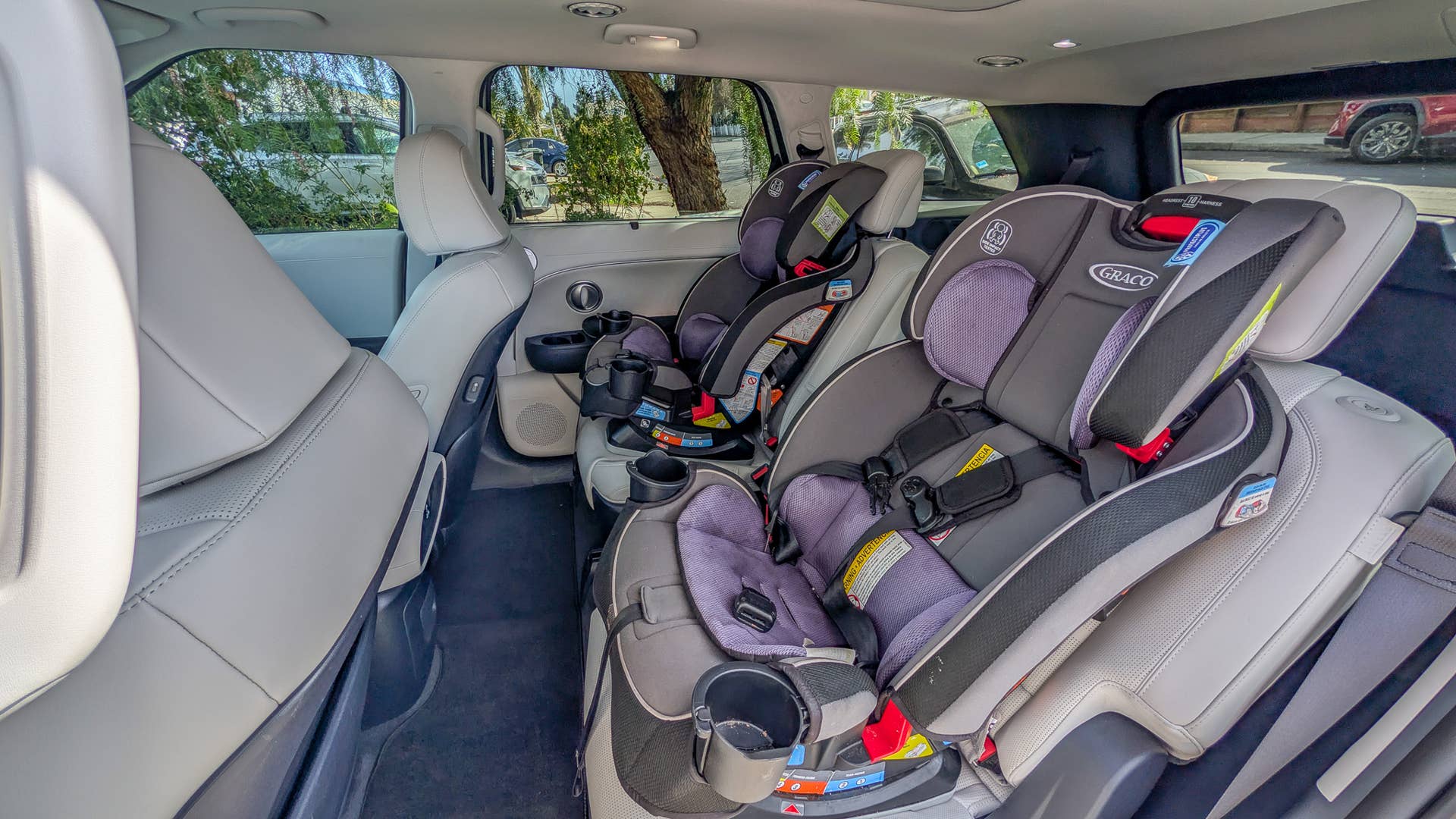
In true Hyundai fashion, though, you don’t have to buy the top-shelf model to enjoy premium features. You can get a $38,935 base SE model with front-wheel drive and still enjoy a decent sound system, that same comfy third row, wireless Android Auto or Apple CarPlay, adaptive cruise control, and more. I enjoyed every second in the Calligraphy AWD, but I would bet that I’d like the base model version, too. Just take it from me… Don’t pick the white leather if you have toddlers. Go with the brown leather. It isn’t so obvious when the kids spill, or their dirty shoes make the backs of the front seats dirty.
Final thoughts
The Hyundai Palisade is a worthy option for families with kids. My in-laws said they’d like one for when all three grandkids are older and come by for a visit, because when the third row isn’t in use, it folds flat. It’s practical, it’s attractive, it’s fun and easy to drive, and the price isn’t insane. My favorite party trick was having my passengers guess how much it cost, and watch the shock on their faces when I told them the real MSRP. I’m not in the market for a three-row SUV, but if I were, it would be a fairly even tie between this and the Honda Pilot.